Custom printed gusseted poly bags solve a familiar packaging problem: the product fits on paper, then misbehaves on the line. The flat dimensions look fine in a quote. The pack-out tells a different story. The extra side or bottom expansion changes usable volume, print placement, and how the finished package reads in the hand or on a shelf. That is the part many buyers only discover after approval. Too late, usually.
These bags sit between a simple flat pouch and a rigid carton. They are lighter than boxes, easier to store than formed packaging, and more structured than a standard pillow-style poly bag. That is why they show up in retail packaging, food service, mail-order inserts, industrial parts, and bundled kits that need branded packaging without turning the unit cost into a joke. The real question is not “What size bag do I need?” It is “What has to happen after the bag is filled?”
Why gusseted bags often outperform flat poly bags in real use
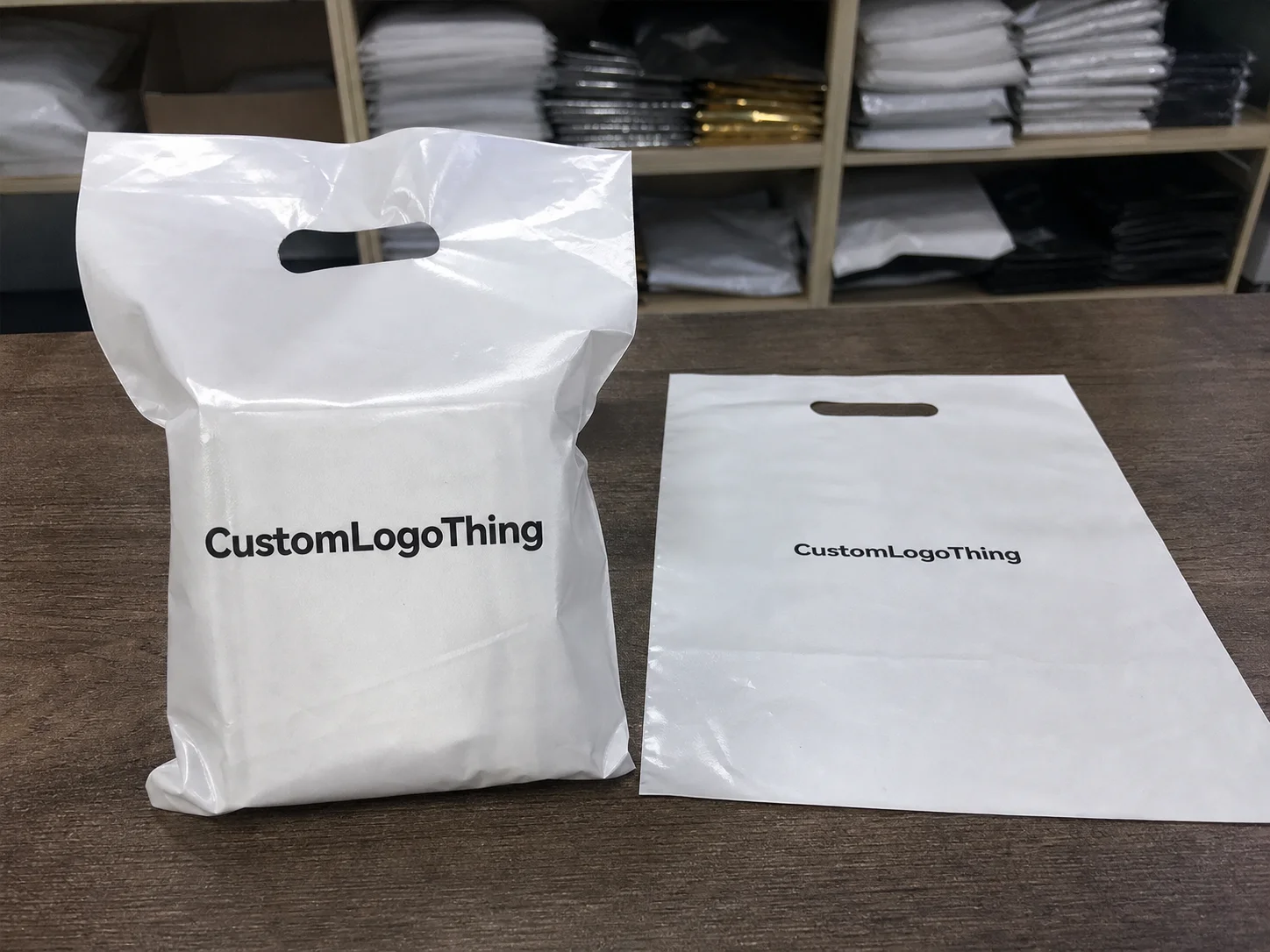
A gusset is a fold that opens as the bag fills. Before product goes in, the bag stays compact. After filling, the fold expands and creates depth. Simple mechanism. Big effect. It changes capacity, storage density, and presentation all at once.
Custom printed gusseted poly bags are useful because they let a product occupy more volume without looking squeezed. A flat bag stretched to its limit tends to warp, wrinkle, or bow at the seams. A gusseted bag distributes that volume more naturally, which usually makes the print face look cleaner too. Graphics stay closer to the shape they were designed for. Not perfect. Better.
Side gussets and bottom gussets are not interchangeable. Side gussets expand from both edges and usually create a flatter front face, which helps with shelf presentation and shipping efficiency. Bottom gussets create a base that can support upright display and easier countertop filling. If the product needs to sit in a tray, a bottom gusset often makes more sense. If the goal is a slim profile with efficient carton packing, side gussets usually win.
Common use cases are predictable:
- Retail packaging for accessories, stationery, small hardware, and value-added sets
- Food service items such as dry snacks, bakery components, and portioned ingredients
- Industrial parts that need dust protection and countable pack sizes
- Mail-order inserts that should look organized inside a shipper
- Kits and bundles that would look sloppy in a loose flat pouch
That mix explains why custom printed gusseted poly bags are often chosen for package branding even when the product is ordinary. A clean printed bag can make a low-cost item look deliberate. A sloppy one makes a decent product feel cheap.
Buyers comparing formats usually want the same three things: a package that packs cleanly, ships without drama, and looks intentional. A simple comparison helps separate those priorities:
| Format | Best Use | Main Strength | Main Limitation |
|---|---|---|---|
| Flat poly bag | Thin or uniform items | Lowest material use | Limited volume and weak shelf presence |
| Gusseted poly bag | Bulky or variable shapes | Better capacity and presentation | Artwork must account for fold distortion |
| Custom printed boxes | Premium retail or fragile goods | Structure and stackability | Higher material and freight cost |
One practical test: if the product needs to look complete before it is sealed, gusseting is usually worth considering. If you are still comparing package structures, our Custom Packaging Products page is a useful place to compare formats before committing to one style.
How the gusset structure changes capacity, display, and sealing
The mechanics are easy to explain and easy to underestimate. A gusset folds inward during storage and shipping. During filling, it opens and creates usable depth. That means the bag occupies less space before use and more space after the product is inside. Buyers who judge size from flat dimensions alone tend to make expensive mistakes.
Side gussets affect the visual field more than many people expect. Put a logo too close to a fold line and it can disappear around the edge once the bag fills. Place compliance copy across the expansion zone and the text becomes harder to read. Bottom gussets do something similar, though the distortion usually shows more at the base than across the main face. If the bag needs barcode space, batch codes, or warnings, those panels should be mapped before the proof is approved.
Material choice matters here. Polyethylene film, gauge, and seal design all influence how the bag performs once expanded. A 2 mil bag works well for lightweight items. A 3 mil or thicker film is often the safer choice for sharp edges, heavier loads, or rough handling in transit. Not always. The right spec depends on puncture risk, product geometry, and how the pack is handled at each step from filling to shipping.
The seal is part of the package design, not a cleanup step. Heat seals give a clean finished edge, but they need proper material margin and consistent machine settings. Adhesive closures can work well in manual packing, especially where speed is not the only concern, but they may slow the line or create variability. In food-related applications, sealing also has to match storage conditions and product sensitivity. If those variables are ignored, the fix usually shows up later as labor, waste, or rework.
One check that pays for itself: ask whether the supplier understands the tests relevant to your use case. If the bags must survive transit, shipping abrasion, or compression, look for familiarity with ASTM methods or ISTA transport standards. For broader material and waste context, the EPA has useful guidance on packaging source reduction at epa.gov, and transport testing guidance is available from ista.org.
Another practical point: a gusseted bag that is visually fine on a flat proof can still fail in production if the filled shape was never checked. That is why filled samples matter. A proof is a drawing. A sample is evidence.
Pricing, MOQ, and unit cost drivers you should compare
Price is where buyers tend to oversimplify. A quote for custom printed gusseted poly bags can look attractive until the real variables show up: film thickness, dimensions, number of print colors, setup method, and freight. The bag itself may be inexpensive. The landed cost is where the story gets less polite.
For common order sizes, a rough working range might look like this: a simple one-color run at 5,000 pieces could land around $0.18-$0.28 per unit, while a larger two- or three-color job with heavier film and more coverage might move into the $0.30-$0.55 range. Those are not universal numbers. They shift with bag dimensions, resin market conditions, print method, and whether the supplier is converting stock film or making a fully custom run.
MOQ is variable too. A stock-size order may start lower, while a custom size with multiple print colors often needs a larger quantity to absorb setup. If the supplier is making new plates, cylinders, or tooling, the minimum rises. That is not a trick. It is the math of setup cost.
Here is a cleaner way to compare quotes:
| Cost Driver | What It Changes | Buyer Impact |
|---|---|---|
| Film gauge | Durability and puncture resistance | Thicker film usually costs more, but can reduce damage and waste |
| Bag size | Material use and converting efficiency | Larger bags cost more and may require different machinery |
| Print colors | Setup time and press complexity | More colors usually mean more cost and more proofing time |
| Print coverage | Ink usage and production speed | Heavy coverage can slow the run and raise unit cost |
| MOQ | How setup cost is spread across units | Lower quantity usually means a higher per-unit price |
| Freight | Total landed cost | Bulky shipments can wipe out a low quote advantage |
The mistake I see most often is comparing only the sticker price. Freight, proof charges, and reprint risk can matter as much as the unit quote. A slightly higher quote that gets the dimensions right and reduces waste can end up cheaper by the time the order reaches your dock.
If your project sits between bag formats, it also helps to compare it against other flexible packaging. Our Custom Poly Mailers page is useful when shipping performance matters as much as display.
Production steps, proofing, and lead time explained
Production usually follows a predictable sequence. First comes spec confirmation: dimensions, gusset depth, film gauge, seal style, print method, and target quantity. Next comes artwork review, then proofing, then conversion and print, followed by inspection, packing, and shipment. Every delay usually traces back to one of those steps being vague.
Artwork is the most common bottleneck. A low-resolution logo, a missing dieline, or a Pantone color that has not been defined can stall the job. Late copy changes do the same thing. If artwork is not final before proof approval, the schedule slips. That is true for custom printed gusseted poly bags and for most other product packaging formats.
Lead time depends on whether the supplier is running stock film or producing a fully custom structure. Stock-film customization can be faster because the material is already available. A fully custom order takes longer because the supplier has to source, convert, print, and inspect everything from scratch. A simple run might move in 12-15 business days after proof approval. Complex orders can take longer, especially if color matching, multiple revisions, or unusual specs are involved.
What to confirm before approval
Do not trust memory here. Confirm the exact dimensions, gusset depth, seal location, and where the graphics will sit once the bag is filled. Ask how the dimensions are measured. Some suppliers quote flat width differently, and that is where expensive misunderstandings start. If there is compliance copy, keep it far enough from fold lines and trim edges to stay readable after conversion.
A practical quote request should include:
- Product dimensions, including the widest point
- Target quantity and a fallback quantity if needed
- Desired bag style: side gusset or bottom gusset
- Film thickness target, if you already know it
- Number of print colors and whether one side or both sides are printed
- How the bag will be filled and sealed on your line
That level of specificity makes quotes easier to compare and reduces the chance of a proof that looks fine on screen but fails on press. If the bag is one part of a broader system, keep the design logic aligned. A strong approach to package branding usually works better than one-off decisions made in isolation.
For quality control, ask what the supplier checks before shipment. Good shops usually verify print registration, seal integrity, color consistency, and overall count. If the bag has a critical application, ask for a retained sample from the run. That gives you a reference point if there is a question later about color drift, seal placement, or size variance.
How to specify the right size, gauge, and print layout
Start with the product, not the bag. Measure width, depth, and height at the widest usable point, then add allowance for insertion, closure, and the way the gusset expands. A bag that looks large on paper can still be too tight if the product has sharp corners or irregular edges. A bag that looks modest may be the right fit if the item compresses cleanly.
Gauge selection should follow function. Buyers often ask for thicker film because it feels safer in the hand. Sometimes that is reasonable. Sometimes it is just expensive comfort. A 4 mil bag for a lightweight accessory is usually unnecessary. A 1.5 mil bag for a heavy, angular part is asking for failure. The useful middle ground for many commercial applications is 2 to 3 mil, but the right answer depends on product weight, puncture risk, and handling conditions.
Print layout deserves more attention than it usually gets. Front-only branding can work for a simple retail pack. Back-panel instructions can help with assembly kits or food products. Repeated side-panel logos can be useful when the bag stands upright and the front panel is partly hidden. If the design includes regulatory text, batch code space, or barcodes, that information should not be squeezed into the most distorted area just to save space.
Think about the filled state
What matters is how the bag reads once it is full. On a counter, in a shipper, and in the customer’s hand, the printed area shifts visually. A proof that looks centered on a flat dieline may appear off-center after expansion. That is normal. It is also why mockups are worth requesting. The hour spent checking a mockup can save a correction run later.
Sometimes buyers focus on the bag and forget the system around it. If the bag is part of a broader branded packaging program, the design should still feel consistent with labels, cartons, and inserts. Strong package branding usually comes from repeated structure, type hierarchy, and restraint. Not from one loud graphic trying to do all the work.
For food or regulated uses, there is another layer: make sure the material and print set-up are compatible with the product and the end market. If a supplier cannot answer basic questions about inks, film grade, or storage constraints, that is a warning sign. Not subtle. Just a warning sign.
Common ordering mistakes that waste time and money
The first mistake is confusing flat width with usable capacity. A bag can look wide on a spec sheet and still fail because the gusset depth was ignored. Buyers who skip that calculation often overbuy the wrong size or underbuy and create pack-out problems. Either way, the cost shows up later.
The second mistake is placing critical copy across fold lines. Logos, warning text, and barcodes get distorted or partially hidden. A gusset panel is not a billboard. It moves. The artwork has to respect that motion. If it does not, even a good print job can look amateurish once filled.
The third mistake is choosing the wrong closure or seal method. Some products need a strong heat seal. Others need easy-open behavior. Some manual operations care more about speed than sophistication. If the line can only handle a certain seal style, the packaging decision should follow the line, not the other way around.
The fourth mistake is skipping samples. A proof helps, but a physical sample is better. It exposes real-world issues such as stiffness, clarity, seal placement, and how the bag behaves with the actual product inside. A bad run can erase the savings from the lowest quote. That damage is usually self-inflicted.
The fifth mistake is treating the quote like it includes everything when it does not. Plates, tooling, freight, and rush charges can all change the result. Ask for those numbers early. Surprises are only fun in fiction.
"The cheapest quote is rarely the cheapest order once you count rework, freight, and wasted product. The right bag is the one that packs correctly the first time."
There is a practical reason experienced buyers ask for samples, dielines, and written approval. It creates a record of what was agreed and reduces ambiguity. That discipline matters for custom printed gusseted poly bags just as much as it does for labels, mailers, or cartons.
Next steps for a cleaner quote and a faster launch
If you want a cleaner quote, send better input. That is the easiest way to improve the outcome. Start with product dimensions, target quantity, print colors, bag style, and the fill method. If the product is fragile or irregular, say so. If the bag must stand on shelf, say that too. That context changes the spec.
Ask for a sample, a dieline, or a mockup before approval. Then check the filled-state appearance, not just the flat layout. Make sure the dimensions, film gauge, print coverage, and delivery timing all line up with the real launch date. If you are comparing more than one supplier, put every quote on the same assumptions so you are not comparing a stock-size solution with a custom-converted one.
The best buyers usually choose one of three priorities: lowest unit cost, fastest lead time, or strongest shelf impact. Two is realistic. Three is harder. That is not a flaw in the product. It is normal packaging math.
Used well, custom printed gusseted poly bags can carry more, present better, and cost less per unit than many buyers expect. The difference usually comes down to how clearly the spec is defined and how carefully the filled pack is checked before production starts.
What are custom printed gusseted poly bags used for?
They are used when a product needs extra expansion room without moving to a rigid carton. They work well for retail goods, food items, kits, and parts that benefit from a cleaner printed presentation.
How do I choose the right size for custom gusseted poly bags?
Measure the product first, then add allowance for insertion, sealing, and gusset expansion. Match the bag to the filled shape, not just the flat dimensions, so the final pack fits correctly and looks intentional.
What affects the price of custom printed gusseted poly bags?
Quantity, film gauge, bag size, print colors, and overall print coverage are the biggest drivers. MOQ, setup work, and shipping can also change the true unit cost, especially on smaller runs.
How long does production usually take for custom gusseted bags?
Turnaround depends on artwork readiness, proof approval, and whether the order uses stock or fully custom materials. Complex print layouts and late revisions usually extend lead time more than the bag format itself.
Can I print logos and instructions on the gusset panels?
Yes, but the artwork has to account for how the bag expands when filled. Critical text should stay clear of fold lines and seals so it remains readable after conversion and use.

