Custom PVC labels are usually chosen for one reason that matters more than the rest: they keep doing their job after the package has already taken a few hits. Moisture, abrasion, cold storage, repeated handling, and shelf friction can turn a standard paper label into a liability. PVC is a different category. It is a flexible plastic film built for rougher conditions, which is why it shows up so often on bath and body products, flexible pouches, chilled goods, retail packaging, and warehouse-oriented applications.
The real comparison is not paper versus PVC in a vacuum. It is paper versus PVC on the actual package, under the actual conditions. Paper can look fine on a dry carton or a short-lived mailer. Put that same label on a flexible bag, a cold bottle, or a product that gets wiped down, and the equation changes fast. The label is no longer decoration. It is part of the package’s working system.
That matters because a label failure rarely fails quietly. It peels at the corner, scuffs the barcode, curls after condensation, or loses adhesion before the product is gone. The brand then pays twice: once for the label, and again for the rework, replacement, or customer complaint. In that sense, the lowest quote is often the most expensive one.
What PVC Labels Are and Why They Outlast Paper
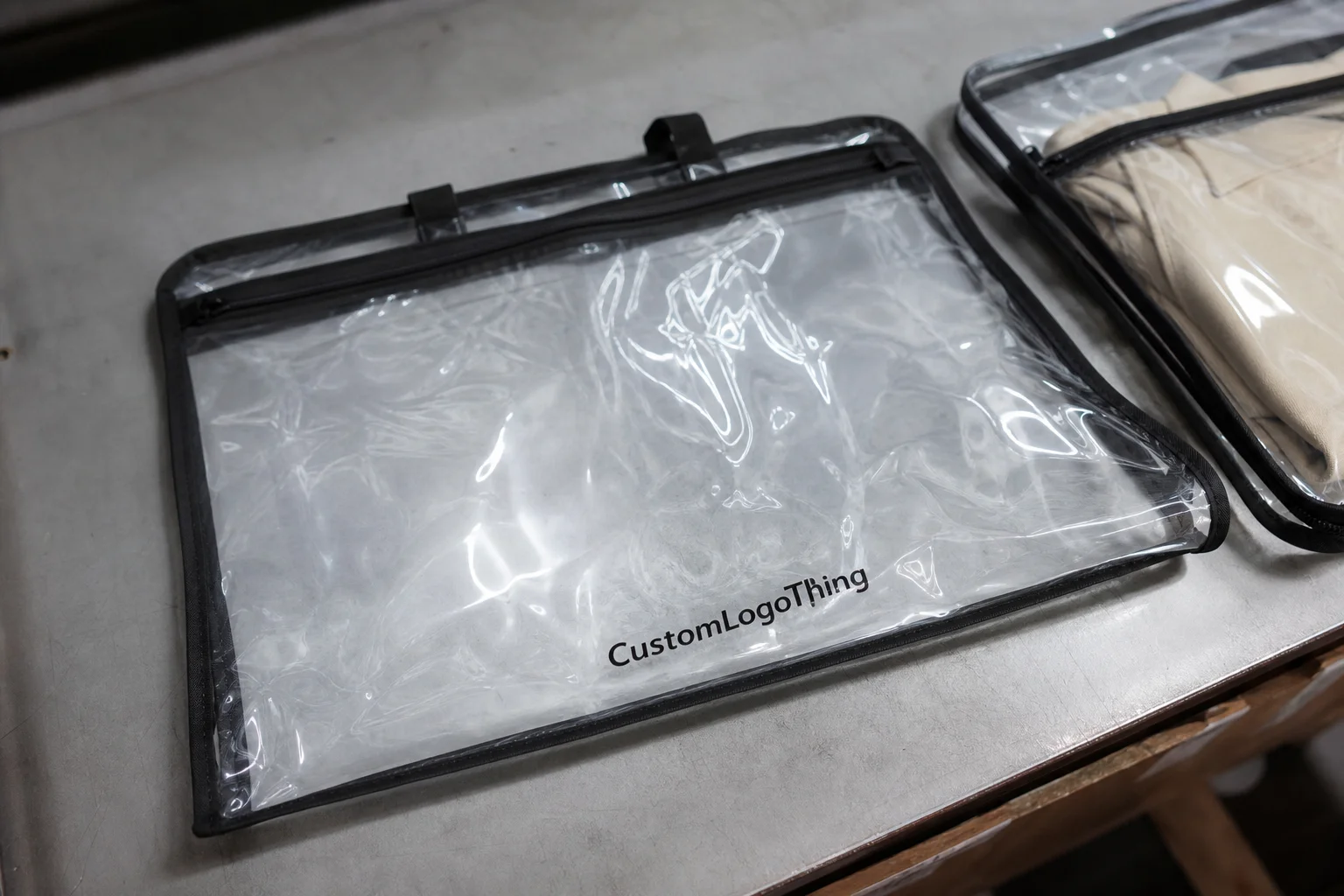
PVC stands for polyvinyl chloride, a plastic film that can be made flexible, durable, and suitable for printing. It is not indestructible. It is simply more forgiving than paper in environments where the package is handled, flexed, chilled, or exposed to moisture. That difference shows up in the field long before it shows up in a specification sheet.
Paper labels tend to absorb moisture, soften at the edges, and tear more easily once the surface gets wet or rubbed. PVC behaves differently. It resists scuffing better, keeps printed details legible longer, and is less likely to distort when the package bends. For brands selling products in busy retail environments or shipping through cold-chain routes, that is not a minor upgrade. It is usually the main reason to choose film.
Custom PVC labels make the most sense where the label is expected to survive the life of the product, not just the first impression. Think cosmetic bottles, detergent pouches, food packaging with condensation, promotional kits, or inventory labels that get touched repeatedly in a warehouse. If the pack sees friction, PVC earns its place.
There is a tradeoff. PVC usually costs more than paper, and not every application needs that extra durability. A dry, rigid carton with a short distribution cycle may not justify the premium. But a label that fails early can trigger a chain of avoidable costs: relabeling labor, inventory delays, waste, and sometimes a weaker shelf presence. Buyers who look only at the print price miss the larger cost picture.
Another point that matters in production: PVC is often chosen because it complements flexible packaging. A rigid label on a flexible pouch can look mismatched or lift at the corners. A flexible film label moves more naturally with the package. That is one reason packaging teams often move to film when the brand starts using pouches, soft bottles, or hybrid retail formats.
How Custom PVC Labels Are Made and Applied
The production path is direct, but each decision affects the outcome. Artwork comes first. The supplier should check file resolution, dielines, bleed, and any white ink layers if the design uses clear film. After that comes the print method. Digital printing is common for short and medium runs, variable designs, and fast turnaround. Flexographic or press-based methods usually fit higher-volume work where repeatability matters more than setup speed.
After printing, the labels are cut, laminated if needed, and converted into sheets, rolls, or individual die-cut pieces. That format choice is not cosmetic. Sheet labels are convenient for small manual runs. Rolls work better for repeated hand application or machine application. Die-cut pieces can create a distinctive outline, but unusual shapes add complexity and can extend lead time because tooling and first-article checks take longer.
Front printing and reverse printing are not interchangeable. Front printing places the image on the face of the film and is common for white or opaque PVC. Reverse printing is often used with clear film, where the artwork is printed underneath and viewed through the material. The advantage is protection: the printed surface is shielded by the film itself. The limitation is obvious. If the design does not have enough contrast, it disappears into the package.
Application is where many label specs prove themselves or fail. A proof can look clean on screen and still misbehave on a curved bottle, a textured bag, or a soft pouch that shifts after filling. The label needs to fit the package surface, not just the artwork dimensions. Suppliers who ask for the actual substrate are doing the right thing. Surface type, curvature, temperature, and fill process all affect whether the label will stay put.
That is why the same label stock can behave differently from one package to another. A rigid carton is simple. A shrink-wrapped bundle is not. A chilled bottle with condensation is a different problem again. The closer the label spec matches the real use case, the fewer surprises downstream.
Material, Adhesive, and Finish Choices That Affect Performance
Performance is built from small choices. Face stock thickness, opacity, finish, and adhesive type all interact. A thicker film may feel more substantial in hand, but thickness alone does not guarantee better durability. Likewise, a glossy finish can make colors pop, but it also reflects light and can make small text harder to read under retail lighting. Matte reduces glare and can hide scuffs, though it may soften the visual punch of the artwork.
Adhesive is where many spec problems begin. Smooth plastic, textured film, corrugated board, and low-energy surfaces do not accept the same adhesive equally well. Some packages are straightforward. Others are stubborn. Cold-chain products add another variable: condensation. Oily surfaces and high-touch packaging add another. If the adhesive is not matched to the surface, the label may look fine during application and fail later at the edges.
For this reason, buyers should ask not just whether a label is “permanent” or “removable,” but what kind of surface it was designed for. General-purpose acrylics cover many standard uses. More demanding applications may need stronger permanent adhesives or specialty options designed for difficult plastics. On flexible packaging, a label often needs both good initial tack and long-term hold. One without the other is a weak spec.
Finish affects readability as much as appearance. A high-gloss label can look premium, but in bright retail environments it may create glare around small type or barcodes. A matte label is often more forgiving. Clear film can create a cleaner, lighter visual on cosmetics and premium retail goods, but it demands careful planning around text color, white ink underlay, and background contrast. If the design is complex, the print plan should be built around the package, not the other way around.
Testing against real handling conditions is worth the time. Packaging programs that ship through vibration, stacking, cold storage, or frequent distribution touchpoints benefit from basic transit testing. Organizations such as ISTA publish methods for distribution testing, while adhesion and peel performance are commonly discussed using ASTM references such as D3330 and D3654. Not every order needs formal lab data, but if the package is vulnerable, these standards provide a useful frame for evaluation.
The cheapest label is usually the one that stays on the pack, reads clearly, and avoids a reprint.
| Label Option | Typical Use | Approximate Unit Cost | Notes |
|---|---|---|---|
| Sheeted white PVC, simple die-cut | Hand application, small runs, internal kits | $0.10 to $0.22 at 5,000 pieces | Useful for straightforward branding and short-term packaging |
| Rolled PVC labels, matte finish | Semi-automatic or repeated hand application | $0.09 to $0.18 at 10,000 pieces | Often reduces application time and works well for repeat SKUs |
| Clear PVC with white ink and specialty adhesive | Premium retail packaging, curved containers, damp environments | $0.20 to $0.45 at 5,000 pieces | Cleaner look, but more setup and more testing |
Custom PVC Labels Pricing: What Drives Unit Cost and MOQ
Pricing is shaped by a short list of variables, and most of them are easy to predict once the spec is clear. Size matters because larger labels consume more material and press time. Shape complexity matters because tight corners, unusual outlines, and intricate die lines add setup and create more waste. Color count matters too, especially if the design uses spot colors, white ink, metallic elements, or multiple print passes.
Finish is another cost driver. Gloss, matte, protective coatings, lamination, and specialty effects can all change the production path. Clear film with white ink is usually more expensive than opaque white film because it introduces another layer of setup and quality control. If the design uses multiple brand colors and a precise match is required, the press may need additional adjustment time. That does not sound dramatic until the job has to be rerun.
MOQ, or minimum order quantity, is often misunderstood. The printer is not only selling labels; it is spreading setup, proofing, finishing, and handling costs across the run. That is why a 1,000-piece order usually has a higher unit price than a 10,000-piece order. The equipment does not care much about your order size. The setup does.
There is usually a separate cost for tooling if the job needs a custom die. That fee can be modest or meaningful depending on the shape. For simple rectangle or rounded-corner jobs, it may be minimal. For intricate outlines, it becomes a real line item. The same goes for proofs and samples. On large runs, those charges are often absorbed into the job. On smaller runs, they can dominate the pricing conversation.
Buyers can often lower cost without weakening the label. Standardize sizes across a product family where possible. Avoid elaborate outlines unless the shape is doing actual branding work. Use one finish across a line instead of mixing finishes casually. Group artwork variants into one production run if the supplier can nest them efficiently. Those choices do more for cost control than trying to shave a fraction of a cent off the substrate.
The practical range is simple enough: a standard white PVC label at mid-volume may land in the low double-digit cents per unit, while a clear label with white ink, specialty adhesive, and a custom shape can move much higher. For small orders, setup and proofing matter more than the unit figure. For large orders, freight, conversion format, and storage planning start to matter. Rolls may be more efficient for production lines. Sheets may be better for hand application and small-batch work.
A useful pricing habit is to ask for the same spec in multiple versions. A basic option, a mid-tier option, and a premium option show the actual tradeoff instead of hiding it inside a single number. That comparison is often more valuable than the quote itself.
Process and Lead Time: From Artwork to Finished Rolls
The timeline usually starts with a brief, then a file check, then a proof. If the artwork needs corrections, the schedule pauses there. That is normal, and it is usually the first place projects slip. Color matching can add another round, especially if the label has to align with an existing brand system or a package family already in market. If the design uses clear film, white underprint, or a custom die, the review process usually becomes more careful.
Simple jobs move faster than complex ones. Straight rectangle labels are quicker than irregular die-cut shapes. Opaque white PVC is usually faster than clear film with reverse printing. Roll formats may be efficient for production lines, while sheet labels can sometimes move more quickly if the finishing line is set up for them already. Custom cutting tools add time for fabrication and first-article inspection. None of this is unusual. It is just part of the schedule.
A practical lead-time framework is often one to two business days for file review, a few days for proof approval depending on the buyer, then production plus shipping. Complex jobs stretch beyond that, especially if sampling is required before full production. Rush orders are possible in many shops, but rushed jobs are less forgiving. If the launch date is fixed, build in buffer time rather than relying on a perfect run.
The biggest delay is usually not the press. It is approval. Teams lose time on corrected artwork, late color changes, and uncertainty about the final substrate. The cleanest projects are the ones where the buyer has already answered the hard questions: What surface will the label touch? Will it be exposed to water, ice, oil, or abrasion? Does it need to match a current line of packaging? Is glare acceptable, or does the text need to stay readable under bright lights?
When the label is tied to a product launch, rebrand, or seasonal package, that planning matters even more. A label is small, but it has a long memory. If it is wrong, everyone notices.
Common Spec Mistakes That Cause Lifts, Tears, or Reprints
The most common failure starts with the wrong adhesive. A label that holds on a desktop sample can still peel on a flexible bag, a low-energy plastic, or a chilled package after condensation forms. Edge lift often appears first. Then the problem spreads. If the package flexes, the adhesive needs to tolerate that movement. If it cannot, the label has already lost.
Another mistake is approving artwork without checking contrast in the real format. Transparent film can look clean and premium, but it also exposes weak type, faint colors, and thin white underprint quickly. Small text is especially vulnerable. So are barcodes and compliance blocks. Screen proofs can hide this. A sample on the actual pack usually does not.
Application errors create another layer of risk. Dust, residue, moisture, seam placement, and surface curvature all affect adhesion and appearance. A label placed slightly off-axis on a curved container may not fail immediately, but it can look poorly finished and become a handling problem later. That is why a test application on the real substrate matters more than a perfect digital mockup.
Underordering is a quieter problem, but it still causes damage. Buyers sometimes reduce quantity to save budget, then pay for rush shipping, partial reprints, or inventory mismatch later. Overcomplicating the spec has a similar effect. Every extra finish, variant, or shape adds another point where a job can slip. Simple is not always cheapest, but it is often easier to produce correctly the first time.
If the label has to survive real handling, test it on the real pack, not only on a flat sample card.
What to Gather Before You Request a Quote
A usable quote begins with good inputs. Gather the label size, shape, quantity, material preference, finish preference, artwork files, and the actual surface the label will touch. Then add the environment. Will it be exposed to water, condensation, oil, abrasion, freezing temperatures, or repeated hand contact? Is the package rigid or flexible? Is the label meant to stand alone or match an existing family of packaging?
Ask for more than one option if possible. A basic spec, a mid-tier spec, and a premium spec reveal the cost and performance tradeoff in a way a single number cannot. One version may be the cheapest. Another may reduce failure risk or improve shelf presentation. The middle one is often the most practical because it balances cost, appearance, and durability without overbuilding the job.
If the application is cold, damp, or high-friction, request a sample or test run before full production. That is especially useful for plastic bags, flexible film, and anything stored in refrigeration or handled on a busy floor. If the sample fails, there is still time to change adhesive, finish, or print orientation. If it passes, the spec has evidence behind it.
Before final approval, verify the adhesive match, confirm the print orientation, and check that the label spec reflects the actual use case rather than a generic packaging assumption. That discipline pays off across the whole packaging program, not just this one line item. It also keeps custom pvc labels aligned with the rest of the package instead of treating them as a last-minute add-on.
The best label is the one that fits the surface, survives handling, and supports the brand without creating extra work downstream. For brands comparing custom pvc labels for a launch or packaging refresh, the strongest starting point is the real packaging condition, not the catalog image. Build the spec from there.
Are custom PVC labels waterproof?
They are generally far more moisture resistant than paper labels, but the result depends on the adhesive, finish, and exposure level. Splash exposure, condensation, and cold storage are common use cases. If the label may be submerged or scrubbed aggressively, ask for a sample and test it before full production.
Will custom PVC labels stick to plastic bags and flexible film?
Sometimes, but the adhesive has to match the exact surface. Some plastics have low surface energy and resist bonding. Smooth, clean application surfaces help. Soft or textured bags often need more testing. Ask which film types have already been tested against your actual packaging.
What is the typical MOQ for custom PVC labels?
MOQ depends on the printer, the label size, and the setup required for printing, cutting, and finishing. Smaller runs are usually possible, but the unit cost rises because setup gets spread across fewer pieces. If you have several designs, ask whether they can be grouped into one run to reduce waste and cost.
How long do custom PVC labels take to produce?
Lead time usually starts with artwork approval, so file corrections are often the first delay. Simple specs move faster than custom shapes, specialty finishes, or jobs that need sampling first. Ask for a schedule that includes proofing, production, and shipping so you can plan a launch date with margin.
Should I choose matte or gloss custom PVC labels?
Gloss usually looks brighter and can create stronger shelf impact. Matte reduces glare and often reads better under harsh lighting. The better choice depends on lighting, handling, and readability. If the design uses small type or dense content, request both finishes as samples before deciding.

