Custom rectangle labels are small, but they sit at the intersection of branding, comfort, compliance, and production discipline. A well-made label can make a garment feel finished. A bad one can make a good shirt feel unfinished before it ever leaves the folding table. That is the real job of custom rectangle labels, not decoration for its own sake, but a final layer that has to survive wear, washing, and close inspection.
Rectangle formats are popular for a reason. They give designers a clean field for logos, size marks, care details, origin copy, or a minimal brand mark without forcing awkward wraps or wasted space. The shape is efficient, but the result is not automatic. Material, edge finish, stitch method, and placement decide whether the label feels soft, rigid, scratchy, or nearly invisible in use.
For apparel brands, the best label is rarely the one that looks best in a digital mockup. It is the one that behaves correctly on fabric. That distinction matters more than buyers expect, especially when the label is sitting on skin, crossing a seam, or going through repeated wash cycles.
A label can be tiny and still damage the perceived quality of a garment. In practice, that is usually a spec issue, not a design issue.
What Custom Rectangle Labels Actually Do on Garments
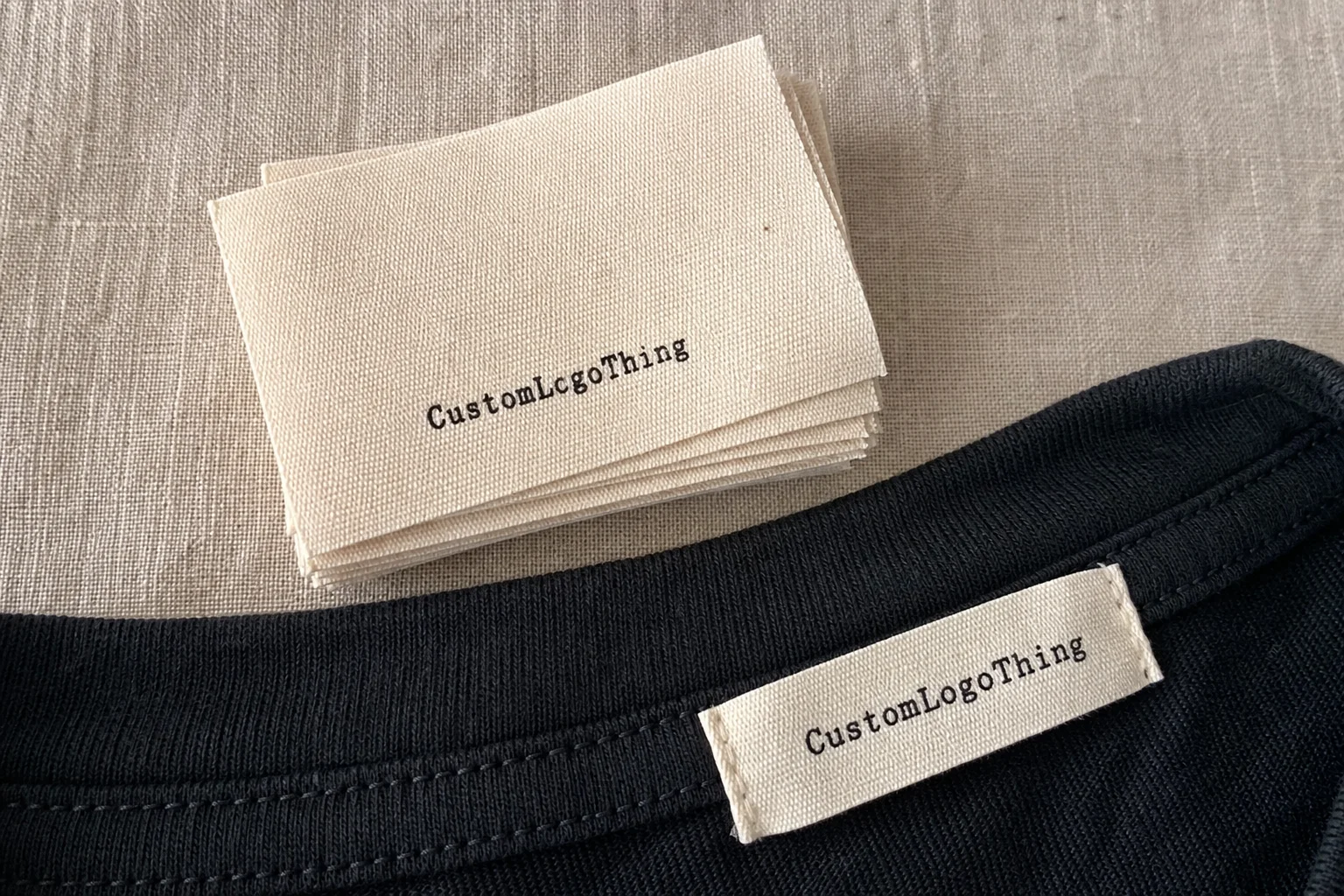
Rectangle labels are the workhorse format in apparel branding. They show up on neck seams, side seams, hems, waistbands, sleeve cuffs, and occasionally on external branding points where a compact mark does the job cleanly. Because the shape is flat and predictable, it is easier to layout than irregular patches and more useful than a tiny tab. There is room for a logo, a size callout, or care information without turning the label into clutter.
That practical role is the same reason brands treat labels as part of a broader packaging system. A good label has to fit with hang tags, cartons, tissue, and any other branded touchpoint. If the label feels premium but the rest of the presentation feels rushed, the mismatch is obvious. Packaging does not get judged in pieces. It gets judged as a set.
For clothing, the useful questions are simple: does the label hold up in the seam, does it read clearly after sewing, and does it remain comfortable after several washes? If the answer is no to any of those, the garment feels less finished even if the logo is attractive. Buyers often focus on artwork first, then discover that the material and application method are what customers actually feel.
There is also a small but important production detail here. Labels are one of the few brand assets that live inside the garment, not on the outside of the package. That makes them more likely to be touched, bent, washed, and ignored until they fail. The best ones disappear into the product in the right way. They are visible enough to communicate, but not so intrusive that they become the thing customers remember.
Process and Timeline: From Artwork to Delivery
The production flow is usually straightforward, but the handoffs matter. First comes the brief: finished size, artwork, quantity, placement, and material preference. Then the supplier checks whether the design will hold up at the intended scale, especially if the label includes fine type or thin lines. A proof follows. If the label needs a color correction, a fold adjustment, or a physical sample, the schedule extends immediately.
For standard orders, a simple printed or woven label often lands in the 7 to 15 business day range after proof approval. That is a typical production window, not a guarantee. Higher weave density, specialty edging, satin backing, metallic thread, or custom folding can add days. If the order is tied to other items such as hang tags, mailers, or custom printed boxes, the slowest component usually governs the launch date.
The delays that create real problems are usually plain and preventable. Missing dimensions. Unclear fold direction. Artwork sent at the wrong resolution. A brand team that needs two days to answer a proof question that should have been settled before the order was placed. None of that is dramatic, but it is expensive when a launch is waiting on a label correction.
For that reason, the order should move through a few early checks before production starts:
- Confirm the finished dimensions, not just the open size.
- Decide whether the label will be sewn into a neck, side seam, hem, or waistband.
- Verify if the artwork needs to be readable at very small sizes.
- Ask whether a physical sample is available before the full run.
- Check what triggers a new proof and whether revisions add cost.
If the labels are part of a larger shipping program, transit testing matters too. References from organizations such as ISTA are useful when evaluating how the package survives transport. For material choices, especially if paper inserts or cartons are involved, resources like EPA recycling guidance can help align the label program with broader disposal and sustainability expectations.
Key Specs That Change Feel, Fit, and Readability
Most label failures start with specs that were guessed instead of decided. Size is the first one. A narrow rectangle works for a short brand name or a small icon. A wider format gives space for care copy, a larger logo, or multi-line information. More space is not always better, but too little space is almost always a problem.
Material choice is the next decision, and this one changes the feel more than most buyers expect. Woven labels usually feel durable and polished, which makes them a strong fit for core apparel, jackets, and repeat-wash items. Satin labels are smoother and often better for necklines, sleepwear, and softer garments. Printed labels are practical for fine detail, multi-color graphics, and small type that would be hard to render cleanly in thread. There is no universal best option. The right choice depends on hand feel, wash cycles, and the role the label plays inside the garment.
Edge finish is another detail that affects how the label behaves after sewing. Heat cut edges can stay neat if they are controlled well. Folded or sewn edges can feel more substantial, but they may also add stiffness. Adhesive-backed formats can be useful for temporary positioning or packaging applications, though apparel usually needs a sewn attachment for durability. If the label sits against skin, softness and edge control matter more than visual drama.
Three quick readability checks are worth doing before approval:
- Can the text be read at arm's length?
- Does the contrast still work under low light?
- Will the design stay legible once it is folded and stitched?
| Label Type | Best Use | Typical Feel | Common Tradeoff |
|---|---|---|---|
| Woven rectangle label | Brand marks, premium apparel, repeat wash wear | Durable, structured, polished | Very fine details can soften at small sizes |
| Satin rectangle label | Necklines, soft garments, comfort-first products | Smooth, lightweight, less scratchy | Can feel less rigid than woven options |
| Printed rectangle label | Small text, care copy, multi-color art | Flat, clean, flexible | Ink and substrate quality matter a lot |
For sustainability-minded brands, the label choice should also fit the rest of the packaging system. FSC-certified paper stocks matter when the line includes hang tags, inserts, or cartons. If your retail presentation includes folded boxes or direct-to-consumer mailers, the full set should feel consistent. A refined label next to a mismatched carton reads as a disconnected program, even when each component is technically acceptable.
Cost, Pricing, and MOQ: What Changes the Quote
Pricing for custom rectangle labels usually comes down to a few variables: size, quantity, material, color count, finishing method, and whether special folding or cutting is needed. Bigger labels use more material. More colors can increase setup complexity. Lower quantities almost always cost more per unit because setup is spread across fewer pieces. That is the basic structure of the quote.
For rough planning, small runs often land around $0.20 to $0.60 per label, depending on method and finish. Larger runs usually lower the unit price, sometimes meaningfully. A simple woven label with a limited palette may price far below a satin label with fine detail, custom folds, or specialty edges. Buyers who compare only the headline number often miss the part that actually determines total value: how the label performs after sewing and washing.
MOQ also changes the economics. Lower MOQs exist, but they typically carry a higher unit price because the setup cost does not disappear. If a supplier has to prepare a custom thread color, a print pass, or a special cut for a small batch, someone is paying for that setup. There is no way around it, only different ways of absorbing the cost.
Extra charges often appear late if they were not clarified early:
- Sample or swatch fees
- Rush production fees
- Revision charges after the first proof
- Custom folding or die-cut setup
- Shipping, duties, and re-delivery costs
The cheapest quote is not the cheapest outcome if the label feels rough, prints poorly, or fails QC. A remake erases small savings quickly. That risk grows when labels are tied to launch dates, retail packaging deadlines, or a larger run of product packaging that cannot move forward until the label is approved.
Packaging associations such as the Packaging Professionals association are useful references for understanding how material choice, print method, and volume affect pricing across a broader packaging program.
Step-by-Step Ordering Guide for Clothing Brands
The cleanest orders start with a spec sheet, not a vague email. List the garment type, label placement, finished size, artwork file, quantity, and finish preference. If the line includes multiple size runs, state that early. If the label needs to work across men’s, women’s, and youth fits, the layout should account for that before anyone opens production.
Then choose the construction with the garment in mind. A soft tee usually needs a softer label. A structured outer layer can support a heavier woven format. A children's item may need a comfort-first approach and a placement that avoids abrasion. The label has to match the product, not just the logo.
Proof review is where many brands lose time. The common misses are not subtle:
- Spelling and line breaks
- Exact finished dimensions
- Color contrast and readability
- Fold direction and orientation
- Margin around the logo or text
After that, confirm how the label will behave once it is sewn in. A design that looks centered on screen can shift once it sits in a seam. That is normal. It still needs to be checked. If the label touches skin, appears on premium apparel, or is part of a larger run, request a sample or swatch. A one-piece check can prevent a multi-thousand-piece reprint.
Finally, lock the schedule and quantity before production starts. Every late change adds friction. Build label lead time into the packaging timeline rather than treating it as an afterthought. That sounds basic because it is. The brands that stay calm in production usually plan the boring parts first.
If the label is part of a broader presentation system, keep it coordinated with hang tags, tissue, mailers, and cartons so the full package branding story stays consistent. Labels may be small, but they should not feel detached from the rest of the product.
Common Mistakes That Create Reprints and Waste
The biggest mistake is trying to fit too much into too little space. Tiny text, thin rules, and delicate logos may look fine on a screen, but once the label is woven, printed, folded, or sewn into a seam, the details can collapse. Screen resolution is not textile resolution. That difference matters.
Placement problems are just as common. A label can look balanced in a mockup and still land too close to the skin, too near an edge, or directly in a flex point. Comfort is part of quality in apparel. If the customer notices the label every time they wear the garment, the branding is working against the product.
Approval errors are expensive because they are usually preventable. Brands often sign off before checking seam allowance, fold direction, or the way the label will sit once folded to final size. A proof is not a decorative preview. It is a production document.
Inventory mistakes create a different kind of waste. If you under-order labels for a launch, the result is mismatched stock and rushed reorders. If you have size variants and forget to account for each one, you end up with leftover pieces that cannot be used efficiently. The same pattern shows up in packaging runs all the time: the wrong count, the wrong format, or the wrong lead time turns a simple item into a delay.
The most reliable buyers reduce waste by standardizing what they can and varying only what they must. That means one approved spec, one checked artwork file, and one clear rule for reorders. If the label will be repeated across seasons, keep the structure stable. Small changes across every batch create unnecessary complexity and more chances for error.
Expert Tips and Next Steps for a Clean Order
If you are ordering labels for the first time, test one label system across a few garments before rolling it out across the line. That matters most for neck labels and soft-touch apparel, where feel is as important as appearance. A label can look correct in a spreadsheet and still be wrong once it is worn.
Ask for a sample or swatch whenever the label will touch skin, sit on premium apparel, or carry a visible brand role. That is not overcautious. It is basic quality control. The same logic applies to paper stocks, cartons, and other elements of branded packaging. If you would not approve a folding carton without seeing the board, do not approve a garment label without checking the hand feel and edge behavior.
Build a reorder buffer. If a style sells through and you need an emergency label run, you are paying for the gap between demand and planning. Keep enough inventory for replacements, growth, and small production shifts. A modest safety stock is cheaper than a rush fee or a delayed launch.
When you are ready to quote, send one clean spec sheet with garment type, finished size, artwork, quantity, placement, and finish preference. The better the brief, the cleaner the quote. Finalize the size, choose the material, confirm the fold, approve the artwork, and ask for pricing from a supplier that can explain the tradeoffs instead of hiding them. That approach saves time because it removes the round of corrections that usually follows a vague order.
For most clothing brands, custom rectangle labels are a small purchase with a large effect. Get the spec right and the label supports the garment. Get it wrong and the mistake shows up in comfort, reprints, and avoidable delays. The best orders are usually the least dramatic on paper and the most controlled in production. That is what a clean label program looks like.
How much do custom rectangle labels usually cost?
Price depends mainly on size, quantity, material, color count, and finishing choices. Small runs usually cost more per label, while larger runs lower the unit cost by spreading setup work across the order.
What is the typical turnaround for custom rectangle labels?
Standard jobs often finish in about 7 to 15 business days after proof approval, but sample requests, revision rounds, and specialty finishes can extend that timeline.
Which material works best for clothing labels on necklines?
Satin and softer woven options usually feel better against skin than coarse or stiff materials. The right choice depends on garment weight, wash requirements, and whether the label is hidden or visible.
Do custom rectangle labels have an MOQ?
Yes, most suppliers have a minimum order quantity, though the exact number varies by method and finish. Lower MOQs are possible, but they usually come with a higher price per label.
What should I check before approving the artwork proof?
Check spelling, text size, contrast, fold direction, and exact finished dimensions. Also confirm placement on the garment so the label does not interfere with comfort or construction.


