Buyer Fit Snapshot
| Best fit | Custom Ribbon Closure Gift Boxes Wholesale projects where brand print, material claims, artwork control, MOQ, and repeat-order consistency need to be specified before quoting. |
|---|---|
| Quote inputs | Share finished size, material target, print colors, finish, packing count, annual reorder estimate, ship-to region, and any compliance wording. |
| Proofing check | Approve dieline scale, logo placement, barcode or warning zones, color tolerance, closure strength, and carton packing before bulk production. |
| Main risk | Vague material claims, crowded artwork, missing packing details, or unclear freight terms can make a low unit price expensive after revisions. |
Fast answer: Custom Ribbon Closure Gift Boxes Wholesale: Quote Scope, Sample Proof, MOQ, and Lead Time should be specified like a repeatable production item. The safest quote records material, print method, finish, artwork proof, packing count, and reorder notes in one written spec.
Production checks before approval
Compare the actual filled-product size with the drawing, then confirm tolerance on folds, seals, hang holes, label areas, and retail display edges. Reserve space for logos, QR codes, warning copy, and material claims before decorative graphics fill the panel.
Quote comparison points
Review material grade, print process, finish, sampling route, tooling charges, carton quantity, and freight assumptions side by side. A quote is only useful when the supplier can repeat the same color, closure quality, and packing count on the next order.
I’ve stood on enough packing lines in Shenzhen, Dongguan, and Ningbo to know this: Custom Ribbon Closure Gift Boxes wholesale can lift perceived value before the customer even touches the product. One cosmetics client I visited in Shenzhen swapped a plain lid box for a ribbon-tie rigid box, and the first thing their retail buyers said was not about the foil logo or the 350gsm C1S artboard wrap. They said, “It feels more expensive.” That sentence is money, especially when the unit cost moves from $1.62 to $2.14 and the shelf price jumps by $8.
That is why custom ribbon closure gift boxes wholesale keeps showing up in buyer meetings for jewelry, candles, apparel accessories, corporate gifting, and influencer kits. The box does part of the selling. It signals presentation, care, and gifting intent. I’ve seen brands use that cue to justify a higher shelf price, raise gift set margins by 8% to 15%, and cut back on extra outer decoration. For packaging teams, that matters because branded packaging is not just decoration; it is part of product packaging economics, right down to the 2 mm greyboard and the 15 mm satin ribbon.
Honestly, buyers sometimes underestimate closure style. A tuck-end carton can protect a product. A magnetic box can impress. But custom ribbon closure gift boxes wholesale sits in a very useful middle ground: more memorable than a standard folding carton, usually less expensive than a fully customized Magnetic Gift Box, and still strong enough to support premium retail packaging. That combination is why procurement teams keep coming back to it. I remember one buyer in a Guangzhou sample room waving three prototypes like he was deciding a hostage situation (his words, not mine), and the ribbon version won before anyone even talked cost.
Why Custom Ribbon Closure Gift Boxes Wholesale Stand Out
The best packaging does three things at once: it protects, it sells, and it repeats well in production. custom ribbon closure gift boxes wholesale checks all three boxes if the structure is engineered properly. The ribbon adds a tactile cue before the lid opens. That matters more than most people think. In one factory-side review I attended in Dongguan, the production manager placed two identical boxes on a table: one with a ribbon closure and one without. The buyers in the room kept reaching for the ribbon version first, even though the contents were the same. The reason was simple. The closure created anticipation.
Commercially, that anticipation supports package branding. The customer sees a gift-ready object rather than “just a box.” For perfumes, candles, jewelry, or corporate gift sets, that shift in perception can justify a stronger margin. A candle brand I worked with in Suzhou moved from a plain carton to a ribbon-closure rigid box and added $4.50 to the perceived value of each set. That also helped them compete in crowded retail spaces where shelf appeal has seconds, not minutes, to work.
I’ve also seen brands use custom ribbon closure gift boxes wholesale for seasonal campaigns because the ribbon color can be swapped without rebuilding the whole structure. A black box with gold ribbon feels formal. A kraft board with olive ribbon feels artisanal. A white box with red ribbon feels holiday-ready. That small change is cheaper than redesigning a full package architecture, and it keeps the brand story intact. Honestly, if a packaging update can do the work of a whole rebrand without the drama, I’m all for it.
Compared with tuck-end cartons, ribbon closure boxes are materially heavier and more premium in hand feel. Compared with magnetic closure rigid boxes, they can be more cost-efficient in many runs, especially when the buyer wants a luxury look but does not need the hidden magnet hardware. I’ve seen procurement teams save 12% to 20% versus a magnetized format, depending on 1.5 mm or 2 mm board thickness, wrap paper choice, and ribbon specification. Not always the case, but often enough to matter.
Here is the buying logic in plain terms. If your product needs a premium cue, a repeatable structure, and wholesale economics, custom ribbon closure gift boxes wholesale deserves a hard look. It fits corporate gifts, cosmetics, jewelry, candles, apparel accessories, PR kits, and holiday bundles. That breadth is one reason it appears so often in Custom Packaging Products catalogs and seasonal buying plans from Hong Kong to Los Angeles.
“Buyers don’t pay for ribbon alone. They pay for the feeling that the product was meant to be gifted, photographed, and remembered.”
That quote came from a retail client in a supplier negotiation I sat through in Shanghai, and it stuck. He was right. The closure is not a decorative add-on. It changes the customer’s first physical interaction with the package.
Custom Ribbon Closure Gift Boxes Wholesale: Product Details
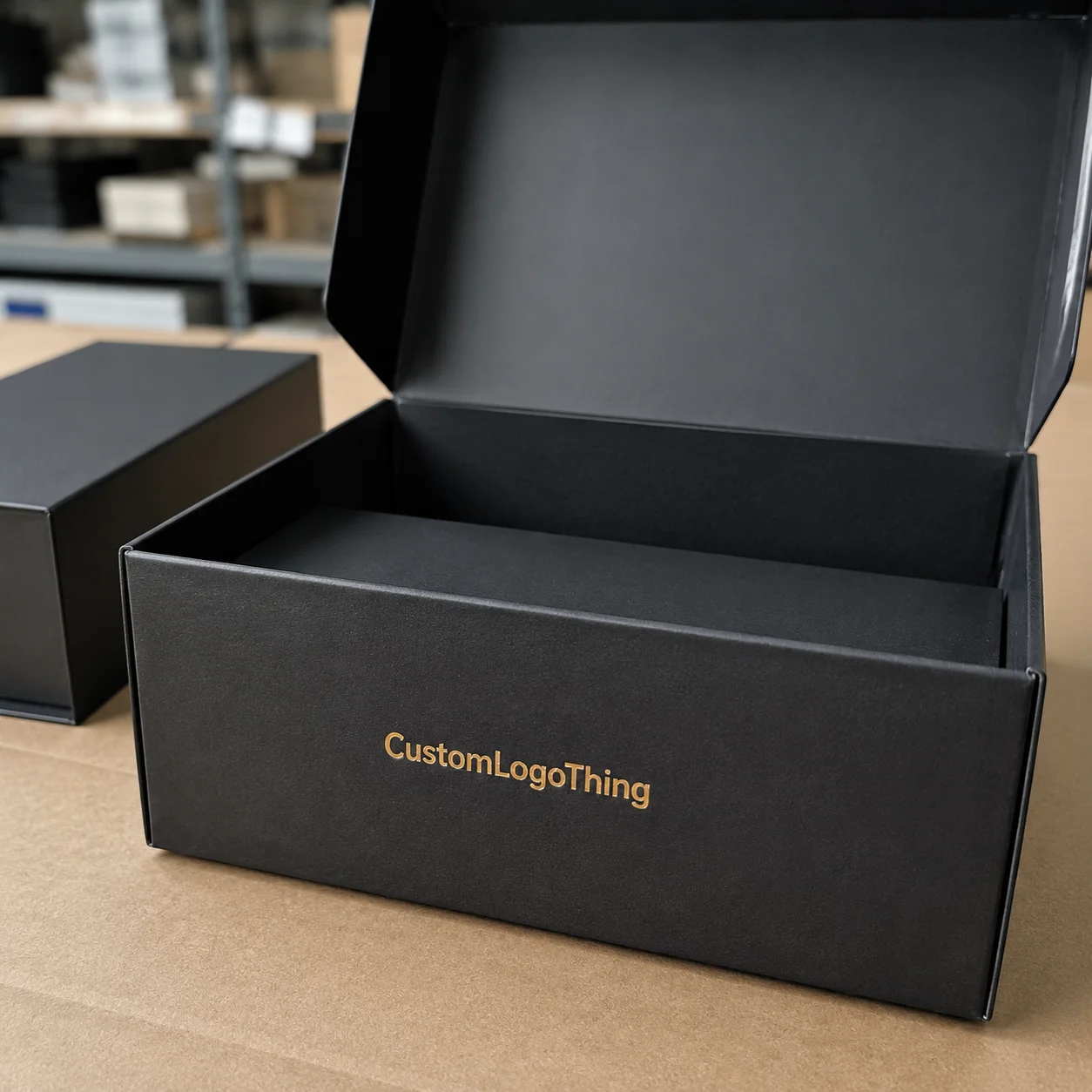
custom ribbon closure gift boxes wholesale usually starts with a rigid chipboard base or a reinforced paperboard structure. In many factory builds, the core is 1.5 mm to 2 mm greyboard wrapped with 157gsm art paper or 350gsm C1S artboard, then finished with matte lamination or soft-touch coating. The closure can be a tie-around ribbon, a loop-through ribbon, or a fixed ribbon band that anchors the lid and base together. Each version affects cost, assembly time, and unboxing behavior.
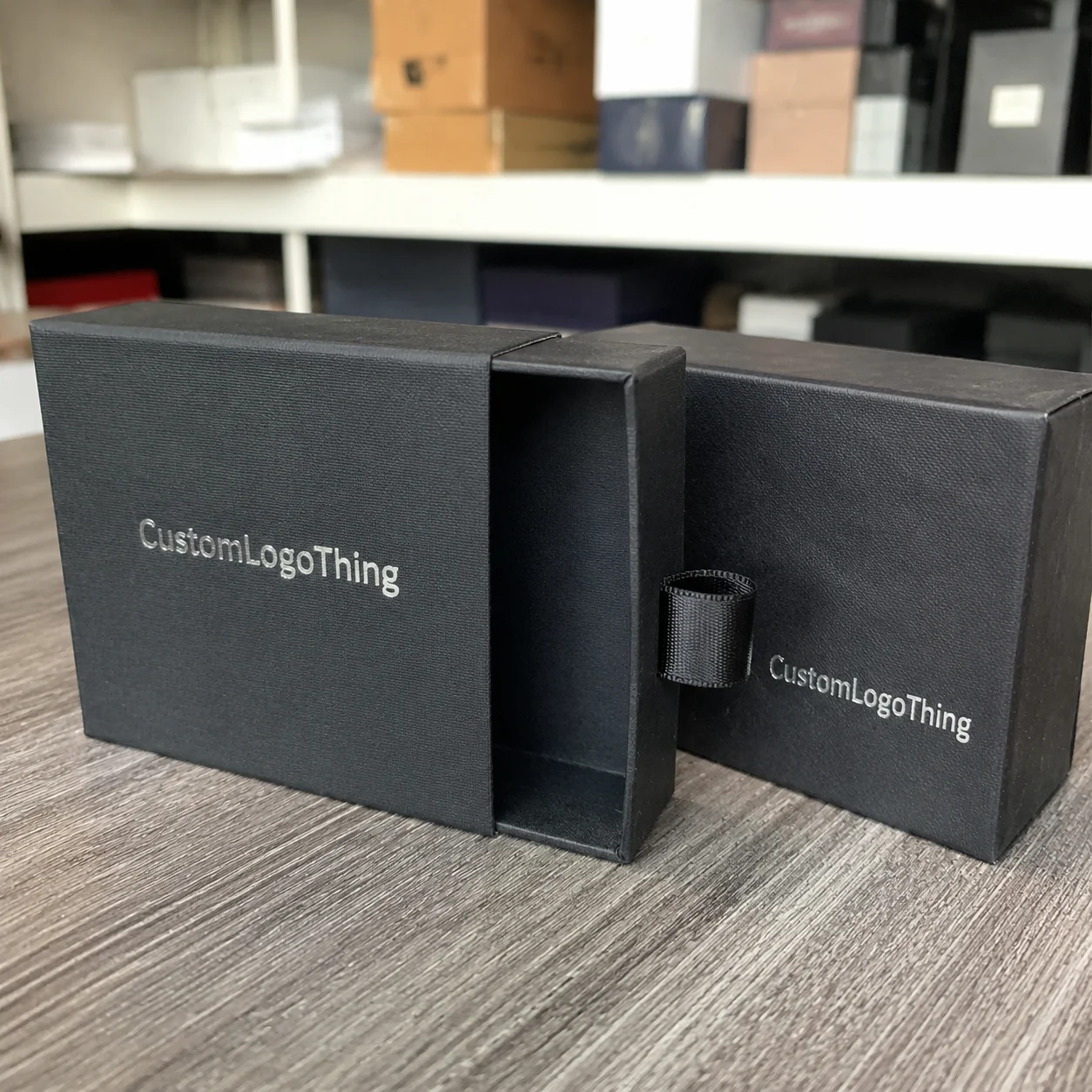
One-piece constructions are common when buyers want a cleaner build and a lower assembly count. Two-piece lid-over-base formats are also popular because they preserve the classic gift-box silhouette. If you want a more elevated feel, the ribbon can pass through side slits, wrap around the box vertically, or form a bow on the top panel. I’ve seen brands choose the bow placement purely for photography. That is not vanity. It is retail packaging strategy. The camera doesn’t care about your feelings; it cares about composition and whether the 20 mm grosgrain ribbon sits centered.
Customization runs deeper than the ribbon color. With custom ribbon closure gift boxes wholesale, buyers can usually specify:
- Box size to fit the product with 2-5 mm tolerance on each side, depending on inserts and tissue.
- Board thickness such as 1.5 mm, 2 mm, or 3 mm chipboard for rigid construction.
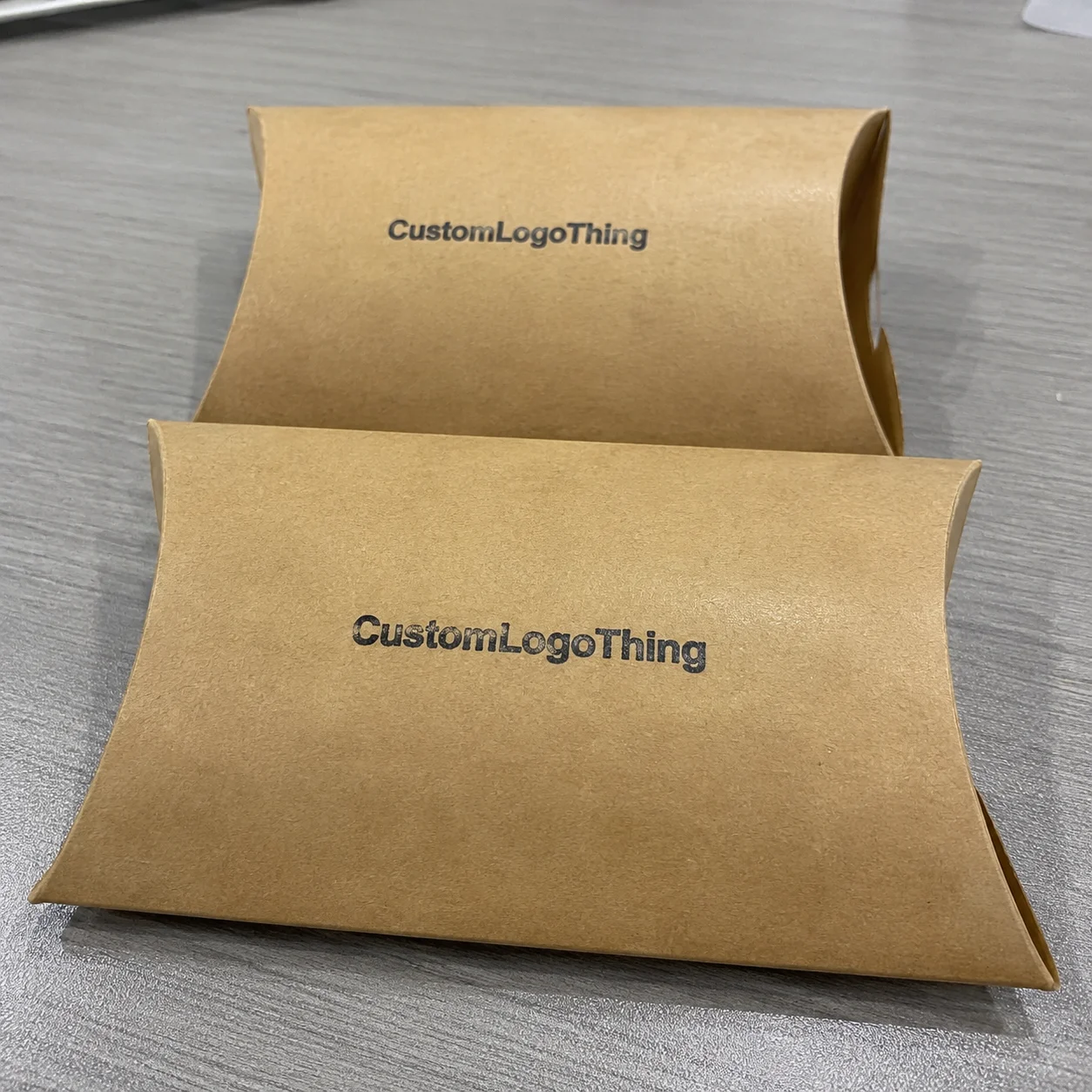
- Wrap material including coated art paper, kraft paper, textured stock, or specialty paper.
- Print method such as CMYK, PMS spot color, foil stamping, embossing, debossing, and spot UV.
- Ribbon material like polyester satin, grosgrain, cotton, organza, or custom woven ribbon.
- Insert type including EVA, paperboard, molded pulp, or foam-free paper trays.
The ribbon itself is not a minor detail. Widths of 10 mm, 15 mm, and 20 mm are common, and each one changes the visual weight of the box. A 10 mm ribbon can feel delicate for jewelry. A 20 mm grosgrain ribbon can feel more assertive for apparel accessories or corporate gifting. I usually advise buyers to match ribbon texture to the product category. Soft-touch lamination plus satin ribbon reads elegant. Kraft wrap plus cotton ribbon reads natural and honest. That is packaging design doing real work, not just looking pretty in a PDF.
There is also the matter of inner presentation. A box can look beautiful externally and fail internally if the product shifts. For candles, inserts often need a snug cavity and a finger cut-out. For jewelry, the insert may need a flocked surface or a paperboard nest. For cosmetics, tube and jar combinations may require dual-density compartments. Good custom printed boxes are never just printed; they are engineered for fit and tested against the actual product at least 3 times during sampling.
In a meeting with a candle brand in Hangzhou last spring, the buyer showed me three sample boxes. The most expensive sample looked polished, but the jar moved 8 mm inside the cavity during shipping simulation. The cheapest sample looked simpler, yet it held the product correctly. The buyer chose the simpler build and saved on replacements later. That is the kind of decision that separates attractive packaging from effective product packaging. I’ll take a boring box that works over a fancy one that breaks any day.
For brands that want to coordinate box and ribbon colors closely, the spec should include PMS references and a physical swatch when possible. A screen mockup is not enough. I’ve seen a “deep burgundy” ribbon arrive looking more like plum because the supplier worked from a JPEG, and the whole 2,000-piece batch had to be rechecked on the line. That sort of mismatch is avoidable. Good procurement teams document everything. A little paperwork beats a warehouse full of “close enough” boxes. I wish that wasn’t true, but here we are.
What Should You Check Before Ordering Custom Ribbon Closure Gift Boxes Wholesale?
Before you place an order for custom ribbon closure gift boxes wholesale, start with the structural specs. Dimensions come first: length, width, and height in millimeters or inches. Then board thickness. Then wrap paper weight. If you skip these basics, the quote may look attractive and still be wrong. A 120 mm x 120 mm x 60 mm box is not the same thing as a 130 mm x 130 mm x 70 mm box, even if the mockup on your screen says otherwise.
Here is the order I recommend, based on how many quoting errors I’ve seen on factory floors in Shenzhen and Dongguan:
- Product dimensions with allowance for insert thickness and clearance.
- Box structure such as one-piece, two-piece, drawer-style, or lid-over-base.
- Board grade and thickness, often 1.5 mm to 3 mm for rigid boxes.
- Paper wrap with finish choice and print requirements.
- Ribbon specification including width, material, weave, and color.
- Insert type for protection and display.
- Artwork format and brand color standards.
For print and finish, ask for the actual method. CMYK printing, PMS matching, matte lamination, gloss lamination, and soft-touch coating do not behave the same way. Soft-touch on a black wrap can look expensive, but it also shows scuffs differently from gloss. Foil stamping can add sharp contrast, yet too much foil can make a box look crowded. I’ve seen buyers over-specify the finish and then wonder why the package feels busy. Less can be more, especially in premium packaging. Nobody needs a box that screams “I had too many options and no self-control.”
When you specify ribbon closure details for custom ribbon closure gift boxes wholesale, include:
- Ribbon length per box
- Ribbon width tolerance
- Stitching or heat-cut edge preference
- Knot style or bow style
- Attachment point location
- Color standard or physical sample reference
Durability matters too. A ribbon should not loosen after the box is opened and reclosed once or twice. If the package is designed for gifting, the closure must survive retail handling, warehouse stacking, and transit vibration. In transit testing, I like to see box compression checks and shake tests aligned to the product’s shipping profile. For more formal validation, buyers can reference standards and methods from organizations like the International Safe Transit Association and ASTM-related testing practices. A good supplier in Guangzhou or Ningbo should be able to walk you through that without blinking.
Compression resistance is especially relevant when boxes ship nested or flat-packed. If the outer cartons are too tight, the ribbon can crease. If they are too loose, box corners may crush. Quality control should include sample approval, color tolerance checks, and a packed-carton inspection before the run moves to mass production. I’ve walked into too many packing rooms where the sample looked perfect and the packed carton looked rushed. That gap is expensive, and it usually shows up as a return rate of 1% to 3% if nobody catches it.
One more practical point: compliance. If the box will be used for retail packaging in regulated categories, ask whether the inks, board, or coatings need specific declarations. For sustainability claims, suppliers should be able to discuss FSC-certified paper options. You can verify chain-of-custody and sourcing guidance through FSC. Buyers who ask these questions early avoid late-stage documentation problems, especially when the shipment is going into the EU or California.
Pricing, MOQ, and Wholesale Cost Drivers
custom ribbon closure gift boxes wholesale pricing depends on several moving parts, and the biggest mistake I see is judging a quote by unit price alone. That is a shortcut. It hides sampling, freight, tooling, and insert costs. A quote that looks cheap on paper can become expensive after it lands at your warehouse in California, Texas, or Rotterdam. I’ve watched teams celebrate a low quote and then stare at the freight bill like it personally offended them.
The main price drivers are straightforward:
- Material grade — 1.5 mm chipboard costs less than 3 mm board.
- Box size — larger formats use more wrap paper and take longer to assemble.
- Print complexity — one-color print costs less than full-wrap CMYK plus foil.
- Finish type — matte lamination is often cheaper than soft-touch or specialty coatings.
- Insert style — paperboard trays typically cost less than EVA or molded structures.
- Ribbon customization — stock ribbon is cheaper than custom woven or color-matched ribbon.
For a practical framework, I usually separate custom ribbon closure gift boxes wholesale into three buying tiers:
| Buying tier | Typical quantity | Common use | General price behavior |
|---|---|---|---|
| Small run wholesale | 300-1,000 units | Launches, sampling, limited editions | Higher per-unit cost due to setup and labor |
| Mid-volume wholesale | 1,000-5,000 units | Seasonal programs, repeat retail orders | Better unit economics and more room for customization |
| Large-volume production | 5,000+ units | National rollouts, corporate gifting, annual programs | Lowest per-unit cost if specs stay stable |
I’ve seen a 1,000-unit order land around $1.80 to $3.80 per unit depending on ribbon, insert, and print complexity, while 5,000-unit runs can drop to $0.98 to $2.10 per unit when the spec is stable and the artwork does not require multiple revisions. For very simple builds, some factories in Guangdong will quote $0.15 per unit for 5,000 pieces on the ribbon component alone, but that does not include the rigid box, wrap paper, or assembly. These are indicative ranges, not promises. Freight, material market movement, and structure changes can swing pricing fast. Buyers should always request itemized quotes.
MOQ is tied to production economics. Rigid boxes need board cutting, wrap die lines, assembly labor, and quality checks. If ribbon color is custom-dyed, the minimum can rise. If inserts are custom-cut, it can rise again. That is why a supplier may quote 500 units for a simple format and 1,000 or 2,000 units for a more complex one. It is not a sales tactic by default. Often it is the reality of setup time in a factory near Shenzhen or Xiamen.
Hidden costs deserve attention. Sampling may be billed separately, often at $25 to $60 per sample depending on complexity. Tooling may be charged for special inserts or unusual window shapes. Freight can exceed the box cost if the order is small and air shipping is required. Rush production usually adds a fee, and that fee can be more painful than the buyer expects. I’ve watched teams save $0.12 per unit on packaging and then spend three times that in expedited freight because the plan changed late.
If you want cleaner budgeting, ask for three price points: landed sample cost, unit price at your target quantity, and unit price at the next volume tier. Also ask whether the quote includes outer cartons, master packing, and palletization. Procurement teams that work through Wholesale Programs usually ask for these details up front, because it makes comparison easier and reduces surprises later.
Here is the buying advice I give clients in plain language: compare true landed cost, not just the factory quote. If one supplier includes a better insert and clearer packing method, that may be the better deal even if the unit price is slightly higher. Packaging is a system. The cheapest box is not always the cheapest program, especially when the reprint cost in month two is $2,000 and the launch window is already tight.
Process and Timeline for Wholesale Orders
The order flow for custom ribbon closure gift boxes wholesale is usually predictable when the buyer is organized. It starts with inquiry, then specification review, dieline confirmation, sample production, approval, mass production, and shipping. The timeline depends on how quickly the brand answers questions and how many revisions happen between stages. A clean spec sheet can save 2 to 4 business days right out of the gate.
In a recent supplier meeting in Dongguan, a buyer lost eight business days because the logo file was sent as a low-resolution PNG instead of a vector PDF. The factory could still make it work, but the cleanup delayed proofing. That kind of delay is avoidable. Another client changed box depth after sample approval, which triggered a new insert cut and reset the packing plan. Small change, big time cost. The production team did not scream, but I could feel the pain across the table.
For simple custom ribbon closure gift boxes wholesale orders with standard wrap paper, straightforward printing, and stock ribbon, a realistic lead time is typically 12 to 15 business days from proof approval. For more complex rigid boxes with special finishes, inserts, and custom ribbon matching, 18 to 30 business days is more typical. Add shipping time on top of that. International freight can take 5 to 18 days by air and 20 to 35 days by sea, depending on route and season. Domestic delivery is faster, but not always cheap.
Delays usually happen in the same places:
- Artwork revisions after proof review
- Size changes after sample approval
- Finish adjustments, especially on foil or soft-touch
- Late feedback on ribbon color or insert shape
- Freight booking delays near peak shipping periods
Buyers can speed production by finalizing dimensions early and sending clean files. A vector logo, a Pantone reference, and a product dimension sheet save time. So does a clear decision on inserts. If the product can move inside the box by even 5 mm, tell the supplier immediately. That affects die-cutting and closure placement. Good packaging design is not only visual. It is dimensional, and that includes whether the ribbon anchor lands 18 mm from the top edge or 22 mm.
Shipping should be specified early as well. Ask how boxes are packed inside outer cartons. Ask whether cartons are palletized. Ask what the outer carton label includes. If the order is going overseas, confirm the HS code, carton count, and estimated cubic meter volume. Those details matter because rigid packaging is bulky, and air freight can punish poor planning. I’ve seen perfectly designed boxes turn into budget headaches because no one calculated volume properly. That’s the sort of oversight that makes people suddenly very interested in spreadsheets.
For buyers concerned with sustainability or material sourcing, request paper certification and packaging waste details. The EPA provides useful guidance on packaging and waste reduction practices at epa.gov, and while that page is broader than gift boxes, it reflects the same basic logic: fewer unnecessary materials, smarter packing, less waste. That principle applies directly to retail packaging and branded packaging programs from New York to Munich.
The fastest orders are usually the ones with the simplest decision tree. Pick the structure, confirm the ribbon, approve the artwork, and hold the line on scope. Every extra revision adds time. Every open question adds risk. That is the reality behind custom ribbon closure gift boxes wholesale, and it does not care how busy your launch calendar is.
Why Choose Us for Custom Ribbon Closure Gift Boxes Wholesale
At Custom Logo Things, we approach custom ribbon closure gift boxes wholesale the way procurement teams like it best: with clear specs, repeatable quality, and direct communication. I’ve seen too many packaging suppliers hide behind vague wording. “Premium quality” is not a spec. “2 mm greyboard, 157gsm art paper wrap, PMS 185 ribbon, and EVA insert with 3 mm tolerance” is a spec. That is the level of detail that reduces mistakes and keeps a 3,000-piece run from turning into a headache.
Our strength is structure control. We work on custom printed boxes with multiple finish options, from matte and gloss lamination to foil stamping, embossing, debossing, and spot UV. We also support ribbon match options that align with brand palettes instead of forcing buyers into stock colors. When a brand wants package branding that feels deliberate, that matters. A matte black box with a 15 mm gold satin ribbon in a Paris showroom looks very different from the same box with an orange stock tie.
From a service perspective, what buyers often value most is predictability. Sample approval should be clear. Production checks should be documented. Reorders should not require starting from zero. If a procurement manager can open a file and see exact dimensions, insert notes, ribbon type, carton count, and the last approved proof, the next purchase is faster and less risky. That is not hype. That is operational hygiene, and it saves real money when repeat orders land every quarter.
In one client meeting, a luxury candle brand in Los Angeles told me the real win was not the box itself. It was the fact that their team could reorder with confidence because the spec sheet matched the delivered product. That reduced back-and-forth by half. For recurring custom ribbon closure gift boxes wholesale programs, that kind of documentation is worth real money. Nobody wants to re-litigate the position of a ribbon slit on the third order.
We also understand that different sectors need different packaging behavior. Jewelry may need a smaller, more delicate build. Cosmetics may need insert precision for jars and tubes. Apparel accessories may need broader dimensions and stronger stacking performance. We tailor the packaging design to the product rather than pushing a one-size-fits-all format. That means the structure, closure, and insert are chosen around the actual item, not around whatever happened to be convenient in the factory that week.
“The best wholesale packaging supplier is the one that makes your second order easier than your first.”
I believe that. Strong production on the first order is good. Faster reordering with fewer revisions is better. That is why custom ribbon closure gift boxes wholesale should be evaluated on documentation, sampling discipline, and communication speed, not just a pretty mockup from a sales rep in a hurry.
How to Order Custom Ribbon Closure Gift Boxes Wholesale
If you are ready to source custom ribbon closure gift boxes wholesale, start with the product, not the packaging. Measure the item you need to fit. Include its widest point, tallest point, and any fragile appendages like pump tops, hooks, or clasps. Then decide whether the box should hold the item snugly or include breathing room for tissue, inserts, or a card. A lipstick set and a candle duo do not deserve the same cavity size, and pretending otherwise wastes time.
Here is the cleanest path:
- Measure the product accurately in millimeters.
- Choose the structure you want: lid-over-base, one-piece, or another rigid format.
- Select ribbon style, width, and color reference.
- Decide on finish: matte, gloss, soft-touch, foil, emboss, or a combination.
- Determine insert needs for protection and display.
- Prepare artwork in vector format with brand colors noted.
- Request a quoted ladder for multiple quantities.
When you ask for a quote, request these five items at minimum: MOQ, unit price at three volume levels, sampling cost, lead time, and freight estimate. If you want a useful comparison, ask for the quote to show what changes at 1,000, 3,000, and 5,000 units. That gives you a real view of unit economics. A single number does not, and it usually hides the ugly parts.
What should you send to get the fastest response? Product photos, dimensions, logo files, target quantity, intended use case, and any reference samples. If you already know you need a foil logo, say so. If the box must fit an insert, say that too. If the ribbon should match a Pantone shade, give the reference. Specific input creates specific output, and it keeps the sampling room in Guangdong from guessing.
Before you approve anything, run through this final checklist:
- Does the box size fit the product with the right tolerance?
- Does the ribbon color match the brand palette under daylight?
- Does the insert hold the product without movement?
- Is the finish appropriate for the sales channel?
- Is the shipping method aligned with your delivery window?
- Do the quote and sample match the same spec?
If the answer to those questions is yes, you are close to a solid procurement decision. If not, slow down. A rushed order can cost more than a careful one, especially when it involves rigid packaging, specialty ribbon, and custom printed boxes that have to arrive on time for a launch or holiday program in October or November.
For buyers managing repeat packaging programs, the smartest next step is to ask for a tailored spec review and a volume-based quote. That gives you a realistic view of structure, cost, and timeline before you commit. If you are comparing suppliers, ask for the same exact build from each one so the numbers mean something. Comparing a 1.5 mm board box to a 2 mm board box and calling it an apples-to-apples quote is how teams end up annoyed for a living.
If your brand needs premium presentation, repeatable quality, and wholesale economics that make sense, custom ribbon closure gift boxes wholesale is a strong place to start. Send your dimensions, logo files, quantity target, and ribbon preference to Custom Logo Things, and request a quote that reflects the actual box you need, not a generic sample pulled from a shelf in Shenzhen.
What is the typical MOQ for custom ribbon closure gift boxes wholesale?
MOQ usually depends on the box size, structure, and printing complexity. For simple rigid formats in Guangdong, you may see 300 to 500 units, while more complex builds with custom inserts or matched ribbon often start at 1,000 units. Ask for tiered MOQ options if you need to balance cash flow and inventory risk.
How much do custom ribbon closure gift boxes wholesale usually cost?
Cost depends on materials, finish, insert type, ribbon customization, and order volume. Lower quantities generally have a higher per-unit price, while 5,000-piece runs can drop close to $0.98 to $2.10 per unit for the full box depending on spec. Request itemized quotes to compare true landed cost, including freight and sampling.
How long does production take for custom ribbon closure gift boxes wholesale orders?
Timeline depends on approval speed, design complexity, and finishing requirements. For standard builds, production is typically 12 to 15 business days from proof approval, while more complex orders can take 18 to 30 business days. Sample production comes before mass production and can affect the overall schedule.
Can I customize the ribbon color and box insert for my brand?
Yes, ribbon color, width, and material can usually be matched to brand requirements. Inserts can be customized for product fit, protection, and presentation, whether you need EVA, molded pulp, or paperboard. Share product dimensions and brand colors early to improve accuracy.
What should I prepare before requesting a quote for custom ribbon closure gift boxes wholesale?
Prepare product dimensions, target quantity, preferred box style, and artwork files. Include finish preferences, ribbon requirements, and whether inserts are needed. If possible, send Pantone references, sample photos, and your target delivery month so pricing and lead time are more accurate.