What custom scratch off stickers are and why brands use them
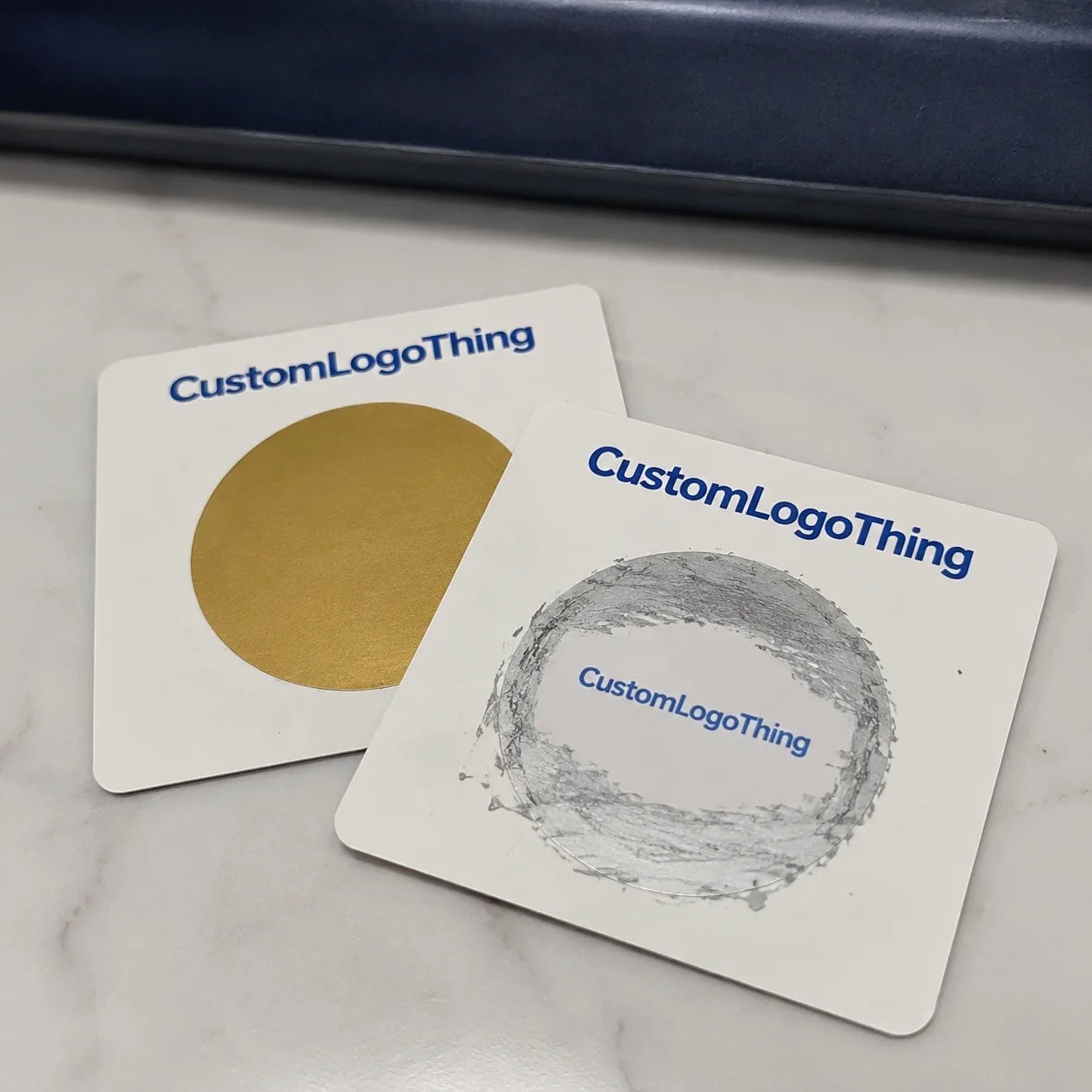
If you have ever seen a promo label hiding a coupon code, a product seal concealing a serial number, or a mailer that reveals a prize after a quick scratch, you already understand the basic appeal of Custom Scratch Off Stickers. They look ordinary at first glance, then create a small moment of discovery that printed inserts rarely match. That moment is the point.
These stickers are built with a printed face, an adhesive layer, and an opaque scratch-off coating over the hidden area. Under that coating sits text, a code, a symbol, or a short message that stays concealed until the user removes the top layer. In practice, that makes them part packaging feature, part promotion tool, and part security device.
Brands use them for giveaways, loyalty programs, contest entries, onboarding inserts, product authentication, and direct mail campaigns. They also appear in retail packaging where a reveal needs to feel intentional rather than decorative. A scratch-off element can lift engagement without forcing a full redesign of the package structure.
From a buyer’s point of view, the real value is utility. A good label can protect sensitive information, trigger a customer action, or support a campaign mechanic while still fitting within existing packaging art. It is a small format with a fairly wide range of uses.
There is also a tactile advantage. A reveal that requires one physical action feels more personal than a static insert. That does not guarantee better results, but it does mean the customer participates instead of just reading. For many campaigns, that difference matters.
Practical rule: if the hidden message needs to prompt a response, not just deliver information, the scratch-off format earns its place.
How the scratch-off layer works on press and in use
The construction is straightforward, but the details are where quality gets decided. Most custom scratch off stickers use a face stock, printed artwork, adhesive, and a removable opaque coating over the hidden content. The concealed area is printed beneath that layer, usually in a strong contrasting color so the reveal reads cleanly once exposed.
When the customer scratches the surface with a coin, fingernail, or similar object, the coating flakes away or rolls off in small pieces. The user then sees the code, icon, QR cue, or message underneath. How satisfying that feels depends on the coating thickness, adhesion balance, and surface finish. Too thin, and the hidden content can show through early. Too stubborn, and the reveal turns into a chore.
Substrate choice changes the outcome more than many first-time buyers expect. Paper stocks are usually the most economical and work well for short-term campaigns, mailers, and inserts. Vinyl and other synthetic materials handle moisture and abrasion better, which matters for bottle labels, shipping applications, or packaging that gets handled repeatedly. Coated paper can improve print sharpness, but it also affects how the scratch layer bonds. Sample testing is worth doing before any full run.
Variable data is another important feature. A run can include unique codes, serial numbers, PINs, or personalized messages printed under the coating. That makes the format useful for validation systems, limited promotions, and controlled campaigns where each piece needs a different outcome. If the campaign relies on a one-time reveal, the data structure needs to be sorted before production starts, not after.
The best jobs balance concealment and ease of use. The coating should hide the content completely, but it should still release cleanly and quickly. If the customer has to scrape for twenty seconds, the experience feels less like a reveal and more like a snag in the process.
Key specs that affect performance, cost, and buyer satisfaction
Size is usually the first spec buyers look at, but it is only one part of the decision. A larger sticker gives more room for branding, instructions, and a readable reveal area. It also uses more material and can increase waste during cutting, so the cost rises in a predictable way. A small round sticker may be enough for a simple promo code. A larger rectangle makes more sense if the hidden content includes a message, a QR code, and a brand lockup.
Material choice is the next major decision. Paper is often the lowest-cost option and works well when the sticker lives briefly on a box, card, or envelope. Synthetic stocks are more suitable when the surface may flex, get wet, or travel through a longer distribution chain. If the sticker has to survive handling and still look clean at the end of that journey, the surface choice matters more than the print file.
Finish changes both appearance and the scratch experience. Matte stocks can feel more restrained and premium on some branded packaging applications. Gloss makes colors pop, especially next to custom printed boxes or other high-impact retail packaging. Specialty finishes can improve shelf appeal, but they also change how the scratch layer behaves under use. A nicer surface is not an advantage if it undermines the reveal.
Coverage area also affects both cost and usability. A full scratch panel hides more information, but it uses more coating and adds setup work. A smaller reveal window reduces material use and can feel cleaner when the hidden content is short. Quantity, setup complexity, color count, and serialized data all influence the final unit price. More setup generally means more cost, which is normal across print work and not unique to this format.
| Spec choice | Best for | Typical tradeoff | Indicative impact on cost |
|---|---|---|---|
| Paper stock | Short-term promos, mailers, inserts | Lower durability | Lowest |
| Vinyl or synthetic stock | Handling, moisture, longer shelf life | Higher material cost | Moderate |
| Partial scratch window | Short codes, simple reveals | Less room for messaging | Lower to moderate |
| Full-cover scratch area | Multiple codes, prize reveals, privacy | More coating and setup | Higher |
| Variable data printing | Unique PINs, serialization, validation | More prepress control | Higher |
One more practical point: if you are comparing custom scratch off stickers with other package branding elements, choose function first. A premium-looking label is nice. A label that helps redeem a reward, confirm authenticity, or move a customer to the next step is usually the stronger buy.
Process and timeline: from artwork approval to delivery
The production flow is simple on paper and a little less simple in practice. It usually starts with concept and copy, then moves to artwork setup, proofing, print production, coating application, cutting, and packing. If the order includes variable data or a custom die shape, prepress often takes longer than the press run. That surprises buyers more often than it should.
Proofing matters because the hidden content cannot be checked after the coating is applied. You need to confirm alignment, scratch zone placement, barcode legibility if one is included, and the relationship between the visible artwork and the concealed area. A one-millimeter shift may not sound serious, but on a small reveal label it can be the difference between crisp and clumsy.
Lead time depends on the complexity of the job. A standard run with straightforward artwork and no unique codes may move relatively quickly once approved. Custom shapes, serialized data, specialty materials, and extra proof rounds can add several business days. In many cases, the real delay is not the press schedule but the approval cycle.
Build time into the rest of the packaging workflow as well. If the stickers have to be inserted into kits, paired with a coupon card, or applied to custom printed boxes before fulfillment, the schedule should include receiving and kitting time. Printing is only one step in the chain; the product still needs to be sorted, packed, and moved into circulation.
Planning tip: approval delays usually hurt more than press time, so lock the hidden content early.
For brands that reuse a packaging system across multiple launches, a simple proof checklist helps. It keeps code format, reveal placement, and quantity aligned from one order to the next, which saves time and reduces rework.
Pricing, MOQ, and how to compare quotes
Pricing for custom scratch off stickers follows the same basic logic as most print quotes, but the scratch layer adds a few more variables. Size, stock choice, print complexity, coating coverage, quantity, and variable data all move the number. Rush production, custom dies, and code processing can add more. That is why two quotes that look similar at a glance can land in different places once the actual specs are compared.
MOQ, or minimum order quantity, is where many buyers make their first tradeoff. A smaller run lowers risk, which is useful for pilots, seasonal campaigns, and test drops. The downside is that setup cost gets spread across fewer pieces, so the unit price rises. Larger runs usually improve unit economics, but only if the volume is real. Overstocking a promo label is not a savings strategy if the campaign ends before the stock does.
When comparing quotes, keep the discussion specific. Confirm dimensions, adhesive type, finish, quantity, whether proofs are included, and whether the supplier charges separately for variable data or special cutting. If one price is lower but excludes code setup or proof revisions, it is not truly lower. It is simply incomplete.
Buyers often see pricing quoted as a function of order size and complexity rather than one flat number. That is normal. A simple 5,000-piece run on paper stock will not price the same as a serialized vinyl job with a custom die. For branded packaging or promotional use, the right spec is the one that meets the need without paying for features nobody will notice.
Here is a practical comparison framework:
| What to compare | Ask the supplier | Why it matters |
|---|---|---|
| Dimensions | Exact width, height, and die shape | Affects layout, waste, and fit |
| Adhesive | Permanent, removable, or surface-specific | Determines how the sticker performs on the final package |
| Coating area | Full-cover or partial reveal | Impacts concealment and cost |
| Variable data | Serialized, random, or repeated codes | Changes prepress complexity |
| Proofing | Included or billed separately | Avoids surprise charges |
There is a quiet buying principle here: choose the spec that fits the application, not the one that sounds most premium. That applies to scratch-off labels and to most packaging design decisions.
Step-by-step ordering guide for first-time buyers
Start with the reveal itself. What needs to stay hidden? A prize code, validation number, private message, coupon, or instruction all lead to slightly different layouts. The more specific the goal, the easier the rest of the job becomes. A clear purpose also helps the sticker match the mechanics of the campaign.
Next, define the environment. Will the sticker live on an inner carton, a shipping label, a retail display card, or a product that stays in circulation for weeks? Indoor packaging is very different from long-term product use. The surface, handling, and exposure level determine the stock and adhesive choice.
After that, match the material to the job. Paper is usually fine for short-term promotions and mailers. Vinyl or a tougher synthetic stock makes more sense if moisture, friction, or repeated handling is part of the plan. If the sticker has to sit on a retail packaging surface and still look clean after transit, do not choose a stock only because it is cheaper.
Then build the artwork with a clear hierarchy. The eye should read the brand first, then the instruction, then the scratch area, then the hidden content once revealed. If everything competes for attention, the sticker looks busy and the customer hesitates. Good packaging usually feels obvious in a few seconds.
- Define the reveal and the action it should trigger.
- Choose the surface and expected handling conditions.
- Select the stock, adhesive, and finish.
- Set the size, shape, and scratch zone.
- Prepare artwork with the hidden content clearly separated.
- Review a proof for alignment, code format, and quantity.
Finally, request a proof and treat it as a production gate, not a formality. Confirm dimensions, color treatment, coating placement, numbering, and final quantity before approval. If the order includes multiple codes or personalized text, review a sample of the data file as well. That extra check can prevent a costly reprint.
Common mistakes that waste budget or weaken the reveal
The most common mistake is making the reveal area too small. Hidden text, serial numbers, and codes need breathing room. If the reveal is cramped, the scratched result feels messy and the customer may misread it. That becomes a real problem when the hidden message contains a redemption code that has to be entered manually.
Another issue is the coating itself. Some coatings scratch too easily and can be damaged in transit. Others are too stubborn and frustrate the user. The right balance depends on the audience, the application, and the amount of protection the piece needs. There is no single setting that works for every campaign.
Contrast is another quiet failure point. If the hidden content does not stand out against the base print, the reveal is technically visible but functionally weak. In the same way that weak contrast hurts packaging readability, it also reduces the impact of the scratch-off moment. Clear black-on-white or similarly strong pairings usually perform better than delicate, low-contrast combinations.
Testing on the actual surface is easy to skip and hard to forgive later. A sticker that behaves perfectly on a sample card may lift, wrinkle, or feather on the final package. That is why surface testing should happen before full production, not after the campaign launches. Skipping proof checks on variable data, alignment, or scratch placement is the last common trap, and it is the one that usually costs the most.
Practical tips before you place an order
Test one sample on the final surface and under real handling conditions before committing to the full run. If the sticker has to adhere to coated paperboard, flexible film, or a textured package surface, the sample should match that reality. Lab-perfect samples are useful, but they do not replace the final substrate.
Keep the hidden message short and high-contrast. A tight reveal feels satisfying because the customer gets the answer immediately. Long sentences, tiny type, and decorative fonts all reduce clarity. If the scratch-off moment is tied to a measurable action such as scanning, redeeming, or registering, simplicity usually wins.
Ask for a quote using the same specs you plan to approve. If one quote is based on paper and another on synthetic stock, or if one includes serialized data while another does not, the comparison is not useful. Comparable specs produce comparable answers. That holds true whether you are buying labels, inserts, or custom scratch off stickers.
If the project has an environmental or compliance angle, you can cross-check broader material and sourcing standards through organizations like the FSC or review packaging guidance through the Packaging Association. For disposal and shipping considerations, the EPA is a reliable general reference. Those sources will not define your sticker construction, but they help frame the bigger material conversation.
Before production, lock five things: artwork, quantity, lead time, code format, and application method. If those are clear, the order is usually straightforward. If they are fuzzy, the schedule and budget both tend to drift.
FAQ
What are custom scratch off stickers used for?
They hide a message, code, prize, or instruction until the user scratches the coating away. Brands use them for promotions, authentication, giveaways, loyalty campaigns, and direct mail engagement.
How long do custom scratch off stickers take to produce?
Timeline depends on artwork approval, quantity, coating complexity, and whether variable data is involved. Simple orders usually move faster; custom shapes, serialized codes, or revisions add extra lead time.
What affects the cost of custom scratch off stickers most?
The biggest drivers are size, material, quantity, print complexity, and scratch-off coverage area. Rush production, special cutting, and variable data can also raise the final quote.
What file details should I prepare before requesting a quote?
Provide dimensions, artwork, hidden content, quantity, desired finish, and any code or numbering requirements. Include the intended application surface so the supplier can recommend the right adhesive and stock.
Can custom scratch off stickers be made for small orders?
Yes, but smaller quantities usually have a higher per-unit cost because setup is spread across fewer stickers. Small runs are useful for testing campaigns, limited promotions, and pilot programs before scaling up.
If you treat custom scratch off stickers as a packaging tool rather than a gimmick, the buying decision gets much easier. Match the stock to the surface, keep the reveal clear, and verify the proof carefully. That is usually how you get a result that feels useful, looks polished, and earns its place in the package.

