Custom Self Adhesive Labels for Clothing Brands
Apparel teams use custom self adhesive labels for a simple reason: they solve a packing problem without creating another sewing or trim step. On a busy line, that matters. A label that can be applied after folding and inspection saves handling time, keeps sizes and codes visible, and gives the final parcel a cleaner retail feel.
The best use cases are usually not the ones buyers picture first. These labels are often doing the unglamorous work: marking samples, identifying sizes, separating bundles, labeling poly bags, carrying barcodes, or helping a return process run without confusion. They are less about decoration than control. That said, they can still carry brand color, typography, and a quiet premium look when the packaging system needs it.
The mistake is treating every adhesive label as interchangeable. Surface, adhesive, finish, and removal behavior all change the result. A label that behaves well on a coated card insert can fail on textured fabric. A stock that looks excellent in a proof can leave residue if the adhesive is too aggressive for the surface. For apparel buyers, the label is only successful if it fits the material, the packing rhythm, and the length of time it needs to stay in place.
Why Apparel Teams Reach for Removable Labeling
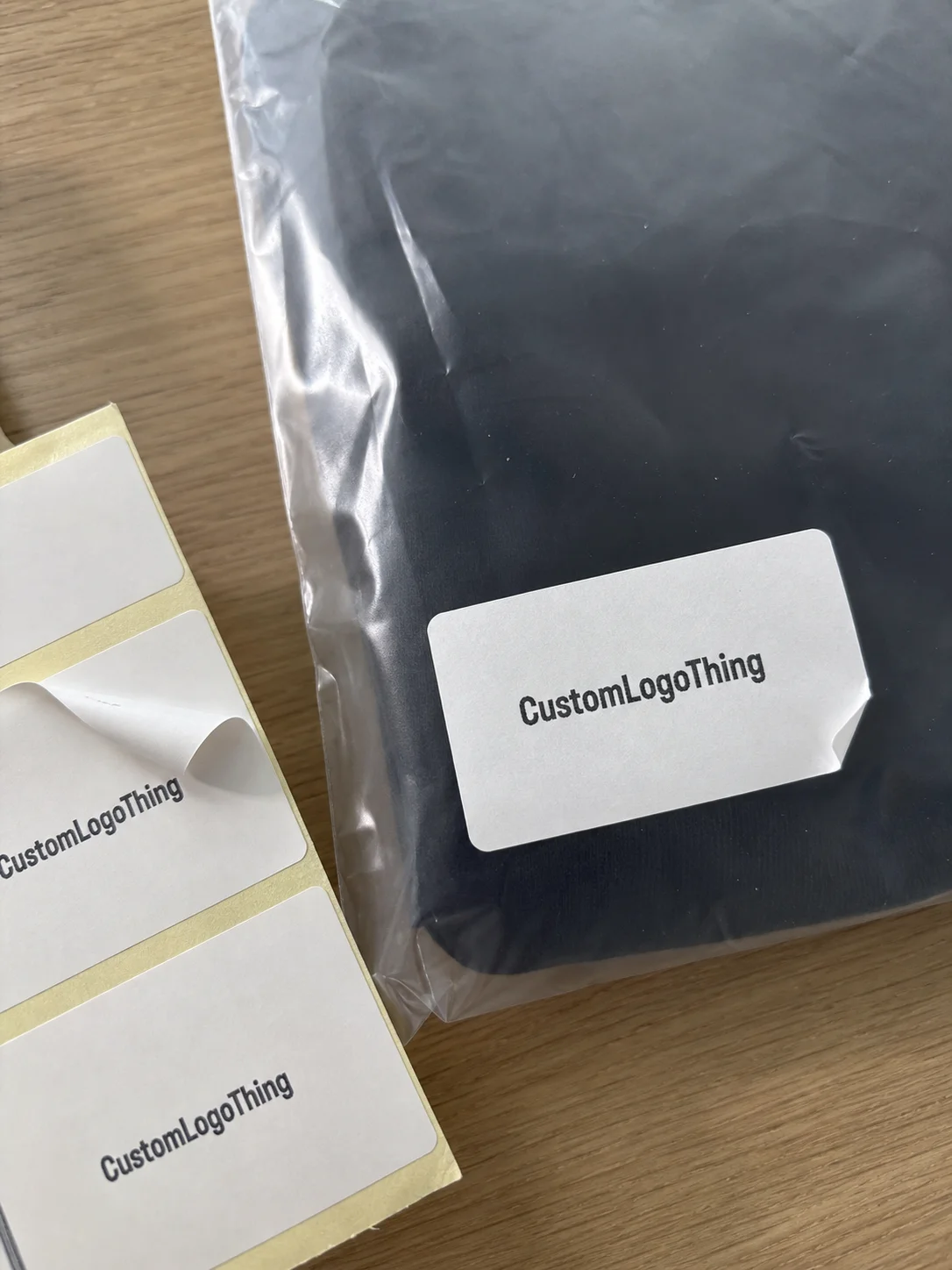
Some garment operations still default to sewn-in labels for anything that feels permanent. That is sensible for care information, fiber content, and brand identity inside the garment. But many day-to-day jobs do not need permanent attachment. Sample management, retail packing, e-commerce sorting, and warehouse identification all benefit from a label that can be applied late in the process and removed cleanly if required.
That late-stage application is the real operational advantage. The packing team can fold, bag, inspect, and label in one flow instead of sending garments through a separate trim or stitching step. For seasonal drops or short-run launches, that can shorten turnaround without changing the product itself. It also reduces the chance that the wrong label version gets attached before a final check.
There are three common functions to separate before ordering:
- Decorative - brand presentation on packaging, tissue, swing tag backs, or retail bags.
- Informational - size, care notes, SKU numbers, price, or barcode data.
- Operational - bundle IDs, carton marks, fulfillment notes, or return handling instructions.
The surface determines how forgiving the label will be. Smooth poly bags are usually the easiest. Coated paper inserts and swing tag cards are manageable. Actual fabric is a different story. Weave, nap, stretch, coating, and lint all affect adhesion. If a label must touch cloth, test it on the exact fabric blend, not on a similar piece from the sample bin.
For brands that already order Custom Labels & Tags and Custom Packaging Products, adhesive labels often bridge the gap between garment identification and final package presentation. They can keep the branding consistent while the product moves through different stages of packing and shipping.
Custom Self Adhesive Labels: How They Work
A self adhesive label has three parts: the face stock, the adhesive, and the liner. The face stock is the printable surface. The adhesive does the holding. The liner protects the adhesive until application and affects how smoothly labels dispense on a bench or packing line.
That structure sounds straightforward, but each layer changes performance. Coated paper prints sharply and keeps costs down. Synthetic film stands up better to moisture, handling, and scuffing. A removable adhesive can be the right choice for packaging or temporary garment marking, but the same adhesive may be too weak for a slick poly bag or too strong for a delicate textile surface. A stronger bond is not automatically better.
Apparel surfaces behave differently from office-label surfaces. Poly bags, tissue wraps, and coated tag stock are predictable enough to spec with confidence. Finished fabric is harder because the bond changes with weave, finish, temperature, and handling. A label that sits flat in the proof may curl at the corners once it meets a coated mailer or a brushed knit. That is why sample testing is not optional on sensitive jobs.
“The right adhesive is the one that survives the packing flow without becoming a residue problem or a removal problem later.”
For technical buyers, the useful questions are always the same: how strong is the initial tack, how long should the label hold, and what does removal leave behind. If those answers are vague, the order is not ready for production. The label is a tool, not a decoration. Its job is to match the life cycle of the product or package it touches.
That also explains why adhesive labels are not a replacement for every sewn-in or heat-applied label. Permanent identification belongs inside the garment system. Adhesive-backed formats are better for temporary identification, variable data, and packaging workflows where speed matters. Used well, they reduce friction in the parts of the operation that usually get ignored until something starts failing.
Material, Finish, and Durability Choices for Clothing Labels
Material choice should follow the surface and the duration of use. Paper stock is usually the economical option for internal marking, size stickers, and short-lived packaging labels. It prints well, cuts cleanly, and keeps unit cost lower. The tradeoff is durability. Once paper is rubbed, bent, or exposed to moisture, the finish can degrade quickly.
Synthetic films, such as polypropylene or polyester, cost more but hold up better under handling. They are a better fit when the label needs to survive shipping, repeated touchpoints, or a retail presentation period. For apparel brands shipping through distribution centers and end customers alike, that extra resistance can be worthwhile. The premium is often small compared with the cost of rework or re-labeling.
Finish changes both appearance and readability. Matte stock reduces glare and tends to be easier for small type and barcodes. Gloss can make colors look richer and give branding a sharper visual edge. If the label sits on a high-visibility package, a matte or soft-sheen finish usually feels more controlled than a bright reflective surface. For operational labels, readability beats shine every time.
Print method matters as well. Digital printing is efficient for short runs, variable data, and multiple SKUs. Flexographic production is often more economical at scale, especially when the artwork is stable and the order volume is predictable. The right decision is not about status or technology preference. It is about quantity, artwork complexity, and how quickly the order needs to move.
Durability is not only about abrasion. Temperature and storage conditions matter. Cold storage, humid stockrooms, and long transit windows all affect adhesive behavior. If labels are being stored before use, ask about shelf life and recommended temperature range. A label that performs well at room temperature can behave differently after sitting in a hot truck or a damp warehouse.
Environmental claims deserve careful handling. If a buyer wants paper-based packaging components, FSC-certified stock can help support that brief. The FSC system is useful when a brand wants its cartons, inserts, and labels to tell one coherent materials story. For shipping stress and packaging durability, standards groups such as ISTA are a sensible reference point even if the label itself is not formally tested to a shipping protocol.
| Label Type | Typical Use | Approx. Price Range | Notes |
|---|---|---|---|
| Coated paper | Short-term size, barcode, and internal labels | $0.05-$0.09 per label at 5,000 pieces | Good print quality, lower scuff resistance |
| Synthetic film | Retail packs, shipping exposure, light moisture | $0.08-$0.15 per label at 5,000 pieces | Better durability, slightly higher cost |
| Removable synthetic | Premium garments and low-residue applications | $0.10-$0.18 per label at 5,000 pieces | Needs surface testing before production |
| Specialty clear or textured stock | Brand-led package branding and visual effects | $0.12-$0.22 per label at 5,000 pieces | Often used where appearance matters as much as function |
If the label will go onto tissue wrap, a poly mailer, or a swing tag backer, the best material may be different from what you would choose for actual fabric. That is why experienced buyers test on the final surface. Substituting a similar material is usually where the surprise problems start.
Production Steps and Turnaround from Artwork to Delivery
Production starts with the brief. The cleaner the brief, the faster the order moves. A good spec includes dimensions, quantity, artwork files, intended surface, adhesive preference, finish, and any handling notes from the packing team. If any of those items are missing, the quote can still be done, but it will be slower and less reliable.
The typical sequence is artwork review, material selection, proofing, print setup, finishing, packing, and shipment. Delays most often happen in proof revisions or during adhesive discussions, especially when the buyer has not yet tested the label on the final surface. That is why launch schedules should include buffer time before the retail date, not after it.
For a simple order with final artwork and standard stock, lead time often lands around 7-10 business days after proof approval. More complex runs, such as custom die-cuts, specialty finishes, or multiple SKUs with variable data, may need 12-15 business days or longer. Sampling and surface testing can add time, but they usually prevent more expensive delays later.
Several details help a production run move faster:
- Press-ready vector artwork or a clean PDF
- Exact dimensions instead of an estimated size
- Quantity tiers for short-run and repeat order planning
- Clear surface information, such as poly bag, tissue wrap, or card stock
- Verified barcode, pricing, and legal copy before proof approval
That last point is one of the easiest ways to avoid reprints. Tiny text, low-contrast colors, and barcode spacing errors can all create failures that are expensive to fix after the press run begins. If the label is part of a larger product packaging system, review it alongside the box, insert, and outer wrap so the typography and hierarchy stay aligned.
When the launch includes multiple packaging pieces, a single timeline is better than separate orders that drift. Labels, boxes, tissue, and tags should be scheduled together whenever possible. Otherwise the fastest component arrives while the rest are still waiting on proof changes.
Cost, Pricing, and MOQ Considerations for Apparel Buyers
Pricing for custom self adhesive labels is shaped by size, shape, material, finish, adhesive type, print coverage, and order volume. Complexity matters too. A simple rectangle with one color and no variable data is cheaper to make than a multi-SKU run with serial numbers, spot colors, or a custom cut line.
MOQ changes the economics quickly. Small runs usually carry a higher unit cost because setup work is spread across fewer pieces. The tradeoff is lower inventory risk. Larger runs reduce the price per label, but only make sense if the artwork is stable and the business can store the inventory without damage or version confusion. A cheap label that gets obsolete before use is not cheap at all.
Other costs are easy to miss if the quote is read too quickly:
- Rush production or short-turn fees
- Proof corrections after the first review
- Sampling for delicate fabrics or unusual surfaces
- Kitting, special packing, or split shipments
- Additional versions for language, size, or market differences
Many apparel buyers start in the 500 to 5,000 piece range, depending on printer capability and label format. Lower quantities usually make setup costs more visible. Higher quantities improve unit pricing, but they require tighter demand planning. A team that changes graphics frequently should not overbuy stock just to save a few cents per piece.
The lowest quote is not always the lowest total cost. A label that applies cleanly, holds consistently, and avoids handling errors can save labor at the packing table. That labor is often larger than the label cost itself, and it rarely shows up in a line-item comparison. If a quote leaves out proofing, die charges, or packaging, the landed cost can change quickly once the order is finalized.
For buyers comparing suppliers, it helps to ask two questions: what exactly is included, and what happens if the label fails on the intended surface. Those answers tell you more about the supplier than a headline price ever will.
Common Application and Artwork Mistakes to Avoid
Surface mismatch is the most common failure. A label that behaves well on a smooth poly bag may not hold on a textured wrap, and a label that removes cleanly from card may leave residue on coated fabric. The fix is straightforward: test on the real surface before a full run. Skipping that step is how a low-cost job turns into rework.
Artwork problems cause just as much trouble. Low-resolution logos, cramped legal copy, weak barcode contrast, and color values that looked fine on screen can all produce avoidable reprints. If the label has to match brand colors, ask for a proof viewed under appropriate lighting rather than relying on a monitor image. Screens are helpful, but they are not the press.
Adhesive selection can also be over-specified. Some buyers assume they need the strongest possible bond, then discover that the label is harder to remove than planned or leaves a residue behind. That is especially risky on delicate textiles or premium packaging. The bond should match the use case, not the strongest possible outcome.
Workflow mistakes are less visible but just as costly. If the label placement is awkward, packing slows down. If the team has to rotate the parcel or hunt for a clean application point, consistency drops. Placement should be decided with the packing team, not only the designer. A label that looks balanced in a mockup can be a nuisance on the actual line.
For branded packaging, the system has to agree with itself. The label, insert, carton, and swing tag should use the same visual hierarchy. A strong logo on the label will not fix a confusing package structure. The better result is a set of components that feel like they were planned together, because they were.
Next Steps for Ordering a Clean, Reliable Label Run
The most practical way to order custom self adhesive labels is to start with the environment. Define the surface first: fabric, poly bag, tissue, card stock, mailer, or a combination of those. Then decide how long the label must stay on, whether it must remove cleanly, and whether it carries branding, data, or both.
After that, build the quote request around the facts: dimensions, quantity, material preference, finish, artwork version, application surface, and deadline. If the order is tied to a warehouse intake date or retail ship date, put that in the brief. It gives the production side room to recommend a realistic schedule instead of guessing.
For premium garments or sensitive fabrics, a sample test is worth the time. One trial on the exact surface can reveal more than a polished sales sheet ever will. That is especially true when the label sits near other packaging components and has to behave consistently beside tissue, tags, and outer cartons.
Good label buying is usually not about finding the flashiest stock or the hardest adhesive. It is about matching material, finish, and process to the actual job. That approach produces fewer surprises, cleaner packing, and a label that feels like part of the product system rather than an afterthought.
How do custom self adhesive labels stay on clothing without damaging it?
They use an adhesive chosen for the intended surface, so the bond is strong enough to hold during handling but still able to release cleanly when removed. Exact fabric, finish, lint level, and temperature all change the result, which is why testing on the real material matters.
What is the best material for self adhesive garment labels?
Paper works well for short-term internal or packaging use, while synthetic film performs better when the label needs more scuff resistance, moisture tolerance, or handling durability. The best choice depends on whether the label will touch fabric, sit on a poly bag, or stay visible through shipping and retail handling.
What affects the price of custom self adhesive labels most?
Quantity, size, material, finish, adhesive type, and artwork complexity are the main price drivers. Smaller runs usually cost more per label because setup is spread across fewer pieces, while specialty finishes, rush timelines, and multiple versions add more cost.
How long does production usually take for custom self adhesive labels?
Simple orders with final artwork and standard materials often move through production in about 7-10 business days after proof approval. Custom shapes, specialty finishes, or variable data can extend that to 12-15 business days or more, especially if sampling is required.
Can self adhesive labels be used on both garments and packaging?
Yes, but the adhesive and face stock must match the actual surface. A label that performs well on a poly bag may not behave the same on fabric, tissue, or coated card, so surface testing is the safest step before production.
What should I confirm before placing a reorder?
Confirm the exact artwork version, label size, adhesive type, finish, and target surface. Small changes can alter performance, and reorders are easiest when the earlier specification was documented clearly and the first run performed the way you expected.


