A soda bottle can take a beating, but the label usually fails first. That is the part buyers underestimate. Custom soda bottle labels have to do more than carry artwork. They need to stay flat on a curved surface, keep their color in cold conditions, and survive condensation, handling, and friction in a case or cooler.
The mockup is the easy part. The hard part is material selection, adhesive choice, and sizing the label to the actual bottle rather than a generic template. If the panel is measured loosely, the seam drifts. If the adhesive is wrong, the corners lift. If the finish is chosen only for appearance, the bottle can look fine on a screen and tired on a shelf. For buyers comparing Custom Labels & Tags with other packaging options, the label is often the smallest item in the budget and the most visible failure point in the chain.
Why soda labels fail faster than the bottle itself
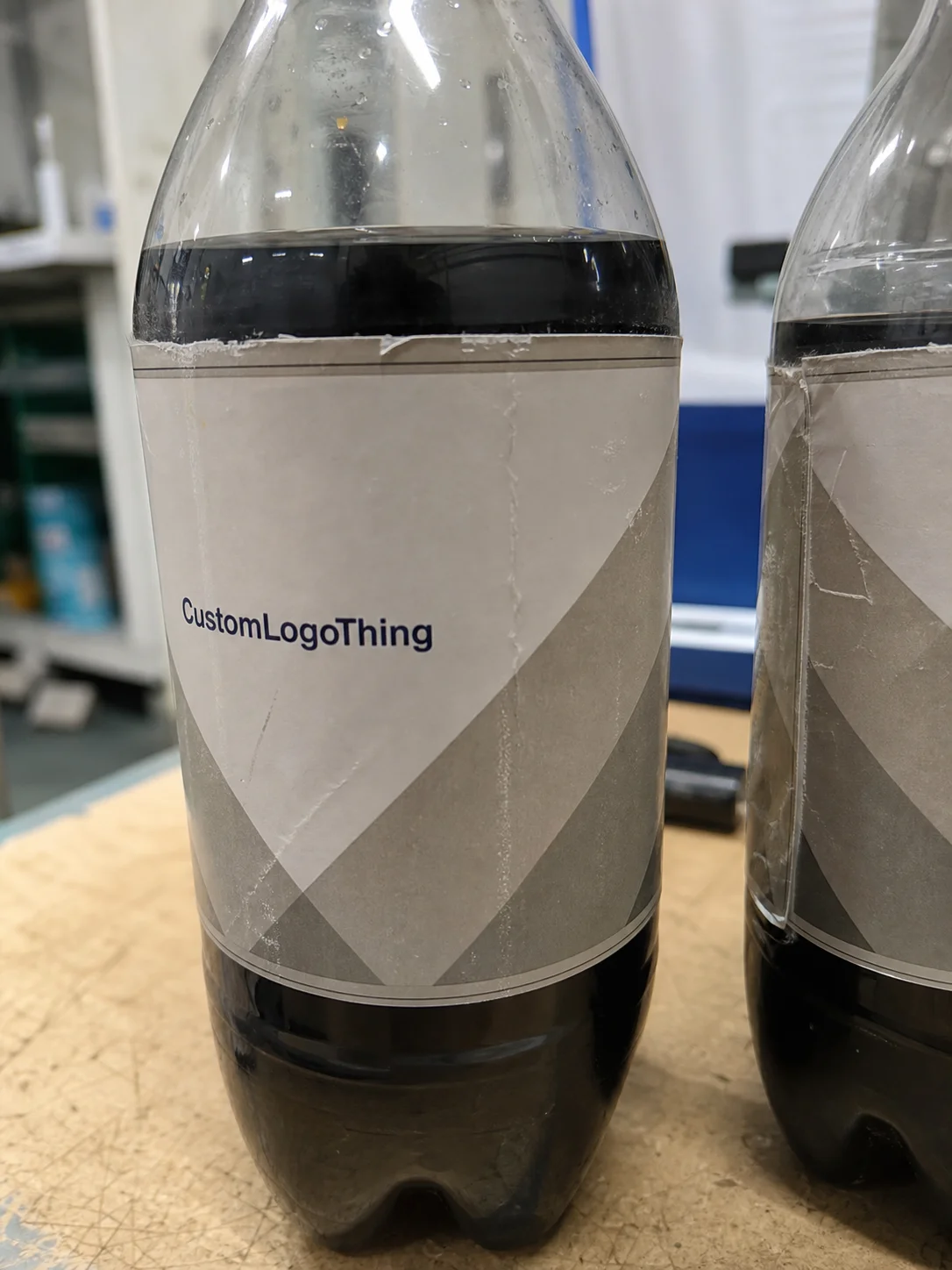
Glass and PET are forgiving. Labels are not. A bottle can move through storage, refrigeration, and shipping without much damage, while the label starts showing stress in the first cold cycle. Moisture gets under a weak edge. A soft stock scuffs in transit. A label sized from a flat dieline instead of the real bottle shape loses alignment as soon as it wraps around a curve.
That is why custom soda bottle labels should be treated as a production component, not just a design surface. The bottle may be used for seasonal retail, private-label runs, event giveaways, or test batches. In every case, the label is the first thing customers judge. If it wrinkles, peels, or shifts, the brand looks rushed even when the liquid inside is good.
There is also a visual issue that does not show up in a static file. On a refrigerator shelf, a label has to read from a distance and under glare. On an iced bottle, it has to keep its edges down while the outside of the bottle sweats. On a curved container, even a small sizing error changes the way the front panel sits. That is why the same artwork can look premium on one bottle and awkward on another.
A label that survives room temperature and fails in cold storage was never really finished.
Buyers often focus on design revisions and forget the physical environment. But packaging lives in the real world. That includes wet fingers, cooler condensation, stacked bottles, and shipping cartons that flex more than expected. In those conditions, a label either holds or it does not.
How custom soda bottle labels are made and applied
The process usually starts with bottle measurements and artwork files. The printer checks the dimensions, confirms the dieline, and sends a proof showing bleed, trim, and safe zones. After approval, the labels move to press, then through finishing, cutting or slitting, inspection, and packing. If the order is on rolls, the roll direction, core size, and spacing need to match the labeling method.
Digital printing is often the practical choice for short runs. It reduces setup time and works well when the order is small, the art changes frequently, or the buyer wants to test a market before committing to a larger quantity. Flexographic printing becomes more efficient at scale. The unit cost falls because the press runs faster and the setup cost is spread over more labels. That tradeoff is simple, but it matters. Digital favors flexibility. Flexo favors volume.
Application method matters just as much as print method. Hand application works for small batches, event bottling, or slower production lines, but it can introduce variation in placement if the team is moving fast. Roll labels applied by machine offer better consistency, but only if the roll format is correct. Wrong unwind direction, incorrect spacing, or the wrong core diameter can stop a line. One small mismatch can waste more time than the label order itself.
Bottle shape affects the usable print area. Straight-sided bottles are the easiest to label. Tapered bottles, shoulder-heavy bottles, and short bottles with narrow front panels all require tighter spec control. A label that looks generous on a measuring tape can still be too wide once it is wrapped and compressed by curvature. The panel on the bottle is what matters, not the size of the bottle in the abstract.
Before production begins, a buyer should expect a proof that clearly identifies the dieline, cut lines, and any content that needs to stay away from the edge. Barcode position, nutrition copy, ingredients, and batch coding should all be checked at this stage. If those details are left until after approval, the job slows down and the risk of reprint rises.
Material, finish, and durability choices that affect performance
For soda bottles, the most common material choice is between paper and synthetic stock. Paper can work for dry, short-lived use, but it is the weakest option in cold and wet conditions. Synthetic films such as BOPP or other moisture-resistant polypropylene-based stocks usually perform better because they resist tearing, soften less, and keep edges down longer.
The real test is not how a label looks at room temperature. It is how it behaves after refrigeration, ice contact, and repeated handling. If a bottle comes out of a cold case and the label is already curling, the stock or adhesive was chosen for the wrong environment.
Finish changes both appearance and durability. Gloss gives stronger color and more visual pop, but it can show scuffs and glare more easily. Matte reduces shine and can hide handling marks better. Soft-touch adds a premium feel, though it is not always the most practical choice for wet bottles because fingerprints and moisture can dull the surface. Clear labels can be useful when the bottle or liquid should remain visible, but they require careful white-ink planning so text does not disappear against a dark background.
The adhesive is often the deciding factor. A label can print beautifully and still fail if the adhesive is not suited to cold application or chilled storage. For glass and PET, ask specifically about the adhesive performance in refrigerated conditions. If the bottles will be wet at application time, that should be stated up front. Adhesive choice is not a minor detail. It is part of the spec.
For buyers comparing substrates, here is a practical breakdown:
| Label option | Best use | Typical strengths | Tradeoffs | Typical unit cost |
|---|---|---|---|---|
| Paper stock | Dry, short-lived promotions | Lower cost, easy printability | Poor moisture resistance | $0.05-$0.12 |
| White BOPP | Most soda bottle use cases | Moisture resistant, durable, clean print | Slightly higher cost than paper | $0.08-$0.18 |
| Clear BOPP | Premium or minimal designs | Lets the bottle show through | Needs white ink planning | $0.10-$0.22 |
| Textured or matte premium stock | Special retail packaging or gift packs | Premium appearance and feel | Higher cost, not always ideal in wet conditions | $0.12-$0.28 |
If the label carries ingredients, a barcode, or batch coding, readability should come before decoration. Small type, thin rules, or dense backgrounds can look attractive in a design file and still become hard to read once the label wraps around a small bottle. The same is true for metallic effects and high-contrast backgrounds. They can lift the shelf appeal, but they also increase the risk of poor legibility if the layout is crowded.
Custom soda bottle labels cost, MOQ, and quote factors
Pricing is driven by more than quantity. Material, size, finish, adhesive type, print method, and shape all affect the quote. A simple rectangular label on white BOPP is one thing. A clear label with white ink, a special die cut, and cold-resistant adhesive is another. The more custom the spec, the more the cost reflects production complexity rather than raw material alone.
For lower quantities, digital printing usually makes the most sense. A small test run may land around $0.18-$0.45 per label, depending on size, coverage, and finishing. Larger flexographic runs can reduce the cost significantly, often into the $0.04-$0.12 range for straightforward specs. Those ranges are practical, not fixed. Heavy ink coverage, specialty stock, and custom shapes can move the number quickly.
MOQ depends on the method. Digital orders can start in the low hundreds when the supplier supports short runs. Flexographic production usually requires a higher quantity because setup work only makes sense when the run is large enough. That is the tradeoff buyers need to plan around. A small launch can justify a short run. A recurring SKU usually cannot.
Hidden cost drivers show up in the details. Rush schedules add expense. Extra proof rounds add time and sometimes charges. White ink, clear stock, unusual shapes, and specialty adhesives all push the quote upward. So do late changes after the proof has already been approved. If the flavor name changes, the barcode moves, or the bottle size is revised, the spec should be rechecked before the order is released.
Tiered pricing is worth requesting. Compare 1,000, 5,000, and 10,000 pieces if the product line could scale. That makes the break points visible. A buyer may find that the cost difference between 1,000 and 5,000 labels is small enough to justify the larger run, or that the extra inventory is not worth the cash tied up in boxes on a shelf.
For this category, the useful quote inputs are specific: bottle material, diameter, label panel height, straight or tapered body, application method, finish, and expected storage conditions. Vague specs create vague pricing. Accurate specs create useful pricing. The difference is practical, not academic.
Production steps and turnaround from proof to delivery
Turnaround depends on how ready the file is and how straightforward the run is. A clean job usually follows a predictable sequence: file review, proof approval, printing, finishing, cutting or slitting, inspection, and shipment. Delays typically come from missing information, not the press itself.
For simple digital orders, a common turnaround is about 7-12 business days after proof approval. Larger flexographic orders may take 12-18 business days or longer if the material is specialty stock or the artwork requires additional setup. If the job is urgent, ask about rush service before approval, not after the bottling date has already been fixed.
The usual delay points are familiar: a missing dieline, the wrong size, color edits after approval, or copy changes that force a fresh proof. Those issues look small until they reset the schedule. The print side is rarely the problem when the order is prepared well. The file is usually where the clock slips.
Shipping deserves the same attention as printing. Labels should arrive before bottling day, not the day of the run. A late carton can hold up the entire production line. If the order is part of a larger packaging kit or a retail launch that includes other printed components, it helps to plan packaging and transit together rather than treating labels as a separate afterthought. If you are bundling them with Custom Packaging Products, ask how the cartons will be protected during transit and palletized for handling. For buyers who want a more formal reference point on transit testing, ISTA provides useful packaging test context.
Common mistakes that ruin label performance on bottles
The most common mistake is sizing from a mockup instead of the actual bottle. A label that is too wide can crowd the seam or overlap awkwardly. A label that is too short leaves a gap that makes the bottle look unfinished. On a curved bottle, even a few millimeters matter more than most buyers expect.
Condensation is the next problem. Soda bottles are often cold, which means wet surfaces and wet hands. If the adhesive is not designed for that environment, the corners start to lift first. Then the label curls. Then the bottle starts looking like it was labeled in a hurry, even if the art file was beautiful.
Another common miss is treating the design like a flat poster. Small bottle labels do not offer much room, so typography has to be sized for real-world reading distance. Thin type, dense copy, and busy backgrounds can all work on a monitor and fail after the label wraps. A good retail label needs to read quickly from arm’s length.
Barcode and ingredient placement also deserve care. A barcode on a seam or curved edge may scan unreliably. Required text too close to the trim can disappear when the label is cut or applied slightly off-center. That is not just an aesthetic issue. It can become a production or compliance problem if the label is carrying regulated information.
The last mistake is approving a label without testing it on the bottle itself. A digital mockup cannot show the texture, sheen, or edge behavior of the physical label. Print one sample, wrap it on the actual bottle, chill it, and handle it. That small check catches more problems than another round of screen revisions.
If the label has not been tested on the bottle, it has only been approved in theory.
Practical buying steps before you place the order
Start with the measurements that affect the job: bottle material, diameter, height, label panel, body shape, and application method. If the bottle is tapered or has a narrow front face, say so early. It changes the dieline and can change the stock recommendation.
Then ask for a sample or a short proof on the real bottle. That is more useful than another visual revision. It shows whether the label sits flat, whether the seam is visible, and whether the finish works with the rest of the package. Good package branding is usually consistent across the whole set, not just on one hero item. If other packaging pieces are involved, keep the label spec aligned with the broader system, including any custom printed boxes used in the same launch.
Request quantity tiers in the quote. Compare the cost at 500, 1,000, 5,000, and 10,000 pieces if those volumes are relevant to the product stage. That gives a clearer picture of unit economics and helps you decide whether a test batch or a fuller run makes more sense. Sometimes the step-up in quantity is cheap enough to justify it. Sometimes it is not.
Review the artwork at actual size. Screen mockups hide legibility issues. What looks crisp in a design file can be too small once it wraps around a curved bottle. If the label needs a barcode, ingredient list, or nutrition panel, confirm those elements stay readable after trimming and application.
The practical sequence is simple:
- Measure the bottle and confirm the label panel.
- Choose the stock and adhesive for wet, cold, or dry use.
- Decide whether labels will be hand applied or machine applied.
- Request a proof with dieline, bleed, and safe zones marked clearly.
- Test one printed sample on the actual bottle before ordering in bulk.
If those steps check out, the order is ready. If they do not, fix the spec first. That is the difference between a label that looks good on a computer and one that still looks intentional after refrigeration, handling, and shipping. For anyone buying custom soda bottle labels, the best result usually comes from the least glamorous step: measure carefully, test physically, and approve only after the bottle proves the label works.
What size should custom soda bottle labels be for a standard bottle?
Start with the bottle’s actual diameter and the flat label panel, not a generic template. Curvature changes the usable area, especially near shoulders and seams. A test wrap on the real bottle is the safest way to confirm fit before production.
Do custom soda bottle labels need waterproof material?
If the bottles will be refrigerated, iced, or handled cold, moisture resistance matters. Synthetic films usually perform better than paper in that setting. Adhesive choice matters just as much as the face stock, so both should be selected together.
What affects the price of custom soda bottle labels the most?
Quantity, material, finish, and print method are the biggest cost drivers. Clear stock, white ink, special shapes, and rush production increase the price. Larger runs usually lower the unit cost, but only if the volume matches the launch plan.
How long does it take to produce custom soda bottle labels?
Simple digital runs can often move in about 7-12 business days after proof approval. Larger or more complex flexographic jobs usually take longer. The fastest way to miss a deadline is to change the artwork after proofing starts.
Can I order custom soda bottle labels in a small quantity?
Yes. Short runs are common for test launches, events, and limited editions. Digital printing is usually the practical option at lower quantities. Ask for tiered pricing so you can compare a small run with a slightly larger one before deciding.


