Custom stickers reviews are most useful when they explain how a sticker performs after application, not just how it looked in the proof. The details that actually help buyers decide are material, finish, adhesive strength, cut quality, color consistency, MOQ, lead time, and whether repeat orders stay on spec.
That matters because the wrong sticker can create real cost: edge lift on curved bottles, scuffing in mailers, weak opacity on dark surfaces, or a reorder that no longer matches the first batch. For brands buying branded packaging or merch, those problems affect both presentation and operations.
Quick Answer: What Custom Stickers Reviews Reveal Fast
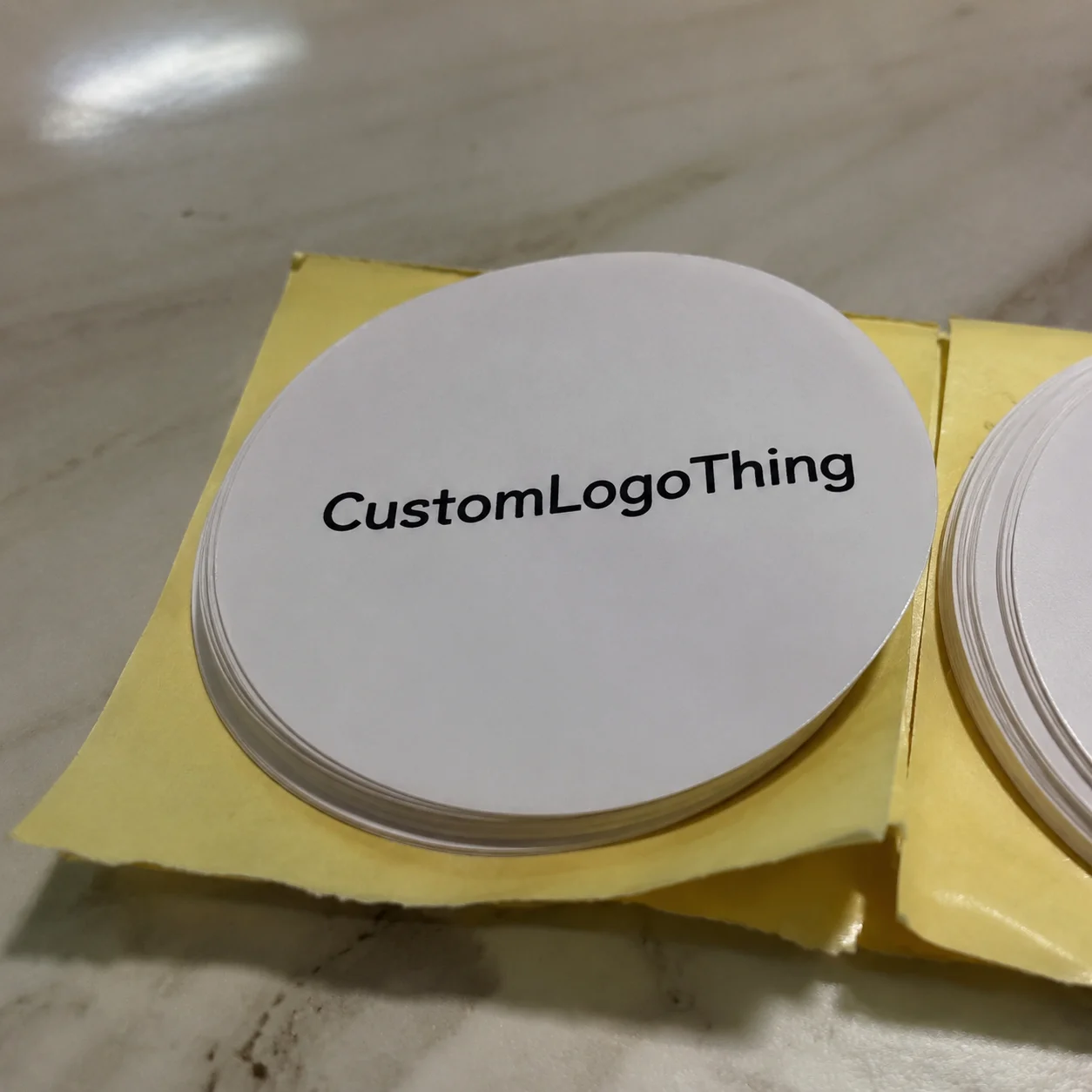
The strongest custom stickers reviews usually point to the same buying criteria: print sharpness, adhesive reliability, finish consistency, and reorder control. A sticker that looks good on screen but fails on the intended surface is not a design problem; it is a specification problem.
Common review themes include:
- Material fit: vinyl for moisture, abrasion, and longer handling; paper for short-life indoor use.
- Finish tradeoffs: gloss boosts color and shelf visibility, while matte reduces glare but can mute contrast.
- Cut and liner quality: tight die-cuts look cleaner, but poor backing or rough edges make application harder.
- Proof accuracy: slight drift in color, white ink coverage, or fine lines causes many complaints.
- Repeatability: volume buyers care less about the opening quote than about batch-to-batch consistency.
Quick verdict: low-risk testing favors suppliers with low minimums and easy sampling; premium branding favors better finish and material control; repeat production favors vendors that document specs and hold them.
What Do Custom Stickers Reviews Say About Quality and Value?
Reviews consistently show that value is not the same as the lowest price. A cheaper sticker becomes expensive if it peels early, scratches in transit, arrives with uneven cuts, or has to be reordered because the second run looks different.
The best value comes from matching construction to use:
- Vinyl or laminated film: better for chilled beverages, outdoor use, laptops, or frequent handling.
- Paper stock: suitable for indoor inserts, short promotions, or sealed packaging with limited abrasion.
- Clear stock: works well visually, but white ink opacity and edge cleanliness matter more.
- Curved surfaces: need more careful adhesive and face-stock selection than flat cartons or inserts.
Buyers also tend to notice a few smaller details immediately: easy-peel backing, clean die-cut edges, good opacity over dark packaging, and a stock thickness that feels appropriate for the product. For packaging, tactile quality matters almost as much as print quality.
If a supplier cannot explain how the sticker will behave on glass, plastic, coated board, kraft stock, or film, that is a warning sign. The most helpful custom stickers reviews describe real performance after application, not just print appearance.
Top Sticker Suppliers Compared by Print Quality, Adhesive, and Finish
Sticker suppliers usually fall into four useful groups: online print platforms, niche sticker specialists, local printers, and packaging manufacturers. Reviews often conflict because buyers are comparing different supplier types for different jobs.
| Supplier Type | Best For | Typical Material | MOQ | Common Tradeoff |
|---|---|---|---|---|
| Online print platform | Samples, small campaigns, fast reorders | Vinyl or paper | Low | Less control over specialty finishes and edge quality |
| Niche sticker specialist | Merch, detailed die-cuts, premium finish options | Vinyl, laminated vinyl, clear film | Low to medium | Price rises with specialty specs |
| Local printer | Rush jobs, proofing support, regional orders | Varies by shop | Medium | More limited material catalog |
| Packaging manufacturer | Retail packaging, repeat production, multi-SKU systems | Custom stock, vinyl, paper, coated films | Medium to high | More setup discipline and often slower to start |
Material choice drives most of the result. Vinyl usually outperforms paper when moisture, refrigeration, frequent handling, or outdoor exposure are involved. Paper is still cost-effective for short-run indoor use. Matte gives a softer, more subdued look; gloss usually creates stronger contrast and better photo impact. Lamination improves scuff resistance, though it can change feel and flexibility.
Supplier differences show up quickly in the details: edge lift on curved bottles, weak white ink on clear stock, color drift on reorders, or rough die-cutting on fine logos. Buyers ordering Custom Labels & Tags often learn that an acceptable proof does not guarantee clean performance on glass, plastic, kraft, or coated board.
As a rule:
- Testing concepts: prioritize low MOQ and easy reordering.
- Merch and giveaways: prioritize durability, cut accuracy, and visual impact.
- Food and beverage packaging: prioritize adhesive reliability and cold/wet performance.
- Ongoing retail programs: prioritize repeatability, packing organization, and spec control.
“The cheapest sticker is expensive if it peels on launch week.”
Detailed Reviews From Real-World Testing Across Packaging and Merch Uses
Performance changes by use case, so good reviews tie results to the actual job.
Packaging labels: The better performers hold clean edges on flat and gently curved surfaces, apply without wrinkling, and maintain opacity over product color. On jars and bottles, backing ease, adhesive grab, and stock thickness matter immediately. Thin material can feel low-value even before any failure appears, which matters for premium package branding.
Promotional stickers and pack-ins: These are judged more on immediate visual punch and handling. They should peel cleanly, resist light scuffing, and survive shipping inside mailers or kits. For event handouts and influencer packs, presentation matters, but so does how quickly customers can peel and use them.
Laptop decals and merch use: Abrasion resistance matters more than for an insert or temporary campaign. If the print surface marks easily against bags, desks, or sleeves, the sticker is not built for merch durability.
Cold or damp conditions: This is where average suppliers get exposed. Freezer use, chilled beverages, and condensation quickly reveal weak adhesives or unsuitable paper stocks. In those settings, material compatibility matters more than the lowest unit cost.
Mixed-SKU orders: Reviews also reflect process quality. Suppliers that keep multiple designs organized, clearly packed, and correctly labeled are usually easier to trust for repeat production. Confusion in fulfillment often points to weak production control elsewhere.
A common disappointment is not bad printing; it is finish overpromising. A sticker sold as premium can still feel ordinary if the laminate is too slick, the cut edge is rough, or the stock feels thinner than expected. In many cases, a simpler construction with tighter quality control performs better than a more elaborate spec handled poorly. That same principle often applies across Custom Packaging Products.
Main takeaway: test under real conditions before scaling. Condensation, shelf lighting, friction inside mailers, repeated handling, and curved application surfaces reveal problems that proofs do not.
Sticker Production Process and Lead Time: From Proof to Delivery
Most custom sticker orders follow a standard path: quote, artwork submission, dieline setup, proof approval, printing, finishing, packing, and shipping. Delays usually come from artwork corrections, spec changes, or material confirmation.
The most common production issues are preventable:
- Low-resolution artwork
- Unclear cut lines
- Missing bleed or safe zone
- Tiny borders with no tolerance room
- Late changes from paper to vinyl or matte to gloss
For standard digital short runs, lead time often falls around 5 to 10 business days after proof approval, plus shipping. Larger runs or specialty builds commonly move into the 12 to 15 business day range. Clear stock with white ink, lamination, unusual materials, and complex die-cuts can add time.
Rush service may improve scheduling and shipping, but it does not remove the need for curing, inspection, trimming accuracy, and careful packing. Buyers who report the smoothest outcomes usually approved clean files early and locked specifications before production started.
To reduce launch risk:
- Submit print-ready artwork with bleed and safe zone built in.
- State the exact application surface: glass, coated paper, PE mailer, kraft box, or plastic film.
- Review matte vs. gloss under the real lighting where the sticker will appear.
- Save the approved stock, size, finish, and adhesive details for reorders.
- Ask how off-color or off-cut batches are handled before you place the order.
Custom Sticker Pricing, MOQ, and Unit Cost Breakdown
Sticker pricing depends on more than dimensions. Material, adhesive, lamination, white ink, shape complexity, packaging method, proof revisions, and freight all affect the final quote.
Small runs cost more per unit because setup and handling are spread across fewer pieces. As a broad market range, short runs may land around $0.60 to $1.50 per sticker, while larger standard-volume orders can fall closer to $0.10 to $0.35 per unit. Specialty finishes can push pricing well above those ranges.
MOQ affects cash flow as much as unit cost. A supplier may price best at quantities much higher than a brand actually needs for a test launch. That can leave inventory sitting while artwork, messaging, or packaging format is still changing.
Extra costs often appear in predictable places:
- Expedited freight
- Setup or tooling fees
- Multiple proof revisions
- Special packing requirements
- Color-matching discussions or tolerance-related replacements
The smarter comparison is landed cost, not just unit cost. A lower quote is not really lower if the sticker fails in use, misses the launch window, or forces a full reorder. That is one of the clearest patterns in custom stickers reviews.
How to Choose the Right Sticker Vendor for Your Exact Use Case
The right vendor depends on where and how the sticker will be used. Indoor promotional stickers, outdoor decals, food-adjacent packaging, and retail merch all need different specifications.
Choose paper for short-term indoor use, simple inserts, or low-cost campaigns with limited wear. Choose vinyl when water, friction, refrigeration, or extended handling are expected. Choose lamination when surface scuffing is a real risk.
If sustainability matters, ask for specifics rather than general claims. For paper-based options, request details such as FSC-certified stock where relevant, and verify guidance through FSC or EPA sustainable materials resources.
A clear buying priority makes vendor selection easier:
- Durability: focus on adhesive, film construction, and lamination.
- Shelf appeal: focus on finish, color density, and stock feel.
- Testing flexibility: focus on low MOQ and simple reorder workflow.
- Repeat production: focus on documented specs and batch consistency.
- Compliance or sustainability: focus on material documentation.
Before ordering, ask practical questions: What adhesive is used? Which surfaces are recommended? What bleed is required? Can the supplier match Pantone? How is liner quality handled? What happens if a reorder drifts from the original run? If the sticker needs to coordinate with Custom Packaging Products or printed boxes, ask whether the supplier can control those specs together.
Price should be considered after fit, not before it. A small saving per piece does not help if the sticker lifts, scuffs, discolors, or arrives off spec.
Our Recommendation and the Next Steps Before You Place an Order
For testing, use a supplier with low minimums, clean proofing, and flexible spec changes. For scaling, use one that can hold color, cut, and finish across reorders. For premium presentation, use a supplier that treats stickers as part of the packaging system rather than as a standalone print item.
In practice, online platforms and local printers often win on speed, while niche sticker specialists and packaging-focused suppliers tend to win on finish options and repeat consistency. If the sticker is tied closely to retail presentation or broader branded packaging, a packaging manufacturer is often the better long-term fit.
Before placing a full order:
- Request a sample pack or short trial run.
- Test adhesion on the real surface.
- Check the finish under actual store, studio, or event lighting.
- Compare landed cost, not only unit price.
- Save the final stock, adhesive, size, bleed, finish, and tolerance notes in writing.
The central lesson from strong custom stickers reviews is simple: the best supplier is the one that fits the application, holds the specification, and can repeat the result reliably.
What do custom stickers reviews say matters most before ordering?
Print quality, adhesive performance, material fit, and reorder consistency matter more than headline turnaround claims. The best reviews explain how the sticker behaved on the real surface and in the real environment.
Are vinyl custom stickers worth the higher price?
Usually yes when the sticker will face water, refrigeration, outdoor use, or repeated handling. Paper is still a practical choice for indoor promotions, inserts, or short-life applications with limited wear.
How much do custom stickers cost in small and bulk quantities?
Small runs often cost more per piece because setup is spread over fewer units. Roughly, short runs may fall around $0.60 to $1.50 each, while larger standard orders can drop closer to $0.10 to $0.35 each, depending on material, finish, cut complexity, and freight.
How long is the lead time for custom sticker orders?
Simple digital jobs often take about 5 to 10 business days after proof approval, plus shipping. Larger or specialty orders may take 12 to 15 business days or more, especially with white ink, lamination, or complex die-cuts.
Which custom sticker company is best for packaging and branded merch?
It depends on the application. Packaging buyers usually need better adhesive reliability, finish consistency, and reorder control. Merch buyers often prioritize durability, color vibrancy, and clean die-cut presentation.


