A truck sticker has a hard life. If you are ordering Custom Stickers Trucks will carry through sun, rain, pressure washing, road salt, diesel residue, and daily handling, the job needs more thought than “print my logo on vinyl.”
That does not mean every vehicle needs a full wrap or a complicated graphics package. Many business owners, contractors, delivery teams, food truck operators, and service fleets need durable logo decals, DOT numbers, unit IDs, safety markings, QR-code labels, trailer graphics, bumper stickers, or removable promotional decals that look clean and stay put. The right build depends on the truck surface, expected lifespan, wash routine, climate, and the distance from which the brand has to be read.
What Custom Stickers Trucks Need to Survive the Road
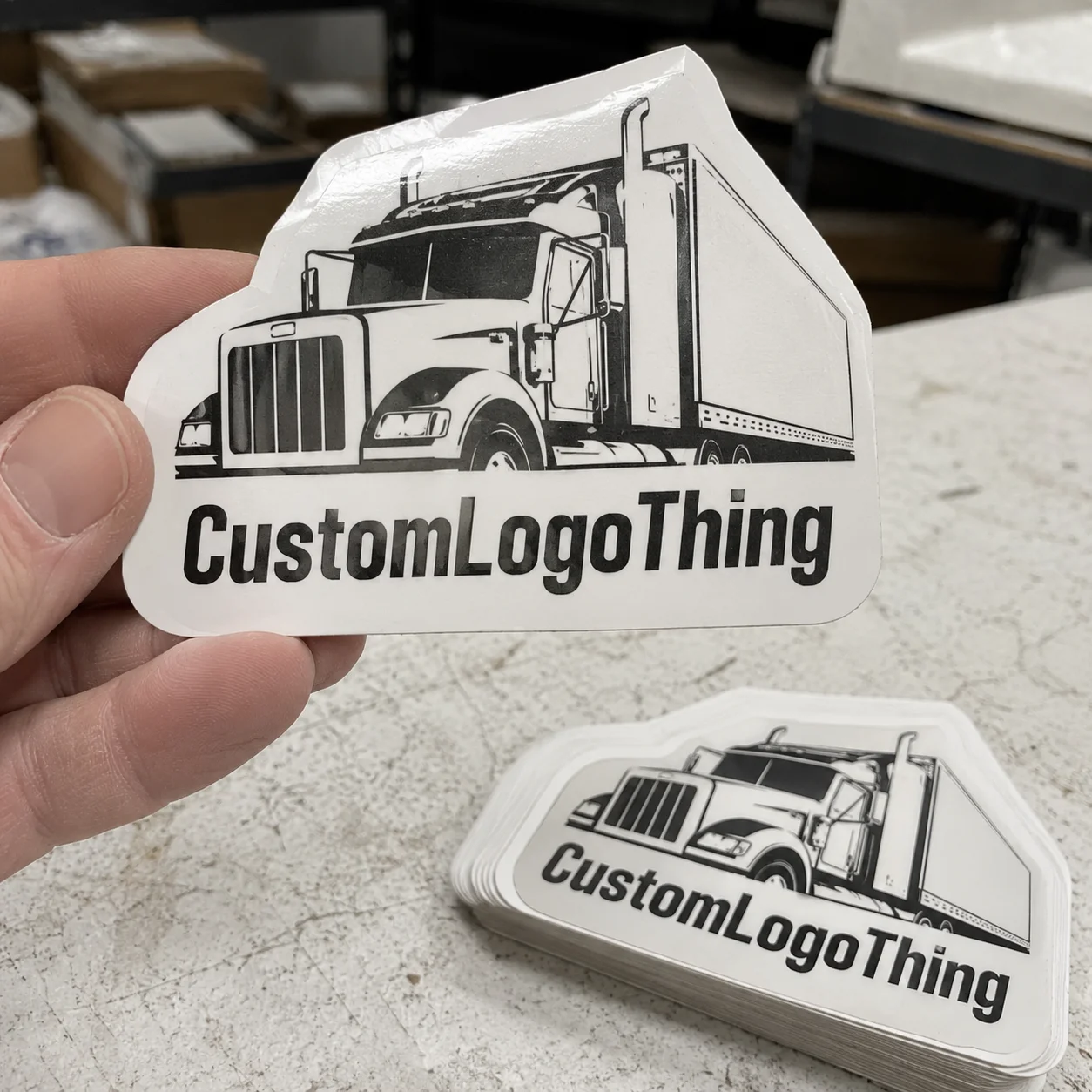
Printed products usually fail in predictable ways, and truck decals are no exception. Sun exposure attacks ink and film. Highway grit works like sandpaper. Pressure washers lift weak edges. Fuel splash and road grime can soften or stain the printed face. Door handles, ladders, tarps, and tool belts rub against the same areas day after day.
Temperature swings add another layer of stress because vinyl and metal expand and contract at different rates. A decal that looks fine during installation can start telegraphing stress weeks later if the film, adhesive, surface, and placement were not matched properly.
That is why truck graphics for real fleet work should be treated as exterior signage, not general-purpose stickers. A decorative sticker might be fine on a notebook or shipping carton. A fleet-ready decal needs outdoor vinyl, UV-stable ink, a suitable adhesive, clean edge cutting, protective lamination, and careful surface preparation. Miss one of those pieces and the decal may curl, fade, crack, or peel long before the truck is ready for new branding.
Truck stickers can be very simple. A one-color door logo, a black unit number, or a small service-area decal can do a lot of work for a local business. They can also be more engineered: full-color contour-cut logos, reflective safety labels, laminated QR-code decals, removable campaign graphics, or coordinated decal sets sized for vans, pickups, box trucks, and trailers.
Practical rule: match the sticker build to the truck’s job. A flat glass decal for a seasonal promotion does not need the same film as a long-term logo crossing rivets on an aluminum trailer.
From a buyer’s point of view, the goal is usually professional visibility without the cost and downtime of a full vehicle wrap. That is a sensible middle ground. A well-made door decal or tailgate graphic can support route recognition, customer trust, and brand consistency for a fraction of the cost of wrapping the entire vehicle.
How Truck Stickers Work: Vinyl, Adhesive, Ink, and Laminate
A truck decal is a small materials stack. The printable vinyl face film carries the artwork. The adhesive bonds that film to the truck. The release liner protects the adhesive before application. After printing, a laminate may be applied over the surface to protect the ink from sunlight, washing, abrasion, and chemical exposure.
The two vinyl families buyers hear about most often are calendared vinyl and cast vinyl. Calendared vinyl is common for flatter panels and medium-term exterior use. It is practical, widely available, and often cost-effective for door logos, tailgate decals, trailer panels, and service markings. Cast vinyl is thinner and more conformable, so it is better for curves, rivets, light contours, and longer outdoor exposure.
If the decal must cross a shallow body curve, sit on a panel with fasteners, or stay in place for a longer branding cycle, cast film is often worth the upcharge. Calendared film can perform well on flat panels, but it is not meant to do every job. Stretch it around compound curves or force it over difficult hardware, and the material may shrink back or lift at stress points.
Adhesive choice matters just as much as the face film. Permanent adhesive is typical for long-term fleet branding. Removable adhesive is useful for seasonal campaigns, leased vehicles, or graphics that must come off later with lower paint risk. Air-release adhesive has tiny channels that help installers push out trapped air, reducing bubbles during application. High-tack adhesive can help on tougher surfaces, though removal may be more difficult.
Digital printing is the usual path for full-color logos, gradients, photos, QR codes, and multi-color designs. Cut vinyl or spot-color lettering still makes sense for simple names, phone numbers, unit IDs, and DOT markings. For clean production, cut paths should be defined clearly, and small interior pieces should be large enough to weed without tearing.
Lamination is where many budget quotes quietly diverge. Gloss laminate makes color look sharper and is easier to wipe clean. Matte laminate reduces glare and gives a softer finish. A thicker protective film can improve abrasion resistance for bumper areas, lower doors, and tool-side surfaces. Reflective films, perforated window films, and safety markings have separate performance considerations, especially for night operations or regulated visibility needs.
For shipping and handling expectations, organizations such as ISTA publish useful transport standards. Broader material and recycling considerations can be checked through resources like the EPA. Those sources will not choose your vinyl for you, but they help frame the difference between a decorative print and a product expected to survive distribution, storage, installation, and road use.
Key Specs to Decide Before You Request Artwork or Samples
Good quoting starts with clear specifications. Before requesting samples or artwork help, gather the finished size, quantity, truck placement, surface type, expected outdoor lifespan, preferred finish, and whether the decal must be removable later. Those seven details prevent most of the back-and-forth that slows production.
Placement changes the build. Door decals need brand visibility from curb height, often in the 8-inch to 18-inch wide range for pickups and vans, depending on the available flat area. Tailgate decals need contrast from farther away; a phone number that looks huge on a screen can disappear at 40 feet. Bumper decals face more abrasion and road spray, so lamination and edge quality matter. Trailer decals may need larger scale, stronger outdoor durability, and panel planning if the design exceeds the print width.
Shape and cut style affect both cost and usability. Square or rectangle cuts are efficient. Contour cuts follow the logo outline and look more polished. Kiss-cut sheets are useful for small labels, safety marks, or unit numbers because the installer can peel each decal from a sheet. Individually cut decals are easier to distribute to field crews, especially when vehicles are spread across locations.
Artwork quality is not a side issue. Vector files such as AI, EPS, SVG, or production-ready PDF keep logos crisp at truck-door size. Outlined fonts prevent font substitution. Raster images should be high resolution at final size; a 600-pixel web logo will not print cleanly as a 16-inch door decal. If brand consistency matters across vehicles, provide Pantone, CMYK, or previous production references. A phone screen is not a color standard.
Surface information is just as valuable as artwork. Painted metal, glass, aluminum trailer panels, plastic trim, and textured equipment boxes do not behave the same. Fresh paint may need weeks to cure before decals are applied. Oxidized paint may not hold adhesive well. Textured plastic can reject standard vinyl entirely. If you already buy Custom Labels & Tags for product packaging or retail packaging, do not assume the same material is right for a truck body.
One detail buyers often miss: installation height. A decal applied high on a box truck may need larger type and stronger contrast than the same logo on a pickup door. A mark that looks balanced in a proof can feel timid once it is placed on a 24-foot trailer. The file is only one part of the decision; the truck is the frame.
Pricing, MOQ, and Unit Cost Drivers for Truck Decals
Pricing for custom stickers trucks carry is usually driven by square inches of material, vinyl grade, print coverage, laminate, cut complexity, setup time, and quantity. Sticker count alone does not tell the full story. Ten large trailer decals may use more material and finishing time than 500 small service labels.
Larger decals cost more because they consume more vinyl, need careful printing and lamination, may require transfer tape, and can take longer to weed, trim, inspect, and pack. If a graphic is too large for a single sheet, it may need to be paneled into multiple pieces, which adds file planning and installation complexity.
| Truck Decal Type | Typical Use | Common Cost Range | Best Fit |
|---|---|---|---|
| Printed outdoor vinyl, no laminate | Short-term promotions, flat panels | $2.50-$6.00 each for small runs around 25-100 pieces | Temporary use where maximum lifespan is not required |
| Laminated calendared vinyl | Door logos, tailgate decals, service-area graphics | $4.00-$14.00 each for common 8- to 18-inch decals | Everyday fleet decals on mostly flat surfaces |
| Cast vinyl with laminate | Curves, rivets, longer outdoor exposure | Often 20%-60% higher than calendared vinyl | More demanding vehicle surfaces and longer branding cycles |
| Reflective vinyl | Safety markings, utility trucks, trailers | Often 1.5x-3x standard printed vinyl | Night visibility and higher safety requirements |
| Die-cut lettering | DOT numbers, unit IDs, phone numbers | Varies by height, character count, and weeding time | Clean text-only markings with no printed background |
Minimum order quantity depends on the supplier and the build. A small pilot run may be useful for checking logo size, color direction, and surface adhesion. Larger fleet orders reduce unit cost because setup, proofing, file preparation, and production handling are spread across more pieces. For example, a laminated 10-inch logo decal might price near $7-$10 each at 50 pieces, while the same build might fall closer to $3-$5 each at several hundred pieces, depending on coverage, cut path, and packing needs.
Ask what the quote includes. Material grade, laminate type, digital proofing, contour cutting, transfer tape, individual packing, shipping, artwork cleanup, and reorder support all affect the real cost. Two decals can look similar in a PDF quote but be completely different in service life. The cheapest unit price is not the lowest real cost if decals fade early, lift at the edges, damage paint during removal, or require paid labor to reinstall replacements.
There are also hidden labor costs after delivery. A decal that arrives without transfer tape may be slower to install if it has loose lettering. A mixed set without labels can waste field time. A large graphic without panel marks can become an alignment problem on site. Good packaging and identification are not glamorous, but they often decide whether a fleet rollout feels controlled or chaotic.
Process, Timeline, and Production Steps from File to Fleet
A clean ordering workflow keeps the job moving. Define the decal use, choose size and placement, submit artwork, confirm material and finish, review a digital proof, approve production, print, laminate, cut, inspect, pack, ship, and apply. For a standard laminated outdoor vinyl order, production often runs about 5-10 business days after proof approval. Larger fleet orders, reflective films, unusual materials, or complex contour cuts can take longer.
Artwork review is more than opening a file and pressing print. Prepress should check resolution, bleeds, cut paths, safe margins, color mode, font handling, and whether the design will stay readable at the intended viewing distance. A 0.5-inch-tall phone number may be acceptable on product packaging, but it is usually too small for a moving vehicle. QR codes also need breathing room and contrast; many printers prefer at least 1 inch square for close-range scanning, and larger is safer on trucks.
The proof is a control point, not paperwork. It should confirm finished size, shape, color direction, cut line, quantity, material notes, and whether transfer tape is required. For multi-piece graphics, the proof should show panel breaks or installation order. For unit numbers or DOT numbers, proof every variable line carefully because one wrong digit can create field headaches.
Production timing depends on artwork readiness, order size, material availability, laminate handling time, contour-cut complexity, inspection requirements, and shipping method. Rush orders may be possible, but they need clean files, stock material, simple finishing, and fast approval. A delayed proof approval can erase most of the advantage of expedited production.
Quality control should happen before the box leaves the supplier. The basics include checking size, color direction, laminate coverage, cut registration, edge cleanliness, spelling, barcode or QR scanability, and the count per set. For decals with transfer tape, the tape should lift the graphic without distorting small pieces. For contour-cut prints, the cut should not wander into the artwork or leave a distracting white halo unless that border was intentional.
Fleet work needs extra planning after the decals are made. Sort decals by vehicle, route, installer, unit number, location, or department before they reach the field. Add spares if trucks are frequently repaired, replaced, or transferred. For teams already coordinating Custom Packaging Products, branded packaging, and custom printed boxes, it helps to keep vehicle graphics in the same brand asset system so logos, colors, and contact details stay consistent.
Common Mistakes That Make Vehicle Stickers Fail Early
The most common failure is not bad printing. It is poor surface preparation. Decals applied to dirty, waxed, oily, cold, or freshly painted surfaces can lift even when the vinyl itself is good. Before installation, the surface should be washed, dried, and wiped with an appropriate cleaner that removes wax and residue without damaging paint. Avoid applying over rust, chipped paint, loose clear coat, or heavy oxidation.
Temperature mistakes cause trouble too. Vinyl becomes stiff in cold conditions and overly soft in high heat. Adhesive needs enough warmth and pressure to wet out against the truck surface. Many vehicle films apply best in moderate conditions, often around 50°F to 90°F, although exact ranges depend on the material. If trucks are stored outside overnight in winter, warm the panel before applying and give the adhesive time to build bond before washing.
Design mistakes are easy to make on a screen. Tiny phone numbers, thin script fonts, low-contrast colors, over-detailed logos, and small QR codes may look fine in a digital proof but fail from moving traffic. A door decal should usually be understood in a few seconds. The brand mark, service type, and contact method need hierarchy. Save the fine print for brochures, invoices, and package inserts.
Material mismatch is another expensive shortcut. Indoor paper stickers, unlaminated budget vinyl, or the wrong adhesive on exterior truck surfaces can lead to fading, edge curl, cracking, adhesive ooze, or messy removal. Applying standard decals across deep seams, rubber trim, compound curves, or riveted panels without the right film and installation method asks too much from the material.
- Do not pressure wash edges directly during the first few days after installation.
- Do not apply over wax unless the wax has been fully removed from the panel.
- Do not mix random sizes across similar trucks unless the design system calls for it.
- Do not skip spare decals for vehicles that may need body repairs or replacement panels.
Operational oversights matter. If decals are not labeled by vehicle or location, field crews may improvise placement. If mixed truck models are not measured, the same decal may fit one door and crowd another. If reorder details are not saved, the next batch may come back with a different finish, color, or cut style.
Removal deserves the same caution as installation. Heat can help soften adhesive, but aggressive scraping can damage paint or glass. Old decals may leave ghosting because the surrounding paint has faded differently. That is not always a sticker defect; sometimes it is the visible record of years of sun exposure.
Next Steps Before You Order Truck Logo Stickers
Before ordering custom stickers trucks will display every day, measure the installation area and take a few straight-on photos of the surface. Note whether the decal goes on paint, glass, aluminum trailer panels, plastic trim, equipment boxes, or another surface. Decide the viewing distance: a decal meant to be read from 10 feet can be smaller and more detailed than one meant to be recognized across a parking lot.
Prepare the production details before requesting a quote. Send a vector logo if available, brand color references, desired finished size, quantity, placement notes, and required text such as DOT numbers, license numbers, phone numbers, service areas, or website URLs. If your business uses packaging design standards for retail packaging or product packaging, include those brand rules too. Vehicle graphics should feel related to your broader package branding, even though the materials and viewing distance are very different.
Ask for material recommendations based on real use. Daily highway driving, local service routes, automatic car washes, outdoor parking, removability, reflective visibility, and seasonal promotions all point to different builds. For a large fleet, an unusual surface, or a critical brand color, order a small sample or pilot set first. A hands-on check can reveal fit, finish, edge behavior, and color issues before hundreds of decals are produced.
- Measure the flat area available on each truck model.
- Confirm the surface material and paint condition.
- Choose the target lifespan, such as seasonal, medium-term, or long-term use.
- Provide vector artwork and color references.
- Review the proof for size, spelling, cut line, and placement notes.
- Save the approved proof, material, finish, and cut style for reorders.
Good reorder discipline saves time. Keep the approved proof, size, material, laminate, finish, and cut style on file so future trucks can be branded consistently without rebuilding the job from scratch. Confirm the surface, material, size, artwork, and installation plan before production, and the finished decals have a much better chance of looking sharp from the first route to the next reorder.
FAQ
What material is best for custom truck stickers?
Outdoor vinyl with a protective laminate is usually the best everyday choice because it balances print quality, weather resistance, wash durability, and cost. Cast vinyl is better for curves, rivets, and longer-term fleet graphics, while calendared vinyl can work well for flatter panels and medium-term use. Reflective vinyl is useful for visibility and safety markings, especially for service vehicles, utility trucks, trailers, and night operations.
How long do custom stickers for trucks usually last?
Lifespan depends on vinyl grade, laminate, sun exposure, road conditions, washing habits, and whether the decal was applied to a clean, sound surface. A laminated outdoor truck decal can often last several years in normal use, while short-term promotional decals may be built for easier removal instead of maximum lifespan. Harsh sun, salt, fuel splash, pressure washing at the edges, and poor surface prep can shorten the life of any vehicle sticker.
Can custom stickers trucks use be removed without damaging paint?
Many vehicle decals can be removed cleanly when the right adhesive is selected and the paint underneath is factory-finished, fully cured, and in good condition. Older, oxidized, repainted, chipped, or poorly bonded paint carries more risk during removal because the adhesive may be stronger than the weak paint layer. If removability matters, specify it before ordering so the decal can be matched to a removable or lower-risk adhesive system.
What files should I send for truck logo decals?
Vector files such as AI, EPS, SVG, or production-ready PDF are preferred for logos, lettering, and contour-cut decals because they scale cleanly. If you only have raster artwork, send the highest-resolution version available and include the desired finished size so the printer can judge whether it will reproduce sharply. Include brand color references, font details, placement notes, and any required text like phone numbers, license numbers, DOT numbers, or service areas.
How do I get an accurate quote for custom truck stickers?
Provide finished size, quantity, artwork, placement, surface type, preferred finish, outdoor lifespan goal, and whether you need individual decals, sheets, transfer tape, or vehicle-specific sorting. Mention if the decals need to be removable, reflective, laminated, contour-cut, or matched across multiple truck models. Ask the supplier to confirm material, laminate, cut style, proofing, shipping, and reorder details so you are comparing the full build, not just the sticker count.


