Custom toggle switch labels can do more than carry a logo. On a garment rack, in a polybag, or under retail lighting, a small label detail can make a shirt feel considered instead of generic before anyone even touches the fabric. Buyers who treat these pieces as a branding decision rather than a leftover production task usually end up with cleaner results and fewer surprises.
In practice, these labels sit at the intersection of packaging design, garment finishing, and retail presentation. They may carry a brand mark, a size cue, a care note, or a short promotional message. The exact format varies, but the buying logic stays the same: every detail has to survive handling, shipping, and real-world use without turning into waste or rework. For teams already managing Custom Labels & Tags alongside broader Custom Packaging Products, the label becomes part of the same branded system, not an isolated item.
The part most buyers underestimate is this: visibility, touch, and placement often matter more than size. A modest label with crisp contrast and the right finish can look more premium than a larger one that curls, smudges, or reads poorly at arm's length. That tradeoff runs through every order of custom toggle switch labels. Better presentation usually means tighter specs, more proofing, and more discipline during setup.
Why custom toggle switch labels stand out on apparel
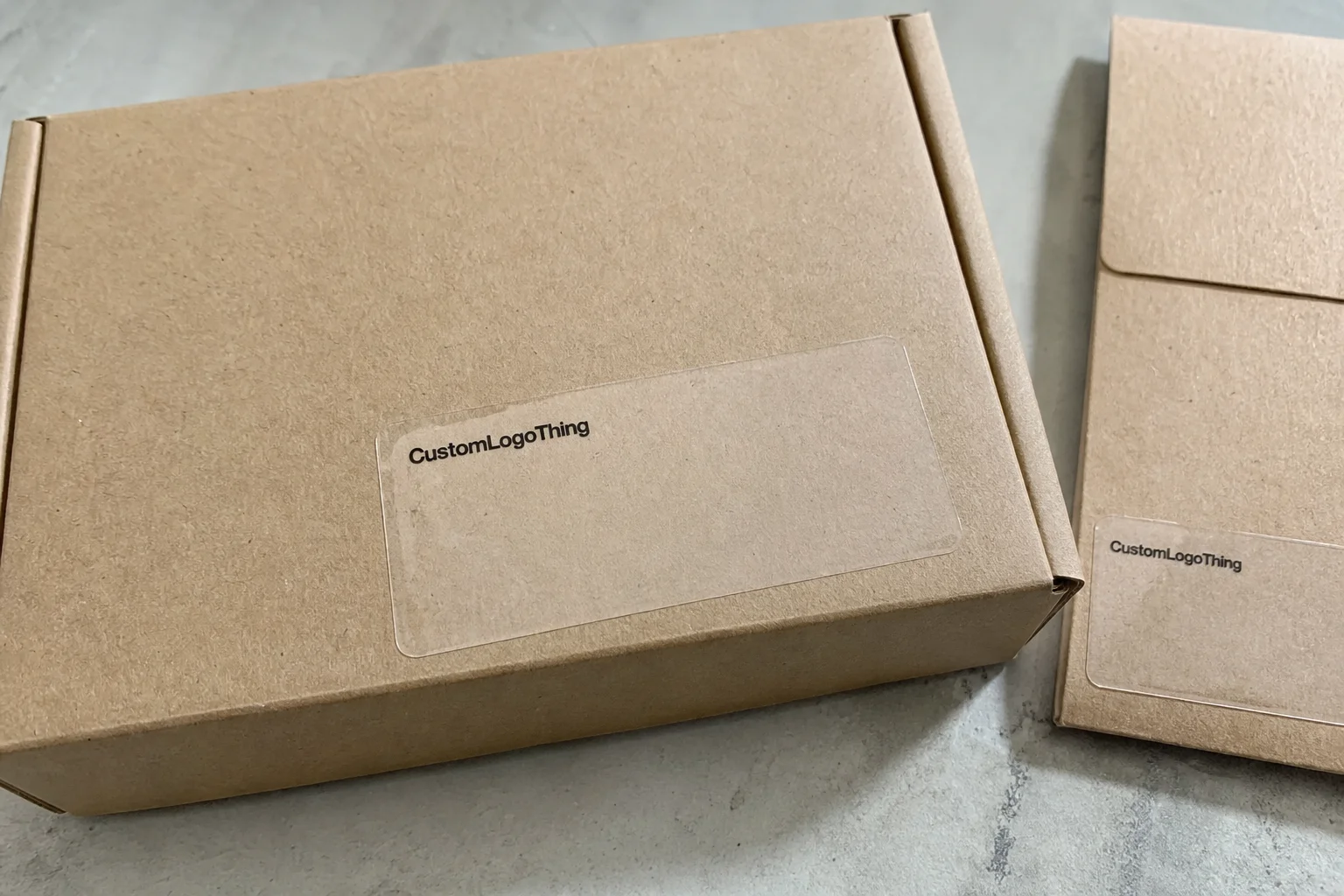
Buyers usually mean a small branded label or attachment point that helps identify the garment, reinforce the brand story, or add functional information without overwhelming the product. In clothing, the label is not just decoration. It is part of the customer's first impression, and that impression affects how polished the item feels next to competing retail packaging and display presentation.
That matters because apparel is judged fast. A shopper might glance at a hanger for two seconds, pick up the item for five more, and decide whether it feels worth the price. A sharp label helps support the premium cue. A weak one does the opposite. That is why custom toggle switch labels often punch above their size in the buying process. The label is small, but the signal is not.
There is also a practical side. These labels often sit in a labeling system that includes size tags, care instructions, hangtags, and sometimes outer packaging. If the brand is already investing in branded packaging or package branding, the label should match that visual language. A high-end knit with a flimsy label feels inconsistent. A basic tee with an overdesigned label can feel forced. The best outcomes sit in the middle: clear, durable, and aligned with the product category.
"The label is usually the last part of the garment to get approved, but it is one of the first parts customers notice."
That is also why the buyer's tradeoff keeps coming back. Stronger presentation often means more setup complexity. You may need exact dimensions, color targets, a folding method, and a placement plan. If the order also has to align with product packaging or bundled retail sets, the approval process gets more sensitive. That is not a flaw. It is the normal cost of getting details right.
There is another reason these labels matter: they are often one of the few brand elements handled directly by the customer before the garment is worn. A logo on the chest can be expressive. A label at the inside seam or neckline feels closer to the product itself, which is why material feel and print clarity matter more than many teams expect.
How the format, attachment, and finish work
At a basic level, the label is built from a substrate, printed or woven with the brand content, then cut, folded, stitched, adhesive-backed, or otherwise attached to the garment or accessory. The buyer can usually specify the face material, the backing, the shape, the size, and the surface finish. That is where custom toggle switch labels become more flexible than many buyers expect.
Attachment method changes both durability and labor. A sewn label stays put through repeated wear and washing, but it adds a manufacturing step. An adhesive-backed label may speed assembly for certain applications, though it is rarely the right choice for garments that will be laundered often. Some labels are inserted into packaging or tied onto the item for a temporary promotional purpose. Others are permanently fixed and expected to last the life of the product. The use case decides the method.
| Finish or attachment | Typical effect | Best fit | Tradeoff |
|---|---|---|---|
| Matte surface | Low glare, cleaner readability | Everyday apparel, minimal brands | Can look less luxurious than satin |
| Satin or coated surface | Higher sheen, stronger visual pop | Premium fashion, gift-ready items | More prone to glare under retail lighting |
| Woven texture | Soft handfeel, textile-first appearance | Knitwear, heritage brands | Fine text can be harder to read |
| Sewn attachment | Excellent long-term retention | Washable garments, workwear | Needs sewing capacity and time |
| Temporary tie or insert | Easy to apply during packing | Promotional packaging, launch kits | Not ideal for permanent branding |
Finish affects perception in ways buyers can measure, even if they do not always phrase it that way. Matte finishes reduce glare and usually improve legibility. Satin can feel more elevated, but it can also create reflection problems under store lighting. Woven textures are excellent when the goal is tactile softness, though they are not the best choice for very small text. Coated surfaces can protect print, but they need careful handling if the brand wants a softer handfeel.
That interaction between surface and visibility is easy to miss. A label that looks great on screen can become hard to read once it is scaled down, folded, or stitched into a seam. For buyers who are also developing custom printed boxes or coordinated package branding, consistency across materials matters. The label should feel like part of the same system, not a separate design language.
Folding style matters just as much as the visible face. A center fold, end fold, loop fold, or straight cut changes how much space you actually have for copy. If the garment requires a narrow seam allowance, the usable print area may be smaller than the flat dimensions suggest. That is where a quote based only on nominal size can mislead.
Cost, pricing, and MOQ drivers
Most pricing surprises come from setup, not the label itself. A small run can look expensive because the supplier still has to prepare artwork, proofing, machine settings, and finishing steps. The unit price then drops as quantity rises, but only when the order is large enough to spread those fixed costs across more pieces. That is the basic economics behind custom toggle switch labels, and it explains why a quote for 500 pieces can look dramatically different from one for 5,000.
For a realistic planning range, buyers often see something like $0.18 to $0.40 per unit at higher volumes for simpler constructions, with setup charges or tooling fees layered on top. More complex builds, specialty materials, or custom shapes can move above that range. If the order includes multiple versions, variable data, or extra finishing, the cost rises again. No supplier can price accurately without knowing the material, dimensions, artwork complexity, and attachment method.
MOQ is usually tied to production efficiency. A supplier may prefer a minimum run because it keeps machine time and waste under control. That can benefit the buyer if the inventory will move. It can also create a problem if the brand is testing a new product line and cannot absorb excess stock. From a packaging buyer's point of view, the cheapest unit cost is not always the best deal if it creates storage pressure or locks capital into slow-moving inventory.
There is also a hidden cost in rework. A low quote that produces off-color labels, weak adhesive, poor stitching, or unreadable text can end up costing more than a slightly higher quote with a cleaner proofing process. Buyers often see the true cost only after the first batch is packed, which is why the spec needs to be clear before pricing starts.
When comparing quotes, ask for the same inputs every time. Otherwise you are not comparing vendors; you are comparing different assumptions.
- Dimensions and folded size, not just flat size.
- Material spec, including any coating or texture.
- Print method and number of colors.
- Attachment method such as sewn, adhesive, tie-on, or inserted.
- MOQ, tooling, and any sample charges.
- Lead time from proof approval to shipment.
If a quote leaves out one of those items, the final number may rise later. That is where buyers lose time and credibility internally. A clean spec sheet makes custom toggle switch labels easier to price, easier to approve, and easier to reconcile with the rest of the branded packaging budget.
As a planning rule, simple woven or printed versions at volume can land close to the low end of the range, while specialty textures, extra folds, color matching, or mixed-component builds tend to move toward the top. Buyers working against seasonal deadlines should budget some buffer for sampling or freight, especially if the labels must arrive before final packing.
Process and turnaround: from proof to shipment
The workflow is usually predictable. Artwork comes in, the supplier confirms dimensions and materials, a proof is issued, and the buyer either approves or requests revisions. If the order is simple, production starts after proof approval. If the specs are unclear, a sample may be needed first. Then comes printing or weaving, cutting or folding, quality inspection, and packing for shipment. Each step adds time, but some are more sensitive than others.
Lead time tends to stretch when the buyer has not finalized the layout, when the brand wants precise color matching, or when the specification changes midstream. That is especially true if the label has to fit alongside care details, sizing, and branding in a very small footprint. The supplier may need a second proof or a physical sample to check legibility. For custom toggle switch labels, those revisions are often the difference between a clean launch and a messy one.
Clean vector artwork helps more than most buyers realize. So does having one decision-maker. If marketing, merchandising, and sourcing each request a different adjustment, the approval cycle slows down fast. If the brand standards are already set, the job moves more quickly. It is also smart to confirm whether the factory wants a dieline, PMS references, or a simple visual mockup before quoting.
Rush jobs are possible, but they are not free. They often compress the schedule for proofing and quality checks, which raises risk. A tighter timeline can be worth it for a seasonal launch or a retail commitment, yet it should be treated as a tradeoff, not a default. A buyer is usually better off spending one extra day on proof correction than a month fixing the wrong labels after production.
For compliance-minded teams, it helps to think about the broader supply chain context as well. Testing and handling expectations can be informed by standards from groups such as ISTA, while material sourcing and fiber claims may connect to FSC if paper components are involved. Not every label order needs formal certification work, but the discipline is useful.
One practical detail that saves time: ask whether the supplier issues a soft proof, a hard proof, or both. A digital proof is enough for many simple jobs, but a physical sample is the safer choice when the label is tied to a premium garment line or a launch with strict color expectations. It is easier to correct a sample than a finished batch.
Spec choices that affect durability and readability
Durability starts with the substrate. A label that will be washed, stretched, or worn against skin needs a material that can take abrasion without shedding print or becoming scratchy. Softer woven constructions are often a better fit for comfort, while coated or printed materials may hold sharper detail. The right answer depends on the garment, not the label category alone. That is why custom toggle switch labels cannot be specified on appearance alone.
Readability is a design problem, not just a production problem. Font weight, spacing, line height, and contrast decide whether the label still works at a distance or under dim retail lighting. Thin fonts may look elegant on a monitor and fail in print. Small reversed-out text can disappear. Dark-on-light usually reads better than light-on-dark, especially once fabric texture and folding are added to the mix.
Edge finish matters too. Rough cuts can fray. Poor sealing can curl. Bad stitching placement can distort the layout and make the brand mark sit crooked. If the label is going near a seam or a curved surface, the die line should account for movement. That is a small detail on paper and a visible flaw in real life. Buyers who order custom toggle switch labels for premium apparel often learn this quickly, because the finish has to hold up to closer scrutiny than workwear or promotional basics.
Match the spec to the product
A useful way to narrow the spec is to start with product category and wear conditions.
- Premium apparel: softer handfeel, higher contrast, cleaner edge finish.
- Workwear: abrasion resistance, stronger stitching, long wash life.
- Lightweight basics: reduced bulk, simplified attachment, readable but compact text.
- Gift or launch packaging: stronger visual polish, often coordinated with custom printed boxes or inserts.
If the label needs to support a regulated care statement or sizing detail, legibility should win over decoration. That is not a design compromise; it is an operational one. A label that is easy to read reduces customer confusion and lowers the odds of avoidable returns.
Quality control checks should mirror the job's use case. A good production run usually includes color confirmation, text inspection under normal lighting, edge and stitch review, and a quick pull test for attachment integrity when relevant. For washable garments, buyers should also confirm whether the material and inks can tolerate expected laundering without bleeding or cracking.
Another often-missed detail is tactile comfort. If a label sits against skin, the back finish and cut quality matter more than a brand deck suggests. Scratchy edges or stiff backing create complaints even when the print itself is perfect. For premium apparel, a slightly softer material is often worth the extra cost.
Common ordering mistakes that inflate rework
The most expensive mistake is approving a mockup without confirming real-world scale. On a screen, a label can look perfectly balanced. In production, the folded size may make the logo too small or the care text too cramped. Buyers often assume the artwork will simply shrink proportionally, but that is not how readability works. At reduced dimensions, every point size and every millimeter matters.
Another common error is using low-resolution artwork or a raster logo when a vector file is needed. Once the design is resized for a small format, jagged edges and soft text become obvious. That is particularly painful with custom toggle switch labels, because the product itself is small. There is nowhere for weak artwork to hide.
Skipping a sample is risky when the label has to match a specific garment feel or an existing line. The buyer may discover a color mismatch, an unexpected surface sheen, or a handfeel that seems too rough after production is underway. At that point, the cost of correction is much higher than the cost of the sample. For best results, request a proof first and a physical sample if the order is new or unusually detailed.
Under-ordering is the quiet mistake. It looks prudent until the brand sells through a size run and needs more labels fast. Then the buyer absorbs repeat setup charges, delays, and possible inconsistency between batches. That is a real risk across seasonal collections and replenishment programs. If your business depends on continuity, make sure the run size supports that continuity rather than just the immediate launch.
One more point: folding and application methods should be confirmed before production starts. If the factory expects a different insertion or sewing process than the buyer assumes, the labels may arrive correct in isolation and wrong in application. That mismatch creates waste that no one budgeted for.
There is also a communication trap. Phrases like “standard size” or “simple finish” mean different things to different teams. A supplier can only work from measurable details, so vague language tends to create avoidable back-and-forth. Precise specs reduce friction and keep the order moving.
For buyers building a label system across a broader assortment, consistency matters as much as cost. A label that looks good on one garment and awkward on another weakens the whole line. The same is true across branded hangtags, care labels, and package components. The strongest package branding usually comes from small decisions repeated cleanly, not from one oversized design move.
Next steps for a cleaner quote and smoother launch
Start with a one-page spec sheet. Include dimensions, material preference, artwork files, quantity, target delivery date, and any special attachment notes. If you already know the garment category, include that too. A supplier can quote custom toggle switch labels far more accurately when the order is framed as a production job instead of a loose concept.
Request a digital proof before you commit, and request a sample if the label will be used across multiple garment styles. That extra step is often the fastest way to catch alignment issues, font problems, or color drift before the run begins. It also helps internal teams sign off faster because everyone is looking at the same reference point.
Confirm the application method with the factory. If the label needs to be sewn in, tied on, inserted, or packed separately, say so early. That keeps production, packing, and final assembly aligned. It also protects your timeline, which is often the most fragile part of the order.
For brands balancing retail packaging, apparel trims, and broader product presentation, the label should be treated as one piece of a larger system. The best orders are not the flashiest. They are the ones with clean artwork, realistic pricing expectations, and specs that match how the product will actually be handled.
If you treat custom toggle switch labels as a small but strategic part of the buying process, they can sharpen branding, reduce rework, and make the garment feel more finished the moment it reaches the customer.
What do I need to request a quote for custom toggle switch labels?
Provide the label dimensions, artwork file, material preference, quantity, and target delivery date. Specify attachment or finishing requirements so the quote reflects actual production, not a generic estimate.
How does quantity affect custom toggle switch label pricing?
Higher quantities usually lower unit cost because setup is spread across more pieces. If storage is limited, compare the savings against inventory risk before choosing the larger run.
Which material is best for custom toggle switch labels on clothing?
Choose a material based on garment use: softer finishes for skin contact, tougher constructions for frequent wear. Match the material to laundering, stretch, and brand position instead of choosing by price alone.
How long does production usually take after approval?
Turnaround depends on proofing, sampling, print method, and finishing complexity. Clean artwork and a fast approval cycle shorten lead time more than almost any other buyer-side factor.
Can custom toggle switch labels include both branding and care details?
Yes, if the layout leaves enough room for legible text and the brand mark. Prioritize hierarchy so the logo, size, and care information remain readable after folding or installation.

