Buyer Fit Snapshot
| Best fit | Custom Tuck End Boxes projects where brand print, material claims, artwork control, MOQ, and repeat-order consistency need to be specified before quoting. |
|---|---|
| Quote inputs | Share finished size, material target, print colors, finish, packing count, annual reorder estimate, ship-to region, and any compliance wording. |
| Proofing check | Approve dieline scale, logo placement, barcode or warning zones, color tolerance, closure strength, and carton packing before bulk production. |
| Main risk | Vague material claims, crowded artwork, missing packing details, or unclear freight terms can make a low unit price expensive after revisions. |
Fast answer: Custom Tuck End Boxes: Design, Costs, and Uses should be specified like a repeatable production item. The safest quote records material, print method, finish, artwork proof, packing count, and reorder notes in one written spec.
Production checks before approval
Compare the actual filled-product size with the drawing, then confirm tolerance on folds, seals, hang holes, label areas, and retail display edges. Reserve space for logos, QR codes, warning copy, and material claims before decorative graphics fill the panel.
Quote comparison points
Review material grade, print process, finish, sampling route, tooling charges, carton quantity, and freight assumptions side by side. A quote is only useful when the supplier can repeat the same color, closure quality, and packing count on the next order.
Custom Tuck End boxes look plain until you watch them work. I’ve stood beside carton lines in Ohio and Shenzhen, and the same pattern kept appearing: the boxes that looked easiest were usually the ones built with the most disciplined folding geometry. A strong tuck-end carton can move quickly through a converting line, stack cleanly in a shipper, and still carry a sharp branded message the second a shopper lifts it. That is the reason Custom Tuck End Boxes keep turning up in cosmetics, supplements, candles, small electronics, and lightweight consumer goods.
The mistake is treating these cartons like generic packaging. They are not. Straight tuck, reverse tuck, and auto-lock bottom styles behave differently on the line, at retail, and in the hand. One style favors a cleaner front panel. Another trims cost. A third gives the base more muscle. Once those differences come into focus, custom tuck end boxes stop looking ordinary and start looking like one of the smartest packaging choices available.
What Are Custom Tuck End Boxes and Why Do Brands Use Them?
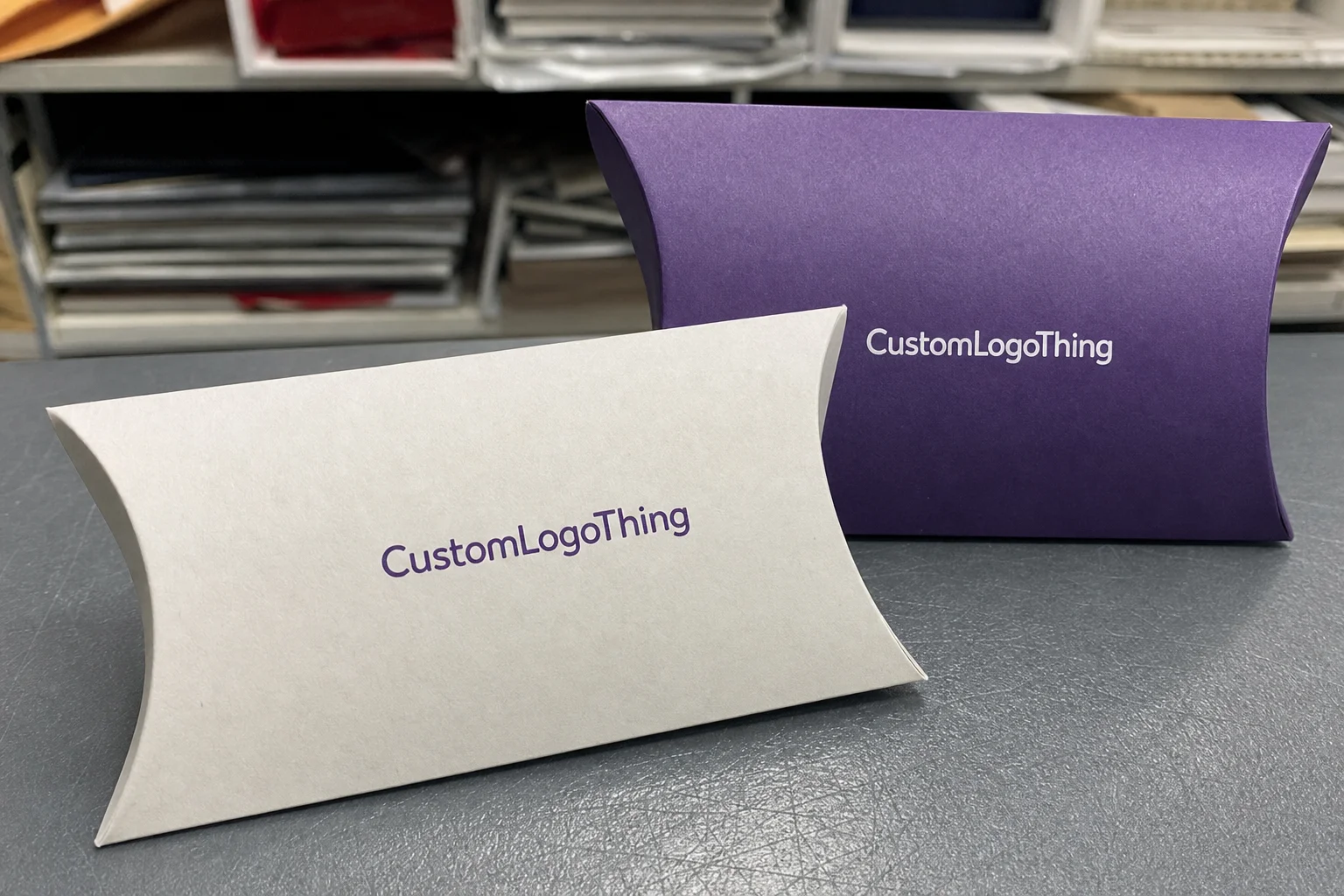
Custom tuck end boxes are folding cartons with tuck flaps that close one or both ends, usually in a retail-friendly rectangular shape with broad printable panels. Converting plants like them because the structure is straightforward to die-cut, fold, and glue, but still flexible enough for a wide range of product packaging needs. The geometry carries more weight than most buyers expect. Shift a score line by a few millimeters and the carton may fold cleanly or fight the machine every few cycles.
Three formats show up again and again. Straight tuck end boxes have top and bottom flaps that tuck in the same direction, which gives the front panel a neat, uninterrupted look. Reverse tuck end boxes fold in opposite directions and are often friendlier to cost and line speed. The auto-lock bottom version is usually chosen for products that need a stronger base or faster manual assembly. Each style has its own behavior, and that is part of what makes custom tuck end boxes so useful for brands trying to balance appearance, cost, and function.
Retail brands choose custom tuck end boxes because the flat panels handle logos, claims, ingredients, and barcodes without crowding. They also work well as e-commerce inserts when the product needs a branded unboxing experience but not the weight of a rigid box. Lip balm sleeves, vitamin bottles, vape accessories, tea samplers, and soap bars all fit this structure well. For lightweight products, the format is efficient and polished without asking for more board than the product needs.
The tradeoff is straightforward. You get less board and less luxury heft than a rigid setup, but you also get faster production, easier storage, and tighter cost control. That is why custom tuck end boxes often sit in the space between presentation and practicality. Brands that want custom printed boxes with intent, not waste, usually end up looking here.
Material choice changes the result in a hurry. A 14pt SBS carton with a gloss aqueous coat feels very different from a 24pt kraft paperboard box with a matte finish and visible fiber texture. Add foil stamping, embossing, or a window patch and the same structural style can move from everyday retail packaging to premium shelf presence in one run. I’ve seen buyers fall for a sample simply because the coating caught the light correctly at eighteen inches.
“The box may look simple to a shopper, but on the floor, it’s a collection of scores, panels, and folds that either work together or waste time.” — something I’ve said more than once standing beside a folding and gluing line
The short version: custom tuck end boxes are chosen because they are efficient, versatile, and brand-friendly. The longer version is better. They can be engineered to do far more than most people expect from a carton that looks plain at first glance.
How Custom Tuck End Boxes Are Built on the Production Line
The production flow for custom tuck end boxes usually starts with the dieline. That flat layout is the blueprint for every panel, score, glue flap, and tuck tab. If the dieline misses by even a small amount, the problems show up later: graphics crossing folds, tuck flaps binding, or glue seams drifting out of register. I’ve seen a 0.5 mm shift turn a good carton into a headache because the barcode landed too close to a score line and stopped scanning reliably.
Once the dieline gets approval, the job moves into print. In commercial box plants, you usually see offset lithography for high-volume, high-image-quality runs, digital printing for shorter quantities or versioned artwork, and flexographic printing when the job is built around speed and certain board types. The right method depends on quantity, color complexity, and budget. A cosmetics line with rich gradients and photographic images often wants offset. A small pilot run of custom tuck end boxes for a new supplement formula may make more sense in digital, especially if the design still needs changes.
Board stock matters just as much as the print method. In plants I’ve worked with, common substrates include SBS for a bright, premium surface, CCNB for a more cost-conscious recycled option, kraft paperboard when a brand wants an earthy look, and corrugated alternatives for heavier items or added crush resistance. A 16pt SBS carton and an 18pt CCNB carton may look similar in mockup, yet they behave differently on the machine and in the hand. That is why samples matter so much for custom tuck end boxes.
After printing, the sheets move through die-cutting, where steel rule dies cut the outer shape and create score lines that help the carton fold. Then comes stripping, folding, and gluing. On a well-tuned line, the blanks feed through a gluer, the side seam bonds, and the finished flat cartons get bundled for shipment. Quality inspection runs throughout, not just at the end. Operators watch glue laydown, score depth, print registration, and carton squareness because a small flaw early can turn into wasted cartons later.
Finishing is where custom tuck end boxes can separate themselves from plain stock packaging. Aqueous coating offers a protective, usually economical finish. UV coating adds stronger shine and abrasion resistance. Embossing raises selected elements for texture. Foil stamping adds metallic accents, which works especially well on premium skincare and candle packaging. Window patching lets shoppers see the product through a die-cut opening with a clear film, a detail that still sells well for bakery, soap, and toy packaging. Those choices are not merely decorative; they affect durability, scuff resistance, and how a carton presents under retail lights.
For buyers comparing options, a simple matrix helps. I use a version of this whenever clients ask whether custom tuck end boxes should be built for speed, shelf appeal, or premium feel:
| Box Style | Best For | Assembly Speed | Typical Material | Common Notes |
|---|---|---|---|---|
| Straight tuck end | Cosmetics, supplements, retail display | Fast | 14pt to 18pt SBS | Clean front panel, good shelf presentation |
| Reverse tuck end | Mass retail, budget-sensitive product packaging | Very fast | 14pt CCNB or SBS | Often economical, dependable on converting lines |
| Auto-lock bottom | Heavier lightweight goods, faster hand packing | Very fast after setup | 16pt to 24pt board | Stronger base, useful for volume packing |
The table simplifies a more complicated reality. In real production, board thickness, coating, glue type, and carton size all affect how custom tuck end boxes run. Even so, it gives buyers a practical way to think about tradeoffs before they commit to tooling or print plates.
If you are comparing broader packaging options, review Custom Packaging Products so you can compare carton structures before locking in a format. Sometimes a client thinks they need a tuck carton, but the product performs better in another folding style.
Key Factors That Affect Custom Tuck End Box Design and Performance
The first question I ask about custom tuck end boxes is not, “What color do you want?” It is, “What does the product weigh, how will it ship, and where will it sit once it lands?” Product weight, dimensions, fragility, and display needs should drive the structure before anyone opens Photoshop. A 60-gram cosmetic jar has very different requirements than a 220-gram bottle of herbal supplement capsules, and I have watched buyers learn that lesson the expensive way after a carton started bowing in the warehouse.
Board thickness and caliper are major structural factors. A carton with heavier ink coverage may need a different substrate than one with a lighter print load, especially if the box has to hold a precise shape on a crowded retail shelf. With custom tuck end boxes, board choice also affects how clean the folds look after scoring. Too thin, and the carton feels flimsy. Too heavy, and the tuck flaps can resist closure or crack on the score. A press operator in a Midwest plant once told me, very plainly, that the prettiest carton in the room is useless if it will not close by hand without fatigue.
Print coverage changes visual quality and sometimes price. A full flood of dark ink across a large panel can look dramatic, but it may show scuffing more easily and need a stronger coating. Light coverage with plenty of white space usually costs less and can still feel premium if the typography and structure are well built. That is one reason custom tuck end boxes are so adaptable: the same shape can support budget-friendly mass retail or upscale boutique branding depending on the print architecture.
Pricing surprises a lot of people. The major cost drivers usually include quantity, box size, material grade, color count, finishing, inserts, and tooling. A run of 5,000 custom tuck end boxes in four-color offset with aqueous coating will price very differently from 500 units in digital print with foil and an emboss. There is also the die cost, which may be a one-time charge, and plate costs for offset work. Request an unusual size or a special window cut, and the tooling conversation changes fast.
Sustainability matters too, and not just as a marketing line. Recyclable substrates, minimal coatings, soy-based or low-VOC inks, and smart right-sizing can reduce waste. I have sat in meetings where a brand wanted a “green” carton but specified heavy lamination, metallic foil on every panel, and a box 30 percent larger than the product needed. That is not a sustainability plan. If the goal is genuinely better packaging design, custom tuck end boxes should be sized tightly and specified with end-of-life in mind. The U.S. EPA has useful packaging and waste reduction guidance at epa.gov, and it is worth checking when sustainability claims matter to your brand.
Branding goals can pull the carton in different directions. Luxury presentation usually means richer print, smoother board, a softer-touch coating, and restrained typography. Budget mass retail may favor simpler graphics, faster assembly, and fewer finishing steps. Neither approach is wrong. I have seen both win, depending on the channel. The key is matching the carton to the product category instead of trying to force one style to do every job. Good custom tuck end boxes support package branding; weak ones just consume budget.
Handling conditions matter too. A carton intended for a dry boutique shelf can behave differently from one that spends two weeks in a humid distribution center. Humidity, temperature swings, and stacking pressure all affect performance. If a box is likely to travel far before it reaches retail, choose the substrate and coating with that route in mind, not only with the mockup in mind.
Step-by-Step: How to Order Custom Tuck End Boxes Without Delays
The smoothest custom tuck end boxes projects begin with exact measurements. I want the product’s width, depth, height, and any closure allowance measured in millimeters or inches, plus the desired fill orientation if the item sits upright or sideways. If the product includes a dropper, pump, cap, blister tray, or insert, those details matter too. A bottle with a tall cap may need a different inner height than the main container suggests, and ignoring that can make a carton seem custom on paper but unusable on the floor.
After measurements, choose the box style based on product weight and line speed. Straight tuck end works well when presentation matters and you want the front panel to stay clean. Reverse tuck end is often a practical choice for moderate volumes where production efficiency matters more than symmetry. Auto-lock bottom can help when the package needs a stronger base or faster manual assembly, which is common in kitting lines or fulfillment rooms. The box style is not a branding afterthought; it changes how custom tuck end boxes behave every day.
Artwork comes next, and this is where many delays start. Request the dieline first, then place logos, copy, ingredient panels, warnings, and barcodes only after the structure is approved. Keep text inside safe zones, extend backgrounds past trim with proper bleed, and avoid placing important copy near folds or glue flaps. In a supplier meeting I had in New Jersey, a client brought gorgeous artwork that placed the expiration date right across a score line. It looked perfect on screen and failed in real life. That kind of fix pushes production back, and it is entirely avoidable.
For print-ready files, use the correct color mode and provide vector artwork where possible. Pantone spot colors can be useful when brand color consistency matters, especially on custom tuck end boxes that sit beside competing products under harsh retail lighting. If you have a barcode, make sure it meets scannability standards and leaves enough quiet space. A beautiful carton that will not scan at receiving is just an expensive problem.
Proofing is where professional buyers save themselves trouble. Review the dieline proof first, then any structural sample, and finally the pre-production proof. If your design includes embossing, foil, a window patch, or special coatings, ask to see how those elements sit on the panel before approving full production. I have seen brands skip the sample and later discover that a matte black box marked every fingerprint from the assembly team. It was a handsome design, but it did not survive the real world.
- Measure the product and confirm fill orientation.
- Select the correct style for the product weight and assembly method.
- Approve the dieline before finalizing artwork.
- Check safe zones, bleed, barcode placement, and fold lines.
- Request a sample or prototype if the carton is structural or premium.
- Approve the pre-production proof only after finish and color review.
- Set production, packing, and freight expectations in writing.
Timelines vary, but a straightforward job for custom tuck end boxes can move through design approval, proofing, print, finishing, and shipment in roughly 12 to 15 business days after final approval if the plant has materials in stock and no structural revisions are needed. Add a new die, foil stamping, or custom inserts, and the schedule stretches. If freight or fulfillment is involved, build that into the plan so the cartons arrive before the product, not after it.
I also recommend asking whether the production site follows recognized quality practices and whether any relevant transit testing is planned. For shipping-related testing guidance, the International Safe Transit Association has useful resources at ista.org, and that matters if your cartons are going to be carton-packed, palletized, or shipped through more than one distribution center.
One more practical note: if you need multiple SKU versions, ask the plant how it handles version control. Custom tuck end boxes often go wrong not because of the carton itself, but because version A, B, and C get mixed in the same proof chain. That is a paperwork problem, not a packaging problem, and it is much easier to prevent than to correct after print.
Custom Tuck End Box Pricing: What You’re Really Paying For
When people ask about custom tuck end boxes pricing, I usually tell them they are paying for five things: material, size, print complexity, finishing, and quantity. A larger carton uses more board, which is obvious. Less obvious is the way bigger print areas, tighter registration, and extra finishing steps add labor and machine time. If a box has a simple two-color layout, no coating, and a standard dieline, the price stays leaner than a carton with foil, emboss, soft-touch film, and a custom window.
Order quantity has a huge effect. Low runs usually cost more per unit because the setup cost gets spread across fewer boxes. That is true for almost every packaging plant I have visited. A 2,500-unit run of custom tuck end boxes may carry a much higher per-box cost than a 20,000-unit run because the same die setup, press make-ready, and QA work still has to happen. Economies of scale are real, but they only help if the inventory plan can handle the extra volume.
There are also hidden or overlooked costs. Structural revisions can trigger new tooling. Special die shapes may require a more expensive cutting rule. Pantone matching can add press complexity. Kitting or manual assembly services can raise the total if the carton needs inserts, shrink bands, or pre-packed components. A client in a West Coast supplement meeting once asked why the quote changed after “just one small flap adjustment.” The answer was simple: one flap adjustment can mean a new die, new setup, and more time on the folder-gluer.
Comparing economy packaging to premium packaging helps put the numbers in context. A budget-friendly version of custom tuck end boxes might use 14pt CCNB, four-color digital print, and aqueous coating. A premium version might use 18pt SBS, offset lithography, soft-touch coating, foil, embossing, and a custom insert. Both are valid. The correct choice depends on margin, channel, and product positioning. If the item retails at $12, I would be cautious about overbuilding the box to the point where the packaging feels more expensive than the product it protects.
| Cost Driver | Economy Option | Premium Option | Typical Impact |
|---|---|---|---|
| Material | CCNB or lighter SBS | High-brightness SBS or specialty board | Changes feel, print quality, and unit cost |
| Printing | Digital or limited-color flexo | Offset with spot colors and tighter registration | Affects image fidelity and setup cost |
| Finishing | Aqueous coating | Soft-touch, foil, emboss, or window patch | Raises both labor and materials cost |
| Quantity | Short run | Long production run | Higher volume lowers per-unit pricing |
| Tooling | Standard die | Custom die and special plates | May add one-time setup charges |
If you want apples-to-apples quotes, send every vendor the same spec sheet. Include board grade, dimensions, print sides, finish, quantity, insert needs, and target use case. Ask whether pricing includes plates, dies, freight, and proofing. If one quote for custom tuck end boxes looks dramatically cheaper than the others, verify what is missing before assuming you found the best value. Often, the missing line item is the real cost.
Honestly, the best pricing conversations are not about getting the lowest number. They are about getting the right number for the right carton, so you do not pay for details that never help the product sell.
Common Mistakes to Avoid With Custom Tuck End Boxes
The first mistake is choosing the wrong structure for the product weight. A carton that looks fine in a flat mockup may fail once a glass bottle, metal tin, or heavy jar is inside. If the product is too heavy for the board caliper or the tuck style, the flaps can bow, crack, or pop open under pressure. I have seen custom tuck end boxes fail shelf tests simply because someone picked the prettiest format instead of the most suitable one.
The second mistake is designing artwork before confirming the dieline. Text on folds, logos clipped by trim, and barcodes too close to a score line are all avoidable if the structure gets approved first. One of the oldest truths in packaging design is that a beautiful layout can still be a bad carton if the panel map is wrong. With custom tuck end boxes, the dieline is not a technical detail; it is the foundation.
Another common problem is choosing finishes that look impressive in a rendering but behave poorly in use. A high-gloss surface can scuff in transit. Heavy foil can crack on a fold if the design crosses a score line. Soft-touch lamination can feel great but add cost and slow turnaround. I have had clients bring in samples that looked stunning under showroom light yet showed fingerprints and abrasion after one distribution cycle. The finish has to match the environment, not just the presentation board.
Assembly speed matters too, especially on reverse tuck end styles in higher-volume packing lines. If the carton takes too much hand manipulation, labor cost rises and consistency falls. I have watched teams on an Illinois packing line lose productivity because a small tuck direction change created friction at every assembly step. That is a real cost, and it shows up fast.
Shipping and storage conditions often get ignored until the warehouse calls. Humid air can soften board performance, while long transit times can stress corners and glue seams. If your custom tuck end boxes are headed for a moist environment or a long import route, ask about board selection, coating, and storage recommendations. Packaging that sits in climate-controlled sample rooms may behave very differently in a summer distribution center with open dock doors.
Finally, some buyers assume all carton specs are interchangeable across suppliers. They are not. One plant may quote a 16pt SBS with a certain caliper that another plant interprets differently. That is why I always advise people to compare exact specifications, not just box names. In packaging, names help, but specs win.
Expert Tips for Better Custom Tuck End Boxes and Next Steps
If you are serious about improving custom tuck end boxes, ask for a sample pack or structural prototype before final approval. A plain white sample can reveal fit, tuck pressure, and closure behavior long before artwork enters the conversation. In my experience, a 10-minute physical check saves far more time than a day of email revisions. You can spot crush risk, flap interference, and panel proportions immediately when the carton is in your hands.
Another good move is simplifying artwork where it will not be seen. Put the budget where shoppers actually look: the front panel, top flap, and key side panel. Back panels can stay cleaner if that lets you improve typography, add a better coating, or upgrade the board. That is especially smart on custom tuck end boxes where every extra print operation adds cost without necessarily adding sales value.
Check shelf readability from arm’s length. I tell clients to stand six feet away, then two feet away, and finally pick up the carton under retail lighting. If the product name, dosage, variant, or flavor is not clear at those distances, the packaging needs another pass. The same goes for barcode scannability. The best branded packaging still has to function for cashiers, warehouse receivers, and fulfillment teams.
Align the design with the production method used in the plant. If the shop is built around offset, design for rich image quality and precise registration. If the plant is optimized for digital, do not ask for effects that will fight the process. That match between design and machine capability is where good packaging lives. Custom tuck end boxes perform best when the creative idea respects the equipment making them.
Here is the next-step checklist I give clients in supplier meetings:
- Measure the product accurately, including closures and inserts.
- Choose straight tuck, reverse tuck, or auto-lock based on weight and assembly.
- Request the dieline before final artwork.
- Use a barcode-safe layout with proper bleed and safe zones.
- Ask for a sample or prototype if the carton is premium or structural.
- Compare quotes with identical specs, not rough descriptions.
- Confirm lead time, freight, and proof approval milestones in writing.
If you follow that sequence, custom tuck end boxes become much easier to manage, and you are less likely to end up with packaging that looks good online but struggles in production. That is the difference between a box that merely exists and a carton that supports the product, the brand, and the budget.
For brands building out a larger packaging program, review related Custom Packaging Products so the tuck carton is chosen in context, not as a stand-alone decision. A good carton should fit into the whole system: product, shelf, shipper, and customer experience.
If you want my honest take, custom tuck end boxes are one of the most underrated formats in packaging. They are efficient, flexible, and capable of looking far more expensive than they are when the structure, stock, and finishing are chosen with care. That is the kind of work I have always respected most on the factory floor: not the loudest carton, just the one that does its job beautifully. The practical takeaway is simple: start with the product’s weight and route, approve the dieline before artwork, and match board, finish, and style to the environment the box will actually face.
FAQ
What are custom tuck end boxes used for?
They are commonly used for retail products, cosmetics, supplements, small electronics, candles, and lightweight consumer goods. Custom tuck end boxes offer a clean presentation, easy assembly, and efficient material use for branded packaging and product packaging alike.
What is the difference between straight tuck end and reverse tuck end boxes?
Straight tuck end boxes have top and bottom tuck flaps that fold in the same direction, which creates a smoother front panel appearance. Reverse tuck end boxes fold in opposite directions, which can be easier to manufacture and often more economical for custom tuck end boxes.
How much do custom tuck end boxes cost?
Pricing depends on box size, material, print method, quantity, and finishing choices. Per-unit cost usually drops as order volume increases, while premium finishes and special structures raise the price for custom tuck end boxes.
How long does it take to produce custom tuck end boxes?
Timeline depends on whether you need new artwork, dielines, samples, or special finishes. Simple runs move faster, while custom structural changes and print approvals add more time before production for custom tuck end boxes.
How do I make sure my artwork fits custom tuck end boxes correctly?
Start with an approved dieline and place all text, logos, and barcodes inside the safe zones. Check bleeds, folds, and flap locations carefully so nothing important lands on a score line in custom tuck end boxes.