Custom Velvet Drawstring Bags: How to Order in Bulk
Custom velvet drawstring bags do a lot of quiet work. They make jewelry feel giftable, cosmetics feel more deliberate, and small promotional items feel like part of a branded package instead of a loose giveaway. That lift usually comes from a few inches of fabric, a decent cord, and a finish that holds up once the pouch is handled, filled, and shipped.
Buyers gravitate to velvet for a reason: the material carries perceived value well. A soft pile, deep color, and clean closure can make a small bag look more expensive than it is. The catch is that velvet exposes weak production faster than plain cotton or nonwoven fabric. Thin pile shows seam shadowing. Uneven cutting makes each bag hang differently. A flimsy cord can undo the whole effect. If the bag is going to represent a premium item, the spec has to be specific enough to support that promise.
Common sizes for custom velvet drawstring bags usually start around 3 x 4 inches and stretch through 8 x 10 inches, with 4 x 6, 5 x 7, and 6 x 8 covering most retail and gift applications. Measure the actual packed item rather than guessing from the product name. A bottle in a carton, a candle in a sleeve, and a ring box all demand different allowances, even if they sit in the same category on a sourcing sheet.
Why Velvet Bags Feel More Premium Than the Price Suggests
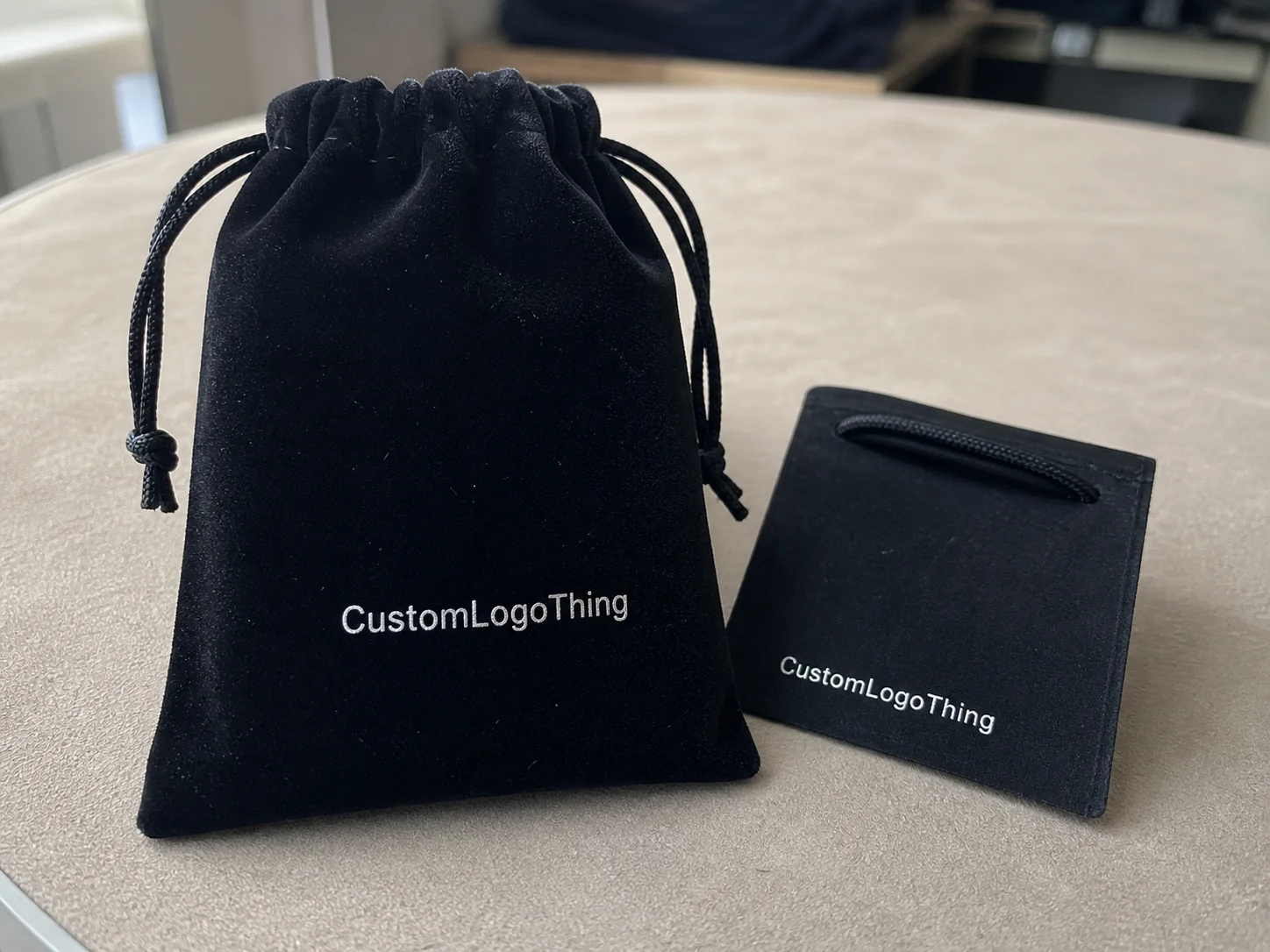
Velvet sits in a useful middle zone for packaging. It feels richer than basic cotton, more tactile than satin, and more polished than a plain microfiber pouch. That makes it a strong option for jewelry, candles, skincare minis, fragrance samples, and presentation kits where the unboxing moment matters as much as the object inside.
The visual effect is doing real work. Velvet absorbs light differently than flat woven fabrics, so color tends to read deeper and more saturated. Black looks dramatic. Burgundy can look expensive if the dye is even. Emerald can be striking, but only if the pile is consistent and the logo treatment is chosen with contrast in mind. Buyers notice color before they touch a product, and the pouch is often the first branded surface they encounter.
That same visual richness can become a liability if the order is under-spec’d. Cheap velvet looks tired quickly. Loose fibers make the surface uneven. A weak cord creates a bargain-bin impression. Once the pouch is filled, those flaws become easier to see, not harder. Velvet rewards careful sourcing because the material does not hide mistakes the way some matte fabrics do.
If you are comparing pouch options, think in use cases rather than in abstract categories. Cotton is easier to print and often cheaper. Satin has a gift-like sheen but can feel slippery or lightweight. Microfiber can take clean graphics, though it lacks the plush hand feel many buyers want. Velvet is the better choice when the bag itself is part of the product presentation, not just a container.
How Velvet Drawstring Bags Are Built and Finished
A decent velvet pouch starts with the fabric. Most custom velvet drawstring bags use polyester velvet or a similar synthetic plush material because it is more consistent to source, more predictable in color matching, and less temperamental than many natural options. Fabric weight matters. Too light and the bag slumps. Too heavy and it becomes bulky for small items. For bulk orders, buyers often land somewhere in the 180 gsm to 260 gsm range, depending on how structured they want the pouch to feel.
The construction is usually straightforward: cut the panels, stitch the sides, finish the top edge, insert the cord, and close the channel. A gusset adds capacity and helps the bag hold boxier contents. Double stitching is a good sign that the factory is paying attention. Clean inside seams matter more than people assume, because loose threads and uneven allowances make the whole piece feel lower grade even if the outside looks fine.
Decoration changes both the look and the unit cost. The common options are not interchangeable.
- Embroidery gives a tactile, premium feel and holds up well under handling.
- Screen print works best for simple logos and sharper unit economics.
- Heat transfer can suit small runs or more detailed art, though velvet texture can soften fine detail.
- Woven labels offer restrained branding without covering the surface.
- Metallic accents can work for holiday sets if the design can support them without becoming cluttered.
Pile direction also matters. Velvet reflects light differently depending on the nap, so two bags from the same run can look subtly different if cutting and assembly are inconsistent. That is one reason sample approval is not a formality. A proper sample should show the actual fabric, cord, stitch quality, and logo placement, not a generic mockup printed on a smooth substrate that behaves nothing like velvet.
For broader packaging terminology and supplier education, packaging.org is a useful reference point. It will not spec the pouch for you, but it does help anchor the discussion in practical packaging language rather than vague sales copy.
What to ask for in a sample: confirm size tolerance, fabric weight, cord type, stitch quality, print or embroidery placement, and whether the bag still sits neatly once filled. If the pouch is going into a launch kit or premium gift set, request a filled sample too. An empty pouch can look perfect and still perform badly once the product is inside.
Cost, Pricing, and MOQ Basics
The Price of Custom velvet drawstring bags depends on more than size. Fabric weight, bag dimensions, color count, decoration method, packing format, and quantity all push the quote around. A small black bag with one-color print is a different job from a larger pouch with embroidery, custom dye, and individual polybagging.
MOQ usually follows how the factory sets up the run. If a supplier already stocks velvet in a standard color, the minimum can be lower. If the order calls for a custom shade, dense embroidery, or a special cord, the MOQ rises. For many bulk orders, minimums tend to land around 300 to 1,000 pieces, with pricing improving more noticeably in the 1,000 to 5,000 range.
Here is a practical pricing frame. The exact figures vary by region and spec, but the pattern is consistent.
| Tier | Typical Spec | Usual MOQ | Indicative Unit Price |
|---|---|---|---|
| Budget | Standard size, stock color, simple print | 500-1,000 pcs | $0.35-$0.75 |
| Mid-tier | Better fabric weight, cleaner stitching, one-color logo or simple embroidery | 1,000-3,000 pcs | $0.75-$1.40 |
| Premium | Heavier velvet, custom color, embroidery, label, or special finishing | 2,000+ pcs | $1.40-$3.00+ |
Those numbers are a buying range, not a promise. Quote apples-to-apples by asking each supplier for the same variables: finished size, fabric weight, logo method, cord type, packing method, and destination. If one quote is far cheaper than the others, check whether it excludes setup, sample charges, artwork corrections, or carton fees. Hidden costs are usually where the headache starts.
If you are sourcing other branded packaging at the same time, such as inserts, mailers, or Custom Packaging Products, keep the pouch spec aligned with the rest of the package system. A high-end velvet bag inside a weak outer shipper creates an inconsistent customer experience, and inconsistency is visible even when buyers cannot name it.
Production Steps and Timeline: From Artwork to Delivery
Production stays manageable when the buyer is organized. It gets slow when the size is guessed, artwork is vague, or approval drifts across multiple rounds. A standard order for custom velvet drawstring bags usually moves through spec confirmation, artwork setup, sample making, sample approval, bulk production, inspection, and shipping.
For a simple run, sample development often takes 5 to 10 business days. Bulk production usually adds another 12 to 20 business days after approval, depending on factory load and decoration complexity. Shipping time sits on top of that. Custom colors, dense embroidery, and seasonal deadlines all extend the schedule. Velvet is not the material to rush if the final bag needs to look polished.
A rough timeline looks like this:
- Day 1-2: Send dimensions, quantity, logo files, and target delivery date.
- Day 3-7: Receive spec confirmation and sample mockup.
- Day 7-14: Approve the physical sample or request revisions.
- Day 15-35: Bulk production and in-line quality checks.
- Final stage: Inspection, packing, freight booking, and delivery.
Speed comes from preparation. If the logo is ready in vector format, the size is confirmed, and the quantity is final, the factory can quote more accurately and move faster. If the decision is still between 4 x 6 and 5 x 7 inches, the process stalls. That delay is usually self-inflicted.
For shipment validation, ISTA test methods are a sensible baseline if the pouch is part of a larger product set. They help check whether the package survives transit conditions rather than just looking acceptable on a desk.
Rush orders are possible with some factories, but they usually cost more and reduce flexibility. That is normal. Fast, cheap, and highly custom rarely coexist without compromise.
How to Choose the Right Size, Color, and Decoration
Size should follow the product, not the category label. A jewelry box, a perfume sample, and a candle jar all need different allowances even if they sound similar on a sourcing sheet. Measure the widest point, the tallest point, and any outer packaging. Then add room for easy insertion and a clean draw closure.
Color does more than decorate. Dark shades tend to feel more luxurious and hide handling marks better. Lighter colors photograph well, but they show dust, fiber shift, and scuffs faster. If the logo needs contrast, avoid selecting a velvet tone that sits too close to the print or embroidery color. That sounds obvious. It still gets missed.
Decoration should match the logo, not the wish list. Fine-line art, tiny text, and gradient-heavy graphics are a poor fit for most velvet pouch runs unless the factory has unusually tight print control. Embroidery gives a richer look, but it can overwhelm small logos. Screen print is usually cleaner for simple marks. Woven labels work well when the goal is restrained branding rather than loud promotion.
Other practical details matter more than buyers expect.
- Drawstring length: too short feels stingy and can be awkward to close.
- Gusset depth: useful for boxed items or products that need side room.
- Closure feel: a smooth cord is better than one that catches in the channel.
- Bag structure: if the pouch needs to stand, ask for stronger side seams and a better base cut.
If the pouch is part of a broader retail packaging set, think about how it relates to any outer carton or custom printed boxes. The graphics do not need to match exactly, but the color family, finish level, and logo treatment should feel like they belong to the same system.
Practical rule: test the actual product in the sample bag, not just a ruler. A pouch that looks perfect empty can become awkward once a rigid box, glass bottle, or irregular item is inside.
Common Ordering Mistakes That Waste Money
The expensive mistakes are usually small and boring. They do not look dramatic on paper, but they add up across a bulk order.
First, people order before confirming dimensions. A bag that is two centimeters too short can fail in a way that looks embarrassingly basic. Second, they approve decoration before checking how artwork behaves on velvet texture. Fine detail can blur. Thin lines can disappear. Low-contrast logos can look muddy instead of premium.
Sampling is another weak point. Skipping a sample to save a few days often costs more later because color mismatch, weak closures, or oversized bags can trigger rework. If the pouch is tied to a premium launch, wedding set, or gift program, a sample is cheap insurance.
There are also logistics mistakes that quietly inflate cost:
- Ordering the wrong size for boxed or padded products.
- Ignoring shipping volume, which can raise freight cost faster than expected.
- Approving a quote without checking setup fees.
- Forgetting that each color or decoration change can create a separate MOQ.
One more trap: buyers assume velvet automatically upgrades everything. Not true. If the rest of the packaging is weak, the pouch can look like a nice item sitting in a cheap system. The full package has to hold together visually.
Better question: Does the bag make the product feel more intentional, or just more expensive? Those are not the same thing.
To keep quotes comparable, use the same inputs every time: size, fabric weight, logo method, finish level, quantity, and delivery destination. One incomplete request can waste days of back-and-forth and still leave you with a number that is hard to trust.
Expert Tips for Better Custom Velvet Bags
If the pouch is part of a premium launch, ask for a pre-production sample. A digital mockup is not enough. Custom velvet drawstring bags live or die on tactile quality, and images cannot show nap direction, seam finish, or how the cord actually sits in the channel.
Keep the artwork simple if speed and readability matter. Strong logos, high-contrast colors, and clean icon shapes print and embroider more reliably than delicate graphics. That advice sounds plain because it is practical. In packaging, plain usually costs less to fix.
Test the filled bag before approving the run. Put the actual product in it, close it, shake it, and carry it for a minute. If the closure pops open or the item looks crushed, the size or construction needs adjustment. A pouch that passes the empty test is not enough.
Ask direct questions. Good suppliers answer without drifting into vague comfort language.
- What is your standard size tolerance?
- How do you inspect stitching and logo placement?
- What happens if the sample and bulk run differ?
- What is your replacement policy for obvious defects?
For program-level quality control, pair the order with a basic inspection plan and a shipment standard. A supplier should be able to speak clearly about checks, tolerances, and packing consistency. If they cannot, the risk moves from theoretical to practical very quickly.
For packaging process context, packaging.org and the transit testing guidance at ISTA are both useful. They are not velvet-specific, but they help you judge performance instead of just appearance.
The best custom velvet drawstring bags usually disappear into the experience. They hold shape, close cleanly, and let the product feel more finished than it would in a generic pouch. That is the standard. Anything less is just fabric with a logo on it.
Next Steps: Build a Quote-Ready Spec Sheet
If you want a clean quote, send fewer guesses and more facts. The fastest way to buy custom velvet drawstring bags is to hand suppliers a spec sheet that answers the annoying questions before they have to ask.
Collect these details before you request pricing:
- Finished bag size: width and height, plus gusset depth if needed.
- Fabric color: stock shade or custom match.
- Logo method: embroidery, print, woven label, or a simple accent.
- Quantity: target order size and any reorder estimate.
- Destination: where the goods ship, so freight is not a guess.
- Delivery date: launch date, event date, or receiving window.
- Product dimensions: the actual item or box the pouch needs to fit.
Add a product photo if you have one. Better yet, include a picture of the item next to a ruler. That removes most of the back-and-forth about whether a 4 x 6 pouch is enough or whether a 5 x 7 size is the safer choice. The photo usually answers it.
Ask for two quote versions if you want a cleaner comparison: one cost-focused and one premium. That shows how much changes when fabric weight, decoration, and finishing move up or down. It is a more useful decision tool than staring at a single number and pretending it tells the whole story.
The right custom velvet drawstring bags should fit the product, support the brand, and stay within budget without looking budget-led. Finalize the spec, approve the sample, compare finish quality against unit cost, and move only when the pouch earns its place in the package.
What should I know before ordering custom velvet drawstring bags in bulk?
Confirm product dimensions first so the bag does not end up too tight or too loose. Decide on decoration method, quantity, and delivery timing before requesting quotes. Ask for a sample or photo proof to verify color, texture, and logo placement.
Are custom velvet drawstring bags expensive compared with other pouch materials?
Velvet usually costs more than basic cotton or nonwoven bags, but less than many hard-goods packaging upgrades. Price depends heavily on size, finish, embroidery complexity, and quantity. The unit cost usually drops meaningfully at higher volumes, so small runs pay a premium.
What is the usual lead time for custom velvet drawstring bags?
Standard orders often need time for sample approval, bulk production, inspection, and shipping. Complex decoration or custom colors can extend the schedule. Rush orders may be possible, but they usually cost more and reduce flexibility.
Which logo method works best on velvet drawstring bags?
Embroidery gives a premium look and holds up well, but it adds cost. Print methods can be more affordable, though texture may affect sharpness. The best choice depends on budget, logo detail, and how premium the bag needs to feel.
How do I choose the right size for custom velvet drawstring bags?
Measure the product at its widest and tallest points, then add enough allowance for easy insertion and closure. Consider whether the item is boxed, padded, or irregularly shaped. Test the actual product in a sample bag before approving the full order.

