Custom velvet pouches are a fast way to raise perceived value without moving into a rigid box or expensive structural pack. They show up in jewelry, cosmetics, gift sets, tech accessories, and promotional kits because they change the first impression quickly. The product inside may be small; the packaging still reads as deliberate.
The material does most of the work. Velvet has a soft hand feel, a deeper visual finish, and a stronger sense of occasion than plain cotton or paper-based packaging. That said, it is still a soft package. It is useful for presentation and light protection, not for replacing a shipper or cushioning system.
That distinction matters when buyers are comparing packaging options. If the goal is display, gift presentation, and gentle internal protection, velvet is a strong choice. If the product has sharp edges, needs moisture resistance, or will be exposed to rough parcel handling, a rigid mailer, insert, or outer carton is the better solution.
A velvet pouch can make a modest item feel curated. It cannot fix poor sizing, weak artwork, or a packaging system that was never designed for the product inside.
Why Custom Velvet Pouches Feel More Premium Than They Cost
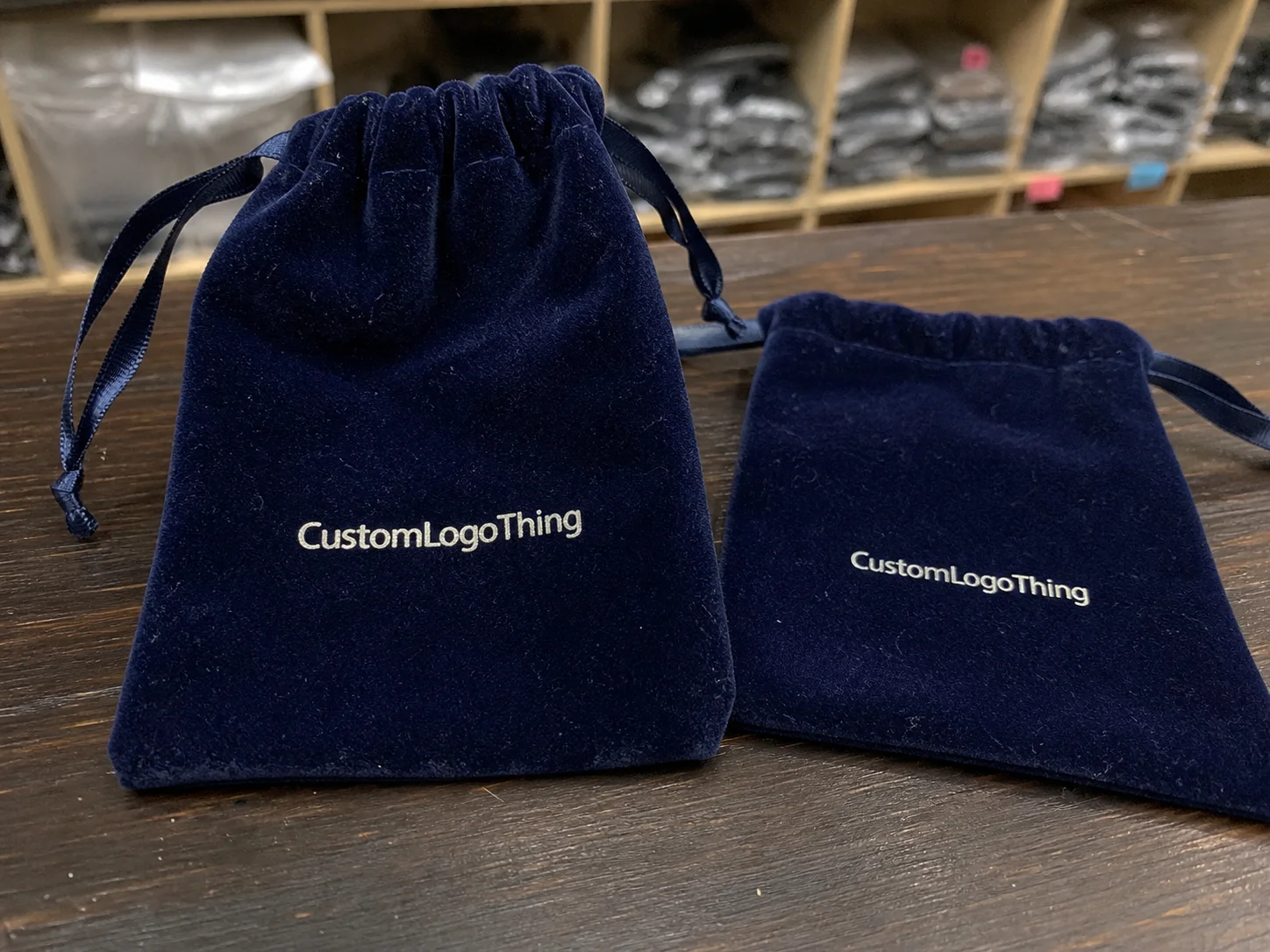
Packaging is judged in seconds. Buyers notice color, texture, and proportion before they read copy or inspect details. Velvet works well in that short window because it looks denser than it is. A flat printed sleeve can communicate information, but a velvet pouch signals occasion.
That is why these pouches remain common in categories that depend on presentation: rings, bracelets, watches, fragrance samples, earbuds, USB drives, cosmetics, and wedding favors. The pouch gives the product a boundary and makes the item feel handled with care, even when the item itself is inexpensive.
The premium effect usually comes from small things working together: dense pile, straight seams, clean stitching, a closure that sits flat, and branding that is legible without being loud. On velvet, restraint usually looks more expensive than oversized graphics. Small embroidery, a woven label, or a subtle foil mark generally holds up better than a large logo.
Color choice also changes the perception. Darker shades feel rich but can hide fine detail. Light shades look gift-like but show lint and handling marks faster. Mid-tone colors are often the easiest to brand because they balance contrast and wear. Buyers who skip sampling often notice these differences only after production.
The cost advantage is real, but limited. Velvet is best used where the product is already stable and where the customer experience benefits from a softer reveal. It is not the right answer for every item, and it should not be treated as a structural packaging system.
How Custom Velvet Pouches Are Built and Decorated
Most velvet pouches use polyester velvet or microfiber velvet because those materials are easier to source consistently and hold color well. Natural velvet exists, but for packaging, repeatability and cost usually matter more than fiber type.
The inside of the pouch matters as much as the outside. It affects movement, scuffing, and the way the pouch feels when opened. A satin or microfiber lining is common for jewelry and polished accessories because it reduces friction. A self-lined pouch can lower cost for softer items, but it may feel less refined.
Closure style changes both price and use. Drawstrings are the standard because they are simple and economical. Ribbon ties feel more gift-oriented. Zippers offer better containment for loose items. Snaps and flap closures look more formal, but they add hardware, complexity, and alignment risk.
Decoration options include embroidery, woven labels, printed marks, foil stamping on an attached tag, piping, contrasting drawcords, and custom color matching. Embroidery usually feels the most tactile and ages well on velvet, but it is not ideal for tiny type. Printing can work for simple marks, though the pile can soften edges. What looks crisp on a mockup can shift once it is stitched or printed on textured fabric.
That is why sampling matters. A digital file does not show how the logo will read in hand. Check the mark at actual size, in daylight and indoor light, and with the pouch filled. Velvet bends around contents, which can change logo placement more than buyers expect.
Material variation also needs attention. Velvet pile direction changes how light reflects, so the same color can look slightly different from run to run. A good supplier will control this, but the safest approach is still a reference sample and a clear approval standard.
Cost and Pricing: What Actually Changes the Quote
Pricing is driven by a few predictable variables. Size is the first one. A larger pouch uses more fabric, more lining, and more sewing time. Fabric weight matters too, since denser velvet and better lining materials cost more.
Closure choice is another factor. A basic drawstring is far cheaper than a zipper, and a zipper is usually cheaper than a custom hardware closure with multiple parts. Decoration can move the price even more than the base material. Embroidery requires setup and thread handling. Multiple colors, woven labels, edge piping, and logo placement on both sides add labor.
MOQ also affects unit cost. Small runs are not penalized arbitrarily; setup costs are simply spread across fewer units. A 500-piece order will usually cost more per unit than a 5,000-piece order, even if the pouch design is identical.
Buyers also miss the cost of the invisible parts. Folding, polybagging, carton packing, labeling, pallet prep, and freight all affect landed cost. One quote may look cheaper until the packing spec is added back in. Another may include a better shipping format and end up cheaper overall. Comparing unit price alone is how packaging budgets get distorted.
| Option | Typical MOQ | Approx. Unit Price | Best For |
|---|---|---|---|
| Stock-style velvet pouch with basic logo label | 500-1,000 | $0.35-$0.70 | Promotional kits, simple retail sets, low-complexity launches |
| Semi-custom pouch with printed or woven branding | 1,000-3,000 | $0.55-$1.10 | Mid-tier branded packaging with cleaner presentation |
| Fully custom size, lining, and embroidery | 3,000+ | $0.90-$2.50 | Jewelry, premium cosmetics, gift programs, and controlled brand systems |
Those ranges are only useful if the specs match. If the lining, size, decoration, or packing format differs, the quote is not a real comparison. For teams evaluating packaging more broadly, it helps to think of the pouch, insert, carton, and outer shipper as one system. Standards and distribution guidance from organizations such as ISTA can help teams think more clearly about transit risk, while broader packaging resources like The Packaging School are useful for understanding how material selection affects downstream performance.
Production Process and Turnaround: From Sample to Shipment
The process is straightforward on paper: review the spec, make a sample, approve it, produce the bulk order, inspect, pack, and ship. In practice, the quality of the brief determines how smoothly the order moves. Finished size, fabric type, color, lining, closure, decoration method, quantity, and target delivery date all need to be clear before the quote is treated as final.
Sample lead time and bulk lead time are not the same. A simple sample may be ready in a few business days if the materials are standard and the decoration is straightforward. Bulk production is slower because cutting, sewing, finishing, and packing all happen at scale. For a simple run, 12-20 business days after approval is a reasonable planning range. Custom dye matching, embroidery, or special closures can extend that schedule.
Velvet also adds a few production variables. Pile direction can make the same pouch look slightly different from one angle to another. Seams can pull the fabric once the pouch is filled. Logo placement can shift by a few millimeters and still be acceptable, or shift by the same amount and look off if the artwork is small. Loose specs create loose results.
Good production control goes beyond checking the first sample. Verify stitch density, seam allowance, drawstring movement, logo alignment against a physical product, and whether the lining catches on clasps or sharp edges. If the pouch will hold plated items, glass, or anything with corners, inspect the inside for snag points before bulk approval.
If the pouches will travel through regular parcel handling, ask whether the shipment should be tested against drop or vibration criteria. A velvet pouch is meant to present the product and prevent scuffing. It is not meant to absorb shipping abuse. The full system needs to be tested as a unit.
How to Spec the Right Size, Closure, and Finish
Start with the product dimensions, not the pouch label. Measure the widest and thickest points, then add enough room for easy insertion and a clean closure. If the fit is too tight, the pouch looks strained and the fabric distorts around the contents. If it is too loose, the product shifts and the presentation loses shape.
Closure should follow use case. Drawstrings are best for fast packing and low unit cost. Ribbon ties can look more gift-like, but they need consistent tying. Zippers are better for holding contents securely, especially if the product may be reused. Snap or flap closures feel more structured, but they add complexity and require tighter manufacturing tolerance.
The interior finish should match the product surface. Jewelry, watches, polished metal goods, and coated accessories usually need a softer lining to reduce scuffing. Soft goods, sample items, and lightweight accessories can often use simpler construction. If the product can scratch, chip, or pick up lint easily, the lining should not be treated as a cost-saving area.
Color choice deserves more attention than most briefs give it. Dark colors hide handling marks but can hide logo detail. Light colors look refined but show dust and wear faster. Medium tones are often easier to brand because contrast remains legible without feeling heavy. If the brand palette is sensitive, ask for a physical strike-off or sample batch in the actual color. Screens do not predict fabric accurately.
A clean spec sheet should include:
- Finished dimensions
- Product dimensions and any insert size
- Outer fabric color and lining color
- Closure style
- Logo method, size, and placement
- Packaging format for shipment
- Target delivery date
That sheet reduces back-and-forth and makes it easier to compare Custom Packaging Products on the same basis. It also exposes gaps in the brief before they become production problems.
Common Mistakes That Waste Money or Create Returns
The first mistake is ordering the wrong size. Too small, and the pouch bulges, the drawstring strains, and the logo sits on a warped surface. Too large, and the product slides around until the pouch feels sloppy. A presentation item that cannot hold its shape is not premium.
The second mistake is approving an empty sample and assuming it is enough. Empty samples tell you very little. The real test is to insert the product, close the pouch, handle it, and inspect it under normal lighting. Check the way the closure sits, whether the lining catches, and whether the logo stays readable once the pouch has weight inside it.
Artwork issues cause more trouble than most teams expect. Velvet is textured, so thin lines can disappear and fine type can lose clarity. A mark that looks elegant on a flat mockup may turn muddy on fabric. A logo that is too large can also make the pouch feel promotional rather than premium. Good decoration on velvet depends on control, not scale.
Quote comparison is another trap. One supplier may include lining, carton packing, and a better logo method. Another may quote a stock pouch with a label added later. The numbers can look close until the missing parts are added back in. If the specs are not identical, the lower price is just a different product.
The last mistake is assuming the pouch can do a shipping carton's job. It cannot. It can protect against scuffing and improve presentation, but it cannot reliably survive compression, water exposure, or rough parcel handling by itself. If the route is hard, the outer packaging needs to carry that load.
Expert Tips and Next Steps for a Clean Order
Keep the brief short, but do not make it vague. A one-page spec is better than a long email thread. Include quantity, dimensions, closure, decoration method, lining, color references, packing format, and target delivery date. The clearer the brief, the cleaner the quote, and the easier it is to spot supplier differences before anyone commits.
Ask for a sample or proof whenever logo visibility, color tone, or fit matters. Custom velvet pouches behave differently under light than they do on screen, even when the art file is technically correct. If the logo is small, request a second placement option. If the color is sensitive, ask for a physical reference. If the pouch has to coordinate with another package component, verify both together.
Plan around production reality rather than wishful timing. A simple order may move in a few weeks after approval, but more complex work needs buffer for sampling, revisions, and freight. If the launch date is fixed, work backward and leave room for changes after the first proof. Those changes are normal; they just need to happen early enough to matter.
For brands building a broader packaging system, velvet pouches work best alongside other Custom Packaging Products such as printed inserts, presentation boxes, or protective outer cartons. The goal is not to make every component fancy. The goal is to make every layer do its job cleanly.
What size should custom velvet pouches be for jewelry or small gifts?
Measure the item first, then add enough space for easy insertion and a neat closure. The right size depends on the product shape, any insert card or tissue, and whether the pouch is meant to sit flat or hold a slightly fuller profile.
What changes the price of custom velvet pouches the most?
Size, fabric weight, closure type, and logo method usually move the price more than buyers expect. MOQ matters as well, because setup costs are spread across fewer or more units. Embroidery, custom labels, and special packing can raise the quote quickly.
How long does production usually take for custom velvet pouches?
Sample timing and bulk timing are separate. A straightforward sample may be ready in a few business days, while bulk production often takes 12-20 business days after approval. Complex decoration, dye matching, or hardware details can extend that schedule.
Are custom velvet pouches good for cosmetics and skincare?
Yes, if the size fits properly and the interior finish will not scuff the product. For heavier items or products that can leak, check the closure and lining carefully before bulk production. Velvet works best as a presentation layer, not as a containment system for messy contents.
Do I need a sample before ordering custom velvet pouches in bulk?
Yes. A sample is the cheapest way to verify fit, color, logo visibility, and seam quality. For custom velvet pouches, the difference between a screen mockup and a finished pouch is often larger than buyers assume, especially once the pouch is filled and handled.

