A chilled bottle pulled from a cooler tells the story quickly. If the label wrinkles, smears, or starts to lift at the edges, the package looks tired before the product gets a fair chance. That is why Custom Water Proof Stickers are not just a styling choice; they are a working part of the packaging system.
The real test begins after the proof sheet looks good. Condensation, ice water, steam, oils from hands, and repeated friction from transport all expose weak construction in a hurry. Buyers who focus only on artwork often find out later that the substrate, adhesive, and finish mattered just as much as the design.
Waterproof labeling is less about one miracle material and more about choosing the right combination for the job. A label for a shower product does not need the same build as one for a frozen beverage, and a shipping label faces a different set of stresses again. Matching the spec to the environment is what keeps the print intact and the package looking deliberate.
Why custom water proof stickers outlast standard labels
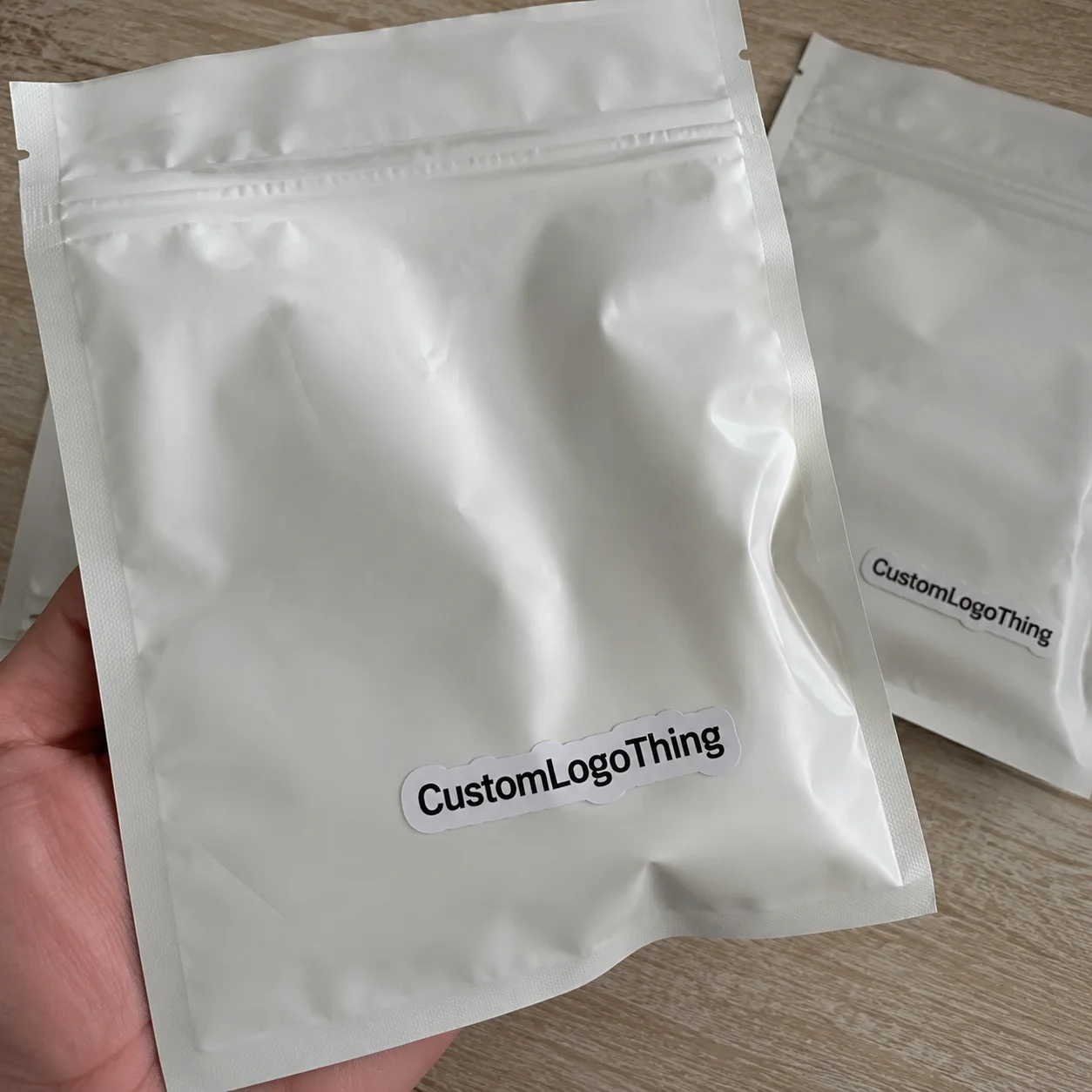
Standard paper labels work well in dry, stable conditions. Once moisture gets involved, the edges soften, the ink can dull, and the adhesive starts losing grip. That is usually where the trouble begins: a little curl at the corner, then a bit of seepage, then a label that looks more temporary than intended.
Custom water proof stickers are built to handle that chain of failure. The face stock resists moisture, the adhesive is chosen for the surface and temperature range, and the finish protects the print from rubbing and splashing. In practice, those layers need to work together. A waterproof face with a weak adhesive still fails, and a strong adhesive on the wrong surface can fail just as quickly.
The difference between water resistant and waterproof is worth keeping clear. Water resistant usually means brief contact or light splashes are fine. Waterproof in packaging means the sticker is expected to keep its structure and legibility through repeated wetting, refrigeration, or contact with damp surfaces. That is a higher bar, and the spec has to reflect it.
That matters most in categories where presentation and durability are both visible:
- Food and beverage packaging for bottles, cans, and chilled jars.
- Bath and body products exposed to steam, soap, and repeated handling.
- Outdoor goods that face rain, UV exposure, and abrasion.
- Shipping and inventory labels that must survive transit and storage conditions.
There is a cost lesson here as well. A label that fails early can create hidden expenses that dwarf the purchase price: rework, relabeling labor, scrap, delayed shipments, and product returns. On paper, a stronger label can look more expensive. Over the life of a product, it often ends up cheaper because it avoids waste.
That is also why these labels need to be considered alongside broader package presentation. A sturdy box with a weak label creates a visual mismatch. For brands that care about shelf presence and handling, the label is part of the packaging, not a separate accessory.
A label that stays intact is part of the product. A label that fails turns into a hidden cost.
How waterproof sticker materials and coatings work
A waterproof sticker is really a small layered structure. The face stock carries the image, the adhesive holds it in place, the ink delivers the design, and the coating or laminate helps protect the print. Change one piece and the performance changes with it.
Vinyl is a common choice because it flexes well and handles moisture without becoming brittle. It is a practical option for curved containers, hand-applied labels, and products that get handled often. BOPP (biaxially oriented polypropylene) is another frequent choice, especially for consumer packaging. It resists water well, prints cleanly, and tends to hold up better than paper in damp environments. Polyester is usually selected for tougher conditions where heat, solvents, or abrasion are more demanding. Laminated paper can work in light moisture exposure, but paper still has a ceiling when wet use becomes routine.
The adhesive matters as much as the face stock. Pressure-sensitive adhesives can be formulated for permanent bond, removable bond, cold-temperature application, or specific surface conditions. If the adhesive does not wet out properly, the edges will lift first. Once moisture gets under the edge, the failure usually spreads from there.
Finish is the last layer people notice, but it should not be treated as decoration. Lamination adds a protective film that improves resistance to scuffing, fingerprints, and moisture. UV coating can help in some applications, though it is not a substitute for the right substrate or adhesive. For bottles, jars, and outdoor products, lamination usually gives more predictable protection than coating alone.
| Material | Moisture resistance | Best use case | Practical note |
|---|---|---|---|
| Vinyl | High | Bottles, jars, outdoor products | Flexible on curved surfaces |
| BOPP | High | Food, beverage, bath products | Common for durable consumer labels |
| Laminated paper | Moderate | Light damp exposure | Lower cost, but not for harsh wet use |
| Polyester | Very high | Industrial or technical labeling | Better for heat and abrasion |
For most buyers, the easiest way to narrow the field is to start with the environment. Dry indoor packaging can sometimes use coated paper. Refrigerated or splash-prone products usually need BOPP or vinyl with a suitable adhesive. Outdoor labels should be tested for UV exposure and abrasion as well as moisture. If the application is close to submerged or exposed to frequent washing, sample testing is not optional.
Distribution standards can help frame those tests. Organizations such as ISTA publish packaging test guidance that is useful when the concern is not only print quality but also how the label behaves through transit and handling.
Key factors that affect durability, cost, and print quality
Water exposure is only one part of the picture. Labels also have to survive abrasion, oils, temperature swings, and repeated contact. A sticker on a shower bottle lives a very different life from one on a warehouse tote, and the construction should reflect that difference.
Surface texture changes performance more than many buyers expect. Smooth glass is easier to bond to than textured plastic. Curved surfaces create extra stress at the edges, which is where lifting often starts. Narrow corners, intricate die cuts, and small text can all raise the risk of waste during production if the artwork is not prepared carefully.
Print quality starts with file quality. Artwork should have correct bleed, high-resolution images, and enough contrast to stay legible once the label is exposed to moisture or glare. Dark containers and clear films often need white ink under the color layer so the artwork does not disappear into the background. That is a common point where design decisions and production decisions meet.
Pricing tends to move with a few predictable variables:
- Material choice usually affects base cost more than buyers expect.
- Finish adds cost, especially with lamination or specialty coatings.
- Quantity lowers unit pricing as setup is spread across more pieces.
- Ink coverage and color count affect press time and complexity.
- Shape and cutting method influence tooling and production waste.
For a simple run of 5,000 pieces, a waterproof label may fall roughly in the $0.18-$0.28 per unit range. More complex builds with premium stock, lamination, or special inks can cost more, sometimes significantly more. The exact number depends on size, coverage, quantity, and finishing. That range is not a quote; it is a realistic planning frame for buyers trying to compare options without guessing.
Price should be compared against failure risk, not against a cheaper sticker that might look fine on day one. If a label needs to be replaced after bottling, packed units may need to be opened, handled, and relabeled. In that sense, the cheapest label is not always the lowest-cost choice.
Process and timeline: from artwork to delivery
The usual path from file to finished label is straightforward: artwork review, proofing, printing, finishing, cutting, packing, and shipping. Each step is predictable until a file arrives with low resolution, missing fonts, or no clear cut line. Then the schedule starts slipping.
Most delays come from proof corrections, special finish requests, and artwork that was not prepared for the actual production method. If the order needs custom shapes, white ink, a specific adhesive, or a special laminate, those details need to be locked in before print approval. That upfront work protects quality, but it also adds time.
For standard custom water proof stickers, a production window of about 12-15 business days after proof approval is common. Simpler jobs can move faster. Large volumes, multiple finishing steps, and specialty materials usually take longer. Rush service is possible in some cases, but it is easiest to accommodate when the artwork is already print-ready and the order is simple.
Shipping time is separate from production time, and that distinction gets missed often. A label can be finished on schedule and still arrive too late if transit time was not built into the launch plan. When the deadline is fixed, it helps to work backward and leave space for proof approval, production, and transit.
For brands coordinating wider product packaging projects, the label should sit in the same schedule as cartons, inserts, and outer shippers. If it is left until the end, it can become the bottleneck that holds up the whole launch.
If the packaging program also includes paper-based components, it can be useful to align those choices with sustainability requirements or certification goals. In those cases, suppliers that can work with FSC guidance for paper materials may make procurement easier.
Step-by-step: how to order the right waterproof label
The best orders start with the use case, not the design file. Before choosing a finish or adhesive, define where the sticker will live. A cold bottle, a bath jar, a shipping carton, and an outdoor tool all create different demands. The harshest condition should drive the spec.
A practical ordering sequence looks like this:
- Identify the environment — refrigeration, humidity, sunlight, abrasion, splash, or washing.
- Select the face stock — vinyl, BOPP, polyester, or coated paper.
- Choose the finish — matte, gloss, laminate, or protective coating.
- Match the adhesive — permanent, removable, cold-temp, or surface-specific.
- Set the size and shape — square, round, contour-cut, or custom die-cut.
- Request a proof or sample — especially for a new container or first run.
Testing on the actual container is one of the most useful steps in the whole process. Put the label on the real bottle, jar, or tub, then expose it to the real conditions. Refrigerate it. Mist it. Handle it with wet hands. Leave it near sunlight if that is part of the environment. A label that looks perfect on a flat proof can still struggle on a curved shoulder or a textured wall.
For tighter radii, flexible film and a stronger adhesive often work better than a rigid stock. For jars and tubs, the greater label area can help, but the curve still needs to be considered. For outdoor use, both adhesion and UV resistance should be checked before full production. The same applies to labels that may be washed, wiped, or stored in damp conditions for long periods.
If you are also ordering Custom Labels & Tags, keep the spec consistent across the packaging system. A premium carton with a weak label creates a mismatch the consumer notices immediately. Good custom printed boxes and durable labels should support the same visual and functional standard.
Practical checklist: final dimensions, substrate choice, finish, adhesive type, artwork format, expected exposure, quantity, and shipping deadline. If those seven items are clear, the rest of the order becomes much easier to manage.
Common mistakes that cause peeling, smudging, or waste
Most label failures are predictable. They usually come from missing one of the basics rather than from a mysterious defect in production.
The most common mistake is assuming a label is waterproof when the adhesive is not suited for cold or damp conditions. Another is choosing paper stock for ice buckets, showers, or exterior products. Paper can look refined, but it still has practical limits once moisture gets involved.
Surface prep matters more than many buyers expect. Dust, oil, residue, and condensation all weaken bond strength. Application temperature matters too. If a label goes onto a very cold container, the adhesive may not wet out properly, and edge lifting can show up later even if the label looked fine at first.
Another expensive habit is approving a small sample and skipping real-world testing before ordering in volume. A pilot run takes time, but it is far cheaper than finding out after thousands of units are packed that the label fails under the actual conditions. Seasonal products are especially vulnerable because there is less room to recover if something goes wrong.
Gloss also needs a realistic reading. A gloss finish can make the label look polished, but shine alone does not mean abrasion resistance or moisture protection. If the finish is not paired with the right laminate or coating, the surface can still scuff, smear, or fade.
The most common errors are easy to spot once you know what to look for:
- Using paper in wet or refrigerated environments.
- Skipping sample testing on the actual container.
- Ignoring application temperature and cure time.
- Choosing the wrong adhesive for curved or textured surfaces.
- Assuming a shiny finish means the label is fully protected.
The last point matters because appearance and durability are not the same thing. A label can look refined and still fail quickly. Presentation supports sales, but construction protects margin.
Expert tips for better performance and next-step decisions
Start with the exact surface, not a similar one. A bottle with a different coating or a jar with a slightly different texture can change adhesion enough to matter. The more the final package differs from the sample, the less trustworthy the sample becomes.
Build for the harshest condition the sticker will face, not the average one. If the label spends most of its life on a shelf but gets handled in wet conditions every weekend, the weekend is the spec. That is usually what reveals weak construction.
Keep readability high. Water, glare, fingerprints, and condensation all reduce legibility, especially on smaller labels. Good contrast, clean typography, and enough breathing room are functional choices, not just design preferences. They help the package stay readable after use begins.
For buyers comparing options, the most reliable path is usually simple: request samples, compare materials, and approve the final build only after testing. If the project also includes cartons, inserts, or shipping materials, make sure the sticker spec fits the broader packaging system. The same principles that make custom water proof stickers perform well also improve the rest of the package experience.
There is one more practical point. If the product will move through rough distribution, be handled frequently, or face environmental stress, ask for a build that has already been matched to those conditions rather than one that merely looks premium. The strongest label is rarely the fanciest one. It is the one that survives the route, the shelf, and the customer’s hand without calling attention to itself.
For a brand buyer, that is the real payoff: fewer reprints, fewer handling issues, and packaging that still looks intentional after moisture and friction have done their work.
FAQ
What makes custom water proof stickers different from regular stickers?
They use moisture-resistant face stocks, stronger adhesives, and protective finishes designed to survive water exposure. Regular stickers often curl, smear, or lift when exposed to condensation or washing.
Which material is best for waterproof product labels?
Vinyl and BOPP are common choices because they resist moisture and wear better than standard paper. The best option depends on whether the label faces refrigeration, outdoor exposure, frequent handling, or washing.
Do waterproof stickers also resist scratches and sunlight?
Only if the build includes the right laminate or coating, since water resistance alone does not guarantee abrasion or UV protection. For outdoor use, ask for protection against fading, scuffing, and moisture together.
How much do custom water proof stickers usually cost?
Cost depends mainly on material, finish, size, quantity, and whether the design needs special inks or die-cutting. Higher quantities usually lower unit cost, while premium finishes and shorter runs raise pricing.
How long does production usually take for waterproof stickers?
Timeline depends on proof approval, order complexity, and finishing requirements, but standard custom runs commonly need about 12-15 business days after approval. Faster approvals and simpler specs move orders along more quickly than specialty materials or multiple revisions.


