Condensation destroys more bottle labels than poor artwork ever will. If you need custom waterproof labels for bottles, the real question is not whether the design looks clean on screen. It is whether the label survives cold storage, wet hands, ice buckets, fridge doors, and the ordinary rough handling that happens once a product leaves the printer.
That is where buyers often get caught. “Waterproof” sounds like a single feature, but a label system only works when the face stock, adhesive, ink, and finish are matched to the bottle and the environment. Miss one piece and you can end up with edge curl, smearing, peeling, or a label that looks tired before the product has sold through.
Custom waterproof labels for bottles: what they are and why they matter
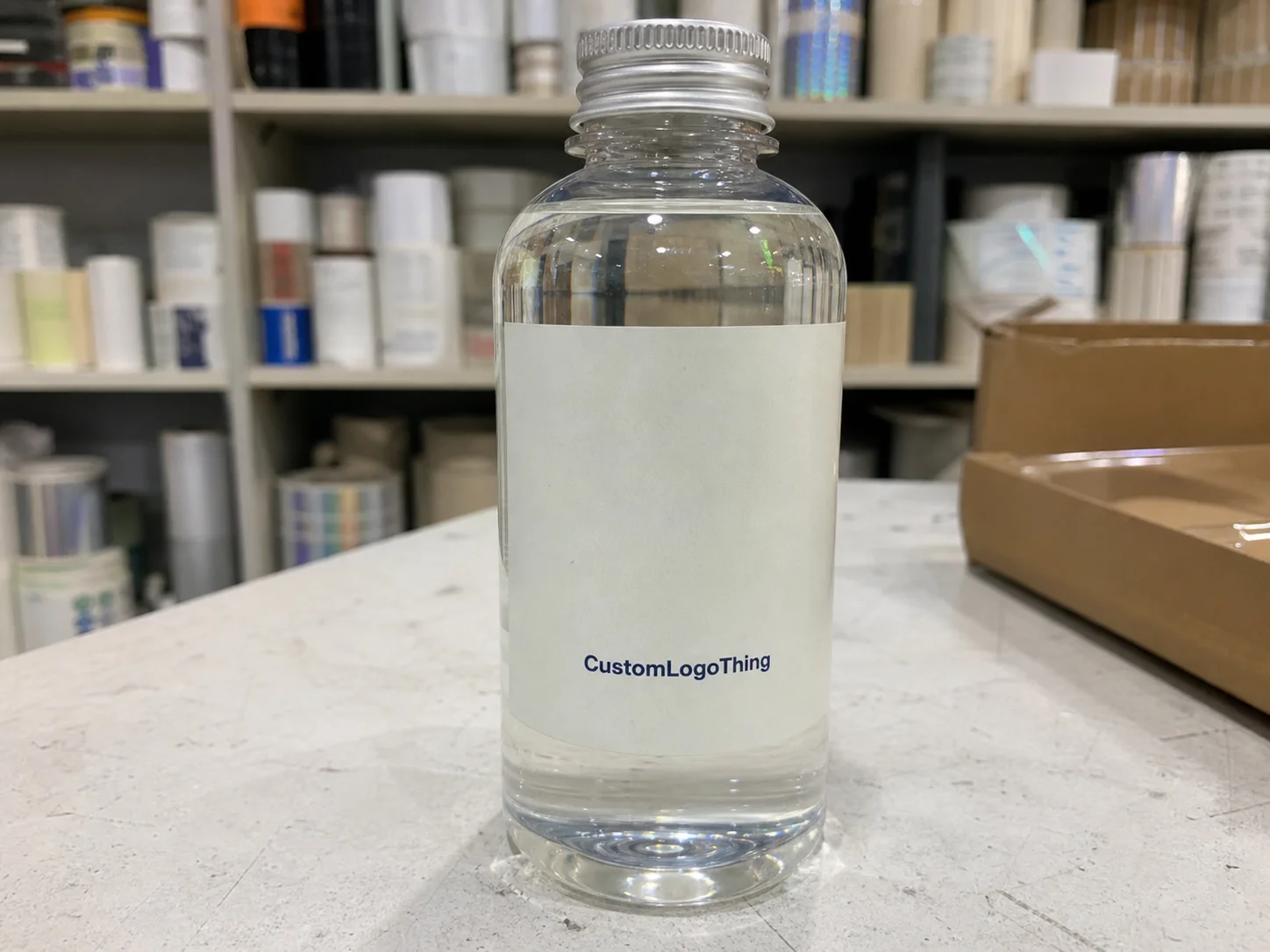
Custom waterproof labels for bottles are built to resist moisture, condensation, and handling without losing adhesion or readability. In practical terms, they need to stay attached, keep the branding visible, and hold up long enough to do their job in retail, hospitality, or direct-to-consumer shipping.
The strongest version is not simply “waterproof paper.” It is a balanced construction: the right face stock, the right adhesive, the right print method, and a finish that protects the printed surface. That matters for water bottles, cold brew, sports drinks, shampoo, lotion, and event bottles, where the package itself is part of the product experience.
It helps to separate a few claims that often get blurred together:
- Water-resistant: handles splashes or brief exposure to moisture.
- Waterproof: built to perform much better under repeated wetting, refrigeration, and condensation.
- Submersion-tolerant: can survive immersion for a period of time, depending on the material, adhesive, and label shape.
That third category gets overstated in marketing. A label can be waterproof and still not be the right choice for bottles sitting in ice water all day or being rinsed repeatedly. The spec should be driven by the actual use case, not by the broadest possible claim.
Setting expectations early saves money. Even a strong label can fail if it is applied to a damp, oily, or dusty surface, or if the adhesive does not get proper pressure and cure time. Good materials help, but they do not replace sound application practices.
How waterproof bottle labels actually work
There are four parts in the stack: substrate, ink or toner, adhesive, and protective coating or laminate. If one of them is under-specced, the label becomes the weak point. It may look fine on day one, then the edges begin to lift or the print starts to scuff the moment condensation shows up.
Polypropylene is one of the most common choices for moisture-resistant bottle labels. It is a film material, so it handles water better than standard paper and gives a clean branded finish. Polyester is tougher and more resistant to abrasion, chemicals, and long wear, which makes it a better fit for harsher handling. Vinyl can work well too, especially for flexible or textured applications. Coated paper is the lower-cost option, but it is only suitable for light moisture exposure.
Each face stock brings tradeoffs. Film labels generally cost more than paper, but they hold up far better under chilled conditions. Paper can still look refined on dry-shelf products or short-term promotions, but it is rarely the right answer for iced bottles or refrigerated display. The savings disappear quickly if the labels wrinkle or need to be replaced early.
The adhesive is just as important. A permanent adhesive is the normal choice for most bottle labeling because it gives reliable hold on smooth surfaces. A removable adhesive may make sense for reusable bottles or temporary promotions, though it usually gives up some holding power. Freezer-grade adhesive is the safer option when a bottle will be stored cold, moved between temperatures, or exposed to prolonged moisture.
Finish affects both durability and shelf appeal. A gloss laminate gives a bright, polished look and usually helps resist scuffing. A matte finish softens glare and can improve readability under strong lighting. Soft-touch feels premium, but if the bottle will be handled a lot, it often needs a protective layer above it. Texture is useful; peeling corners are not.
Print method matters too. Digital printing is usually the practical choice for shorter runs, multiple SKUs, and quicker proof cycles. Flexographic printing becomes more cost-effective at higher quantities because setup costs are spread across more labels. In wet conditions, ink adhesion and cure quality are critical. If the printed layer is weak, moisture will reveal it fast.
For brands building broader Custom Packaging Products, bottle labels are only one part of the packaging system. They should fit the cartons, inserts, and retail packaging so the entire presentation feels consistent rather than pieced together.
“Waterproof” is not a magic word. It is a material spec, an adhesive choice, and a finish decision working together.
For general packaging material references and sustainability basics, the Packaging School / packaging.org resources are useful for understanding common material families and packaging constraints.
Key factors that affect performance, cost, and pricing
Pricing for custom waterproof labels for bottles usually comes down to a handful of variables: material, size, shape, finish, quantity, and the number of versions you need. There is no mystery pricing model hiding behind the curtain. It is mostly setup, material yield, and production time.
As a rough buyer’s range, small runs may land around $0.12-$0.35 per label depending on size and setup, while larger quantities often fall lower once the fixed costs are spread out. Specialty finishes, metallic effects, custom shapes, and heavier protective laminates push pricing upward. Die-cut complexity can add surprisingly fast when the shape is not standard.
| Option | Typical use | Durability | Relative cost |
|---|---|---|---|
| Coated paper | Short-term promos, dry shelf display | Low to moderate | Lowest |
| Polypropylene film | Cold drinks, bath products, general bottle use | High | Moderate |
| Polyester film | Heavy handling, harsh conditions, longer wear | Very high | Higher |
| Vinyl with protective finish | Flexible or premium branded presentation | High | Moderate to higher |
MOQ has a direct effect on price. Lower quantities usually carry a higher unit cost because the same setup work is divided across fewer labels. If you only need 500 pieces, the economics will not resemble a 10,000-piece run. That is normal production math, not a hidden penalty.
Bottle shape also changes the equation. A flat glass bottle is simpler than a heavily curved PET bottle. Smooth glossy surfaces can call for a stronger adhesive. Bottles that will be stored in a fridge or iced display need a spec that can deal with condensation. Textured or oily surfaces should be tested before a full order is placed.
Usage details matter as well. If the label needs to carry ingredients, batch codes, QR codes, or barcodes, the layout must leave enough room for legibility and scanning. A crowded label may look fine in a proof and fail in production. For brands that may later extend into Custom Labels & Tags, it helps to keep the print spec flexible enough to support variants without rebuilding the design from scratch.
For reusable bottle programs or packaging with disposal concerns, material selection should also be checked against recycling guidance. The EPA’s recycling resources at epa.gov/recycle are a practical starting point when you are sorting out package components that may affect recovery or waste handling.
A useful rule: do not over-specify just to sound careful in procurement. If the bottle lives on a dry shelf and gets touched once, a heavy-duty industrial label may be unnecessary. Spend where failure risk is real, not where the spec sheet looks impressive.
Process, timeline, and production steps from artwork to shipment
The production path is usually straightforward: request quote, confirm material, review artwork, approve proof, print, finish, and ship. Lead time depends mostly on how complete the brief is at the start. A vague request slows everything down later.
For simple digital label orders, turnaround often falls in the range of 7-12 business days after proof approval. More complex jobs, especially custom shapes, premium finishes, or higher volumes, can take 12-18 business days or more. Sampling adds time, but it also reduces the risk of ordering the wrong construction.
Proofing usually comes in two forms. Digital mockups move quickly and are useful for checking layout, text, and die-line placement. Physical samples take longer and cost more, but they are worth it when condensation, refrigeration, or repeated handling will be part of the label’s life. A sample on the actual bottle is much better than a guess.
Custom dies add another layer of time. If you want a special shape, the cutter has to be made and checked. Standard rectangles and circles move faster because the tooling is simpler and the setup is more predictable. A custom die-cut can add several business days, especially if revisions are needed after the first proof.
Here is a practical sequence for planning a run:
- Request pricing with bottle specifications, quantity, label size, and usage conditions.
- Confirm the face stock, adhesive, and finish.
- Review artwork with bleed, dieline, and barcode placement checked carefully.
- Ask for a sample if the bottle will be chilled, wet, or handled often.
- Build lead time into the launch calendar, especially for seasonal packaging or event dates.
For recurring programs, keep a reorder file with the final art, dimensions, finish, adhesive, and any color targets that were approved. That reduces back-and-forth and keeps later runs closer to the original. In retail packaging, consistency matters more than most people realize, especially once the bottle is part of a broader product line.
It also helps to align label ordering with carton or secondary pack timing. Sitting on bottles with no labels, or labels with no bottles, is one of the easiest ways to turn a routine job into an avoidable expense.
How to choose the right label spec for your bottle
Start with the environment. Will the bottle sit in a fridge, an ice bucket, a shipping carton, a shower, or a dry retail display? That one answer narrows the material choice faster than any sales pitch.
If the bottle will face only light moisture, a coated paper with a protective finish may be enough. If condensation will be heavy, a film label is the safer path. If the bottle will see rough handling or longer wear, polyester or a higher-grade film usually makes more sense. For refrigerated or wet bottles, this is where custom waterproof labels for bottles become a practical need rather than a nice extra.
Adhesive should match the bottle substrate:
- Glass: generally straightforward, though smooth surfaces often benefit from a strong permanent adhesive.
- PET: common for drinks and usually needs a label that can stay stable under cold and handling.
- HDPE: a trickier surface, so testing is smart before large-volume production.
- Reusable bottles: removable adhesive can help if the label must peel cleanly later.
Size and shape affect more than appearance. They change wrap distance, seam placement, barcode readability, and how much room you have for product copy. A label that is too small looks cramped. One that is too large can wrinkle on curves or collect bubbles during application. Neither result is a good use of budget.
Artwork setup is another place where good jobs can go sideways. Files need bleed, the correct dieline, adequate margin from the cut edge, and font sizes that remain readable at print size. Thin type can disappear on glossy or textured finishes. Color can shift depending on substrate, too. Film often reads differently from paper, and coated stocks can make inks appear brighter or more muted than they did on screen.
If the bottle carries barcodes or QR codes, scan them on the actual surface before approving production. Curved labels and wet conditions can create avoidable scan problems. That is a planning issue, not a printing mystery.
Many brands also pair bottle labels with custom printed boxes or other secondary packaging. That makes sense when the product has to move through shipping, shelf display, and retail handling while still looking like one coherent system.
Common mistakes that ruin bottle label results
The first mistake is still the most common: using paper labels on iced bottles and acting surprised when they wrinkle. A label can only perform within the limits of the material chosen for it, especially if the bottle is already cold before the label goes on.
Second, buyers skip laminate or a protective finish to save a little money. The label then scuffs, marks up, and looks older than it should. That small saving can vanish the first time a customer handles the bottle or sees the label under bright retail lighting.
Third, they never test condensation. The proof looks fine on a desk, so the full order gets approved, and then the label lifts at the corner after an hour in a refrigerator. A 24-hour test on the actual bottle would have caught the problem early.
Fourth, they pick the cheapest adhesive instead of the one that matches the surface. That is not thrift. It is just moving the cost of failure to a later date.
Fifth, artwork gets sent without checking the dieline or resolution. Low-resolution logos, tiny copy, and poor cut placement are still the quickest ways to make a label look cheaper than it needs to, even if the material itself is decent.
Keep these basics in mind:
- Test on the actual bottle.
- Match the adhesive to the surface.
- Use film for heavy moisture.
- Protect the print if the bottle will be handled often.
- Approve artwork at final size, not just on a screen.
Expert tips and next steps before you place an order
Start by testing one sample on the real bottle, not a flat mockup. Flat proofs are helpful for layout, but they do not tell you much about curvature, adhesion, or performance in cold and wet conditions. If there is only one thing to remember, it is that.
Ask for pricing at two or three quantities. Seeing the difference between 1,000, 2,500, and 5,000 pieces often shows whether a slightly larger order lowers the unit cost enough to justify holding a little extra inventory. That is practical buying, not spreadsheet theater.
Request a material recommendation based on moisture, temperature, and handling. A good supplier should be able to explain whether polypropylene, polyester, or coated paper fits the job. If the answer is only the cheapest option and nobody asks about surface type or storage conditions, the recommendation is not finished yet.
Keep a reorder file. Save the approved art, dimensions, finish, adhesive, and print notes so the next run does not have to start from zero. That small habit saves time and helps prevent color drift, trim mistakes, and avoidable revisions.
Before you ask for quotes, define four things clearly:
- Bottle type and surface material
- Label size and shape
- Quantity range
- Deadline and whether samples are needed
If you are building packaging around sustainability goals, it is also worth checking material choices against broader paper and recycling considerations. The Forest Stewardship Council resources at fsc.org can help when paper components are part of the overall package system.
For buyers at Custom Logo Things, the best approach is straightforward: define the use case, match the material to the environment, and order custom waterproof labels for bottles that are designed for real conditions rather than for a perfect mockup. That usually means better durability, fewer production surprises, and a label that still looks intentional after it has been chilled, handled, and sold.
FAQs
Are custom waterproof labels for bottles really necessary for cold drinks?
Yes, if the bottle will sweat, sit on ice, or be handled with wet hands. Standard paper labels usually fail quickly in condensation-heavy conditions. Film labels with the right adhesive perform much better.
What is the best material for waterproof bottle labels?
Polypropylene is a common all-around choice for moisture-resistant labels. Polyester is tougher for harsher handling or longer wear. The best option depends on the bottle surface, budget, and display conditions.
How much do custom waterproof labels for bottles cost?
Pricing depends on size, material, finish, quantity, and shape complexity. Small runs usually have a higher unit cost because setup is spread across fewer labels. Getting quotes at multiple quantities is the quickest way to see where value improves.
What turnaround should I expect for waterproof bottle labels?
Simple orders can move faster than custom shapes or special finishes. Proof approval, material availability, and quantity all affect lead time. Build extra time if you need samples or variable data printing.
Can waterproof labels be used on wet or refrigerated bottles?
Yes, but only if the material and adhesive are selected for cold, damp conditions. Application surface matters; labels stick better to clean, dry bottles. Testing on the actual bottle is the safest way to verify performance.


