A plastic bag often becomes the first branded surface a customer touches, especially in apparel, accessories, spare parts, and e-commerce. But bag customization is not just a logo decision. The choices under the graphics—film type, thickness, size tolerance, seal style, opacity, closure, and print method—determine how the bag fills, ships, opens, and holds up.
That is where buyers run into trouble. Two bags may look similar on a quote sheet and perform very differently in production. A bag can appear fine in a mockup yet split at the weld, scuff in transit, cloud the product, or slow packout because the opening is too tight.
Why customizing plastic bags affects more than branding
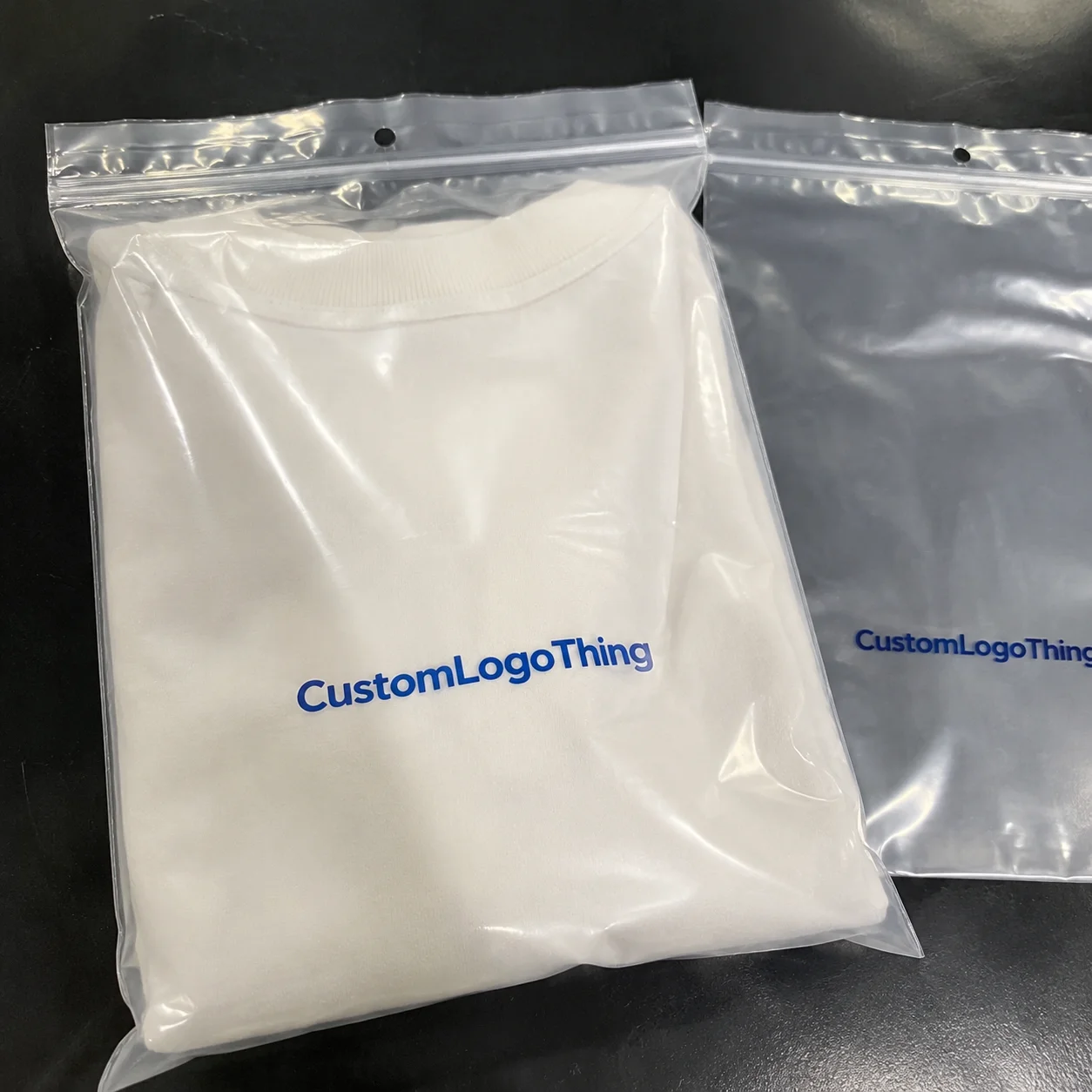
Graphics and finish matter, but function usually matters more. A custom bag affects protection, fill speed, tamper evidence, shelf presentation, and customer perception. A clear polypropylene apparel bag communicates something very different from an opaque co-ex mailer with a permanent adhesive strip.
Bag category changes the priority:
- Retail bags focus on clarity, print quality, and display value.
- Shipping mailers need puncture resistance, seal security, opacity, and print that resists abrasion.
- Food-contact bags add material and compliance requirements early.
- Promotional carry bags depend more on handle strength and visual impact.
Useful customization points include:
- Dimensions such as width, length, flap, side gusset, or bottom gusset
- Film family including LDPE, HDPE, PP, co-ex film, and some mono-material recyclable options
- Thickness in mil or micron
- Opacity from clear to frosted, white, black, or tinted film
- Closures such as lip-and-tape, permanent adhesive, zipper, wicket, or heat-seal area
- Features like vent holes, hang holes, perforations, tear notches, or die-cut handles
- Surface finish such as gloss or matte
A heavier mailer may cut punctures. A clearer BOPP apparel bag may improve product visibility. An opaque co-ex shipper may provide better privacy and clearer tamper indication. Those are specification decisions, not decoration.
A bag that looks right in a proof still has to work in packing, shipping, storage, and opening.
How the customization process actually works
Most custom bag orders follow the same path: quote request, spec review, artwork preparation, proofing, print setup, production, inspection, and shipment.
- Request for quote with size, quantity, use case, film preference, thickness target, and print details
- Spec review to resolve missing items such as flap length, seal type, packing method, or tolerance needs
- Artwork preparation in AI, EPS, or press-ready PDF
- Proofing for layout, print area, seam allowances, barcode position, and color notes
- Plate or cylinder preparation for conventional printing
- Printing on film
- Converting through cutting, folding, sealing, perforating, or adhesive application
- Inspection and packing before shipping release
Three print methods cover most programs. Flexographic printing is common for poly bags and mailers and works well for simple graphics at moderate to high volumes. Rotogravure offers strong consistency for large runs but with higher cylinder cost. Digital printing can suit shorter runs or frequent artwork changes, but film compatibility and unit economics vary.
Artwork setup deserves careful review. Fine lines can break up on film. Small reverse text may fill in. Seams and folds reduce printable space, so artwork that looks centered on a flat proof can shift visually after conversion. Barcodes need enough contrast and clear quiet zones to scan after filling.
Sampling prevents expensive errors. That may be an unprinted fit sample, a material swatch, a printed mockup, or a pre-production piece. Buyers also need to remember that printing and bag making are often separate operations; if a color issue appears late, it can affect the schedule beyond the last production step.
Specs that control performance, appearance, and packout
Material selection comes first because it drives clarity, stiffness, puncture resistance, seal behavior, noise, and cost.
Polyethylene is the standard for many custom bags. LDPE is softer and more flexible. HDPE is crisper and common in carry-bag use. Polypropylene, including BOPP or CPP, usually offers better clarity for retail presentation. Co-ex films are common in mailers because they balance toughness, opacity, and seal performance. PCR blends can support recycled-content goals, though haze, color consistency, and mechanical performance may change as recycled content rises.
Thickness is the next major decision. Many apparel or retail poly bags fall around 1.0 to 1.5 mil. E-commerce mailers often run about 2.0 to 3.15 mil, depending on puncture risk and handling. Sharp corners, heavier products, or rough parcel networks may require more gauge.
Core specs that should be written clearly
- Finished dimensions: width x length, plus flap or gusset if needed
- Tolerances: especially for automated packing or tight product fit
- Seal style: side weld, bottom seal, center seal, or lap seal
- Closure: zipper, tape strip, permanent adhesive, or heat-seal area
- Appearance: clear, frosted, white, black, matte, or gloss
- Functional details: vent holes, hang holes, tear notches, handles, wicket holes, or perforation
- Print requirements: color count, underprint, registration limits, and print location
Appearance choices have tradeoffs. Clear film shows the product but may need white underprint for strong color. Matte or frosted film can feel more premium but may reduce graphic sharpness versus gloss. Opaque white gives a strong print base but removes product visibility.
The practical questions narrow the spec quickly: Does the product have sharp edges? Will the bag be packed by hand or on a line? Is easy opening important? Does the customer need to see the contents before purchase? Will the bag rub against corrugate or parcel equipment? Ignoring those points usually causes failure at packout, in transit, or at retail.
Compliance can shape the bag as much as branding. Food-contact uses may require specific resin and ink systems. Retail bags may need warning text, country-of-origin marking, or a barcode that still scans with product inside. For transit testing, ISTA standards are a practical reference when the bag must survive parcel handling.
Sustainability claims also need specifics. Buyers should ask about mono-material recyclable structures where available, post-consumer recycled content percentages, and downgauging options, along with the tradeoffs in haze, odor, or stiffness.
Customizing plastic bags: cost, MOQ, and quote drivers
Pricing becomes confusing when buyers compare different constructions as if they were equivalent. A simple LDPE bag is not directly comparable to a co-ex mailer or laminated specialty bag, even at similar dimensions.
Main cost drivers usually include:
- Bag size
- Film type and structure
- Thickness
- Print colors and coverage
- Order volume
- Special features such as zippers, handles, vent holes, or dual adhesive strips
- Packing method such as loose-packed, wicketed, or retail-counted cartons
MOQ is mainly driven by setup cost. Plates or cylinders must be made, presses adjusted, and converting lines set. Because that setup work is similar whether the order is small or large, per-unit cost drops as volume rises.
As a rough market guide, simple custom bag programs often start around 3,000 to 10,000 pieces. Stock-size overprints or some digital jobs may go lower. More specialized structures usually start higher.
| Bag Type | Typical MOQ | Typical Unit Price Range | Main Cost Drivers |
|---|---|---|---|
| Simple LDPE retail bag, 1-color print | 5,000-10,000 | $0.07-$0.18 | Size, gauge, plate setup |
| Clear PP apparel bag with flap and tape | 5,000-20,000 | $0.09-$0.24 | Clarity, adhesive strip, registration |
| Co-ex poly mailer with 2-4 color print | 3,000-10,000 | $0.18-$0.42 | Film thickness, seal construction, coverage |
| Laminated specialty bag with premium finish | 10,000+ | $0.28-$0.70+ | Lamination, multiple processes, premium graphics |
These numbers are directional. Resin markets, freight, and ink coverage can shift pricing, especially with heavy white underprint or flood coverage.
Ask whether the quote includes or excludes:
- Plate, cylinder, or tooling charges
- Proof or sample costs
- Master cartons and inner-pack requirements
- Freight
- Compliance documentation or test reports
- Rush fees
The best way to compare suppliers is to send the same spec sheet to each one. Match dimensions, gauge, material family, print count, quantity, and packing assumptions. If the inputs differ, the comparison is not reliable.
Teams sourcing multiple formats should also check how the bag spec fits wider packaging requirements such as carton labeling and receiving rules, especially if one supplier handles several Custom Packaging Products.
Production timeline and realistic lead times
A practical planning range for many custom bag orders is 12 to 25 business days after final proof approval. Repeat orders on standard materials may move faster. First orders, specialty films, or physical sample approvals usually take longer.
A typical timeline looks like this:
- Artwork approval: 1-3 business days
- Plate or cylinder prep: 3-7 business days
- Material procurement: 2-10 business days depending on film availability
- Printing and curing: 3-7 business days
- Converting and packing: 2-5 business days
- Final inspection and shipping release: 1-3 business days
The biggest delays usually come from revisions: barcode moves, changed Pantone targets, material changes after proofing, or updated legal copy. Specialty materials can add time as well, especially unusual gauges or higher-PCR films.
Rush production is sometimes possible on standard constructions, but it usually means higher cost, tighter review windows, and less room for sampling. That is more acceptable on a repeat spec than a first run. Buyers should also leave time for inbound freight, warehouse check-in, and internal approvals after arrival.
Common buyer mistakes with custom bags
The costliest mistakes are usually basic ones: wrong size, wrong gauge, or the wrong closure for the actual packing method.
Undersizing is common because buyers use product dimensions instead of packed dimensions. Folded garments, boxed kits, and products with hard corners need insertion allowance. A bag can technically fit and still pack badly if the opening is narrow or the flap is too short.
Artwork errors are another frequent problem. Low-resolution logos, tiny reverse text, and missing spot-color references create avoidable disputes. Vector files are the safest starting point. If color matters, specify Pantone references and confirm realistic tolerances for that film.
Proof approvals should check:
- Logo position relative to seams and folds
- Barcode size, orientation, and scan contrast
- Warning copy and required legal text
- Flap length, tape position, and opening direction
- White underprint placement on clear or tinted film
- Fit allowance for actual packout
Another mistake is buying only on unit price. Two mailers listed at the same thickness may still differ in resin blend, seal strength, opacity, tolerance control, or ink adhesion. If the bag will rub against corrugate, other parcels, or conveyors, scuff resistance matters.
Testing also gets skipped too often. A simple fit trial, seal check, drop test, or short packout run reveals problems faster than extended email review.
What to prepare before customizing plastic bags
Accurate quotes depend on clear inputs. Before requesting pricing, gather the information that affects fit, print, and production.
- Product details including packed dimensions, weight, and any sharp edges or unusual shapes
- Use case such as retail display, e-commerce shipping, storage, food contact, or promotional use
- Bag requirements including film type, thickness target, closure style, opacity, and finish
- Artwork files in vector format with Pantone references if color matching matters
- Order assumptions including quantity, target date, ship-to location, and packing method
If part of the spec is still open, say so. Suppliers can usually narrow options if the use case is clear. That matters in printed plastic packaging, where one unclear dimension can affect fit, layout, and carton count.
A physical reference can help—a current bag, a competitor sample, or even a marked-up sketch—especially if no approved drawing from a prior order is available.
Practical ways to build a better bag spec
Start by defining the bag’s main job: protection, display, shipping, storage, or promotion. That priority simplifies material, gauge, and feature choices.
If fit matters, request an unprinted sample early. For many projects, a plain sample in the target material and gauge is enough to confirm dimensions before artwork is finalized. For tighter applications such as automated filling or premium retail use, a pre-production sample in the actual film is worth the extra step.
A useful spec sheet should include:
- Bag style and application
- Finished dimensions with tolerances
- Film family and gauge
- Print colors, locations, and underprint needs
- Opacity and finish
- Closure type and functional features
- Carton pack, bundling method, and shipping destination
- Compliance notes, barcode details, and required warning text
Simpler artwork often prints more reliably on flexible film. Fine gradients, tiny details, and heavy total ink coverage can introduce variation, especially on thin poly. A clean two-color design often delivers better legibility and repeatability than a more complex layout.
The strongest specs are repeatable ones. Standardized dimensions, approved materials, saved color references, and clear receiving instructions reduce rework and make future orders easier to match.
FAQ
What should I know before customizing plastic bags for my product?
Start with the packed size, not the bare product size. Then define weight, shape, use case, and whether the bag is meant for display, shipping, storage, or food contact. Material, gauge, closure, and print method should follow that use case.
How much does customizing plastic bags usually cost?
Cost depends on dimensions, film type, thickness, print colors, print coverage, quantity, and added features such as zippers or handles. Simple printed bags may land in the low cents per unit, while specialty laminated or heavier-duty mailers cost more. Tooling, sampling, and freight should be checked separately.
What is the typical lead time for custom plastic bags?
Many orders fall in the 12 to 25 business day range after final artwork approval. First-time jobs, physical sample approvals, special films, and late artwork changes can extend that timeline.
How do I compare quotes for custom plastic bags fairly?
Use the same spec sheet for every supplier. Match dimensions, material, gauge, print count, quantity, and packing method. Then confirm whether tooling, proofs, freight, and compliance items are included or excluded.
What are the most common mistakes in customizing plastic bags?
The biggest ones are undersizing, choosing too light a gauge, using weak artwork files, and approving proofs without checking seams, flap placement, barcode readability, and actual product fit. Skipping a physical fit sample is another costly one.


