Dymo Custom Labels for Clothing: Order the Right Fit
For apparel teams, dymo custom labels often look like a minor supply item until they start affecting pick speed, size accuracy, and returns. A label that peels off a folded tee, prints too small to scan, or adds ten seconds to every order can create a noticeable labor drain over a week. In lean retail and fulfillment setups, small friction compounds quickly.
That is why clothing buyers should treat labeling as part of the packaging system, not a side task. The right format supports product packaging, retail packaging, stockroom organization, and outbound checks while fitting into broader branded packaging and package branding decisions. If your operation already invests in Custom Packaging Products or Custom Labels & Tags, the label spec should be held to the same standard as the rest of the package stack.
Why Clothing Teams Choose Dymo Labels for Fast Identification
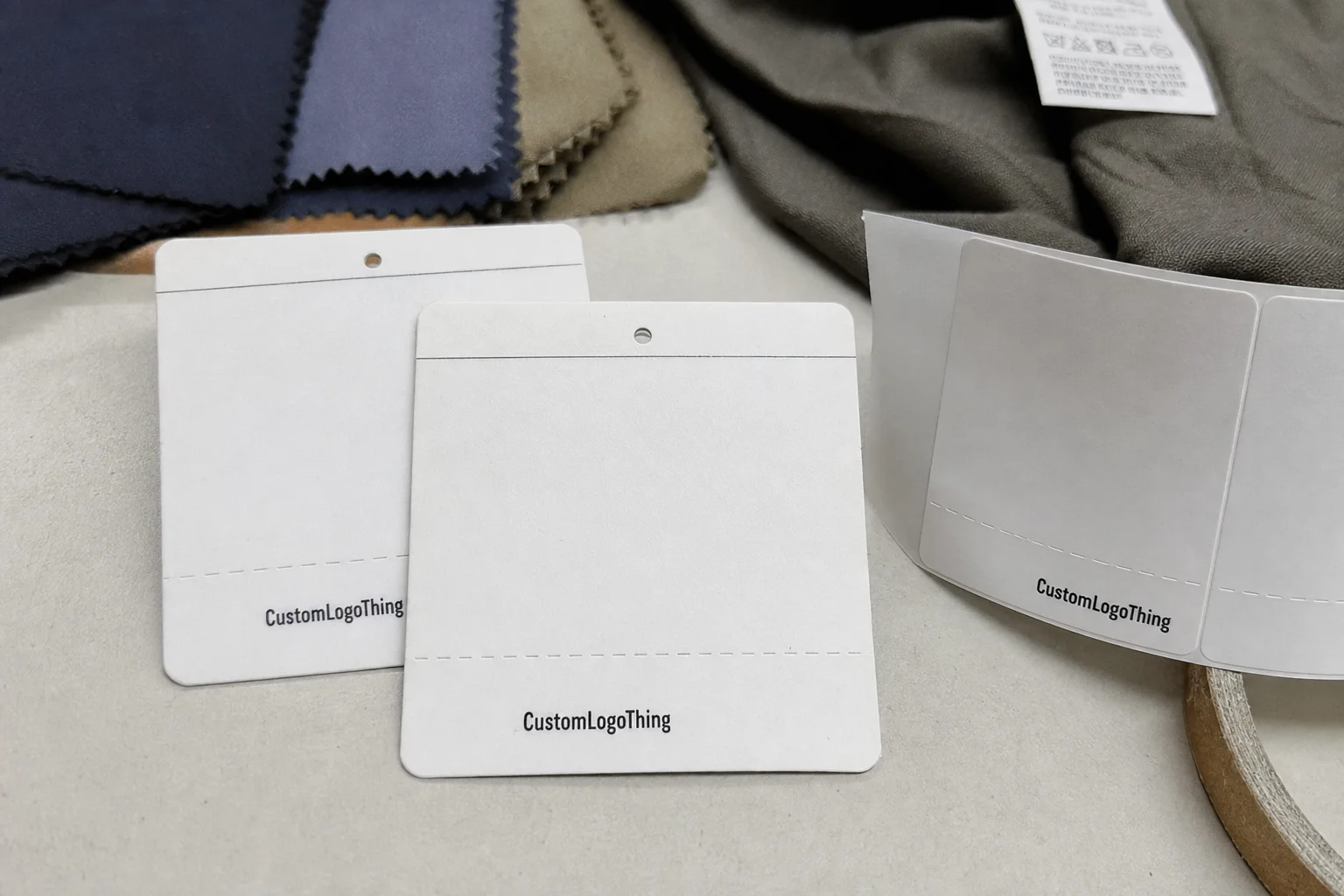
The appeal is practical: speed without adding much process weight. Dymo-style label systems print variable data fast, do not need ink ribbons in many setups, and are simple for small teams to run from a packing bench or stockroom. For clothing workflows, that usually means size identifiers, SKU tags, rack labels, bin labels, and quick carton markings that must be readable at a glance.
That matters more than it sounds. A packer who can identify a size run instantly keeps orders moving. A merchandiser who does not have to relabel shelves every week saves labor. A pop-up seller who can print pricing and style codes on demand avoids handwriting errors that become expensive later. The label is part of the workflow, not decoration.
For small apparel brands, the gain is usually consistency across multiple touchpoints. One label format can carry item codes for warehouse staff, short handling notes for folding teams, and destination info for outbound boxes. That is also why dymo custom labels sit alongside custom printed boxes and other retail packaging choices: they often serve as the last operational checkpoint before a garment leaves the building.
A label that saves five seconds on one order barely registers. Multiply that by 300 orders and the labor cost becomes visible.
There is another reason clothing teams prefer this format: it is easy to standardize across SKUs. Once a template is set, the same structure can work for tees, hoodies, denim, accessories, or seasonal bundles. That reduces training time, and training time is a real cost in a busy packing room. Fewer exceptions usually mean fewer mistakes.
The strongest use cases are usually the ones with repeatable logic: a size label on one line, a SKU on another, a barcode underneath, and a short handling note if needed. If the format changes every time a new collection launches, the system starts to lose its value. Stability is the whole point.
What Dymo Custom Labels Actually Mean for Garments
At the technical level, these are usually direct thermal labels. The printer heats the label surface and creates the image without toner or ribbon. That keeps the system simple, which is one reason it fits short-run apparel work well. When teams need variable data, such as a different SKU on every roll or every label, that simplicity becomes operationally useful.
“Custom” can mean several things. It may refer to the label dimensions, the shape, the spacing between labels, the face stock, the adhesive strength, or the printed template itself. A stock roll from a catalog can work, but it is not always built for garment handling. A custom format is usually designed around the actual use case, which might be folded garments, hang tags, shelving, shipping cartons, or storage bins.
For clothing, the first question is where the label lives. If it goes on a polybag or carton, a stronger adhesive can make sense. If it touches a fabric fold or is used as a temporary size marker on a bundle, a removable adhesive may be the safer choice. If it sits on a garment itself for more than a brief handling window, testing becomes non-negotiable because residue and edge lift show up fast on delicate textiles.
One caution matters here: these labels are operational tools, not a replacement for permanent care labels or legal garment labeling where compliance applies. A sewn-in fiber content label, country-of-origin mark, or wash-care label still has to do its own job. Dymo custom labels are best used for the fast-moving layer around the garment, not as a substitute for regulated information on the finished item.
That separation is useful in practice. A carton label can carry outbound details, a shelf label can carry style and color, and a garment-facing marker can carry size and count. When those functions are kept distinct, teams are less likely to confuse inventory marks with product information. The result is fewer relabels and less time spent checking what a label was supposed to mean.
There is also a design advantage. A simple operational label can be built for fast reading, while your consumer-facing package can stay visually distinct. That distinction matters in apparel because the label that helps a team on the floor does not need to carry the same visual language as the label that supports the customer experience.
Material, Adhesive, and Size Factors That Change Performance
Material choice is the first performance decision. Paper stocks are usually fine for short dwell times, dry storage, and low abrasion. Synthetic stocks cost more, but they hold up better in humidity, handling, and storage environments where cartons are stacked or moved repeatedly. If labels are likely to rub against polybags, shelving, or shipping tape, the extra durability can pay for itself quickly.
Adhesive strength is the second decision, and it is where many apparel buyers guess wrong. A weak adhesive may lift on rounded surfaces, coated cartons, or lightly textured packaging. A strong adhesive can create a different problem on fine knits, satin, soft finishes, and any surface where residue would look bad. The best choice depends on how long the label stays in place and what it touches.
For garment contact, removable adhesive is usually the safer starting point. That does not mean every removable stock will behave the same way. Temperature, storage time, and surface finish all change the result. A label that peels cleanly from one fabric may leave a trace on another, especially if the garment sat under pressure in transit. Testing on the actual product is the only way to know.
Size affects performance for a simpler reason: readability. A label packed with SKU, size, barcode, price, and handling notes can become unreadable if the format is too narrow. Most teams are better off designing for quick scanning and fast recognition first, then adding only the fields they truly need. If a packer has to slow down to decipher the layout, the format is already too dense.
Print clarity also deserves its own check. Small text, reversed type, low contrast, and compressed barcodes all increase the chance of errors. A label can look acceptable on screen and still fail in the room if the scan rate is poor. Proofs should be reviewed at actual size, not only in a design file or laptop mockup. A 3 mm shift in spacing may not matter on screen, but it can ruin the balance of a tight label.
Common label choices for apparel operations usually fall into a few buckets:
- Paper direct thermal for short-term tagging, temporary sorting, and lower-cost label runs.
- Synthetic direct thermal for more handling, better resistance to moisture, and longer shelf life.
- Removable adhesive for temporary garment contact, folding, and bundle organization.
- Permanent adhesive for cartons, storage bins, and shipping-related surfaces.
For buyers who also manage broader package branding, the label spec should sit next to the rest of the packaging system. A clean garment label, a consistent insert, and a well-built box create a more coherent brand experience than any one element can do alone. The label does not need to be flashy. It does need to behave predictably.
Cost, Pricing, and MOQ for Clothing Labels
Pricing is driven by a few predictable variables: stock choice, label size, print coverage, quantity, and whether the format needs custom cutting or special finishing. If the artwork uses simple black text and a barcode, the cost stays lower. If the label needs heavy coverage, specialty adhesive, or a custom die, the quote moves up quickly.
MOQ is where smaller apparel brands feel the pressure. A low minimum may look convenient, but smaller runs almost always cost more per label than repeat production at larger quantities. For a first order, that is normal. For a recurring label used across multiple collections, it is worth pushing for a format that can be reordered without reworking the whole job.
Here is a practical way to compare options.
| Option | Typical Use | Common Price Range | Notes |
|---|---|---|---|
| Stock paper roll | Short-term garment sorting, simple SKU tags | $0.03-$0.08 per label | Lowest cost, but limited durability |
| Custom paper roll | Branded size labels, basic barcode use | $0.06-$0.14 per label | Better fit for repeat apparel workflows |
| Synthetic custom roll | Longer handling, humidity, carton labeling | $0.10-$0.22 per label | Higher material cost, stronger real-world performance |
| Custom die-cut format | Special shapes, premium presentation, retail packaging | $0.12-$0.28 per label | Useful when the label is part of package branding |
Those ranges are not universal. A 2,000-piece order will usually price differently than a 10,000-piece reorder, and a simple one-color format will not behave like a label with multiple barcodes or a dense template. Still, the table gives buyers a useful lens: the cheapest quote is not always the lowest cost if it causes relabeling, scan failures, or damaged fabric.
When comparing quotes, ask what is included. Does the price cover setup, proofing, sample runs, shipping, and reprint policy? If not, the headline price can be misleading. A slightly higher quote with clean proofing and reliable repeatability often wins in practice.
For teams building a larger packaging system, this is the same decision logic used for custom printed boxes and other custom packaging products. A label that saves labor has real value, but only if it works in the field and fits the rest of the operating process.
One more pricing reality gets overlooked: label costs should be compared against labor, not only against other label quotes. If a slightly better material prevents one relabeling pass, the actual savings may exceed the unit price difference. In apparel operations, the cheapest material is not always the cheapest outcome.
Process and Turnaround: From Artwork to Finished Rolls
The production path is straightforward, but each step can slow down if the buyer is unclear. It usually starts with artwork intake, then a template check, then proofing, production, finishing, packing, and shipment. If a supplier has to guess at label dimensions or content placement, the calendar stretches almost immediately.
Proof approval is the biggest timeline variable. In many label jobs, the supplier can move quickly once the final size, adhesive, barcode content, and layout are locked. If the buyer changes the copy after proofing, the clock resets. That is why the fastest orders are usually the ones with the cleanest spec sheet.
For standard stock formats, turnaround is typically shorter. For fully custom labels built around a clothing workflow, a realistic lead time is often 12-15 business days from proof approval. Repeat orders can move faster, while new tooling, specialty materials, or unusually dense artwork can extend the schedule. If the launch date matters, the buyer should ask for exact timing before approving artwork.
Repeat orders are usually easier. Once the artwork, material, and adhesive are locked, reorders tend to be more predictable, and the risk of inconsistency drops. That matters for brands managing multiple SKUs because it keeps label language and production rhythm stable across collections.
A useful habit is to build a small label library. A size label, a SKU label, a carton label, and a care note label can cover most apparel needs without redesigning every time a new collection lands. Standardization sounds dull, but it reduces formatting errors, speeds approvals, and makes reordering much simpler.
There are also practical checks outside the label itself. If your labels ride in shipping cartons, test against real handling conditions. The ISTA testing framework is useful for understanding how packages behave under vibration, drop, and compression assumptions, while the EPA offers guidance around waste reduction and materials use. If your label stock is paper-based and part of a broader materials strategy, FSC certification is worth asking about.
Turnaround is not only about manufacturing speed. It is also about how quickly the buyer can make a decision. If the artwork is unstable, the label spec is vague, or the barcode content is still changing, no supplier can hold the schedule together for long. Clean inputs are usually the difference between a routine job and a delayed one.
Common Mistakes That Cause Label Failures
The most common mistake is selecting an adhesive by habit instead of by use case. A label that works on a cardboard carton may fail on a garment fold. A label that is safe on smooth poly may be too aggressive for a delicate fabric. Buyers sometimes discover this only after a launch, which is the expensive time to learn it.
Another failure point is clutter. Teams try to fit too much into one label because space feels cheap on a screen. In the packing room, space is not cheap. A label should be readable in seconds, and every extra field adds visual noise. If the barcode, SKU, and size are the priority, those elements need the strongest hierarchy on the face.
Testing is often skipped or reduced to a quick peel check. That is not enough. Fold the garment. Stack it. Put it in a bag. Send it through a normal transit path. Leave it in the expected storage condition. The point is not to create a lab-perfect result. It is to see whether the label behaves correctly in the environment it will actually face.
Barcode readability deserves separate attention because it can fail even when the print looks clean. A label may scan on one device and fail on another if the contrast, quiet zone, or bar width is off. That creates a hidden operations problem: the label exists, but the workflow still breaks because the scan rate is poor.
Another issue is version control. If one person updates the template and another keeps using an old file, the batch can split into slightly different formats. That sounds minor until the team is sorting thousands of garments. A single locked template, stored in one place, avoids a lot of friction.
Here is the short version of what to avoid:
- Using a too-strong adhesive on delicate fabric contact points.
- Overloading the format with text that nobody needs at picking speed.
- Skipping real-world testing on folded, stacked, or shipped garments.
- Ignoring barcode scan performance until production is already underway.
There is one more practical failure mode: assuming a label will look the same across materials. Thermal output can shift depending on the printer settings, face stock, and storage conditions. What looks crisp on one roll can come out faint on another. That is why a quick press-and-scan check before full production is worth the time.
Expert Tips and Next Steps for a Cleaner Rollout
Start with a sample test on the actual garments you sell. Not a proxy. Not a similar fabric if you can avoid it. Check adhesion after folding, after packing, and after transit simulation. Then review the label under the same lighting your team uses at the bench, because small text and low contrast can look worse in real conditions than they do on a design file.
Build a label library before the next launch. Most apparel teams only need a handful of repeatable formats: size, SKU, carton, bin, and short handling notes. Once those are standardized, new collections move faster and the chance of a formatting error drops. That is one of the quiet advantages of dymo custom labels: they are easy to systematize once the first round is done correctly.
Before requesting quotes, define four things clearly: garment type, label purpose, quantity, and whether the label must be removable. If you can also specify the environment, such as dry stockroom, humid storage, or frequent handling, the recommendation gets better. A supplier can only match the label to the job if the job is described plainly.
Quality control should be explicit, not implied. Ask for proof checks on barcodes, trim lines, and label orientation. Confirm roll direction and core size if the printer setup is fixed. If the job includes sequential data, check the first and last labels in the run, not just the proof. Those are the places where errors tend to surface.
One more practical point: if your label will sit alongside other branded packaging elements, keep the visual language consistent. The label does not need to imitate your box art, but it should not feel random either. A clean package system makes the brand look organized, and organization is often what buyers and customers notice first.
For teams moving from ad hoc labeling to a repeatable system, the path is simple. Test the format, lock the spec, and keep the rollout narrow until it proves itself. That is how dymo custom labels become a reliable part of clothing operations instead of another thing to fix mid-fulfillment.
What are Dymo custom labels used for in clothing?
They are commonly used for size IDs, SKU tracking, bin labels, price tags, and packing labels in apparel workflows. They help teams sort, scan, and ship garments faster without handwritten marks. They are usually best for operational labeling, not as a replacement for permanent compliance care labels.
Are custom Dymo labels safe to place on garments?
They can be safe when the adhesive is matched to the use case, especially for temporary handling or packaging. Test on the actual fabric before launch, because delicate textiles and long dwell times can leave residue. If the label touches the garment directly, use the least aggressive adhesive that still stays in place.
How do I choose the right size for Dymo labels on clothing?
Start with the content you must fit: SKU, size, barcode, and any short handling note. Choose the smallest size that still allows fast reading and reliable scanning at arm's length. Leave enough white space so the label does not look crowded or print poorly after trimming.
What affects the price of Dymo custom labels most?
Material choice, label size, quantity, and whether the order needs custom setup or finishing are the biggest drivers. MOQ matters because smaller runs usually carry a higher unit cost than larger repeat orders. A quote should also account for proofing, samples, and shipping so the total cost is clear.
How fast can custom Dymo label orders be turned around?
Speed depends on proof approval, stock availability, and whether the design can use an existing format. Simple repeat orders usually move faster than first-time custom jobs because the specs are already locked. If timing matters, ask for the exact lead time before you approve artwork or commit to a launch date.


