Buyer Fit Snapshot
| Best fit | Eco Poly Mailers Supplier projects where brand print, material claims, artwork control, MOQ, and repeat-order consistency need to be specified before quoting. |
|---|---|
| Quote inputs | Share finished size, material target, print colors, finish, packing count, annual reorder estimate, ship-to region, and any compliance wording. |
| Proofing check | Approve dieline scale, logo placement, barcode or warning zones, color tolerance, closure strength, and carton packing before bulk production. |
| Main risk | Vague material claims, crowded artwork, missing packing details, or unclear freight terms can make a low unit price expensive after revisions. |
Fast answer: Eco Poly Mailers Supplier: Artwork Proof, Packing Count, and Landed Cost should be specified like a repeatable production item. The safest quote records material, print method, finish, artwork proof, packing count, and reorder notes in one written spec.
Production checks before approval
Compare the actual filled-product size with the drawing, then confirm tolerance on folds, seals, hang holes, label areas, and retail display edges. Reserve space for logos, QR codes, warning copy, and material claims before decorative graphics fill the panel.
Quote comparison points
Review material grade, print process, finish, sampling route, tooling charges, carton quantity, and freight assumptions side by side. A quote is only useful when the supplier can repeat the same color, closure quality, and packing count on the next order.
If you’re building packaging around sustainability and not just green-colored marketing fluff, this Eco Poly Mailers supplier guide is the one I wish more buyers read before sending their first RFQ. I’ve stood on factory floors in Shenzhen while a buyer opened a pallet of “eco” mailers and found flimsy film, crooked seals, and a logo that looked like it had been printed through a shower curtain. Same product class, different reality. Better buyer education would have saved them $8,400 in returns and reprints, and honestly, that kind of mistake still makes me wince a little.
The phrase Eco Poly Mailers supplier guide is easy to say and harder to use well. It’s not about finding a cheaper bag with a leaf on it. It’s about understanding recycled content, print quality, seal strength, shipping performance, and whether the supplier can prove the claims they’re making with batch records, test data, and clear resin specifications. I’ve seen brands cut complaint rates fast just by switching from plain PE mailers to better-built eco poly mailers with a cleaner finish and stronger closure strip. Customers notice that stuff. A lot. I remember one apparel brand in Los Angeles telling me the new mailers “felt weirdly reassuring” in hand, which is a pretty funny way to say the packaging actually did its job.
Eco Poly Mailers Supplier Guide: What They Are and Why They Matter
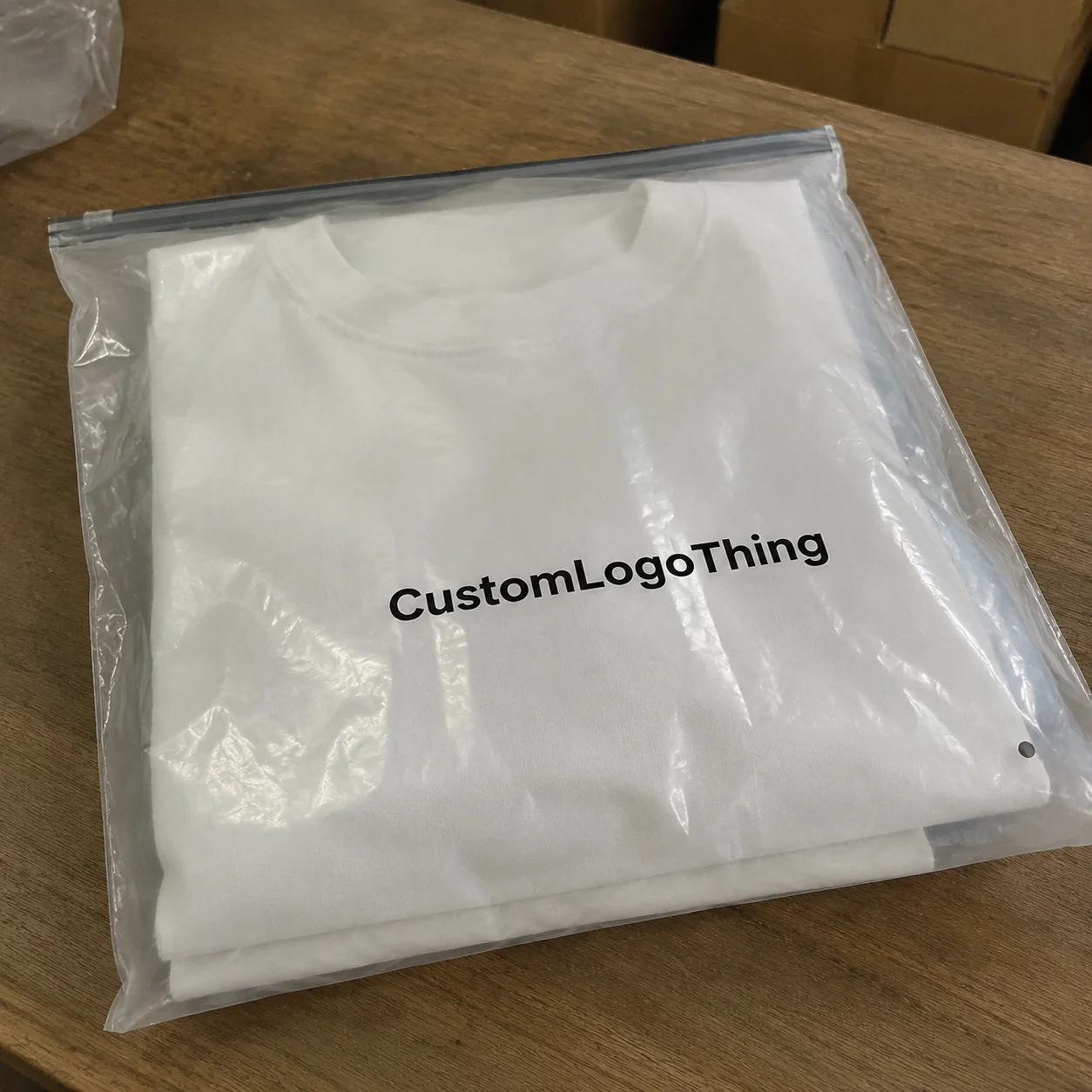
Let’s keep this simple and specific. Eco Poly Mailers are shipping bags made with a lower-impact material profile than standard virgin plastic mailers, usually polyethylene-based film with either recycled content, reduced gauge, or a mono-material structure designed for a cleaner recovery path. That can mean recycled content, recyclable structures, reduced virgin resin, or a design that uses less material overall. The words sound similar because suppliers love to blur them together like they’re selling the same thing, but they’re not. If a sales rep starts using “eco,” “green,” and “sustainable” like they’re interchangeable, I get a little twitchy, especially when the spec sheet stops at marketing language and never mentions resin grade or film thickness.
In one buyer meeting, a DTC apparel brand in Austin told me they wanted “the most eco option.” Fine. Great goal. But their product was a heavy knit sweater with sharp cardboard hangtags, and the first sample they tested tore at the side seam after a 48-inch drop. That’s not eco. That’s waste with a PR sticker on it. A real eco poly mailers supplier guide starts with the shipment, not the slogan, and it starts with actual handling conditions, not a mood board. If the bag can’t survive a 1.2-meter drop with a 900-gram garment inside, the sustainability pitch doesn’t matter much to the customer who receives a ripped parcel.
Here’s the basic translation, with the details buyers usually need:
- Eco means the supplier is claiming a lower environmental impact somehow, usually through recycled resin, lighter gauge, or reduced material use.
- Recycled means the material includes post-consumer or post-industrial resin, often PCR, and the supplier should be able to state the percentage, such as 30% PCR or 50% PCR.
- Recyclable means the bag can be accepted in some recycling streams, depending on local infrastructure, collection access, and the film stream available in that region.
- Compostable usually means a very different material family entirely, and most poly mailers are not compostable just because someone printed the word on the front in dark green ink.
That distinction matters more than buyers think. I’ve had suppliers in Dongguan and Ningbo tell me a mailer was “recyclable” because the base film was polyethylene. Technically, sure. Practically, if the bag has a heavy ink flood, odd laminate additives, or adhesive components that complicate sorting, it may not be as easy to recycle as the brochure implies. This is exactly why any eco poly mailers supplier guide needs to talk about claims, not just colors. A bag can wear a leafy costume and still be a mess underneath, and that mess usually shows up in the customer service inbox three weeks after launch.
Who actually needs these? E-commerce brands, subscription boxes, apparel sellers, beauty brands, accessories labels, and any business shipping lightweight non-breakable items. If you’re mailing a silk scarf, a tote bag, a small cosmetic pouch, or a stack of lookbooks, eco poly mailers can be a smart fit. If you’re shipping glass jars, please don’t get cute. Use proper protective packaging from Custom Packaging Products and choose a structure that survives reality, whether that means a 350gsm C1S artboard insert, molded pulp, or a corrugated mailer that can hold a 3-pound load without collapsing.
Supplier choice matters because the factory controls the film blend, the seal quality, the print consistency, and the tolerances. Marketing copy doesn’t keep a bag from splitting at the gusset. Factory process does. I’ve seen a “premium” supplier in Shanghai charge 18% more than a budget option and still win because their gauge control was tighter by 0.02 mm and their mailers passed a rough handling test the cheaper run failed by a mile. That’s the sort of detail a serious eco poly mailers supplier guide should help you evaluate. It’s also why I keep telling buyers to stop worshipping the lowest number on the quote sheet when a difference of $0.03 per unit can be erased by one round of reprints.
“The cheapest quote is usually the most expensive mistake once freight, defects, and reorders show up.”
How Eco Poly Mailers Work: Materials, Construction, and Claims
Most eco poly mailers are made from polyethylene-based films, often with recycled polyethylene or PCR content blended in. Some use co-extruded layers, which means multiple film layers are combined to balance strength, opacity, and print performance. A good multilayer structure can help the bag resist punctures while still keeping branding sharp. A bad one feels soft, stretches unevenly, and prints like a tired office copier that’s been asked to work one more hour than it should. In practical terms, the film might be 55 to 80 microns thick, with a common mid-market spec sitting around 60 microns for lightweight apparel and 75 microns for heavier SKUs.
In practice, the structure is doing three jobs at once: protecting the product, carrying the brand, and meeting the environmental claim. That’s not easy. On one sourcing trip in Guangdong, I watched a factory swap from a 60-micron film to a 55-micron film to save material cost, and the mailer still looked fine on the table. Then we dropped loaded samples from 1.2 meters and the adhesive strip popped open on two of ten bags. That 5-micron savings? It was a joke. The eco poly mailers supplier guide angle here is simple: ask what changed in the structure before you compare unit price. Otherwise you’re comparing fairy tales while the factory is quietly shaving resin in Foshan or Huizhou to improve their margin by $0.01 per bag.
The closure matters too. A proper peel-and-stick strip should create a tamper-evident seal with enough tack to survive pressure, heat, and transit vibration. A weak closure is a disaster because customers will blame your brand, not the bag. I’ve lost count of the times a buyer thought they had a film problem when the real issue was a cheap adhesive line applied too narrow by the factory, usually under 8 mm wide when 12 to 15 mm would have been safer for an export shipment. That’s why any strong eco poly mailers supplier guide should ask about adhesive width, seal tack, and aging performance after 24 hours at elevated temperature. If the supplier can’t answer clearly, I start mentally preparing to be annoyed.
Now, the claims. Good suppliers verify eco claims with documents such as:
- Material declarations that name the resin type and batch number
- Recycled content certificates showing percentages such as 20%, 30%, or 50% PCR
- Third-party test reports from labs such as SGS or Intertek
- Country-of-origin paperwork tied to the actual production lot
- Factory QC records for film thickness, seal performance, and print adhesion
One lower-cost factory I negotiated with in Zhejiang claimed “30% recycled content” but could only produce a vague internal letter with no batch reference and no test method. The premium supplier had a cleaner paper trail, batch-specific declarations, and a QC sheet showing average gauge, tensile data, and seal strength on the actual run. They also gave us a photo of the completed roll labels from their Hangzhou warehouse, which sounds small until you’ve spent a week chasing missing documents. Guess who I trusted? Exactly. The point of an eco poly mailers supplier guide is not to reward the best storyteller. It’s to find the supplier who can prove what they said.
There’s also a real difference between recycled-content and recyclable. A bag can contain recycled resin and still not be recyclable in every local system. And a recyclable bag may not contain any recycled material at all. Public recycling access varies. In California, the Northeast, and many parts of the EU, the collection landscape is different from what buyers see in inland China or in smaller U.S. cities like Omaha or Tulsa. The EPA’s guidance on packaging waste and recycling realities is worth a read: EPA recycling resources. If your marketing says “recyclable,” make sure the claim matches where your customers actually live and toss trash. Otherwise, well, the internet will eventually do what it does best and call you out.
Print method matters too. Flexographic printing is common for volume orders because it’s efficient and consistent, especially on 10,000-piece runs and above. Gravure can deliver beautiful ink laydown at higher scale, though the setup cost is not gentle and often starts around $300 to $800 per cylinder set depending on complexity. Digital is useful for shorter runs and faster customization, particularly if you’re testing 1,000 to 3,000 bags in a new market. Ink choice, finish, and coverage can affect both recyclability and how premium the mailer feels in-hand. A heavy ink flood can look rich, but it can also complicate the sustainability story. The best eco poly mailers supplier guide advice I can give: ask the factory how the print interacts with the film, not just how many colors they can push. I’ve seen beautiful artwork ruin an otherwise decent bag because nobody asked how aggressive the ink system was.
Key Factors When Choosing an Eco Poly Mailers Supplier
If I had to boil supplier selection down to one sentence, it would be this: specs beat promises. A good eco poly mailers supplier guide starts with the stuff you can measure. Thickness. Recycled content percentage. Puncture resistance. Opacity. Seal width. Print tolerance. If the supplier won’t give you those numbers, they’re not really selling a product. They’re selling hope in a glossy PDF, and I’ve got enough of that in my inbox already. A proper supplier should be able to quote film thickness in microns, seal tolerance in millimeters, and bag size in exact finished dimensions like 10 x 13 inches or 12 x 15.5 inches.
Material specification is the first filter. You want to know the resin source, the recycled content percentage, and whether the bag is a mono-material structure or a mixed setup. In my experience, thickness often ranges from 50 to 90 microns for common e-commerce mailers, but the right number depends on what’s inside. A 120-gram cotton tee is one thing. A heavy hoodie with a zipper is another. A 0.5 kg accessory kit packed with a rigid insert is another again. Any serious eco poly mailers supplier guide should push buyers to match gauge to product risk, not to a random target because it sounds green.
Pricing structure is the next trap. Unit cost is the shiny number everyone quotes first. Then setup fees show up. Then plate charges. Then shipping. Then customs. Then the “small order handling” fee that somehow wasn’t mentioned until the invoice was due. I’ve seen a quote from a Shenzhen supplier at $0.18 per unit look amazing on paper, then land at $0.31 all-in after freight, duties, and packaging. Another factory in Dongguan quoted $0.15 per unit for 5,000 pieces, but the printed version required a $95 plate fee and $180 for export cartons, which changed the math fast. That’s why a proper eco poly mailers supplier guide keeps the conversation on landed cost. The factory can smile all it wants; the freight bill always shows up with receipts.
Here’s a practical comparison table I use with buyers when they’re evaluating options:
| Supplier Type | Typical Unit Price | MOQ | Lead Time | Best For |
|---|---|---|---|---|
| Overseas stock + simple print | $0.12–$0.22 | 5,000–10,000 | 15–25 business days | Testing and early-stage brands |
| Overseas custom run | $0.18–$0.38 | 10,000–30,000 | 20–35 business days | Growing e-commerce brands |
| Domestic custom supplier | $0.28–$0.60 | 1,000–10,000 | 10–20 business days | Fast turns and lower inventory risk |
MOQ and scalability matter more than founders expect. You might only need 3,000 bags for a test launch, but if the supplier’s minimum is 30,000, your “cheap” packaging becomes a warehouse problem. A smart eco poly mailers supplier guide should look for suppliers who can support a pilot order and then ramp cleanly to a larger replenishment without forcing a full redesign. I’ve watched brands fill half a storage room with mailers they were too scared to use because the spec changed after the first order. That’s not strategy. That’s regret in cardboard cartons, especially when storage in places like Long Beach or Secaucus runs $18 to $35 per pallet per month.
Customization is another big one. Size range, color matching, tear strips, resealable features, and brand print quality all matter. One beauty client of mine in Brooklyn wanted a soft pastel mailer with a matte finish and a single-color logo. The first supplier printed a muddy peach because their ink control on recycled film was weak. The second supplier matched the PMS target within a practical range and used a cleaner co-ex film from a plant in Jiangsu. That’s the difference between “it’ll do” and “we can actually ship this.” The best eco poly mailers supplier guide calls out print quality as a supply chain issue, not a design afterthought.
Documentation is non-negotiable. Ask for certifications, test reports, and country-of-origin details. If you want to make FSC-related claims anywhere in your broader packaging mix, understand what that actually covers at FSC. Poly mailers themselves are usually not FSC products, but your supplier should still be able to provide clean paperwork and clear sourcing records. Vague answers are how brands end up with compliance headaches and angry legal teams, especially when a customs broker in Rotterdam or Los Angeles asks for a declaration and nobody can produce one within 24 hours.
Lead time reliability is where the pretty brochures often die. Ask how many lines they run, how many shifts they operate, and whether they reserve production capacity for repeat clients. I once visited a supplier in Shenzhen who promised 12 business days on a custom run. Their actual line was jammed with two large orders, and our bags sat in queue for six extra days while sales asked me why packaging was late. That’s not an edge case. That’s Tuesday. An honest eco poly mailers supplier guide should treat lead time like a real cost, and it should include the timeline from proof approval, not just the date the factory feels optimistic.
Communication is the last filter, and honestly, it’s one of the best ones. If a supplier answers within 12 hours, sends clear specs, and provides sample photos with measurements, that’s a good sign. If they dodge questions about recycled content or give you three different answers about the same thickness, walk away. I don’t care how charming the price is. A supplier who can’t explain their own product is not a supplier I’d trust with a brand launch. That belongs in every eco poly mailers supplier guide because bad communication becomes expensive fast, especially when your operations team in Chicago is waiting for a corrected proof and the factory is still discussing font size.
Eco Poly Mailers Supplier Guide: Cost, Pricing, and Timeline
Let’s talk money like adults. A useful eco poly mailers supplier guide should tell you that pricing is a mix of material grade, print complexity, volume, and logistics. Cheap resin helps. So does a simple one-color print. But if you need a custom size, a soft-touch matte finish, and a higher recycled content mix, the number climbs. That’s normal. What’s not normal is pretending every quote should look identical. A 25-micron stock mailer from a factory in Yiwu will not price like a 70-micron custom-printed bag shipped to Newark with export cartons and carton labels already applied.
For a realistic framework, think of it like this:
- Low-cost import options: usually basic recycled-content bags with simple print and higher MOQs, often 10,000 pieces or more.
- Mid-range custom runs: the sweet spot for most brands that need branding, decent QC, and moderate volume, often around 5,000 to 20,000 pieces.
- Premium suppliers: tighter tolerances, better documentation, stronger QC, and usually better communication, often with more detailed pre-production checks and batch testing.
I’ve seen sample packs cost anywhere from $25 to $80 depending on how many sizes and print variations you want. Pay it. Seriously. I once rejected a 20,000-piece order because the sample showed a seal that failed after the bag sat under a warm light for four hours. That test saved the client roughly $6,500 in replacement and freight. Another time, a supplier in Fujian sent a proof overnight and the client approved it within 36 hours, which kept the schedule moving without paying a rush surcharge. Any eco poly mailers supplier guide that ignores sample costs is setting buyers up to make dumb decisions.
Here’s how the timeline usually breaks down:
- Inquiry and RFQ: 1 to 2 business days if your spec sheet is complete
- Spec review and quotation: 1 to 3 business days for a standard bag, longer if recycled content proof is needed
- Sampling and revisions: 5 to 10 business days for stock-film samples, 10 to 15 business days for custom print changes
- Pre-production approval: 1 to 2 business days once the proof is correct
- Production: typically 12-15 business days from proof approval for a small domestic run, or 20-35 business days overseas
- Quality check: 1 to 3 business days depending on lot size
- Freight booking: 2 to 5 business days for ocean freight, often faster for air
- Transit and receiving: 3 to 7 business days domestic, 18 to 35 days by ocean from East Asia to the U.S. West Coast depending on port congestion
For custom eco poly mailers, a normal cycle can run 12–15 business days after proof approval for small domestic jobs, or 20–35 business days for overseas production before transit. Then you add freight. Sea freight might be economical, but it is not fast. Air freight is fast, but your CFO may develop a nervous twitch when the freight quote lands at $1,400 for a small cartonized order. The best eco poly mailers supplier guide recommendation is to build a two-week approval buffer and some safety stock so you aren’t paying for emergency shipping because someone forgot to sign off on artwork.
Ask for an all-in landed cost. Not the factory quote alone. Not the FOB bait. The full landed number to your warehouse. That means unit price, packaging, cartons, freight, duties, and any broker charges. I’ve seen a “cheap” quote from a Shenzhen factory look unbeatable until the buyer added ocean freight, customs fees, and last-mile trucking. Suddenly, the supposedly low-cost option was 14% more than the mid-range supplier in Vietnam, and the buyer was staring at a landed price of $0.29 per unit instead of the quoted $0.16. That kind of surprise makes me want to throw a spreadsheet. An honest eco poly mailers supplier guide saves you from that nonsense.
Lead time also changes depending on whether the supplier is domestic or overseas, and whether the bag is stock or fully custom. Stock items print faster. Custom film structures take longer because the factory needs to source resin, set up the line, and validate print. If you’re in a seasonal business, that matters a lot. Missing a holiday drop because your packaging arrives late is one of those pain points no brand wants to learn the hard way, especially if your peak season starts in September and your bags are still on a vessel outside Port of Los Angeles. And yes, I’ve seen it happen more than once. Buyers get excited about a lower quote, then spend the next month explaining delays to customers. That’s not savings. That’s chaos.
Step-by-Step Guide to Vetting an Eco Poly Mailers Supplier
The vetting process is where a smart eco poly mailers supplier guide earns its keep. I usually break it into seven steps because more than that and people start pretending they “already know a guy.” That guy often ships bags that smell weird and split on arrival, usually from a factory that only inspected one bag out of a 2,000-piece run.
Step 1: Define your shipping needs. List product weight, edge sharpness, shipping method, and brand requirements. If you’re shipping a 300-gram tee in a poly mailer, that’s one spec. If you’re shipping a boxy accessory set with metal zippers, that’s another. Don’t guess. Measure the actual product and the finished pack dimensions. If your garment folds to 11 x 14 inches and you want room for a return insert, say that clearly.
Step 2: Request specs and proof. Ask for material composition, recycled content percentage, thickness, seal type, and certificates. A serious supplier will send this without acting offended, as if documentation is a personal insult. If they hesitate, that tells you more than their sales pitch. A solid eco poly mailers supplier guide should tell you to trust paperwork more than promises, and to expect batch-level information tied to an actual production date and factory location such as Shenzhen, Dongguan, or Ningbo.
Step 3: Order samples from at least three suppliers. Test with your real product. Not a sock. Not an empty shirt. Your actual item, with inserts if you use them. One client sent me a sample bag full of air and said, “It looked fine.” Of course it looked fine. Air is easy to ship. Real inventory is harder, and slightly less smug. I’d rather see one sample with a 420-gram packed garment than five empty bags with pretty print.
Step 4: Compare performance. Check print alignment, odor, tear resistance, and seal strength. Run a simple rough-handling test. Drop it. Shake it. Press on the seams. Expose it to heat for a few hours if your warehouse gets warm. A practical eco poly mailers supplier guide should encourage abuse testing, because customers will do the same thing accidentally, usually in a hallway or a parking lot before they ever reach the unboxing video stage.
Step 5: Compare quotes by landed cost. Include freight, duties, packaging, and any sample charges. If one supplier quotes $0.20 and another quotes $0.24, the cheaper one may still lose once logistics are added. The real comparison is total cost per usable bag. Anything else is vanity math, and vanity math tends to create expensive inventory that looks good only in a spreadsheet.
Step 6: Confirm production and QC. Ask how they inspect film gauge, adhesion, and print quality. If they say “we check carefully,” that’s not enough. Ask what they measure, how often, and what happens when they find a defect. A dependable eco poly mailers supplier guide always checks the QC system, because that’s where consistent quality comes from. In a good plant, you should hear about inline sampling every 30 minutes, roll-to-roll gauge checks, and seal peel tests documented by shift.
Step 7: Start small if you can. If you’re testing a new supplier, don’t commit to a giant run unless the numbers and sample results are strong. A 5,000-piece pilot order is much easier to survive than a 50,000-piece order that turns into a warehouse regret. Then scale once the communication, quality, and timing hold up. I’ve seen brands save themselves a lot of stress by starting with a $750 sample run instead of a six-figure commitment to a supplier they’d never audited.
There’s one more thing I tell every buyer: keep a note file on each supplier. Lead time accuracy, defect rate, response speed, and how they handle problems. That data becomes gold on your next reorder. A good eco poly mailers supplier guide is not just about making one purchase. It’s about building a sourcing system that works every season, from a small 2024 launch in Miami to a repeat order shipping through a 3PL in Dallas.
Common Mistakes Buyers Make With Eco Poly Mailers
The biggest mistake? Buying on the word “eco” alone. I’ve seen a mailer labeled sustainable because it contained a sliver of recycled content, while the rest of the spec was thin, brittle, and not fit for purpose. That is not a win. That is a packaging problem with better branding. Any useful eco poly mailers supplier guide has to call that out, especially when a factory in Guangzhou uses a recycled-content claim to disguise a 45-micron film that would be too weak for a 2-day parcel route.
Another classic mistake is choosing the cheapest supplier and then acting shocked when customer complaints go up. You save $0.03 a bag and spend $1.20 fixing the downstream mess. Reprints. Returns. Damaged product. Angry emails. It adds up faster than buyers expect. I’ve watched a brand lose a retail account because their mailers split in transit on two separate replenishment orders. The supplier had been chosen purely on price. Great move. Terrible outcome. I still remember the email thread from that week, and it was not a fun one, especially when the replacement run cost another $2,300 in air freight from China to Chicago.
Skipping sample tests is another one. You cannot evaluate adhesive strip performance from a PDF. You cannot evaluate print richness from an email attachment. You need physical samples with your actual product. Period. A eco poly mailers supplier guide should be blunt here because being polite about bad sourcing habits gets people in trouble, and not just with packaging. It affects shipping labor, customer returns, and the resale value of the whole order.
Then there’s the recycling claim issue. If you label a mailer recyclable without checking local recycling access, you may be overstating the claim. Some customers have great access to film recycling. Many do not. If your legal or sustainability team is involved, get them to review wording before it goes live. That saves awkward conversations later, especially in markets like Texas, Florida, or rural Ontario where curbside film recovery may be limited or nonexistent.
Finally, buyers over-order too early. They lock in 30,000 pieces before confirming size, print placement, and how the mailer feels in the customer’s hands. Then they discover the logo sits too low, or the bag is too glossy for the brand image, or the adhesive strip is too narrow. A disciplined eco poly mailers supplier guide tells you to validate first, scale second. Otherwise you’re just paying to be surprised, and surprise inventory has a nasty way of sitting untouched in a warehouse for 9 months.
Expert Tips for Buying from an Eco Poly Mailers Supplier
If you want the short version of my sourcing advice, here it is: compare factories like a grown-up. Not on vibes. Not on a sales rep’s enthusiasm. On measurable standards. Ask every supplier the same questions, then score them on price, lead time, recycled content proof, sample quality, and communication speed. That way your eco poly mailers supplier guide becomes a decision tool, not a hope notebook. A simple scorecard with five categories and a 1-to-5 rating can save you more money than another hour in the quote inbox.
Ask for the factory’s standard test methods. Some will quote tensile strength, some will reference seal peel tests, and others will use internal QC checks that may or may not mean anything useful. I like suppliers who can explain their test process without turning defensive. That usually means they know their own line. It also means they probably won’t panic when you ask for a recheck on a sample lot. If they say their seal strength is 3.5 N per 15 mm, ask what test standard they used and whether that number came from the same run you’re buying.
Negotiate based on yearly volume if you can. Suppliers often respond better when they see a reorder path rather than a one-off squeeze for five cents. I’ve gotten better pricing by saying, “If this pilot works and we hit 40,000 pieces in the next two quarters, what can you do on reorders?” That conversation opens more doors than arguing over the first quote like it’s a flea market. A realistic eco poly mailers supplier guide should tell you to think in annual spend, not single-order drama, because a supplier in Zhejiang will often shave $0.02 per unit once they see a credible 80,000-piece annual forecast.
Request a pre-production sample or proof before committing to a full run. This matters a lot for color-critical branding. Recycled film can print differently than virgin film. The surface energy, the opacity, and the ink laydown all affect the final look. I once watched a brand reject a huge batch because the soft gray logo came out too dark against the recycled green-toned film. The supplier wasn’t wrong. The buyer just never checked the proof closely enough. That’s on the process, and yes, it stung a bit because everyone in the room knew it could have been avoided.
Use fewer mailer sizes if you can. One size can often cover multiple products with the right inserts or folded packing method. That reduces SKUs, simplifies inventory, and makes reordering less annoying. Every packaging manager I know eventually learns that fewer sizes usually means fewer headaches. This is exactly the kind of practical advice an eco poly mailers supplier guide should include, especially if your operations team is juggling SKUs in two fulfillment centers and a seasonal overflow unit in Phoenix.
Keep a backup supplier. Always. Not because your main supplier is evil. Because production lines get busy, resin gets delayed, freight gets weird, and people miss deadlines. A second source gives you breathing room and leverage. If a supplier is vague about composition or evasive about documentation, walk away. I’ve said it before and I’ll say it again: vague is how people end up with expensive trash. The best eco poly mailers supplier guide helps you avoid that pile of regret, ideally before you place a $12,000 order that nobody has properly reviewed.
What to Do Next With Your Eco Poly Mailers Supplier Search
Start with a one-page spec sheet. Keep it tight. Size, thickness, print colors, closure style, target recycled content, product weight, and estimated order volume. If you can fit it on one page, a good supplier can quote it faster and more accurately. That’s the first move I’d make in any eco poly mailers supplier guide workflow, and it usually cuts RFQ back-and-forth from a week to two or three days if the information is complete.
Then short-list three suppliers and send the same RFQ to each. Same measurements. Same artwork. Same expected quantity. No special treatment, no hidden assumptions. That’s how you compare apples to apples instead of comparing apples to a weird crate of pears. Ask for samples, documentation, and an all-in landed cost to your warehouse. That gives you a real decision base, whether your receiving dock is in New Jersey, Lancashire, or a bonded facility outside Ho Chi Minh City.
Once the samples arrive, use them in a real unboxing flow. Put the actual product inside. Seal it. Drop it. Tape it. Stack it. If it’s going to a fulfillment center, ask the team there what they think after handling 20 of them. Warehouse feedback is gold. They see the packaging fail before the customer does. A practical eco poly mailers supplier guide should always include operational testing, because a bag that survives a tabletop demo may still fail when a picker tosses it into a gaylord box at 7:00 a.m.
Rank suppliers by total value, not unit price alone. Include quality, communication, documentation, and consistency. The supplier who saves you 2 cents today but causes one return cycle later is not the winner. Write down defects, lead times, and response times. By the next reorder, you’ll have facts. And facts beat guesswork every time, especially when your finance team asks why a “cheap” packaging line item generated $1,800 in hidden freight adjustments.
Good packaging buying is boring in the best way. Same spec. Same sample test. Same QC expectations. Same backup plan. That’s how you keep costs predictable and customer complaints low. If you’re building out broader branded packaging, you can also look at Custom Poly Mailers alongside your other materials so the whole shipper kit makes sense together. A solid eco poly mailers supplier guide should make that process feel less like gambling and more like procurement, with clear numbers and a realistic production schedule.
One last thing from me: don’t let a shiny “eco” label rush you into a weak supply decision. Ask for proof. Test samples. Compare landed cost. Keep a backup. That’s the real playbook. If you do that, your eco poly mailers supplier guide turns into a repeatable sourcing process instead of a one-time headache, and your brand avoids the kind of packaging mistake that shows up in customer reviews with five stars and a photo of a torn parcel.
FAQ
How do I verify an eco poly mailers supplier's recycled content claims?
Ask for a material declaration, recycled content certificate, or third-party test report that states the percentage clearly, such as 30% PCR or 50% PCR. Confirm whether the claim applies to the entire mailer or only one layer of a multi-layer film. Request sample documentation before placing the order so you can review it with your compliance or sourcing team. That is the bare minimum in any eco poly mailers supplier guide, and it becomes even more useful if the paperwork includes a batch number and production location like Shenzhen or Ningbo.
What should I ask an eco poly mailers supplier about pricing?
Ask for unit price, setup fees, printing charges, packaging costs, freight, duties, and any extra sample fees. Request the landed cost to your warehouse, not just the factory quote. Check how pricing changes at higher volume so you know whether the supplier rewards scale or just punishes small buyers. A decent eco poly mailers supplier guide keeps you focused on total cost, and it should make room for real numbers like $0.15 per unit for 5,000 pieces or a $95 plate fee if the design requires it.
How long does it usually take to source custom eco poly mailers?
Sampling, revisions, and approval usually take longer than buyers expect, so build in extra time. Production lead time depends on whether the mailer is stock or fully custom, plus whether the supplier is domestic or overseas. For many custom runs, production is typically 12-15 business days from proof approval for domestic orders and 20-35 business days overseas before transit. Add buffer time for freight, customs, and any QC issues so you are not paying for emergency shipping. That timing reality belongs in every eco poly mailers supplier guide.
What are the most common mistakes when choosing an eco poly mailers supplier?
Buying on price alone and ignoring quality, documentation, and shipping reliability. Skipping sample tests with your actual product. Using vague eco claims without verifying materials or local recycling compatibility. Those three mistakes cause most of the pain I see, and a practical eco poly mailers supplier guide should help you avoid all of them, especially when the difference between suppliers is only $0.03 to $0.06 per unit but the defect rate doubles.
Can an eco poly mailers supplier help me pick the right size and thickness?
Yes, a good supplier should recommend size and gauge based on your product weight, sharp edges, and branding needs. Provide product dimensions, packaging inserts, and shipping method so they can suggest a realistic spec. Always confirm with samples because recommendations are useful, but real-world testing is what saves you from expensive mistakes. That’s one of the most useful parts of an eco poly mailers supplier guide, especially when your product mix changes between 300 grams and 1.2 kilograms across the year.