FedEx custom branded boxes get judged in three places: the dock, the driveway, and the moment the customer cuts the tape. That is where packaging either feels intentional or looks like an afterthought. A good carton does not just carry the product. It carries a signal that someone planned the shipment with care.
The mistake is treating print as decoration and structure as an afterthought. The box needs to survive transit first, then represent the brand. If the board is too weak, the dimensions are off, or the artwork lands across a seam, the branding stops looking premium very quickly. A crushed box with a perfect logo is still a bad box.
For most buyers, the real question is not whether custom branding is possible. It is whether the added cost creates a measurable return in presentation, damage reduction, or perceived value. For a product that is unboxed in front of a client, the answer is usually yes. For internal shipments or low-visibility freight, a simpler spec often wins.
Why Branded Shipping Boxes Pay Off Faster Than You Think
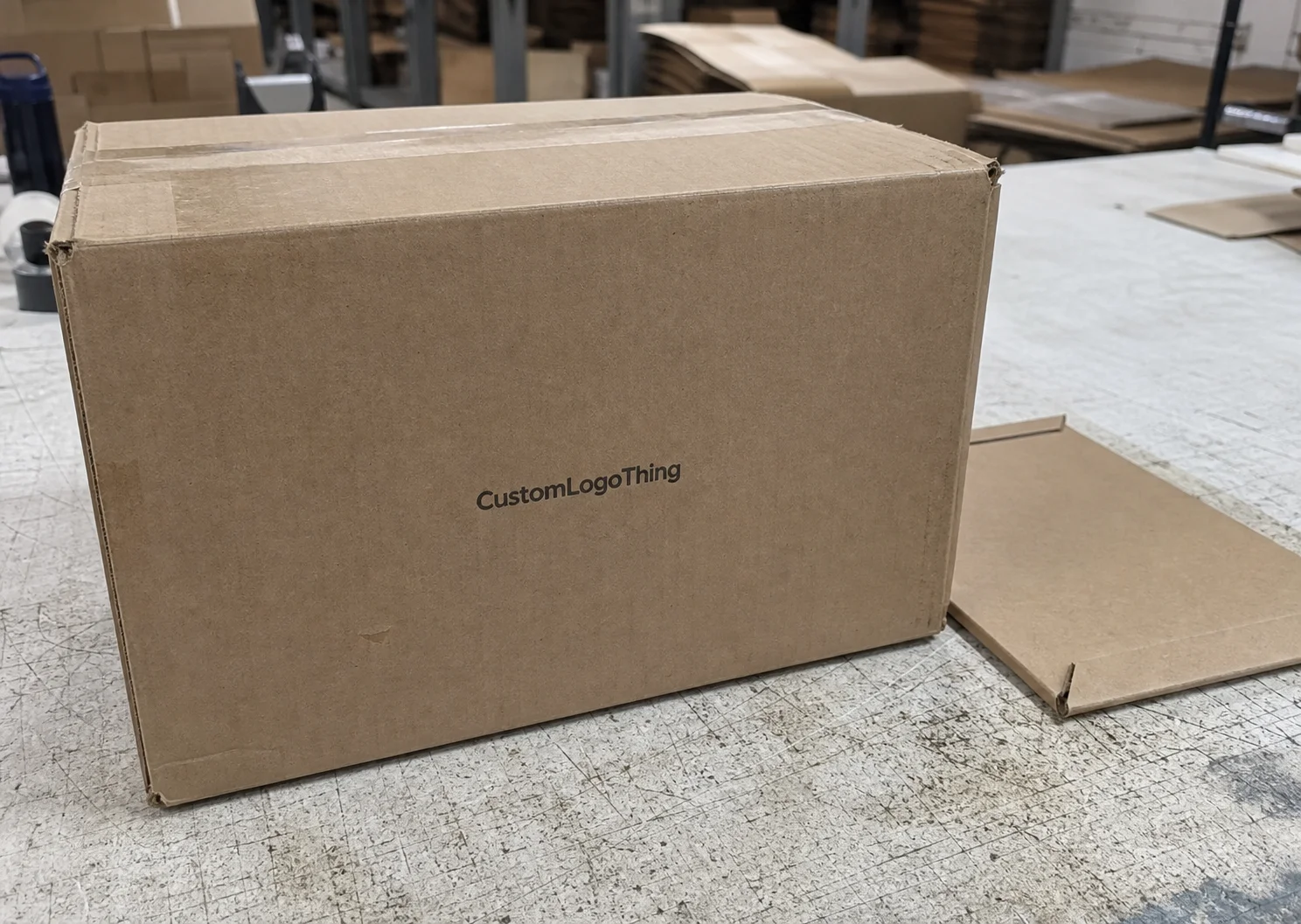
A plain carton and a branded carton do the same physical job, but they do not create the same experience. One says utility. The other says the shipment was considered, checked, and packaged with the customer in mind. That difference matters most in categories where the box is seen before the product is touched: gift shipments, retail samples, B2B presentation kits, subscription orders, and premium e-commerce.
FedEx-compatible branded boxes also help in a less obvious way. They create consistency across shipments. When a package moves through multiple hands, a clear brand mark can reduce confusion, help recipients identify the sender quickly, and make the carton easier to route inside offices or warehouses. That is not dramatic, but it is practical.
The strongest return usually comes from simple branding done well. A clean logo, a restrained color palette, and a box size that fits the product often outperform a crowded exterior with too much print coverage. Buyers often assume the artwork is the expensive part. In practice, structure, board grade, and print method move the quote more than the logo itself.
The box is not an accessory. It is part of the shipment.
That sounds blunt because it is true. If the carton bulges, needs excessive void fill, or arrives with crushed corners, the customer notices the failure before the product. Good packaging should lower friction. It should not create one more thing for the recipient to forgive.
There is also a freight angle. A package that is one or two inches oversized can cross into a higher dimensional-weight tier, and that can matter more than the print cost. A well-sized carton may save more money over time than a more elaborate design. That is one reason experienced packaging buyers look at the whole system, not just the box art.
For broader sourcing, the same logic shows up across Custom Packaging Products and in Case Studies where structure, freight, and presentation change the economics together. The carton is rarely a standalone decision.
FedEx Custom Branded Boxes: What Actually Gets Printed
Most buyers start with the top panel because that is the first surface people see. That makes sense, but the top is only one option. Print can go on the long side panels, the short ends, the tuck flaps, the inside lid, and sometimes the interior base. Each location changes the visual effect and the production constraints. A logo that looks balanced in a mockup can end up clipped by a score line or split by a seam.
One-color flexographic printing is still the workhorse for larger runs. It is economical, dependable, and better suited to simple brand marks than complex art. Digital printing is more flexible for shorter runs, versioned artwork, and detailed graphics. Beyond that, spot coatings, specialty finishes, and heavy ink coverage raise setup time and reject risk. The quote usually reflects that quickly.
Buyers should send a complete art package, not just a logo file. The best quotes usually start with:
- Vector artwork so edges stay clean at production scale.
- Pantone references if color consistency matters across batches.
- Dieline-specific placement rather than a mockup pasted onto a flat rectangle.
- Barcode, QR code, or compliance mark zones that remain readable after printing and handling.
- Label clearance areas so shipping labels do not fight the branding.
Not every program needs full exterior coverage. In many cases, a logo on the top panel and a short message inside the lid is cleaner and more expensive-looking than wrapping every visible surface. Overprinting can make a box feel busy, and busy is rarely premium. It often just means the design team got more freedom than the carton deserved.
Structure should decide where artwork lives. Seams, scores, and flaps are not minor details. They are the geometry of the box. If a brand mark lands too close to a fold, the print may distort. If copy runs through a closure flap, it may disappear when the box is assembled. Good packaging design starts with those constraints, not after them.
There is also a real difference between a shipping carton and a shelf-facing retail box. Shipping boxes need to tolerate more handling, compression, and pallet stacking. Retail packaging needs to look better on arrival. A single print strategy usually does not serve both well unless the product and route are very simple.
For teams tracking sustainability claims, material and sourcing documents matter as much as the visual design. The EPA has practical guidance on waste reduction at epa.gov/recycle, and FSC-certified board is a straightforward route when chain-of-custody documentation is required from fsc.org. Those credentials do not make a weak carton better, but they do help procurement and compliance teams document the choice.
Material and Structure Choices That Change the Result
Corrugated board drives three outcomes at once: protection, print quality, and shipping weight. That is why the cheapest sheet is often not the cheapest finished box. A lighter board may trim unit cost, but it can raise damage rates, force more void fill, and create a higher return rate. The savings vanish fast if the shipment starts failing in transit.
For many programs, single-wall corrugated with an appropriate flute profile is enough. A B-flute or C-flute choice often depends on the product weight, the amount of stacking during transit, and the visual finish the buyer wants. Heavier or more fragile items may need a stronger board grade, and sometimes double-wall makes more sense than adding extra filler or crossing fingers.
Common structures come up repeatedly. Mailer boxes work well for subscription kits, apparel, and lightweight DTC shipments. Regular slotted cartons are efficient for general shipping and bulk fulfillment. Custom die-cut boxes create a tighter fit and a more refined opening experience, but they also bring tooling and setup cost. There is no universal winner. The product decides.
| Option | Typical Use | Pros | Tradeoffs |
|---|---|---|---|
| Mailer carton | DTC orders, kits, lightweight retail packaging | Fast assembly, good presentation, stable branding area | Less forgiving for bulky items |
| RSC corrugated box | General shipping, bulk fulfillment, storage-heavy programs | Efficient, familiar, easier to source | Looks utilitarian unless upgraded with print or inserts |
| Die-cut custom box | Premium product packaging, sample kits, gift sets | Tighter fit, stronger presentation, better unboxing | Higher tooling and setup cost |
Size is where many programs quietly lose money. Oversized cartons increase dimensional weight, need more filler, and can make the brand look careless. Too small, and the packing line slows down or the product gets stressed. The difference between a good fit and a lazy one can be just a few inches, but that small gap affects freight, damage, and presentation all at once.
Surface quality also matters. Some board stocks take ink cleanly and hold color well. Others make the print look flat or inconsistent, especially on larger runs. If the brand depends on a specific color, test it on the actual board, not just on a screen or coated sample. Corrugated is not a glossy brochure stock. It has its own behavior.
Inserts and dividers deserve a place in the spec, not just in the afterthought pile. If the product shifts inside the carton, the unboxing feels cheap even if the outside looks polished. A simple insert system can reduce rattling, improve product protection, and lower the need for loose filler. That improves both the experience and the packing process.
For buyers comparing fedex custom branded boxes with standard stock cartons, the board spec is where the hidden value sits. A stronger structure can reduce damage, but a poorly sized one can increase freight. A stronger material can also add cost without improving the outcome if the product is light. The right answer is almost always tied to the route, the weight, and how much stacking the box will face.
Cost, Pricing, and MOQ: What Buyers Pay For
The cost stack is usually built from a few predictable pieces: artwork setup, plates or dies, board stock, print coverage, finishing, packing labor, and freight. Miss one of those pieces and the quote looks too low to trust. Buyers comparing numbers should focus on landed cost, not the per-box sticker price alone.
Minimum order quantity is mostly about fixed costs. The lower the run, the more each unit carries the burden of setup and tooling. Larger runs reduce the unit cost, but they also tie up cash and storage. There is no magic number that works for every company. A short-run digital order for 500 pieces behaves very differently from a flexo run of 5,000 or more.
Typical market ranges vary by region and spec, but rough planning numbers help. A simple logo-only carton at a higher quantity can often land somewhere around $0.80 to $1.80 per unit. A custom die-cut box with interior print or more elaborate finishes can move into the $1.75 to $4.50 range or higher. Those numbers are not a promise. They are a reality check. Material, board grade, and freight can move them quickly.
For planning, ask for quantity breaks. A quote at 500, 1,000, 2,500, and 5,000 units usually reveals where the real economics sit. Sometimes the jump from one tier to the next is small enough to justify a larger buy. Sometimes it is not. The only way to know is to see the ladder before placing the order.
Freight matters more than many buyers expect. A box that looks cheap per unit can become expensive once pallet count, cube, receiving fees, and storage are added. If the cartons need to arrive on specific pallets, if the receiving dock has a narrow window, or if the warehouse charges for special handling, the landed cost changes. That is not a small detail. It is often the detail that decides whether the project is worth doing.
For a buyer writing the brief, specificity saves time and money. If the supplier knows the product weight, ship method, carton dimensions, and target finish, the quote is more accurate. If the brief just says “make it premium,” the vendor has to infer half the spec. That usually leads to revisions, and revisions are expensive in a packaging project.
Production Steps and Lead Time From Proof to Delivery
Clean input produces cleaner output. The order should start with exact dimensions, quantity, destination, print colors, board grade, and any special handling requirements. If those details change after quoting, the numbers and the timeline will change too. That is normal. What is not normal is expecting a supplier to resolve missing information by guesswork.
The prepress stage is where most avoidable mistakes are caught. The vendor checks the dieline, maps the artwork to the carton structure, and sends a proof for approval. This is the point to watch for seams, label zones, panel alignment, and the way text sits near a fold. If the proof is approved casually, the production run will usually repeat that mistake at scale.
The standard production sequence looks like this:
- Dieline review and artwork placement
- Proof approval
- Plate or die creation, if required
- Printing
- Cutting, scoring, and folding
- Gluing or finishing
- Packing, inspection, and palletizing
Digital runs can move faster because they avoid some tooling steps. Standard flexo jobs are efficient once the plate work is complete. Custom structures, special finishes, and larger volumes add time. A simple branded carton might move in roughly 5 to 10 business days after proof approval. A more complex die-cut or multi-process job can take 2 to 4 weeks, sometimes longer if tooling or artwork revisions slow the front end.
Lead time is not just manufacturing time. Freight and receiving can extend the real turnaround. The boxes may be finished, but if the warehouse cannot receive them or the truck misses the delivery slot, the project is late anyway. Packaging projects get blamed on production when the real issue is usually logistics coordination.
Transit testing should not be treated as optional for fragile or higher-value shipments. The International Safe Transit Association has useful references at ista.org. If the box fails under stack pressure, drop testing, or vibration, the print never gets a chance to matter. A branded carton that breaks in transit is not premium packaging. It is a costly failure with decoration on it.
Common Mistakes That Blow Up the Order
The first mistake is still the most common one: the wrong size. Too much empty space means more filler, higher freight, and a weaker opening experience. Too little space slows packing or risks damage. Buyers pay to avoid this and then create it with a rushed dimension guess. It happens more often than it should.
Artwork problems come next. A file that looks sharp on screen can print poorly on corrugated stock if it is not built for production. Thin lines disappear. Small text softens. Color shifts are common when the substrate and the print method are not considered early. If the brand has strict standards, the art file needs to be prepared for print, not presentation.
Skipping the proof stage is another predictable error. If color accuracy, panel placement, or fit matters, test them before the full run. A small delay for review is cheaper than a reprint. That is true even when the order feels straightforward. Straightforward packaging still has seams, tolerances, and production variables.
Shipping labels create their own trouble. FedEx labels, barcodes, and handling marks need clean space. If branding crowds the label zone, operations slows down and compliance gets messy. The carton may still look good in a mockup, but the warehouse sees a different problem: a pretty box that is hard to process.
Another mistake is assuming all custom printed boxes behave the same. They do not. A carton for lightweight apparel should not be specified like a box for dense equipment or glass. Product weight, route length, storage conditions, and stack time all change the right spec. A box that looks adequate on paper can fail once it meets the actual shipping environment.
For fedex custom branded boxes, restraint usually produces better results than adding more artwork. Use the right structure, keep the print deliberate, and spend money on what the recipient notices first: fit, protection, and clarity. Fancy for its own sake is how budgets expand and performance gets worse.
Next Steps: How to Request a Clean Quote
Start with the basics: exact outside dimensions, quantity, shipping destination, target delivery date, and the number of print colors. If you know the product weight, ship method, and any stacking concerns, include those too. Those details shape the structure, the board grade, and the freight estimate more than most buyers expect.
Then decide what level of branding the box actually needs. A logo-only carton, an inside message, full exterior coverage, and custom inserts are different programs with different economics. Not every shipment needs a fully developed branded package. Some only need a clean, stable box with one disciplined print location.
Ask for three items before approving a run:
- A dieline so artwork can be placed accurately.
- A production proof for print and fit review.
- More than one quantity tier so unit cost and inventory risk can be compared.
Confirm freight terms, pallet counts, warehouse receiving rules, and approval deadlines. That is where many rushed orders go wrong. The cartons may be ready, but the project is not complete until the boxes are in the right place at the right time. Packaging and logistics are linked whether the purchase order says so or not.
If you are writing the brief for fedex custom branded boxes, be clear enough to make the quote boring. Boring specs get accurate pricing. Vague specs trigger revision loops. Include dimensions, print areas, board preference, finish requirements, and destination, then ask for the quote to break out the assumptions. That makes the comparison usable instead of decorative.
The practical formula is simple: fit the product properly, print only where the design supports it, keep lead times honest, and evaluate landed cost instead of per-box fantasy pricing. Done that way, the box stops being a novelty and starts doing real work for the brand.
Are FedEx custom branded boxes worth the extra cost?
Yes, if the carton is visible to the recipient or multiple people before the product is opened. The return usually comes from better presentation, stronger perceived value, and fewer oversized cartons. If the shipment is internal, low-touch, or purely functional, a simpler branded mark is often enough.
What is the minimum order for branded FedEx shipping boxes?
MOQ depends on print method, board choice, and whether custom tooling is required. Digital runs can start lower because they avoid some setup costs. Flexo and die-cut programs usually need more quantity before the unit price makes sense. The right move is to ask for multiple quantity breaks before deciding.
How long do custom branded FedEx box orders usually take?
Simple branded runs can move in about 5 to 10 business days after proof approval. More complex custom structures, special finishes, or larger volumes can take 2 to 4 weeks or longer. Freight, receiving windows, and proof revisions often add time outside the factory schedule.
Can I print inside and outside of the box?
Yes, if the structure and budget support it. Inside print is useful for welcome messages, instructions, or secondary branding that appears during unboxing. It increases setup complexity, so it should be used for a reason, not just because it looks polished in a mockup.
What should I send for an accurate quote?
Send dimensions, quantity, shipping destination, artwork files, print area requirements, board preference, finish requirements, and whether inserts are needed. Add product weight and shipping method if you have them. The cleaner the brief, the fewer revisions and pricing corrections you will need.


