FedEx Office Custom Boxes: What Buyers Should Know Before Ordering
FedEx Office custom boxes tend to attract buyers who need packaging solved quickly, not buyers who want to spend weeks refining a carton spec. That changes the decision-making. Size, construction, proofing speed, and delivery timing usually matter more than the artwork itself, which is where first-time buyers often misread the quote. A clean design is useful, but if the box is too loose, too tight, or built from the wrong stock, the packaging still fails.
The typical buyer is trying to meet a real deadline. A product launch is on the calendar. A trade show kit needs branded packaging before freight leaves. A founder wants a prototype that looks credible enough to show investors. Sometimes the order is simply meant to prove a concept before a larger run. In all of those cases, the main question is not whether a box can be printed. It is whether the finished box will hold the product correctly, survive handling, and arrive on time.
“Custom” can mean several different things in practice. It may be a printed mailer, a resized carton, a folding carton for retail display, or a presentation box with inserts. Those are not interchangeable. They price differently, move through production differently, and carry different risks. A shipping box needs structural strength. A retail carton needs a cleaner print surface. A presentation box needs both appearance and fit.
A box can look polished and still be wrong for the job. If the product shifts, crushes, or rattles, the packaging missed the point even if the print proof looked good.
What buyers notice first
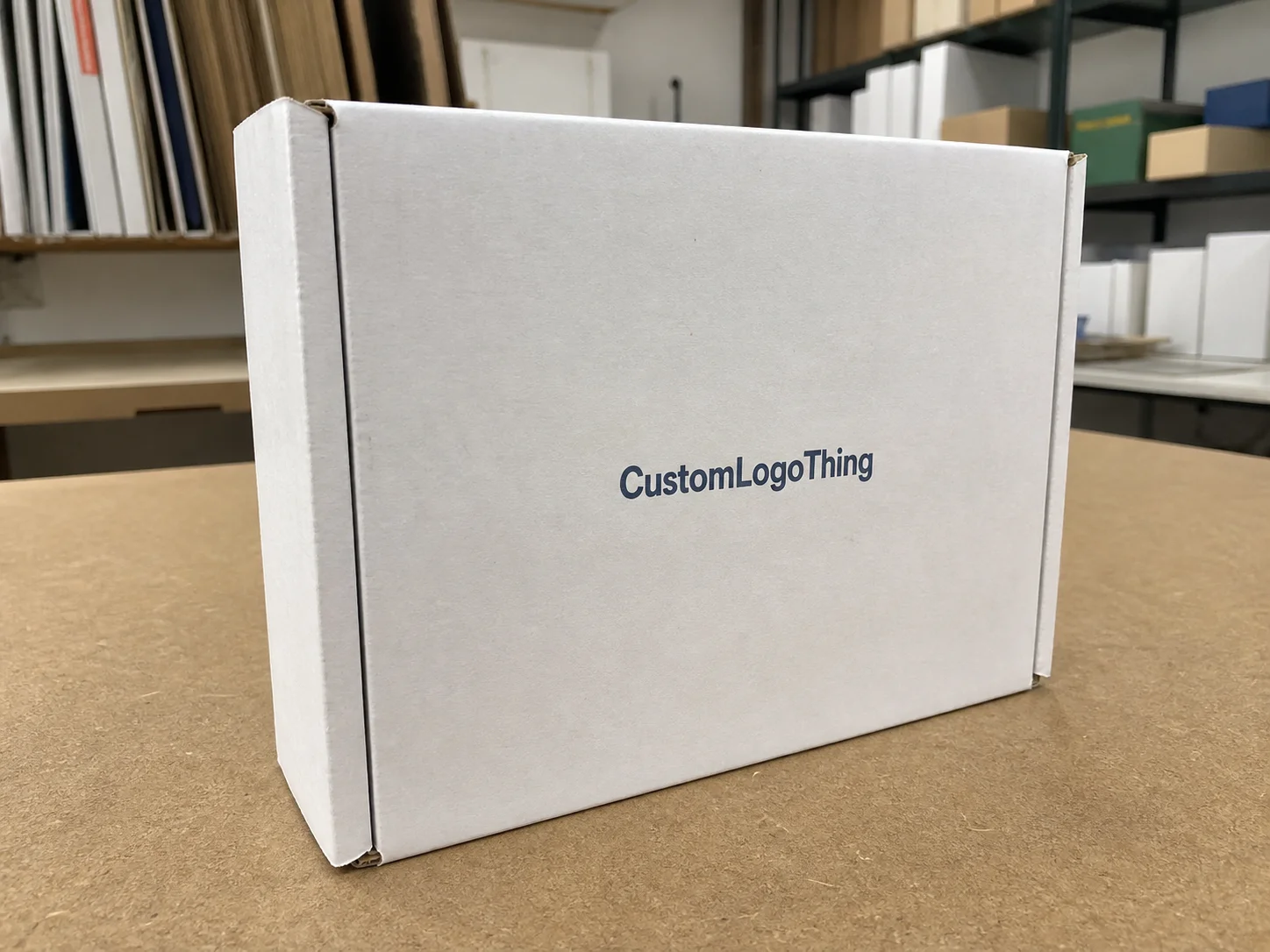
The first thing to understand is that “custom” does not always mean fully bespoke from the ground up. Often it means one of three things: a standard structure with custom printing, a size adjustment, or a more presentation-oriented format with inserts or special finishing. That distinction matters because a buyer comparing quotes can easily compare unlike jobs and draw the wrong conclusion about price.
Small businesses often start here because the workflow is simple. There are fewer vendor calls, less sourcing work, and usually a shorter path from file to finished box. Event teams like the same thing for temporary kits, welcome packs, and seasonal campaigns. In those cases, convenience is part of the value. The tradeoff is less control over board grades, structural details, and advanced finishing than you would get from a packaging-only converter.
The practical question is whether you need a quick branded carton, a proof-of-concept sample, or a repeatable spec you can reorder later. Those are different jobs. A prototype can tolerate more adjustment. A reorder needs tighter control over dimensions, color consistency, and insert fit. If the order is for a product that will ship repeatedly, the structure matters as much as the graphics.
That is also why the box type should be chosen before the artwork is finalized. The dieline determines where the folds, flaps, seams, and trim lines fall. If the file is built before the structure is confirmed, the design can land on the wrong panel or cross a seam in a way that looks fine in a mockup but fails in production. The safest approach is to treat structure and size as the starting point, not the last step.
For buyers comparing packaging options, it helps to look at a broader range of Custom Packaging Products before committing to one format. Seeing how mailers, folding cartons, and presentation boxes differ makes the quote easier to interpret.
For shipping-related projects, protective testing standards are worth checking early. The International Safe Transit Association is a useful reference if the box needs to handle transit, not just shelf display. A good-looking package that fails in shipping is expensive in a very ordinary way: returns, replacements, and damaged product inventory.
How the ordering workflow usually works
The best orders follow a simple sequence. First, define the use case. Is the box for shipping, retail display, gifting, or a short-run campaign? Then measure the product itself, not the carton you already have on hand. After that, choose the material and structure before asking for pricing. That order saves time because size and construction control the rest of the file setup.
Artwork review usually comes after the box size is confirmed. The dieline decides where copy, logos, barcodes, and safety text can safely sit. A proof should show bleed, safe zones, fold lines, and seam placement clearly enough that you can catch issues before the job enters production. If there is a tuck flap, a glued side seam, or a window cut, the layout rules change. What looks centered on screen may shift once the box is folded.
Approval is the point where the job stops being a concept and becomes a production instruction. If the dimensions are off or a logo is too close to a fold, the mistake gets built into the run. That is why experienced buyers read proofs slowly, even when the quoted turnaround looks fast. A good proof review is slightly tedious. It should be.
Delivery details matter too. Some orders are picked up locally, some are shipped, and some are built into a broader fulfillment plan. A straightforward order can move quickly if the material is in stock and the file is ready. A job with custom inserts, nonstandard sizing, or special finishing tends to require more review and more back-and-forth.
One practical habit helps avoid confusion: ask for the exact point where the job enters the queue. Sometimes it is payment. Sometimes it is proof approval. Sometimes it is corrected artwork or material confirmation. That detail sounds minor, but it determines whether a deadline is realistic.
Key factors that shape fit, durability, and appearance
Size comes first. A branded box that looks good but leaves too much movement inside is still the wrong box. Excess space increases shifting and can raise damage risk. Too little space can crush inserts, distort the closure, or slow pack-out. The cleanest way to size a box is to measure the product at its widest, tallest, and deepest points, then add only the clearance the item actually needs.
Material choice follows fit. Corrugated board is common for shipping because it balances strength and cost. Folding carton stock and chipboard are more common for retail packaging and presentation boxes because they print well and feel more refined in hand. A single-wall corrugated build may be enough for light shipping, while thicker flute structures or double-wall construction make more sense for heavier contents or longer transit. The right choice depends on product weight, route, and stacking pressure, not just on appearance.
Finish changes both cost and feel. Matte coating, aqueous coating, soft-touch lamination, spot UV, and metallic accents can all improve presentation, but they also affect production complexity. A box with heavy ink coverage and special finishing may look affordable at a larger run and expensive at a short run. That is not a mistake. It is the math of setup and waste being spread across fewer units.
Inserts deserve more attention than they usually get. A fragile product that moves inside the carton can fail even if the outer box is strong. For kits, subscription packaging, and gift sets, the insert is part of the box system. It supports structure, reduces movement, and keeps the contents aligned so the pack line stays consistent from unit to unit.
If the package is intended for shipping, look for testing language tied to ISTA or ASTM D4169. If the buyer needs documented paper sourcing, FSC-certified board may matter. The Forest Stewardship Council is the proper reference for that claim. These details matter more than many buyers expect because they influence both compliance and customer perception.
The same design can be a sensible buy at one quantity and a poor buy at another. Quantity changes the whole equation. So does print coverage, insert complexity, and whether the box is meant to travel or simply sit on a shelf.
Cost and pricing: what changes your unit price
The main pricing levers are predictable: box size, board grade, print coverage, finishing, number of colors, structure complexity, quantity, and turnaround speed. Rush windows can move the number sharply because production has to be re-sequenced, material may need to be sourced sooner, and revision time becomes tighter. Buyers often focus on one line item and miss the full picture.
Small orders usually cost more per unit because the fixed work gets spread across fewer boxes. That fixed work includes file checks, proof creation, setup, and make-ready waste. A 100-piece order can look cheap in total dollars and still be much more expensive per unit than a 1,000-piece order with the same design. That is normal manufacturing behavior, not a hidden fee.
There are also costs that get overlooked during first quotes: proofs, design corrections, inserts, freight, and any file cleanup needed before production can begin. A messy file can add both time and expense because someone has to rebuild the dieline alignment or fix resolution issues before the press run starts. A line-item quote is the only serious way to compare offers.
| Box type | Best use | Typical small-run unit price | Usual timing | Notes |
|---|---|---|---|---|
| Printed corrugated mailer | Shipping, branded mail drops | $1.10-$2.25 | 5-10 business days after approval | Good balance of protection and cost |
| Custom folding carton | Retail packaging, lighter products | $0.45-$1.20 | 7-12 business days after approval | Cleaner print feel, lower crush strength |
| Presentation box with insert | Kits, gifts, premium product packaging | $2.50-$6.00 | 10-18 business days after approval | Insert and finish choices change price quickly |
Those ranges are illustrative, not a quote. They move with quantity, freight, and board selection. A slightly higher unit price can still be the better buy if it reduces damage, lowers rework, or improves the packaging enough to support the product.
Production process and turnaround
After approval, the path is usually straightforward: quote confirmation, file review, proof approval, material prep, printing, cutting, finishing, and final packing for pickup or shipment. If the job is simple and the file is clean, it can move quickly. If it uses special inserts, a new structure, or a finish that needs extra handling, the calendar stretches out.
First-time jobs are slower than reorders because there is no verified reference point. The dieline has to be checked, the structure has to be validated, and the artwork has to be aligned carefully. Reorders move faster because the file has already been through that scrutiny. That difference is especially noticeable for packaging that has to protect a product and present it well at the same time.
Rush orders are possible in some cases, but speed is not free. A shorter timeline usually means a higher price, less room for revision, and fewer material choices. If the file is not ready, the rush advantage disappears quickly because proof cycles become the bottleneck. Buyers should ask for the actual ship or pickup date, not just the production estimate. Freight time is part of the real deadline.
It also helps to ask what has to happen before the order can enter the queue. The answer might be payment, corrected artwork, proof approval, or material confirmation. That sounds basic, but it is often the difference between a predictable schedule and a last-minute scramble.
For anyone comparing vendors, the production calendar should be treated as part of the product. A good quote is not good if the box arrives too late or if the approval process runs long because one dimension was missing or a barcode crossed a seam.
A cleaner way to place an order
Start with the product, not the carton. Measure the item or kit, including any protective wrap, insert, or accessory that must fit inside. Then write down the purpose of the box: retail display, shipping protection, subscription packaging, presentation, or a temporary campaign. That sentence gives the supplier a usable brief instead of a guess.
Next, gather the files that actually help production. Vector files are usually best for logos and text. Any linked images need enough resolution for print. Confirm bleed, safe area, and barcode placement before the file goes out for review. If the box has a seam or a fold line that lands in a critical area, fix that early instead of discovering it during proofing.
- Measure the product and note the clearance you actually need.
- Choose the box style that fits the use case.
- Prepare artwork and confirm panel layout.
- Request a written quote with dimensions, quantity, material, print method, and timing.
- Review the proof for size, copy, color, and fold placement before approval.
A written quote matters because it creates a fair comparison point. If one vendor includes freight, another includes proofing, and a third leaves both out, the lowest number is not really the lowest number. Ask for the same line items from each source.
If the order supports a launch, add a little buffer to both quantity and timing. That leaves room for a small revision, a replacement batch, or a packaging adjustment without putting the project at risk. For repeatable programs, keep the approved spec in one place so the next reorder does not depend on memory.
Common mistakes and practical tips
The most common mistake is ordering by outside dimensions only. That can leave the inside cavity too small for the product or insert. The second mistake is under-describing the use case. A box for shipping, gifting, and shelf display may share a footprint, but it does not need the same strength, finish, or closure style.
Another easy error is approving artwork before the dieline is verified. Logos, QR codes, and key copy can land on a fold or get too close to a glued seam. That kind of problem is expensive because it often shows up after the proof has already looked acceptable at a glance. Slow proof review is a feature, not a delay.
If the box will be touched by customers, not just handled in a warehouse, ask for a physical sample or prototype. Screen proofs do not tell you how stiff the lid feels or whether the insert sits correctly.
One habit saves a lot of time: request a sample whenever the box will be used for retail, gifting, or fragile products. That is not overkill. It is cheap insurance against a structure that looks correct on screen but behaves badly in hand. Another useful habit is to keep a small timing buffer so a revision does not derail the schedule.
Packaging should be checked with the same care as the product label if it is part of a brand launch. It is not just a container. It is part of the first impression, and people notice when the box feels intentional versus rushed. The difference is subtle in a screenshot and obvious on a desk.
Finally, think about the next reorder while you are still on the first order. Save the dieline, the final proof, the exact dimensions, and any notes on stock performance. That record turns a one-off purchase into a repeatable packaging program.
Closing thoughts
FedEx Office custom boxes make the most sense when speed, convenience, and a clear buying process matter more than absolute structural freedom. They are especially useful for prototypes, small runs, campaign packaging, and orders that need to move quickly without building a full vendor relationship first. The tradeoff is limited customization compared with a specialist packaging manufacturer.
The smartest buyers focus on fit, board choice, proof accuracy, and timing before they focus on finishes or artwork tweaks. That order of operations saves money and avoids the common trap of approving a box that looks right but performs badly. If the box has to ship, protect, display, or all three, the structure has to earn its place.
For a short-run or time-sensitive order, the best result usually comes from treating the box as a system rather than a surface. Size, material, insert, print, and delivery all affect the outcome. Get those aligned, and the packaging does its job without becoming the story.
FAQ
Can I order FedEx Office custom boxes in small quantities?
Yes. Small quantities are often the reason buyers choose this route for launches, prototypes, and seasonal runs. The tradeoff is that the unit price is usually higher because setup, proofing, and file review get spread across fewer boxes. If the project may repeat, ask how the approved spec is stored for reorders.
How long do FedEx Office custom boxes usually take?
Turnaround depends on box complexity, file readiness, material availability, and whether the proof needs revisions. A simple order moves faster than a structural job with inserts or special finishing. Ask for both production time and the actual pickup or delivery window so you know the full schedule.
What affects the price of FedEx Office custom boxes most?
Size, board type, print coverage, finishing, quantity, and rush timing are the biggest cost drivers. Short runs usually cost more per unit because setup and proofing are fixed costs. Freight, proofs, and design corrections can also add to the total, so a line-item quote is the best comparison tool.
Do I need a dieline for FedEx Office custom boxes?
If the box is truly custom, a dieline is usually needed so the artwork lines up with folds, flaps, and safe areas. Even when a template is provided, the file still needs to be checked for bleed, resolution, and panel placement. That prevents logos or text from landing on a seam or fold.
What should I check before approving FedEx Office custom boxes?
Confirm the dimensions, quantity, material, print colors, and turnaround date before final approval. Review the proof for copy accuracy, barcode placement, logo size, and any issues with seams or folds. If the boxes protect a product, verify that the internal fit leaves room for inserts or protective packing.

