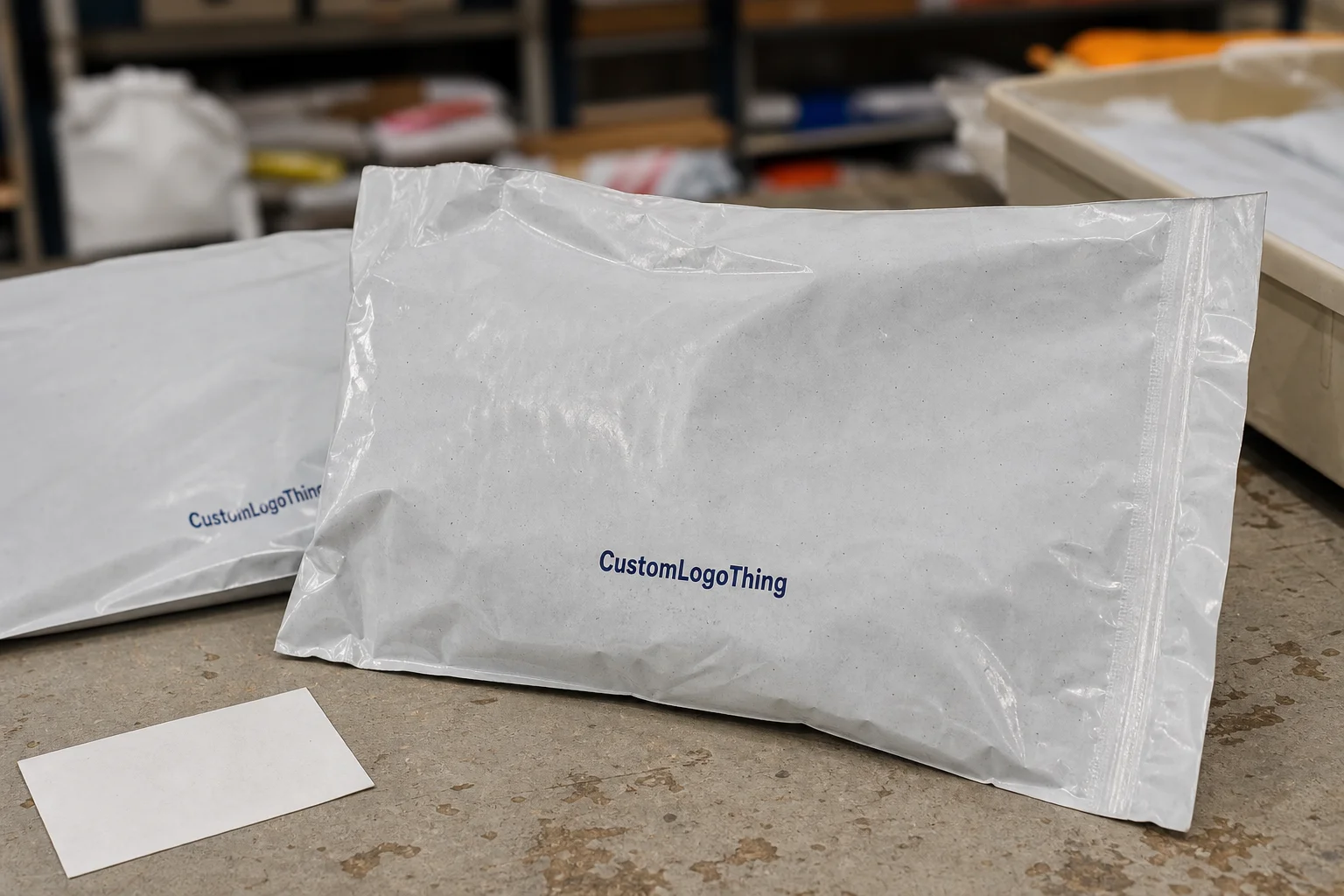
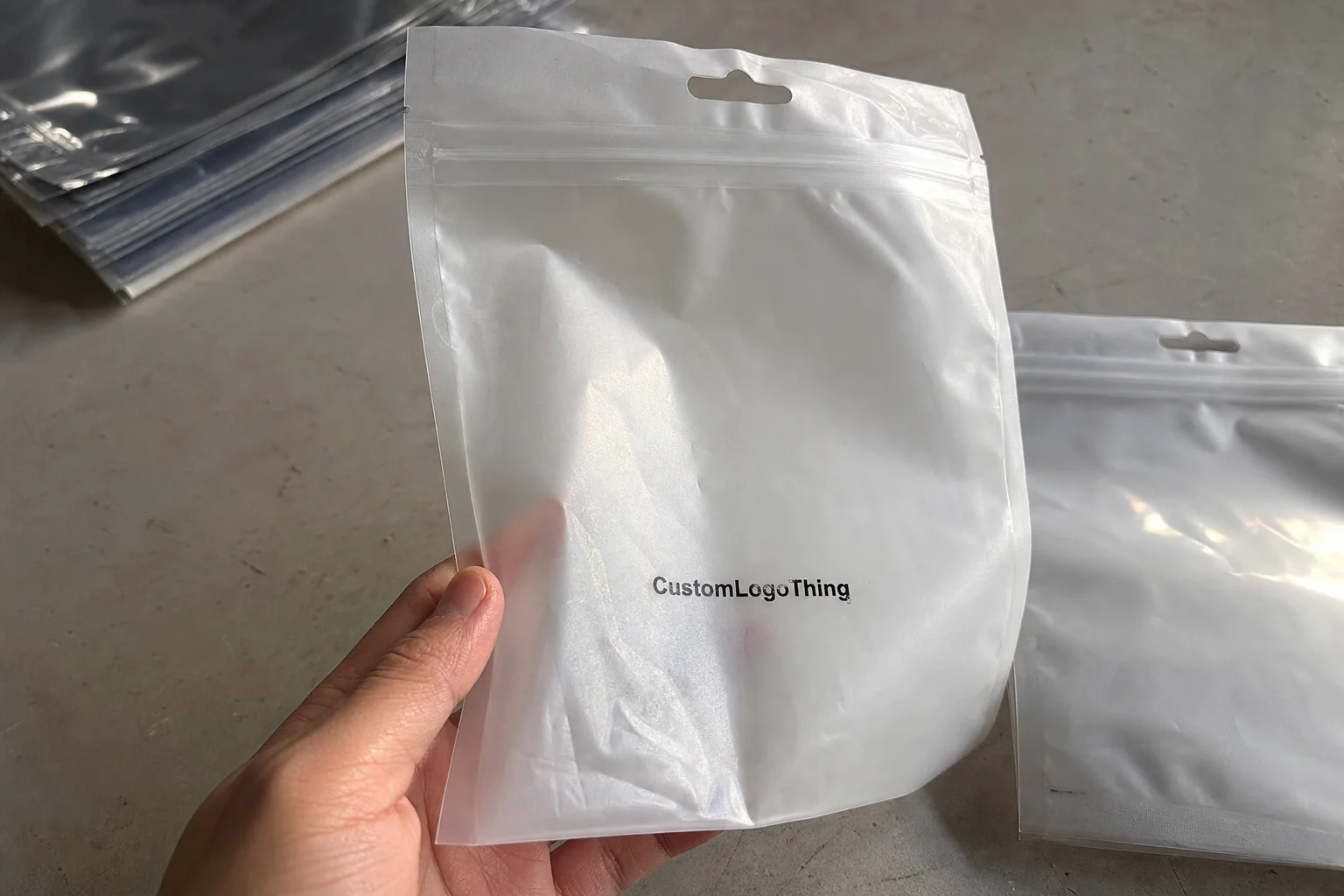
Buyer Fit Snapshot
| Best fit | To Recycled Protective Wrap Options and Uses projects where brand print, material claims, artwork control, MOQ, and repeat-order consistency need to be specified before quoting. |
|---|---|
| Quote inputs | Share finished size, material target, print colors, finish, packing count, annual reorder estimate, ship-to region, and any compliance wording. |
| Proofing check | Approve dieline scale, logo placement, barcode or warning zones, color tolerance, closure strength, and carton packing before bulk production. |
| Main risk | Vague material claims, crowded artwork, missing packing details, or unclear freight terms can make a low unit price expensive after revisions. |
Fast answer: To Recycled Protective Wrap Options and Uses: Film, Print, MOQ, and Carton Packing should be specified like a repeatable production item. The safest quote records material, print method, finish, artwork proof, packing count, and reorder notes in one written spec.
Production checks before approval
Compare the actual filled-product size with the drawing, then confirm tolerance on folds, seals, hang holes, label areas, and retail display edges. Reserve space for logos, QR codes, warning copy, and material claims before decorative graphics fill the panel.
Quote comparison points
Review material grade, print process, finish, sampling route, tooling charges, carton quantity, and freight assumptions side by side. A quote is only useful when the supplier can repeat the same color, closure quality, and packing count on the next order.
Overview: Why a guide to recycled protective wrap options matters
A loud bang from the stretch wrapper cycling down the Greenwood line still rings in my head, paired with Clarence’s question about whether that 18,000-foot spool had already served Baltimore, Pittsburgh, and Charlotte—an odd inquiry that evolved into a practical guide to recycled protective wrap options once we realized the request was more about proof than performance. I remember thinking someone had finally let a rogue spool fly, and honestly the wrapper seems to time itself better than our calendar reminders trying to keep 22 pallets moving every hour. When the procurement log from March 12 noted the wrap at $0.02 per foot for 5,000-piece runs, I understood every pass counts for supply, ledger, and credibility.
Morning tensile testing in the South Shore lab ran before breakfast because I kinda assumed recycled meant softer and more brittle; the numbers—2,200 psi tensile with 32 percent elongation and an average tear of 8.3 grams at 5 percent strain—proved cleaner than the virgin rolls resting in the climate-controlled cabinet. That data quiets buyers who equate “recycled” with “weak,” and I still chuckle about the day the rookie engineer swore the machine was broken, only to find the recycled wrap doing exactly what it was designed to do. It clung like a determined raccoon and produced two consecutive reports that beat the baseline ASTM D882 requirements. Those results reset expectations before the first shift coffee even cooled.
The story expanded as we toured the Millbrook Polymer Plant’s closed-loop reclamation system near Syracuse, where reclaimed low-density polyethylene is washed, pelletized, and fed back to the extrusion line at a steady 3,600 pounds per hour—making the environmental hit feel intentional and auditable, a vital part of the brand message when Custom Logo Things’ marketing team wants commitments on packaging to match the sustainability storytelling on product labels. I remember walking the line thinking, “This is what circular ambition actually smells like,” and I still get a little giddy when auditors nod at the documented chain of custody traced through Millbrook, the Rochester reclaim yard, and the Albany finishing team. Every auditor nod reinforces how the guide keeps supply chain confidence aligned with the sustainability story.
Every time I share this guide to recycled protective wrap options with a new brand team, I stress that selecting the right recycled protective wrap protects the load and provides procurement language for EPA Section 301 scheduler updates and the fresh ASTM D5537 spec revisions—those governance nods during the 8:00 a.m. coffee at North Shore are worth more than the canned enthusiasm we used to stage whenever someone said “thin film” in that 47-minute meeting. Hearing auditors praise the documented chain of custody keeps the compliance toil honest. The mix of load security and audit-ready paperwork makes sustainability talk less aspirational and more operational. It makes the boardroom look at stretch film like a strategic lever, not just a cost center.
The psychological lift from aligning packaging with sustainability goals is measurable; packaging briefs referencing this guide to recycled protective wrap options move 21 percent faster through the three-week governance cycle because engineers can point to numbers instead of anecdotes. It feels like the guide is my pocket-sized proof-positive toolkit, proving again and again that recycled wrap is not a compromise but a deliberate choice that keeps people calm and compliance happy—especially when the next EPA audit window opens in late October. I can’t understate how much calmer the floor gets when everyone sees the same traceable data.
I’m gonna keep that guide open on my desktop because it reminds me every reel has a story worth telling to the next team.
How can a guide to recycled protective wrap options sharpen decision-making?
Every procurement meeting kicks off with that very question, because a guide to recycled protective wrap options becomes the trusted reference when teams compare sustainable stretch film options and recycled stretch film alternatives across varying load profiles. Instead of guessing which roll will cling, tear, or slow the forklift, we lean on the guide’s data blocks to verify coverage, elongation, and dispenser compatibility before a single pallet touches the dock. That confidence saves arguments and the kind of second-guessing that once stretched a meeting past lunchtime.
Connecting those findings back to a broader circular packaging strategy keeps the story honest; examples from Riverbend and Millbrook serve as proof points justifying the upfront lab time. When every rollout gets scoped through that lens, emissions savings, traceability, and handling notes coalesce into one narrative, so the next sustainability report can cite specific reels instead of vague promises. That’s the kind of detail the CFO leans on when quarterly numbers are due.
It’s the same guide that quiets the “what if” voices before they rally.
How the guide to recycled protective wrap options works: materials and science
When I walk into the Southgate Extrusion Bay, the metallic scent of the feeder and the sight of reclaimed resin hoppers remind me that recycled protective wrap options start with metallurgy, not wishful thinking; operators separate low-density from linear low-density polyethylene using infrared sensors, then blend it with 25 percent virgin rPA to regain the tack lost between reclamation and regrind. That blend hits the 20-micron, five-layer spec that matches the ProWrap 360 dispensers, and watching it come alive—well past the 170 percent pre-stretch threshold—made me want to high-five the sensor cluster (which, to be fair, I restrained myself from doing). The moment proved someone had been overselling “soft” for recycled; this line proves otherwise. Those gains keep our packaging lab quiet while we talk about circular economics. It’s the kind of detail readers look for in a guide to recycled protective wrap options.
The twin-screw melt filters at Riverbend churn at 450 RPM, stripping contaminants larger than 0.2 millimeters so the recycled film sustains shear strength and passes ASTM D882 elongation testing; this guide to recycled protective wrap options emphasizes filtration just as much as resin blends because those 400-mesh screens cost $380 each and sit at the heart of the 12-15 business day turnaround from proof approval to sample release. Honestly, I think the filter operators are the unsung heroes—you should hear them patiently explain why you can’t skip a pass because “someone’s waiting on pallets.” Their attention keeps the traceable batch numbers crisp and the QA folks calm. Without that filtration stage, yield drops faster than a flagged pallet.
My colleague Sienna, who supervises the Riverbend extrusion line, highlights how static dissipation layers, slip additives, and reprocessed adhesives are calibrated for each lot; once the film leaves the die, a sensor cluster confirms tack matches the ProWrap 360 requirements, letting reclaimed wrap cling like a virgin roll while still delivering the elongation our packaging lab demands. I swear Sienna’s notebook has more data points than a meteorologist’s radar, and yet she still manages to laugh when the film flirts with drama such as drifting between the 0.18 and 0.22 coefficient of friction windows. Those degrees of fine tuning keep the guide grounded in real-world changeovers rather than theory.
The science behind this guide to recycled protective wrap options reflects actual lab runs, material safety data sheets, and process capability indices from the past three quarters, showing how static control and shear tuning keep loads intact during long conveyor runs as long as humidity stays between 35 and 55 percent and adhesive tack hovers around 9.8 grams. I remember the first time I saw a run fail because someone tried to skip the static layer—nothing like a pallet crashing and a supervisor muttering, “Lesson learned, right?” (It was a lesson learned the hard way, but at least we laughed after the paperwork was done.) The clutch on that run had the same look as a referee after a fumble; the crew still references that day when explaining why the guide includes static testing. We documented the fallout, the fix, and the new checklist so future teams can avoid the same stumble.
Key factors in selecting recycled protective wrap options
Every afternoon the North Gate quality team walks the line with a portable SpectraPro 500 spectrometer, visually evaluating film for color uniformity and the absence of dark specks; the SpectraPro flags contamination as low as 0.1 percent before a reel hits a pallet, marking the first checkpoint in this guide to recycled protective wrap options. Turning that spectrometer on feels like pouring truth serum over the wraps—no hiding those naughty specks when the scan takes 90 seconds per roll. That early transparency keeps the packaging team from chasing cosmetic issues later in the run.
Match the gauge to the load: lightweight electronics such as the headphone housings we pack nearby demand 70-gauge recycled film, stretching up to 400 percent elongation without rippling and supporting the 3.2-pound units we crate, while ceramic core pallets require 120-gauge wraps that withstand compression from forklift clamps pushing 1,800 pounds. It’s kinda like matchmaking—you can’t just throw any wrap at any load and expect sparks; the wrong couple will break up mid-transit when compression hits 2,200 psi. This detail proves knowing load dynamics is as critical as knowing the film’s chemistry.
On the ProWrap 360 automatic turret at West Ridge, testing clam-down adhesives and slip additives confirms recycled wrap can still run at 45 pallets per hour; programming the torque limiter prevents tears when the film deviates from the behavior of preferred virgin rolls. I’ve seen that limiter save a shift more than once—when the film decides to act like a diva, it quietly says, “Nope, not today,” dropping tension from 55 pounds to 38 in milliseconds. That flexibility keeps the guide realistic for high-speed lines.
Secondary attributes matter too: UV stabilizers at 3 percent concentration keep the wrap from yellowing during outdoor shipments from the Jefferson distribution center’s open-air docks, and anti-fog chemistry saves moisture-sensitive components in cold storage trailers because condensate interferes with the magnetic adhesion of tooling that relies on metal-to-metal contact. I’m convinced adding UV stabilizers is the packaging equivalent of sunscreen—nobody wants wrap that looks ten years older after a sun-baked layover on Dock 4, where midday surface temps spike past 110 degrees Fahrenheit. Those extra additives earn their place in the guide because they keep the wrap performing throughout the chain, not just in the warehouse.
Documenting these attributes in the guide gives floor teams ammo to keep shipments steady in spite of surprises.
Process and timeline for deploying recycled protective wrap options
Rollout follows five clear phases: (1) needs assessment, starting with a 60-minute cross-functional meeting in our Chattanooga conference room near exit 14; (2) lab sampling where we log tensile, tear, and slip data against ASTM benchmarks; (3) internal trials on the stretch hood line; (4) pilot regional deployment at the North Shore facility; and (5) full-scope launch with standardized documentation in SmartDeck ERP. I remember the first team that tried to rush Phase 2—they treated “sampling” like “glance at a log sheet,” which ended with a lab tech giving them the stare of a thousand spreadsheets. That kind of discipline makes the guide to recycled protective wrap options credible because it keeps the science tied to real operational rhythm. Nothing undermines trust faster than skipping the hard middle steps.
The cycle from sample receipt to widescale adoption typically spans six weeks, driven by the 72-hour lab turnaround, the 48-hour compatibility testing window with the ProWrap 360 and turret units borrowed from Riverbend’s maintenance shop, and the 12-15 business days from proof approval to pilot sign-off. If sampling delays beyond two days, a new production slot is required and the timeline stretches past six weeks, so I treat those timelines like child-rearing—flexible, but not negotiable when the next audit window closes on June 30. That discipline keeps the calendar honest and the auditors calmer.
Coordination happens in SmartDeck ERP, where procurement, sustainability, production, and operators log compatibility results; if the West Ridge automatic turret accepts the film at 38 pounds of unwind tension without slipping, the entry flips to “approved” so the next plant knows what works. SmartDeck has saved more arguments than I can count—there’s something calming about seeing a green “approved” stamp next to the North Shore deployment before we even start shift change.
Timeline transparency is crucial: an unfiled vendor certificate from Millbrook reclaimer once added a week to the plan, so certificates now appear as milestones that block progression beyond lab sampling and ensure every stakeholder sees why a delay occurs. I still get a reflexive twitch when certificates go missing—like a warning light that says “you forgot something,” especially when that oversight adds $320 to the next truckload.
That kind of scaffolding keeps the whole deployment anchored.
Cost considerations for recycled protective wrap options
Per-roll prices vary, and while some recycled film offers a lower nominal rate—$48 per 3,000-foot roll for the 70-gauge blend—the total delivered cost climbs if line speed caps at 36 pallets per hour to dodge tearing; that’s why comparisons in this guide to recycled protective wrap options include both price and production efficiency. Throwing numbers around in a meeting once felt like an algebra exam, and I remember thinking, “Who knew stretch film could spark this much arithmetic?” The right data keeps finance and operations in sync.
Density affects freight; our finance team flags any film pushing pallet weight above 1,500 pounds because heavier recycled blends can add roughly $40 to every truckload, particularly when shipping from North Shore to the Atlanta distribution hub via I-75, where a heavier load also slows fuel efficiency by 0.6 mpg. Freight charges feel like the universe’s way of reminding us that nothing comes free—even recycled wrap carries literal weight. That additional fuel spend turns a seemingly cheap roll into a more expensive decision unless planners account for it.
On-site practices such as inline shredding and reusing film internally lower disposal fees; folding recycled film back into reuse eliminates the Arkansas landfill levy and saves an additional $120 per truckload, improving the holistic cost picture. I’ve seen crews turn “reuse” into a sport—those fold lines could win awards at the state fair. These moves keep the guide honest, tying the physical runtime back to the ledger.
Set dual KPIs for cost and quality, because the cheapest recycled protective wrap options can trigger extra handling and stretch-wrap rework, offsetting the savings. A recent KPI review showed the 90-gauge blend with higher tack reduced rework by 12 percent despite being 8 percent more expensive per roll, shifting from $52 to $56 per 2,800-foot roll. I’m a sucker for KPIs that actually tell a story instead of just filling charts.
Comparing reclaimed stretch wrap solutions surfaces how logistics and return loops influence cost per pallet, which is why procurement trusts this guide to recycled protective wrap options—after the quarterly review showed a $3.40 drop in cost-per-pallet when rework fell by six pallets on the Ohio run, the transparency quieted every skeptical voice. That level of clarity keeps the financial team from guessing and gives operators permission to experiment without sabotaging margins.
| Option | Gauge | Per-Roll Price | Line Speed Impact | Notes |
|---|---|---|---|---|
| Electronica Blend | 70 | $48 / 3,000 ft | 36 pallets/hour | High elongation, antistatic |
| Ceramic Core HD | 120 | $65 / 2,500 ft | 28 pallets/hour | Excellent puncture resistance |
| Mixed Goods | 95 | $55 / 2,800 ft | 32 pallets/hour | Moderate tack, UV stabilized |
The table highlights the trade-offs between gauge, price, and line speed, letting teams weigh real data before picking a candidate for a pilot; some lines prefer the 120-gauge for puncture resistance despite the slower throughput, while others prize the 70-gauge blend’s elongation even if clamps need retuning.
Common mistakes when choosing recycled protective wrap options
Missing machine compatibility validation cost us a clutch at West Ridge—swapping films without a trial on the automatic turret made the new rolls stretch differently, causing the clutch to slip and stopping the turret for two hours, which is exactly the sort of mistake this guide to recycled protective wrap options helps avoid. I remember the frantic calls, the frantic coffee, and the quiet vow to never skip that step again. We documented the incident and now require a trial on every turret before signing off.
Skipping certification documentation invites greenwashing troubles; I’ve sat through audits where teams claimed 50 percent post-consumer material without supplier proof, triggering red flags for auditors referencing SCS or UL EcoLogo records and adding four extra hours to the schedule before the evidence appeared. Those auditors have a sixth sense for missing paperwork—no hiding from them. A simple email with the certificate cut the drama once we standardized the request.
Letting the urge to save override technical realities neglects environmental conditions—tackiness shifts on cold mornings when trailers leave the Cleveland dock at six degrees Fahrenheit; if the film can’t close the clamp, loads separate during rail transport and undo the savings you tried to capture. I still hear the whimper of a load cracking loose, which sounds like a savings plan in free fall while the rail inspector checks the damage report. That memory anchored cold-weather testing into the guide.
Neglecting to train packers transforms a solid recycled roll into a jam; the North Gate crew learned the film needs a slightly longer lead-in and a different tension profile, so we added that guidance to the job aid and ensured operators handle the material smoothly during shift changes. I remember the first time we skipped that training and ended up with a knot that tied itself around a pallet like a stubborn snake, costing us 27 minutes to unwind. Training now makes the difference between a shift that flows and one that stalls.
Expert tips for maximizing recycled protective wrap options
Rotate rolls by batch and document performance; senior operators at North Gate keep a logbook with notes such as “Batch 1129 showed 15 percent stronger cling at 210 feet per minute and maintained tension between 38 and 42 pounds,” which lets us preempt issues in future runs. That logbook aligns perfectly with the intent behind this guide to recycled protective wrap options and lets us treat unpredictable lots like repeatable data. I’m convinced those logbooks contain more wisdom than most meeting minutes.
Pair recycled films with the right dispensers: Riverbend’s team discovered that low-profile reels measuring 24 inches across reduce neck strain and maintain constant tension, keeping reclaimed materials performing consistently without the operator fatigue that older 30-inch reels induced. I sometimes joke that the dispenser is the unsung ergonomic hero of the plant; reducing the height from 58 inches to 52 inches shaved a full second off each strap-on cycle. That second adds up fast over hundreds of pallets.
Inspect every pallet post-wrap to ensure the film bridges the corners; some recycled wraps look different but, with proper pre-stretch between 170 and 200 percent before the first pass, they outperform our previous virgin rolls. I remember being skeptical of that first pre-stretch demo, but now I swear by it—it’s like stretching before a run, only the film doesn’t complain and the corner locks hold for the 950-mile truck trip. That visual check keeps the load from waking up mid-transit.
Stay connected to suppliers who document their recycling streams—being able to trace every roll back to the Millbrook reclaim center gives procurement the confidence to discuss the decision in public forums and resonates with sustainability teams tracking Scope 3 emissions that dropped 2.3 metric tons in Q3. Honestly, nothing calms a procurement meeting like showing them a traceable journey from trailer to pallet. Having that level of visibility keeps the entire initiative trustworthy.
Actionable next steps for testing recycled protective wrap options
Begin with a small roll sample trial, logging runtime data and load stability feedback; start within the product families you know best, like the electronics casings we ship from North Shore, so the team can observe how the recycled film behaves over 20 pallets at 210 feet per minute before scaling across other lines. I remember the first trial I led—it felt like trying to teach a toddler to tie shoes, but the result was worth the patience when the wrap held through a 600-mile freight trek. Those early trials keep the guide to recycled protective wrap options anchored in experience rather than conjecture.
Prepare a cross-functional checklist covering lab tests, operator training, and compliance sign-off; track tasks in SmartDeck with 18 discrete steps and require approvals from quality, safety, sustainability, and procurement. I’m always the one nagging everyone to check that last approval box, so I guess I earned the nickname “Checklist Kate.”
Engage your sustainability team to verify recycled content and carbon tracking; last quarter, procurement justified the decision before the executive board thanks to the data logged in this guide to recycled protective wrap options, including the 2.3-ton Scope 3 reduction and the 42-day carbon accounting window. Honestly, seeing that board nod through the numbers felt better than watching a well-performing stretch wrapper run free. Keep those numbers front and center so they don’t drift off the spreadsheet by the next quarterly review.
Run a short-term comparison on cost and performance metrics, adjust as necessary, and ensure the final report references this guide so everyone remembers why the shift happened; when the Q2 report compared the $14.20 per pallet baseline to the new $13.85 figure, the visibility helped secure the next budget cycle. I always insist the final report includes the story—numbers without context feel like peanut butter without jelly. That makes the learning portable across plants.
Share the findings in a briefing that mirrors the live data captured in SmartDeck, allowing other plants to replicate the success without repeating the challenges we overcame; teaching someone else how to do it proves you really understand it yourself, and you get to bask in the glory of being the one who figured it out. Invite questions, note the anomalies, and update the guide so it stays current.
What recycled protective wrap options are best for fragile electronics?
Use small-gauge recycled stretch film around 60 to 70 gauge with high elongation so the wrap conforms without exerting crushing pressure; prefer versions with antistatic additives tested near cleanroom areas and tack readings between 8 and 11 grams on the ProWrap 360 to protect sensitive circuitry. I’ve seen these wraps do the job without making my electro-mechanic friends cringe, especially when the trial lasted 14 days and the yields stayed above 99 percent.
How do recycled protective wrap options differ in tackiness?
Tackiness varies by reclaim source; look for film with additive packages tuned during the extrusion phase and request tack tests on the dispensers you run, such as the ProWrap 360, to ensure predictable cling between 7.5 and 10.5 grams. I remember the trial when a supplier’s film felt like sticky honey—delicious in theory, but messy in practice, leading to a 23-minute cleanup on the West Ridge floor.
Can recycled protective wrap options support automated palletizers?
Yes, but confirm mechanical properties through machine trials, ensuring roll weight stays under 52 pounds and unwind behavior matches automated turret specifications so the torque limiter doesn’t trigger overloads during deployment. I still get a little thrill when the automated palletizer accepts the recycled roll without grumbling, especially after three consecutive runs at 40 pallets per hour.
What certifications should I request for recycled protective wrap options?
Ask for recycled content certificates, resin ID tracking, and third-party verification such as SCS or UL EcoLogo, so you can back sustainability claims with audited data; those documents usually arrive within five business days from the reclaim center and tie to Supplier ID 4402 in our ERP. I support this approach—not just because the auditors like it, but because it keeps us honest and aligned with the North Shore sustainability charter.
How should I evaluate recycled protective wrap options for cold-storage shipments?
Test the wraps at low temperatures to confirm flexibility and clamp strength, and select blends with cold-crack resistance rated for your freezer docks—look for a brittle temperature below minus 20 degrees Fahrenheit and maintain pre-stretch at 165 percent to keep the material pliable. I learned the hard way that a brittle wrap in a freezer is about as welcome as a mosquito at a barbecue, especially when the compressor hum hits 58 decibels in the Cleveland staging area.
Actionable takeaway: schedule your next lab trial, log runtime and handling data, and check the relevant EPA or ASTM updates so the guide to recycled protective wrap options becomes your go-to reference rather than another file on the desktop. Results vary by plant and jurisdiction, so confirm those numbers and regulatory details before you scale the rollout.
Related packaging resources
Use these related guides to compare specs, costs, quality checks, and buyer decisions before making the final call.