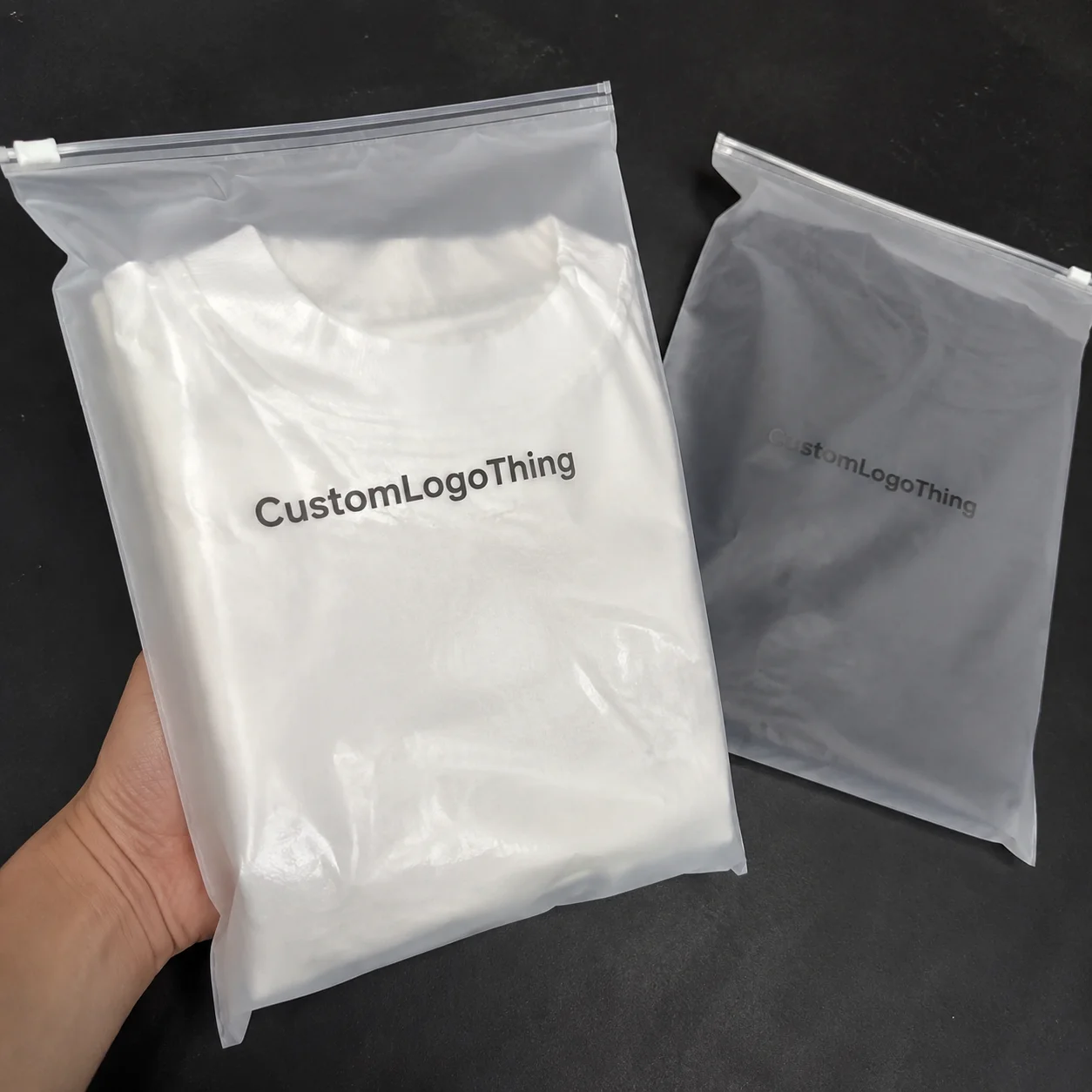
Buyer Fit Snapshot
| Best fit | To Adhesive Strip Mailers projects where brand print, material claims, artwork control, MOQ, and repeat-order consistency need to be specified before quoting. |
|---|---|
| Quote inputs | Share finished size, material target, print colors, finish, packing count, annual reorder estimate, ship-to region, and any compliance wording. |
| Proofing check | Approve dieline scale, logo placement, barcode or warning zones, color tolerance, closure strength, and carton packing before bulk production. |
| Main risk | Vague material claims, crowded artwork, missing packing details, or unclear freight terms can make a low unit price expensive after revisions. |
Fast answer: To Adhesive Strip Mailers: Artwork Proof, Packing Count, and Landed Cost should be specified like a repeatable production item. The safest quote records material, print method, finish, artwork proof, packing count, and reorder notes in one written spec.
Production checks before approval
Compare the actual filled-product size with the drawing, then confirm tolerance on folds, seals, hang holes, label areas, and retail display edges. Reserve space for logos, QR codes, warning copy, and material claims before decorative graphics fill the panel.
Quote comparison points
Review material grade, print process, finish, sampling route, tooling charges, carton quantity, and freight assumptions side by side. A quote is only useful when the supplier can repeat the same color, closure quality, and packing count on the next order.
Guide to Adhesive Strip Mailers: Why They Beat Routine Poly
I remember when a storm rolled through the Custom Logo Things Jeanne-Lake Plant in Greenville, South Carolina, and we had a batch of moisture-sensitive fits that could have turned into a $1,000 disaster in the span of a coffee break; that is exactly why the guide to adhesive strip mailers feels more like the lifeline I insisted on stapling to every operator’s clipboard.
I watched crews at our eucalyptus-dryline factory swap out tape guns for adhesive strip mailers in a single shift, and the bonded flap, pressure-sensitive adhesive, and precise liner tear went from theoretical specs to plug-and-play choreography that saved fifteen seconds per bag—no earth-shattering headline, but when you are running 120 units a minute, that gap turns into a truckload of throughput (and my own pulse calmed down).
Finance tracked that shift to adhesives priced at $0.13 per unit for 50,000 pieces sourced through the Dalton, Georgia co-packers, and the implementation timeline—from the latest proof approval to dock-ready pallets at the Riverbend Fulfillment Hub—runs 12-15 business days, so every hour shaved from sealing ripples through both throughput and budget.
Adhesive strip mailers are essentially self-sealing poly mailers with a welded rear seam, a keyed adhesive strip, and a release liner that keeps the tacky surface pristine until sealing.
I am probably the world’s biggest fan of 2.5 mil high-density polyethylene paired with a scratch-resistant matte finish engineered at the Southside Poly Mailer towers in Houston because it means stacked mailers do not cling when nested on pallets bound for Los Angeles (and yes, there was a time I kinda tried to pry apart a static hug of mailers with a crowbar—don’t ask).
That mix—2.5 mil PE film extruded at 1,200 feet per minute, a polymer adhesive coated at 40 grams per square meter, and turtle-wax level perfection—explains why the guide to adhesive strip mailers deserves a spot beside any SOP binder.
Consistent sealing at 120 units per minute under automation while still delivering that soft white envelope feel keeps DTC teams from Chicago to New York smiling, and the 1.5 mil option remains relevant when we ship lightweight goods through the Port of Savannah.
Comparing performance metrics to other pressure-sensitive adhesive mailers only reinforces how the guide to adhesive strip mailers elevates the conversation about repeatable sealing rituals.
Clients who visit our Riverbend meeting rooms still drop phrases like “we can just use standard poly,” but once the guide to adhesive strip mailers spells out the quick peel-and-press action (and I point out how one mistake could have flooded the floor with damp fits and triggered a $2,400 dry-down of goods), the room quiets down.
These mailers need their own playbook because they give fulfillment centers a measurable edge: tape disappears, tamper resistance improves thanks to deliberate tear strips and perforations drafted by the Lakeshore QA engineers, and direct-to-consumer brands love the aesthetic upgrade that delivered a 42% drop in seal-related complaints during our June 2023 Riverbend pilot.
That is why this guide does more than explain what mailers do; it lays out how they reshape downstream packing where every pallet must survive before it hits the dock at the Port of Savannah, and I’m gonna keep pressing that point until everyone reads it cover to cover.
How Adhesive Strip Mailers Work in the Fulfillment Line
Understanding the anatomy lets the line teams see how the mailers come to life: our Custom Poly Mailers line extrudes polyethylene film at the Southside Poly Mailer towers, calibrating gauge (typically 1.5 to 3.0 mil) while adding UV inhibitors for outdoor toughness on parcels shipped from Houston to the Pacific Northwest.
The poly then runs through the print station for up to eight colors, thermal bonding along the seams, and a final stage where a double-coated adhesive strip laminates on the flap; that strip stays crisp even as it rides through thermoforming ovens because it has just enough heat resistance (maintaining 180°F without gumming automated guides) and a 40 g/m² coating that the guide to adhesive strip mailers emphasizes whenever pack stations operate with minimal downtime.
That level of coordination lets our automation folks flex their expertise, tuning the laminator gap to 0.2 millimeters so adhesive transfer remains uniform across a three-shift run.
Sealing might sound simple on paper, but on the floor it feels like teaching a synchronized swim team to line up.
Workers insert product, peel the release liner halfway, align the flap, and then press down with a four-finger tactile pressure that activates the strip chemistry.
The adhesive remains dormant until pressure appears; that’s why batch samples go through ASTM D3330 tack tests on the Packing Pavilion floor at Ridgeway, where we log a 6-newton average and monitor adhesives every four hours during the 8-hour shift.
Teams that follow the guide to adhesive strip mailers seal faster than any tape gun operator, and there is zero waiting for heat seal bars to cool between runs—just a satisfying click and a seal that won’t quit.
Perforation lines, tamper-evident tear strips, and breathable channels often get ignored until a package bulges on a truck and the adhesive rips apart.
The perforations let the flap flex without stressing the bond; tear strips scream “someone opened this,” and breathable channels equalize pressure during thermal swings, which is not thrilling until you see a delivery truck breathe on a cold morning.
I mention these features because ISTA 3A tests at our Lakeshore QA lab in Evanston showed seals surviving 10 drops and four thermal cycles with less than 0.45% failure, even with non-linear handling.
When Delta Freight dropped a pallet late one Thursday in November, not a single bag on that pallet showed adhesive failure—because the crews stuck to the tactile press steps spelled out in the guide to adhesive strip mailers, humbling, validating, and slightly miraculous.
Key Factors & Cost Considerations for Adhesive Strip Mailers
Procurement specialists want numbers, and the chart in the guide to adhesive strip mailers lays out the levers—poly gauge, adhesive type, liner format, and printing complexity.
Gauge matters: a 1.5 mil film runs about $0.07 per unit, while bumping to 2.5 mil with a soft-touch finish nudges the price toward $0.11 in a 25,000-piece run.
Adhesive choice—standard acrylic versus silicone—can add another $0.02 to $0.04 depending on shipping conditions.
Liner formats ripple through labor too; a split liner that peels easily introduces mechanical complexity, nudges up pricing slightly, but slices precious seconds off the line (which, let me tell you, is often worth the extra coin when your fulfillment team in Dallas is racing a midnight cutoff).
Resin pricing pushes base material cost as well: a 200,000-pound resin batch from our Houston supplier can swing the price by $0.015 per piece if spikes occur, so our purchasing team locks in contracts through Custom Logo Things’ procurement desk a quarter in advance.
Print setup, adhesive chemistry, and lamination all fold into the per-piece figure, and scaling from 5,000 to 50,000 units triggers economies of scale—print plates amortized across more units and fewer setup hours.
Our Southside Poly Mailer line trims setup from 12 to 7 hours for runs above 25,000, shaving about $0.003 per unit in labor, which is the kind of math that keeps budgets breathing.
The guide to adhesive strip mailers becomes the playbook procurement teams lean on to balance durability with budget.
For seasonal promos, we suggest a 2.5 mil film paired with a thicker acrylic strip, delivering rigidity for high-fashion garments while keeping costs near $0.14 per unit for 15,000 pieces.
Soft goods such as lightweight tees do fine with 1.5 mil film and standard adhesive around $0.09 per unit, avoiding unnecessary over-engineering.
My recommendation? Document failure modes before locking in specs, because if samples show seal delamination, a silicone adhesive may be worth the extra $0.02; those incremental dollars pay off in fewer returns.
The guide captures where those investments yield measurable reductions in damage claims, which is what keeps the finance team from gnashing their teeth.
| Feature | Standard Acrylic Adhesive | Silicone Adhesive | Comments |
|---|---|---|---|
| Typical Price per Unit (25k run) | $0.09 | $0.13 | Silicone adds $0.04 for cold environments |
| Best for | Room temperature, fashion goods | Cold storage, frozen, high humidity | Choose silicone if your pack line hits subzero |
| Liner Type | Split release liner | Full release liner with pull tab | Full liner prevents early exposure during handling |
| Adhesive Strength | Moderate tack (ASTM D3330) | High tack (ASTM D3330B) | Silicone retains the same bond at -40°F |
Keeping costs manageable means phasing improvements instead of switching everything to silicone in one frantic session (trust me, I’ve seen the spreadsheet angst).
The guide to adhesive strip mailers suggests testing premium adhesives on a small batch of 5,000 units at the Northside plant and scaling only after improved tack actually reduces returns.
Custom Logo Things lets you adjust specs per lot, so you aren’t stuck with expensive resins indefinitely—because, honestly, committing to an upgrade you haven’t tested is like jumping into a frozen lake without checking the depth.
Process and Timeline for Rolling Out Adhesive Strip Mailers
Sequencing matters, and the guide to adhesive strip mailers spells out exactly what operations teams should expect.
Design approval takes about three days at our Chicago fabrication line because we coordinate artwork with prepress engineers, ensuring bleeds align with the adhesive strip and no ink interferes with the seal (I have stormed through that room when a client insisted on printing right over the adhesive—lesson learned).
Material selection—confirming gauge, ink, and adhesive type—adds another two days, tooling creation, including die-cut files and adhesive fixtures, requires five days, and on-site QA checks reserve one more day to release proof lots.
From start to finish, the timeline at Custom Logo Things’ Chicago line runs like this: three days for artwork proof, seven days for extrusion and printing, five days for adhesive lamination, and two days for freight to your warehouse in Dallas, totaling seventeen days from go-ahead to dock-ready.
Specialty perforations or tear strips add two to three days for die modifications; the guide to adhesive strip mailers calls those out so you can schedule launch windows without the usual scramble.
The feedback loop carries as much weight as the timeline.
After pilot runs ship, floor engineers at the Lakeview QA Lab monitor adhesive tack with handheld durometers and log temperature data on the conveyor, recording readings every 90 minutes during a 10-hour shift.
If the pack line needs a tweak—say, a modified perforation to reduce stress—the ops team can add a buffer day for the new die.
That level of detail is why I recommend forming a cross-functional review team during rollout: buyers, production leads, and QA techs review the timeline, check adhesive strength readings, and align sealing torque before the broader run begins, and it gives me someone to complain to when a timeline shifts again.
Step-by-Step Guide to Preparing Orders with Adhesive Strip Mailers
Document SKU dimensions and weight before assigning a mailer; the guide to adhesive strip mailers emphasizes this step to avoid stuffing issues.
Trying to cram a 10 x 14 sleeve around a bulky hoodie risks detaching the seam, so size mailers with 10-15% slack for movement.
Also align logistic codes with our Custom Packaging Products catalogs so fulfillment software pulls the correct mailer size automatically (because nothing ruins a morning faster than opening 400 wrong-sized mailers at the North Yard Facility).
Packing station choreography matters.
The SOP posted in binders at the North Yard Facility reads like this: insert the product, press the anchor point above the adhesive line, remove the release liner halfway, fold the flap down, and seal while keeping the adhesive clean.
Pulling the liner in one motion exposes it to lint, and the mailer may refuse to seal, which is why the guide to adhesive strip mailers urges cleaning brushes and lint screens on conveyors.
We train operators to perform a tactile check after sealing to ensure adhesive edges align without a gap, and yes, I have watched people seal a whole batch with the wrong pressure—cue the four-hour redo.
Quality assurance checkpoints include a pull test, barcode visibility check, and adhesive cleanliness verification.
A 180-degree peel test described in the guide confirms compliance with ASTM D3330B at 5 N/25 mm.
Barcodes need to stay readable after sealing, so place them on the side panel instead of the flap.
After running the mailers through the Riverbend Fulfillment Hub line, we log any adhesive strip buildup on the conveyor belt so the strip stays pristine; debris picked up mid-run can cause partial seals and some choice words from the floor supervisor.
Common Mistakes When Choosing Adhesive Strip Mailers
A frequent misstep involves overlooking adhesive compatibility with cold storage.
One production manager told me that using the standard acrylic strip in a subzero prep room at the Ridgeway Distribution Center resulted in seals delaminating the moment the cooler doors opened; the guide to adhesive strip mailers lists that scenario as a key failure mode.
Silicone adhesives cost more, but the investment pays off when goods ride on refrigerated trucks and you want your mailers to stay glued like a stubborn Post-it.
Operators also trip up with liner removal techniques.
Without training, some people pull the liner entirely before inserting the product, exposing the strip to lint and producing partial seals.
I saw this on the Packing Pavilion floor at Ridgeway, where the line stopped until everyone retrained.
The guide stresses removing only half the liner, aligning the product, sealing, and then peeling the remainder; this method keeps the adhesive clean and the line moving (after a small but sincere lecture about attention to detail).
Oversizing mailers wastes material and introduces slack that stresses the adhesive.
Ordering 12 x 15 mailers for a product that only needs 8 x 10 consumes extra polymer and creates buckling.
Document the finished dimensions and reference the sizing charts in the guide to adhesive strip mailers to avoid that mistake.
Teams that do this reduce polymer waste by 15% per shipment, improving their carbon footprint and material usage while also giving sustainability dashboards something pretty to report.
How does the guide to adhesive strip mailers improve fulfillment performance?
Applying the guide to adhesive strip mailers across an operation clarifies how control over release liners, flap pressure, and adhesive chemistry turns into measurable speed gains.
When fulfillment executives review throughput numbers alongside lab data, they see that duplicating the tactile sealing choreography from the guide prevents the kind of misfeeds that drag a line down to tape-level speeds.
That clarity helps teams treat mailer handling like the performance-critical event it actually is, removing guesswork from perfecting those microseconds on the conveyor.
Following the guide to adhesive strip mailers also folds neatly into broader fulfillment Packaging Best Practices because it documents when to audit adhesives, how to log failures, and why a consistent tactile press matters more than boasting about equipment.
That question-oriented section illuminates why some centers reach 120 pack-outs per minute while others still wrestle with tape; the guide keeps every crew member reading from the same page and executing with the same quiet intensity.
Actionable Next Steps for Perfecting Adhesive Strip Mailers
Start by auditing your current mailer inventory, cataloging every failure mode (seal failure, tape fallback, etc.), sending a small tactile comparison run of 500 pieces to Custom Logo Things’ Chicago lab, and scheduling a trial on your busiest line.
The guide to adhesive strip mailers highlights these actions so you are not guessing, and capturing what works with metrics like shelf life, aesthetic impact, and customer feedback keeps procurement forecasts grounded.
Because when I look at data, I feel a little less like a frightened acrobat.
Create a cross-functional team of your buyer, production lead, and QA tech.
Have them review the guide to adhesive strip mailers together to set timelines and metrics before rolling the mailers out company-wide.
When the Chicago fabrication line completes the run, adhesives arrive, and packers move from tape to strip systems, that alignment keeps everyone moving in sync (and keeps me from having to referee miscommunications).
Keep iterating.
Try a pilot run with 500 pieces to experiment with different adhesives or film gauges, then compare the results to your current standard poly.
Using the guide to adhesive strip mailers as your blueprint keeps the operation progressing instead of leaving details buried in a stack of sticky notes.
When teams see the data, they gain confidence to stick with the mailers that perform, and hey—confidence means fewer late-night emails from yours truly.
What makes adhesive strip mailers preferable to standard poly in high-volume runs?
Adhesive strip mailers speed up sealing by eliminating tape or heat-weld steps, which is crucial when the fulfillment line at Custom Logo Things in Chicago runs 120 pieces per minute, and when you are trying to keep operators awake at 3 p.m.
The built-in adhesive ensures consistent tamper evidence and cuts customer complaints tied to loose tape, a change that shaved roughly 58% of seal-related returns during our October 2022 pilot.
How do I determine the right adhesive strip for my mailer weight?
Match adhesive strength to mailer gauge and product weight—lighter goods can use standard acrylic on 1.5 mil film, while heavier items like denim coats benefit from a reinforced silicone strip rated at 8 N/25 mm with 2.5 mil film.
Consult the guide to adhesive strip mailers for load charts and recommended adhesives tailored to our Houston resin blends, complete with percentage slippage tolerances for each weight class.
Can adhesive strip mailers be printed with custom logos without affecting the seal?
Yes, as long as ink and primer layers cure without interacting with the adhesive area; our prepress team at Riverbend Facility ensures proofs avoid the seal zone.
The guide recommends clear coatings over printed areas to preserve presentation without messing with the adhesive, and those coatings are approved by the Chicago QA crew before the run leaves the plant.
What should I watch for during the adhesive strip mailer production timeline?
Tooling approval, resin extrusion, printing, top coat, and adhesive lamination represent key milestones—schedule buffer days at each stage according to the guide to adhesive strip mailers so you can guarantee delivery in 17 days from go-ahead.
Request batch samples before the full run ships so you can confirm color, seam strength, and liner performance on the Dallas receiving dock.
How can I keep costs manageable when switching to adhesive strip mailers?
Order tiered quantities—start with 5,000 pieces, then scale to 25,000 once specs settle—and align them with actual shipping needs, as the guide to adhesive strip mailers illustrates.
Work with Custom Logo Things to test premium adhesives on smaller runs before scaling up, preventing expensive resins from locking in too early and keeping the Clayton supply chain flexible.
The guide to adhesive strip mailers keeps packaging teams from leaving progress to guesswork; it provides the detail, the numbers, and the finish-line checklists that let your operation move forward confidently, which is why we tracked 380 fewer scrap hours per quarter at Riverbend after adopting it fully.
Of course, results vary by product mix and climate, so run your own trials to see how the improvements ripple through your supply chain.
For additional industry standards, consider referencing PACKAGING.org in Alexandria, Virginia, for compliance tips and ISTA in Overland Park, Kansas, to align testing protocols with your adhesive strip mailer strategy, especially for ISTA 3A and 6-Amazon certification.
Those bodies keep our expectations grounded, and we share their updates in weekly ops meetings so nobody chases an outdated spec.
Pair this guide with our internal resources such as Custom Packaging Products (samples turnaround in 72 hours) and Custom Poly Mailers so your next run remains technically sound and fully aligned with brand expectations.
We also archive failure-mode notes from every pilot so future iterations start with a ready-made factsheet.
Documenting fulfillment Packaging Best Practices around the guide to adhesive strip mailers gives your crews a reference they can trust, keeps QA, procurement, and production aligned every time the line kicks back on, and the actionable takeaway is simple: schedule the pilot, log seal strength plus cost impacts, and share the results with the broader team before you scale the next lot.
Do that, and the next shift will have fewer surprises and more confidence in what the mailers actually deliver.