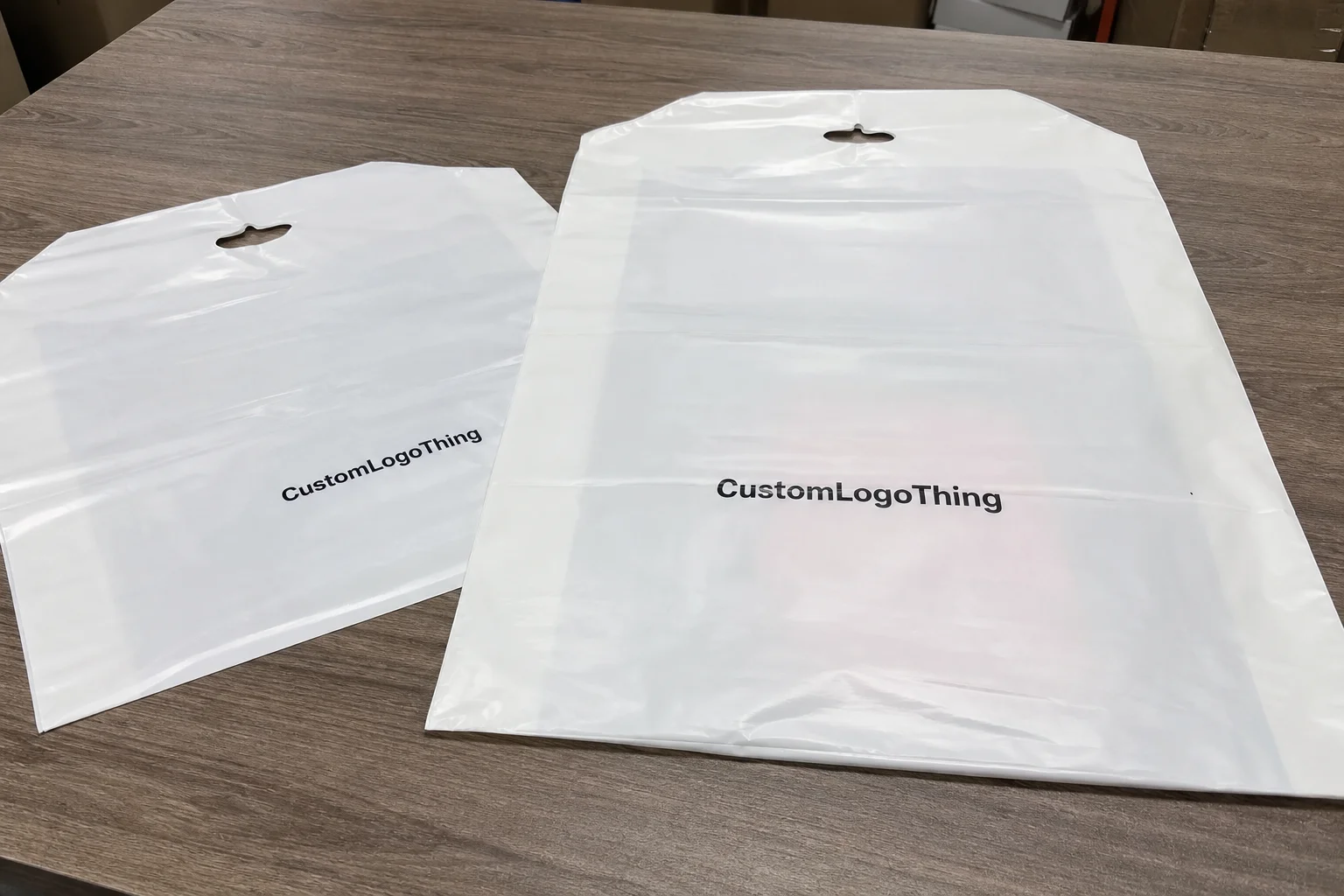
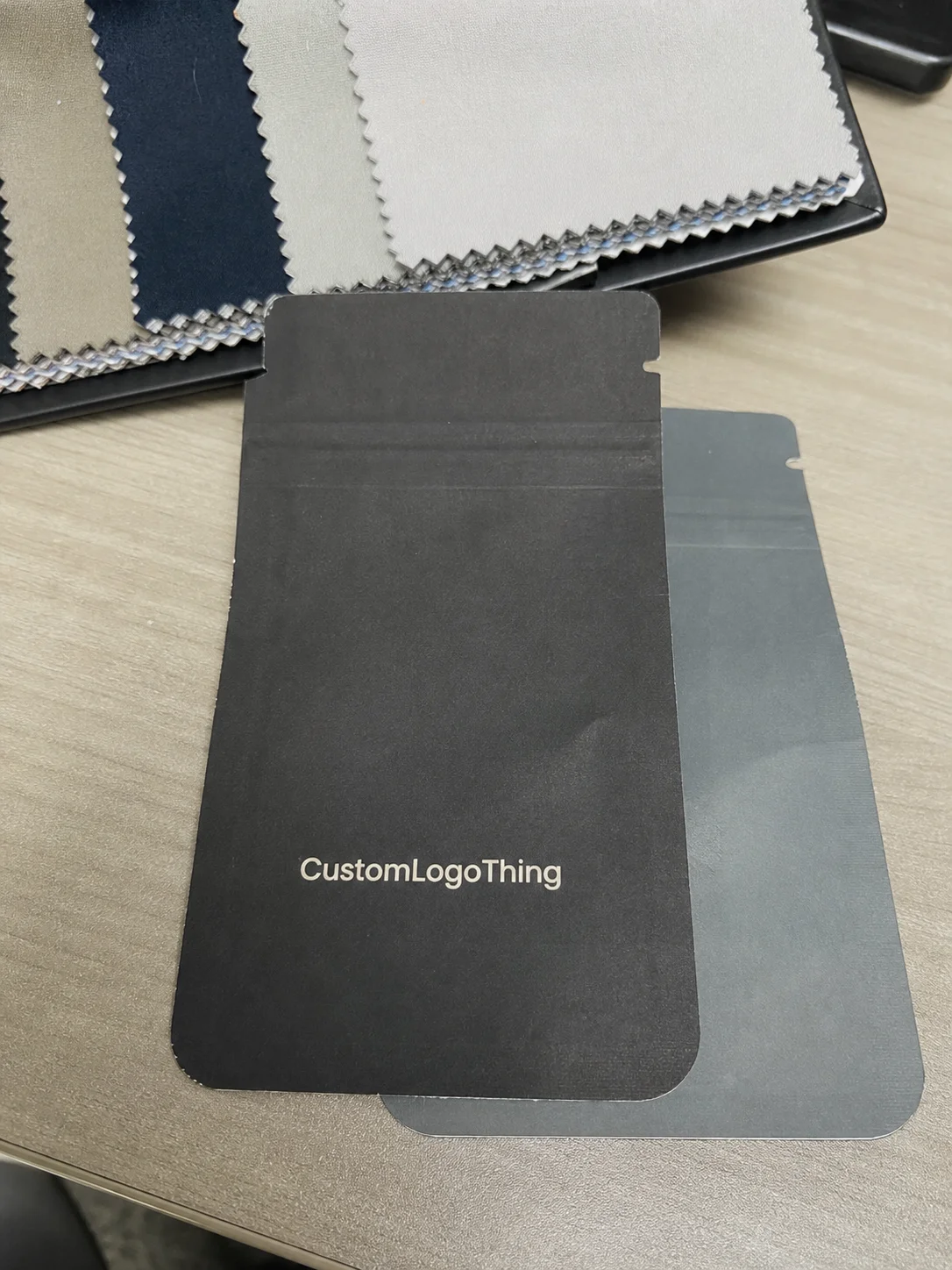
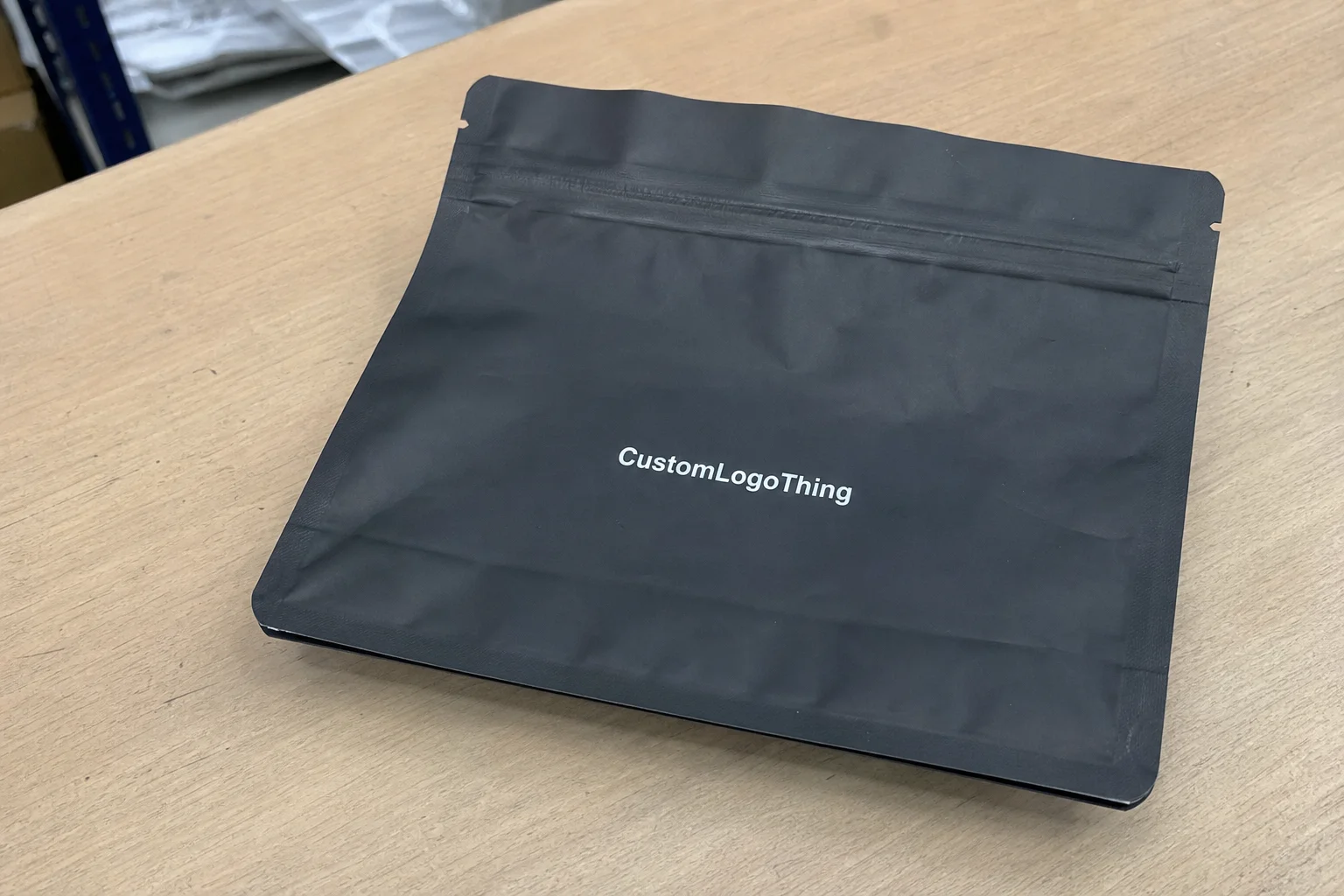
Buyer Fit Snapshot
| Best fit | To Insulated Poly Mailer Bags projects where brand print, material claims, artwork control, MOQ, and repeat-order consistency need to be specified before quoting. |
|---|---|
| Quote inputs | Share finished size, material target, print colors, finish, packing count, annual reorder estimate, ship-to region, and any compliance wording. |
| Proofing check | Approve dieline scale, logo placement, barcode or warning zones, color tolerance, closure strength, and carton packing before bulk production. |
| Main risk | Vague material claims, crowded artwork, missing packing details, or unclear freight terms can make a low unit price expensive after revisions. |
Fast answer: To Insulated Poly Mailer Bags: Film, Print, MOQ, and Carton Packing should be specified like a repeatable production item. The safest quote records material, print method, finish, artwork proof, packing count, and reorder notes in one written spec.
Production checks before approval
Compare the actual filled-product size with the drawing, then confirm tolerance on folds, seals, hang holes, label areas, and retail display edges. Reserve space for logos, QR codes, warning copy, and material claims before decorative graphics fill the panel.
Quote comparison points
Review material grade, print process, finish, sampling route, tooling charges, carton quantity, and freight assumptions side by side. A quote is only useful when the supplier can repeat the same color, closure quality, and packing count on the next order.
I still remember the first time I watched a client ship collagen gummies in a setup that belonged in a guide to insulated Poly Mailer Bags conversation. They were convinced they needed a giant foam box and a mountain of ice packs. They did not. What they needed was a smarter film structure, a tighter fit, and a seal that would not peel open like a cheap envelope in a humid warehouse. I’ve seen that mistake cost a brand $8,400 in spoiled replacements over one summer lane from Dallas to Atlanta, which is a memorable way to learn packaging math if you enjoy pain, and I do not recommend it. That lane spent 18 hours in transit, plus a 7-hour dock delay in Georgia, and the product warmed faster than anyone expected because the pack-out was oversized by nearly 30 percent.
This guide to insulated poly mailer bags is for Brands That Ship temperature-sensitive products but do not want every order to look like a laboratory shipment. I’ve spent 12 years in custom printing and packaging, from plant floors in Dongguan to sample approvals in Los Angeles, and I can tell you this: the right mailer can cut weight, reduce filler, and make packing faster without pretending to be a miracle. Honestly, I think that balance is the whole point. Sometimes it’s the difference between a package that arrives in spec and one that turns into a customer complaint with a tracking number attached, especially when the order volume is 3,000 units per week and every return hits the margin hard.
Guide to insulated poly mailer bags: what they are and why they matter
An insulated poly mailer bag is a lightweight shipping bag built with an outer poly layer, an insulation layer, and a closure designed to slow heat transfer. Think of it as a slim protective envelope with a thermal job to do. Not glamorous. Very effective when designed correctly. In a proper guide to insulated poly mailer bags, the point is not to make the package feel heavy; the point is to buy time while the parcel is moving through the carrier network, where boxes get tossed, stacked, delayed, and occasionally treated like they owe somebody money. Many stock versions use a 60–80 micron outer polyethylene film paired with bubble insulation or a metallized barrier, while custom builds can step up to 100 micron LDPE, 2 mm bubble, or a foil laminate depending on how long the product needs protection.
Most people hear “insulated” and picture bulky box liners, thick foam coolers, or a giant corrugated shipper with enough space to pack a lunch inside. That is not always the play. During one factory visit in Shenzhen, I watched a line produce mailers with a reflective laminate outside and a bubble-foam interior that weighed far less than a traditional cold-chain box. The client saved about $0.62 per shipment on dimensional weight alone, which mattered because they were shipping 18,000 units a month. Small savings. Big annual difference. That kind of thing adds up faster than people expect, especially when the cartons are moving through a distribution center in Guangzhou before crossing to Long Beach by sea or flying into Chicago by air.
In a practical guide to insulated poly mailer bags, these bags show up in food delivery, beauty products, supplements, medical samples, refrigerated e-commerce, and seasonal shipping where ambient temperature swings can wreck product quality. I’ve also seen them used for probiotics, eye masks with active ingredients, frozen pet treats, and small nutrition bars that soften too fast in warm lanes. If the product is not legally required to stay at a strict refrigerated temperature, a good mailer can be enough for short transit windows. If it is, then this is where the music stops and the testing starts. A brand shipping from Nashville to Charlotte in 1 to 2 days has a very different risk profile than one sending parcels from Miami to Phoenix during August.
What they are not: they are not a replacement for dry ice, validated cold-chain packaging, or temperature-controlled freight when product safety demands it. If you are shipping biologics, certain medical specimens, or anything that must stay within a narrow range backed by formal testing, you need a system built around thermal validation, not wishful thinking and a shiny bag. I’ve had that conversation with founders who wanted “just something cheaper.” Cheaper is great until the product arrives warm and your insurance claim gets a polite no. The polite no is somehow always the most irritating part, especially when the shipment spent 16 hours sitting on a sorting floor in Memphis.
The real benefit in a guide to insulated poly mailer bags is balance. They can improve transit performance, reduce packaging weight, and simplify packing versus corrugated shippers. They also tend to store flatter in the warehouse, which matters if your team is working off a 120-square-foot packing table and not a lab bench with unlimited room. I’ve stood in plenty of those little packing zones in Jersey City, Reno, and suburban Dallas, and let me tell you, every extra inch counts when you are loading 500 orders before a 3 p.m. pickup.
Client quote from a supplement brand: “We thought we needed boxes for everything. Your sample pack showed us we could cut packing time by 27 seconds per order and still keep the product stable for the entire regional route.”
How insulated poly mailer bags work in real shipping conditions
A strong guide to insulated poly mailer bags has to explain the physics without turning into a science lecture. These bags help reduce three forms of heat transfer: conduction, convection, and radiant heat gain. Conduction is direct heat passing through the material. Convection is warm air moving around the pack-out. Radiant heat is the sun or hot warehouse surfaces pushing thermal energy into the package. The bag cannot stop physics from existing. It can slow the rate at which your product loses the battle, which is usually the best you can ask for in parcel shipping. In testing, a well-built mailer with a 3-layer structure can extend cool hold time by 4 to 8 hours compared with an uninsulated poly mailer, depending on lane temperature and payload size.
Reflective films, foam, bubble, and thermal laminates all help by creating barriers and trapping air. Air is not a joke here. Trapped air pockets slow warming, and a reflective surface can bounce some radiant heat away. That is why a well-made guide to insulated poly mailer bags often talks about film structure instead of just thickness. I’ve seen two bags with the same outer dimensions perform very differently because one had a cheap single-layer plastic build and the other used a foil laminate with a bubble core. Same size. Different outcome. Packaging is rude like that. A 55 gsm metalized PET layer can behave very differently from a basic clear PE film, even before you factor in the seal and the headspace inside the bag.
Seal quality matters just as much as the layers. An adhesive closure, heat seal, or tamper-evident strip can be the weak link if it is not tested under real packing conditions. A bad seal ruins performance fast. I watched one cosmetics client lose an entire launch of peptide masks because the closure adhesive softened in a hot consolidation center in Fontana, California. The bags looked fine in the office. They failed in the actual carrier network. That is the difference between brochure packaging and shipping packaging, and it is a difference people usually learn the hard way. If the adhesive is rated for only 65°C and your dock area touches 38°C with heavy pressure stacking, you are already living too close to the edge.
For logistics, transit length and dwell time matter more than people admit. A one-day regional route behaves differently from a two-day national shipment with a 9-hour warehouse delay and two carrier handoffs. Ambient temperature also changes the equation. A product that survives 68°F staging and a 14-hour route may fail badly if it sits in a trailer at 92°F. A serious guide to insulated poly mailer bags should tell you to map the full lane, not just the delivery estimate on the checkout page. A parcel leaving Atlanta at 5 p.m. and arriving in Tampa by noon the next day is not the same as one leaving Portland, Oregon, with a weekend hold in Oakland.
Pack-outs can include gel packs, insulated liners, void fill, and inner wraps working together. I’ve done side-by-side tests where a 4 oz gel pack plus a snug mailer beat a much heavier box system because the bag had less empty air. Less air means less warm air to condition. That is a simple win. Not fancy. Effective. And yes, I still prefer actual test data over “the supplier said it should be fine.” Supplier confidence is not a thermal spec, no matter how charming the sales rep is. If the pack-out uses a 6 x 8 inch gel pack, a 12 x 15 inch mailer, and a 2 mm bubble liner, you can usually predict performance much more accurately than by guessing from the product name alone.
For reference on packaging sustainability and material recovery basics, the EPA recycling guidance is a useful place to start. It will not pick your bag spec for you, but it will keep you honest about disposal and material choices, especially if you are comparing polyethylene, PET laminate, or mixed-material structures in a facility that handles thousands of units per week.
Key factors to compare before buying insulated poly mailer bags
If you only compare price per unit, you will buy the wrong bag. That sounds harsh because it is. In any guide to insulated poly mailer bags, the first comparison should be material structure: mil count, foil laminate, bubble style, foam thickness, and whether the outer film is tough enough to survive a conveyor line without splitting at the corner seams. I once saw a brand save $0.03 per bag by switching to a thinner film, then lose $1.80 per order in re-shipments because the seam failures spiked. Great savings. Terrible arithmetic. Packaging math has a cruel sense of humor. If the spec is 2.5 mil instead of 4 mil, you may feel the difference immediately when the first pallet arrives from a factory in Ningbo or Xiamen.
Temperature target and dwell time come next. A bag that performs for 6 to 8 hours in mild weather may not hold up for 24 hours in summer freight. If you are shipping overnight versus two-day versus 48-hour exposure, the right spec changes. This is where a good guide to insulated poly mailer bags helps you avoid the classic mistake: buying a beautiful-looking bag that is underbuilt for your actual lane. A product traveling from Denver to Salt Lake City with a 30-minute dock wait needs a different build than one making a 2-day trip from Orlando to Seattle in July.
Size fit is not a minor detail. Oversized bags waste money and create extra air space. Undersized bags crush the insulation layers and make sealing unreliable. I’ve had packing teams force a product into a bag one size too small because “it mostly fits.” Mostly fit is not a packaging standard. The correct size should allow the product, any gel packs, and an inner wrap to sit flat without deforming the closure area. Anything else turns into the kind of problem that shows up right when you are already short-staffed. A 10 x 14 inch bag can feel generous until you add a folded insert, a 4 oz gel pack, and a carton label that eats half the flap.
Seal strength and tamper evidence deserve a real test. Ask for peel tests, not promises. Ask whether the adhesive strip performs in hot and cold conditions, because some adhesives go limp in warm rooms and others become brittle in cooler docks. If leak risk exists, ask about dual closures or reclosable options. A proper guide to insulated poly mailer bags should always treat the seal like a critical component, because it is. I like to see peel-force data in grams per inch and a real sample tested after 24 hours at 90°F, not just a glossy spec sheet with no numbers behind it.
Branding matters more than some engineers admit. Custom printing can be worth the extra spend if the package reaches the customer’s front door and doubles as a visible brand touchpoint. A plain white bag with a sticker is fine for internal logistics. A printed bag is better for unboxing and shelf appeal when customers receive chilled retail items. If you already buy Custom Poly Mailers, you know how much a clean print can change perceived value. Customers absolutely notice, even if they do not say it out loud. In many plants around Dongguan and Shenzhen, one-color flexographic print on a poly mailer may add only a few cents at 5,000 pieces, while a 4-color custom design can increase the unit cost by $0.08 to $0.15 depending on plate setup.
Here is a practical pricing snapshot from quotes I’ve seen from custom converters and distributors. Prices swing hard based on order volume, print, and spec, so treat this as a working range, not gospel. I’ve had the same bag come in at $0.21/unit at 10,000 pieces and $0.38/unit at 2,000 pieces. Volume matters. Paperwork matters too, because nobody likes a surprise freight bill after the PO is already approved. If a supplier can quote you $0.15 per unit for 5,000 pieces on a stock thermal mailer, that usually means a simpler structure, limited print, and a factory run that fits cleanly into standard sheet sizes or roll conversion.
| Option | Typical unit cost | Best for | Tradeoff |
|---|---|---|---|
| Stock insulated poly mailer | $0.18–$0.32/unit at 5,000 pieces | Basic cold-sensitive shipping | Limited branding, fewer spec choices |
| Custom-printed insulated mailer | $0.28–$0.55/unit at 5,000 pieces | Brand presentation and repeat orders | Higher setup cost, longer proofing |
| Thicker thermal or foil-laminated mailer | $0.35–$0.80/unit at 5,000 pieces | Longer transit or warmer lanes | More cost, sometimes more weight |
| Specialty custom build with tamper features | $0.50–$1.10/unit at 5,000 pieces | Higher-risk products | More MOQ pressure and lead time |
If you are comparing suppliers, ask for quotes from names like Pregis, Sealed Air, and Uline, then compare against a custom converter that can match your dimensions and print goals. For broader sourcing across formats, Custom Packaging Products can help you compare mailers, boxes, inserts, and branded shipping options in one place. If you want a laminated structure with a 350gsm C1S artboard insert card or a foil-bubble combo made in Guangdong, ask for that exact spec on the quote so the numbers are comparable from the start.
Step-by-step guide to choosing the right insulated poly mailer bags
The easiest way to get this wrong is to start with the bag instead of the product. A strong guide to insulated poly mailer bags begins with the item you are actually shipping. Is it a serum that can tolerate a warm window, a probiotic capsule that degrades fast, or a chilled snack that needs a short cold hold? Write down the product’s temperature limit, sensitivity to condensation, and whether it must stay dry. That checklist saves money later, which is nice because manufacturing invoices have a habit of arriving with enthusiasm. If the product’s shelf life drops after 72 hours above 77°F, that detail belongs on the first page of your spec sheet, not buried in an email thread from three months ago.
Step 1: Identify the product and its real sensitivity
List the target range, not a vague “keep cool” note. I’ve seen teams specify “cold” and assume everyone means the same thing. They do not. For one client, “cool” meant under 77°F. For another, it meant 35°F to 46°F. That difference changes the entire pack-out. A proper guide to insulated poly mailer bags should force clarity before ordering 20,000 pieces. If your product is a vitamin gummy, the tolerance may be different from a cream formulation or a fish oil capsule, and that difference can decide whether a 4 mm foam layer is enough or whether you need a foil barrier.
Step 2: Map shipping lanes and transit times
Separate local, regional, and national shipments. A lane from Phoenix to Las Vegas is not the same as Phoenix to Miami. Add warehouse dwell time, pickup cutoffs, weekend holds, and cross-dock transfers. I once visited a distribution center where packs sat 11 hours before they even left the dock. The client blamed the carrier. The carrier blamed the shipper. Both were half right, which is very annoying and extremely common. If your carrier picks up at 4:30 p.m. and the parcel misses the linehaul, your “2-day” order can quietly become a 4-day journey through hubs in Kansas City and Memphis.
Step 3: Match insulation style and closure to the job
If speed matters, a self-seal adhesive strip can be ideal. If security matters more, ask about tamper-evident closures or heat-seal compatibility. If your product sweats, consider a liner that resists moisture migration. A sensible guide to insulated poly mailer bags does not push the same format for every use case. That would be lazy, and lazy packaging usually gets expensive in the form of returns, complaints, and somebody forwarding you an angry email at 7:12 a.m. A heat-seal strip from a converter in Shenzhen can perform very differently from an acrylic adhesive strip sourced in California, so request both the material spec and the closure performance range.
Step 4: Request samples and test with real product
Do not test with empty bags and optimism. Test with actual product, actual gel packs, and actual ship methods. Run the sample through summer and winter conditions if you can. I like to compare bag performance after a 6-hour room-temperature hold, a refrigerated staging period, and a simulated carrier route. If the sample fails, you learned that for the cost of a few samples, not 5,000 printed units and a headache. That’s a trade I will take every time. A decent sample program usually costs $25 to $150 in freight and prototype fees, which is nothing compared with a pallet of unusable finished goods.
Step 5: Run a small pilot order
Place a pilot order and measure failure rates, seal consistency, customer complaints, and damage claims. If the pilot shows melt issues, shrink the bag size or increase insulation. If it shows seal problems, change adhesive or closure width. A disciplined guide to insulated poly mailer bags always ends the same way: test, measure, revise. If you can, run 250 to 1,000 units first, then review the data after 2 shipping cycles so you are not making decisions from a single lucky route.
Step 6: Lock in specs and reorder rules
Once the pack-out works, document every detail. Dimensions, material structure, print colors, closure style, tolerance, carton count, and approved vendor. This is the part people skip and then regret six months later when a reorder arrives “close enough” and the packing team has to improvise like it is arts and crafts hour. I have seen grown adults stare at a slightly wrong bag and say, “Can we make it work?” Sure, if by work you mean waste time and money. Put the spec in writing with a tolerance range of plus or minus 2 mm, list the approved factory in Guangdong or Jiangsu, and keep the reorder sheet where operations can find it in under 30 seconds.
For wood-pulp or paper-based components in your broader packaging system, FSC certification may matter depending on your brand claims and supply chain requirements. If that applies, the FSC website is the right place to verify standards and sourcing language. If you need an insert card or retail sleeve, a 350gsm C1S artboard printed in Hangzhou or Suzhou is a common starting point for branded packaging that still folds cleanly in a carton line.
Cost, pricing, and timeline: what to expect when ordering
A realistic guide to insulated poly mailer bags should talk money without pretending every quote is identical. Pricing depends on material composition, custom print setup, size, MOQ, adhesive quality, and freight. A stock mailer usually costs less than a custom-printed mailer, and a thicker insulated version costs more than a basic thermal bag. No magic there. Just manufacturing, and manufacturing tends to be less romantic than the sales deck suggests. If the bag uses a standard PE outer film and a simple bubble liner, pricing may land much lower than a multi-layer foil laminate shipped from Dongguan with custom die-cut features.
Here is how I explain it to clients: if a plain bag is $0.22 and a better insulated custom version is $0.41, the extra $0.19 may sound annoying until you compare it to a $12 replacement shipment or a customer refund. I’ve watched brands obsess over pennies and ignore the real landed cost. That is backwards. A solid guide to insulated poly mailer bags should force you to calculate claims, re-shipments, and lost customer trust, not just unit price. One brand I worked with cut refund-related losses by $4,900 in a quarter after moving from a generic mailer to a lane-specific insulated build.
Lead times usually break into sampling, proofing, production, packing, and freight. Sampling can take 5 to 10 business days if the supplier already has a close spec. Proofing can be quick, sometimes 1 to 3 days, unless you need artwork revisions or custom colors. Production might be 12 to 20 business days depending on factory load and material availability. Freight can add a few days or a few weeks if you are moving cargo by sea. I’ve had one order leave a plant on schedule and still land late because customs decided to have a personality. Honestly, I would love to meet the customs officer who thought that was a fun afternoon. In practice, a clean order with proof approval on Monday often lands in production by Wednesday and can be ready in 12-15 business days from proof approval if the factory is in Shenzhen, Dongguan, or Ningbo and the film stock is already on hand.
Supplier coordination matters more than people think. Artwork approval can be fast, but specialty laminations or custom tooling can add days or weeks. If you are ordering from a packaging vendor, ask for a line-by-line quote that separates the bag, print setup, cartons, and shipping. The cleanest quote I ever got from a converter in Guangdong saved me two hours of back-and-forth because they listed every variable, down to the exact adhesive spec. Rare. Beautiful. Slightly suspicious. If the quote includes a plate charge, confirm whether it is a one-time cost of $45, $120, or $300, because that can change the math on smaller runs immediately.
For price benchmarking, I would ask suppliers like Pregis, Sealed Air, and Uline for comparable quotes, then compare them to a custom manufacturer who can match your dimensions and branding requirements. Sometimes the distributor wins on speed. Sometimes the factory wins on unit cost. Sometimes the cheapest quote turns expensive after freight, delays, and “oops, that print color isn’t what we expected.” That part never gets old. Said no one, ever. If you want a tighter comparison, ask for landed pricing to your warehouse in Dallas, Columbus, or Ontario, California, not just ex-factory pricing from the supplier floor.
Common mistakes people make with insulated poly mailer bags
The biggest mistake is choosing based on appearance instead of transit performance. Shiny foil does not automatically mean better thermal protection. In a practical guide to insulated poly mailer bags, the bag needs to match the route, not the mood board. I’ve seen beautiful bags fail because the closure was weak and the insulation layer was too thin for the lane. Pretty packaging is fine, but pretty packaging that fails is just expensive disappointment. A silver exterior from a factory in Shenzhen does not guarantee anything if the inner bubble layer is only 1 mm and the seal peels at 18 ounces of force instead of 40.
Another common error is ignoring real shipping duration and warehouse staging time. A product that leaves the dock in 30 minutes may need very little hold time. A product that sits overnight in a hot staging area needs a completely different setup. People love to test under ideal conditions. The carriers, shockingly, do not cooperate with ideal conditions. If your warehouse in Austin hits 88°F by 2 p.m. and the truck does not depart until 7 p.m., your test should reflect that five-hour delay, not a pristine temperature-controlled room.
Using the wrong size is a classic. Too much empty space creates extra warm air and reduces efficiency. Too little room compresses the insulation. Both are bad. Another issue is skipping seal testing and leak checks. I once watched a team validate a bag for three weeks, then discover the adhesive failed on humid days because nobody bothered to test the closure after a product was inserted at line speed. This is how expensive lessons happen, and why I now ask uncomfortable questions much earlier. A 14 x 18 inch bag may look good on paper, but if the product is really 9 x 11 inches, the extra headspace can turn into heat gain by the end of a 36-hour route.
Some companies assume one format works for every product and every season. It does not. Summer and winter pack-outs should not be identical. A good guide to insulated poly mailer bags will tell you to use different configurations for different lanes and weather windows. That may sound like extra work. It is. It is also cheaper than returns. In Chicago in January, a 4 oz gel pack behaves one way; in Phoenix in July, it behaves another, and your spec should acknowledge that with real test data.
Finally, people overpay for features that do not improve the customer experience. If a tamper-evident strip does nothing for your product category, do not pay for it just because it sounds premium. If a thicker laminate adds cost but no measurable performance, skip it. Packaging should earn its place. Fancy is not the same as functional, and I wish that sentence were printed on half the purchase orders I see. A clean one-color logo on a costed bag can be smarter than a full-bleed print on a spec that never gets noticed by the customer.
Expert tips to improve performance, reduce waste, and simplify reorders
My first tip: use lane-specific pack-outs instead of one universal setup. This is one of the simplest improvements I recommend in a guide to insulated poly mailer bags. A local same-day shipment does not need the same structure as a two-day national route. Separate SKUs by geography or season, and your failure rate usually drops because the pack-out finally matches the job. If you are shipping from a fulfillment center in Newark and another in Phoenix, those two nodes should not share a single thermal spec unless the product is unusually forgiving.
Second, test summer and winter conditions separately. A bag that works in mild weather can fail badly in heat. I learned this the hard way during a client visit in Arizona where a mailer passed room tests but lost performance after a trailer dwell. The product arrived soft, sticky, and not fit for sale. We fixed it by changing the insulation layer and adding a tighter inner fit. Not glamorous. Very effective. Also, yes, I was annoyed for about two weeks afterward. The solution was a slightly heavier laminate and a smaller headspace allowance, which added only $0.06 per unit but rescued the route.
Third, keep backup SKUs for different product sizes. If staff has to force-fit inventory, you will get crushed corners, poor seals, and a packing room full of improvisation. Fourth, negotiate using a volume forecast and a clear annual demand range. Suppliers like clear numbers. They hate vague “we’ll probably grow” talk almost as much as customers hate surprise price increases. A clean forecast can shave real money off your quote. If your forecast is 24,000 units per year, say so; if you expect 5,000 in Q1 and 9,000 in Q4, that shape matters to the factory in Jiangsu or Guangdong.
Fifth, track claims, melt issues, and returns by lane. That data should drive spec changes. Do not guess. I’ve seen one brand reduce warm-shipment complaints by 38% after they adjusted bag size and gel pack placement based on return reasons. That is the kind of boring, measurable result I trust. If the claim rate falls from 3.1 percent to 1.9 percent after a spec change, that is a real win you can put in a spreadsheet and defend in a finance meeting.
Sixth, build a reorder sheet that includes dimensions, material, closure type, print colors, and approved vendor. Put it in one place. Not three email threads and a spreadsheet named “final_final_use_this_one.” We have all seen that circus, and it is not a system. I like to include carton count, case pack, pallet count, lead time from proof approval, and the exact factory city, because “same bag” is not a spec when a supplier has three different lines in three different plants.
If you want a broader packaging mix alongside your mailers, the Custom Packaging Products catalog is a useful way to compare insulated mailers, branded mailers, cartons, and accessories. And if your packaging program includes custom printed outer mailers for non-thermal items, Custom Poly Mailers can be a good benchmark for print quality and structural options. For insert cards, a 350gsm C1S artboard printed with water-based inks in Suzhou or Hangzhou can keep the presentation consistent while staying easy to stack and pack.
One more practical note: if sustainability matters in your brand story, ask suppliers what percentage of the structure is recyclable in your target market and whether the material mix fits your claims. If you are making environmental statements, verify them. The packaging industry has enough nonsense already without brands accidentally claiming something that is not backed up by the material spec. A mailer made with mono-material polyethylene may be easier to position than a mixed PET-foil-foam structure, but only if your actual market can process it.
What should you know before buying insulated poly mailer bags?
Before buying insulated poly mailer bags, define the product’s temperature sensitivity, map the shipping lane, and confirm seal performance with real samples. This guide to insulated poly mailer bags works best when the bag is matched to transit time, not just price. A short regional route may need a simpler structure, while a longer or hotter lane usually calls for thicker insulation, a stronger closure, or both.
How do insulated poly mailer bags compare to regular poly mailers?
Insulated poly mailer bags slow heat transfer and protect temperature-sensitive products better than standard poly mailers. Regular poly mailers mainly protect against dirt and moisture, not temperature fluctuation. If your product can warm up for a few hours without damage, a standard mailer may be enough. If not, the insulated version earns its keep. For example, a standard 2.5 mil poly mailer may handle apparel just fine, while a 3-layer insulated structure with bubble or foil can make a real difference on a 1 to 2 day regional route.
What size insulated poly mailer bags should I buy?
Choose a bag that fits the product plus any gel packs or inner wrap without crushing the insulation layer. Leave enough room for a secure seal, but avoid oversized bags that create empty air space. I usually tell clients to sample two or three sizes and test actual pack-outs before locking the spec. If your product is 9 x 6 inches, sample 10 x 8, 11 x 9, and 12 x 10 so you can see how the closure behaves with a real gel pack and not just in a flat mockup.
Are insulated poly mailer bags expensive?
They cost more than plain poly mailers because of the extra materials and performance features. Pricing depends on bag size, insulation type, print colors, order volume, and freight. At common volumes, I’ve seen pricing range from about $0.18 to over $1.00 per unit depending on spec complexity. A stock thermal mailer at 5,000 pieces might be closer to $0.15 per unit if it uses a simple structure, while a custom foil build with print and tamper features can move much higher.
How long do insulated poly mailer bags keep products cold?
Performance depends on the product, pack-out, outside temperature, and shipping time. They are best for slowing temperature rise during short to moderate transit, not replacing full cold-chain systems. If your lane includes long hot dwell times, you need real testing and probably a stronger thermal system. In many cases, the useful hold time is measured in hours, not days, and a lane with 72°F ambient conditions will behave very differently from one that sits at 90°F on a warehouse dock.
Can I print my logo on insulated poly mailer bags?
Yes, many suppliers offer custom printing for branding and a more polished unboxing experience. Confirm artwork limits, print color options, and minimum order quantities before placing the order. If print quality matters, ask for a proof and a physical sample, not just a PDF on a screen. A 1-color print may be enough for a clean logo, while a 4-color process from a factory in Guangdong can add more visual impact at 5,000 pieces or more.
If I had to reduce this guide to insulated poly mailer bags to one sentence, it would be this: match the bag to the product, the lane, and the seal, or you are just buying expensive plastic with a cold-sounding name. I’ve seen brands waste thousands trying to fix the wrong problem with the wrong format. Get the specs right, test with real shipments, and the guide to insulated poly mailer bags becomes less about guesswork and more about repeatable, profitable shipping. The clearest next step is to lock the product limit, the shipping lane, and the closure standard in one written spec before you reorder, because that is what keeps the packaging team from guessing and keeps the product from arriving warm.