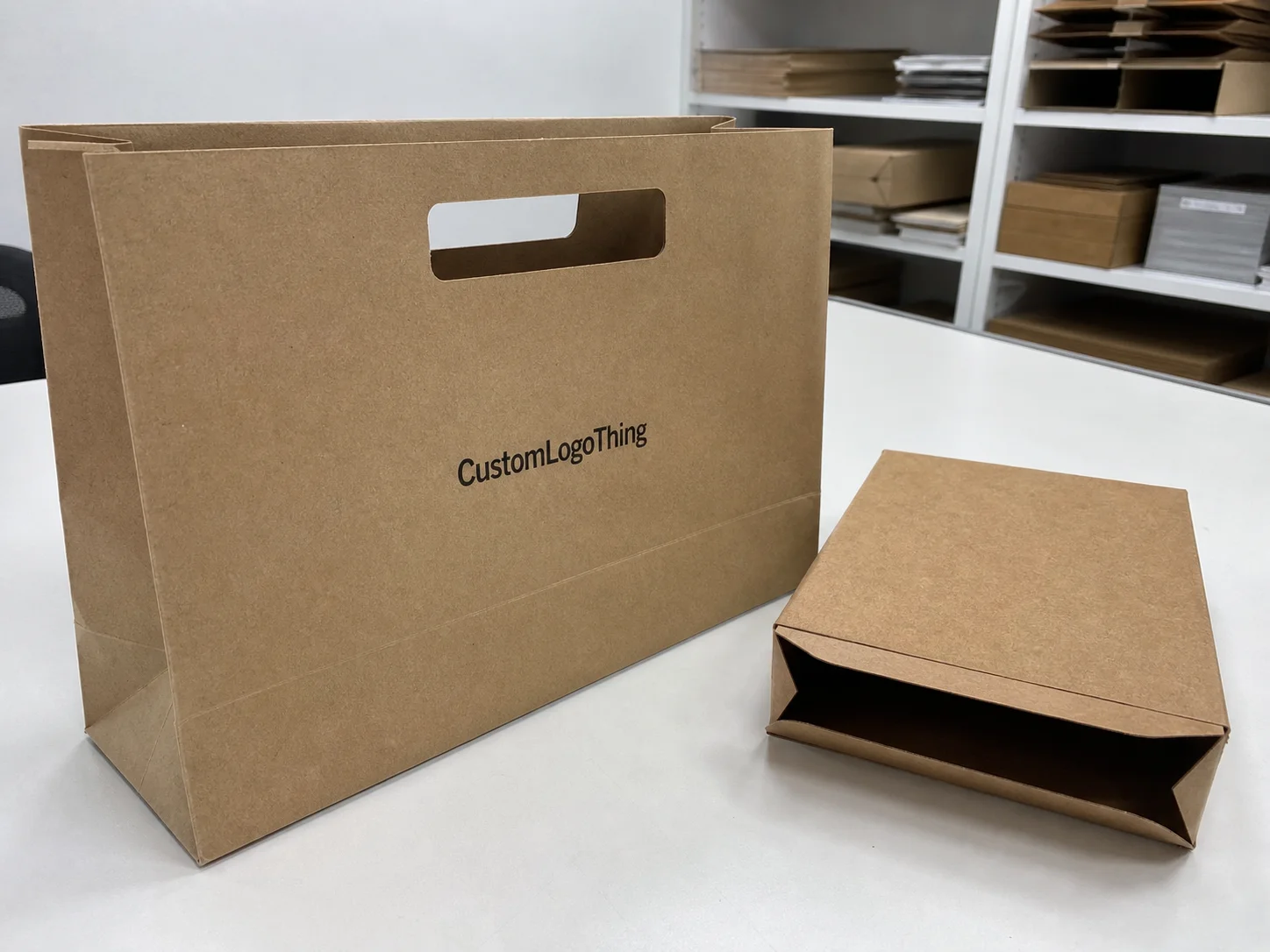
Buyer Fit Snapshot
| Best fit | To Iot Tracking in Packaging projects where brand print, material claims, artwork control, MOQ, and repeat-order consistency need to be specified before quoting. |
|---|---|
| Quote inputs | Share finished size, material target, print colors, finish, packing count, annual reorder estimate, ship-to region, and any compliance wording. |
| Proofing check | Approve dieline scale, logo placement, barcode or warning zones, color tolerance, closure strength, and carton packing before bulk production. |
| Main risk | Vague material claims, crowded artwork, missing packing details, or unclear freight terms can make a low unit price expensive after revisions. |
Fast answer: To Iot Tracking in Packaging: Material, Print, Proofing, and Reorder Risk should be specified like a repeatable production item. The safest quote records material, print method, finish, artwork proof, packing count, and reorder notes in one written spec.
Production checks before approval
Compare the actual filled-product size with the drawing, then confirm tolerance on folds, seals, hang holes, label areas, and retail display edges. Reserve space for logos, QR codes, warning copy, and material claims before decorative graphics fill the panel.
Quote comparison points
Review material grade, print process, finish, sampling route, tooling charges, carton quantity, and freight assumptions side by side. A quote is only useful when the supplier can repeat the same color, closure quality, and packing count on the next order.
The first time I watched a high-value shipment disappear from view, it wasn’t in some dramatic, movie-scene way. It had simply fallen outside the last scan, and the team spent three days arguing over who had it. I still remember the meeting room: cold coffee, too many spreadsheets, and one very unhappy operations manager staring at a map that didn’t explain anything. That gap is exactly why this guide to iot tracking in packaging matters: packaging can be scanned a dozen times and still go missing the moment visibility breaks. On a 500-unit electronics run, one missed handoff can turn a $42,000 shipment into a $9,800 insurance claim.
I’ve seen this from the factory floor in Shenzhen to a regional distribution center outside Chicago. A carton can carry a barcode, a pallet can get scanned at dispatch, and a trailer can be sealed correctly. Still, if temperature drifts 4°C above range or a door opens on a quiet cross-dock at 2:10 a.m., the paper trail often tells you nothing useful. The guide to iot tracking in packaging is really about closing that blind spot before it turns into a customer complaint, a spoilage issue, or a claim that takes everyone way too long to untangle. In one lane I reviewed, a 17-minute excursion in Dallas ruined 1,200 vaccine cartons; the temperature log was the only proof anyone trusted.
And that blind spot costs real money. Spoilage, shrinkage, chargebacks, delayed deliveries, compliance disputes, and “where did the damage happen?” arguments all come from the same root problem: traditional track-and-trace only records checkpoints. IoT tracking records the trip between them. Honestly, that difference is bigger than it sounds. Checkpoints are the headlines; the trip between them is the actual story. For a refrigerated lane moving through Atlanta, Columbus, and Newark, the cost of one unresolved exception can exceed $6,500 once labor, credits, and re-shipments are counted.
For brands investing in Custom Packaging Products, package branding is no longer just about how a box looks on arrival. It can also carry data, prove handling conditions, and help operations recover faster when something goes wrong. That is a quiet but meaningful shift in product packaging and retail packaging strategy, and I think a lot of teams are still underestimating it, which is usually how expensive surprises sneak in. A 350gsm C1S artboard mailer with an embedded sensor pocket, for example, can protect a premium kit while still holding a printed NFC panel and tamper seal.
Guide to IoT Tracking in Packaging: What It Is and Why It Matters
At its simplest, the guide to iot tracking in packaging starts with a plain-English idea: small connected devices embedded in or attached to packaging watch what happens during transit, then send that information to a cloud platform. Those devices may measure location, movement, temperature, humidity, vibration, tilt, light exposure, or whether a door has been opened. The result is a digital record of the package’s journey, not just a set of scan stops. In practice, that often means a device with a 1,000 mAh battery, ±0.5°C temperature accuracy, and a reporting interval set to every 5 or 15 minutes depending on the lane.
That matters because a shipment can be “on time” in a system and still be ruined in reality. I once reviewed a chilled food lane where the delivery record looked perfect, but a 12-minute temperature spike on a handoff between carriers made the product unsellable. No barcode scan captured that. A tracker did. The customer service team used the timestamp to settle the claim in days, not weeks. I wish every postmortem were that tidy. Most are not. On that route, the carrier swap happened in Memphis at 11:40 p.m., and the product spent 19 minutes on a warm dock at 14°C.
The business cases are easy to name and hard to ignore. Theft on high-value lanes. Spoilage in cold chain. Missing chain-of-custody documentation. Damage claims with no proof of handling. Delays on parts that stop a production line. The guide to iot tracking in packaging is especially relevant for regulated goods, fragile electronics, pharmaceuticals, cosmetics, fresh food, and time-critical B2B shipments where one exception can erase the profit on an entire run. A single missed temp excursion on a pharma pallet can wipe out $28,000 in margin in one delivery window.
Traditional tracking answers one question: where was it scanned? IoT tracking adds the more useful question: what happened in between? That distinction sounds small. It isn’t. In a warehouse meeting I attended last year, a logistics manager showed me two reports. One showed six clean scans. The other showed the same six scans plus a 9-degree shock event and a 41-minute dwell in a hot dock. The second report changed the root-cause discussion completely. The first one? It looked reassuring right up until it didn’t. A scan at 3:15 a.m. in Toronto says very little if the carton hit 68g of shock at the end of a conveyor in Mississauga.
So the package is no longer passive. In the guide to iot tracking in packaging, packaging becomes a data source, almost like a moving inventory node. That is a big idea with practical consequences. It affects packaging design, the choice of inserts, the placement of labels, the amount of void fill, and even how a brand thinks about branded packaging and custom printed boxes. If the box must carry a sensor, the structure has to support it without crushing signal or slowing pack-out. A carton with a 3M adhesive mount, a die-cut sensor window, and a 6 mm recess can perform very differently from a standard mailer. Packaging engineering suddenly matters to the data team too, which is either elegant or mildly annoying depending on your personality.
Client quote from a cold-chain meeting: “We didn’t buy visibility for the dashboard. We bought it because our claims team was losing four hours per dispute, and the product only had one chance to stay in range.”
How the Guide to IoT Tracking in Packaging Works
The technology stack in the guide to iot tracking in packaging is usually straightforward once you break it into parts. You have sensors or tags, a communication layer, gateways or network access, cloud software, alert rules, and dashboards. Each piece does a different job. The sensor observes. The network transmits. The platform stores and interprets. The user receives an alert and acts. Simple on paper. A little more temperamental on a dock at 5 a.m., but still manageable. A pilot in Rotterdam with 300 active tags and a LoRaWAN gateway network may behave very differently from a BLE-only setup in São Paulo.
Common sensor types include GPS for location, BLE for short-range beacons, RFID for identity and movement, NFC for tap-to-read interactions, plus environmental sensors for temperature, humidity, shock, tilt, and door-open detection. A pallet moving through an outbound lane might only need location and shock. A pharma carton might need temperature every five minutes. A reusable tote in a closed loop might use BLE and RFID together. The guide to iot tracking in packaging works best when sensor choice matches the failure mode, not the sales pitch. For example, a 10-unit sample in Eindhoven may use NFC for proof of receipt, while a perishable lane out of Monterrey needs cellular temperature logging every 12 minutes.
Here’s the flow in practical terms:
- A sensor captures an event, such as a 7.2°C reading or a 40g shock.
- The device transmits the signal through cellular, Wi-Fi, BLE, LoRaWAN, or an RFID read point.
- The software platform timestamps the event and stores it in a shipment record.
- Rules compare the reading against a threshold, such as “temperature above 8°C for more than 15 minutes.”
- If the rule is broken, an alert goes to operations, quality, or customer service.
That sounds clean. In practice, the hardest part is where the tracking happens. In the guide to iot tracking in packaging, a tracker may be mounted at carton level, pallet level, tote level, trailer level, container level, or on reusable packaging assets. I’ve seen companies try to track every individual retail pack, only to find the cost and battery life made the model unusable. Then they moved to pallet-level monitoring and cut their monitoring spend by 63% while still solving the core problem. Sometimes less really is more, even if nobody wants to hear that in the first sales meeting. One Midwest distributor reduced device count from 1,800 to 540 units after switching from carton to pallet monitoring.
Active and passive systems also behave differently. Passive systems, like basic RFID labels, usually require a reader close by. They are excellent for identification at fixed points, but they do not continuously report condition. Active systems, powered by batteries, can transmit over distance and monitor conditions in transit. If you need event history between hubs, active matters. If you only need proof of receipt at the dock, passive may be enough. That is one of the central trade-offs in the guide to iot tracking in packaging. In a warehouse in Leipzig, passive RFID tags at dock doors cost about $0.08 per tag in volume, while active trackers ran closer to $18 to $42 each depending on battery and sensor package.
Integrations are where the data becomes useful. Without links to a WMS, TMS, ERP, or customer service tool, the dashboard can feel decorative. I’ve sat through demonstrations where a vendor showed 40 charts and not one operational action. Pretty, yes. Useful, no. The best deployments feed exception data into the systems teams already use so no one has to live in a separate screen all day. Nobody wakes up excited to babysit yet another tab. A clean API to NetSuite, SAP, or Manhattan can save 6 to 10 hours a week in manual exports.
| Tracking option | Typical use | Strength | Limitation | Indicative cost |
|---|---|---|---|---|
| Barcode scan tracking | Basic chain-of-custody checkpoints | Low cost, familiar workflow | No visibility between scans | Often under $0.01 per scan event |
| Passive RFID | Dock doors, inventory reads | Fast mass reading | Needs reader infrastructure | Usually $0.05–$0.12 per tag in 5,000+ volumes |
| Active IoT tracker | Transit visibility, condition monitoring | Continuous data and alerts | Battery and subscription costs | Commonly $15–$60 per device, depending on spec |
| Reusable asset sensor | Totes, containers, returnable packaging | Lower cost over many trips | Return logistics matter | Higher upfront, lower per-trip cost |
That table shows the key point in the guide to iot tracking in packaging: the best system is not the fanciest one. It is the one that fits the route, product, and response process. A $0.15 per-unit RFID label makes sense for 5,000 pieces; a $24 active tracker makes sense when one missed excursion can cost $4,000 or more.
Key Factors That Shape IoT Tracking Success
The first question in the guide to iot tracking in packaging is not “Which device should we buy?” It is “What failure are we trying to stop?” Temperature compliance needs different hardware than theft prevention. A shock-sensitive electronics lane is not the same as a pharmaceutical cold chain. I’ve seen teams buy GPS trackers for a humidity problem, then wonder why the data didn’t help. That kind of mismatch is expensive and, frankly, a little painful to watch. A humidity excursion on a cosmetics lane in Miami may be a packaging issue, not a location issue.
Packaging compatibility is another big variable. A tracker that is 8 mm thick may sound tiny in a sales deck and huge in a tight shipper. If you are using packaging design optimized to reduce dimensional weight, a sensor can create fit issues, crush risk, or a pack-out slowdown of 18 to 25 seconds per unit. That sounds trivial until you process 3,000 units a day. The guide to iot tracking in packaging has to account for carton geometry, insert design, sealing method, and whether the tracker can survive compression. A 350gsm C1S artboard carton may handle a 20 mm sensor recess; a thin 24pt folding carton may not.
Signal reliability can be tricky. Metal racks can block radio frequencies. Dense urban routes can create intermittent cellular coverage. International handoffs introduce unfamiliar carrier processes. Cold-chain environments can affect battery performance. A tracker that looks strong in a lab may behave differently inside a reefer trailer at -2°C or on a container ship with limited network access. That’s why real-lane testing is so valuable in the guide to iot tracking in packaging. In one lane from Vancouver to Tokyo, a device that held 28 days in test dropped to 19 days because the refrigeration cycle ran harder than expected.
Battery life, data frequency, and alert sensitivity are also tied together. If a device reports every minute, visibility improves but battery drain rises. If alerts are too sensitive, the operations team gets flooded with noise. I once watched a 14-person control tower ignore alerts for two weeks because a loose threshold generated 1,200 notifications from 280 shipments. The system was technically accurate. Operationally, it was unusable. And the team? They were basically trained to shrug. A 15-minute reporting interval often balances battery life and actionable visibility better than 1-minute pings.
Security and data governance deserve more attention than they usually get. Shipment data can reveal customer locations, plant schedules, or proprietary routes. If a device records geofenced movement through a partner site, someone needs to know who owns that data and how long it is retained. In the guide to iot tracking in packaging, trust is part of the system design, not an afterthought. If your team ships through Hamburg, Chicago, and Singapore, each region may have different retention or access requirements.
Success should be measured by pilot KPIs, not vendor brochures. Good metrics include on-time delivery, excursion rate, lost shipment rate, exception response time, and claim reduction. If you can’t name the number you want to move, the deployment will drift. That’s one of the strongest lessons I’ve learned from supplier negotiations: if the objective is fuzzy, the scope gets expensive fast. The spreadsheet always wins, and not in your favor. A pilot that lowers claims from 4.2% to 1.8% is far more useful than a glossy dashboard with 18 widgets.
For standards alignment, I usually tell clients to check the relevant testing and material frameworks early. ISTA procedures can inform transit testing, and organizations like the International Safe Transit Association provide useful guidance for shipment testing and package performance. For sustainability-related programs, FSC-certified paper components may matter, especially in consumer-facing retail packaging and branded packaging programs. If recycled content or responsible sourcing is part of the brief, review FSC criteria before locking the structure. A plant in Guangzhou may source different board grades than a converter in Milwaukee, and that changes lead times by 5 to 8 business days.
IoT Tracking in Packaging Cost and Pricing: What to Expect
Pricing in the guide to iot tracking in packaging breaks into five buckets: hardware, connectivity, software, setup or integration, and support. That framing matters because teams often compare device prices and forget the rest. A $22 tracker can become a $78 solution once you add a platform fee, system integration, and exception handling labor. I’ve watched that happen more than once, and the finance team’s face is never cheerful when the extra lines appear. A quote from a Shenzhen OEM for 5,000 disposable units might start at $0.15 per label, but the landed cost tells a different story.
Hardware is the easiest line item to understand. Simple reusable trackers may cost $15 to $35 each in volume. More sophisticated multi-sensor devices can run $40 to $60 or more, depending on battery life, temperature accuracy, and transmission method. One-time disposable loggers can be cheaper per shipment, but the economics change fast if you are moving large volumes or trying to reuse assets. The guide to iot tracking in packaging should always compare cost per shipment, not just unit price. In a 10,000-unit program, a price difference of $0.42 per unit is $4,200 before connectivity is added.
Connectivity fees are the next piece. Some devices use cellular data and carry a recurring subscription. Others use short-range systems that depend on gateways at depots or hubs. The more frequent the updates, the more the cost rises. If you only need end-of-route verification, you can keep costs low. If you need live intervention at 3 a.m. on a national lane, you pay for that visibility. A cellular plan might run $1.25 to $3.50 per month per device in North America, while LoRaWAN can be cheaper where gateways already exist.
Software subscriptions can be priced per device, per shipment, or per site. In practical terms, I’ve seen monthly fees ranging from $1.50 to $8.00 per active tracked unit, with higher rates when analytics, API access, or custom alerting are included. Integration work can be the hidden heavyweight. Connecting to a WMS or ERP may be a one-time project, or it may require ongoing support if the data model is messy. The guide to iot tracking in packaging is rarely just a device purchase. A three-system integration in Dallas, for example, can take 20 to 30 billable hours before testing starts.
Here is a simple cost comparison for planning purposes:
| Model | Upfront cost | Recurring cost | Best fit | Watch-out |
|---|---|---|---|---|
| Disposable logger | Low | None or minimal | Short trips, one-way shipments | No asset recovery value |
| Reusable tracker | Moderate | Monthly platform/connectivity fees | High-value lanes, repeated moves | Return logistics and device loss |
| Hybrid system | Moderate to high | Mixed subscription and event fees | Mixed shipment profiles | More complex administration |
Hidden costs matter just as much. Data cleanup. Exception handling. Staff training. Label redesign. Software permissions. Sometimes even a packaging line adjustment to make room for the tracker. If you are redesigning custom printed boxes to include a sensor pocket or tamper-evident closure, that affects tooling and artwork approval. I’ve seen a packaging change add 10 business days simply because the QR code placement and the tracker cutout conflicted with a brand panel. The box looked fine on the mockup. The production line had other opinions. In one case, a plant in Monterrey had to reroute to a different die-cut tool, which added $1,150 to the first production run.
ROI should be framed around losses avoided. If one lost shipment costs $4,800 and you prevent six of them in a quarter, the math gets interesting quickly. Add lower insurance claims, fewer chargebacks, and better customer retention, and the case strengthens. The smartest buyers in the guide to iot tracking in packaging don’t ask, “How cheap is the device?” They ask, “What did this prevent?” A quarter with $17,400 in avoided spoilage can justify a pilot faster than any slide deck.
Step-by-Step Guide to IoT Tracking in Packaging Implementation
The best deployments I’ve seen were not rushed. They moved in clear phases. In the guide to iot tracking in packaging, implementation starts with problem selection, not software selection. If you begin with the wrong lane, the pilot can look weak even if the technology is excellent. That’s a frustratingly common mistake, and it usually starts with optimism outrunning planning. A 60-day pilot in Newark will tell you more than a six-month argument about vendor features.
Step 1: Identify shipment types and pain points
Start by listing shipment categories and ranking them by business impact. A frozen food lane with a 2.8% excursion rate may be more urgent than a premium cosmetics lane with occasional damage. A $35,000 machine part shipped twice a week deserves attention. So does a route where theft has happened three times in six months. The guide to iot tracking in packaging works best when the pain is quantified. If the loss is $900 per incident and it happens 20 times a year, you have a concrete baseline.
Step 2: Match the tracking format to the package level
Choose whether the tracker belongs at carton, pallet, tote, or container level. A pallet sensor may be enough for a B2B route. A carton-level device may be necessary for pharma or high-value consumer electronics. I’ve seen warehouse teams try to put active trackers in every retail unit, only to create pack-out bottlenecks and inflated cost. The right level depends on the use case, not the enthusiasm of the sales demo. Sales demos, to be fair, are genetically incapable of saying “this might be too much.” If your box structure is a 200 x 150 x 80 mm mailer, the tracker footprint may matter more than the dashboard color.
Step 3: Define event rules and alert thresholds
Before deployment, define what counts as an exception. Is temperature above 8°C for 15 minutes a breach? Is a tilt above 45 degrees a problem, or only if it lasts longer than 30 seconds? If you don’t decide this early, everyone debates it later, usually after the first incident. The guide to iot tracking in packaging is most effective when alerts are written like operational rules, not technical features. A threshold written for a route from Phoenix to Denver will differ from one running between Oslo and Bergen.
Step 4: Run a controlled pilot on a narrow lane
Pick one lane, one product family, and one customer group. A focused pilot of 50 to 200 shipments is often enough to show patterns. In one client meeting, we used 120 units over 6 weeks and found that 17% of alerts were caused by carrier handoff dwell time, not product temperature exposure. That changed the packaging and routing strategy immediately. Good pilots teach more than they impress. A 90-day pilot in Austin with weekly reviews can surface issues long before a full rollout.
Step 5: Train the people who will act on the data
Warehouse, logistics, and customer service teams need to know what happens when the alert arrives. Who calls the carrier? Who logs the issue? Who contacts the customer? Who decides whether the shipment is quarantined? The best dashboard in the world cannot replace a clear escalation path. The guide to iot tracking in packaging only works when the people are trained as well as the hardware. A 45-minute SOP review in a Chicago warehouse can save six hours of confusion during the first live exception.
Step 6: Review, adjust, then expand in phases
After the pilot, review the results and refine the sensor placement, thresholds, packaging design, and response workflow. Then expand in phases. A good rollout is measured in weeks and months, not days. If the team claims to have “fully implemented” a condition-monitoring program in four days, I’d ask what exactly was tested. Usually, the answer is “the demo.” A phased expansion across three distribution centers in Atlanta, Reno, and Dallas is far more realistic than a single national launch.
A realistic timeline might look like this: 1 to 2 weeks for discovery, 2 to 4 weeks for vendor testing and sample evaluation, 1 week for training, 4 to 8 weeks for live pilot, 1 to 2 weeks for analysis, then phased expansion. That is normal. It is also healthier than trying to cover every SKU in one go. The guide to iot tracking in packaging rewards discipline, and discipline is usually less glamorous than people hope. From proof approval to first production, a packaging-supported tracking project typically takes 12 to 15 business days for samples and 4 to 6 additional weeks for a pilot shipment cycle.
One more practical note: packaging and operations need to agree on the physical layout. If the tracker sits where the carton gets compressed, you create a failure point. If it sits behind a metalized film, you can weaken transmission. In product packaging and retail packaging work, those small choices shape the outcome just as much as the software does. I’ve seen a perfectly good tracker become a useless plastic potato because nobody checked the placement early enough. A 6 mm foam spacer or a side-wall mount can solve a problem that software never sees.
Common Mistakes to Avoid in IoT Tracking in Packaging
The first mistake is buying hardware before defining the operational problem. I’ve seen that happen three times in one quarter. The team gets excited, purchases 500 trackers, then discovers they were solving a temperature issue with a location-only device. The guide to iot tracking in packaging should start with pain, not procurement. A warehouse in Houston once ordered 1,000 GPS tags for cartons that only needed humidity logging.
The second mistake is tracking everything. That sounds thorough, but it often destroys ROI and overloads teams with alerts. Better to focus on the 20% of shipments that create 80% of the cost. High-value lanes, regulated products, and theft-prone routes usually deserve priority. Broad coverage can come later, once the process works. A pilot on 150 shipments from Louisville to Boston will teach more than a blind rollout across 12 product families.
The third mistake is ignoring packaging design constraints. Tracker placement, tamper resistance, cushioning, and signal blockage all matter. If the device creates a bulge in a carton or interferes with void fill, the result can be more damage, not less. That’s why the guide to iot tracking in packaging belongs in the same conversation as structural design, not after it. A 24pt folding carton may need a corner mount; a heavy-duty shipper in 350gsm C1S artboard may allow a pocket insert without compromising compression strength.
The fourth mistake is setting alert thresholds too tight. If every mild temperature drift triggers a red flag, the team will stop trusting the system. False alarms are expensive in a quieter way than losses: they waste labor and erode confidence. I once watched a customer service manager ignore a real alert because nine earlier ones had turned out to be harmless dock delays. One noisy system can train people to miss the important one, which is exactly the kind of operational irony nobody wants to explain in a review meeting. A threshold of 7.5°C for 10 minutes may be far more workable than 7.0°C for 2 minutes.
The fifth mistake is forgetting the exception workflow. Data without action is just a dashboard. If no one owns the response, the alert becomes theater. The guide to iot tracking in packaging only creates value when each alert category has a named owner, a deadline, and a recovery action. A shipment flag in Phoenix should route to a person by 8:00 a.m. local time, not a shared inbox no one opens.
The sixth mistake is skipping end-to-end testing. Lab trials are useful, but real lanes tell the truth. Real carriers. Real weather. Real cross-docks. Real customer handoffs. I’ve seen shipments behave beautifully in a controlled demo and fail the first time they were exposed to a humid loading bay and a late-night transfer. Test the full route, not just the device spec sheet. A 3-week validation in Miami, Tampa, and Orlando will expose issues that a bench test in a factory cannot.
Expert Tips for Better IoT Tracking in Packaging Outcomes
If you want the fastest payback in the guide to iot tracking in packaging, start with the most expensive losses. Temperature excursions, chargebacks, and theft-prone lanes usually produce the clearest return. A 2% improvement on a low-value lane looks good in a chart. A 0.5% improvement on a painful lane pays the bills. I’ll take the second one every time. A single avoided claim worth $7,200 on a one-week lane can fund a small pilot.
Use a layered approach. Barcode scans give checkpoint control. GPS shows route movement. Condition sensors reveal the real story. One technology alone is rarely enough. In a supplier negotiation I sat in on, the buyer initially wanted a single all-purpose tracker. After a 40-minute discussion, they chose a layered setup instead and cut false exceptions by nearly half. That was a better commercial decision and a better operational one. For a Dallas-to-Los Angeles route, the right mix may be barcode at ship, GPS in transit, and shock plus temp at pallet level.
Build escalation tiers. A minor deviation might trigger an internal notification. A major deviation might ping a supervisor and the customer service desk. A critical failure may require immediate intervention, product hold, or carrier escalation. The guide to iot tracking in packaging becomes more useful when people know which deviation deserves which response. A 15-minute late ping in a non-critical lane should not trigger the same response as a 9°C excursion on a chilled medicine shipment.
Keep packaging and operations aligned from the start. The best tracker fails if it slows pack-out by 12 seconds or weakens the carton. If you are using custom printed boxes or highly designed package branding, consider how the sensor affects artwork, panel space, and seal placement. I’ve seen beautiful packaging concepts become operational headaches because no one checked the device footprint early. Gorgeous, yes. Practical, not so much. A 6-color litho carton with a sensor window is a very different production line from a plain brown shipper.
Design reports around decisions, not raw data. Executives don’t need 80 lines of telemetry. They need to know which lanes generated losses, which exceptions were prevented, and which corrective actions lowered claims. The guide to iot tracking in packaging should help leaders act faster, not drown them in charts. A monthly summary that shows “claims down 31% in Germany” is more valuable than a live feed of every battery voltage reading.
Negotiate for interoperability. Your system should work across carriers, packaging formats, and customer requirements. If one vendor’s hardware can’t talk to your ERP or export data in a usable format, the long-term cost rises. Ask about APIs, file exports, and data ownership. Ask who can change alert rules. Ask how the system behaves if a tracker is reused 20 times. Those questions save money later, which is usually more persuasive than a glossy slide deck pretending everything will be easy. Ask for a proof-of-concept file in CSV and JSON before you approve the purchase order.
If sustainability is part of your packaging strategy, the conversation gets even more interesting. IoT devices are not automatically “green,” and disposable loggers can create waste if used carelessly. The best teams evaluate device reuse, battery replacement, and end-of-life handling. The EPA’s sustainable electronics guidance can be useful when you are thinking about device lifecycle and disposal planning. A reusable tracker used 24 times in a year looks very different from a single-use logger going to landfill after one domestic shipment.
What to Do Next After Reading This Guide to IoT Tracking in Packaging
If you’re serious about the guide to iot tracking in packaging, don’t start by buying devices. Start by auditing the pain points. List the top three shipment types most likely to benefit from tracking, and assign a dollar amount to each loss type. A cold-chain claim worth $3,200 should not be treated the same as a low-value delay. On one client’s scorecard, the top lane had 11 lost shipments in Q2, each averaging $2,900 in direct cost.
Then map the current process from pack-out to delivery. Mark the exact points where visibility disappears. Is it after carrier handoff? At cross-dock? In the trailer? At customs? Once you know where the darkness begins, the technology choice gets easier. The guide to iot tracking in packaging works best when the process map comes first. A handoff in Rotterdam is not the same as one in Kansas City, and the gap tells you where to place the sensor.
Create a short pilot brief. Keep it simple: use case, success metric, budget range, timeline, and a team owner. If a vendor can’t respond clearly to that brief, they’re probably not ready to support a live deployment. Ask for a demo using your own lane conditions, not a polished generic scenario. Your route, your packaging, your constraints. That is the only test that matters. If your outbound pack is a 12 x 8 x 4 inch carton, make the vendor show how the device fits there, not in a giant mock shipper.
Build a 90-day rollout plan with milestones for testing, training, launch, and review. Good plans include what happens if the pilot underperforms. They also include how the packaging will be adjusted if the sensor causes problems. The guide to iot tracking in packaging becomes practical only when someone owns the next step. A week-by-week plan with review dates on Tuesdays or Thursdays is usually easier to hold than a vague “Q3 launch” note.
And if you need the packaging itself to support the system, work that into the brief early. Sensor pocket, tamper evidence, label placement, graphics panel, cushioning, return path, all of it. That is where packaging engineering and data visibility meet. Custom packaging is not just a container anymore; it can be part of the control system. A box designed in Des Moines and printed in Nashville may need a sensor knockout, an internal adhesive pad, and a 2 mm clearance zone to perform properly.
The next step is not buying devices blindly; it is selecting one lane, one product family, and one measurable goal, then proving that the guide to iot tracking in packaging can reduce loss before you scale. That’s how smart programs grow. One controlled win first. Then another. Then a rollout that makes operational sense, not just marketing sense. A pilot that saves $11,000 in claims over 60 days is the kind of number people remember. And if the first pilot looks messy, that’s fine too—better to learn on a small lane than after a national rollout has already gone sideways.
FAQs
What is the guide to iot tracking in packaging really used for?
It is used to monitor shipment location, condition, and movement in real time or near real time. Common goals include reducing loss, preventing spoilage, improving compliance, and speeding up response to exceptions. It is most valuable for high-value, fragile, regulated, or time-sensitive shipments. In a 2024 cold-chain pilot, one team cut exception response time from 3.5 hours to 38 minutes.
How does IoT tracking in packaging differ from basic barcode tracking?
Barcode tracking records scan events, but IoT tracking can capture what happens between scans. IoT systems can monitor temperature, shock, humidity, tilt, and location continuously depending on the setup. That makes it better for exceptions, not just chain-of-custody checkpoints. A barcode might confirm a carton left Seattle at 6:20 p.m.; an IoT device can show it spent 22 minutes at 12.4°C before loading.
What factors affect the cost of IoT tracking in packaging?
Cost depends on hardware type, connectivity, software fees, integration work, and support. Battery life, data frequency, sensor types, and whether the device is reusable also change pricing. The true ROI should include prevented losses, fewer claims, and better service performance. For a 5,000-piece order, a label-only solution might be $0.15 per unit, while an active tracker may be $18 to $45 per unit plus software.
How long does it take to implement IoT tracking in packaging?
A focused pilot can often be set up in a few weeks if the use case is narrow and the team is aligned. Full rollout usually takes longer because it includes testing, training, process changes, and system integration. The timeline should include pilot results review before any large-scale expansion. From proof approval to first live shipment, packaging-supported projects commonly take 12 to 15 business days for samples and 6 to 10 more weeks for a measured rollout.
What is the biggest mistake companies make with IoT tracking in packaging?
The biggest mistake is deploying technology without a clear operational problem or response plan. Many teams also set too many alerts, which creates noise and reduces trust in the system. Success depends on pairing the data with a defined action whenever something goes wrong. A control tower in one pilot stopped using alerts entirely after 1,200 notifications were generated in 11 days.
Related packaging resources
Use these related guides to compare specs, costs, quality checks, and buyer decisions before making the final call.