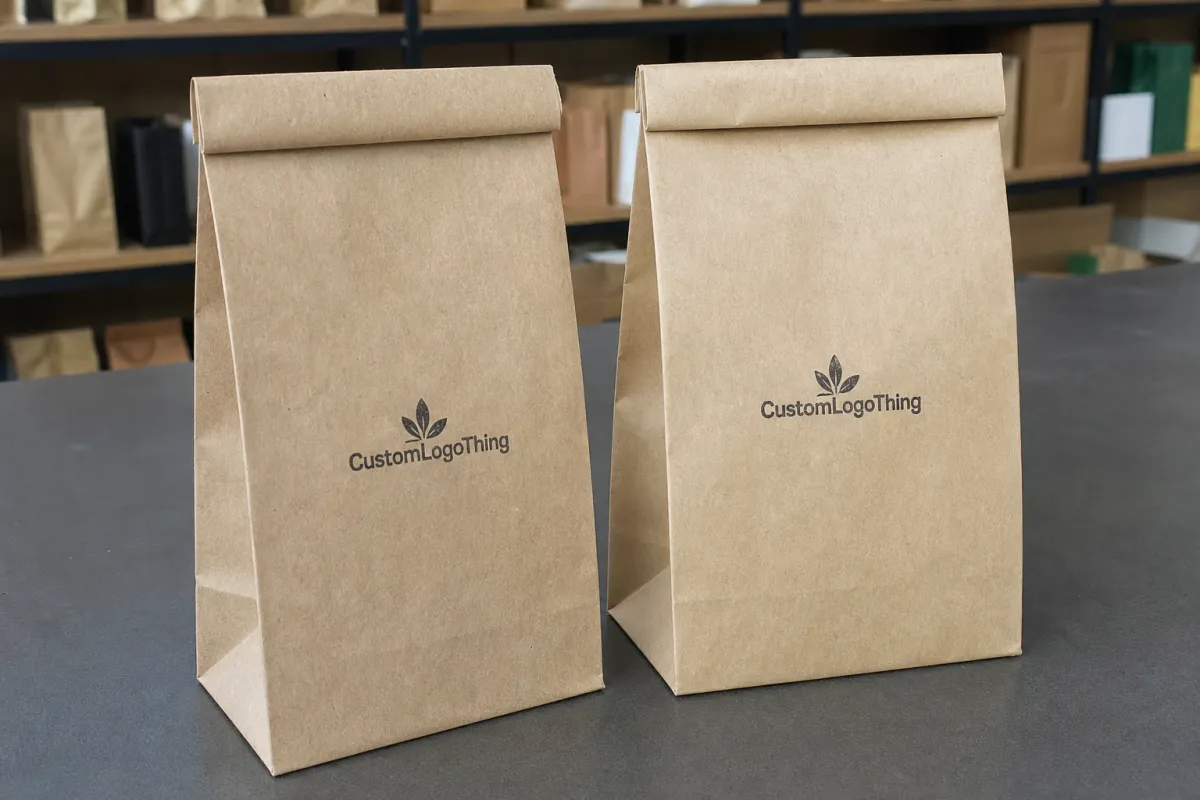
Buyer Fit Snapshot
| Best fit | To Zero Waste Packaging projects where brand print, material claims, artwork control, MOQ, and repeat-order consistency need to be specified before quoting. |
|---|---|
| Quote inputs | Share finished size, material target, print colors, finish, packing count, annual reorder estimate, ship-to region, and any compliance wording. |
| Proofing check | Approve dieline scale, logo placement, barcode or warning zones, color tolerance, closure strength, and carton packing before bulk production. |
| Main risk | Vague material claims, crowded artwork, missing packing details, or unclear freight terms can make a low unit price expensive after revisions. |
Fast answer: To Zero Waste Packaging: Quote Scope should be specified like a repeatable production item. The safest quote records material, print method, finish, artwork proof, packing count, and reorder notes in one written spec.
Production checks before approval
Compare the actual filled-product size with the drawing, then confirm tolerance on folds, seals, hang holes, label areas, and retail display edges. Reserve space for logos, QR codes, warning copy, and material claims before decorative graphics fill the panel.
Quote comparison points
Review material grade, print process, finish, sampling route, tooling charges, carton quantity, and freight assumptions side by side. A quote is only useful when the supplier can repeat the same color, closure quality, and packing count on the next order.
Why a Guide to Zero Waste Packaging Matters More Than Most Brands Think
I’ll be blunt: most consumer packaging does a job for minutes or days, then hangs around for decades. That mismatch is exactly why a guide to zero waste packaging has moved from “nice initiative” to core operating requirement for brands that expect to grow responsibly. A product may sit 30 days on shelf and spend 3 days in transit; its package might sit 30 years in landfill if it’s made from mixed materials nobody can realistically recover.
I watched this play out in a teardown workshop in Chicago. We opened 12 direct-to-consumer beauty shipments from different brands and timed each step. Average unboxing time: under 90 seconds. Average disposal time: about 11 minutes, because people had to split molded pulp, PET windows, foil labels, paper shreds, and rigid boxes with magnetic closures. Only three of 12 could be sorted cleanly into common curbside streams. Nine landed in trash. Strong first impression, broken back-end system.
Teams still frame packaging waste as ethics-only. The numbers tell a wider story: economics and risk sit right beside ethics. Municipal tipping fees across many U.S. markets often cluster around $55 to $85 per ton, and denser metros can run higher. Extended Producer Responsibility (EPR) rules keep expanding; fee schedules are getting tighter by format and recyclability class. Retail buyers increasingly request packaging scorecards, recycled-content disclosures, and documented reduction plans before they finalize shelf placement.
Customer sentiment moves fast too. A premium unboxing with five parts can boost social shares by 8% in one campaign, then drag repeat purchase if disposal feels annoying or guilt-inducing. I’ve seen NPS comments shift from “luxury feel” to “wasteful overkill” in a single quarter, especially in beauty, food kits, and subscription categories.
So what should a serious guide to zero waste packaging actually deliver? Operational choices. Explicit trade-offs. Implementation detail tied to line compatibility, freight math, compliance exposure, and performance testing. No perfection theater. No moral posturing. A working playbook for DTC brands, ecommerce operators, food and beauty teams, and the procurement and operations leaders expected to make this scale.
The thesis I repeat in boardrooms is simple: zero waste packaging is a systems-design problem, not a substrate swap. Change material while ignoring disposal behavior, local recovery infrastructure, and damage thresholds, and your “improved” pack can perform worse than the old one.
Branded presentation still matters. A guide to zero waste packaging doesn’t force every SKU into plain brown boxes. It pushes intentional structure, right-sized geometry, smarter inks and adhesives, and crystal-clear end-of-life instructions that protect product, margin, and trust at the same time.
Guide to Zero Waste Packaging Fundamentals: What It Is and How It Works
Every effective guide to zero waste packaging starts with clear definitions. Zero waste packaging means designing packs so materials are prevented, reduced, reused, refilled, composted, or recycled at high real-world rates, with minimal leakage to landfill or incineration. Real-world is the critical phrase. Lab performance alone won’t save you.
Terms get mixed constantly in client meetings, so define them early and pin the definitions to the project brief:
- Recyclable: The package can be collected, sorted, and reprocessed by existing systems (material, format, and sorting compatibility).
- Recycled content: The package contains post-consumer or post-industrial recycled feedstock (for example, 30% PCR PET).
- Compostable: Material breaks down under industrial or home compost conditions, depending on certification and time/temperature controls.
- Biodegradable: Broad term, frequently vague unless paired with a specific environment and timeline.
- Reusable/refillable: Package is engineered for multiple cycles through return or refill loops.
I coach teams to follow a strict hierarchy: prevent > reduce > reuse > recycle > recover. Elimination beats substitution more often than people expect. Pulling one nonessential insert from 500,000 units usually creates more impact than swapping polymers where collection rates remain uncertain.
During a supplier negotiation in Shenzhen, we cut a skincare kit from seven components to four by removing a non-functional PET tray and replacing two glued wraps with one locking die-cut structure in 350gsm SBS board. Unit cost fell from $0.64 to $0.51 at a 50,000 MOQ. Freight cube improved 12%. Damage stayed below 1.1% after ISTA 3A simulation. That’s a real guide to zero waste packaging in action—not slogans, just engineering plus operations discipline.
Systems thinking matters because many actors touch one package: mills, converters, printers, co-packers, brand teams, 3PLs, retailers, consumers, and municipal MRFs. One weak link can sink the whole outcome.
Packaging runs in layers, and each layer has a distinct job:
- Primary packaging: Contacts product (tube, bottle, pouch, jar).
- Secondary packaging: Groups and presents product (folding carton, sleeve, set box).
- Transit packaging: Protects shipment (mailer, corrugate shipper, void fill, tape).
Your guide to zero waste packaging has to evaluate all three layers together. I’ve seen teams celebrate recyclable primaries while shipping each order in oversized RSC cartons with 40% dead air. DIM weight rises. Void fill rises. Emissions rise. Gains disappear.
Infrastructure reality decides success. A multilayer pouch labeled “recyclable where facilities exist” sounds reasonable until you map access by ZIP code and discover only a minority of customers have practical drop-off options. Validate against local systems every time. References like the U.S. EPA recycling guidance and regional recovery directories keep decisions grounded in evidence.
One principle deserves permanent placement in any guide to zero waste packaging: design for behavior, not just material science. If proper disassembly needs a butter knife and five minutes, most people won’t do it. Correct disposal has to be the easiest move available.
Key Factors That Determine Zero Waste Packaging Success
Most wins—or failures—trace back to six variables. Miss one, and even a well-funded guide to zero waste packaging can stall.
1) Material compatibility and chemistry details
Mono-material formats usually recycle better than mixed structures. But performance still rules. Dry goods may run fine in a PE mono-pouch with EVOH below accepted thresholds; oxygen-sensitive foods may still need barrier structures that complicate recyclability. Adhesives, coatings, inks, and label stocks all influence outcomes. A wash-off adhesive can improve PET reclaim quality compared with permanent hotmelt that contaminates flakes.
2) Product protection math
This is where many projects break: damaged product equals wasted product, wasted packaging, and added reverse-logistics emissions. In electronics, I’ve measured initiatives where cushioning reduction cut material by 14% but pushed damage rates from 0.8% to 3.6%, erasing environmental gains and margin gains in one shot.
A credible guide to zero waste packaging models damage thresholds before launch and sets stop/go criteria in writing.
3) Operations and line fit
Can current lines run a new format at 90 units per minute, or does throughput drop to 62 and trigger overtime? Will cartons hold compression in 75% RH warehouse conditions? Does case-pack optimization lift palletization from 84 to 96 units per layer? Those details determine viability more than mood boards ever will.
4) Customer disposal behavior
Confusion kills diversion rates. Effective on-pack instructions use plain language, standard icons, and contrast that stays readable at small sizes. QR links to ZIP-based guidance can improve correct sorting in post-purchase surveys—assuming the instructions around the QR are clear and not buried under marketing copy.
5) Policy and retailer pressure
EPR fee modulation, plastic taxes, and retailer standards are now margin variables. Several major chains request reduction evidence during annual vendor reviews. A useful guide to zero waste packaging maps compliance by market rather than assuming one global format works everywhere.
6) Metrics that reflect the full system
Track these monthly at minimum: diversion rate, recycled-content percentage, packaging-to-product ratio, CO2e per shipment, damage/return rate, and total delivered cost per protected unit. One metric can mislead. Weighted scorecards with threshold gates make go/no-go calls cleaner and less political.
For transport performance, bring in ISTA protocols early, not after design lock. Late-stage failures can burn 6 to 10 weeks plus fresh tooling expense.
Reliable execution in a guide to zero waste packaging balances material science, logistics, behavior, and compliance. Ignore one, and design intent won’t survive reality.
Step-by-Step Guide to Zero Waste Packaging Implementation (Process and Timeline)
Execution is where good intentions usually fail. The process below has worked across startup and enterprise contexts, and it forms a practical guide to zero waste packaging framework.
Step 1: Baseline audit (Weeks 1–2)
Map every SKU and packaging component: grams, material type, dimensions, supplier, MOQ, unit cost, and likely end-of-life outcome. A 180-SKU personal-care client uncovered 27 duplicated components and 14 low-volume carton sizes during this step alone. Pure complexity tax, hiding in plain sight.
Step 2: Prioritize opportunities (Weeks 2–3)
Score opportunities by impact and feasibility. I use a 100-point model: 35 points waste-reduction potential, 25 operational feasibility, 20 customer experience, and 20 financial return. Pick the top 10, then pilot the top 3. That keeps a guide to zero waste packaging from becoming endless ideation theater.
Step 3: Concept development (Weeks 3–6)
Build options across four pathways: elimination, lightweighting, mono-material shift, and refill/reuse models. Include technical specs: board grade (for example, 350gsm C1S), flute profile (E-flute vs B-flute), closure geometry, ink system, and adhesive class. If you need Custom Packaging Products, ask suppliers for line-drawing dielines and compression data, not just glossy renders.
Step 4: Prototype and test (Weeks 6–10)
Run structured validation:
- Transit: ISTA 3A or relevant sequence
- Compression: stack tests by pallet height and dwell time
- Seal integrity: burst/leak checks for pouches or liquids
- Shelf-life: barrier validation for perishable SKUs
- Usability: timed unboxing and disposal trials with 20–50 users
I once watched a refill pouch fail because spout torque varied by just 0.2 N·m between lots, causing leaks during 3PL handling. Tiny tolerance miss, expensive returns wave. We fixed it with tighter torque controls and incoming QC checks, but that lesson stuck.
Step 5: Pilot launch (Weeks 10–14)
Launch in one region, one channel, or 1–2 SKUs. Track damage, return reasons, disposal behavior, and cost deltas weekly. Keep a control group on legacy packaging for clean comparison. Strong decisions in a guide to zero waste packaging come from side-by-side evidence, not internal enthusiasm.
Step 6: Scale and optimize (Ongoing)
Renegotiate MOQs, lock longer-term board or resin agreements where sensible, update artwork with disposal guidance, and review KPIs monthly. Then iterate every 8–12 weeks. It’s kinda boring work sometimes, but boring is good when you’re protecting margin.
Sample timeline by company size
| Company Type | Typical Timeline | Common Bottlenecks | Practical Fix |
|---|---|---|---|
| Startup (1–20 SKUs) | 6–10 weeks for first pilot | MOQ constraints, limited test budget | Use stock formats first; test top 1 SKU |
| Mid-market (20–250 SKUs) | 10–18 weeks | Cross-team approvals, supplier lead time | Stage-gate process and dual sourcing |
| Enterprise (250+ SKUs) | 4–9 months by category | Global regulatory alignment, ERP complexity | Regional pilots before global harmonization |
A strong guide to zero waste packaging should be managed like any serious operational transformation: clear ownership, milestones, validation gates, and written decision logs.
Zero Waste Packaging Costs: Pricing, ROI, and Budget Trade-Offs
Money settles most arguments. A workable guide to zero waste packaging breaks costs into six buckets: tooling, MOQ exposure, unit material cost, testing/certification, freight impact, and reverse logistics.
Typical ranges from active programs I’ve worked on:
- New die/tooling: $250 to $4,500 depending on complexity
- Transit testing program: $1,200 to $8,000
- Unit cost delta for substrate swap: -$0.03 to +$0.12
- Lead-time impact during transition: +2 to +6 weeks initially
The claim that “sustainable always costs more” is incomplete. Lightweighting plus dimensional optimization often offsets material premiums. In one ecommerce apparel project, shifting from a 12x10x4 RSC to a right-sized mailer and reducing void fill cut DIM charges by 9%, saving $0.22 per shipment while material unit cost rose only $0.05. Net gain.
Use this comparison model as a planning base:
| Scenario | Example Change | Upfront Cost | Unit Cost Impact | Typical Timeline | Likely ROI Window |
|---|---|---|---|---|---|
| Low-change swap | Remove insert, switch to mono-material label | $0–$1,500 | -$0.01 to +$0.02 | 3–8 weeks | 1–3 months |
| Mid-level redesign | New carton structure, right-sized shipper | $2,000–$15,000 | -$0.04 to +$0.06 | 8–16 weeks | 3–9 months |
| System-level reuse/refill | Return loop with durable primary pack | $25,000+ | Cycle-dependent | 4–9 months | 9–24 months |
Doing nothing has costs too, often bigger than redesign: compliance penalties, retailer scorecard hits, avoidable damage from poor-fit formats, and long-term trust erosion. One beverage company I advised received a retail warning after missing recycled-content disclosures across two major accounts; that pressure alone justified a formal guide to zero waste packaging program.
Model ROI correctly: total delivered cost per protected unit, not piece-part price. Include inbound freight, fulfillment labor, damage/replacement rates, returns handling, and disposal impacts where relevant.
Budget tactics that consistently help:
- Phase by top 20 revenue SKUs first
- Dual-source critical formats to limit supply risk
- Co-develop with suppliers using shared tooling commitments
- Pilot before scale to prevent portfolio-wide rework
If both retail packaging and ecommerce formats need updates, stage them separately. Teams are gonna burn budget fast when both change at once without independent test gates.
A practical guide to zero waste packaging treats cost as a design variable, not a veto point. With solid modeling, footprint and margin can improve together.
Common Mistakes in Zero Waste Packaging (and How to Avoid Them)
After enough failed audits, patterns become obvious. These are the misses I see most—and the fixes that hold up under pressure.
Mistake 1: Material swap without system fit
Example: compostable film launched in markets with weak composting access. Result: landfill outcome, higher unit cost, confused customers. Fix: map disposal access by customer geography before making benefit claims. Any credible guide to zero waste packaging aligns design with actual recovery pathways.
Mistake 2: Treating “premium” as more components
Magnetic rigid boxes, foam inserts, and multilayer finishes can photograph beautifully and fail badly at end-of-life. Structural creativity works better: locking tabs, emboss/deboss effects, selective varnish, and high-impact graphics on recyclable board. Strong package branding does not require disposal chaos.
Mistake 3: Vague disposal instructions
“Please recycle” tells customers almost nothing. State what goes where, in what order, and whether any piece should be removed first. Test comprehension in under 10 seconds. Add QR guidance by location. A better guide to zero waste packaging treats communication as infrastructure, not decoration.
Mistake 4: Optimizing one metric while breaking three others
Teams celebrate plastic reduction while spoilage rises, or increase recycled content while transport emissions climb because format weight increased. Use a scorecard with pass/fail thresholds across protection, waste, cost, and emissions.
Mistake 5: Cross-functional drift
Design pushes aesthetics. Procurement pushes piece price. Legal pushes claims caution. Ops pushes line speed. If alignment is absent by week two, delays are almost guaranteed. Shared gate reviews every two weeks keep projects moving.
Mistake 6: Claims without evidence
Words like “eco,” “green,” and “planet-safe” draw scrutiny if unsupported. Back every public claim with composition data, recycled-content documentation, test results, and region-specific disposal guidance. FSC chain-of-custody references can add credibility where relevant; see FSC resources for context.
“We thought changing to a compostable pouch solved everything. Returns went up, complaints went up, and we had no local compost path for most customers.” — Ops Director, mid-market food brand
One honest disclaimer: not every SKU can become fully circular immediately. Barrier-heavy applications, medical requirements, and shelf-life constraints are real limits. The mistake is pretending those limits don’t exist. A durable guide to zero waste packaging is transparent about trade-offs and updates decisions as technology and infrastructure improve.
Expert Tips and Next Steps: Build Your Guide to Zero Waste Packaging Roadmap
Teams that want momentum next quarter should keep the process measurable and tight. This cadence works for a practical guide to zero waste packaging.
30-60-90 day plan
- First 30 days: Complete SKU packaging audit, gather supplier specs, map disposal pathways in top 5 sales regions.
- By 60 days: Select top 3 redesign opportunities and prototype at least one with a defined test protocol.
- By 90 days: Launch one controlled pilot and publish the first KPI dashboard (damage, cost, diversion proxy, customer feedback).
Decision checklist for each packaging change
- Does the material match available collection and sorting systems?
- Are inks, coatings, and adhesives compatible with the intended recovery stream?
- Can current filling or packing lines maintain target throughput?
- Have ISTA or equivalent transport tests passed?
- Are disposal instructions specific, readable, and user-tested?
- Are claims supported by documented evidence?
Need execution support for custom printed boxes or shipping formats? Start with one category through Custom Packaging Products, then expand after validation. If you’re revising branded packaging, request print proofs with real icon placement rather than visual mockups only.
Governance that prevents drift
Assign one packaging owner with decision authority. Set approval gates at concept, prototype, pilot, and scale. Hold monthly reviews with procurement, design, operations, and compliance in one room. Keep meetings to 45 minutes and require numeric updates.
Communication best practices
Publish progress with data, not slogans: “reduced corrugate by 18g per shipper,” “improved cube utilization by 11%,” “kept damage under 1.5%.” State trade-offs directly. If one SKU still needs a mixed-material barrier to protect shelf life, say so. Credibility beats polished claims.
Three actions you can execute this week:
- Request material data sheets and compliance declarations from your top 5 suppliers.
- Collect dimensional and weight data for your top 20 SKUs.
- Schedule transit tests for one redesigned format before full PO commitment.
Final takeaway: treat your guide to zero waste packaging as a living operating system, not a one-off document. Start with SKU-level facts, pilot one high-impact format, and make scale decisions only after protection, cost, and disposal data agree. That sequence is how brands cut waste without sacrificing product safety, growth, or trust.
What Should a Guide to Zero Waste Packaging Include First?
Start with a baseline that is painfully specific: SKU-level material weights, current packaging costs, damage rates, and real disposal outcomes by region. Then rank opportunities by impact and feasibility. A guide to zero waste packaging works best when teams sequence easy wins (elimination and right-sizing), validate performance through transit testing, and scale only after pilot data confirms protection, cost, and customer usability. Skip that sequence, and even high-intent sustainable packaging projects can fail in operations.
FAQs
What is the easiest way to start a guide to zero waste packaging for a small business?
Start with a SKU-level packaging inventory and isolate the top 20% of formats driving most waste volume or disposal friction. Target fast wins first: remove nonessential inserts, right-size shipping boxes, and shift to mono-material formats where performance allows. Run a 1–2 SKU pilot, then expand based on damage rates, customer feedback, and unit economics. A focused guide to zero waste packaging usually outperforms a broad plan with no budget behind it.
How much does zero waste packaging usually cost compared with conventional packaging?
Upfront spend can increase due to tooling, testing, and temporary MOQ inefficiencies. Total cost can still decline through lightweighting, dimensional optimization, and fewer damage-related returns. Compare total delivered cost per protected unit, not material piece price in isolation. A phased guide to zero waste packaging rollout controls risk and helps avoid expensive portfolio-wide mistakes.
How long does it take to implement a zero waste packaging strategy?
Simple format changes can move in weeks; full redesign programs often require several months. Most timelines include audit, concept development, prototype/testing, pilot, and scale, with KPI gates at each stage. Supplier lead times, regulatory checks, and performance testing requirements drive duration. A staged guide to zero waste packaging generally performs better than a single big-bang launch.
Can zero waste packaging still protect fragile or perishable products?
Yes, if validation happens before full rollout. Transit testing, seal integrity checks, and shelf-life studies are essential. Protection metrics should be tracked beside waste metrics to prevent backfire from damage or spoilage. A strong guide to zero waste packaging relies on fit-for-purpose structure and barrier optimization rather than default over-packaging.
How do I know if my zero waste packaging claims are credible?
Substantiate claims with measurable evidence: composition data, recycled-content percentages, diversion outcomes, and test results. Avoid vague language and specify where and how packaging can be recycled, reused, or composted. Use recognized labeling frameworks or third-party verification where possible. A trustworthy guide to zero waste packaging is transparent about constraints as well as achievements.