Heavy Duty Garment Bags Sample Order Checklist for Confident Buying
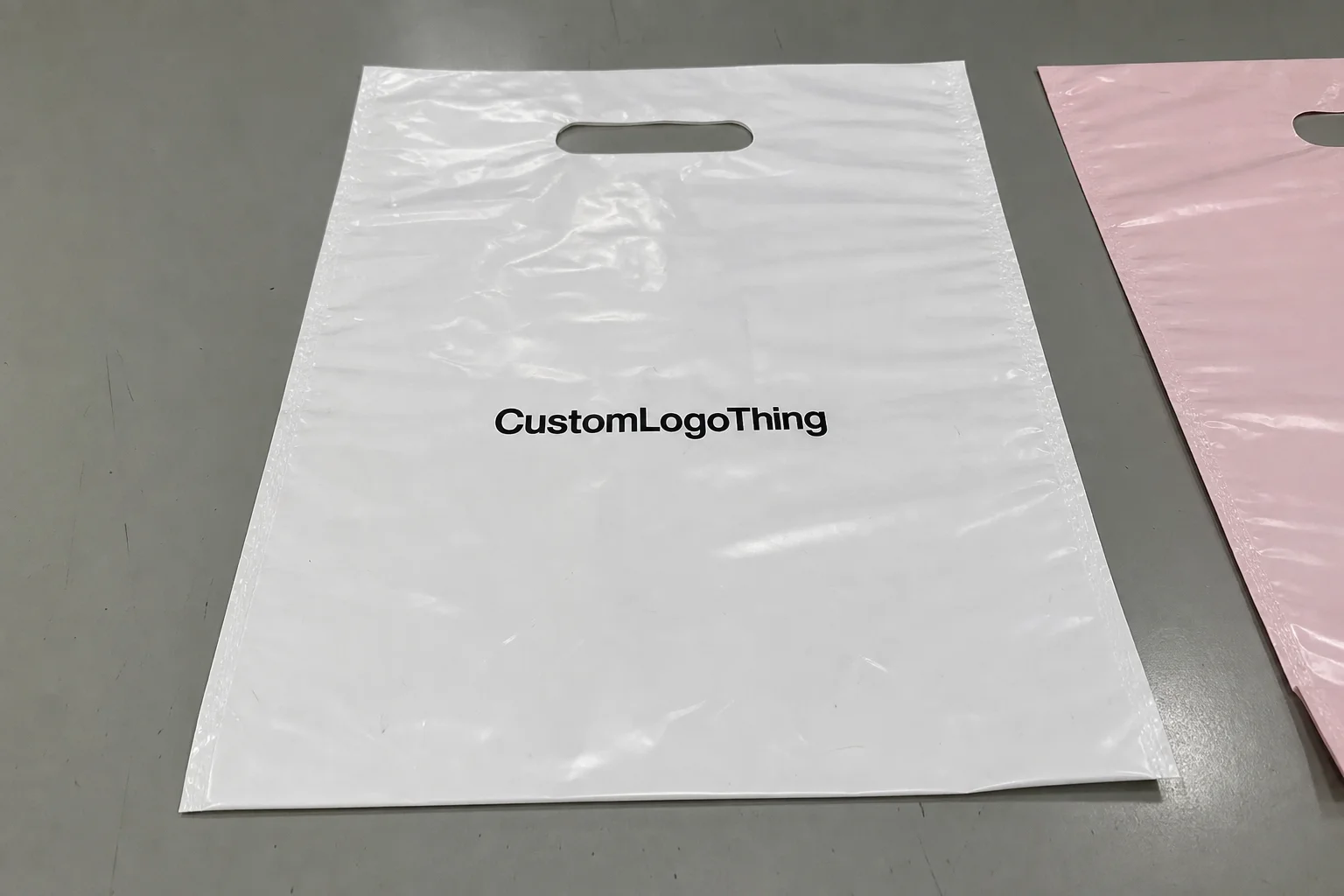
A garment bag rarely fails across the smooth center of the film. It gives up at the hanger hole, zipper line, side seam, or bottom gusset after a few rough pulls on a rack. That is why a heavy duty garment Bags Sample Order Checklist should test real handling, not just whether the bag looks acceptable on a desk.
Buyers asking for heavy-duty garment bags usually already know that a thin dry-cleaner cover will not survive the job. The product may be a wool coat, school uniform set, formalwear piece, dance costume, hotel garment, bridal dress, retail apparel sample, or uniform moving through warehouse racks before it reaches the final user. The sample stage is where those assumptions become measurable.
From a packaging buyer's view, the first sample has to answer practical questions. Does the film feel strong without becoming stiff and loud? Does the zipper glide after repeated openings? Does the hanger opening resist tearing under weight? Does the printed logo still sit in the right place once the garment is inside? Does the bottom gusset hold shape, or does it bunch like a loose sleeve?
Those details matter because heavy-duty garment bags are not one-size packaging. A long coat bag, a short suit bag, a reusable uniform issue bag, and a retail-ready garment cover can require different thicknesses, closures, gussets, print zones, and packing formats even if they look similar in a product photo.
Practical rule: approve the sample only after the intended garment has been loaded, hung, handled, folded if required, and checked against the exact rack, carton, or storage method used in your operation.
A good checklist protects the buying team from small misses that become expensive rework. A bag can be technically correct and still wrong for the job if the opening is awkward, the zipper pull is too small for gloved hands, or the material blocks the label window warehouse staff depends on. The best samples feel almost boring: they fit, close, hang straight, and do not force packers to improvise.
Branded packaging adds another layer. The sample should show how the bag behaves with actual artwork, not a placeholder logo. Ink density, print registration, clear panels, and seal lines all change once a real design is applied. A clean PDF proof can still reveal weak spots on film, especially where dark ink crosses a fold or where a transparent section must stay clear for product visibility.
What Should the Checklist Include?
A useful heavy duty garment Bags Sample Order Checklist should cover material type, film thickness, finished size, closure style, hanger opening strength, print placement, and packing method. Add the intended garment weight, hanger type, storage environment, and expected reuse cycle. That turns a vague request for custom garment bags into a sample brief a supplier can price and build.
Separate visual approval from performance approval. Visual approval asks whether the logo, opacity, finish, and proportions look right. Performance approval asks whether the bag survives loading, hanging, rack movement, folding, carton packing, and repeated closure use. Both matter. A beautiful bag that tears at the hanger hole is still a failed sample.
For internal review, mark each line item as pass, revise, or reject. Pass means the bulk production specification can use that detail without change. Revise means the sample is close but needs a measurable correction, such as adding 2 inches of length or moving the print 25 mm upward. Reject means the construction choice is wrong for the garment.
Specific comments save time. "Too short" is weak feedback. "Add 50 mm finished length below the hem after loading the padded hanger" gives production something to act on. The same standard should apply to print position, zipper pull size, gusset depth, seal width, and carton packing.
Material, Thickness, and Construction Details to Check First
Material selection should come before artwork because the film affects strength, feel, opacity, print behavior, machine performance, and cost. PE is the broad family most buyers mean. LDPE tends to feel softer and more flexible, with good puncture resistance for reusable garment storage. HDPE is stiffer and crisper, often lighter for the same perceived structure, though it can feel noisier and less premium.
Blended films are common because they let the manufacturer balance flexibility, tear resistance, clarity, and sealing performance. A co-extruded film may outperform a single-layer film at the same overall gauge because one layer can support gloss or print response while another improves toughness. If a vendor cannot explain the film structure in plain language, the sample stage is the right moment to find out.
Discuss thickness in mils or microns, not vague words such as thick, premium, or extra strong. Many custom garment bags sit around 2 mil to 4 mil. In metric terms, 50 to 100 microns is a reasonable starting range for many heavy-duty PE applications. Heavier reusable garment covers can go higher, but thickness alone does not guarantee better performance.
A bag that is too rigid can be harder to pack, more expensive to ship, and more likely to crease sharply around the garment. A better design may use a moderate film gauge with stronger seams, a reinforced hanger opening, or a better closure. That is the useful comparison: not thick versus thin, but complete construction versus actual handling conditions.
Construction deserves the same scrutiny as material. Check side seams, bottom seals, bottom gussets, die-cut hanger holes, reinforced hanger openings, zipper closures, adhesive flaps, snap closures, and vent holes if garments need airflow. A reinforced hanger opening may add cost, but it can be the difference between a bag that survives warehouse racking and one that tears during the first receiving shift.
Use the checklist to test weak points. Tug both side seams by hand. Load the intended garment on the actual hanger. Hang it for at least 24 hours if the garment is heavy. Open and close the zipper repeatedly. Check whether the film clouds, wrinkles, or stretches near the hanger hole. If the bag has a gusset, push the garment fully into the corners and see whether the bottom seal stays flat.
Before the sample is made, send garment dimensions, hanger type, fabric sensitivity, storage method, and handling environment. A velvet costume stored flat has different needs from a padded winter coat moving through a distribution center. Standards bodies such as ISTA can be useful references for buyers thinking about transport testing and packaged-product handling.
What to confirm in the sample build
Ask whether the hanger hole is die-cut, punched only, or reinforced with a welded patch or ring. Ask if the zipper tape is sewn, heat-sealed, or attached as a separate strip. Ask where the side seam lands relative to the garment shoulder, because a poor seam position can create pressure points on delicate fabric. These choices should be recorded before the sample leaves production.
Venting is another decision that looks minor until storage conditions change. Some buyers want vent holes to reduce trapped moisture. Others prefer a tighter enclosure for dust protection. A seasonal retail storage bag may need airflow, while a premium presentation cover may need clearer visibility and a smoother surface finish. The sample should make that trade-off visible, not theoretical.
Size, Fit, and Print Specifications That Prevent Rework
Fit problems create expensive rework because they often appear after artwork looks approved. Measure finished width, finished length, gusset depth, hanger hole placement, zipper length, header area, seam allowance, and usable internal space after the garment is inserted. That last point is easy to miss. A 24-inch wide bag is not always 24 inches of comfortable garment room once seams, folds, and bulky fabric enter the picture.
Size the bag around the packed garment, not only the flat clothing measurement. Padded hangers add shoulder width. Bulky sleeves steal room. A coat with a collar stand or shoulder pads can need a longer top section than a simple shirt cover. If the bag is too short, the hem may drag inside the bottom fold. If it is too narrow, the zipper line can strain at the edges every time the bag closes.
Print placement needs the same discipline. Confirm the logo position against the garment profile, zipper line, fold area, and any clear window. A centered logo on an empty bag may shift awkwardly once a coat fills the front panel. For clear or frosted bags, check how the print interacts with visibility. For opaque bags, decide whether the design needs to carry brand, size, care instructions, warehouse codes, or distribution information.
Ask for the artwork proof at finished panel size, not only on a scaled mockup. This catches text too close to the seam, an icon landing on a fold, or barcode placement that will be partly hidden. Buyers often lose time here because a good-looking digital proof hides problems that appear only after film stretching, cutting, and sealing.
The sample review should include one loaded fit test with the actual hanger style and garment weight. If the bag is meant for retail, run a rack test with adjacent bags touching each other. Crowded rails change how the bag hangs and how the print reads from a distance. If the bag is meant for storage, test whether it stacks flat or catches on carton corners.
Artwork and branding checks
Print coverage affects both appearance and cost. A simple one-color logo near the top usually costs less than a full-panel printed design, but the result depends on ink density, film type, and print method. On some films, heavy coverage can make the panel feel tacky or show minor ripples after sealing. On others, the same design looks crisp and adds real presentation value.
Ask whether the sample uses the intended print process, such as flexographic or gravure printing. A substitute print can help confirm layout, but it may not prove opacity, edge sharpness, ink rub resistance, or final color. If brand color is critical, use a physical color standard and allow realistic tolerance. Film is not coated paper; it stretches, reflects light differently, and can change perceived color under warehouse lighting.
Check legibility from a practical distance. A garment bag often hangs in a stockroom or distribution area, not on a display pedestal. Six to ten feet is a useful viewing range for brand recognition and size markings. If a barcode or QR code is printed, test scanning after the bag is loaded and hanging, not only while it lies flat.
Cost, Pricing, MOQ, and Unit Cost Factors
Price makes more sense after the sample specification is locked. Otherwise quotes move with every change in thickness, gusset depth, zipper style, print count, reinforcement, and carton pack. For many custom heavy-duty garment bags, sample fees may range from a modest prototype charge to a higher tooling or plate cost if the design needs custom print plates, special dies, or nonstandard sealing setups.
Bulk pricing changes sharply with quantity. A 5,000-piece run may sit in one bracket, while 20,000 pieces can lower the unit cost enough to justify a larger order if storage and cash flow allow it. As a practical reference, heavy-duty PE garment bags with simple one-color print may fall around $0.18-$0.28 per unit at 5,000 pieces, depending on size, thickness, and coverage. More complex printing, heavier film, zippers, reinforced openings, or custom gussets can push that higher. Reusable premium styles with heavier film or added closures move into a different range entirely.
Those figures are starting points, not fixed market rules. Resin prices, exchange rates, freight, labor, print setup, and seasonal capacity can all affect the quote. A buyer comparing suppliers should make sure each quote uses the same finished size, gauge, closure, print coverage, carton pack, and delivery terms. Otherwise the cheapest number may simply be the thinnest or least complete version.
MOQ is tied to production efficiency. Film extrusion, print setup, cutting, and sealing all carry setup time. Lower quantities usually cost more per unit. A buyer who needs a 500- or 1,000-piece pilot should expect a different rate than a replenishment order. The sharper question is not "what is the cheapest quote?" but "which specification gives the best value for the expected wear life and handling cycle?"
Transport and packing affect landed cost. A heavier bag may require a larger carton footprint and increase freight. A bulk-packed zipper bag may ship more efficiently than an individually folded, retail-ready garment cover. If the supply chain requires palletized cartons for warehouse receiving, ask for carton count, gross weight, carton dimensions, and pallet pattern before approving the sample.
It also helps to compare standard, upgraded, and premium options. One version might use 60-micron film with a die-cut hanger hole. Another might use 80-micron film with reinforcement and a zipper. A third may add a gusset, print changes, or retail folding. That comparison shows where money improves performance and where it only adds cost.
If printed carton labels, care cards, or insert sheets are part of the project, ask whether FSC-certified paper can be used for those paper components. FSC does not apply to the plastic film itself, but it may support a broader packaging materials policy for brands that track paper sourcing.
Sample Process, Lead Time, and Production Steps
A good sample process starts with a clean brief. Send bag size, film thickness, closure type, print artwork, target quantity, garment weight, and intended use in one message if possible. If the supplier has to chase basic information across five separate rounds, the timeline stretches and mistakes become more likely.
Most garment bag samples move through quotation, artwork proof, sample production, review, and revision. Simple samples can often be made in 5-10 business days after the specification is approved. If the design needs new print plates, a custom zipper, special reinforcement, or a fresh cutting die, 10-15 business days is more realistic. Bulk production after sample approval may run 12-15 business days for straightforward jobs, although busy seasons and shipping schedules can change that.
Ask whether the first sample is hand-made, pilot-run, or production-line representative. Those are not equal. A hand-made sample can prove size and basic appearance, but a line-run sample better reflects seal strength, zipper placement, and repeatability. For a serious order, the best sample is the one that comes closest to the way the bulk run will actually be produced.
Keep revisions limited and measurable. If the first sample is too short, say by how much. If the zipper pull is awkward, explain whether the problem is grip size, placement, or closure resistance. If the print is too low on the panel, mark the corrected position directly on the sample photo or proof. Good feedback reduces the number of sampling rounds.
Once the sample is approved, ask for the final production sheet, artwork file, pack pattern, and carton packing plan. That document set becomes the bridge from sample to bulk order. It helps prevent the common problem where the approved sample is strong, but production quietly shifts to a different zipper, narrower seal, altered fold format, or substitute film because the instruction set was incomplete.
For higher-value programs, request one retained sample from the approved run. That gives the buyer and supplier a physical reference if there is a later dispute about fold direction, logo position, closure type, or material feel. Add retained sample requirements before approval, not after a complaint appears.
Quality Checks Before Approving Bulk Garment Bag Production
After sample approval, the next job is making sure the bulk run matches it. Do not judge only the first carton off the line. Inspect random pieces from the start, middle, and end of production. Look for film gauge consistency, seal quality, zipper alignment, print registration, odor, clean edge trim, and correct fold direction. If the bag is gusseted, verify that gusset folds are even and do not twist during stacking.
Physical testing should stay practical. A pull test on the hanger hole, a zipper cycle test, and a loaded hang test usually reveal more than visual inspection alone. Some buyers also request ASTM-based film testing, such as tensile strength or impact resistance, depending on the film structure and the abuse expected in transit. Lab tests do not replace real use, but they add measurable support to the approval decision.
Carton packing needs inspection too. Garment bags can arrive with permanent crease memory or curl, especially on stiffer films. If the bag is meant for retail display, ask how it will be packed to keep the front panel presentable. If it is meant for warehouse storage, ask whether the carton size and fold pattern maximize cube efficiency without damaging shape.
The final approval should compare the bulk pre-production sample against the signed-off spec sheet. Quiet changes happen on busy jobs: a zipper pull changes without notice, a print moves 10 mm, a hanger opening shrinks because a die was adjusted for speed, or film gauge drifts below tolerance. The checklist is there to catch those changes before they become inventory.
Common failure points to watch
The most common failures are easy to miss until the bag is under load. The hanger hole tears first. The zipper track separates near the top stop. The bottom seal wrinkles and opens after repeated handling. A seam looks straight when flat but pulls crooked once garment weight is added. Each defect points to a different cause, so the sample should be treated as a working prototype rather than a decorative approval piece.
If the garment is valuable or delicate, test ordinary handling moves. Lift the bag off a rack, set it down, move it sideways, and rehang it. Open and close the bag with one hand. Slide it past other garments. Check whether the film scuffs, the print rubs, or the hanger opening stretches. That is where packaging performance becomes visible.
How to Send a Sample Request That Gets Quoted Fast
Faster quoting usually comes from a compact brief, not a long thread. Include finished bag size, estimated garment dimensions, film thickness target, closure style, print colors, target quantity, and intended use. Add photos of the garment, hanger, and current packing method if available. A supplier can quote more accurately when the request shows the actual product, not only the idea.
State the main priority clearly. If price is the hard limit, say so. If presentation matters more than the lowest unit cost, say that instead. If the bag must survive repeated reuse, make that clear because it changes the material recommendation. Buyers get better answers when the supplier understands the trade-off.
Use the same document package across projects: spec sheet, artwork file, reference sample photo, target timeline, shipping destination, and any compliance or packing requirements. That keeps procurement, marketing, and operations aligned before film is cut.
A strong sample process does not need drama. If the bag holds up under the intended load, looks right on the hanger, prints cleanly, and fits the packing method actually used, the buyer is close to a reliable bulk order. That is the value of a heavy duty garment bags sample order checklist: it turns a soft packaging preference into a set of decisions that can be priced, tested, approved, and repeated.
FAQ
How many samples should I request?
For most buyers, two or three pieces are enough for inspection, fit testing, and a backup reference. If the bag has multiple print versions, closure options, or film gauges, request one sample of each approved configuration.
What is the biggest mistake buyers make?
They approve a flat sample without loading the garment. A bag can look correct on paper and still fail when the real hanger, real fabric, and real handling method are introduced.
Can I compare zipper and non-zipper styles in the same project?
Yes. Zipper bags cost more but usually give better retention and a more finished feel. Open-top or flap styles can work better for some storage systems, especially where packing speed matters.
Should I ask for a physical sample before bulk order approval?
Yes. A photo proof is not enough for a heavy-use bag. Physical handling reveals seal strength, fit, material feel, and closure behavior in a way images cannot.
Do heavy-duty bags always need the thickest film available?
No. The best thickness depends on garment weight, reuse frequency, storage time, freight cost, and construction. A well-designed 3 mil bag may outperform a poorly designed 4 mil bag if seams, closure, and hanger reinforcement are better balanced.
Can I reuse the same checklist for future projects?
Yes, but revise it for each garment type. A checklist built for coats may miss details that matter for uniforms, gowns, costumes, bridal pieces, or retail apparel sets.

