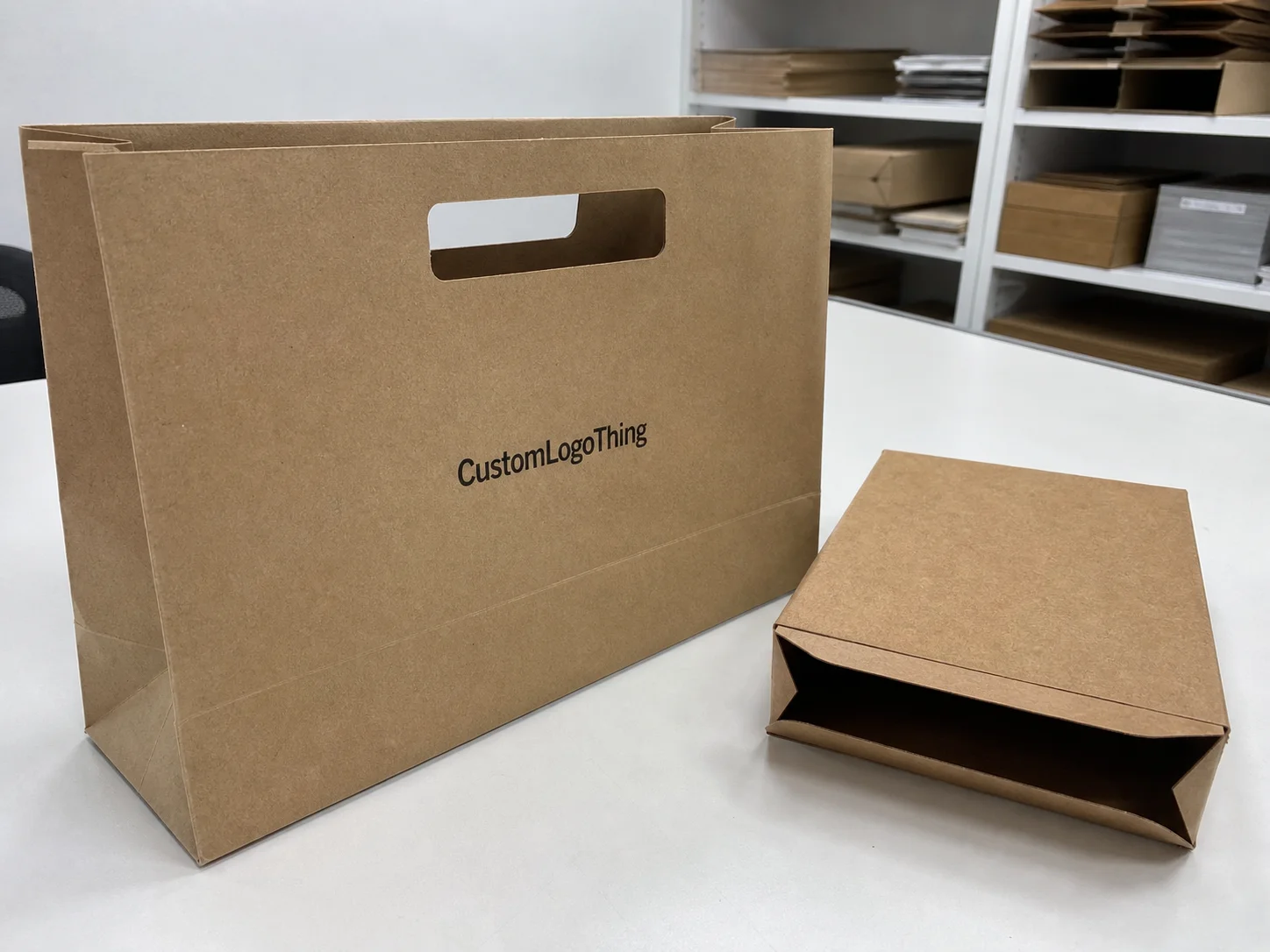
Buyer Fit Snapshot
| Best fit | Sustainable Packaging projects where brand print, material claims, artwork control, MOQ, and repeat-order consistency need to be specified before quoting. |
|---|---|
| Quote inputs | Share finished size, material target, print colors, finish, packing count, annual reorder estimate, ship-to region, and any compliance wording. |
| Proofing check | Approve dieline scale, logo placement, barcode or warning zones, color tolerance, closure strength, and carton packing before bulk production. |
| Main risk | Vague material claims, crowded artwork, missing packing details, or unclear freight terms can make a low unit price expensive after revisions. |
Fast answer: Sustainable Packaging: Artwork Proof, Packing Count, and Landed Cost should be specified like a repeatable production item. The safest quote records material, print method, finish, artwork proof, packing count, and reorder notes in one written spec.
Production checks before approval
Compare the actual filled-product size with the drawing, then confirm tolerance on folds, seals, hang holes, label areas, and retail display edges. Reserve space for logos, QR codes, warning copy, and material claims before decorative graphics fill the panel.
Quote comparison points
Review material grade, print process, finish, sampling route, tooling charges, carton quantity, and freight assumptions side by side. A quote is only useful when the supplier can repeat the same color, closure quality, and packing count on the next order.
I’ve spent enough time around packing lines to know this: how to choose sustainable packaging is rarely a neat one-material answer. I remember standing beside a case packer at 7 a.m. in Sheffield, coffee in one hand and a sample carton in the other, while a production manager told me the “eco option” had just created a new jam at line speed. Very inspiring. The most sustainable mailer I’ve seen was also the plainest—a smaller box, fewer inserts, and 18% less corrugate than the earlier version, with the spec cut from 400gsm board to 350gsm C1S artboard for the inner fitment. That change beat a fancier material swap by a mile on cost and carbon. If you’re trying to figure out how to choose sustainable packaging for your brand, the real question is not “What sounds green?” It’s “What cuts impact without creating new problems?”
That distinction matters more than most people think. I’ve sat in supplier meetings in Guangzhou where teams fell in love with compostable film, then discovered their customers lived 200 miles from the nearest industrial composting facility. I’ve also watched a product line save freight dollars by trimming box height by 12 mm, which improved pallet density by 9% on a 48-box pallet. That’s the kind of practical thinking that turns how to choose sustainable packaging from a marketing exercise into a working business decision. Honestly, that’s the part I care about most: whether the solution survives contact with reality, including the 12–15 business days it can take from proof approval to first production run in a plant outside Ho Chi Minh City.
How to Choose Sustainable Packaging: What It Really Means
Here’s the blunt version: the most sustainable package is not always the most recyclable one. Sometimes the best move is source reduction—using less material in the first place. I’ve seen a 14-gram paperboard carton outperform a heavier recycled structure because it cut total material use, lowered board consumption by 2,400 pounds a year, and reduced inbound freight weight by 8% across a Dallas-to-Chicago lane. That’s a better answer to how to choose sustainable packaging than chasing a label alone.
In plain language, sustainable packaging means packaging designed to lower environmental impact across the full chain: sourcing, manufacturing, transport, use, and end of life. That includes the paper, the ink, the adhesive, the tape, the insert, and even the shipping configuration. If you’re serious about how to choose sustainable packaging, you have to think past the box face. (The face is usually where the marketing department starts, which is understandable—but not sufficient.) A folding carton printed with soy ink in a facility in Dongguan is still part of the equation if the glue lines, cut score, and insert geometry add waste.
The term gets messy because people use “sustainable,” “recyclable,” “compostable,” “recycled,” and “renewable” as if they mean the same thing. They don’t. A package can be recyclable but never actually recycled if local collection systems don’t accept it. It can be compostable in a lab and useless in a suburb with no industrial compost access. Understanding that difference is central to how to choose sustainable packaging without getting trapped by green-sounding claims. A PLA-lined cup, for example, may pass an ASTM compostability test yet still fail in a county where curbside compost pickup doesn’t exist.
Another hard truth: the best choice depends on the product itself. A dry candle, a leak-prone supplement, and a fragile glass bottle have very different protection needs. Shipping distance matters too. So does branding. I’ve worked with clients who needed premium black-on-black branded packaging for retail shelves, and others who wanted plain kraft because the whole brand story was built around restraint. There isn’t one answer to how to choose sustainable packaging that fits all of them. A 250ml cosmetic jar packed in rigid board in Milan has a different carbon profile than the same jar shipped in a padded mailer from Shenzhen to Toronto.
My lens is simple. Evaluate packaging as a system, not a single material. That means asking how the structure behaves in transit, how customers open it, how it looks on shelf, and what happens after use. Keep that system view in place, and how to choose sustainable packaging becomes a process with clear tradeoffs instead of a vague moral test. It also keeps you from spending $0.18 per unit on a “better” substrate that adds three seconds of packing labor and 14 grams of extra air per order.
“We thought we needed a greener material. After testing, we realized we needed a smaller carton.” That was a client comment from a cosmetics line review in Manchester, and honestly, it summed up the entire decision better than any white paper.
How Sustainable Packaging Works in the Real World
Packaging impact starts long before the box reaches your customer. Raw material extraction, pulping, resin production, converting, printing, filling, palletizing, shipping, and disposal all add up. In my experience, the biggest impact clusters are usually material weight, transport efficiency, and product damage rates. If a package fails in transit and the product gets replaced, the environmental cost multiplies fast. That’s why how to choose sustainable packaging can’t ignore performance. A carton that saves 22 grams but increases breakage from 1.5% to 5% is not a win, especially on a route from Rotterdam to Marseille with multiple handoffs.
Lightweighting is one of the cleanest wins available. Right-sizing is another. I once reviewed a subscription box program in Austin that shipped 31% void space in every carton. The fix was embarrassingly simple: change the insert geometry and move to a lower-depth tray. The result was fewer dunnage materials, a smaller corrugated footprint, and better pallet utilization. For anyone asking how to choose sustainable packaging, these are the kinds of adjustments that often beat a material swap. The new pack used 32 ECT recycled corrugate instead of 44 ECT, and the line still ran at 42 units per minute.
There’s also a giant gap between recyclable in theory and recyclable in practice. The EPA notes that local collection, sorting, and reprocessing all affect whether a material actually gets recycled. If the stream doesn’t exist, the claim doesn’t help much. You can read more from the U.S. EPA on waste and recycling systems here: EPA recycling resources. That reality check belongs near the center of how to choose sustainable packaging. A PET tray may be widely recyclable in one metro area and effectively landfill-bound in a rural county 90 miles away.
Coatings and finishes matter more than many teams expect. A paperboard carton with a high-gloss plastic lamination may look polished, but it can complicate recycling. Same issue with certain pressure-sensitive labels, foil stamping, and mixed-material windows. Adhesives can create problems too, especially when they are used heavily on pouches or multi-layer structures. When I’m helping a team with how to choose sustainable packaging, I always ask them to list every component—not just the primary substrate. Otherwise, you end up arguing over the “box” while quietly leaving the sticky, shiny, hard-to-separate bits on the table. A 12-micron film window or a full-wrap PET sleeve can undo the benefit of an otherwise simple kraft carton.
Here’s a quick comparison of common materials and how they usually behave:
| Material | Strength / Protection | End-of-Life Reality | Common Use Case |
|---|---|---|---|
| Recycled corrugate | High crush resistance; good for shipping | Broadly recyclable in many regions | E-commerce, shipper boxes, outer cartons |
| Molded fiber | Good cushioning; varies by density | Often recyclable, sometimes compostable | Trays, inserts, protective packaging |
| Paper-based board | Good for retail presentation; moderate protection | Usually recyclable if kept simple | Retail packaging, folding cartons |
| Bioplastics | Can perform well for moisture or clarity | Depends heavily on local composting and resin type | Films, some flexible packaging |
That table is not a verdict. It’s a reminder. The right material depends on structure, shipping lane, and disposal access. That’s the real work behind how to choose sustainable packaging. And yes, the finishing details matter as much as the substrate. A folding carton made in Suzhou with 18% recycled fiber can still be a better choice than a heavier premium board shipped halfway across Europe if the freight weight, damage rate, and pack speed all improve.
One more thing: packaging doesn’t live on a spreadsheet. I once toured a contract packing room in Querétaro where a light material kept collapsing at the case pack stage because the seal window was too narrow for the line speed. The team had to add a reinforcement strip, which increased material use by 3 grams per unit but prevented product loss. In sustainable packaging, a 1% material increase can still be better than a 5% damage rate. I was mildly annoyed on their behalf, but also impressed by how quickly the operators spotted the issue.
Key Factors to Evaluate Before You Decide
Before you decide how to choose sustainable packaging, get honest about what the package must actually do. I’ve seen teams start with aesthetics, then work backward from there. That usually creates expensive packaging with weak performance. It’s better to start with protection, disposal, brand fit, compliance, and total landed cost. A carton spec that looks beautiful in a render can still fail a 24-inch drop test at the first distribution center in Memphis.
Material performance
Ask direct questions: Will this hold 2 lb, 10 lb, or 30 lb? Does it need moisture resistance? Does it have to survive a 3-foot drop test? If your product ships through parcel networks, ask for ISTA-style testing or at least a comparable transit simulation. The International Safe Transit Association has a useful overview of packaging transport testing standards here: ISTA transport testing standards. If you’re serious about how to choose sustainable packaging, performance testing is not optional. For a fragile item, you may need a 275# burst-strength corrugated shipper; for a lighter retail carton, a 300gsm SBS board may be enough.
End-of-life reality
Recyclability, compostability, and reusability sound clean in theory. Reality is messier. Reusable packaging works well in closed loops or subscription systems with predictable return channels, such as a regional refill program in Amsterdam with same-zone pickup. Compostable packaging only works when the right composting infrastructure exists and contamination is managed. Recyclable packaging is generally the broadest practical path, but even then, print coverage, coatings, and components can interfere. The question behind how to choose sustainable packaging is not what the package claims. It’s what the customer can realistically do with it. If disposal requires a scavenger hunt, the system is already losing.
Brand alignment
Packaging is part of the product story. A premium skincare line may need a rigid presentation box with restrained printing and a tactile finish, while a direct-to-consumer coffee brand may care more about simplicity and post-use recovery. Both are valid. What matters is that the package supports the brand instead of fighting it. I’ve seen package branding strengthen when the design got simpler, not louder. If you want how to choose sustainable packaging to support growth, alignment matters as much as material choice. A matte white carton with a 1-color black print can feel more premium than a busy six-color build with foil accents and a plastic window.
Compliance and certifications
Certifications are useful, but they prove different things. FSC tells you the fiber chain follows responsible sourcing requirements. BPI supports compostability claims for specific products. ASTM standards define test methods and performance criteria. How2Recycle can improve consumer communication, but it is not a guarantee that a package will be recycled everywhere. FSC’s site explains its forest management and chain-of-custody framework well: FSC certification information. For how to choose sustainable packaging, certifications should inform the decision, not replace it. If you’re sourcing from a converter in Ho Chi Minh City or a board mill in the Netherlands, request the certificate numbers, not just the logos.
Cost and pricing
I always tell clients to look beyond unit price. A carton that costs $0.18/unit at 5,000 pieces may be cheaper than a $0.14/unit option once you factor in damage rates, freight, and reduced void fill. A slightly pricier structure can also require less labor and pack faster. Custom tooling, insert dies, and print plates change the picture too. If you’re comparing options for Custom Packaging Products, ask for sample pricing, lead times, and minimums in the same quote. A typical sample run might be $85 for three prototypes, with production following 12–15 business days from proof approval if the structure is already in the plant’s standard library. That is the only fair way to judge how to choose sustainable packaging.
Here’s a practical comparison of packaging approaches I’ve seen teams use:
| Option | Typical Unit Cost | Pros | Watchouts |
|---|---|---|---|
| Standard recycled corrugate shipper | $0.42–$1.10 each | Strong, recyclable, familiar supply chain | Can be oversized if not right-sized |
| Custom printed folding carton | $0.16–$0.65 each | Brandable, lightweight, efficient for retail | Needs careful spec control for durability |
| Molded fiber insert system | $0.22–$0.80 each | Good protection, lower plastic use | Tooling and lead times can be longer |
| Compostable flexible mailer | $0.20–$0.55 each | Low weight, useful for certain DTC shipments | Only makes sense with compost access and proper disposal behavior |
Cost should never be judged by box price alone. That’s one of the biggest mistakes I see in how to choose sustainable packaging. Total landed cost includes freight, breakage, labor, storage, and customer experience. A cheap box that crushes in transit is not cheap. I know that sounds like the kind of line people put on a slide, but after enough damage claims, you stop rolling your eyes and start writing better specs. On a 10,000-unit run, a $0.03 increase can still be offset by a 2% reduction in returns.
How to Choose Sustainable Packaging Step by Step
If you want a practical path for how to choose sustainable packaging, start with a simple audit. I’ve done this with everything from beauty products to hardware kits, and the first pass always reveals extra material. Always. One client had five components in a shipper: outer carton, inner tray, two foam corners, tissue wrap, and a thank-you card in a poly sleeve. Two of those items had no real function. Removing them saved 11% on packaging spend and reduced pack time by 14 seconds per order at a facility in Louisville.
Step 1: Audit every component
List each packaging piece, its material, its weight, and its function. If a component does not protect, communicate, or support compliance, challenge it. This is where how to choose sustainable packaging gets real. Many packaging systems carry tradition pieces that no longer earn their keep. (The industry has a weird affection for unnecessary inserts. I say that with love, and a little fatigue.) If your spec includes a 1.5 mm paperboard divider, a 25-micron OPP sleeve, and a separate instruction card, ask whether all three still earn their space.
Step 2: Define the product’s actual risks
A ceramic mug needs drop protection. A rigid candle jar needs crush resistance and maybe odor control. A T-shirt needs very little beyond cleanliness and presentation. That means the best packaging strategy changes by product. I’ve seen teams overbuild for a low-risk item because they copied a competitor’s structure. That is an expensive habit. A 120g apparel tee can ship safely in a 60-micron mailer, while a 500g glass serum bottle may need a two-piece carton with molded pulp corner protection.
Step 3: Match the material to the waste stream
This is where most people get tripped up. If your buyers are mostly urban and already recycling corrugate and paperboard, a simple recyclable structure may be the best answer. If your customer base is in regions with poor recycling access, reducing material or choosing a mono-material option might matter more than a compostable claim. For many brands, how to choose sustainable packaging means choosing the broadest practical recovery path, not the most fashionable one. A kraft mailer in Berlin may make sense; the same item in rural Texas may need simpler disposal instructions and fewer mixed components.
Step 4: Request samples and test them
Samples are not decorative. Open them, drop them, stack them, and ship them. Compare print sharpness, scuff resistance, fold integrity, and how the package feels in hand. If you are using custom printed boxes or retail packaging with a premium finish, check whether the coating affects recyclability or makes the box look too glossy for the brand. I’ve seen a carton pass visual approval and fail after 48 hours in a humid warehouse in Singapore. That’s why how to choose sustainable packaging needs physical testing, not just art proof approval. Packaging can look flawless on a monitor and still behave like a grumpy cardboard accordion in real life.
Here’s a simple sample-evaluation checklist I recommend:
- Verify dimensional fit with the product inserted.
- Measure empty and packed weight.
- Check print accuracy against the approved dieline.
- Test closure, seal strength, and opening experience.
- Run at least one transit simulation or rough handling test.
Step 5: Compare timeline impacts
A sustainable switch can be quick, but not always. If you’re changing only board content and keeping the same structure, you might move in 10–15 business days after proof approval, depending on inventory and plant load. If you need new tooling for molded fiber, artwork rework, or certification review, the window can stretch to several weeks. When clients ask me how to choose sustainable packaging, I tell them to treat timeline as a design factor, not a postscript. A molded pulp insert from a plant in Xiamen may require 4–6 weeks for tooling and trial production, while a stock corrugate change can often move much faster.
I remember a client in personal care who wanted to launch a greener mailer ahead of a retail trade show in Frankfurt. They had eight weeks. The first concept required a new insert die and a specialty coating; it was not happening. The second concept used a right-sized paperboard carton, stock kraft outer, and a simpler print build. They launched on time. Not glamorous. Effective. And, yes, there was a minor collective sigh of relief in the room.
Common Mistakes When Choosing Sustainable Packaging
Honestly, I think the biggest mistake is treating sustainability like a single-label contest. A package can carry a green message and still be a poor choice. That happens when teams do not test real performance, do not understand disposal infrastructure, or do not review hidden components. If you are learning how to choose sustainable packaging, avoid the traps below. I’ve seen teams greenlight a carton in a 20-minute review and then spend six weeks fixing seal failures, ink rub, and warped corners.
- Choosing a material because it sounds eco-friendly: A compostable pouch is not automatically better than a recyclable paper option.
- Ignoring local recovery systems: Customers in one region may recycle corrugate easily while another region sends similar material to landfill.
- Overlooking “small” details: Tape, labels, foil accents, coatings, and mixed-material windows can complicate recovery.
- Assuming higher cost equals higher sustainability: A more expensive package can still use more material or create more shipping waste.
- Skipping transit testing: If your packaging fails and products are replaced, the environmental math gets worse fast.
I’ve watched a brand spend more on a compostable mailer only to discover half their customers tossed it in regular trash because the disposal instructions were unclear. That was a messaging failure, but also a packaging selection failure. The package had been chosen for its story, not its system. That’s the exact opposite of how to choose sustainable packaging well. In one case I saw, the mailer cost $0.27 per unit, yet the company still had to replace 600 damaged orders in the first quarter.
Another common miss is mixed-material construction. A paper box with a plastic window can still be fine in some markets if the window is tiny and easy to separate. But if the box is covered in film, metallic ink, and heavy adhesive, the recycling path gets weaker. I’m not saying never use finishes. I’m saying know what each one does to the end result. A 15% flood coat and a 40-micron laminate are not neutral choices.
And here’s a point many brands ignore: customer behavior. You can design a technically recoverable package, but if people do not understand how to dispose of it, the benefit drops. Clear instructions matter. Short instructions matter more. “Recycle box; remove sleeve” is better than a paragraph buried on the bottom flap. A two-line instruction printed in 8pt type is not enough if your customer is opening the package at 9 p.m. and binning it in 30 seconds.
Expert Tips for Better Sustainable Packaging Decisions
If you want smarter results from how to choose sustainable packaging, start with a hierarchy. Reduce first. Reuse second. Recycle or compost third. That sequence sounds simple, but it prevents a lot of false wins. A light package that uses 20% less material often beats a heavier eco package made from a more desirable feedstock. A 38-gram carton with no insert can outcompete a 52-gram “green” alternative with a molded tray and a decorative belly band.
I also like to anchor decisions in hard numbers: damage rates, return rates, freight cost, and cube utilization. A packaging change that cuts breakage from 4% to 1% can save more material than a fancier substrate ever could. In one client review, reducing box height by 0.75 inches improved pallet density enough to lower outbound freight spend by $0.06 per unit. That’s real money, not theory. On 80,000 units shipped from Atlanta to Denver, that’s $4,800 back in the budget.
Ask suppliers for documentation. Not marketing sheets. Documentation. Request recycled-content statements, FSC certificates, compostability support files, and test data where relevant. That is especially important if you are buying product packaging or retail packaging for multiple regions. Good suppliers will understand the request. If they hesitate, that tells you something. A converter in Shenzhen or Leicester should be able to provide paper specs, coating details, and a production timeline in writing.
Design choices can improve sustainability without changing the core material. Smaller tuck flaps. Fewer inserts. Better nesting. A simpler print coverage plan. A one-piece structure instead of two layers. I’ve seen package branding become stronger after simplifying the design because the message got cleaner. Strange, but true. Sometimes less ink, fewer shapes, and one solid structural idea make the brand feel more confident. A 2-color design on 350gsm C1S artboard can look more intentional than a crowded 6-color layout on the same stock.
Plan for scale, too. A packaging choice that works at 2,000 units may become inefficient at 50,000. Minimum order quantities, tooling amortization, and shelf life of materials all change the economics. If you’re trying to understand how to choose sustainable packaging for the long haul, ask whether the solution still makes sense when volume doubles. A molded fiber tool priced at $7,500 may be fine at 100,000 units, but painful at 8,000 if the launch is uncertain.
Here’s a quick decision matrix I use with clients:
- High protection need: prioritize right-sized recycled corrugate, molded fiber, and transit testing.
- Retail presentation need: use simplified paperboard or custom printed boxes with minimal coatings.
- Disposable convenience priority: choose the most broadly recyclable option with clear disposal instructions.
- Closed-loop return model: reusable packaging may make sense if return logistics are controlled.
One more opinion, since you asked for something practical: brands sometimes spend too much time debating material identity and not enough time improving the package structure. A well-designed carton with smart dimensions, minimal components, and honest communication often outperforms a flashy sustainable format that adds complexity. That’s the part of how to choose sustainable packaging that usually gets missed in conference slide decks. A pack that ships flat from Dongguan or Kraków, folds cleanly, and uses $0.15 per unit for 5,000 pieces can still outperform a more expensive structure that burns labor and freight.
Next Steps: Put Your Packaging Decision Into Action
Now turn the decision into a process. If you are serious about how to choose sustainable packaging, create a comparison sheet with 3 to 5 options and score each one on impact, cost, protection, and disposal clarity. Keep it simple enough that procurement, operations, and marketing can all use it. I’ve seen spreadsheets with 40 criteria and no final decision. That’s just bureaucracy in a better font. A one-page scorecard with weights for freight, damage, and recovery access is usually enough to get the conversation moving.
Collect quotes that include unit price, tooling, minimum order quantities, sample costs, and lead times. Compare total value, not just the box price. A structure that costs $0.08 more per unit may reduce freight enough to pay for itself. Or it may not. You need the numbers. That is the only honest way to answer how to choose sustainable packaging for your business. Ask for a landed-cost estimate that includes freight from the plant in Poland or Vietnam, plus any import duties if the order crosses borders.
Run a pilot. Even a small one. Ship 50 units, or 100, or a test pallet. Watch for corner crush, seal failure, scuffing, and customer confusion. For retail packaging, stand it on a shelf next to the current pack and review visibility from 6 feet away. For e-commerce, test opening experience on a kitchen counter. I’ve found those two moments reveal more than a design review ever does. A carton that looks strong in a conference room may fold at the corner when a pallet in Chicago is wrapped too tightly.
Once you choose a direction, update the spec sheet and customer-facing disposal guidance. Then save the rationale. The next time someone asks how to choose sustainable packaging for a new product line, you will not start from zero. That matters. Process beats memory. Include the substrate, finish, adhesive type, print coverage, and approved suppliers on the spec so the next run in 2026 doesn’t drift into a different material by accident.
I’d also suggest building an internal checklist that includes supply chain checks, test standards, print specs, and disposal claims review. If you use Custom Packaging Products, keep the file attached to the quote request so vendors are working from the same expectations. It reduces back-and-forth, and in my experience, it cuts revision cycles by at least one round. A vendor in Shenzhen, Dallas, or Leicester can usually quote faster when they receive a board spec, dieline, and target ship date in the same email.
Packaging decisions should not depend on gut feel alone. They should be grounded in material performance, customer reality, and operational data. When you treat how to choose sustainable packaging as a repeatable business process, the improvements compound. Lower waste. Better freight. Fewer surprises. Clearer branding. That’s the kind of sustainability result that actually holds up, whether your boxes are printed in Guangzhou, your inserts are molded in Jiaxing, or your final packout happens in Ohio.
FAQ
How do I choose sustainable packaging for a product that needs extra protection?
Start with the minimum protection your product truly needs, then test the lightest option that prevents damage. In many cases, recycled corrugate, molded fiber, or right-sized inserts beat heavier multi-layer builds. Compare the cost of damage reduction against the environmental and freight impact of additional material. For example, a $0.24 molded fiber insert might be cheaper overall than a $0.17 paper pad if it cuts breakage from 3% to under 1% on a 2,000-unit run.
How do I choose sustainable packaging if my customers live in different areas?
Check whether your target regions have curbside recycling or commercial composting access. If disposal systems vary widely, choose the material with the broadest practical recovery path and give customers simple disposal instructions. The easier the instruction, the less likely they are to toss the item in the wrong bin. A one-line message like “Recycle carton; remove insert” usually works better than a long paragraph.
Is compostable packaging always better than recyclable packaging?
No. Compostable packaging only helps if the right composting infrastructure exists and the item is designed for that stream. Recyclable packaging can be a better option when collection systems are stronger and contamination risk is lower. The best answer depends on product use, local waste systems, and actual disposal behavior. A compostable mailer in Portland may make sense; the same pack in a market with no organics collection may not.
How much more does sustainable packaging usually cost?
Costs vary by material, print complexity, order size, and performance requirements. Some sustainable options cost more per unit but save money through lighter freight, lower damage rates, or smaller pack sizes. The most accurate comparison is total landed cost, not the box price alone. A carton at $0.18 per unit for 5,000 pieces can be cheaper in practice than a $0.14 option if it reduces returns, labor, or freight cube.
How long does it take to switch to sustainable packaging?
Simple swaps can move quickly if the structure stays the same and suppliers have stock available. Custom designs, certification checks, testing, and new tooling can add several weeks or more depending on complexity. Build time for sample review, transit tests, approvals, and artwork updates into the schedule. In many plants, a standard print update takes 12–15 business days from proof approval, while a new molded fiber tool may need 4–6 weeks.
If you remember one thing, make it this: how to choose sustainable packaging is not a search for the greenest-sounding material. It is a structured decision about protection, cost, branding, and recovery in the real world. When you choose that way, the package does more than look responsible. It actually is. And if that means choosing a simpler 350gsm C1S artboard carton over a flashy layered structure, so be it.