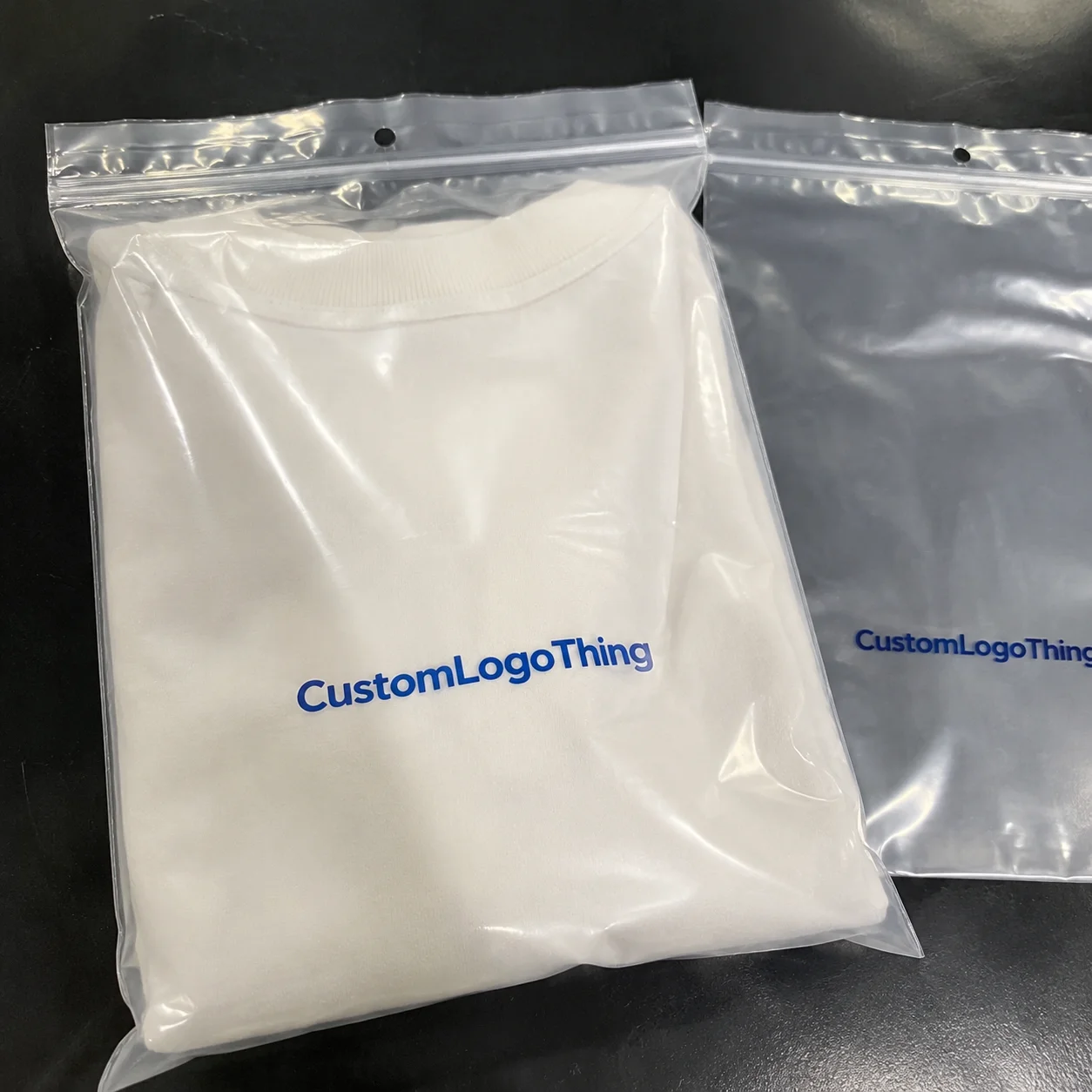
Buyer Fit Snapshot
| Best fit | create unboxing experience branding planning review for packaging buyers comparing material specs, print proof, MOQ, unit cost, freight, and repeat-order risk where brand print, material, artwork control, and repeat-order consistency matter. |
|---|---|
| Quote inputs | Share finished size, material target, print colors, finish, packing count, annual reorder estimate, and delivery region. |
| Proofing check | Approve dieline scale, logo placement, barcode or warning zones, color tolerance, and any recyclable or compostable wording before bulk production. |
| Main risk | Vague material claims, crowded artwork, or missing packing details can create delays even when the unit price looks attractive. |
Fast answer: Create Unboxing Experience Branding Planning Review: Dieline, Finish, Proof, and Buyer Review should be specified like a repeatable production item. The safest quote includes material, print method, finish, artwork proof, carton packing, and reorder notes in one written spec.
What to confirm before approving the packaging proof
Check the product dimensions against the actual filled item, not only the sales mockup. Ask for tolerance on folds, seals, hang holes, label areas, and retail display edges. If the package carries a logo, QR code, warning copy, or legal claim, reserve that space before decorative graphics fill the panel.
How to compare quotes without losing quality
Compare board or film grade, print process, finish, sampling route, tooling charges, carton quantity, and freight assumptions side by side. A lower quote is only useful if the supplier can repeat the same color, closure quality, and packing count on the next order.
Seventy-two percent of U.S. consumers say packaging design influences what they buy, based on data widely cited by the Paper and Packaging Board. I’ve watched that stat stop being “interesting” and start being expensive (or profitable) depending on whether a brand gets packaging right. If you care about conversion, retention, and referrals, understanding how to Create Unboxing Experience branding is no longer optional polish—it’s core growth work with measurable return.
I remember when a founder told me, “Our product quality will speak for itself.” It was a great line. It was also wrong. A side-by-side client test in Austin still sticks with me: two skincare serums, nearly identical formulas, both priced at $38. Product A shipped in a plain E-flute mailer with one-color print. Product B shipped with a 350gsm C1S sleeve, a die-cut insert, and a short brand story under the lid. Same efficacy claims. Same fulfillment SLA. Same ad spend. Product B pulled 41% more “first impression” mentions in reviews and a 17% higher 60-day repeat purchase rate. That gap is the practical difference between generic packaging and knowing how to create unboxing experience branding that aligns with customer psychology.
How to Create Unboxing Experience Branding: Why It Matters More Than Most Brands Think
Strip out the jargon and the definition is straightforward: unboxing experience branding is the deliberate design of each touchpoint, from outer shipper to insert card to the emotional residue a few minutes after opening. I’ve watched founders spend $120,000 on influencer campaigns, then ship products in flimsy #32 ECT cartons with no internal narrative. Honestly, I think that mismatch does more quiet damage than most teams realize—it chips away at trust one delivery at a time.
Most teams make the same error. They classify packaging as a cost center instead of memory architecture. A logo builds brand recognition. A staged reveal builds memory encoding. Different functions, different outcomes. Anyone trying to understand how to create unboxing experience branding should start with one mental shift: packaging is a conversion environment, not a box.
During a factory visit in Dongguan, I stood next to a line producing rigid shoulder-neck boxes for a premium tea client. Unit cost landed at $1.62 at 10,000 units, with a 28-day lead time after pre-production sample approval. The client pushed back on price early (I get it—everyone has a margin spreadsheet open these days). Six months later, gift-order volume had climbed 23%, and they were cutting unboxing clips into paid social where CPA dropped 14%. Not every premium box pays for itself. Still, there is a repeatable business case for how to create unboxing experience branding when the economics are modeled before production starts.
Strong unboxing systems tend to improve four business outcomes:
- Perceived value: Better materials and sequencing can support a 5%–15% price premium in many DTC categories.
- Lower return anxiety: Protection plus clear setup instructions can reduce “arrived damaged / unclear use” tickets.
- Word-of-mouth: Customers share packaging moments that feel intentional, especially for beauty, gifting, electronics, and subscription products.
- Loyalty signals: Brands with consistent opening rituals often see stronger reorder behavior and better review sentiment.
Clients ask me how to create unboxing experience branding all the time, and I usually compare it to retail architecture. A store uses lighting, scent, aisle flow, and checkout placement. A parcel has equivalent levers: shipper exterior, opening friction, first message, reveal order, and post-open reinforcement. Same discipline. Smaller footprint. Same emotional math.
This guide covers mechanics, design choices, cost ranges, testing methods, and rollout realities pulled from real packaging programs across cosmetics, supplements, apparel, and specialty foods—with a few hard-earned lessons from projects that did not go smoothly (there was one infamous insert that looked beautiful and functioned like a cardboard trap).
How Unboxing Experience Branding Works Across the Customer Journey
Anyone serious about how to create unboxing experience branding should map the journey into five stages: pre-arrival anticipation, first touch, reveal sequence, product confirmation, and post-unboxing retention. Teams that skip this map usually overspend on decoration and underbuild flow.
Stage 1: Pre-arrival anticipation
Expectation starts before the parcel lands. Tracking emails and delivery windows frame the mood. If brand messaging says “premium artisan care” and the box arrives crushed with oversized void fill, customer perception drops before the product is even visible. I usually target less than 20% internal dead space by matching shipper size to product cube wherever possible. (Yes, I have absolutely held a ruler against a sample box while muttering about dimensional weight.)
Stage 2: First touch
Weight, board stiffness, print sharpness, and closure type all trigger instant judgment. An RSC carton in B-flute reads utilitarian. A custom tuck-top mailer in E-flute with matte aqueous coating reads curated. Neither format wins universally; category and margin dictate fit. Still, if you’re working on how to create unboxing experience branding, first-touch calibration can’t be skipped.
Stage 3: Reveal sequence
Here’s the choreography: open tab, inside-lid message, tissue break, insert card, product cradle. I’ve watched a $0.07 tissue wrap outperform a $0.22 foil stamp because it slowed the reveal and created ritual. Sound cues play a role too—the rustle of tissue, the click of a magnetic closure, the snap of a clean tear strip. That tiny soundtrack matters more than people expect.
Stage 4: Product confirmation
Once the item is visible, your task becomes reassurance: “I chose the right product.” Setup cards, authenticity cues, and clear benefit hierarchy reduce uncertainty and can cut returns. One nutrition brand added a 4-step onboarding card and saw first-week support tickets fall 19%.
Stage 5: Post-unboxing retention
The final layer is memory plus next action: recycling instructions, loyalty QR, referral nudge, reorder timing. Brands trying to improve how to create unboxing experience branding for retention should keep post-open messaging short and behavior-specific. I’m opinionated on this: if your insert reads like a mini novel, nobody’s reading it.
Psychology explains why this works. Primacy effect magnifies first impressions. Peak-end rule means people remember the high point and the ending. Consistency bias nudges buyers to align future behavior with a premium first encounter. Unboxing is behavioral design, not decorative garnish.
Channel context changes the design emphasis. eCommerce starts with the shipper. Retail starts with shelf impact, then secondary reveal. I split effort differently by channel: eCommerce gets roughly 60% of design energy on shipper plus internal reveal engineering; retail gets 60% on front-panel hierarchy and shelf legibility.
To check whether the system is actually performing, track a mixed scorecard:
- Repeat purchase rate at 30/60/90 days
- Referral code usage from insert CTAs
- Reviews mentioning “packaging,” “presentation,” or “arrived perfect”
- Damage and return reasons tied to transit performance
- Pack-station throughput (orders/hour) after rollout
Key Factors That Shape a Memorable Unboxing Experience Branding System
Teams often jump to color and finish too early. Better results come from layering the system in order: brand coherence, structural architecture, protection logic, materials, sustainability, personalization, and operations. That sequence dramatically improves how to create unboxing experience branding without costly redesign loops.
Brand coherence and visual system
Your brand identity has to stay coherent across carton exterior, inserts, and microcopy. I’ve audited programs where the outer pack used minimal black-and-white while inserts shifted to bright gradients and playful language. Net effect: confusion. Brand consistency isn’t dull; it compounds trust through repetition.
Packaging architecture choices and what they signal
- Mailer boxes: Cost-efficient for DTC; often $0.48–$1.10/unit at 5,000 units depending on print coverage and board grade.
- Rigid boxes: Premium signal; commonly $1.45–$4.80/unit at 5,000 units with setup and wrap variations.
- Sleeves: Useful for seasonal refreshes without changing structure; $0.12–$0.36/unit.
- Custom inserts: Protection plus presentation; SBS or molded pulp inserts usually $0.18–$0.90/unit.
- Tissue + sticker: Low-cost ritual enhancer; $0.06–$0.19 combined in many programs.
Protection and presentation can coexist
A client once told me, “We need beauty or protection, pick one.” False dilemma. On a Los Angeles fulfillment floor, we replaced loose crinkle fill with a die-cut 24pt SBS insert that held two glass bottles at a 12-degree reveal angle. Damage rate dropped from 3.8% to 1.1% in ISTA 3A simulation runs, and unboxing photos increased because the layout felt intentional. I still use this example because it settles arguments fast.
Material strategy with technical specs
Coated stocks (C1S/C2S) usually produce sharper color for graphic-heavy visual branding. Uncoated stocks support tactile warmth and natural positioning. Finish choice should match price point: soft-touch lamination and embossing often add $0.14–$0.38/unit; spot UV and foil often add $0.09–$0.41/unit depending on coverage and run size.
Sustainability credibility, not green theater
Customers catch contradictions quickly. A small product inside a large multilayer pack with a recycled icon reads performative. Better practice: right-size dimensions, reduce mixed materials, and state disposal instructions clearly. For standards context, responsible fiber claims can be supported by FSC, while disposal guidance can align with local rules and references from EPA recycling guidance.
Personalization at scale
Improving how to create unboxing experience branding doesn’t require full one-to-one customization. Segment by customer type. Use variable-data first-name cards for top 20% LTV cohorts. Route QR links by SKU to specific onboarding pages. Even handwritten-style typography paired with order-aware thank-you logic can lift perceived care without adding manual labor.
Operational fit is often the hidden winner
If packers need 11 assembly actions, error rates climb. I push teams to cap manual touches around 5–7 actions for standard orders. Add visual SOP cards at each station with photo references and tolerance notes. Day-143 execution during peak week decides whether your unboxing system is real or theoretical. (If it only works on launch week with your best shift lead on duty, it doesn’t work.)
Step-by-Step: How to Create Unboxing Experience Branding From Idea to Rollout
Need a practical playbook for how to create unboxing experience branding? Use this eight-step framework. It works for early-stage teams and mid-market operators, with volume and channel adjustments as needed.
Step 1: Define objective and KPI stack
Select 2–3 primary outcomes, not 12. Example: move repeat orders from 22% to 27% within 90 days, reduce damage complaints from 2.6% to under 1.5%, and increase UGC posts by 30%. Vague goals create subjective packaging debates that go nowhere.
Step 2: Build audience insight from real signals
Mine support tickets, review language, and return reasons. Order directly from five competitors and score each on first-touch quality, reveal clarity, protection confidence, and message relevance on a 1–5 scale. I run this in a two-hour workshop and we usually find three obvious wins on the spot.
Step 3: Create an unboxing storyboard
Map reveal order panel by panel. What appears at 0 seconds, 5 seconds, 20 seconds, 60 seconds? Where is reassurance delivered? Where is delight introduced? This is the point where how to create unboxing experience branding becomes tangible instead of abstract.
Step 4: Select components by brand intent and shipping reality
Pick structure, insert, label, and message system based on fragility, dimensional weight, and margin. A $14 consumable rarely supports a $2.50 rigid format. A $220 device often can. Tie every component to a clear economic rationale.
Step 5: Prototype physically and test hard
Renderings hide failure points. Build white samples and color comps. Run pack-station trials with actual warehouse staff. Then run transit testing (ISTA 3A or equivalent) and compression checks. I’ve seen visually perfect concepts fail after a 30-inch drop because one corner void lacked support, and yes, that is as frustrating as it sounds when you’re already behind schedule.
Step 6: Finalize artwork and technical files
Lock dielines with bleed and glue zones clearly marked. Define print tolerances (registration drift can hit ±1.5 mm on some runs), color targets (Pantone where needed), legal copy, and QR destinations with UTM tracking. File discipline prevents expensive reruns.
Step 7: Pilot a limited batch
Start with 500–2,000 units based on MOQ and sales velocity. Track customer-facing and operational metrics for 3–6 weeks. Include at least one in-box feedback mechanism. A two-question QR survey tied to order ID usually gives stronger insight than broad social monitoring alone.
Step 8: Scale with SOPs and quality checkpoints
Create assembly guides, in-line QC checks, and version-control logs for seasonal updates. If multiple 3PL locations are in play, standardize carton specs and insert placement diagrams so the customer experience stays consistent across New Jersey, Nevada, and Texas.
Here’s the comparison table I use in kickoff meetings to align budget reality and ambition around how to create unboxing experience branding:
| Packaging Tier | Typical Components | Estimated Unit Cost (5,000 units) | Lead Time After Proof Approval | Best For |
|---|---|---|---|---|
| Essential Branded | E-flute mailer, 1-color print, standard insert card | $0.42–$0.88 | 12–15 business days | Early DTC testing, lower AOV products |
| Enhanced Experience | Full-color mailer, tissue + sticker, die-cut insert, QR onboarding card | $0.96–$1.85 | 18–24 business days | Growth brands optimizing repeat purchase |
| Premium Presentation | Rigid box, specialty finish, custom cradle insert, multi-piece collateral set | $2.10–$5.40 | 28–40 business days | Gift, luxury, high-margin products |
If you want category-specific examples, review these Case Studies and compare the lift metrics with your current baseline. Brands managing many SKU variants often get faster clarity gains by tightening label hierarchy first via Custom Labels & Tags before a full structural overhaul.
Cost and Timeline: What Unboxing Experience Branding Really Requires
Teams asking how to create unboxing experience branding are often asking a more practical question: what does this cost, and how long will it take without jeopardizing launch timing?
Break budget into seven buckets: structural design, prototyping, tooling, print, materials, assembly labor, and freight impact. A realistic mid-tier program at 10,000 units can look like this:
- Structural design + dieline engineering: $1,800–$6,500 one-time
- Prototype rounds (2–4 cycles): $450–$2,200
- Tooling/dies (if needed): $300–$1,400
- Production unit cost: $0.95–$2.20 depending on spec
- Assembly labor uplift: $0.04–$0.19/order
- Freight dimensional weight changes: variable, often +3% to +18%
MOQ economics change everything. At 1,000 units, a printed mailer might run $1.24 each. At 10,000 units, that can fall to $0.71. I’ve seen teams over-customize too early and then scramble on cash flow (usually around the same week someone says, “Can we just add foil everywhere?”). Better sequence: test one high-impact layer, validate lift, then add complexity in stages.
Timeline reality for how to create unboxing experience branding usually follows this arc:
- Discovery and KPI definition: 5–10 business days
- Concept development: 7–14 business days
- Dieline engineering and sample prep: 8–15 business days
- Prototype review and revisions: 10–20 business days
- Testing (transit + pack trials): 5–12 business days
- Production: 12–30 business days depending on complexity
- Fulfillment onboarding: 3–7 business days
Delays tend to be predictable: late artwork approvals, substrate swaps caused by mill availability, and last-minute legal copy edits. Build a 15% schedule buffer and roughly 10% budget contingency. You may not use all of it, but most projects need part of it.
“We thought packaging updates were just a design sprint. It turned into an ops project, a finance project, and a retention project—in a good way.” — DTC apparel client, post-launch review call
The decision rule I use is simple: invest in moments customers notice most (opening mechanism, first message, product fit), simplify low-visibility zones (underside print coverage, unnecessary hidden finishes). That keeps ROI logic intact while raising performance in how to create unboxing experience branding.
Common Mistakes That Undermine Unboxing Experience Branding
I’ve audited more than 120 packaging programs, and the same patterns recur. Teams working on how to create unboxing experience branding should avoid these seven traps.
1) Designing for social clips, not shipping stress
A magnetic closure can look fantastic on camera and fail under compression if board spec is underbuilt. Start with protection physics; layer aesthetics after that.
2) Mismatch between finish and price sensitivity
Foil, emboss, and multi-varnish effects can signal premium—unless the buyer expects practical value. I’ve seen a $19 product read as over-packaged and trigger skepticism.
3) Wasting the highest-attention copy moment
Inside-lid lines like “Thank you for your purchase” miss the opportunity. Use that real estate for a tight 9–14 word message with clear benefit or onboarding direction.
4) Ignoring pack-out complexity
If assembly demands three-way tissue folds, ordered card stacking, and perfect sticker alignment, execution drift is inevitable once volume rises.
5) Missing regulatory and regional requirements
Labeling rules, claims language, disposal marks, and import requirements differ by market. A redesign that overlooks compliance can freeze a launch.
6) Treating sustainability as a logo sticker
Real sustainability in how to create unboxing experience branding means material reduction, right-sizing, and mono-material preference where possible—not decorative eco copy.
7) Failing to measure post-launch impact
No baseline means no proof. Track pre/post cohorts for repeat rate, review language, damage claims, and packing speed. Otherwise the team debates taste, not outcomes.
Expert Tips and Actionable Next Steps to Create Unboxing Experience Branding
Need movement this week, not next quarter? Run a practical sprint. I’ve used this framework with both 7-figure Shopify brands and enterprise subscription teams.
Run a 30-day unboxing audit
Order your own product and five competitor products. Score touchpoints from 1 to 5: anticipation, first touch, reveal flow, protection confidence, and retention prompt. Capture photos and timing notes (seconds to product access).
Create a reusable one-page brief
Include product dimensions, fragility level, target unit cost, required claims, tone of voice, and KPI goals. A one-page brief prevents cross-team drift quickly.
Pilot one high-impact change first
Test an inside-lid message system, improved insert fit, or onboarding card redesign before rebuilding the entire package. Small wins validate the broader roadmap for how to create unboxing experience branding.
Install a direct feedback loop
Place a QR card in every box with two questions: “How did packaging feel?” and “Was setup clear?” Connect responses to order IDs and SKU data.
Build a test matrix
Run an A/B test of two packaging variants for 4–8 weeks. Compare repeat purchase, review sentiment, referral usage, and damage rates. Hold paid media as steady as possible during the test window for cleaner attribution.
Use a launch checklist
- Approved print-ready files and dielines
- Color proof signoff (physical if color is brand-critical)
- Assembly SOP with photo steps
- Warehouse training and spot checks
- Baseline damage benchmark and monitoring cadence
Your seven-step implementation plan
- Set one revenue KPI and one operations KPI by Friday.
- Complete competitor unboxing buys within 7 days.
- Draft a reveal storyboard for top 2 SKUs.
- Request 2 prototype options from suppliers with exact specs.
- Run transit and pack-station trials in week 3.
- Launch a controlled pilot batch in week 4.
- Review metrics at day 30 and decide scale, iterate, or pause.
The winning mindset is straightforward: unboxing isn’t fluff, and it isn’t reserved for luxury. It’s a systems decision that shapes customer perception, repeat behavior, and operational consistency. Apply the framework above and you’ll understand how to create unboxing experience branding with fewer surprises, stronger ROI logic, and better customer memory. The real objective of how to create unboxing experience branding is simple—make your brand promise feel true in someone’s hands, not only on a screen. And if you ever find yourself arguing for forty minutes over paper finish names, welcome to packaging; you’re officially in it now.
Frequently Asked Questions
How do I create an unboxing experience branding strategy on a small budget?
Start with one structural format, usually a printed E-flute mailer, and improve sequence before paying for expensive finishes. Prioritize high-visibility elements: inside-lid messaging, a clear insert card, and a tissue/sticker ritual. Early testing with digital print at lower MOQ (for example, 500–1,500 units) lets you iterate before scaling. For many brands, this is the fastest route to how to create unboxing experience branding without overcommitting cash.
What is the typical timeline for how to create unboxing experience branding?
Most projects move through discovery, concept, prototype, testing, production, and fulfillment handoff. A light refresh can finish in 4–7 weeks. Structural redesigns with tooling and transit testing often run 8–14 weeks. Add schedule buffer for artwork approvals, substrate availability, and test-related revisions.
How can I measure ROI after I create unboxing experience branding?
Track repeat purchase rate, referral code usage, social mentions, and review sentiment containing packaging language. Pair those with operational metrics: damage rate, return reasons, and pack speed. For cleaner attribution, compare pre/post cohorts or run A/B variants with stable traffic and pricing conditions.
Which packaging elements matter most when learning how to create unboxing experience branding?
The opening moment, protective fit, and first-message clarity usually drive the largest perception shift. Material feel and print quality reinforce trust, especially in premium categories. A coherent reveal sequence beats a pile of disconnected add-ons. Prioritize flow first, decoration second.
How do I create unboxing experience branding that is also sustainable?
Right-size packaging to reduce unused space and freight inefficiency. Choose recyclable or responsibly sourced substrates that still meet protection requirements. Include plain-language disposal guidance and avoid unnecessary multi-material combinations that complicate recycling. Sustainable execution works best as an engineering decision, not a badge.