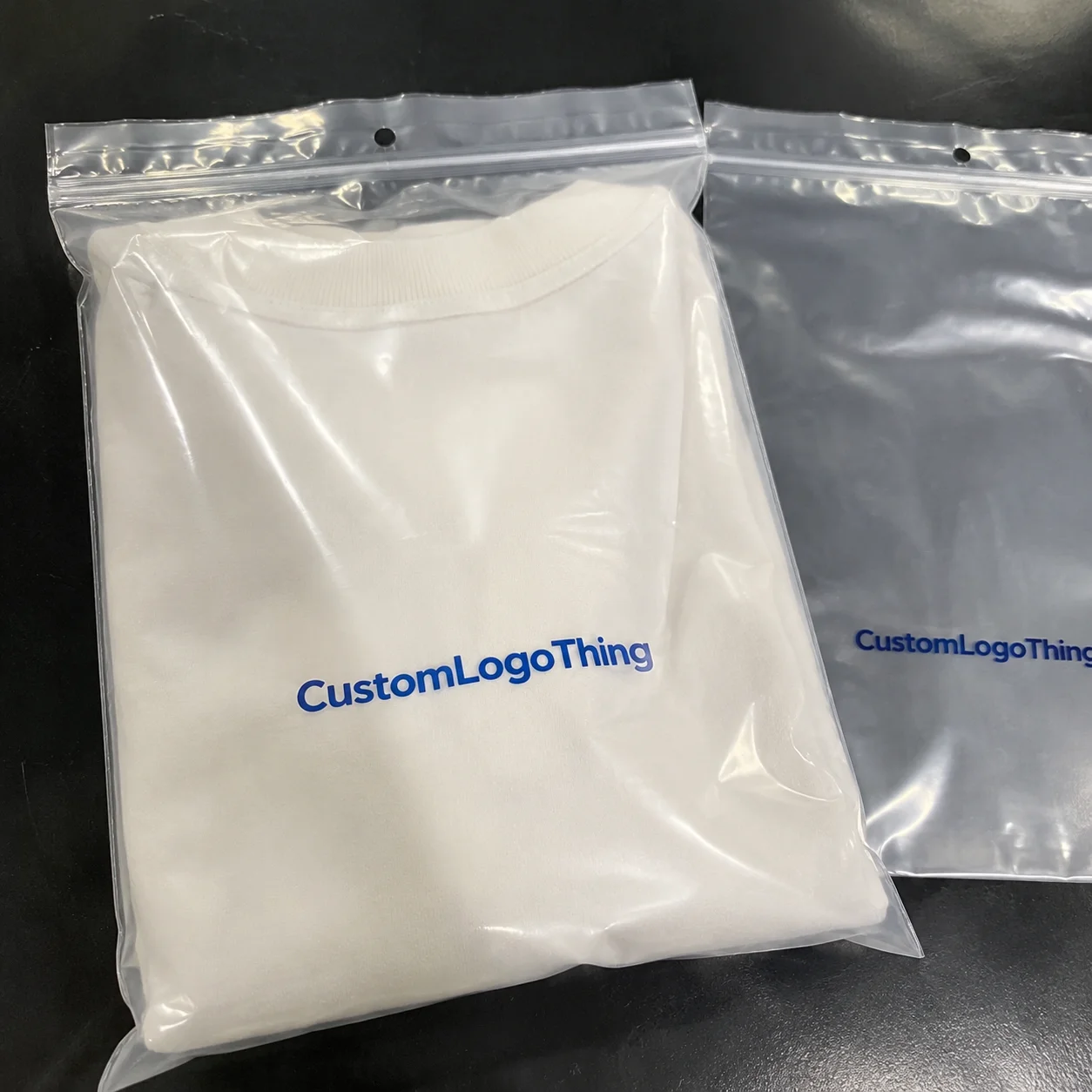
Buyer Fit Snapshot
| Best fit | Design Packaging for Target Market projects where brand print, material claims, artwork control, MOQ, and repeat-order consistency need to be specified before quoting. |
|---|---|
| Quote inputs | Share finished size, material target, print colors, finish, packing count, annual reorder estimate, ship-to region, and any compliance wording. |
| Proofing check | Approve dieline scale, logo placement, barcode or warning zones, color tolerance, closure strength, and carton packing before bulk production. |
| Main risk | Vague material claims, crowded artwork, missing packing details, or unclear freight terms can make a low unit price expensive after revisions. |
Fast answer: Design Packaging for Target Market: Quote Scope, Sample Proof, MOQ, and Lead Time should be specified like a repeatable production item. The safest quote records material, print method, finish, artwork proof, packing count, and reorder notes in one written spec.
Production checks before approval
Compare the actual filled-product size with the drawing, then confirm tolerance on folds, seals, hang holes, label areas, and retail display edges. Reserve space for logos, QR codes, warning copy, and material claims before decorative graphics fill the panel.
Quote comparison points
Review material grade, print process, finish, sampling route, tooling charges, carton quantity, and freight assumptions side by side. A quote is only useful when the supplier can repeat the same color, closure quality, and packing count on the next order.
I’ve sat through enough packaging reviews to know how this usually goes: someone falls in love with a mockup in the first five minutes, then the room spends the next hour trying to justify that emotional reaction with shopper data, trend slides, and a few very polished words like “premium presence.” That order is backwards. The prettiest box in the room can still miss the buyer, while a simpler pack that speaks the customer’s language can move product faster, especially across crowded retail packaging and ecommerce channels from Los Angeles to Manchester.
At Custom Logo Things, I’ve watched brands spend $18,000 on custom printed boxes, only to realize the finish, copy, and color palette were aimed at the founder’s taste rather than the shopper’s expectations. I’ve also seen a $0.42 folding carton outperform a glossy rigid box because it matched the category, the price point, and the shelf environment in a Chicago grocery aisle, which, frankly, is less glamorous but a lot more useful. That’s the real job of how to design packaging for target market: make the right customer stop, understand, and trust in one glance.
What follows is a practical way to think about how to design packaging for target market without getting lost in aesthetics alone. It’s grounded in what actually happens on the shelf, in unboxing videos, and in buyer meetings from New York to Shenzhen. If you want branded packaging that earns its keep, start with the audience, not the artwork. I learned that the hard way after watching one “beautiful” carton sit untouched on a shelf like it was waiting for applause.
How to Design Packaging for Target Market: Why Fit Beats Pretty
One of the biggest mistakes I see in packaging design is confusing “premium-looking” with “right for the buyer.” Those are not the same thing, and they rarely show up at the same party. A matte black carton with gold foil might look expensive in a Brooklyn studio, but if you’re selling a family snack product in a mainstream grocery aisle, that same design can feel off, even a little suspicious. How to design packaging for target market starts with fit. Fit beats decoration every time, whether the carton is a 350gsm SBS folding box or a 24pt rigid setup.
When I visited a snack co-packer outside Chicago, the operations manager showed me two runs on the same line: one using brightly colored retail packaging with clear nutrition callouts, the other using a minimal black design with tiny type. The first one sold better by a wide margin because parents could read it in under three seconds, even under fluorescent lights and a 14-inch shelf strip. That’s the point. Packaging is not just protection. It’s a sales tool, a shelf signal, and a brand filter all at once.
Target market, in packaging terms, means more than age and gender. It includes income, shopping channel, values, purchase context, and even how much time the shopper has in a place like Toronto or Houston. A gift buyer browsing a boutique shop wants different cues than a procurement manager ordering B2B packaging supplies for a subscription kit of 2,000 units a month. If you want to know how to design packaging for target market, you need to think like the person making the purchase, not the person approving the design deck. That sounds obvious, but I’ve been in enough rooms to know obvious things are often the first to get ignored.
Good packaging creates instant recognition and reduces decision friction. That’s what package branding does at shelf level. It tells the buyer, “This is for me,” or, just as useful, “This is not for me.” Clear. Fast. Human. I’ve seen brands resist that idea because they wanted broad appeal, but broad appeal is often just a design compromise that weakens conversion. Trying to please everyone is a great way to end up invisible, especially when a shopper is choosing between twelve similar products in under 20 seconds.
So before color swatches or dielines, ask a harder question: what does the customer already expect in this category, and what needs to change? That is the foundation of how to design packaging for target market. If you skip that part, you can still make something attractive, sure, but attractive and effective are two different animals, like a sample box in a studio and a pallet in a warehouse in Dallas after a summer truck ride.
How Target Market Packaging Decisions Actually Work
People like to say shoppers decide with their eyes. True, but incomplete. In practice, customers decode packaging in a few seconds using a stack of cues: color, shape, material, typography, copy hierarchy, and tactile cues like embossing or soft-touch coating. On a crowded shelf, these signals are compressed into a judgment that feels emotional but is actually semi-structured. That’s why how to design packaging for target market is part psychology, part visual engineering, and part “please don’t make me squint to figure out what’s inside.”
Luxury buyers often look for restraint, heavier board, precise finishes, and space in the layout. Eco-conscious buyers tend to respond to kraft paper, recycled fiber claims, FSC cues, and minimal inks, though not always—some still want a premium feel that doesn’t scream “raw and unfinished.” Budget shoppers look for clarity, value cues, and practical information. Gift buyers respond to opening experience. B2B customers care about consistency, batch labeling, durability, and easy handling across a 500-piece to 5,000-piece run. Different market, different signals. Same product, different wrapper.
Online changes the rules again. On a thumbnail, a package has maybe 120 pixels of visual real estate before the shopper scrolls. That means bold contrast, readable hierarchy, and a clear product category matter more than ornate details. In-store, the package must survive distance, glare, neighboring brands, and imperfect lighting, especially under LED fixtures in stores in Atlanta or Paris. So how to design packaging for target market depends heavily on where the product is sold. Shelf, shipping box, marketplace listing, boutique counter—each one asks a different question.
I remember a client meeting where a founder insisted the inside of the box mattered most because “unboxing is everything.” The agency team nodded. I asked one question: how many buyers need to be convinced before they ever open it? The room got very quiet, which is usually a sign somebody has just realized the pretty part is not the only part. Packaging communicates trust, quality, and relevance before the product is even tried. It’s a behavioral shortcut, and good packaging helps the right customer recognize the product quickly, whether the carton lands in a Miami apartment or a Berlin gift shop.
That shortcut is powerful. But it only works when the visual language matches the audience. A clinically styled box for a wellness supplement can signal credibility. The same treatment on a children’s snack might look cold. A playful design can lift a confectionery brand. Put that same playfulness on a medical device carton and you’ve got a problem, probably a very expensive one. So, if you’re asking how to design packaging for target market, remember this: packaging is a language, and every market has its own vocabulary.
Key Factors That Shape Packaging for Your Target Market
There are six variables I always review before recommending a structure or finish. Ignore one, and the package can drift away from the buyer. Get them aligned, and how to design packaging for target market becomes much easier to execute. It’s not magic; it’s just a disciplined way to avoid expensive guesswork, the kind that turns a $0.15 unit carton into a $0.48 problem after revisions.
1. Demographics. Age, location, income, lifestyle, and cultural preferences matter. A 22-year-old urban skincare shopper in a DTC environment in Austin will not interpret color and typography the same way as a 58-year-old suburban grocery buyer in Minneapolis. I’ve seen one brand cut through because it switched from pastel gradients to a cleaner white-and-forest-green system that older buyers trusted immediately, especially when the carton was a 400gsm SBS with a matte aqueous seal.
2. Buying behavior. Is this an impulse purchase, a repeat refill, a trial-size item, or a gift? A subscription product needs efficient opening and reclosability. A gift needs presence. A trial item needs clarity and low friction. This is where product packaging decisions become commercial decisions. If the buyer is experimenting, the package should reduce perceived risk. If they are buying on autopilot, the package needs to make reordering feel easy and familiar, like a barcode that scans cleanly at a Walgreens checkout line on the first pass.
3. Brand positioning. Premium, mass-market, sustainable, playful, clinical, artisanal, or corporate—each position narrows the design lane. A premium cereal brand might use a rigid carton with foil stamping and 450gsm SBS. A mass-market cereal brand may do better with a standard folding carton and crisp typography. Neither is “better.” They serve different markets, and pretending otherwise is how teams end up arguing for three weeks about a silver foil swatch nobody asked for in the first place.
4. Materials and finishes. Rigid boxes, corrugated packaging, kraft paper, soft-touch coating, embossing, foil, window cutouts, and aqueous coatings all send different signals. A soft-touch lamination can add perceived value, but on a shipping-heavy ecommerce item, it may scuff more than expected after a 1,200-mile truck route. I’ve had clients fall in love with foil, then cut it after a sample run because it pushed unit price up by 12% with little sales lift. Beautiful, yes. Helpful, not always.
5. Channel constraints. Retail shelf visibility, ecommerce shipping durability, Social Media Unboxing, and marketplace thumbnail readability all affect decisions. A package that looks elegant in a photoshoot may collapse in transit if the corrugated grade is too light. That’s why ISTA testing matters. You can read more about transport testing standards at ISTA. I wish more teams asked for this before the first pallet left the building instead of after everyone starts muttering about dents and refunds from a fulfillment center in Ohio.
6. Budget and margin. This is the reality check. If your gross margin is 32%, a $1.10 package can be too heavy unless the product price supports it. If you’re selling a $7 item, you do not have the same room as a $48 item. I’ve seen teams forget that and design themselves into a margin corner. It’s a classic move: gorgeous spreadsheet, ugly P&L, especially once freight adds another $0.07 to $0.18 per unit.
Here’s a simple comparison of common packaging directions and what they usually signal in the market:
| Packaging option | Typical signal | Approx. unit cost at 5,000 pcs | Best fit for |
|---|---|---|---|
| Standard folding carton, 350gsm SBS | Clean, efficient, mainstream | $0.28–$0.55 | Mass retail, CPG, promotional product packaging |
| Rigid box with insert | Premium, giftable, high perceived value | $1.20–$3.80 | Luxury, gifting, high-margin bundles |
| Kraft mailer box | Practical, eco-leaning, direct-to-consumer | $0.65–$1.40 | Ecommerce, subscription, sustainable brands |
| Corrugated retail-ready tray | Durable, efficient, store-friendly | $0.40–$0.90 | High-volume retail packaging, shelf-ready display |
I’m not saying a more expensive package always works better. I’m saying the package must match the market signal. That’s the core lesson in how to design packaging for target market: design for recognition, not just admiration. Admiration is nice. Recognition pays the bills, and it shows up in reorder rates from Denver to Dublin.
How to Design Packaging for Target Market: Step-by-Step
If I were starting a new project tomorrow, this is the process I’d use. It’s practical, and it keeps the team from wandering into subjective debates about “nice” versus “not nice.” How to design packaging for target market becomes much simpler when you treat it like a sequence, not a brainstorm. Every time I’ve skipped a step, I’ve paid for it later in revisions, delays, or that awkward moment where everyone stares at a mockup and says, “Hmm, it’s not quite right,” which is packaging code for “we are going to need three more rounds.”
Step 1: Research the customer with real evidence
Start with customer reviews, retailer comments, competitor packaging audits, and sales data. Read 50 reviews, not five. Look for repeated words like “cheap,” “confusing,” “giftable,” “premium,” or “hard to open.” Those words tell you what buyers are actually responding to. If possible, pull marketplace imagery and compare bestsellers side by side. The point is to gather evidence, not assumptions.
One brand I advised thought its audience wanted bold color because the founder loved vibrant palettes. After reading 80 reviews, we found the word “clean” came up 19 times and “easy to understand” came up 14 times. That changed the packaging design direction entirely. The founder was not thrilled in the moment, but the sales lift later made the argument for us, especially after the first 3,000-unit production run cleared in under two weeks.
Step 2: Build a packaging persona from purchase behavior
I prefer packaging personas that include shopping context, not just demographics. Example: “Eco-aware parent ordering pantry staples online, compares three brands, wants clear ingredient information, price-sensitive but willing to pay $1 more for sustainability claims that feel credible.” That’s much more useful than “female, 25–44.” If you want to know how to design packaging for target market, this persona becomes the filter for every decision, from a 2-color kraft carton to a 4-color CMYK mailer printed in Shenzhen.
Step 3: Turn the persona into design rules
This is where strategy becomes visual language. Choose a color range, typography style, copy length, structure, and finish that support the persona. If the audience values trust and clarity, use a strong hierarchy and avoid decorative clutter. If the audience wants luxury, widen the white space, improve stock weight, and sharpen finishing details. If sustainability matters, consider FSC-certified paperboard and muted inks. FSC certification can be explored at FSC.
For example, a clinical supplement might use 400gsm white SBS, one accent color, and matte aqueous coating. A botanical skincare line might use kraft board with 1-color flexo printing and a stamped logo. Both can work. The trick is that each one fits a different buyer expectation. Honestly, I think this is where a lot of teams get stuck: they pick the texture they personally like instead of the texture the market already trusts, whether that market is in Seattle, Seoul, or São Paulo.
Step 4: Prototype two or three directions
Never approve packaging from a PDF alone if you can help it. I’ve seen too many teams fall in love with flat artwork, then discover the box feels flimsy or the type gets lost at size. Build two or three packaging directions and test them. Keep one conservative, one differentiated, and one balanced. That gives you useful comparison points. A controlled prototype session is one of the fastest ways to learn how to design packaging for target market without burning budget on a full run, especially when a sample kit costs $85 to $150 and can save a $12,000 reprint.
When we ran a tasting session for a beverage client, the version with the boldest artwork won attention, but the version with the clearest product claim won purchase intent. That distinction matters. Attention is not the same as conversion, and a lot of brands learn that after the hard way has already collected a fee.
Step 5: Test practicality, not just aesthetics
Check shipping performance, stacking, opening experience, and regulatory labeling. Does the structure survive a 36-inch drop? Can it be packed efficiently at 12 units per case? Is the barcode placed on a flat, scannable surface? Does the legal copy remain legible at 7pt minimum? The best-looking box can still fail if it slows packing or damages product, and a 1.5mm tolerance miss can turn into a production headache fast.
If you sell on marketplaces, this is even more important. A package that looks strong in a studio but bruises at the corners after three parcel drops is not a good package. This is where ecommerce packaging and retail packaging often split paths, and the split gets expensive if you ignore it. I’ve seen a team in Atlanta save $0.06 per unit on board, then lose far more to refunds and reships after the outer mailer crushed in transit.
Step 6: Refine, then finalize the production spec
After feedback, update the dieline, artwork, and material spec. Lock the Pantone references, varnish callouts, insert dimensions, and glue areas. Specify the board grade, the coating, and any special finishing. I like to see all of that in one production brief because last-minute ambiguity causes expensive errors. More than once, a missing note about foil coverage added an extra press pass and delayed launch by a week. The press room does not care about your excitement; it cares about clear instructions, a final PDF, and a clean 300 dpi export.
Step 7: Measure the launch, then adjust future runs
Packaging is not finished when the cartons arrive. Track sell-through, return reasons, customer reviews, and repeat purchase rates. Read the language buyers use after launch. If they say “easy to open,” “looks expensive,” or “found it fast,” you’re close. If they say “confusing,” “cheap,” or “didn’t feel right for the price,” you’ve got data for the next run, and maybe a reason to adjust the finish or copy in the next 8,000-piece order.
That’s the practical side of how to design packaging for target market: research, define, prototype, test, refine, then learn from the market response. It’s not glamorous, but it works, which is more than I can say for half the “inspiration” decks floating around out there.
Packaging Costs, Pricing, and Timeline: What to Expect
People often ask for a ballpark on packaging, and the honest answer is that the ballpark depends on structure, quantity, print method, and finishes. Still, you need numbers. So here’s the practical view I use in client meetings. How to design packaging for target market also means knowing what the market can justify financially. Pretty packaging that breaks the margin is just expensive decoration, even if it came from a factory in Dongguan or Shenzhen.
The main cost drivers are material, print method, quantity, structure complexity, specialty finishes, and inserts. A simple one-color folding carton can be very efficient. Add embossing, foil, and a custom insert, and the price climbs fast. I’ve seen a carton go from $0.34 to $0.91 per unit after a team added matte lamination, spot UV, and a die-cut window. The customer loved the result, but only after we confirmed the margin could support it. There’s a reason production people get a little twitchy when “just one more finish” comes up for the fourth time.
Here’s a working cost lens for custom packaging:
| Packaging feature | Typical added cost impact | Value signal to buyer |
|---|---|---|
| Soft-touch coating | + $0.08 to $0.22/unit | Premium, tactile, controlled |
| Foil stamping | + $0.10 to $0.35/unit | Luxury, highlight, visibility |
| Emboss/deboss | + $0.06 to $0.18/unit | Craft, depth, refinement |
| Custom insert | + $0.12 to $0.75/unit | Protection, presentation, organization |
| Window cutout | + $0.05 to $0.20/unit | Transparency, product proof |
Minimum order quantities matter too. At 1,000 units, your price per box may be much higher than at 10,000 units because setup costs are spread across fewer pieces. For many custom printed boxes, the sweet spot starts to improve noticeably at 3,000–5,000 units, though that varies by structure and supplier. A 350gsm C1S artboard mailer can land around $0.15 per unit for 5,000 pieces in a simple one-color print, while a rigid box with a paper-wrapped chipboard insert may land closer to $1.35 to $2.20 per unit. This is where the question of how to design packaging for target market becomes inseparable from buying power and order volume.
Timeline is another place where expectations drift. A simple project can move from concept to sampling in a few weeks if approvals are fast. A more complex project with structural changes or multiple specialty finishes can take longer. A realistic timeline often looks like this: 3–7 business days for research and creative direction, 5–10 business days for design, 7–14 business days for sampling, 3–5 business days for revisions, and 12–20 business days for manufacturing after proof approval. In many production houses in Guangdong, the standard window is typically 12 to 15 business days from proof approval for straightforward folding cartons, while rigid boxes and complex inserts can stretch to 18 to 25 business days. Delays usually happen in artwork changes, proof approvals, structural revisions, or seasonal production bottlenecks before Lunar New Year or the Q4 retail rush.
One supplier negotiation I remember clearly ended with us removing a custom insert because it pushed the landed cost above the product’s margin ceiling. Nobody cheered. Nobody posted a photo of the spreadsheet. But it was the right call. That’s the kind of decision nobody wants to make emotionally, but it’s the one that keeps the business healthy. Packaging should support the product economics, not ignore them. If a package adds $0.60 to a $6 product and doesn’t improve conversion, that’s a hard sell.
My rule: align packaging spend with product price point, expected margin, and channel. Premium ecommerce can absorb different costs than discount retail. The right answer in one channel may be the wrong answer in another. That’s why how to design packaging for target market is also about financial fit, not just visual fit, whether the items are packed in Illinois or imported through a warehouse in Rotterdam.
Common Mistakes When Designing Packaging for Target Market
The most expensive packaging mistakes are usually basic ones. Not dramatic. Just costly. I’ve watched brands commit to a design because the founder liked it, then spend six months trying to explain why the market ignored it. That is a painful lesson in how to design packaging for target market, and one I’d happily never repeat if the universe were taking requests.
Designing for internal taste. This happens constantly. The leadership team picks the color they like, the marketing team wants more copy, and the designer tries to satisfy everyone. The result is a package with no clear hierarchy. The buyer sees noise, not a message. I’ve seen this on a 12-sku beverage line where the only thing consistent was confusion.
Using too many design elements. Multiple fonts, competing icons, several claims, and layered backgrounds can weaken recognition. A package needs one dominant idea. If everything is loud, nothing is. I’ve seen a skincare carton with five badge icons, three finishes, and two gradients. It looked busy in a way that made the product feel less trustworthy, like it was trying too hard to convince me it had a personality.
Choosing materials that fail in transit. Pretty board can crush. Heavy-coated surfaces can scuff. Gloss can glare under store lights. A package that looks lovely in a render may not survive real distribution. For shipping-heavy products, I always ask for transit testing or at least a strong corrugated outer if the primary package is delicate, especially if the route runs through humid ports in Savannah or Vancouver.
Ignoring category norms. If everyone in the category uses a transparent window and you remove it, you need a very good reason. If premium competitors all use heavyweight rigid boxes, a flimsy carton will feel out of place. Not because consumers are sheep. Because category norms help people assess quality faster. They’re shortcuts, and shoppers love shortcuts almost as much as they love not making a bad purchase.
Overlooking regulatory details. Barcode placement, ingredient panels, warnings, recycling marks, and country-of-origin text all need room. I’ve seen late-stage artwork get rejected because a legal line got tucked behind a decorative element. That delay cost one client 11 production days. Nothing humbles a team quite like realizing the “small print” was not actually small enough to ignore.
Forgetting ecommerce realities. A package must photograph well and survive transit. White boxes can pick up dirt. Small type disappears on mobile. Fragile structures can arrive dented. If you sell online, your package is also a thumbnail, a shipping container, and an unboxing moment. That’s a lot of jobs for one object, especially when the product ships through three warehouses and a last-mile carrier in under 96 hours.
“The box sold the story before the product ever did.” — a brand manager said that to me after a shelf test, and she was right. The package did not need to be the loudest thing in the store. It needed to be the clearest.
Honestly, I think the biggest mistake is assuming the target market will figure it out. They won’t always. If the package takes too much effort to decode, people move on. Fast. So if you’re asking how to design packaging for target market, simplify the path to understanding. If shoppers need a decoder ring, something has gone off the rails.
Expert Tips for Smarter Target Market Packaging
After years of sitting through sample approvals and press checks, I’ve landed on a few principles that save time and money. These are the habits I wish more teams adopted when learning how to design packaging for target market. They’re not flashy, but neither is getting the reprint bill you didn’t budget for, especially when the press run is 20,000 units and the error is a misplaced barcode.
Start with one segment. Do not try to appeal to everyone at once. Pick the highest-value customer segment first. Once the package works for them, you can expand carefully. Packaging that tries to please three audiences usually satisfies none, and the design ends up looking like it was assembled by committee in a conference room at 4:45 p.m.
Use adjacent-category benchmarks. Look at categories your buyers already trust. A premium tea brand can borrow visual cues from skincare. A wellness supplement can learn from pharmacy packaging. Adjacent references help you spot what your market expects, and where you can stand out without becoming alien. A black-and-white label with 9pt type might work in supplements; on a confectionery carton it could feel chilly unless you warm it with illustration or texture.
Test on shelf and on screen. Real buying often happens in both places. Put the package on a physical shelf mockup, then shrink it to phone size. If the product name disappears at thumbnail size, that’s a problem. If the package blends into the shelf, that’s also a problem. I like to test at 150% distance and at 320-pixel width, because those two views catch more issues than a polished render ever will.
Choose one memorable feature. Shape, texture, opening experience, or color system—pick one area to make memorable, then let the others support it. I’d rather see one strong detail executed well than five weak ones fighting for attention. That’s especially true in branded packaging for competitive categories. A lot of people call that restraint; I call it mercy, and in many cases it keeps the unit cost under $0.80.
Control versioning tightly. I cannot stress this enough. Keep the approved sample, production spec, and final dieline aligned. Version confusion is how you get misprinted cartons and costly rework. A clean approval trail saves orders, especially when one file says “v7_final_FINAL” and another file says “use this one please.”
Measure with behavior, not applause. Pretty packaging gets compliments. Effective packaging gets sales. Track repeat purchase, conversion, returns, review language, and reorder velocity. The right package should create confidence, not just admiration. That’s the test for how to design packaging for target market, and it is much harder to argue with than someone saying “I just like the blue better.”
Next Steps to Build Packaging That Matches Your Market
If you want to move from theory to execution, create a one-page packaging brief today. Include the target customer, brand promise, budget range, sales channel, required dimensions, and any compliance constraints. That single page will save you hours of back-and-forth later. It also keeps everyone aligned on how to design packaging for target market, from the designer in Portland to the supplier in Ho Chi Minh City.
Next, gather three competitor packages and write down what each one signals instantly. Is one clearly premium? Is one obviously budget-driven? Is one trying too hard? Those notes are more useful than a mood board full of random inspiration images. Mood boards are great for inspiration; they are terrible at telling you what will actually sell in a 40,000-store rollout or a 500-unit boutique launch.
Then choose two design directions and one structural option to prototype first. Don’t overcomplicate the first round. A good sample process should answer one question: which direction creates the strongest match between the product and the buyer? After that, set a review timeline for feedback, revisions, and final approval. Protect it. Delays are usually a process problem, not a creative one, and every extra week can add freight and storage costs.
Before launch, document the final packaging rules so future product lines stay consistent with the target market. That includes type sizes, acceptable colors, finishes, logo placement, claim language, and structural standards. If you don’t document it, the next product line will drift. I’ve seen that happen more times than I can count, and every time it starts with someone saying, “We’ll remember the original,” which is adorable in the worst possible way.
The plain truth is that how to design packaging for target market is not a one-and-done creative choice. It’s an ongoing process of learning, testing, and adjusting as the market changes. The best brands treat packaging as a living commercial asset, not just a design expense. That mindset is what separates boxes that look good from packaging That Actually Sells.
If you’re building your next package, start with the market signal first: who the buyer is, where they shop, what they trust, and what the category already teaches them to expect. Then choose the structure, materials, and finishes that support that signal, even if the fanciest option is calling your name. A package that matches the target market is the one that gets understood fast, survives the channel, and earns another order.
FAQ
How do I design packaging for target market without a big budget?
Focus on one strong design signal, such as color, typography, or texture, instead of expensive add-ons. Use standard structures with custom artwork to control costs. Prioritize materials and finishes that match the audience, then scale upgrades later. I’ve seen simple packs outperform pricier ones just because they felt clearer and more honest, especially at $0.22 to $0.48 per unit for 3,000-piece runs.
What research helps most when learning how to design packaging for target market?
Customer reviews, competitor packaging audits, and sales data reveal what buyers already respond to. Short surveys and interviews show what customers expect from the product category. Observing shelf behavior or ecommerce click-through can expose what packaging is actually doing. If you can get real buyer language, even better, because people usually tell you exactly what they want if you listen long enough, sometimes in just 2 or 3 repeated phrases across 100 reviews.
How long does custom packaging design usually take?
A simple project can move from concept to sampling in a few weeks if approvals are fast. More complex packaging with structural changes, specialty finishes, or multiple revisions takes longer. Timeline depends heavily on sampling, proofing, and production scheduling, and a typical manufacturing window is 12 to 15 business days from proof approval for straightforward cartons in facilities around Guangdong or Zhejiang.
What should I prioritize first when designing packaging for my target audience?
Start with the customer segment and the buying context. Then decide the message the package must communicate in one glance. After that, choose materials, structure, and decoration that support that message. If the product is sold online, I’d also make sure the thumbnail still works before worrying about fancy finishes, because a package that reads well at 320 pixels often sells better than one that only looks good in a studio.
How do I know if my packaging matches my target market?
Test it with real buyers and look for quick recognition, clear preferences, and purchase confidence. Check whether the package feels aligned with the product price point and category expectations. Use sales performance, feedback, and repeat orders to validate the design after launch, ideally within the first 30 to 60 days after a 2,500- to 10,000-unit release.