What Instagram Stickers Custom Orders Actually Mean
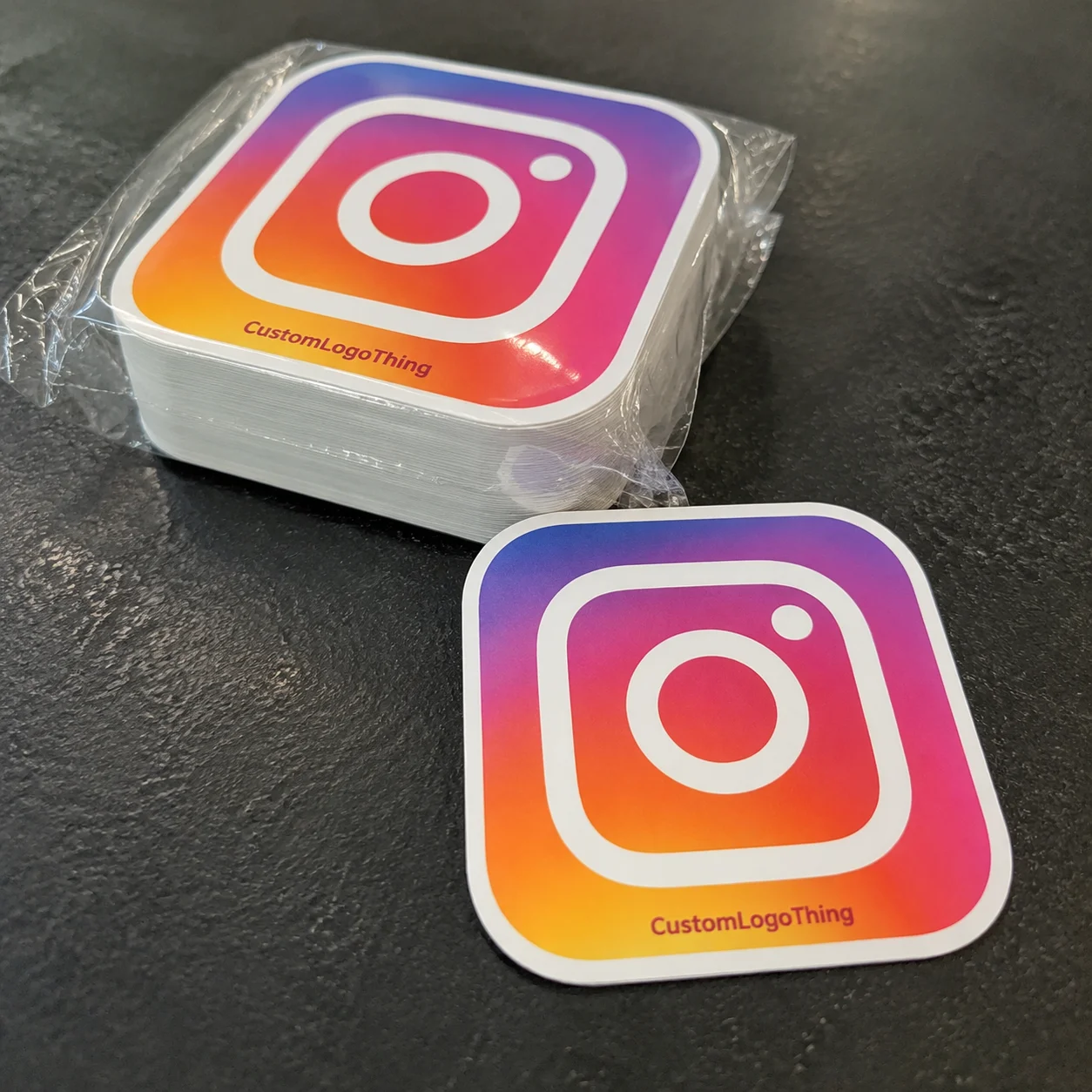
People forget most brand posts within seconds. A sticker on a laptop, bottle, mailer, notebook, retail bag, or sample pouch can stay visible for months. That is the practical appeal of instagram stickers custom: they take a social prompt and turn it into a physical reminder customers can keep, share, scan, or apply.
These are not stickers sold by Instagram. They are custom printed promotional stickers built around Instagram-style cues: handles, QR codes, hashtags, profile graphics, creator collab prompts, story-style reactions, product-drop labels, and “tag us” messages. The point is not to imitate the app. The point is to connect offline packaging with online action in a way that feels natural to the customer.
Brands often use them in ecommerce insert packs, influencer mailers, subscription boxes, event giveaways, pop-up shops, retail packaging seals, and launch kits. Some stickers are purely decorative. A well-made sticker sheet can make a box feel more finished and more personal. Others are meant to do a job: drive a scan, encourage a follow, collect user-generated content, label a limited drop, or move someone to a campaign page.
That distinction changes how the order should be planned. A decorative sticker can be judged mostly on look, texture, and brand fit. A conversion-focused sticker needs a readable message, a working destination, a scannable code, and material that holds up wherever it is applied. Pretty but unreadable is still a failed sticker, just with nicer colors.
From a packaging buyer’s point of view, Instagram-style stickers sit in a useful middle ground. They are small, easy to ship, relatively inexpensive at scale, and more personal than another printed card buried in a box. They can support package branding, campaign tracking, customer retention, social sharing, and limited-run promotions without requiring a full packaging redesign.
There is also a budget reason they show up everywhere. Sticker units can be inexpensive compared with rigid boxes, custom inserts, molded trays, or specialty print effects on primary packaging. A small sticker sheet can make a plain mailer feel considered. A QR sticker can update a campaign without changing the box. A roll label can turn standard packaging into something seasonal, creator-specific, or channel-specific.
The catch is that stickers look simple, so teams sometimes treat them casually. That is where problems start. Wrong adhesive. Tiny handle. QR code too glossy to scan. Color that looked great on screen and printed muddy on recycled paper. A cut line that clips the design. None of this is dramatic, but it can create waste, repacking work, delayed campaigns, or stickers that customers ignore.
The buying process should match the sticker’s purpose. If the sticker needs to survive a refrigerated bottle, choose the material like it matters. If it needs to push traffic to Instagram, test the scan and the landing page before production. If it is going into 20,000 orders, check proof details carefully. A sticker may be small, but in a packaging program it still has to perform.
How Custom Social Media Stickers Work From File to Finished Sheet
The workflow is not complicated: define the campaign goal, prepare the artwork, choose the format, confirm material and finish, review the proof, approve production, then receive the finished stickers. Simple. Also very easy to mess up if nobody owns the details.
Common formats include individual die-cut stickers, kiss-cut sticker sheets, roll labels, square stickers, circle stickers, QR code stickers, and packaging seals. Die-cut stickers are cut through both the sticker and backing in the final shape. Kiss-cut stickers cut only through the top sticker layer, leaving the backing intact. That makes peeling easier and gives sticker sheets a cleaner presentation.
Roll labels are usually better for packing lines, especially when staff apply hundreds or thousands of stickers to boxes, jars, tubes, sleeves, mailers, or bags. Sheets are better for kits and giveaways because they feel like a designed set. Individual die-cuts are useful for merch-style handouts, laptop stickers, event bags, and creator mailers.
The artwork needs to be built for print, not just social. Vector files are typically best for logos, icons, line art, and type. High-resolution PDF, PNG, or TIFF files can work if the resolution is strong enough at final size. CMYK color mode is usually the safer print workflow, although some digital printers accept RGB files and convert them internally. Fonts should be outlined or embedded so type does not shift when the file moves between systems.
Bleed and safe zones matter more than many teams expect. Bleed gives the printer extra image area beyond the cut line so tiny cutting movement does not leave a white edge. A common bleed range is about 1.5 to 3 mm, depending on the printer and sticker type. Safe zones keep important text, QR codes, handles, and icons away from the trim. For small stickers, a safe zone of roughly 2 to 4 mm is often practical, but the exact margin depends on the size and cut shape.
If the sticker has a custom shape, the cut path should be clean and not packed with fragile points unless that shape is truly necessary. Thin points, narrow stems, and deep interior cuts can be harder to weed and may lift more easily during handling. Rounded corners are often more durable than sharp corners, especially on stickers used as packaging seals or stickers applied to curved containers.
QR codes need their own review. Test the scan at final size. Test it on a phone with normal lighting, not just under perfect desk light. If the sticker will be glossy, holographic, clear, or curved around a bottle, test that too. Glare, low contrast, distortion, and crowding can all make a code unreliable. For very small stickers, it is usually safer to simplify the surrounding graphics and give the code quiet space rather than squeeze in extra copy.
A handle that looks crisp on a screen can become weak at two inches wide. White type on pale pink may fit the brand palette but fail on a kraft mailer. A tiny hashtag may be readable in a proof PDF at 200% zoom and useless in real life. Print does not care about the mood board. It rewards contrast, scale, and clean hierarchy.
Proofing should check the actual production variables: size, cut line, spelling, color expectations, material, finish, quantity, packing method, roll direction if applicable, and shipping details. If the sticker is part of a larger packaging program, match it against the rest of the packaging. A sticker that is two millimeters too large for a tube lid, carton panel, tissue fold, or jar cap is not “close enough.” It may become scrap, or at least a slower packing day.
Variable designs are possible. Some campaigns use one design across the whole run. Others split the order by creator, product line, promotion, or season. This can work well with Custom Labels & Tags and broader Custom Packaging Products programs when a brand wants consistent packaging with campaign-specific messages.
Versioning does add complexity. More files mean more proof points. More proof points mean more chances for the wrong handle, expired URL, old product name, or outdated campaign claim to slip through. Keep a version list. Name files clearly. Confirm final destinations before sending anything to production. For larger runs, a simple spreadsheet with file name, size, material, quantity, URL, and approval status can prevent avoidable errors.
“The best sticker is the one the customer understands in three seconds. If they need a second glance to know what to do, the design is doing too much.”
Materials, Finishes, and Adhesives That Change Sticker Performance
Two stickers can look identical in a mockup and behave completely differently in use. One survives condensation on a cold bottle. Another curls at the edge after two days on a kraft mailer. The difference usually comes down to material, coating, adhesive, and the surface underneath.
Paper, vinyl, BOPP, clear film, and textured stocks all have a place. Paper is a common choice for indoor packaging, inserts, short-term promotions, and budget-sensitive giveaways. It prints well, feels familiar, and can suit brands that want a softer or more natural look. However, standard uncoated paper is not usually the best choice for moisture, abrasion, or heavy handling.
Vinyl and BOPP are better when durability matters. They typically handle moisture and friction better than standard paper. That makes them useful for bottles, jars, shipping packs, retail packaging, outdoor giveaways, and products that customers may touch repeatedly. BOPP is especially common in packaging labels because it is thin, stable, and available in white, clear, and metallic-looking options.
Clear film can create a “printed-on” look, especially on glass, plastic jars, or colored packaging. It needs careful planning because transparent areas allow the container color to show through. White ink backing may be needed behind logos, text, or QR codes so the design does not disappear. On clear stickers, small type and low-contrast gradients can be risky unless the production setup supports them well.
Finish changes both appearance and function. Gloss laminate makes colors appear brighter and can create a polished retail look, but it can also produce glare. Matte laminate feels softer and more premium, and it often improves readability. Soft-touch coatings can make a sticker feel more elevated, although they may show scuffs depending on use. Holographic, glitter, foil, or metallic effects can attract attention, but they should not interfere with QR scanning or essential copy.
Adhesive selection is just as important as face stock. A general permanent adhesive is common for packaging seals, product labels, and promotional stickers meant to stay in place. Removable adhesive can be useful when the customer may peel the sticker off a card, laptop, or product surface. High-tack adhesive may be needed for rough, recycled, textured, or low-energy plastics, but it can be harder to remove cleanly.
Surface conditions matter. Corrugated kraft mailers, Matte Laminated Boxes, glass jars, flexible pouches, metal tins, plastic tubes, and paper shopping bags all accept stickers differently. Dust, oil, moisture, and cold surfaces can weaken bond strength. For cold-fill, frozen, refrigerated, or bathroom products, ask whether the material and adhesive are suitable for that environment. A sticker that works on a dry sample box may not work on a chilled bottle with condensation.
For instagram stickers custom orders tied to packaging, typical sticker thickness depends on the material and laminate. Many paper labels are relatively thin and efficient for roll application. Durable vinyl stickers are often thicker and feel more like merchandise. Sticker sheets may use a slightly heavier backing so the sheet feels stable in hand. The right choice depends on whether the sticker is meant to be applied by staff, peeled by customers, used as a seal, or kept as a branded item.
Ink coverage also affects the final result. Heavy dark backgrounds can look rich, but they may show scratches more than light designs. Large solid areas can reveal banding on some digital processes if the artwork is not prepared well. Fine gradients, tiny icons, and pale colors may shift slightly depending on press, stock, and coating. If exact color is important, request a physical sample or production proof when the budget and schedule allow.
For food, cosmetics, supplements, or regulated products, stickers may need to follow additional rules. Promotional stickers should not cover required labeling, warnings, lot codes, expiration details, ingredient lists, or compliance marks. If a sticker is applied directly to primary packaging, confirm whether the ink, adhesive, and placement are appropriate for the product category. Requirements depend on the market and product type, so cautious review is better than assuming a small sticker is exempt.
Pricing, MOQ, and Unit Cost Factors for Instagram-Style Stickers
Sticker pricing depends on more than size and quantity. Material, finish, cut complexity, number of designs, packing method, proofing needs, roll direction, and shipping schedule can all change the cost. A small square paper sticker on a roll may be very economical. A custom-shaped holographic sticker sheet with multiple kiss-cut elements, white ink, and split designs will usually cost more.
Minimum order quantity depends on production method. Digital printing often supports lower MOQs, sometimes suitable for small campaign tests, sample kits, or influencer drops. Flexographic or offset-style production may make more sense for higher-volume label runs where tooling, setup, or plate costs can be spread across many units. Exact thresholds vary, but as a general rule, unit cost decreases as quantity increases.
For small custom sticker projects, teams often order in the hundreds or low thousands. For ecommerce insert programs, common quantities may range from a few thousand to tens of thousands, depending on order volume and campaign length. Retail packaging seals or product labels can run much higher. The best quantity is not always the cheapest unit price. It is the quantity you can use before the campaign, URL, handle, offer, or packaging format changes.
Several cost drivers are predictable:
- Size: Larger stickers use more material and may reduce the number of pieces that fit on a sheet or roll.
- Shape: Simple circles, rectangles, and rounded squares are usually easier than intricate contour cuts.
- Material: Paper is often more economical than durable films, specialty textures, or metallic stocks.
- Finish: Lamination, foil, holographic effects, spot gloss, and specialty coatings usually add cost.
- Versions: Multiple creator names, hashtags, QR destinations, or language versions add proofing and setup time.
- Application format: Roll labels for machine or hand application may require specific core size, unwind direction, and gap spacing.
Shipping and packing also matter. Flat sheets may need protection from bending. Rolls need to be wound and packed so edges are not crushed. Individual die-cuts can be bulk packed, counted into bundles, or packed in sets. If the stickers are going directly into a fulfillment operation, ask how the team wants to receive them. The most beautiful sticker is annoying if the packing crew has to sort loose mixed designs by hand.
For campaign measurement, consider using QR codes or short URLs by version. A sticker for an influencer mailer might use one destination, while a sticker in standard ecommerce orders uses another. This is not just a marketing detail. It affects artwork, file naming, approval, and sometimes quantity planning. Keep the tracking structure simple enough that production staff and proof reviewers can verify it.
When comparing quotes, make sure each supplier is pricing the same specification. “Custom sticker” can mean very different things. Confirm final size, stock, adhesive, finish, color setup, proof type, quantity, packing, lead time, and freight. If one quote is much cheaper, it may be using a thinner material, no laminate, a different adhesive, or a simpler print process. That may be perfectly fine, but it should be a conscious decision.
Process and Timeline: From Concept to Campaign-Ready Stickers
A typical sticker project can move quickly if artwork is clean and decisions are made early. Small digital orders may often be produced in a short window after proof approval, while specialty materials, large quantities, split versions, or complex finishing can take longer. The safest schedule includes time for design, proofing, production, shipping, receiving, and packing line setup.
Start with the use case. Is the sticker a giveaway, a product label, a packaging seal, a QR prompt, or a decorative sheet? Where will it be applied? Who applies it: the factory, a fulfillment center, retail staff, event staff, or the customer? Does it need to survive shipping, refrigeration, moisture, sunlight, or repeated handling? These answers narrow the material and adhesive choices before anyone spends time polishing artwork.
Next, define the message. A sticker has limited space. Many successful designs focus on one action: follow us, scan for styling ideas, tag us to be featured, join the drop list, claim care instructions, or share your unboxing. If the sticker asks for three actions, customers may do none. For Instagram-driven campaigns, the handle, hashtag, or QR code should be easy to find without competing with too many decorative elements.
Then prepare production files. Include final dimensions, bleed, safe zone, cut path, color expectations, and any white ink layer if using clear or metallic material. For a sticker sheet, show each kiss-cut item and the outer sheet trim. For roll labels, specify orientation and unwind direction if the stickers will feed into a dispenser or labeling machine. If a machine applies the labels, the gap between labels and roll core size may also matter.
Proofing should be treated as a packaging approval step, not just a graphic design review. Check size against the real package. Print a paper mockup at 100% scale and place it on the mailer, box, jar, tube, pouch, or insert card. Scan the QR code at final size. Confirm the link destination. Review spelling, capitalization, trademark use, product claims, and any promotional terms. If the campaign has an expiration date, make sure the landing page will still make sense after the offer ends.
Production timing depends on the specification. A simple paper roll label may move faster than a die-cut vinyl sticker sheet with laminate and multiple versions. Specialty films, foils, textured stocks, and exact-match colors may require additional sampling or setup. If the stickers need to arrive with boxes, inserts, or other packaging components, build a shared schedule so one late piece does not hold up the full campaign.
Receiving is also part of the process. When stickers arrive, check quantity, design version, size, material, finish, cut quality, and packing condition. If rolls are part of a packing line, test one roll before staging the full run. If sheets go into kits, confirm the sheet count and whether the sheets are easy to pick and place. For large campaigns, a small receiving checklist can catch issues before the stickers are distributed across multiple packing stations.
Common Design and Ordering Mistakes That Hurt Results
The most common mistake is designing only for the screen. Instagram-style graphics are often bright, layered, and small. That can work online because the user can zoom, tap, or view on a backlit display. On a 50 mm sticker applied to a kraft box, the same graphic may become cluttered. For print, hierarchy matters. The main action should be visible first, then the handle, QR code, hashtag, or supporting copy.
Another mistake is ignoring the final surface. A removable sticker may be great on an insert card but weak as a shipping seal. A standard paper sticker may look right in an unboxing kit but fail on a wet bottle. A glossy sticker may look premium but make a QR code harder to scan under overhead lights. Match the sticker to the packaging surface and use environment, not just the visual concept.
Teams also underestimate small type. Handles, hashtags, legal notes, and promotional messages need enough size and contrast. Very thin fonts, condensed type, and reversed-out text can fill in or become hard to read. As a practical check, print the design at actual size on an office printer. It will not match production color, but it will reveal whether the layout is too small or too crowded.
Cut lines are another weak point. A contour cut that hugs every detail may look interesting in a mockup but peel poorly, tear easily, or require slower finishing. For stickers that customers will remove from a sheet, shapes should be easy to lift. For seals, the shape should support the fold or closure instead of fighting it. On cartons and mailers, rounded corners often reduce edge lift.
Ordering too many versions can create avoidable confusion. A campaign with ten creators, three languages, and five QR codes may be valid, but only if the approval workflow can handle it. Without careful file naming and proof tracking, it is easy to print an old handle or ship the wrong bundle to the wrong packing operation. If the team is small, fewer versions with cleaner tracking may perform better than a complicated versioning plan.
Finally, some teams treat stickers as an afterthought until the rest of the packaging is done. That can work for a simple decorative sticker, but it is risky for campaign stickers. If the sticker must fit a box panel, close a tissue wrap, seal a pouch, or match a brand color, bring it into the packaging plan early. The earlier it is specified, the easier it is to align with the full unboxing experience.
Next Steps Before You Request a Sticker Quote
Before requesting a quote, gather the practical details a production team needs. Start with quantity, final size, shape, material preference, finish preference, adhesive needs, number of designs, intended surface, and target delivery date. If you are unsure about material, describe the use case instead of guessing. “Applied to a chilled glass bottle” is more useful than “premium sticker.”
Prepare artwork in the strongest file format available. Vector PDF or AI files are usually preferred for logos, icons, and text. Include linked images or embed them at sufficient resolution. Add bleed and safe zones. If you are using QR codes, provide the final destination and test the code in the actual artwork. If the sticker uses clear, metallic, or holographic stock, ask whether white ink or special setup layers are needed.
Think about how the stickers will be handled after production. Will they be applied by hand, dispensed from a roll, packed as a sheet, inserted into ecommerce orders, or included in influencer kits? Should they arrive counted into bundles? Do different versions need separate cartons or labels? These details can prevent friction once the stickers reach the packing floor.
If the sticker is part of a larger package refresh, coordinate it with other components such as printed mailers, cartons, insert cards, tissue, labels, or product sleeves. A well-planned sticker can extend the life of standard packaging and add campaign flexibility. Used carelessly, it can look like a patch. The difference is usually in size, placement, material, and message discipline.
For best results, ask for a specification-based quote rather than a vague “custom sticker” price. Share the use case, artwork, expected quantity, delivery window, and any performance requirements. That gives the supplier a better chance to recommend a practical material and process. It also helps you compare options fairly instead of choosing based only on the lowest unit price.
FAQ
Are instagram stickers custom products official Instagram merchandise?
No. In packaging, the phrase usually refers to custom printed stickers that use Instagram-related campaign elements such as handles, hashtags, QR codes, “tag us” prompts, or social sharing messages. They should be designed to support your brand and campaign without confusing customers about ownership or affiliation.
What is the best material for Instagram-style packaging stickers?
It depends on use. Paper is common for indoor inserts, light packaging, and short-term promotions. BOPP or vinyl is usually better for moisture resistance, product labels, shipping packs, and stickers customers may keep. Clear film can work well on glass or plastic when the artwork is prepared correctly.
What size should a QR code sticker be?
The right size depends on scan distance, code density, contrast, surface curve, and finish. Many packaging QR stickers work best when the code has enough quiet space and is tested at final size. Small codes can work, but they should be simple, high contrast, and not placed on highly reflective or distorted surfaces.
Are sticker sheets or individual die-cut stickers better?
Sticker sheets are often better for unboxing kits, giveaways, and campaigns with several graphics. Individual die-cut stickers are useful for handouts, merch-style pieces, and creator mailers. Roll labels are usually better when staff need to apply stickers quickly to packaging.
Can custom stickers be used as packaging seals?
Yes, but the shape, adhesive, and material need to match the package. A seal that bridges a carton flap or tissue fold should have enough contact area and a shape that does not lift easily. Permanent adhesive is common, while removable adhesive may be useful when the seal should peel away cleanly.
How can I avoid ordering the wrong sticker specification?
Start with the use case, not only the artwork. Confirm the final surface, environment, size, material, adhesive, finish, quantity, and application method. Review a proof carefully, test QR codes at actual size, and compare the sticker against the package before approving full production.


