Large custom labels do more than carry a logo. In apparel, they can replace cramped neck tags, carry care instructions, support compliance text, and make a garment feel finished the moment it comes out of the bag. They also solve a quieter problem: they help a brand look intentional without forcing every piece of information into a tiny patch of fabric.
The catch is that a larger label is not automatically a better label. If the type is too small, the fold is wrong, or the material feels stiff against the skin, the result can look more expensive on paper than in the hand. Buyers usually discover this after the first sample, which is why the spec matters as much as the artwork.
For clothing brands working on retail packaging, private-label basics, uniforms, or relabeling existing garments, the label should be treated as part of the product system, not an afterthought. If you already order Custom Labels & Tags or broader Custom Packaging Products, this is the piece that connects the garment to the rest of the presentation.
What Large Custom Labels Do for Clothing
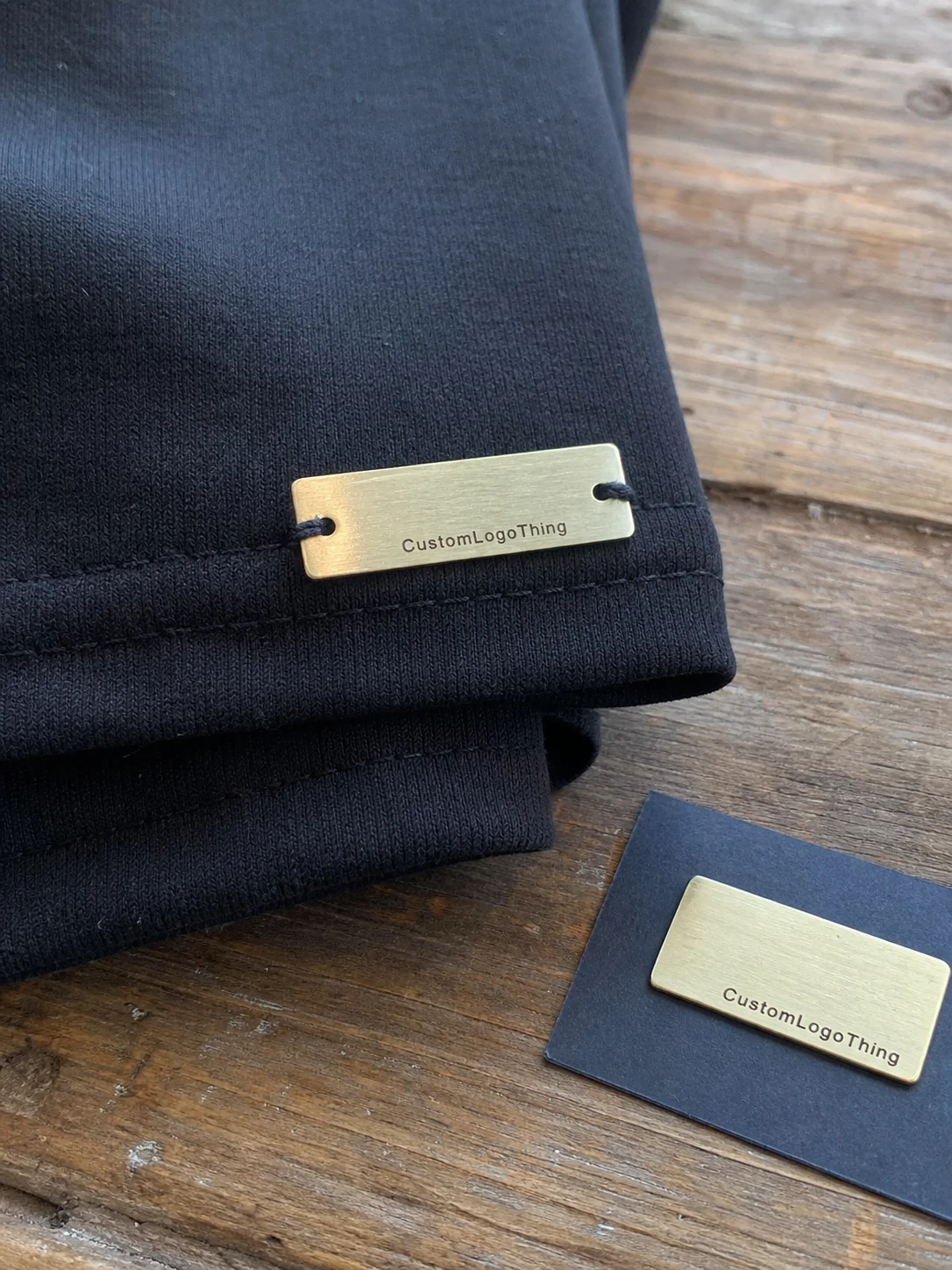
Large custom labels are easier to read, easier to sew, and easier to inspect than tiny tags that try to hold too much information. That is the main reason buyers ask for them. A larger format gives room for a logo, size, fabric or care details, icons, and origin text without turning the label into a dense block of microscopic print.
There is no single industry size that defines “large.” The term is functional. Once the label needs enough area to keep the layout readable after sewing, folding, and washing, it belongs in that category. The real test is not how big the label looks in a mockup. It is whether the finished piece still reads clearly after it has been stitched into a hoodie, washed five times, and handled by a customer who is not trying to inspect it carefully.
That is why the best label decisions start with the garment. A heavyweight fleece hoodie can take a broader woven label or a larger exterior branding piece. A soft tee, by contrast, may need a lighter construction and a softer edge so it does not scratch the neck. Kidswear pushes the requirement even further: the material has to feel gentle, the text has to stay legible, and the label cannot become a complaint waiting to happen.
Large labels also help with retail presentation. On a rack or folded on a shelf, they make the brand easier to recognize. That sounds cosmetic, but it affects how buyers and end customers judge the product. A garment with a clean, readable label usually feels more complete than one where the branding is squeezed into a corner.
In practical terms, a large label does three jobs at once:
- It carries information without crowding the design.
- It supports brand recognition at a glance.
- It makes the product look more finished in retail packaging.
“A label that cannot be read without effort is a production mistake, not a design choice.”
That rule sounds severe, but it saves money. The wrong label spec creates rework, waste, and a product that feels underdeveloped no matter how strong the rest of the line is. The label is small compared with the garment, yet it is often the part people touch first.
How the Production Process Works
The workflow is simple in theory and easy to get wrong in practice. It usually begins with artwork intake, then proofing, then material and construction selection, followed by production, finishing, inspection, and shipment. The whole thing runs faster when the buyer sends a final file set instead of a rough mockup and a list of hoped-for changes.
The proof stage is where most expensive mistakes are caught. This is the time to confirm dimensions, spelling, logo placement, color count, fold style, and the amount of text that has to fit on the label. If there are care instructions, size information, or compliance details, the proof needs to be checked at actual scale. A design that looks clean on a laptop can fail once it is reduced to the real label size.
Large custom labels deserve extra attention here because they often hold more than a logo. The more information on the label, the more opportunities there are for line breaks to behave badly, margins to shrink, or symbols to become illegible. If the layout includes multiple text blocks, ask for a mockup that shows the label in context on the garment, not just in isolation.
A typical order will involve a few decisions that affect both price and performance:
- Construction: woven, printed, satin, damask, or specialty material.
- Backing: sew-in, heat-applied, adhesive, or no backing.
- Fold style: straight cut, end fold, center fold, loop fold, or miter fold.
- Placement: neck, side seam, hem, cuff, or an exterior position.
- Content: logo only, logo plus size, or logo plus compliance and care details.
For buyers coordinating apparel with packaging, the label should be part of the same visual system as the hang tag, box, or bag. If the rest of the product packaging is minimal and crisp, the label should not introduce a different tone or a different typography system. That mismatch is easy to miss in proofs and obvious in the finished product.
Sample approval is not bureaucracy. It is insurance against the most common failure points: poor contrast, awkward folding, stiff edges, text that disappears into the seam, and materials that feel wrong on the body. A label that is technically correct can still be a bad choice if it is uncomfortable or visually heavy in the wrong place.
For transport and packaging discipline, general standards from groups such as ISTA are useful references even when the label itself is not the object being tested. The point is to think like a packing engineer as much as a designer: the label has to survive handling, storage, and fulfillment without damage or confusion.
Cost, Pricing, and MOQ: What Changes the Quote
Quantity is still the biggest pricing driver. Setup costs are spread across more units as volume rises, which pulls the per-piece price down. That is true whether the order is 500 pieces or 50,000. Buyers often focus on unit price alone and miss the setup math, then wonder why a low-MOQ order does not look cheap. The answer is simple: the same machine work still has to happen, whether the run is large or small.
Material choice comes next. A printed label with straightforward artwork usually costs less than a densely woven damask label with multiple thread colors, custom finishing, or a more complex fold. Large custom labels also use more raw material than small ones, and that matters once the dimensions grow. Extra width and height raise material use, slow finishing, and can increase waste during cutting or folding.
Other quote variables show up quickly:
- Size: larger labels use more material and can take longer to finish.
- Color count: more thread or print colors usually means more setup.
- Finish: soft-touch, heat-seal, adhesive, or specialty backing changes cost.
- Fold style: simple cuts are cheaper than folded constructions.
- Rush timing: urgent jobs can cost more if the line can actually be moved up.
- Sample work: revised proofs, file cleanup, and physical samples add time and cost.
MOQ, or minimum order quantity, is mostly a function of setup. The supplier needs enough units to justify the tooling, run time, and finishing steps. Smaller minimums are often possible on printed constructions, especially when the layout is simple and the turnaround is not aggressive. Woven labels, specialty backing, and larger formats usually need higher volume because the production setup is more involved.
| Label Type | Typical MOQ | Common Use | Price Tendency |
|---|---|---|---|
| Printed satin | 250 to 1,000 pieces | Soft apparel labels, care details, lighter garments | Lower setup cost, better for smaller runs |
| Woven damask | 1,000 to 5,000 pieces | Premium branding, durable retail apparel | Higher setup, stronger perceived value |
| Heat-applied label | 500 to 2,000 pieces | Outerwear, athleticwear, no-sew applications | Depends on adhesive and finish |
| Specialty large format | 1,000+ pieces | Multi-line content, exterior branding, compliance-heavy labels | Usually the highest setup and finish cost |
For budget planning, simple large custom labels often land around $0.08 to $0.22 per unit at volume. More detailed woven or specialty builds can move into the $0.18 to $0.45 range or higher depending on size, finish, and quantity. That spread is normal. A suspiciously low quote usually means something is missing, whether that is shipping, revision work, proof fees, or a thinner material than the buyer expected.
One detail worth checking early is whether the quote covers the label alone or the broader brand package. If the label has to coordinate with custom printed boxes, hang tags, or inserts, the revision cycle can affect the whole order. A small artwork change can ripple across multiple components, which is how a low-cost label ends up creating a higher-cost packaging run.
Choosing the Right Size, Material, and Finish
Good label specs start with the garment. A label that works on a denim jacket may feel wrong on a fitted tee. A finish that looks refined on a folded retail hoodie might be irritating on a child’s garment. The best large custom labels are the ones that fit the product and the use case, not the ones that simply fill a bigger rectangle.
Woven labels usually read as the most premium choice and hold their shape well. They are a strong option for branding that needs durability and a cleaner edge. Printed labels are useful when the design includes fine text, small symbols, or gradients that would be hard to reproduce in weave. Satin gives a softer hand and is often preferred for garments worn close to the skin. Damask is a woven construction with fine detail and a polished appearance, though not always the lowest-cost route.
Size should be driven by readability. If the label has to carry brand name, size, care instructions, and compliance information, the layout needs breathing room. Overcrowding is one of the fastest ways to make a label look cheap. It does not matter how strong the logo is if the rest of the text is crammed into a space that should have been split into two lines or one larger label.
Finish matters just as much as material. A label can be visually correct and still feel wrong in the hand.
- Soft hand: better for neck areas and next-to-skin use.
- Clean edge: important if the label will be visible on the outside of the garment.
- Fold style: end folds and center folds change how the label sits after sewing.
- Backing: heat seal or adhesive can help in some applications, but not every fabric accepts them well.
Here is the basic match-up that tends to work in production:
- T-shirts and basics: printed satin or soft woven, low profile, low irritation.
- Hoodies and fleece: woven damask or a thicker printed label, enough room for branding.
- Denim and workwear: sturdier woven construction, clean edges, durable stitching.
- Kidswear: soft touch, clear type, no sharp edge or heavy backing.
- Outerwear: larger format, stronger branding, content that stays readable at a glance.
If the line also uses custom packaging, keep the label language aligned with the hang tag, carton, and insert materials. That does not mean every element should match exactly. It means the typography, logo treatment, and information hierarchy should feel like part of the same system. A brand looks more credible when the package, the tag, and the label tell the same story without repeating themselves.
For paper components, the FSC standard matters if the packaging program includes cartons or tags. The textile label itself may be woven or printed, but the overall presentation still benefits from the same level of discipline. Buyers who separate label selection from packaging decisions usually end up with pieces that work individually and clash collectively.
Turnaround, Lead Time, and Production Steps
Lead time generally begins after proof approval, not after the first email inquiry. That distinction matters more than buyers expect. If the artwork is still changing, the color reference is unclear, or the label construction has not been chosen, the clock has not really started. A supplier can only produce against approved specs.
A normal production sequence looks like this: proofing, sample or revision if needed, production, finishing, inspection, and shipment. The exact duration depends on construction and quantity. A simple printed label can move faster than a detailed woven one. Add folding, specialty backing, or multiple approval rounds, and the timeline stretches. That is not a failure of the supplier; it is the cost of making something specific.
Typical timing ranges are usually in this neighborhood:
- Proof approval: 1 to 3 business days if the file is ready.
- Sampling or mockup revisions: 2 to 5 business days depending on edits.
- Production: often 7 to 15 business days for standard runs.
- Shipping: depends on destination, freight method, and order size.
Rush service can work, but only if the order is actually rushable. Final artwork, confirmed dimensions, and available materials are the usual requirements. If the buyer is still deciding between woven and printed, or making copy changes after the proof, the schedule will stretch no matter how urgent the launch feels. Production does not bend around uncertainty.
Seasonal launches need margin. If the labels are part of a retail release, build in enough time for relabeling, packing, and coordination with the rest of the packaging plan. Large custom labels can become the bottleneck simply because they are the last small component to be approved. That is a bad place to discover a delay.
A practical rule: place the order early enough that one revision is still possible without affecting the ship date. One revision is normal. Several revisions are usually a sign that the spec was not complete enough.
Common Ordering Mistakes That Make Labels Look Cheap
The most common mistake is choosing a label size that looks elegant on screen and turns cramped once it is sewn in. A label can be physically large and still be visually wrong if the text is too small, the spacing is too tight, or the fold cuts off part of the layout. Oversized does not mean readable. Readable is the goal.
Contrast is another frequent failure. Light gray text on pale satin can look refined in a proof and disappear on fabric. Thin type, long lines, and crowded icons create the same issue. Screens are forgiving; cloth is not. If the label needs to be read in a store, in a closet, or after repeated washing, the letters need enough weight and enough separation from the background.
Cost-cutting on construction also shows up quickly. A low unit price means very little if the label frays, curls, irritates the neck, or fades after a few washes. Buyers sometimes accept a cheaper spec and end up ordering again because the first run looks tired too soon. That is not savings. That is deferred expense.
Other mistakes show up often:
- Ignoring fold allowance and losing part of the artwork in the seam.
- Skipping a physical scale check before approval.
- Using too many text lines for the available space.
- Not confirming whether the label is sew-in, heat-applied, or adhesive-backed.
- Forgetting how the label looks next to the garment color and trim.
Brand consistency matters too. If the label feels disconnected from the hang tag, carton, and insert materials, the entire packaging system starts to look assembled in pieces. Customers notice that, even if they cannot explain why. The product feels less settled.
Handling and packing discipline also matter once the labels are bundled with other components. Bent cartons, crushed inserts, and mixed lots usually come from rushed fulfillment, not from a bad design file. That is where basic packaging standards and transport awareness pay off. Waste is not only an environmental issue; it is a quality-control issue.
What to Do Before You Request a Quote
Send a clean spec. That is the fastest way to get an accurate quote and avoid the back-and-forth that slows everything down. For large custom labels, the more complete the request, the more useful the estimate.
- Dimensions: width, height, and whether the label needs to be folded.
- Artwork: final logo files, text copy, and any icons or care symbols.
- Quantity: total units and any size splits if needed.
- Garment type: tee, hoodie, denim, kidswear, outerwear, or other.
- Construction: woven, printed, satin, damask, or specialty build.
- Backing and application: sew-in, heat-applied, adhesive, or no backing.
- Deadline: the real deadline, not the comfortable one.
If the design includes several text lines, ask for a mockup or sample. That is especially useful if the label will be visible on the garment exterior or if it has to carry both branding and compliance information. The purpose of the proof is not to admire the artwork; it is to catch problems before production starts.
Ask each supplier for the same spec sheet so the quotes can be compared on equal terms. Otherwise one quote may include setup, another may exclude shipping, and a third may assume a different material. That is how pricing gets distorted. A fair comparison only works when the inputs are the same.
Also check whether the price covers the label alone or the full presentation system. If the garment is part of a broader package branding program, the label should fit the visual language of the hang tag, box, and bag. Good branded packaging feels coordinated without being overworked.
For apparel lines that need to look organized quickly, the sequence is straightforward: lock the spec, request the proof, compare the quotes, then place the order. That reduces rework, keeps the budget honest, and gives the garment a label that actually helps the product instead of competing with it.
How big should large custom labels be for clothing?
Start with the garment and the information you need to fit. Brand name, size, care details, and compliance text all compete for space. A label is large enough when the layout stays readable after folding and sewing. Ask for an actual-scale mockup so you can check it on the real garment, not only on a screen.
Are large custom labels better woven or printed?
Woven usually feels more premium and holds shape well, while printed is often better for fine detail, gradients, and lower pricing. If the label sits against skin, softness matters as much as appearance. For heavy wash cycles, compare durability specs rather than judging from a single sample photo.
What MOQ should I expect for large custom labels?
MOQ depends on construction and finish, but simpler printed options can support smaller runs than more complex woven builds. The per-piece price drops as quantity rises, so very small orders often cost more than buyers expect. If you are testing a new line, ask whether a sample run or mixed-size order is available.
How long do large custom labels take to produce?
Production usually starts after proof approval, so clean artwork and fast decisions matter. Lead time depends on material, quantity, and finishing, but rush orders only work when the specs are final and stock is available. Build extra time into seasonal launches and relabeling projects.
What should I send to get an accurate large custom labels quote?
Send final dimensions, artwork, quantity, garment type, color specs, and the exact label construction you want. Include fold style, backing, sewing method, and deadline so the quote reflects the real job. Ask for unit cost plus any setup, sample, shipping, or rush fees so the total is actually comparable.


