Buyer Fit Snapshot
| Best fit | Luxury Rigid Packaging Manufacturer projects where brand print, material claims, artwork control, MOQ, and repeat-order consistency need to be specified before quoting. |
|---|---|
| Quote inputs | Share finished size, material target, print colors, finish, packing count, annual reorder estimate, ship-to region, and any compliance wording. |
| Proofing check | Approve dieline scale, logo placement, barcode or warning zones, color tolerance, closure strength, and carton packing before bulk production. |
| Main risk | Vague material claims, crowded artwork, missing packing details, or unclear freight terms can make a low unit price expensive after revisions. |
Fast answer: Luxury Rigid Packaging Manufacturer: Board, Finish, Dieline, and Unit Cost should be specified like a repeatable production item. The safest quote records material, print method, finish, artwork proof, packing count, and reorder notes in one written spec.
Production checks before approval
Compare the actual filled-product size with the drawing, then confirm tolerance on folds, seals, hang holes, label areas, and retail display edges. Reserve space for logos, QR codes, warning copy, and material claims before decorative graphics fill the panel.
Quote comparison points
Review material grade, print process, finish, sampling route, tooling charges, carton quantity, and freight assumptions side by side. A quote is only useful when the supplier can repeat the same color, closure quality, and packing count on the next order.
A luxury rigid packaging manufacturer can make a box look immaculate on a shelf and still miss the real job if the corners crush in transit, the finish scuffs under handling, or the product rattles inside the insert like loose change. That gap between appearance and performance is where a lot of packaging decisions go sideways. Pretty is nice. Durable is what keeps the replacement orders from piling up.
Custom Logo Things works across custom printed boxes, retail packaging, and product packaging decisions from the buyer’s side of the table, so the conversation has to cover structure, freight, assembly, and the unboxing moment in one pass. That sounds simple. It isn’t. Plenty of suppliers still treat those pieces like separate jobs, and then everyone acts surprised when the quote is low but the finished box is a headache. If you are comparing a luxury rigid packaging manufacturer, start with the build, the insert, and the sample approval process before anything goes to production. Structure carries the load. Finish sells the story.
What a Luxury Rigid Packaging Manufacturer Actually Does
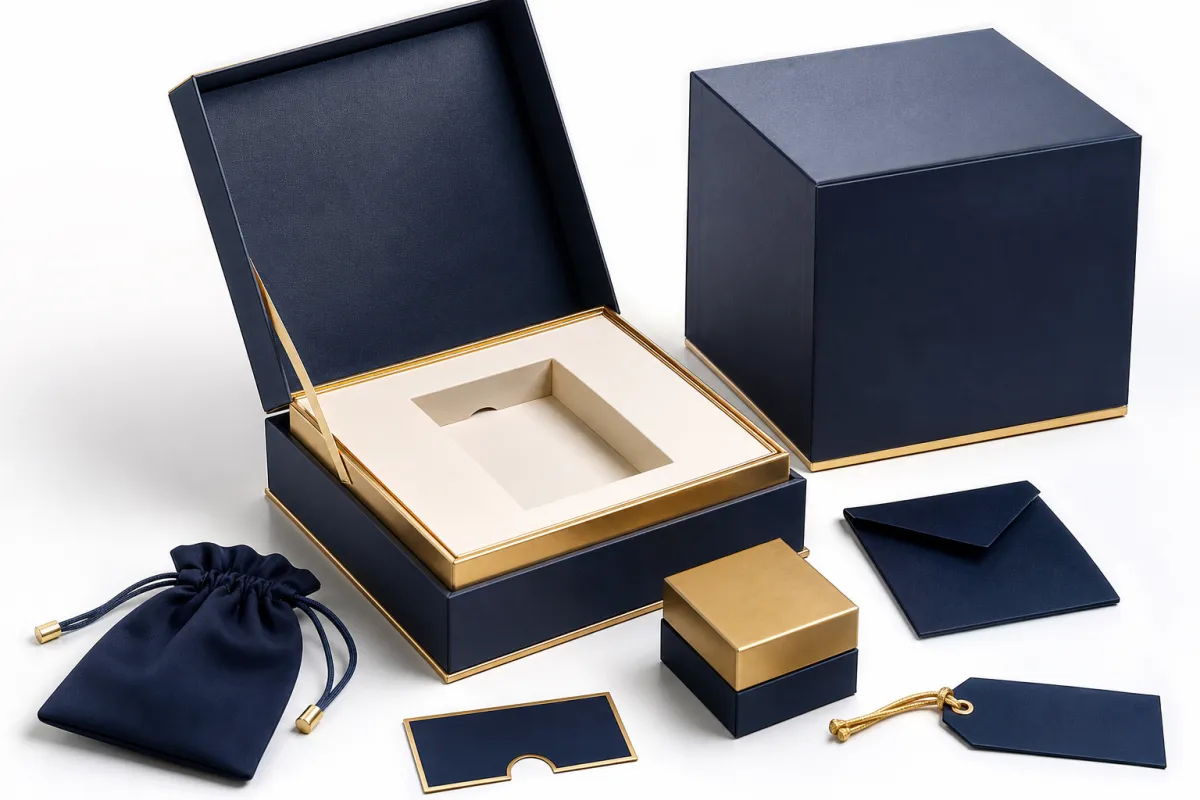
A luxury rigid packaging manufacturer builds packaging from thick board, wrapped surfaces, custom inserts, and finishing work that gives the box weight, presence, and protection. In practice, rigid packaging is usually made from chipboard or greyboard, often around 1.5 mm to 3.0 mm thick, then wrapped with printed or specialty paper. That wrap can be matte, soft-touch, textured, foil stamped, embossed, debossed, or some combination of those, depending on the brand and the product.
Rigid boxes and folding cartons solve different problems. Folding cartons ship flat and assemble quickly. A luxury rigid packaging manufacturer is building a box that arrives pre-formed, keeps its shape, and uses more labor to keep corners crisp and panels aligned. That extra labor is exactly why these boxes cost more, and also why they carry a stronger premium cue. Cosmetics, spirits, jewelry, premium electronics, and collector items all benefit from that physical presence. The customer notices the package branding. Operations notices whether the box survives a freight lane without turning into a dented apology.
In shipping and logistics, rigid packaging has a job beyond looking expensive. It has to protect the product through pick-and-pack, pallet movement, vibration, compression, and the occasional rough handoff that nobody wants to admit happened. A good luxury rigid packaging manufacturer thinks through how the box behaves inside a master carton, how much void fill the product needs, whether an insert stops migration, and whether the outer surface is likely to rub against neighboring cartons. That is where packaging design stops being decorative and starts becoming measurable.
Buyers usually get the point faster once they see the three-part structure behind the box: board, print, and hand assembly. If one of those parts is weak, the whole package feels cheaper. A premium box can still underperform if the insert is loose, the wrap pulls at the corners, or the closure style doesn’t suit the product weight. Strong luxury rigid packaging manufacturer conversations go far beyond artwork and move into thickness, tolerances, fit, and transit assumptions. That part is not glamorous, but it is the part that keeps the project from going sideways.
Before you compare vendors, set expectations clearly. You want to know how the process works, what drives cost, where delays usually show up, and how a supplier prevents damage from becoming a hidden expense. If a luxury rigid packaging manufacturer cannot explain those pieces in plain language, the quote may look tidy on paper while quietly hiding risk in production or freight. And yes, that happens more often than it should.
How a Luxury Rigid Packaging Manufacturer Builds Boxes
The production flow usually starts with a product brief, then moves into dieline work, sampling, artwork approval, board cutting, wrap printing, lamination or coating, assembly, insert installation, and final pack-out. A dependable luxury rigid packaging manufacturer wants dimensions, product weight, fragility notes, shipping method, and the target opening experience before anything gets locked. That early detail saves time later because rigid packaging does not forgive guesswork once tooling and materials are moving.
Rigid box manufacturing is part craft and part controlled assembly. The board has to be cut accurately, the wrap needs clean registration, glue coverage has to stay even, and corners need to wrap tight without buckling. A good luxury rigid packaging manufacturer watches small details like corner turn-in, panel squareness, insert friction, and surface alignment because those are the things buyers notice even if they cannot name them. If a magnetic closure feels weak or a tray slides too freely, the box loses its premium feel immediately.
Structural engineering matters just as much as print quality. A box that looks beautiful in a render can still perform badly in palletized freight if it crushes under stack pressure or allows the product to rattle. For that reason, many brands ask a luxury rigid packaging manufacturer to test not only appearance but also fit, compression, and vibration behavior. The standards conversation often points to ISTA shipping test methods, especially if the product moves through parcel networks or third-party logistics centers.
Several rigid box structures come up again and again, and each one behaves a little differently. A one-piece setup box gives you a classic premium look. A magnetic closure book-style box adds a satisfying open-and-close feel, but it needs careful hinge construction. Telescoping boxes offer a lid-and-base profile with good protection for heavier items, while tray-and-sleeve styles give a strong reveal and work well for sets or gift packaging. A thoughtful luxury rigid packaging manufacturer matches structure to the product instead of forcing every brand into the same template. That part matters more than people think.
Timelines depend on how many moving parts the job has. A simple rigid box with standard wrap and a plain insert might move from proof approval to production in 12 to 15 business days, while a design using specialty paper, foil, embossing, and a custom insert may need 20 business days or more. Delays usually show up at sample revision, artwork signoff, paper sourcing, or finishing bottlenecks. If you are dealing with a luxury rigid packaging manufacturer who talks openly about those choke points, that is usually a good sign. It means they’ve seen the mess before and know how to keep it from becoming your mess.
A pretty sample that cannot survive a drop test is not finished packaging; it is only a display object.
That line sounds blunt because packaging problems are blunt. They show up as dents, loose fit, crooked panels, and customer complaints. A luxury rigid packaging manufacturer should balance presentation and durability without pushing one so far that the other suffers. The right supplier is usually the one that asks uncomfortable questions early, then uses those answers to make a better box.
Key Factors That Shape Premium Rigid Box Quality
Quality starts with the material stack, and a luxury rigid packaging manufacturer usually treats board thickness, wrap paper choice, coatings, insert material, and finishing method as one system instead of separate decisions. A 2.0 mm greyboard box wrapped in 157 gsm art paper with matte lamination feels different from a 3.0 mm board with textured paper and soft-touch lamination. Add foil stamping, embossing, or spot UV, and the tactile experience changes again. In packaging, visual appeal and physical feel travel together.
Durability depends on how the box handles stress. Crush resistance matters if cartons are stacked in a warehouse. Stackability matters if cases ride on pallets. Weight matters because heavier structures can raise outbound freight and make retail replenishment less convenient. A careful luxury rigid packaging manufacturer considers whether the package needs to survive repeated handling, cold-chain conditions, or long storage periods before it ever reaches the customer. That’s the part that saves a brand from looking polished in photos and messy in operations.
Consistency is another quiet marker of quality. On a retail shelf, box heights need to line up, panels need to stay square, and closure points should feel the same from unit to unit. If the run varies too much, the whole display looks less polished, even if the graphics are strong. That is why seasoned buyers of retail packaging often care more about build consistency than about flashy decoration alone. A clean structure with disciplined tolerances usually beats a busy design that is hard to assemble well.
Brand fit matters too. The opening force should feel intentional, not stubborn. A magnetic closure should snap with a controlled, quiet action. An insert should hold the product firmly but not trap it so tightly that the customer has to fight the box. A strong luxury rigid packaging manufacturer understands that the unboxing sequence is part of the product story, and that story starts before the item is even visible. I’ve seen beautiful boxes lose credibility in three seconds because the lid dragged or the insert made the product wobble. That kind of thing kills the premium feel fast.
Sustainability tradeoffs deserve an honest conversation. Recycled greyboard, paper-based inserts, and mono-material construction can reduce waste, but not every decorative feature is harmless from a materials point of view. Heavy lamination, extra magnets, foam inserts, and oversized empty space can all add cost and complexity. If a supplier is serious about responsible choices, they should be able to talk through FSC-certified papers, recycled content, and right-sized packaging without pretending there is a perfect answer. The FSC framework is a useful reference point for chain-of-custody questions, and the EPA recycling guidance helps anchor the conversation around recoverability and material handling.
Here is a practical checklist many buyers use to judge quality quickly:
- Board integrity: no warping, soft spots, or crushed corners.
- Wrap performance: clean turns, even glue spread, no bubbling at edges.
- Insert fit: product stays centered and does not rattle in transit.
- Finish control: foil, emboss, and coating stay consistent across the run.
- Functional feel: closure strength, opening resistance, and lid alignment feel deliberate.
If one of those items fails, the whole package feels off. That is why a luxury rigid packaging manufacturer needs more than a pretty portfolio; it needs a process that controls the box from raw board to final shipment. Fancy photos don’t catch warped board. Production discipline does.
What Drives Luxury Rigid Packaging Manufacturer Pricing
Pricing usually comes down to board thickness, print method, specialty finishes, custom inserts, labor intensity, order quantity, and overall dimensions. A luxury rigid packaging manufacturer may quote a box that looks expensive compared with a folding carton, but that comparison is not really apples to apples. Rigid packaging includes more hand assembly, more material per unit, and more opportunities for quality checks, so the unit cost reflects actual work, not just markup.
Low quantities almost always raise the per-unit price because setup, sampling, toolmaking, and manual assembly get spread across fewer boxes. That is not unique to one supplier; it is how rigid production behaves. A 500-unit run can cost dramatically more per unit than a 5,000-unit run, even if the design stays the same. A good luxury rigid packaging manufacturer explains those breakpoints clearly instead of hiding them behind a vague quote. Buyers deserve to know where the price drops and why.
Freight can move the number more than people expect. Oversized boxes consume pallet space quickly, and bulky inserts can raise carton cube even when the product itself is compact. If packaging dimensions inflate by even half an inch on multiple sides, outbound efficiency may drop enough to change the landed cost. A careful luxury rigid packaging manufacturer thinks about freight class, pallet density, and master carton configuration before the order is finalized. That’s not a side issue; it’s part of the price.
Some design choices look premium but make assembly harder. Deep embossing can slow production if registration is tight. Soft-touch film may feel great, but it can show scuffs if the box is rubbed hard during transit. Magnetic closures add elegance, yet they increase component count and can complicate fit. A disciplined luxury rigid packaging manufacturer will warn you when a finish choice adds risk without adding much customer value. That warning is worth listening to, even if it dents the mood in the meeting a little.
The table below shows how common rigid box builds typically compare for budget planning. These are general ranges, not a fixed price list, because material availability, artwork coverage, and quantity can move the numbers quickly.
| Box Style | Typical Build | Common Use | Typical Unit Range at 5,000 pcs |
|---|---|---|---|
| Basic rigid setup | 1.5-2.0 mm board, printed wrap, matte lamination | Gift sets, entry premium product packaging | $1.40-$2.20 |
| Mid-tier premium box | 2.0 mm board, soft-touch finish, foil or emboss, paper insert | Beauty, wellness, small electronics | $2.40-$4.10 |
| High-touch luxury box | 2.5-3.0 mm board, specialty paper, magnetic closure, custom insert | Prestige launches, collectible retail packaging | $4.50-$7.50 |
Those numbers change with size, print coverage, and shipping assumptions. A large format box can cost more to make and much more to move, even if the decoration stays simple. That is why a smart buyer compares the full quote, not just the unit price. A reliable luxury rigid packaging manufacturer should spell out sampling charges, tooling, freight assumptions, and any special finishing fees before approval.
Here is a simple quote comparison framework that keeps teams honest:
- Structure: board thickness, box style, and insert type.
- Finish: lamination, foil, embossing, coating, and paper grade.
- Quantity: price tiers at 1,000, 3,000, 5,000, and 10,000 units.
- Timing: prototype lead time, production lead time, and freight transit time.
- Logistics: master carton count, pallet pattern, and shipping destination.
That kind of comparison makes it easier to choose a luxury rigid packaging manufacturer based on total landed cost, not just a headline number that looks attractive for about five minutes. Pricing without context is just a number with confidence issues.
Step-by-Step: From Brief to Production and Delivery
The cleanest projects begin with a tight product brief. A luxury rigid packaging manufacturer needs product dimensions, product weight, fragility notes, shipping channel, and the customer experience goal. If the item ships direct to consumer, the box may need more internal restraint than a retail display box. If it moves through wholesale distribution, the outer package may need better stack performance and cleaner pallet geometry.
Next comes prototype development. This is the moment to check fit, closure strength, board feel, and whether the insert supports the item the way you expected. A sample that looks good on camera can still fail in the hand if the lid drags, the magnet is too strong, or the product sits too high in the cavity. A seasoned luxury rigid packaging manufacturer asks you to test more than appearance; they want to know whether the sample survives a real shipping scenario. That’s not being picky. That’s preventing a mess later.
Artwork and dieline confirmation should happen before the run begins, not after. That means bleed, type size, color expectations, foil placement, and insert openings all need review. If the packaging design is built for a bottle, a jar, or a boxed set, the opening window must be checked with the real item in mind. A good luxury rigid packaging manufacturer will warn you early if text is too close to a fold, if the finish may distort fine detail, or if the paper choice changes how dark the colors appear.
Production planning then moves into material procurement, print scheduling, wrapping, assembly, quality checks, and pack-out. Small choices have big downstream effects. A delayed paper shipment can push the run. A last-minute artwork edit can force reproofing. A slightly off insert can create a high reject rate at assembly. That is why a dependable luxury rigid packaging manufacturer communicates in stages, not just at the start and the finish. It keeps everyone honest and cuts down on the “we thought you meant...” nonsense.
Delivery and acceptance should include count verification, damage inspection, and a quick review of how the boxes were packed for transit. If the order is going to a fulfillment center, the packaging should arrive ready for kitting or direct allocation. If it is going straight to retail, the cartons may need clearer labeling and tighter cube efficiency. A responsible luxury rigid packaging manufacturer helps you think through the receiving step, because problems there can be just as costly as problems on the line.
- Brief: define dimensions, weight, shipping method, and presentation goals.
- Prototype: confirm fit, feel, and protection before artwork is locked.
- Approval: sign off on dieline, print, finish, and insert placement.
- Production: schedule materials, printing, wrapping, assembly, and inspection.
- Delivery: check quantity, condition, pallet pattern, and readiness for use.
That sequence sounds simple, but it is exactly where a lot of brands save money or lose it. If a luxury rigid packaging manufacturer keeps the process visible and checks each stage against the product’s real shipping path, the final result usually holds together far better.
Common Mistakes When Hiring a Luxury Rigid Packaging Manufacturer
The first mistake is approving a design before testing the product inside it. Renderings can hide a loose insert, a weak corner, or a lid that looks elegant but catches during opening. A luxury rigid packaging manufacturer should be willing to build samples that reflect the real product dimensions, not just a theoretical fit. If the item shifts by even a few millimeters, the unboxing feel changes fast.
The second mistake is focusing only on unit price. That is a narrow way to buy packaging. Total landed cost includes freight, storage, spoilage, remake risk, and damage claims. A slightly higher quote from a better luxury rigid packaging manufacturer can be cheaper overall if it reduces breakage, avoids rework, and packs more efficiently on a pallet. Packaging buyers who track landed cost usually make better decisions than buyers who only track the lowest line item.
Another common issue is poor communication on tolerances and finish expectations. “Premium” is not a measurable instruction. You need to say whether the box should feel matte or silky, whether the paper should have texture, whether the closure should snap lightly or firmly, and how much movement is acceptable for the product inside. If a luxury rigid packaging manufacturer does not receive that level of detail, it may still produce a good box, but it may not be the box you intended.
Skipping shipping tests is another costly oversight, especially for ecommerce, subscription kits, and high-touch retail channels. A package can look excellent on a desk and still fail after vibration, compression, and repeated handling. If the product is fragile, the box should be checked under the same transit conditions it will actually face. A better luxury rigid packaging manufacturer will not treat that as extra work; they will treat it as basic risk control.
Finally, do not let vague specs blur the project. If no one has said how the box will close, how the insert should behave, what the surface texture should feel like, or whether the packaging is meant for shelf display or parcel shipping, everyone starts making assumptions. That is where projects drift. The right luxury rigid packaging manufacturer keeps the details explicit because details are what keep production calm.
Next Steps With a Luxury Rigid Packaging Manufacturer
If you are narrowing supplier options, start with the basics: product dimensions, shipping method, target finish level, order volume, and budget. A luxury rigid packaging manufacturer can only quote accurately if the brief includes the real use case. A box for in-store gifting is not the same as a box for nationwide parcel fulfillment, even if the product inside is identical.
Ask each supplier for sample photos, material options, lead-time ranges, and examples of how they handle protective inserts. Also ask how they confirm transit durability, what they do if the sample needs revision, and whether they can support custom printed boxes and package branding without forcing the design into a one-size-fits-all format. The best suppliers speak in specifics, not promises.
It helps to build a comparison sheet with simple scoring categories. Many teams use fit, finish, communication, shipping readiness, and pricing clarity. That makes it easier to compare a luxury rigid packaging manufacturer with another luxury rigid packaging manufacturer on the same terms instead of relying on instinct alone. If one supplier is strong on finishing but weak on logistics, you will see it immediately.
If you are still in the early planning stage, explore Custom Packaging Products to see what kinds of structures and materials are available, and review About Custom Logo Things if you want a sense of how the team approaches custom packaging work. Those pages will not replace a proper sampling process, but they can make the first conversation much more efficient. A good luxury rigid packaging manufacturer relationship starts with clear questions and realistic expectations.
My honest advice is to request a physical prototype before full production, even if the visuals already look right. That one sample often reveals whether the insert is too tight, whether the closure feels right, and whether the package survives the handling you actually expect. If a luxury rigid packaging manufacturer cannot explain fit, freight, and finishing in plain language, keep looking until you find one that can. For premium packaging, clarity is part of the product.
How does a luxury rigid packaging manufacturer differ from a standard carton supplier?
A standard carton supplier usually works with folding cartons that ship flat and rely on lighter board, faster machine folding, and lower assembly labor. A luxury rigid packaging manufacturer builds thicker, pre-formed boxes with more manual work, more finish options, and tighter attention to fit and presentation. The difference matters because rigid boxes are often chosen for premium unboxing, better protection, and stronger branded packaging on the shelf or in transit.
What should I send to a luxury rigid packaging manufacturer for an accurate quote?
Send product dimensions, product weight, fragility notes, target quantity, preferred box style, finish preferences, and the shipping method. A luxury rigid packaging manufacturer also needs to know whether the boxes will ship individually, in master cartons, or on pallets, because freight assumptions can shift the quote a lot. If you already know you need an insert, include that upfront so the quote reflects the actual build, not a simplified placeholder.
How long does luxury rigid packaging production usually take?
Timing depends on sampling, artwork approval, specialty material sourcing, and finishing complexity. A straightforward job can move fairly quickly once proofs are approved, while a custom piece with foil, embossing, and a detailed insert takes longer. A reliable luxury rigid packaging manufacturer should give you a clear timeline from prototype through production and should flag approval delays before they become schedule problems.
What factors raise pricing most in luxury rigid packaging?
The biggest drivers are board thickness, custom inserts, specialty finishes, low order quantities, and labor-heavy assembly. Oversized boxes can also increase freight and storage costs, even if the unit price looks acceptable. A good luxury rigid packaging manufacturer helps you see where the money goes so you can decide whether the extra finish or structural upgrade is worth it for your product packaging goals.
How can I tell if a luxury rigid packaging manufacturer can handle shipping demands?
Ask how they test fit, compression, vibration, and scuff resistance before final approval. Request examples built for your shipping channel, whether that is retail distribution, ecommerce, or kitting, and ask how they think about pallet density and master carton efficiency. If the supplier can explain those points clearly, that is usually a strong sign they are the right luxury rigid packaging manufacturer for a premium project.
Bottom line: choose the supplier that can prove fit, protection, finish quality, and landed cost with a real sample and a clear production plan. If the luxury rigid packaging manufacturer can walk you through board spec, insert behavior, shipping assumptions, and approval timing without hand-waving, you’re probably looking at the right partner. If they can’t, the box may still look good, but it’ll be gambling in a fancy outfit.


