Buyer Fit Snapshot
| Best fit | Minimalist Logo Design for Mailers projects where brand print, material claims, artwork control, MOQ, and repeat-order consistency need to be specified before quoting. |
|---|---|
| Quote inputs | Share finished size, material target, print colors, finish, packing count, annual reorder estimate, ship-to region, and any compliance wording. |
| Proofing check | Approve dieline scale, logo placement, barcode or warning zones, color tolerance, closure strength, and carton packing before bulk production. |
| Main risk | Vague material claims, crowded artwork, missing packing details, or unclear freight terms can make a low unit price expensive after revisions. |
Fast answer: Minimalist Logo Design for Mailers: Material, Print, Proofing, and Reorder Risk should be specified like a repeatable production item. The safest quote records material, print method, finish, artwork proof, packing count, and reorder notes in one written spec.
Production checks before approval
Compare the actual filled-product size with the drawing, then confirm tolerance on folds, seals, hang holes, label areas, and retail display edges. Reserve space for logos, QR codes, warning copy, and material claims before decorative graphics fill the panel.
Quote comparison points
Review material grade, print process, finish, sampling route, tooling charges, carton quantity, and freight assumptions side by side. A quote is only useful when the supplier can repeat the same color, closure quality, and packing count on the next order.
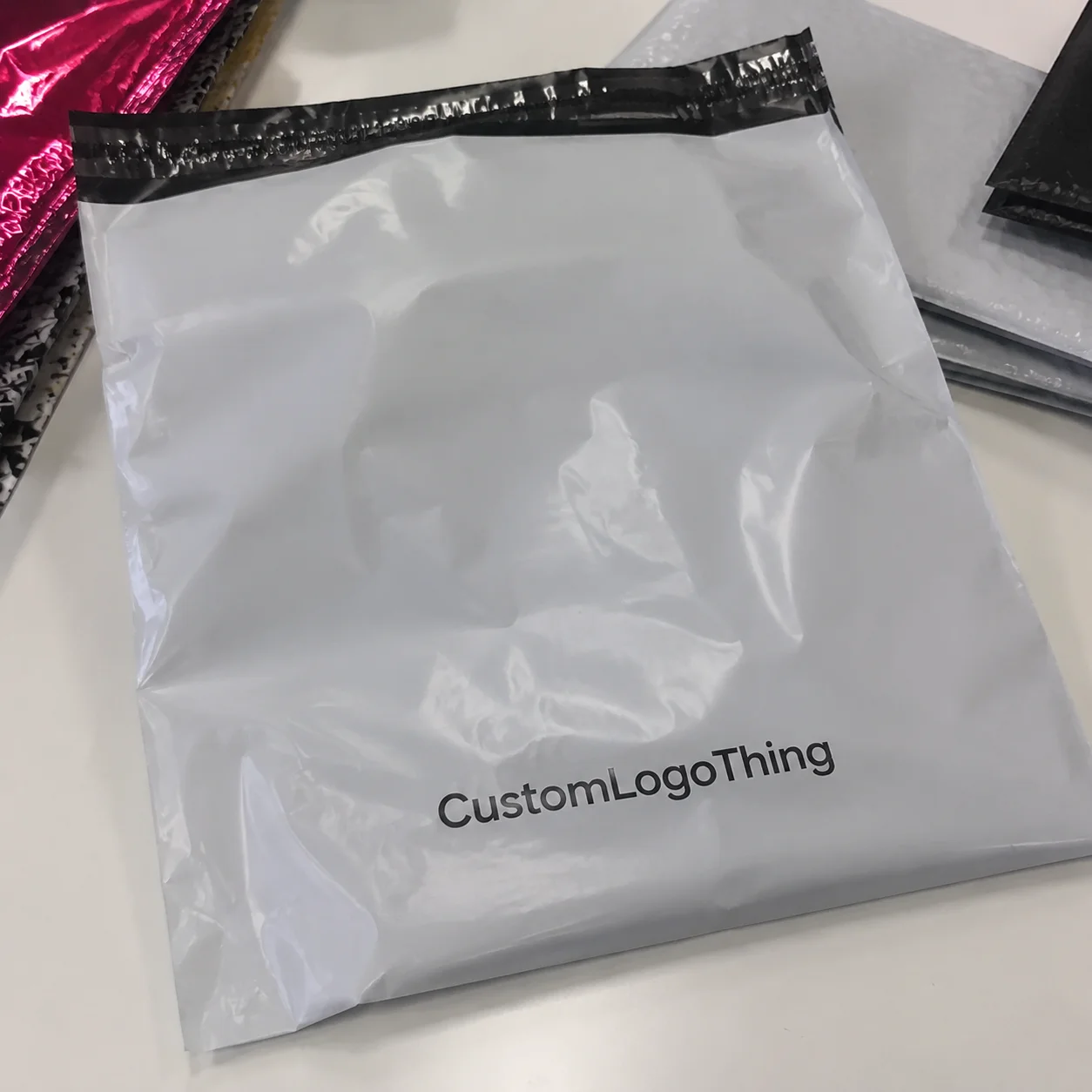
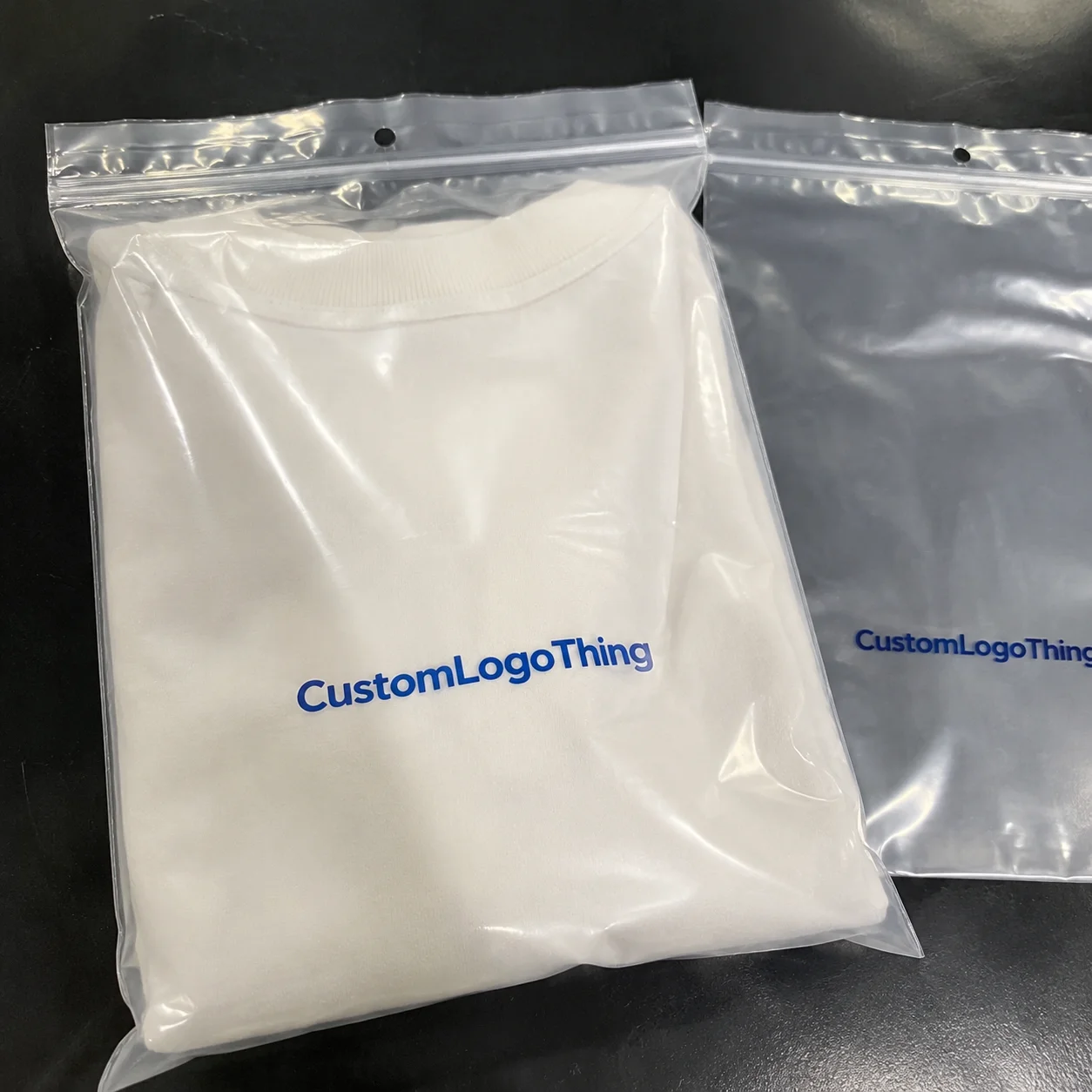
I’ve spent enough time on pressrooms, dock doors, and brand review calls to know this: Minimalist Logo Design for mailers can outperform a busy logo the moment a parcel starts moving through a facility in Newark, New Jersey or a carrier hub outside Dallas, Texas. I remember one afternoon in a fulfillment warehouse in Edison, New Jersey, standing beside a stack of LDPE mailers while a line operator pointed at a tiny wordmark and said, “That one I can read. The other one? Not a chance.” He was right. A small, simple mark is easier to catch at a glance when a mailer is tumbling through sorting lanes, stacked under a hundred other parcels, or grabbed for delivery in a half-second. That’s not theory. I’ve watched a stripped-down logo hold its shape at 12 inches away while a detailed crest turned into visual noise on a 10x13 mailer printed in matte black ink on 0.08mm film.
For Custom Logo Things, the practical question is never “Can we make it look fancy?” It’s “Can minimalist logo design for mailers still read clearly after flexing, shrinking, wrinkling, and being printed on a surface that isn’t perfectly flat?” That distinction matters. A mailer is not a brochure, and it absolutely does not behave like one. It’s a moving surface with low attention and high abuse, especially on 350gsm C1S artboard inserts slid into a poly outer or on 2.5 mil LDPE bags coming off a flexographic press in Ontario, California. The design has to survive all of that and still feel intentional, which is harder than it sounds and, honestly, sometimes more annoying than clients expect.
Minimalist Logo Design for Mailers: Why Less Often Wins
A logo with fewer shapes often gets remembered faster than a more ornate one when it’s on a parcel. I’ve seen this play out in client meetings where the brand team wanted “more personality,” but the logistics team wanted the mark to stay readable from six feet away on a conveyor belt running at 180 feet per minute. The simpler version won every time. In minimalist logo design for mailers, clarity is not a compromise. It’s the point, especially when the mailer is being handled in busy sortation centers in Atlanta, Georgia or Louisville, Kentucky where a driver may see the package only for a second or two.
In practical terms, minimalist logo design for mailers means fewer strokes, restrained color use, tighter control of spacing, and a mark that can survive reduction without collapsing into a blob. It usually means the logo is built around one of three structures: a wordmark, a monogram, or a simple icon with strong negative space. A design that needs five colors, three gradients, and delicate linework is usually asking too much of flexible packaging. I’m not saying it can’t be beautiful on a pitch deck, because sure, it can. I’m saying the mailer will not care about your mood board, especially if it’s being printed at $0.15 per unit for 5,000 pieces on a high-speed line in Shenzhen or Ho Chi Minh City.
Poly mailers behave differently than boxes or labels. They wrinkle. They flex when handled. They reflect light unevenly. They also pass through low-attention moments: sorting, stacking, scanning, doorstep drop-off. The viewing time is short, and the viewing angle changes constantly. That’s exactly why minimalist logo design for mailers tends to outperform decorative treatment. Simple shapes survive motion better. Dense ornament does not, particularly on 0.06mm to 0.10mm PE film where the surface can show stretch marks after sealing at the side gusset.
I still remember a meeting with a subscription brand that used a detailed seal with tiny stars and a script ribbon. Beautiful on the screen. A disaster on a 6x9 poly mailer produced in a facility outside Suzhou, China. Once printed, the ribbon broke into fragments and the stars vanished under a matte finish. We simplified it to a bold monogram with one accent line and a 1.5mm clear zone around the mark. The client was nervous for about ten minutes, then relieved when their fulfillment team said the mailers looked cleaner on the line and were easier to sort visually. That was one of those moments where the room goes quiet, and everybody pretends they weren’t clinging to the old version for emotional reasons.
Most people get the tradeoff wrong. They assume minimal means plain. It doesn’t. In minimalist logo design for mailers, the goal is not to remove personality. It’s to remove everything that doesn’t help the logo read, print, and hold up. That’s a very different design discipline, whether you’re shipping from Portland, Oregon or a contract packer in Charlotte, North Carolina.
There’s also a perception issue. Minimal marks often feel more premium because they imply restraint. But that feeling only works when the logo is still legible in one color or two. If the reduced mark becomes ambiguous, the premium signal disappears and you’re left with something forgettable. That’s why I always tell clients: minimalism is not decoration with fewer elements. It’s engineering for recognition, especially on mailers sized 9x12, 10x13, or 14.5x19 inches where the front panel has to do the selling in a single glance.
How Minimalist Logo Design for Mailers Works on Poly Mailers
Printing method changes the final result more than most brand teams expect. Flexographic printing is efficient for high volumes, but fine details can fill in if the line weight is too thin, particularly on 2.5 mil LDPE film running through a CI flexo press in Guadalajara or Foshan. Digital printing gives you more flexibility for short runs and color variation, yet delicate gradients still need care because the poly surface can influence how saturated they appear. Screen printing can deliver strong solids, though it prefers bold artwork and fewer tiny gaps. In minimalist logo design for mailers, the artwork should be built around the method, not just the brand mood board.
When a logo is reduced to mailer size, the first things to fail are usually the smallest. Tiny text disappears. Thin strokes break apart. Decorative dots merge into the background. I’ve seen a 14mm-wide icon survive beautifully when the lines were 1.2pt, while a neighboring version using 0.4pt hairlines looked like someone had rubbed it with a thumb after 2,000 units came off the stack. If the logo needs surgical precision to survive print, it probably isn’t right for mailers. I know that sounds blunt, but I’d rather be blunt than watch a reprint get approved with everybody squinting and nodding politely.
Negative space is one of the strongest tools in minimalist logo design for mailers. A well-placed gap can define a shape better than another outline or flourish ever could. Think of a monogram where the empty space forms the recognisable part of the symbol. That gap helps the eye do the work quickly. On a moving mailer, the eye is already working harder than on a web page or business card, especially when the parcel is on a gray conveyor in a warehouse with 4000K fluorescent lighting.
Some of the best-performing mailer marks I’ve seen are surprisingly simple:
- Monograms with 2-letter structures and wide spacing.
- Wordmarks in a clean sans serif with slightly expanded tracking.
- Simple symbols that can be understood in one glance.
- One-color icons with enough weight to resist print loss.
That doesn’t mean Every Brand Should collapse into a plain black wordmark. It means the mark must be designed for a flexible substrate that wrinkles and travels. A logo that looks elegant on a flat PDF can turn weak on a mailer if the proportions are too fine. In minimalist logo design for mailers, restraint is not just an aesthetic choice; it is a production strategy, and on 12x15 poly mailers it often saves both ink and press adjustment time.
I’ve also seen how the right logo can make a mailer feel more deliberate without adding cost. On a 0.08mm LDPE mailer sourced in Vietnam or southern China, a simple white logo on a charcoal base can look far more premium than a multicolor design that fights the material. The surface texture does part of the work. The logo’s job is to support that, not overpower it. A 1-color print on a satin finish often reads cleaner than a four-color build trying to do too much.
Key Factors That Shape Minimalist Logo Design for Mailers
Material choice changes how a logo appears. Glossy mailers can make dark colors feel deeper, but they also create glare that can soften edges under warehouse lighting. Matte finishes reduce reflection and usually make minimalist marks easier to scan visually, though the color can appear slightly muted. Recycled poly mailers often have a more textured look, which can be attractive, but that texture can reduce perceived sharpness unless the design has enough contrast. In minimalist logo design for mailers, the substrate is half the design brief, whether the film is 1.8 mil recycled PE from Vietnam or a virgin LDPE blend produced in Monterrey, Mexico.
Cost matters too, and not just in the obvious way. Fewer colors can reduce setup complexity. Simpler artwork means fewer prepress corrections. Clean vector files usually lower the chance of a last-minute plate issue or a registration problem. I’ve had supplier negotiations where a two-color version saved a client from paying for an extra setup pass because the original logo required tight alignment across multiple small elements. That doesn’t mean simple always means cheap. It means simple reduces risk, and risk has a price, especially when a 5,000-piece run is quoted at $0.18 per unit for a stock-size mailer and the client wants an unplanned second proof.
| Logo Style | Typical Print Risk | Setup Complexity | Mailers Where It Works Best |
|---|---|---|---|
| One-color wordmark | Low | Low | Matte and glossy poly mailers |
| Two-color monogram | Moderate | Moderate | Mid-volume branded shipping mailers |
| Gradient-heavy icon | High | High | Rarely ideal for flexible mailers |
| Fine-line emblem | High | Moderate to high | Only if enlarged significantly |
Color choice deserves more scrutiny than most brands give it. High-contrast pairings usually perform better than delicate palettes because mailers are seen in all kinds of lighting: warehouse fluorescents, truck interiors, and front-porch shade. A pale beige logo on a warm gray bag may look tasteful on screen, but on a moving parcel it can disappear faster than you expect. In minimalist logo design for mailers, contrast often beats subtlety, even if somebody in a brand workshop insists that “subtle feels more elevated.” Sometimes subtle just means invisible, particularly on a kraft-look mailer manufactured in Dongguan where the base color already absorbs half the signal.
Placement and proportion change the message. A centered mark says “this is the brand.” A corner placement can feel more understated. A repeat pattern across the surface can make the mailer feel more fashion-led or retail-oriented. I’ve worked with brands that wanted the logo in the lower left corner because it felt “editorial,” and others that needed a strong center hit so warehouse staff could identify the package quickly. Neither is inherently better. It depends on the business model and what the package needs to do in motion, whether it’s shipping from a Toronto fulfillment center or a third-party logistics hub in Chicago.
There’s another layer here: compliance and legibility. If the mailer also carries return instructions, warnings, recycling language, or shipping information, the logo must share space without creating clutter. I’ve seen brands cram too much into the front panel and then wonder why the whole thing feels cheap. The problem isn’t the logo alone. It’s the hierarchy. minimalist logo design for mailers works best when the logo has room to breathe and the rest of the panel is disciplined, with at least 8mm of clear margin around the main mark.
For material sourcing and broader packaging options, I often point clients toward Custom Packaging Products when they need to compare mailer formats, finishes, and branding approaches side by side. That comparison usually clarifies whether the logo should be bold, reserved, or repeated as a pattern, and it helps teams decide whether a 2.75 mil co-extruded poly mailer or a recycled-content bag is the better fit for the artwork.
Step-by-Step Process for Creating Minimalist Logo Design for Mailers
The best results start with an audit. I ask clients to spread out every current logo version: full-color, monochrome, stacked, horizontal, icon-only. Then we ask a blunt question: what can be removed without losing recognition? Sometimes the answer is “not much.” Other times the brand has been carrying around five design devices that nobody actually needs. That audit is the first real step in minimalist logo design for mailers, and it usually takes about 30 to 45 minutes if the source files are organized in Adobe Illustrator or PDF.
Next, test the logo at actual mailer scale. Not on a laptop. Not in a deck. On paper or film at the size it will be printed. I’ve stood on factory floors with a prototype taped to a 10-foot conveyor-side wall, and the difference between screen resolution and real-world visibility is enormous. If you can’t read the mark from arm’s length, it probably needs simplification. If it only looks balanced when zoomed in to 400%, that’s another warning sign. A 7x9 inch proof on 0.08mm film tells you more than a polished mockup ever will.
“The logo looked elegant on the monitor, but once we saw it on a 10x13 mailer under warehouse lights, the thin lines vanished. We cut the design in half and it actually looked more expensive.”
Then choose the simplest color version first. I usually recommend building a one-color version before anything else. If that works, a two-color version may be possible. If the one-color version fails, the logo may rely too heavily on contrast effects that won’t survive flexible packaging. In minimalist logo design for mailers, the one-color test is a truth serum. It does not flatter anybody, which is part of why I trust it, especially when the print house in Ho Chi Minh City wants final artwork by 3:00 p.m. local time.
After that, match the logo to the print method and finish. A soft-touch matte mailer will show line weights differently than a glossy LDPE bag. Digital printing can handle more nuanced artwork than flexographic printing, but it’s still not a license to fill the logo with microscopic detail. I’ve seen designers create “mailer-safe” logos in theory, only to discover that the chosen production method tightened the tolerances. Build for the process you are actually buying, not the process you wish you had, whether that means screen print, gravure, or a 6-color flexo press with inline corona treatment.
- Audit the current logo set and remove anything nonessential.
- Resize the logo to the exact mailer dimensions.
- Print a mockup and view it from 3–6 feet away.
- Test one-color first, then introduce the second color only if needed.
- Confirm print method compatibility before artwork is finalized.
- Approve a prototype against competitor mailers in similar lighting.
That final comparison matters more than many brands admit. If your mailer gets stacked next to five others on a fulfillment bench, the logo must stand out in a crowded field. I’ve reviewed samples where the best-looking logo on the screen was invisible next to the competition because it blended into the same beige-and-gray universe. Minimalist logo design for mailers only works if it distinguishes the brand, not just decorates the package, and the strongest test is seeing it among actual competitors on a bench in Columbus, Ohio or Memphis, Tennessee.
When the design is close to final, I always recommend ordering sample runs from a production-capable option like Custom Poly Mailers so you can verify the logo under actual handling conditions. A proof on paper is one thing. A finished poly mailer is another, and a sample lot of 50 to 100 units printed on the right film is usually the fastest way to catch contrast or placement issues before a 10,000-piece production run.
Minimalist Logo Design for Mailers: Timeline, File Prep, and Pricing
Most mailer branding projects move through a fairly predictable path: concept, proof, revision, approval, production. Clean designs usually shorten revision cycles because fewer elements need debate. A logo with three colors and a script line under it can trigger half a dozen rounds of tweaks. A simple wordmark in one color often gets approved faster because everyone can evaluate it without squinting at a mockup for 20 minutes. In minimalist logo design for mailers, simplicity often saves time, and I say that as someone who has sat through one too many revision meetings that should have been emails.
File prep is where a lot of delays begin. You want vector artwork in AI, EPS, or PDF format. Fonts should be outlined. Spacing should be intentional. Colors should be specified clearly, ideally with Pantone references or agreed CMYK values. Low-resolution JPGs are a problem because they hide edges until production reveals them. I’ve seen a team send a 600-pixel logo for a 10-inch mailer and then act surprised when it looked soft. That kind of issue burns time fast, especially when the supplier in Shenzhen is already waiting on final art before a Monday machine slot.
Timeline also shifts when customization enters the picture. Special finishes, custom sizes, metallic inks, or exact brand-color matching can all add steps. A straightforward minimalist logo on a standard poly mailer may move through proofing in 5–7 business days and production in 12–15 business days from proof approval. If you need color matching, packaging mockups, or multiple size tests, expect the schedule to stretch. I’d rather tell a client that upfront than pretend every project runs on the same clock. Honestly, the “we need it by Friday” request tends to appear right after someone has asked for a redesign, which is one of those recurring little joys of the job.
| Project Type | File Requirements | Typical Proof Cycle | Cost Impact |
|---|---|---|---|
| Basic one-color mailer logo | Vector PDF, outlined fonts | 1–2 rounds | Lower setup friction |
| Two-color branded mailer | Vector artwork with Pantone specs | 2–3 rounds | Moderate setup and proofing |
| Custom finish plus logo placement test | Vector files, finish notes, dieline reference | 2–4 rounds | Higher due to testing and approvals |
| Complex logo simplification project | Source files, brand guide, simplified variants | 3+ rounds | Higher because design work is involved |
On pricing, I’m careful not to overpromise. Simpler artwork can reduce prepress friction, and that may lower overall production risk. But final cost still depends on quantity, material, size, print method, and whether the mailer is plain stock or custom printed. I’ve seen a 5,000-piece run price out at $0.15 per unit for a basic one-color setup on a 10x13 mailer from a plant in Guangdong, while a more customized version with special color matching and extra proofing landed much higher. The logo simplification itself is not always the biggest cost driver. The production stack is, especially if the order includes recycled content, custom gussets, or a short-run digital press changeover.
Hidden delays usually come from avoidable problems: last-minute logo edits, inconsistent brand guidelines, old source files, or decisions that change after the proof is already underway. I think many brands underestimate the value of a stable approval chain. If marketing, operations, and procurement all get a say, align them early. Otherwise minimalist logo design for mailers can turn into a revision loop that burns both time and patience, particularly when one stakeholder is in Chicago, another is in London, and the factory is waiting in Dongguan.
For brands that want to understand the broader packaging context, I also recommend reviewing industry guidance from the Packaging Machinery Manufacturers Institute and sustainability references from the EPA, especially if recycled content or recyclability claims are part of the packaging story. Those references are especially useful when you’re specifying a mailer made with 30% PCR film or comparing virgin LDPE to mono-material PE.
Common Mistakes in Minimalist Logo Design for Mailers
The biggest mistake is over-simplifying until the logo becomes generic. I’ve reviewed minimal marks that looked tidy but had no distinct feature left. No memorable angle. No unique spacing. No visual hook. A logo should be stripped down, not stripped of identity. In minimalist logo design for mailers, you still need one recognisable anchor, even if the mark is only 18mm wide on a shipping bag leaving a warehouse in Nashville.
Thin lines are another frequent problem. If the stroke weight is too fine, a flexible mailer can make the logo appear broken or faint. Tiny text is equally risky. If your subline or tagline is smaller than the print process can reliably reproduce, it should probably be removed from the mailer version. I’ve watched a beautiful logo turn into a speckled mess simply because the designer insisted on preserving a tagline nobody could read in transit. That one still annoys me, if I’m being honest, especially when the final print run had already been booked for 8,000 units.
Too much empty space can also backfire. Negative space is powerful, but if the whole layout feels underdeveloped, the result looks unfinished rather than elegant. That’s a design balance problem, not a minimalism problem. The border, margin, and logo placement need structure. Empty space without hierarchy just looks like a mistake, particularly on a 9x12 mailer with a large blank field and a logo floating too close to the edge.
Trend-chasing creates its own trap. A logo can look stylish in a design review and still fail on a moving parcel. I’ve had clients bring in ultra-thin, fashion-forward marks because they loved the look on a stationery mockup. On a mailer, those marks often softened too much. Production reality has a way of humbling good intentions. minimalist logo design for mailers only works when it is tested under real handling conditions, ideally after a 24-hour cure time and a bend test at the factory in Shenzhen or Richmond, California.
There’s also the screen-to-material mismatch. A logo can feel crisp on a monitor because the screen is emitting light and the artwork is perfectly still. The mailer, by contrast, bends, catches glare, and gets packed into shipping cartons. If your design still looks sharp after a 30-degree bend and a warehouse lamp above it, then you’re getting closer to something durable. I like to check it under both 5000K and 6500K lighting because the difference can change whether a pale line looks intentional or washed out.
One more thing: brands sometimes forget the shipping environment itself. Mailers are scanned, stacked, sorted, and sometimes compressed. A logo that relies on delicate visual cues can get flattened in every sense of the word. That’s why I keep pushing clients to think about the parcel journey, not just the artwork file. It changes everything, especially on cartons and mailers moving through last-mile networks in Los Angeles, Phoenix, and Atlanta.
Expert Tips and Next Steps for Minimalist Logo Design for Mailers
Create a hierarchy of logo versions. You should have a full mark, a simplified mark, and a one-color backup. That way, if the preferred version loses clarity on a specific mailer material, you can fall back to something that still represents the brand properly. In minimalist logo design for mailers, flexibility is a strength, not a compromise, and it matters when a glossy bag in 0.09mm film behaves differently than a matte recycled option in 0.10mm.
Test on real samples before approving a full run. I know that sounds obvious, but I’ve seen plenty of expensive assumptions made from mockups alone. A 50-piece sample run can save thousands in reprints or missed launch timing. Compare at least two finish options if you can: matte versus gloss, or standard poly versus recycled poly. The logo may behave differently on each surface, and a sample order usually costs far less than reworking 10,000 mailers after the fact.
Measure readability, contrast, and recognition. Don’t judge only by taste. A brand team may prefer a softer palette, but if the contrast drops too low, the logo loses practical value. I often ask clients to set the sample on a table, step back three paces, and tell me what they see first. That little exercise exposes a lot. Minimalist logo design for mailers should be easy to name, not just easy to admire, especially when the parcel is sitting under retail lights at a pickup counter in Seattle or Boston.
Use the last round of approval to refine placement, not redesign the logo from scratch. This is where many projects drift. Once the core mark is working, the final decisions should be about location, size, and spacing on the mailer panel. I’ve seen brands waste two weeks arguing about a decorative line that never needed to exist in the first place. The better move is usually to tighten the layout and protect the legibility you already have, with at least 6mm of safe space around the mark and a finished proof printed on the actual substrate.
“The simplest mailer we ever ran got the best response from customers because it looked intentional instead of noisy. The logo did its job, and the packaging disappeared into the experience.”
As a final checklist, gather your brand assets, request a print proof, compare two finish options, and confirm the final minimalist logo design for mailers before production. If you’re still choosing substrate, quantity, or print method, speak with a packaging specialist before locking artwork. A small decision about material can change the way the whole design reads. That’s especially true on poly mailers, where sheen, stretch, and thickness all influence the final look, and where a 2.8 mil bag can show a mark very differently than a thinner 1.8 mil version.
Start with the version that survives one-color printing, then test it on the actual mailer film at real size. If it stays readable under warehouse lighting, holds its shape after flexing, and still feels like your brand from a few steps away, you’ve got the right foundation. That’s the point to keep in mind: minimalist logo design for mailers should be judged by motion, material, and distance before anyone falls in love with a polished mockup.
What makes minimalist logo design for mailers different from a regular logo?
Mailers move through fast, low-attention moments, so the logo must be readable almost instantly. A strong minimalist logo design for mailers usually relies on fewer details, stronger contrast, and cleaner spacing than a logo used on a website or business card. It also has to survive folds, flexing, and the limitations of print on poly material, especially on 9x12 or 10x13 bags that may be handled dozens of times before delivery.
Is minimalist logo design for mailers cheaper to print?
Often, yes. Simpler artwork can reduce setup complexity and lower the risk of printing errors. One- and two-color designs are usually easier to produce than multi-color or gradient-heavy logos. Final pricing still depends on quantity, size, material, and print method, so a clean logo does not automatically mean the lowest total cost. For example, 5,000 units at $0.15 per unit on stock PE can be very different from a custom-printed recycled mailer with special inks.
What file type should I use for a minimalist mailer logo?
Vector files are best, especially AI, EPS, or PDF with outlined fonts. Vector artwork keeps edges clean when the logo is resized for poly mailers, which is critical for minimalist logo design for mailers. Avoid low-resolution JPGs or PNGs unless they are only being used as reference images. A print-ready file should also include Pantone or CMYK values and clear spacing notes so the factory in Dongguan or Monterrey can reproduce it accurately.
How long does it take to finalize minimalist logo design for mailers?
Timelines vary based on revisions, proofing, and print method. Simple minimalist designs can move faster because there are fewer elements to troubleshoot. Extra time is needed if the logo requires color matching, special finishes, multiple mockups, or if the source artwork needs cleanup before production. A typical schedule is 5–7 business days for proofing and 12–15 business days from proof approval to production on standard runs.
What are the best colors for minimalist logo design for mailers?
High-contrast combinations usually perform best, especially dark-on-light or light-on-dark pairings. Neutral palettes can feel premium, but bold brand colors can work if they stay legible on the chosen mailer finish. Always test colors on the actual poly material, since sheen and texture change the look more than most people expect. A white logo on a charcoal mailer, for instance, often reads cleaner than a soft beige mark on a warm gray bag.