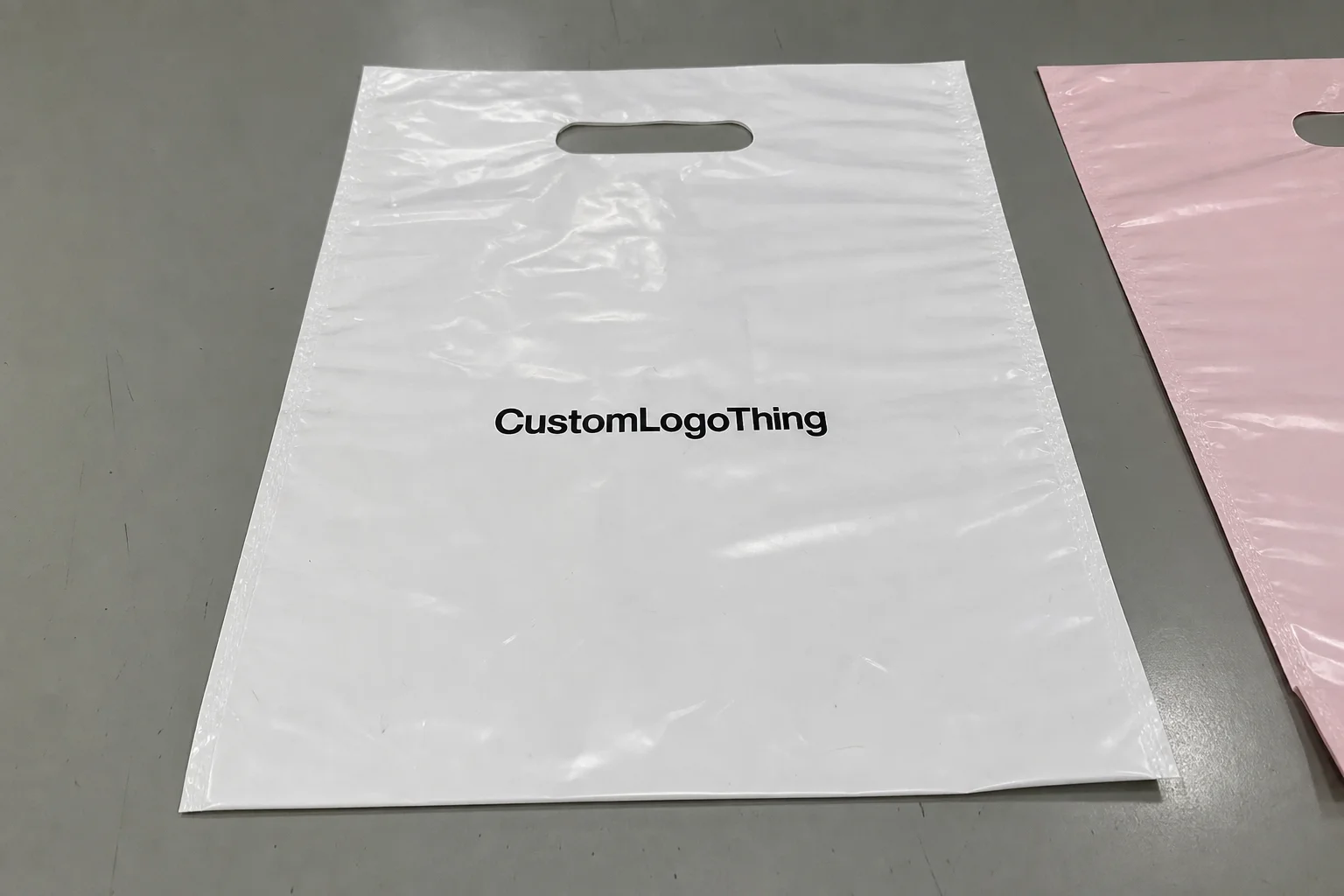
A mailer can look good in a sample pack and still fail under conveyor pressure, stacked parcels, or a damp doorstep. That is why many brands move to custom coextruded mailers with logo: the value is not only the print, but the layered film structure that improves shipping performance.
These are lightweight polyethylene shipping envelopes made from multiple film layers, then printed with a logo or other graphics. They are common for apparel, soft goods, subscription shipments, printed materials, and light replacement parts where a box adds cost and cube without adding much protection. If you already buy Custom Poly Mailers or are comparing other Custom Packaging Products, the film structure deserves as much attention as the artwork.
In practice, buyers usually notice four differences first: puncture resistance, opacity, seal consistency, and print surface quality. This guide focuses on the specs that affect performance, cost, MOQ, lead time, decoration, and inspection.
Why custom coextruded mailers with logo outperform basic poly mailers

Basic poly mailers can work for low-risk shipments, especially lightweight apparel traveling short distances. Problems show up when the packed product has bulk, dense folds, corners, or mixed contents that stress the film.
Coextruded film gives the manufacturer more control because different layers can do different jobs. The outside can stay smooth and print-friendly while inner layers add toughness, opacity, or better sealing. For buyers, that usually means fewer tradeoffs between appearance and function.
For e-commerce shipments, common white-outside/black-inside constructions remain popular because they block show-through, support cleaner branding, and give better privacy. Two mailers can share the same listed size and thickness yet perform very differently if one has a better resin blend, stronger seals, and a more stable print surface.
That matters most when the package is handled at scale. A slightly cheaper bag loses value quickly if packers fight the opening, seams split under pressure, or the print scuffs in transit.
How coextruded film works: layers, seals, opacity, and print performance
Coextrusion means two or more polyethylene layers are extruded together into one film. Instead of asking one resin layer to handle printability, strength, opacity, and sealing, the structure spreads those jobs across multiple layers.
A common build uses LDPE and LLDPE blends. LDPE helps with softness and flexibility. LLDPE typically improves toughness and tear resistance. Suppliers may not disclose exact ratios, but this balance is a common reason coextruded mailers outperform low-spec alternatives.
The outer layer is usually tuned for appearance and printing. Surface treatment such as corona treatment helps ink adhesion. If treatment is weak, print can look uneven or scuff too easily during packing and transit. Inner layers may be adjusted for opacity, slip, puncture resistance, or sealing behavior.
Opacity is both a privacy and presentation issue. If dark garments or inserts show through the film, the package looks cheaper and reveals contents too easily. A darker inner layer reduces show-through and gives printed graphics a cleaner background.
Most mailers use a permanent pressure-sensitive adhesive strip under a release liner. Return programs often add a second strip so the customer can reuse the bag. That feature adds cost but may be worthwhile for apparel categories with frequent returns.
Thickness is often oversimplified. Many e-commerce mailers fall around 2.0 to 3.5 mil, but the right gauge depends on the packed product. A 2.5 mil bag may be fine for a folded T-shirt and marginal for a heavy hoodie with inserts or hard-edged accessories. Film design matters as much as gauge.
For broader package testing references, buyers often consult ISTA and the Institute of Packaging Professionals.
Key specs that shape durability, branding, and packing efficiency
Quoting starts with finished size, film thickness, film colors, print colors, finish, adhesive style, and special features. The best spec comes from how the item is packed and shipped, not from a generic category label.
Size is a common first-order mistake. Measuring a folded garment flat on a table ignores tissue, inserts, labels, and natural loft. The better method is to pack the product exactly as it will ship, then measure the finished bundle. If your SKU mix varies, test against the 80th or 90th percentile packout rather than the smallest item.
Thickness affects durability, feel, and cost. Heavier gauges may help when shipments include paperboard inserts, boxed accessories, or dense bundles with corners. For softer items, adding gauge can increase resin cost without adding much functional value.
Printing also changes cost and risk. A one-color logo on a white or light exterior is usually the most economical and forgiving. Heavy ink coverage and more colors can look strong, but they increase demands on registration, adhesion, and scuff resistance.
Finish affects appearance and wear. Matte can look refined but may show abrasion differently than gloss. Gloss usually gives the print more pop. The right choice depends on brand style and handling conditions.
Optional features are worth adding only when they solve a real need:
- Suffocation warnings where required
- Dual adhesive return strips for return-heavy programs
- Tear notches or perforations for easier opening
- Writable panels for hand-applied notes or codes
- Barcode zones for scan consistency
- Vent holes if trapped air slows packout
Also check bag opening behavior and case pack. A mailer that clings, collapses during loading, or opens poorly can slow packing even if it looks fine in a sample review.
What are custom coextruded mailers with logo and how do they work?
Custom coextruded mailers with logo are printed polyethylene shipping envelopes made from multiple film layers extruded into one structure. Each layer supports a function such as printability, opacity, puncture resistance, or seal strength. The film is then printed, converted into bags, fitted with adhesive, and packed for shipment.
They are widely used for apparel, accessories, textiles, and other non-fragile products that do not require a rigid carton. In practical terms, they offer a middle ground between a plain commodity mailer and more elaborate branded packaging.
Cost and pricing: what drives quote accuracy and unit cost
Unit cost depends on several variables at once. The main pricing drivers are usually:
- Finished size
- Film gauge or thickness
- Resin blend and opacity target
- Number of print colors
- Total ink coverage
- Order quantity
- Adhesive configuration
- Case pack and packing method
MOQ matters because setup costs have to be spread across the run. Print plates or cylinders, press setup, color matching, and startup waste make small orders expensive on a per-piece basis. Larger runs usually reduce unit price, but the cheapest theoretical piece price is not always the best buy if it creates excess inventory or ties up cash.
For many programs, a first order covering roughly two to four months of usage is a reasonable starting point. It improves pricing compared with a trial run without locking you into the wrong spec for too long.
Special features can raise cost quickly. Dual-return strips, unusual sizes, heavy flood printing, matte treatments, rush production, and split deliveries all add complexity. Freight can also change the real total, especially if case packs are inefficient.
When comparing quotes, review unit price, units per case, carton dimensions, pallet quantity, freight terms, and lead time assumptions.
| Volume Level | Typical Cost Behavior | Best Fit | Common Tradeoff |
|---|---|---|---|
| Low volume | Highest unit cost because setup is spread across fewer pieces | Testing a new size or visual direction | Limited pricing efficiency |
| Mid volume | More balanced piece price and inventory exposure | Steady monthly e-commerce demand | Complex prints still carry setup impact |
| High volume | Lowest unit cost if specs remain stable | Established repeat programs | Higher cash and storage commitment |
A stronger RFQ usually includes:
- Target finished size
- Packed product dimensions or sample description
- Desired thickness range
- Estimated monthly or annual usage
- Vector logo files
- Print color count and preferred PMS references
- Ship-to ZIP code
- Required in-house date
Production steps and lead time from artwork approval to delivery
The order path is usually inquiry, spec review, quote, artwork submission, proofing, approval, production, packing, and shipment. Most delays happen before production starts.
Suppliers usually want vector artwork in AI, EPS, or press-ready PDF format, plus PMS references if color accuracy matters. Printable areas must account for seams, flap position, adhesive zones, and edge distortion. If warning copy or regulatory text applies, include it during proofing rather than adding it late.
At a high level, the manufacturing flow is: film coextrusion, surface treatment, printing, bag conversion, adhesive application, cutting, sealing, counting, casing, and palletizing.
For repeat jobs with stable specs, a common lead time is around 12 to 15 business days from final proof approval, plus freight transit. First orders often take longer because sizing, artwork placement, and material decisions need more review. Rush orders may be possible, but usually with higher cost or fewer options.
A useful planning habit is to count backward from the date the bags must be at the pack station, not from the date you hope to issue the PO.
Step-by-step guide to choosing the right mailer for your product mix
- Define your common shipments. Measure the product after folding and include tissue, inserts, labels, cartons, and anything else that changes packed bulk.
- Choose size around packed volume. A little working room usually improves fill speed and creates a cleaner seal.
- Select thickness based on shipping risk. Soft apparel does not need the same gauge as mixed kits, heavy catalogs, or products with hard edges.
- Pick the closure style. A single seal works for most outbound shipments; dual adhesive makes sense when returns are frequent.
- Match print style to the job. A simple one-color logo often gives better value than full flood coverage when cost control and warehouse use matter.
- Request samples or a pilot run. Test opacity, seal performance, scuff resistance, barcode readability, and packing behavior.
- Standardize where possible. Fewer sizes and repeatable specs make forecasting, storage, and reordering easier.
Practical callout: If you are deciding between two sizes or gauges, pack both with real products and let the fulfillment team test them. A short hands-on trial usually gives a better answer than a render or spreadsheet.
Common mistakes buyers make with custom printed mailers
One frequent mistake is sizing from a flat product instead of a packed one. Mailers that are too tight create seam stress, slow fulfillment, and make the final pack look strained.
Gauge selection also causes problems at both extremes. Some buyers over-specify and pay for resin they do not need. Others go too light and start seeing punctures or weak seals during sortation. The right gauge depends on the product, packout, and shipping lane.
Artwork delays are another common issue. Low-resolution logos, missing font outlines, absent PMS references, and website-sourced graphics all slow proofing. Printers want vector art and clear placement approval with enough safe area around seams and folds.
Buyers also underestimate how much film color and finish affect the printed result. White, gray, and black exteriors do not present the same logo the same way, and matte versus gloss can shift the look again. If brand presentation matters, review a printed sample rather than relying only on a screen proof.
Finally, many apparent supplier delays are really reorder-point problems. If your inventory plan leaves no room for proofing, production, and freight, the order is already late.
Next steps: how to request samples, compare quotes, and place a smarter first order
If you are sourcing for the first time, gather the information that allows accurate quoting: packed product dimensions, expected monthly usage, target delivery date, vector logo files, preferred print colors, and any need for return strips, warning copy, or opening features.
Keep the first inquiry focused. One or two sizes and one print direction are usually enough to get useful pricing. Then ask for a film recommendation based on the actual product and shipping conditions, not just a thicker bag.
When quotes come in, compare finished size, gauge, seal style, print count, case pack, lead time, freight terms, and any plate or tooling charges. A lower unit price can hide weaker opacity, a lighter structure, or optimistic scheduling assumptions.
When samples arrive, review them under real working conditions:
- Hold them up to light to check opacity
- Pack real products and test seal strength
- Rub the print surface to check scuffing
- Confirm labels adhere and scan properly
- Watch how quickly the team can fill and close them
For a first production order, buy enough to validate the spec through a normal usage cycle without committing to excess inventory. With real packed dimensions, clear artwork, and sample testing, you are far more likely to land on a mailer that works on the packing line as well as it looks in the proof.
What are custom coextruded mailers with logo made from?
They are typically made from layered polyethylene films, often combining LDPE and LLDPE. Each layer can support printability, seal strength, opacity, or toughness depending on the application.
How do I choose the right size for custom logo coextruded mailers?
Measure the item after it is fully packed, not while it is lying flat. Include tissue, inserts, labels, folded bulk, and accessories. If products vary, test a couple of sizes with real orders before committing.
What affects the price of custom coextruded mailers with logo the most?
Size, thickness, quantity, print colors, ink coverage, and adhesive configuration usually have the biggest effect. Short runs carry more setup cost per piece, and features like return strips or rush timing raise pricing further.
How long does it take to produce printed coextruded shipping mailers?
Lead time depends on artwork approval, production scheduling, order size, and freight transit. Repeat jobs with approved art are usually faster; first orders often take longer because proofing and sizing need more review.
Are custom coextruded mailers with logo good for returns and e-commerce packaging?
Yes. They work well for soft goods and lightweight products that do not need a rigid carton. Dual-adhesive versions can support returns, and the right gauge and opacity help balance privacy, branding, and shipping performance.