A cheap-looking logo can make a solid product feel disposable. Custom epoxy stickers solve that by turning a printed label into a raised, glossy badge with more depth and a more finished feel than a flat decal.
Each piece starts with a printed face stock, usually vinyl or polyester, topped with a clear resin dome. The dome is often polyurethane, though many buyers still use “epoxy” as the category term. Once cured, it adds thickness, shine, and a smooth surface that helps small branding areas look more substantial.
That makes domed labels useful for electronics, drinkware, tools, appliance panels, cosmetic accessories, promotional items, and retail packaging accents. They sit between a low-cost sticker and a rigid nameplate: more premium than a flat label, but without the tooling cost of molded emblems or metal badges.
They are not the right fit for every job. Very soft materials, deep curves, heavily textured rubber, and low-budget commodity applications are common poor matches. Weak artwork is another issue; the dome adds gloss, not detail.
What Makes Custom Epoxy Stickers Different From Standard Labels
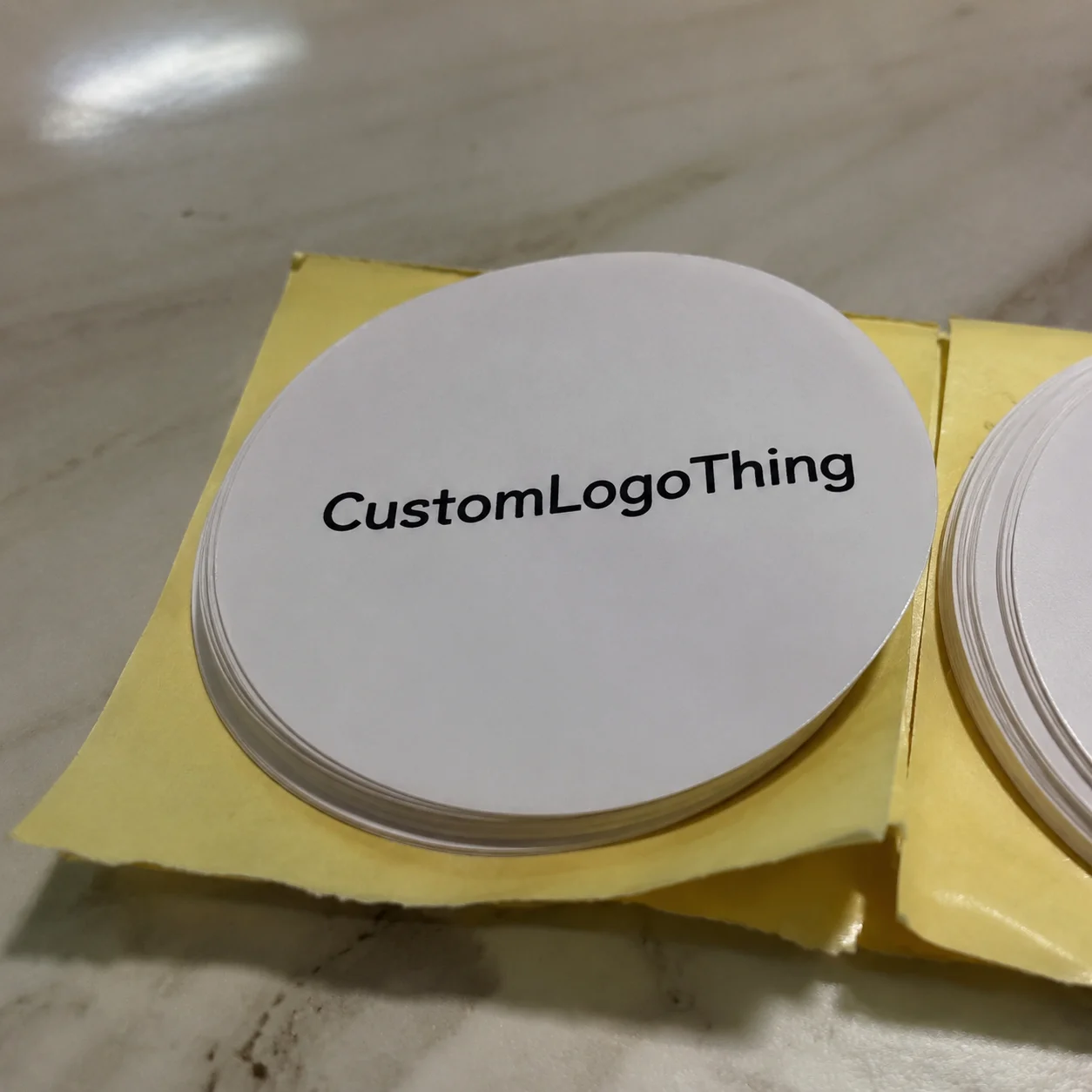
Standard labels identify a product. Domed labels identify it and add presence.
They are made from a printed film with a clear resin cap. As the liquid settles, surface tension creates the rounded profile that gives the label its raised look. That layer protects the print and creates a badge-like effect that makes even simple artwork look heavier and more intentional.
The tactile difference matters on hard goods and accessories. A flat logo can be functional, but a domed badge usually feels better matched to premium packaging, upgraded SKUs, and products sold partly on presentation.
Common applications include:
- Electronics logos and control panel markers
- Equipment badges and appliance branding
- Drinkware and tumbler logos
- Tool handles and branded hardware
- Cosmetic accessory labels
- Promotional items and giveaway merchandise
- Retail packaging accents that need more visual weight
There are limits. If the label has to wrap a corner, flex sharply, or stretch with the substrate, a thinner film label is usually safer. Domed construction performs best on smooth, fairly stable surfaces.
How the Dome Works: Materials, Adhesives, and Surface Performance
The basic construction is simple: face material, printed ink, pressure-sensitive adhesive, release liner, and the clear dome. The visual effect comes from the dome, but real-world performance depends just as much on the film and adhesive below it.
Common face material options include:
- White vinyl: versatile and cost-conscious for general product labeling
- Clear polyester: good for transparent effects, often with white underprint for color visibility
- Metallic film: useful for decorative branding and higher contrast
- Brushed silver polyester: a practical way to get a nameplate look without real metal
Adhesive choice is often more important than buyers expect. Permanent acrylic adhesive works for many smooth plastics and coated surfaces. High-tack adhesive is often better for powder-coated metal, painted parts, and some lower-surface-energy plastics. Removable adhesive is uncommon because most domed labels are meant to stay put once applied.
Surface prep also matters. Dust, skin oils, mold release, and silicone residue can cause edge lift even when the adhesive itself is correct. Many adhesion failures come from contamination, not the label build.
Performance usually comes down to UV exposure, yellowing resistance, moisture, abrasion, and edge stability. Outdoor life often ranges from about one to five years depending on resin quality, ink system, film, adhesive, and actual conditions. UV-stable polyurethane generally ages better, but no domed label is permanent in full sun and weather.
Shape affects manufacturability. Rounded rectangles, circles, and ovals dome more consistently than stars, sharp points, or detailed cut lines. The more intricate the perimeter, the harder it is to keep dome height even and avoid thin spots or overflow.
Artwork also has to survive glare. Under a glossy dome, reflections increase. Low-contrast logos, thin lines, and transparent effects may look refined on screen but lose legibility on the finished part. Cleaner spacing and stronger contrast usually work better.
For buyers comparing label materials across a larger packaging program, the Institute of Packaging Professionals is a useful reference. Domed labels work best when specified as part of the full product and packaging system, not as an isolated decoration.
Specs That Matter Before You Request a Quote
A useful quote starts with details that can actually be manufactured. Vague requests create avoidable revisions, pricing changes, and lead-time delays.
The main variables are size, shape, corner radius, face material, adhesive, quantity, and packing format. Small changes in any of these can affect resin volume, sheet layout, cure behavior, handling time, and cost.
Size and shape tradeoffs
Very small labels lose detail quickly. As a working rule, line weights below about 0.25 pt to 0.35 pt and text under 5 pt to 6 pt often become risky after printing and doming. Larger pieces use more resin and require tighter process control. For many jobs, roughly 20 mm to 60 mm on the longest side is a practical range.
Artwork setup basics
Vector artwork is best: AI, EPS, or clean PDF. Include bleed if requested, often around 1.5 mm to 2 mm, and keep important text inside the safe area. Raster logos, tiny reverse text, and soft effects often need revision before production.
Color and print concerns
Many orders run in CMYK for cost control, while Pantone matching may be available for tighter brand requirements. Clear designs usually need white ink underprinting so colors remain visible on the final surface. Metallic films also shift color appearance, so proofs should be reviewed with the actual material in mind.
Use environment
State the real conditions. Indoor packaging, bathroom accessories, hand tools, outdoor equipment, and kitchenware all put different demands on the label. If the part will see cleaners, heat, oil, water, or repeated handling, mention it early so the adhesive and film can be matched to the job.
Packing format
Labels can be supplied on sheets, rolls, or as individual pieces. Individually cut parts are often easiest for manual application. Sheets or rolls usually improve speed for assembly use. If the order includes multiple SKUs, ask how they will be counted, separated, and packed to reduce sorting mistakes.
Priority order should be simple: fit, adhesion, readability, and suitable durability first. Cosmetic upgrades only make sense once those basics are right.
Custom Epoxy Stickers Pricing: What Drives Cost and MOQ
Pricing follows production reality. Size, resin volume, setup work, material choice, and quantity matter more than projected reorder potential or rush pressure on the buyer side.
Main cost drivers include:
- Face material choice
- Print method and color complexity
- Die creation or cutting setup
- Resin volume and dome thickness
- Labor for doming, curing, and inspection
- Packing format and SKU sorting
- QC requirements such as adhesion checks or tighter cosmetic standards
MOQ varies by supplier, but very small runs usually have a high unit cost because prepress, proofing, setup, and handling still happen. Runs under 250 to 500 pieces may be available, but they are rarely the best value unless the order is a pilot, sample batch, or limited promotion.
| Run Size | Typical Unit Cost Range | Best Use Case | Common Tradeoff |
|---|---|---|---|
| 250-500 pcs | $0.65-$1.50 each | Sampling, pilot launches, limited merch | High setup cost per unit |
| 1,000-2,500 pcs | $0.28-$0.75 each | Small production runs, accessories, retail add-ons | Still sensitive to shape complexity |
| 5,000-10,000 pcs | $0.12-$0.35 each | Established product lines, broader package branding | Requires better forecasting and storage planning |
These are broad ranges because construction changes pricing quickly. A small white vinyl circle is not priced like a larger brushed silver badge with white underprint, strict color control, and individual bagging. Multi-SKU orders also cost more than many buyers expect because each version adds proofing, setup, inspection, and sorting.
Freight matters too. Domed labels are thicker than flat decals and need packing that protects them from compression, heat, and scuffing during transit. Shipping is usually not the biggest cost, but mixed-SKU orders can increase it.
To control cost, standardize sizes across SKUs, use rounded shapes instead of intricate die lines, consolidate volume, and avoid unnecessary variants that differ only by minor text changes.
Production Steps and Lead Time: From Artwork Approval to Delivery
The usual flow is inquiry, spec review, artwork check, proofing, sample if needed, printing, doming, curing, inspection, packing, and shipping. Most delays happen before production starts, not during it.
Incomplete files, missing dimensions, unclear substrate notes, and vague color expectations slow more orders than the pressroom does. A rushed deadline does not offset incomplete inputs.
Typical lead time stages
- Prepress and proofing: often 1 to 3 business days
- Sample production, if required: often 3 to 7 business days
- Main production: often 5 to 10 business days depending on quantity and complexity
- Cure time: built into production, but still a fixed limit
- Packing and transit: often 2 to 7 business days depending on shipping method and destination
A normal order often lands around 10 to 15 business days from final proof approval. Larger quantities, multiple SKUs, or strict brand-color review can stretch that to three to four weeks. Faster freight may shorten transit, but it does not change cure time.
Pre-production samples are worth it for curved application areas, metallic films, strict color requirements, or any job where readability under glare could become an issue. A sample also confirms adhesive behavior on the real substrate.
Quality checks should cover bubbles, dome consistency, print-to-cut registration, edge quality, cosmetic marks, and adhesion on the intended surface. Reviewing samples under direct light is especially useful because flaws that disappear in soft lighting can stand out on shelf.
For shipping protection, some manufacturers use broader transit-testing logic aligned with ISTA principles, especially when the finished parts could be damaged by vibration or compression.
Planning tip: Work backward from the launch date and leave at least a one-week buffer after expected delivery for proof revisions, shipping delays, and internal approvals.
How to Order the Right Domed Label in Five Practical Steps
Ordering goes faster when the request reflects the real application, not just the desired look.
- Define the surface and use case. Identify the substrate and whether the area is flat, slightly curved, or exposed to sun, moisture, cleaners, or abrasion.
- Set the physical specs. Confirm finished size, shape, corner radius, and material appearance: white, clear, metallic, or brushed silver.
- Prepare artwork correctly. Send vector files, color references, and notes about white ink, transparent areas, or metallic effects.
- Request a complete quote. Include dimensions, quantities, substrate, use conditions, packing format, and delivery destination.
- Review the proof or sample carefully. Check color, reflectivity, edge shape, readability, and fit before approving production.
Quick buyer checklist
- Application surface material identified
- Flat or curved surface noted
- Exact finished size confirmed
- Shape and corner radius specified
- Indoor or outdoor use defined
- Exposure to water, cleaners, heat, or oils mentioned
- Vector artwork ready
- Pantone or CMYK expectations listed
- Quantity tiers requested
- Packing preference included
If you need options, ask for three builds: ideal, value-engineered, and middle-ground. That quickly shows where cost can be reduced safely and where savings will create visible quality or adhesion risk.
Common Buying Mistakes and the Next Steps That Actually Save Time
The most common mistakes are predictable: choosing adhesive by price instead of substrate, ignoring surface curvature, sending low-resolution raster art, shrinking text too far, overcomplicating the die line, and skipping the sample stage on a sensitive application.
Another common mistake is assuming any domed label is outdoor grade. It is not. Durability depends on the full construction: resin, film, ink, adhesive, and the surface it is applied to.
Price comparison creates another trap. Buyers often compare custom epoxy stickers to flat labels on unit price alone, ignoring scratch resistance, replacement rate, and perceived product value. The cheaper label is not always the lower-cost choice in use.
Practical ways to improve the result
- Use rounded corners whenever possible
- Increase artwork contrast under glossy domes
- Test adhesion on the actual substrate, not a similar one
- Ask for UV-stable resin if sunlight is involved
- Request quantity breaks early to find the best pricing tier
- Keep micro text and very thin lines to a minimum
Buyers with sustainability requirements should also ask how the domed label fits into the wider packaging system. The label itself often uses synthetic film, but surrounding paper components may still need to align with standards such as FSC.
If the goal is a fast, accurate first quote, send vector artwork, exact finished size, material preference, application surface, flat-or-curved note, use environment, quantity tiers, packing preference, and delivery destination. Clear inputs usually produce clear pricing.
FAQ
What are custom epoxy stickers and how do they work?
Custom epoxy stickers are printed labels covered with a clear resin dome that cures into a smooth, raised surface. The dome adds gloss, depth, and a protective layer over the artwork, giving the label a badge-like appearance that feels more substantial than a flat decal.
How durable are custom epoxy stickers for outdoor use?
Outdoor durability depends on the resin, film, ink system, and adhesive. UV-stable polyurethane and outdoor-grade films generally perform better, but exposure level still matters. On smooth, clean surfaces with the right adhesive, outdoor life often falls somewhere between one and five years.
What surfaces do domed logo stickers adhere to best?
They usually adhere best to smooth plastics, coated metals, glass, and painted surfaces. Heavily textured materials, silicone-like surfaces, oily substrates, and deep curves are more difficult and may require either a high-tack adhesive or a different label construction.
Are custom epoxy stickers waterproof and scratch resistant?
Most are water resistant and more scratch resistant than flat printed stickers because the dome protects the print. They are not indestructible. Harsh chemicals, aggressive abrasion, poor surface prep, and unsuitable adhesives can still lead to failure.
What is the usual MOQ for custom domed stickers?
MOQ varies by supplier and construction, but small runs under 250 to 500 pieces usually have a high unit cost because setup work remains nearly the same. Pricing becomes more practical at 1,000 pieces and up for many standard builds.
How long does it take to make custom epoxy logo stickers?
Typical lead time after final proof approval is around 10 to 15 business days, including printing, doming, curing, inspection, packing, and shipping. Samples, multiple SKUs, and color revisions can extend the schedule, so it helps to build in extra time.


