A cheap label can become an expensive packaging problem when it leaves residue, damages printed surfaces, or fails after the first move. Custom reusable stickers are designed for a narrower job: stay in place during normal handling, remove cleanly, and stick again on a compatible surface.
That requires more than “light glue.” Performance depends on the full construction: face stock, adhesive, finish, cut style, and the surface receiving the sticker. Reusable is not the same as removable, and neither behaves like a static cling.
Buyers usually need five answers before ordering: how well it holds, whether it leaves residue, how many times it can be reused on the real substrate, what it costs, and how long production takes. Those factors decide whether a reusable label program saves labor or creates rework.
Why custom reusable stickers solve a surprisingly expensive labeling problem
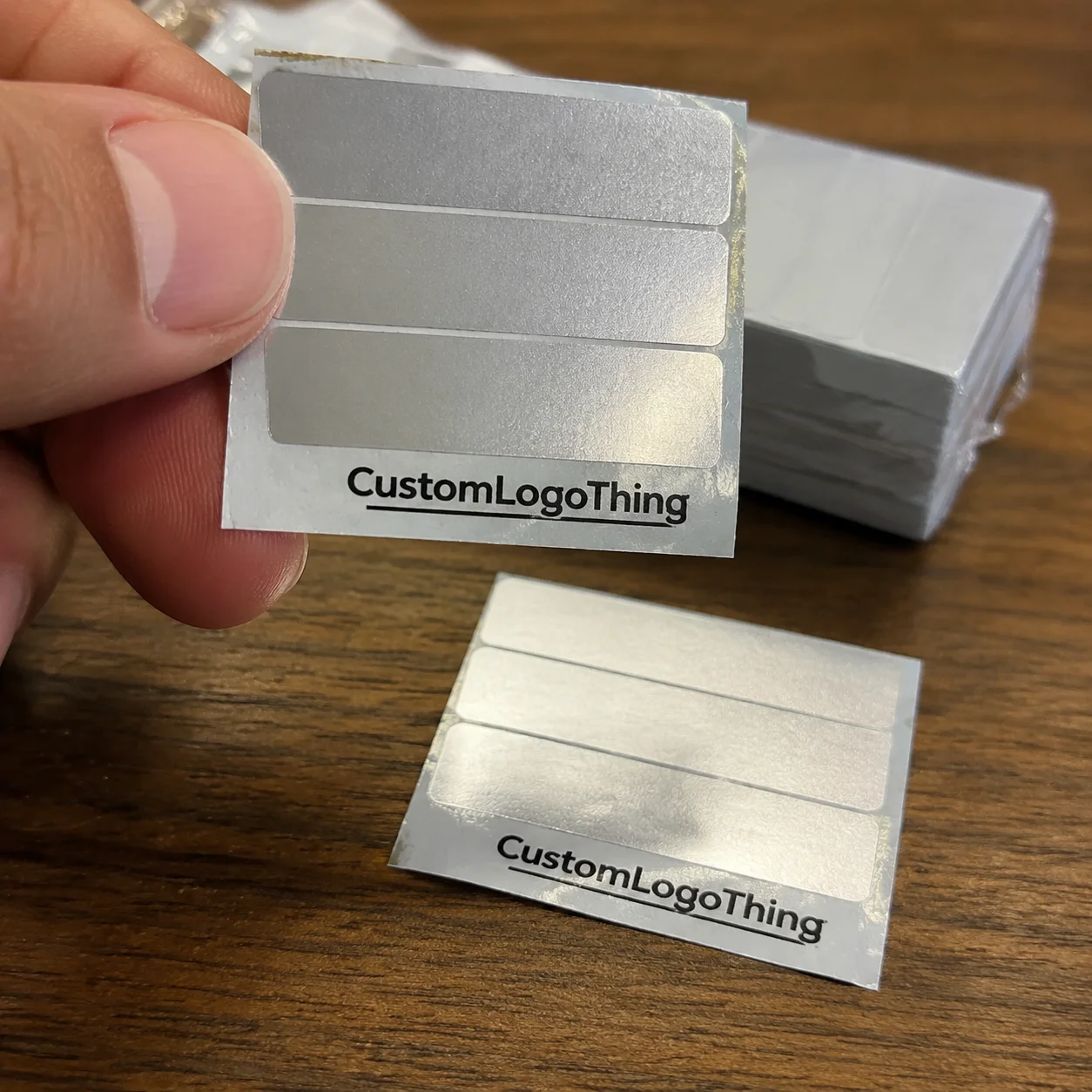
Most failures are small at first: a lifted corner on a curved jar, haze on coated packaging, or a label that peels cleanly once but will not stick again. Across a few thousand units, those small issues turn into relabel labor, scrap, and delayed shipments.
That is why buyers should separate reusable stickers from lookalike products:
- Permanent decals prioritize long-term hold, not clean removal.
- Standard removable labels may remove once but lose too much tack for reuse.
- Window clings usually need smooth glass-like surfaces.
- Static cling films are more sensitive to dust, texture, and handling.
The difference matters most on refillable containers, printed cartons, retail displays, event kits, and other items where the surface underneath is costly to replace. Teams refining artwork before larger Custom Packaging Products runs often use reusable constructions to keep last-minute changes manageable.
Unit price is only part of the cost. Reusable constructions often cost more than standard permanent labels, but they can reduce relabel time, protect decorated packaging, and limit obsolete inventory.
How reusable adhesive systems work without acting like weak stickers
Reusable adhesives are tuned differently, not simply made weaker. Buyers should evaluate four variables:
- Initial tack: how quickly the sticker grabs the surface
- Peel strength: how much force removal requires
- Dwell time: how behavior changes after hours or days in place
- Clean release: whether it removes in one piece with little or no residue
A reusable construction usually depends on four components working together:
- Face stock: vinyl, polypropylene, polyester, or paper
- Adhesive system: removable, repositionable, or ultra-removable acrylic formulas
- Liner: affects converting, storage, and application
- Target substrate: glass, PET, coated paperboard, metal, polypropylene, and other surfaces each respond differently
Reuse always has limits. Dust, finger oils, abrasion, moisture, and long dwell times all reduce adhesive recovery. A sticker may survive several moves on clean glass and struggle after one or two on textured plastic.
Common constructions each fit different jobs:
- Removable vinyl works well on curves and in repeated-handling promo use.
- White BOPP or polypropylene film suits packaging, offers moisture resistance, and is usually more cost-efficient than premium films.
- Polyester adds stiffness and durability where abrasion or chemical exposure matters.
- Low-tack paper stocks fit short-term indoor use when cost matters more than moisture resistance or high reuse count.
Surface energy is often the hidden variable. Glass and coated metal are usually forgiving. Low-energy plastics such as some PP and PE containers are harder to bond to even when they feel smooth. Texture creates another problem by reducing real contact area.
Strong hold, clean removal, and repeated reuse rarely peak at the same time. Improving one usually weakens another.
A smooth PET jar, a powder-coated tin, and a soft-touch laminated carton may all look suitable for the same sticker size, yet each can remove very differently after the same dwell time.
For sensitive applications, test the exact surface under actual use conditions. If the stickers will face shipping stress or temperature swings, distribution testing guidance from ISTA can help define a realistic trial.
Key spec factors that determine whether a removable sticker actually performs
If performance matters, start with the adhesive and work outward. The same artwork can behave very differently with a different adhesive family.
Adhesive choice comes first
Removable adhesives focus on clean release and may support limited reuse. Repositionable adhesives are better for lift-and-reapply use. Ultra-removable adhesives suit delicate or very temporary applications, but they may be too weak for rough handling or longer dwell times.
Match the face stock to the job
Flexible films are usually safer for jars, bottles, and curved surfaces. Stiffer materials can present more neatly on flat panels. If condensation, refrigeration, or splash exposure is involved, film generally outperforms paper. Buyers already ordering Custom Labels & Tags often keep the same art and size while changing only stock and adhesive to support reuse.
Finishes affect performance
Matte improves readability under bright light; gloss increases visual pop. Laminates add durability but also change flex, which can affect edge lift on tight curves. Soft-touch finishes may look premium but are not always ideal for repeat peel-and-reapply use. Writable coatings can help in warehouse, classroom, and refill systems, but marker compatibility should be checked with the exact pen.
Shape and format affect usability
Rounded corners usually last longer than sharp corners. Narrow points and complex contours lift first. Kiss-cut sheets suit office use and hand application. Rolls fit faster application or dispenser use. Individually cut pieces are often best for mailers, inserts, and events.
Printing details still matter
Heavy ink coverage makes scratches, bubbles, and edge defects easier to see. Small reversed text can lose legibility on matte or textured materials. Clear films often need white ink under the artwork to preserve color density. Heat can soften some adhesives, while cold can reduce initial tack.
A simple qualification list speeds specification:
- What exact surface will the sticker be applied to?
- How long must it stay in place each time?
- How many reapplications are actually required?
- Will it face heat, cold, UV, condensation, or abrasion?
- Should it ship on rolls, sheets, or as individually cut pieces?
Custom reusable sticker pricing: what drives cost, MOQ, and unit economics
Pricing is mainly driven by face stock, adhesive, size, print coverage, finish, cutting method, and packaging format. Quantity then spreads setup cost across the run.
Specialty removable and repositionable adhesives usually cost more than standard permanent constructions. Film facestocks also cost more than basic paper. The more useful comparison is cost per successful use, not just invoice price.
For indoor projects with standard CMYK printing, these ranges are realistic:
| Construction | Typical MOQ | Estimated unit cost at 1,000 pcs | Estimated unit cost at 5,000 pcs | Best fit |
|---|---|---|---|---|
| Low-tack paper removable label | 500-1,000 | $0.18-$0.32 | $0.07-$0.14 | Short indoor campaigns, low handling |
| White BOPP with repositionable adhesive | 1,000 | $0.22-$0.38 | $0.09-$0.18 | Jars, plastic containers, retail promos |
| Removable vinyl decal with laminate | 250-500 | $0.45-$0.90 | $0.18-$0.34 | Laptops, events, repeated handling |
| Clear polyester with specialty removable adhesive | 1,000+ | $0.40-$0.75 | $0.16-$0.30 | Premium packaging, higher durability |
Digital printing supports smaller pilot runs, often in the low hundreds. Minimums rise if the project needs a custom die, white ink on clear stock, unusual laminates, sequential numbering, or individual polybagging. Setup and tooling charges often range from about $40 to $250, with specialty finishing higher.
Hidden costs can matter more than a slight material-price difference: physical samples, sample freight, rush production, split shipments, and hand packing. Individual bagging for promo distribution can add roughly $0.05 to $0.20 per piece depending on labor and insert requirements.
When comparing suppliers, hold the specification constant. Same stock, adhesive family, size, finish, cut style, and packing format. Otherwise one quote may be for a permanent roll label and another for a laminated repositionable decal.
Production steps and turnaround timeline from artwork to delivery
The process is simple: artwork review, material selection, proofing, sampling if needed, print production, finishing, packing, and shipping. Most delays come from missing application details rather than press time.
For a standard digital order, a practical lead time is often 7 to 12 business days from proof approval for uncomplicated work. Shipping commonly adds 2 to 5 business days. If the job needs a custom die, white ink on clear film, or a physical preproduction sample, total timing often reaches 12 to 18 business days.
A physical sample is usually worth the extra time when:
- The surface is unfamiliar, sensitive, or expensive to replace.
- The sticker must survive more than one removal cycle.
- The packaging finish is premium enough that residue, edge lift, or print pull would be costly.
Lead times improve when the order includes:
- Final dimensions and shape
- Artwork with bleed and safe area
- Photos or details of the target surface
- Indoor or outdoor use
- Expected application temperature
- Expected number of moves
- Roll, sheet, or individual cut format
- Quantity tiers for quoting
Common ordering mistakes that lead to edge lift, residue, or wasted inventory
The most common mistake is buying on piece price alone. That is how teams end up with labels that haze on jars, slide on low-energy plastics, or damage carton surfaces during removal.
Another mistake is assuming all smooth surfaces behave the same. PET, HDPE, powder-coated metal, UV-coated paperboard, and polypropylene bins can all feel similar but produce very different peel results.
Skipping real-world testing causes the next set of problems. A sample applied in an office does not tell you much about chilled storage, warm retail lighting, repeated handling, or transit abrasion. A 72-hour substrate test is a sensible starting point, and higher-risk jobs should be tested across the full expected dwell time.
Design can also hurt performance. Intricate die lines create points that lift first. Large dark solids show scuffs and fingerprints. Tiny type can lose crispness after lamination or on textured matte films.
Format and storage errors are quieter but costly. A label intended for hand application may be awkward on a tight roll. A pack-in may need individually cut pieces instead of sheets. Heat ages adhesive, dust reduces reusability before use, and excessive compression can distort kiss-cuts.
For a new program, testing 250 to 1,000 pieces across two or three constructions usually teaches more than committing to a large run based on a sample card.
Expert tips for specifying the right reusable label program
The safest starting point is a small pilot. Test two or three constructions on the actual substrate, leave them in place for the expected duration, then remove and reapply them under ordinary conditions.
Before requesting quotes, put these details on one page:
- Target substrate: glass, coated carton, PET, PP, metal, painted surface, laptop shell, and so on
- Use conditions: room temperature, refrigeration, humidity, outdoor exposure, transit abrasion
- Removal window: same day, one week, one month
- Required reuse count: one extra application, several moves, or more
Then ask direct questions: what adhesive type is being quoted, whether residue risk rises after long dwell, and whether there are known issues with soft-touch coatings, textured plastics, or varnished paperboard. Specific answers are more useful than broad claims about removability.
A practical workflow looks like this:
- Define the use case and cost of failure.
- Shortlist two or three constructions.
- Request samples or a pilot run.
- Compare quotes on matching specifications.
- Approve artwork after finish and format are confirmed.
- Scale in batches if the program is still evolving.
What are custom reusable stickers and how do they work?
Custom reusable stickers are printed stickers made with removable or repositionable adhesive systems that are designed to peel away cleanly and support at least one additional application on the right surface. They work by balancing initial tack, peel strength, dwell behavior, and adhesive recovery so the sticker stays in place during normal use, removes with minimal residue, and can be pressed back onto a compatible substrate.
Performance depends on the full construction rather than the adhesive alone. Face stock, laminate, liner, die line, storage conditions, and substrate all influence the result. Smooth, higher-energy surfaces such as glass and coated metal usually deliver the best reuse performance, while textured paperboard, dusty bins, and low-energy plastics are more demanding.
FAQ
How many times can custom reusable stickers be reused?
There is no universal number. On clean glass or coated metal, some constructions handle several moves reasonably well. On textured or low-energy plastics, performance may drop after one or two reapplications. Dust, skin oils, and long dwell times reduce adhesive recovery, so any reuse claim should be checked on the exact substrate.
Are custom reusable stickers safe for product packaging and jars?
Often, yes, especially on glass, metal, and some coated packaging surfaces. They are commonly used for seasonal promotions, refill systems, and limited runs where packaging needs to change without being damaged. Testing still matters because varnishes, laminates, and plastic surface chemistry can alter both adhesion and release. For food-adjacent projects, confirm compliance requirements separately. If sourcing standards are part of the brief, material guidance from FSC may also support specification decisions.
What is the difference between reusable stickers and removable labels?
Removable labels are usually designed to come off cleanly, but not always to be applied again several times. Reusable or repositionable stickers are more deliberately tuned for lift-and-reapply performance. The terminology varies by manufacturer, so compare adhesive type, substrate recommendations, and test results rather than relying on product naming alone.
Do custom reusable decals leave residue on walls, laptops, or bottles?
Well-matched constructions are intended to minimize residue, but surface type and dwell time still control the result. Heat, aging, low-energy plastics, delicate coatings, and textured finishes can all increase the chance of adhesive transfer. A short real-world test is the best check before placing a larger order.
How do I get an accurate quote for custom reusable stickers?
Provide size, shape, quantity tiers, artwork, intended surface, use conditions, required reuse count, and delivery format. Ask each supplier to quote the same material assumptions so the comparison stays fair, and request samples if the application is sensitive, high volume, or tied to premium packaging.

