A strong logo can feel boxed in on a rectangle and suddenly look settled the moment it moves into custom stickers round. That shift is not a design trick. It is simple geometry. A circle removes empty corners, keeps attention in the center, and often makes a small brand mark feel more deliberate on jar lids, mailers, box closures, and handouts.
That is a big reason round stickers keep showing up across packaging. They can work as a logo badge, closure seal, mini product label, QR prompt, or low-cost promotional piece. Most buyers are talking about circular stickers printed on paper or film and supplied on rolls, sheets, or individual cuts. The shape stays the same, but the job changes with the material, adhesive, and delivery format.
Not every round sticker is solving the same problem. A giveaway sticker for an event has very different requirements from a candle lid label. A bakery box seal needs to tear cleanly and peel without a fight. A water bottle or car window decal needs UV and weather resistance. Small circle, lots of ways to specify it badly.
The buying logic is straightforward once you narrow it to the right factors: size, stock, adhesive, finish, format, cost, and timing. Those choices decide how the sticker looks, how quickly it applies, and how well it holds up against moisture, oil, friction, refrigeration, or shipping wear. If your product line also uses Custom Labels & Tags or broader Custom Packaging Products, the same thinking carries across the rest of the packaging system.
Why custom stickers round show up everywhere from coffee cups to candle lids
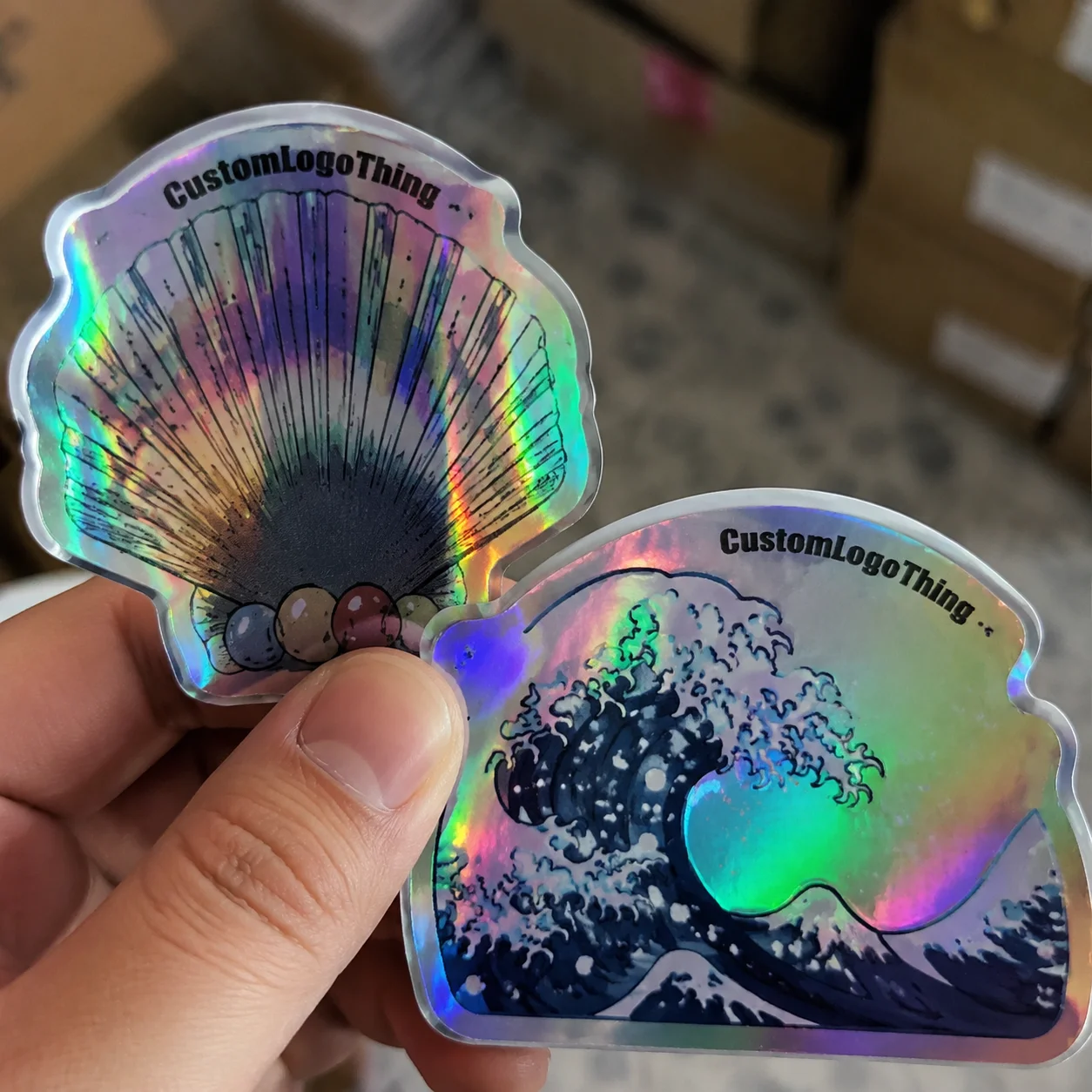
Spend ten minutes in a café, a small retail shop, or a packing area and circles start to appear everywhere. Coffee cup lids, candle caps, cookie boxes, jar tops, envelope seals. The format fits surfaces that are already round, but that is only part of the reason it works so well.
Visual efficiency matters more. Rectangles can make a centered logo feel cramped, especially if the artwork is compact and the print area is small. A circle keeps the eye pulled inward. For a packaging buyer, that often means a cleaner presentation without increasing the printed footprint.
Round stickers also adapt well across a wide range of jobs:
- Logo badges: useful for lids, tissue seals, and small-batch retail packaging
- Ingredient or scent callouts: common on candles, soaps, balms, and food lids
- QR prompts: easy “scan me” applications on mailers or inserts
- Tamper-style closures: practical for bakery boxes, sleeves, and folded cartons
- Promo handouts: simple add-ons for events, order inserts, and thank-you packs
Production helps the case too. Circular shapes are standard in die-cutting, so suppliers can often quote and run them efficiently on digital or flexographic presses. Standard does not mean dull. It usually means fewer odd variables, cleaner setup, and less back-and-forth before production starts.
The shape alone will not rescue a weak specification. Cheap paper on an oily lid can wrinkle or stain. A tiny circle packed with six lines of text will read as cluttered and amateur. A clear sticker on a dark cap can make artwork disappear if no white ink layer is built into the file. Those are basic mistakes, and they still show up all the time.
Practical rule: if the sticker has to do more than look good for a few minutes, start with the material and adhesive, then decide on finish.
How round stickers work in print, cutting, and application
The production path is fairly simple. Artwork is prepared first. Printing comes next. After that, the sticker may receive varnish or lamination, then the material is die-cut into circles, stripped, rewound or sheeted, checked, and packed for shipping.
Even a plain circle needs disciplined file setup. You still need bleed, often 0.0625 inch to 0.125 inch depending on the supplier, along with a safe area so type and key artwork do not drift too close to the cut line. Circles reveal alignment problems quickly because people instinctively check symmetry. A border that sits off by half a millimeter can look wrong immediately.
Most buyers choose one of three delivery formats:
- Rolls: best for faster hand application, dispensers, or machine labeling
- Sheets: useful for smaller runs, office use, and mixed artwork versions
- Singles: ideal for giveaways, inserts, and retail handouts
Roll format usually makes the most sense for product packaging because it cuts handling time. Small round pieces on sheets can become annoying to peel, especially below 1.5 inches. They may photograph nicely in a sample packet and still slow down real work at the packing table.
Edge quality deserves more attention than many buyers give it. Dark flood backgrounds can show tiny white nicks if the cut edge is rough or the ink coverage is not handled well. Metallic and holographic films can reveal chatter along the edge too. If the sticker is meant to look premium, ask about die-cut tolerance and whether the supplier has experience printing dense color on film stocks.
Application is affected by more than the face material. A high-tack permanent adhesive may bond well to glass, plastic, or coated board, but it can be frustrating if you need even slight repositioning. Liner release matters too. A liner that peels awkwardly slows hand application. For automated labeling, roll direction, core size, outer diameter, and the gap between labels all matter. For hand application, an easy peel often matters more than machine-ready specs.
If products are moving through rough distribution, the sticker is only one part of the packaging picture. Vibration, abrasion, and stacking pressure can affect exposed closures and seals. That is why packaging teams often pay attention to testing frameworks from groups like ISTA when they assess how a package performs in transit.
Size, material, finish, and adhesive choices that change performance
Diameter is the first practical decision. Most round stickers fall into a few common size bands:
- 1 to 1.5 inches: logo seals, envelope closures, sample jars, small lids
- 2 to 3 inches: standard product labels, candle lids, coffee bags, bottle caps, inserts
- 3.5 to 5 inches: promo stickers, larger retail packaging, mailing tubes, takeaway containers
Choose the size from the actual application area, not a guess based on screen mockups. Measure the lid, flap, front panel, or cap top, then pull back slightly to leave breathing room around the sticker. On a 3-inch candle lid, a 2-inch circle often looks cleaner than a 2.5-inch one because the border around the edge helps the piece feel intentional rather than crowded.
Material options
Paper is the budget-friendly option. It prints crisply, feels familiar in the hand, and can look excellent for dry-use retail packaging. It is less resistant to moisture and scuffing unless a coating or lamination is added. Paper works well for bakery boxes, tissue seals, envelope closures, and other short-life indoor uses.
White BOPP is often the practical workhorse for product packaging. It is water-resistant, flexible, and usually more economical than vinyl while still holding up well against condensation and handling. For jars, bottles, balms, refrigerated goods, and cosmetics, white BOPP is often the sensible middle ground.
Clear BOPP gives a no-label look, but only if the artwork is built with the substrate in mind. Transparent film allows the container color to show through. That can look sharp on clear glass and become a problem on kraft, black lids, amber jars, or uneven backgrounds unless white ink is used selectively under the artwork.
Vinyl is tougher and often the better choice for outdoor exposure, heavy abrasion, or longer-life decals. It also costs more, sometimes by a fair margin. For stickers living on laptops, water bottles, helmets, or exterior surfaces, that extra durability can be worth it.
Specialty stocks such as holographic film, metallic facestocks, textured paper, or estate papers create a distinct effect, but they also raise cost and can make small text harder to read. They work best when the visual effect serves the brand rather than distracting from the message.
Finish and adhesive choices
Gloss strengthens color and suits bold graphics, food packaging, and beverage branding. Matte gives a softer look and usually photographs with less glare. Soft-touch feels upscale but can scuff. Writable surfaces can be useful for batch dates, scent names, or short notes, though not every pen works reliably on coated materials.
Adhesive is often the detail that decides whether the sticker performs well or fails early. Permanent adhesive covers most standard labeling jobs. Removable adhesive works better for temporary promotions, short-term event use, or applications where the surface should stay clean after removal. Cold-fill, freezer, and condensation-heavy uses need adhesives rated for that environment. A moisture-resistant face stock paired with the wrong adhesive is still a poor specification.
Space gets tight quickly in a circle, so color contrast matters. Fine script, pale type, and thin outlines disappear fast below 2 inches. If the label needs to be read at arm's length, protect readability first and decorative detail second. A strong design can still look cheap in ten seconds if the material and print choices do not support it.
Round sticker pricing: cost drivers, MOQ, and unit cost tradeoffs
Pricing is usually driven by a short list of variables: diameter, material, quantity, print method, finish, adhesive, and format. Freight, proofing complexity, and special handling can shift the quote too, but those core factors do most of the work.
Short runs are often affected by setup costs more than buyers expect. Five hundred stickers do not cost one-tenth as much as five thousand because artwork prep, press setup, die-cutting setup, and finishing time still have to happen. Higher volumes spread those fixed costs across more pieces, which is why the unit price typically drops as quantities rise.
Minimum order quantities vary by supplier and stock, but these ranges are common:
- Sheets: often 50 to 250 pieces minimum
- Rolls: often 250 to 1,000 pieces minimum
- Specialty films or finishes: often require higher minimums
The table below gives a realistic starting point for standard circular labels. Actual pricing will vary by supplier, region, material availability, and artwork complexity, but these numbers help frame the conversation.
| Spec | Qty | Typical Format | Estimated Unit Cost | Notes |
|---|---|---|---|---|
| 1.5" paper, gloss | 500 | Sheets | $0.08-$0.18 | Best for dry indoor use |
| 2" white BOPP, matte | 1,000 | Rolls | $0.06-$0.14 | Common for product packaging |
| 3" white BOPP, gloss | 5,000 | Rolls | $0.05-$0.10 | Setup spread improves economics |
| 3" vinyl, laminate | 1,000 | Singles or rolls | $0.18-$0.35 | Better for outdoor durability |
| 2" holographic film | 1,000 | Sheets or rolls | $0.14-$0.30 | Premium effect, less practical for small text |
Smaller does not always mean dramatically cheaper. If setup and die-cutting dominate the quote, dropping from 2 inches to 1.5 inches may not change the total very much. A switch from paper to film, or the addition of lamination, can alter the economics much faster.
Quotes are easier to compare if you look through four practical lenses:
- Cost per piece
- Expected usable life
- Waste rate from misapplication or damage
- Labor time to apply
A cheaper sheeted option can end up costing more if staff lose hours peeling and placing tiny stickers by hand. Labor is still part of the packaging budget, even when it sits under a different department code.
Process and lead time: what happens from quote approval to delivery
Most jobs follow the same basic path: quote request, spec review, artwork submission, proof approval, production, packing, shipping, and delivery. The process is familiar. So are the places where it slows down.
Delays often happen before anything reaches the press. Missing bleed, unclear sizing, low-resolution files, a late switch from paper to clear film, or an unspecified roll direction can stall the job. Production gets blamed for slow timelines fairly often, but the file package is frequently where the trouble starts.
Proof approval deserves more attention than a quick glance. This is the stage where you catch type that is too small, a circle that feels undersized on the actual lid, or a cut line that sits too close to a border. If brand color matters closely, ask whether the run will be digital CMYK, flexographic, or spot color matched. Each approach has cost and consistency tradeoffs.
Typical production times for custom stickers round often land around 5 to 12 business days after proof approval for standard work. Specialty materials, higher quantities, or added finishing can stretch that window. Shipping is separate and may add another 2 to 6 business days depending on origin and destination.
Rush service is possible on many jobs, though it usually comes with tradeoffs:
- Higher unit or setup cost
- Limited material availability
- Fewer proofing rounds
- Stricter file requirements
Product launches, events, and seasonal packaging changes all benefit from extra buffer time for revisions and transit. Brands with formal sourcing requirements may also want to ask whether paper stocks are certified through programs such as FSC. That will not matter for every order, but for some teams it is part of the purchasing checklist.
No one enjoys hearing that a fast-turn order is still waiting on artwork cleanup. If the deadline matters, send complete specs at the start and respond to proof questions quickly.
How to order the right round sticker in 6 clear steps
Good ordering comes from clear specifications, not a longer menu of options.
- Define the use case. Decide whether the sticker is a product label, closure seal, promotional giveaway, or outdoor decal. That answer shapes material, adhesive, and finish.
- Measure the application area. Use real package dimensions such as lid diameter, flap depth, or front-panel width. Do not estimate from a tiny dieline preview.
- Select material and finish. Dry indoor use may be fine on paper. Moisture, refrigeration, oils, or repeated handling usually push the job toward BOPP or vinyl.
- Prepare artwork correctly. Include bleed, safe zone, legible type, and correct color setup. Vector files are usually best for logos and text-heavy marks.
- Choose quantity and format. Balance budget, storage space, and application speed. Rolls usually fit production work best. Sheets can be perfectly fine for lighter use.
- Review the proof carefully. Check size, cut alignment, text, color, quantity, finish, and delivery format before approving the order.
A fast, usable quote is much easier to get when all the needed information is in one message:
- Diameter
- Quantity
- Material preference or environment details
- Finish
- Adhesive type if known
- Rolls, sheets, or singles
- Artwork status: ready file or design help needed
- Needed-in-hand date
A simple request might read like this: “Need 2-inch round Labels for Candle lids, 3,000 pieces, white BOPP, matte lamination, permanent adhesive, supplied on rolls, artwork ready, need delivered within three weeks.” That is clean enough for a supplier to quote without guessing.
If the sticker needs to match custom printed boxes, inserts, or other packaging elements, mention that early. Visual consistency across the package matters more than many buyers expect. A warm white label next to a cool white box can make both components look off.
Shortcut: keep a one-page sticker brief with diameter, stock, finish, adhesive, format, quantity, and deadline, then reuse it for supplier quotes.
Common round label mistakes that waste money or ruin the look
Most sticker failures are not dramatic. They come from ordinary specification errors, which is useful because ordinary errors are preventable.
Mistake one: forcing too much text into a small circle. A 1.5-inch badge is not the right place for ingredients, a social handle, a slogan, and a QR code. If the space is limited, give the sticker one clear job.
Mistake two: choosing clear material without planning for the background surface. Clear stock on black lids, amber glass, kraft paper, or textured board can shift color and kill readability very quickly.
Mistake three: ignoring curves, seams, and raised edges. Lids with domed tops, rims, or shrink seams can distort placement. Flat digital mockups are not reliable stand-ins for the real object.
Mistake four: using matte or unlaminated paper where moisture or oils are part of the environment. Refrigerated foods, bath products, facial oils, and freezer items expose weak material choices almost immediately.
Mistake five: skipping adhesive testing. Surface energy, plastic type, coatings, and temperature all affect bond performance. Test on the actual substrate rather than something merely similar.
Mistake six: ordering the wrong format for the job. Tiny stickers on sheets can destroy labor efficiency. If a team is applying hundreds per day, rolls are usually the sensible choice.
Mistake seven: approving without a physical sample or at least a full-size printed mockup. Print the circle at actual size, place it on the package, and view it from normal distance. Design decisions that look clever on a screen can feel awkward in the hand.
Brands building a full retail packaging system feel these mistakes more sharply. A weak sticker does not stay isolated. It can make the entire presentation feel less considered, even if the box or container itself is well designed.
Next steps: build your specs, compare quotes, and test before you scale
If you are ready to buy, keep the process focused. Finalize the specifications that actually affect outcome before requesting quotes:
- Diameter
- Use case
- Material
- Finish
- Adhesive
- Format
- Quantity
- Deadline
From there, narrow the material options to two or three realistic choices. Asking for every possible combination usually creates a messy comparison that tells you very little. A better approach is to compare paper against white BOPP for dry retail use, or white BOPP against vinyl for moisture and abrasion. That produces a decision you can actually use.
If the sticker will face condensation, oils, rubbing, refrigeration, or outdoor exposure, request samples or a short test run. Put the sticker on the real package. Rub it. Chill it. Wipe it. Stack it. Ship it. A little abuse testing can save a much larger mistake later.
Price should not be the only comparison point. Look closely at production time, proofing support, supplied format, freight, reprint policy, and likely waste risk. A slightly higher quote can be the better buy if it cuts application time or avoids a material mismatch that hurts the finished packaging.
The last check is simple: view the applied sticker from normal distance, not from six inches away. If it looks balanced, reads clearly, and applies without trouble, the specification is probably close. If you are narrowing options for custom stickers round, start with the real package in hand and build the quote request from that instead of relying on a generic calculator. That one habit saves money, time, and a surprising amount of frustration.
FAQ
What size should custom round stickers be for product packaging?
Choose the diameter from the actual label area rather than the overall package size. Small circles around 1 to 1.5 inches work well for logo seals and lid badges. Sizes from 2 to 3 inches fit many candle lids, jars, and front-panel labels. If the sticker also needs ingredients, directions, or promotional copy, you may need a larger format or a second label. A printed paper mockup at full size is still one of the best ways to check the fit before ordering.
Are custom stickers round better on rolls or sheets?
Rolls are usually the better choice for faster hand application and machine labeling. Sheets make sense for small runs, office use, or jobs with multiple artwork versions in one batch. Singles are better suited to giveaways, order inserts, and retail handouts than to packaging lines. For small circles applied at volume, rolls are almost always easier operationally.
How much do custom round stickers cost per piece?
Unit cost depends on size, quantity, material, finish, and format. A basic paper sticker in a short run may land around $0.08 to $0.18 each, while a larger or more durable film sticker may cost less at higher volumes or increase with premium finishes. The smarter comparison is total applied cost, especially if one format takes much longer to apply.
What material is best for round logo stickers that get wet?
Water-resistant films such as white BOPP, clear BOPP, or vinyl are usually better choices than standard paper. Lamination or protective coating helps if the sticker will face friction or repeated handling. Adhesive selection matters too, especially for refrigerated goods, cold-fill products, or surfaces that collect condensation.
How long is the turnaround for custom round stickers?
Turnaround includes proofing, production, and shipping rather than press time alone. Standard production often runs about 5 to 12 business days after proof approval, with shipping added after that. Missing bleed, artwork cleanup, and material changes are common reasons jobs take longer. Rush service may be available, but it often raises cost and limits available stock or finish options.


