Custom waterproof name labels solve a narrow but persistent problem: names disappear exactly when items are being sorted, washed, packed, or returned. A label that looks fine on day one is not enough. The real test is whether it still reads clearly after detergent, dryer heat, hand washing, friction inside a school bag, and repeated handling by people who are not being careful with it.
That makes the buying decision more technical than it first appears. Material, adhesive, print method, and finish all affect whether the label survives in the wild. For buyers who already think about packaging durability, the logic will feel familiar: the cheapest unit price often tells you less than the full build spec and the expected wear cycle.
In practice, the strongest labels are the ones that do their job quietly. They stay attached, they stay legible, and they do not create extra work for parents, teachers, caregivers, or warehouse staff. That is the standard worth using.
What custom waterproof name labels do differently in daily use
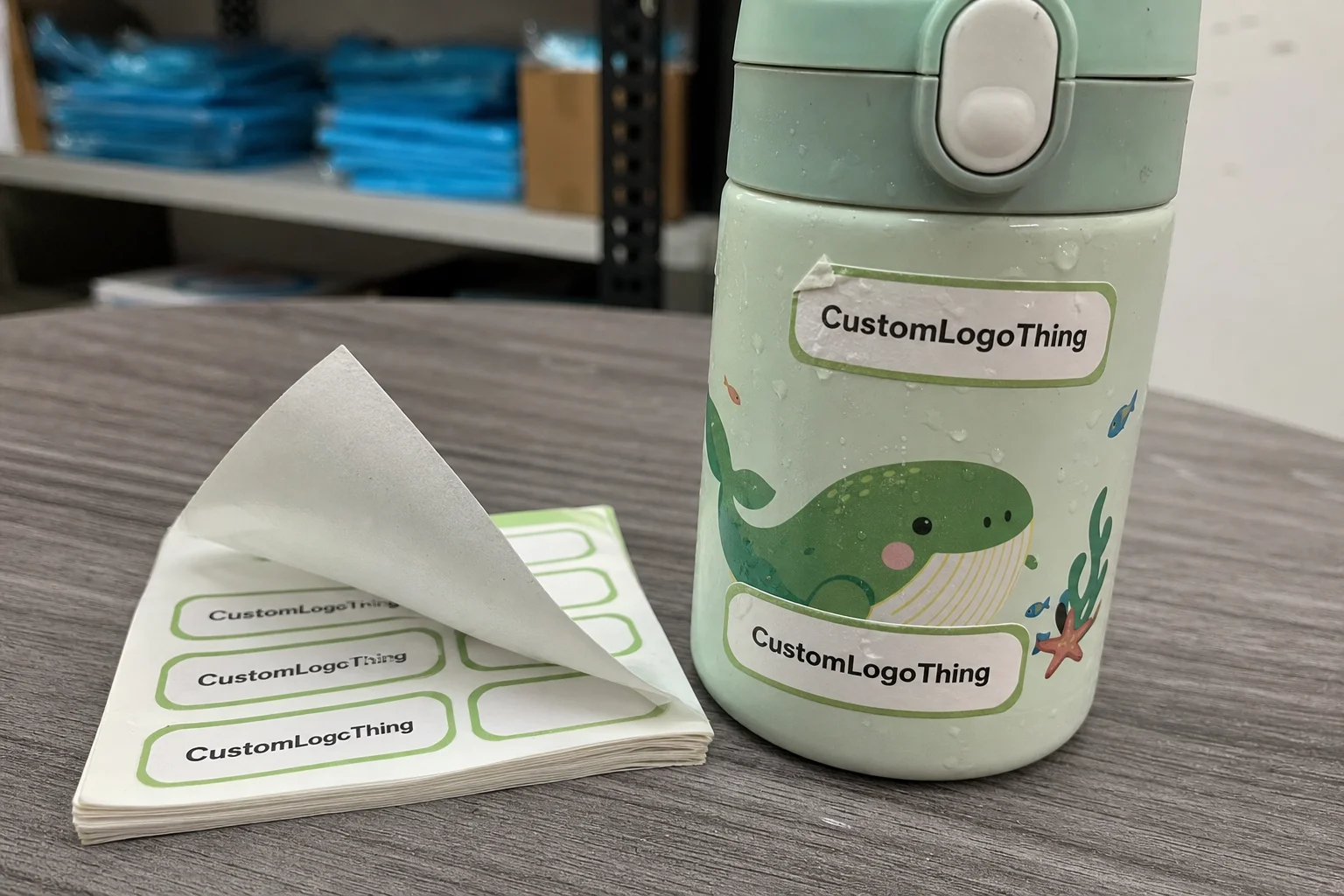
Most label failures do not start with water. They start with heat, detergent, abrasion, and movement. A label may survive splashes and still fail after a few laundry cycles because the print rubbed away or the adhesive softened on a tricky surface.
That is why custom waterproof name labels are built differently from ordinary stickers. A durable label usually relies on a synthetic face stock, a print method suited to moisture and abrasion, and an adhesive matched to the intended surface. Some are designed for fabric care tags. Others are better on plastic containers, lunch boxes, water bottles, or gear cases. The same label rarely performs equally well on all of them.
For clothing, the main enemy is a combination of laundry chemistry and mechanical wear. For hard goods, it is repeated wiping, hand oils, condensation, and edge lift. A daycare label, a school uniform label, and a sports bottle label all need to be readable, but they do not need the same construction. That distinction matters more than most product pages admit.
There is also a packaging angle. If your team already handles product packaging or package branding, you know the value of a label that behaves predictably. Identification has to be dependable, not decorative. A cute font that loses clarity after three washes is a poor trade.
If the label cannot survive heat, friction, and repeated wash cycles, it is the wrong specification for the item.
A good buyer’s habit is to define the use case before approving artwork. Ask a few blunt questions: will the item go through a hot wash, a warm wash, or just occasional wiping? Will the label be placed on fabric, coated plastic, glass, or painted metal? Will the user need to read it at arm’s length or at a glance? Those answers shape the build more than color choices do.
How the materials, ink, and laminate keep names readable
Durability comes from the whole stack. The face stock carries the design, the ink or toner creates the text, the adhesive bonds the label to the surface, and the top layer protects the print from scuffing and moisture. If one layer is weak, the failure shows up there first.
Material choice is the core decision. A paper label can be useful in dry environments, but it is the wrong starting point for laundry or repeated wiping. Waterproof labels usually use vinyl, polyester, polypropylene, or a similar synthetic substrate. Polyester is often chosen when abrasion resistance matters. Vinyl can be a practical choice for flexible surfaces and general moisture exposure. The exact match depends on the item, not the trend.
Print method matters just as much. Some print systems lay down color in a way that looks sharp at delivery and then dulls quickly after handling. Better systems pair the print method with a protective overlaminate or coating so the name remains readable after washing or rubbing. That extra layer is not cosmetic. It is part of the performance spec.
Adhesion is another place where real-world testing matters. Smooth plastics and sealed surfaces usually behave differently from textured bins, fabric seams, or curved bottles. A label can hold beautifully on a flat lunch container and start lifting at the corners on a rounded surface. That is not a defect in the label alone. It is a mismatch between label and substrate.
For buyers sourcing across custom printed boxes, retail packaging, and identification labels, the same rule applies: the finish has to fit the handling conditions. There is no single “best” waterproof label. There is only the best one for a specific substrate, temperature range, and lifespan.
If the job involves transit before end use, it is useful to think the way shipping testers do. Organizations such as ISTA focus on shock, vibration, and handling during transport, and that mindset translates well here. A label that survives a desk sample is not automatically ready for a backpack, a laundry basket, or a warehouse tote.
One caution that deserves a direct mention: waterproof does not mean universal. Some adhesives are excellent on laundry tags but weak on powder-coated surfaces. Others are strong enough to stay put but leave residue if removed. Some finishes are fully water resistant but still vulnerable to harsh cleaners or repeated high-heat drying. Buyers who know the actual item usually get better results than buyers who rely on a generic label description.
Cost, pricing, and MOQ: what changes the quote
Pricing for custom waterproof name labels is usually driven by size, shape, material, print complexity, quantity, and finishing. Two orders that look similar on paper can price very differently if one has variable names, a custom die line, or a protective laminate. That is normal. The labor behind the run matters as much as the label itself.
Minimum order quantity affects unit cost because setup work is spread across fewer pieces. Proofing, plate or file preparation, die cutting, and quality checks all take time whether the run is 200 pieces or 20,000. Small orders therefore carry a higher per-unit burden. That does not mean they are poor value; it means the economics are different.
Here is a practical pricing guide for common builds at a moderate quantity such as 5,000 pieces. The ranges are approximate, but they are useful for comparing quotes without getting distracted by a low number that ignores setup or finishing:
| Option | Typical use | Approx. unit price | What affects the quote |
|---|---|---|---|
| Basic waterproof vinyl label | Simple name ID for bags, bins, and hard goods | $0.12-$0.20 | Size, one-color or full-color print, standard shape |
| Laminate-protected polyester label | Repeated laundry, abrasion, and frequent handling | $0.18-$0.32 | Topcoat, cut shape, adhesive strength, artwork coverage |
| Specialty format with variable names | Personalized sets, mixed lists, or multiple name lines | $0.25-$0.45 | Data handling, proofing, packaging, changeover time |
Setup fees are common on custom work and often fall in the $25-$80 range, though the number can move higher if the art is complex, the die line is unusual, or the proofing requires extra revisions. Rush jobs, special packaging, and nonstandard adhesives can push the cost further. A custom shape may cost more to produce, but it can also reduce application mistakes if it matches the item more cleanly.
The lowest quote is not always the lowest cost. If a label fails after several washes, the replacement order, customer frustration, and time spent fixing the problem usually cost more than the initial savings. That is especially true for resale inventory, school programs, or multi-item kits where consistency matters across many units.
Sustainability can affect the quote too, though it is usually secondary to performance for this product category. Some buyers ask for recycled content, FSC-certified paper components in supporting materials, or lower liner waste. Those details matter in broader packaging programs, but they should not override the core question: will the label perform where it will actually be used?
Production steps and turnaround: from proof to shipment
The production workflow is straightforward, and most delays happen before printing starts. First comes artwork review. Then a proof is prepared. After approval, the job moves into print, curing or drying, cutting, inspection, and packing. If the names, sizes, or layout are still changing during proofing, the schedule slips fast.
A clean brief saves more time than almost anything else. Final text, preferred size, quantity, and intended surface should be clear before the job enters production. If a label needs a special shape or a variable-data layout, that needs to be settled early too. Revisions after proof approval are the fastest way to lose a day or more.
Typical turnaround for standard runs is around 12-15 business days after proof approval, depending on volume and finishing. Smaller orders can move faster if the artwork is clean and the line is open. More complex jobs, including multiple name sets or heavy print coverage, may take a few extra days. That is not a delay so much as the normal cost of precision work.
Rush production is possible in some cases, but it depends on press availability, proof approval speed, and finishing capacity. If you need labels for a school intake deadline or a seasonal program launch, the practical move is to send final artwork early and avoid last-minute content changes. The label itself is not usually the bottleneck. The approval loop is.
Quality control should be specific, not vague. A supplier should check registration, color consistency, cut accuracy, and adhesion behavior before release. If the labels are destined for uniforms or resale packaging, a carton that looks fine is not enough. The batch has to perform after handling, not just on the bench.
A disciplined supplier should also be able to explain material consistency and traceability in plain language. The answer does not need to sound impressive. It needs to be clear enough that a buyer can judge whether the run will be repeatable on reorder.
How to choose the right format for uniforms, daycare, and resale
The right label format depends on the item, the environment, and how quickly someone needs to read it. A school uniform label usually benefits from compact text and a quiet layout. A daycare label often needs stronger contrast and slightly larger type because staff may be reading it quickly while sorting multiple items. Resale inventory can sit somewhere else entirely, where the label needs to look cleaner and fit into a broader brand presentation.
Readability should lead the design. Small garments require shorter names, tighter spacing, and type that remains legible at a small size. Bags and containers can support more text, secondary lines, or item codes. Once the label gets crowded, it becomes harder to scan after use, and legibility drops faster than people expect.
- For uniforms, keep the text compact and high contrast.
- For daycare items, favor easy-to-read type and a finish that tolerates wiping.
- For resale, match the label look to the packaging so identification feels part of the brand system.
Wear conditions matter just as much as dimensions. Hot washing, tumble drying, sunlight exposure, repeated wiping, and frequent flexing all shorten label life if the material is not selected carefully. A label that works perfectly on a flat care tag may fail on a stretchy athletic seam. A label that clings to a flat plastic box may lift at the edge on a curved bottle or a textured bin.
The practical rule is simple: choose the format after you know the surface, wash cycle, and handling pattern. Catalog images are not enough. They rarely show the part that actually decides success, which is whether the label survives the way the item is really used.
For teams already thinking about package branding, name labels can also support the broader presentation. A clean identification label on a kit box or garment bag creates order without demanding attention. That kind of support role is often underrated, but it improves the entire system.
Common mistakes that shorten label life
The first mistake is assuming waterproof means invincible. A label can resist moisture and still fail if it is applied to the wrong surface or used outside its intended conditions. Fabric, coated plastic, curved containers, and textured surfaces all behave differently.
The second mistake is poor contrast. Thin fonts, pale colors, decorative backgrounds, and cramped layouts all become harder to read after repeated washing or handling. If the purpose is identification, clarity has to win over decoration. A plain, bold layout usually outlasts a prettier one.
The third mistake is careless application. Dirty surfaces, trapped moisture, poor alignment, and weak pressure during application all reduce adhesion. On some materials, the label also needs a short dwell time before heavy use. That is true for fabric and hard goods alike.
The fourth mistake is skipping the sample stage. A proof can approve the layout and still tell you almost nothing about real performance. A small test on the actual garment or object is cheaper than replacing a failed batch later. It is also the fastest way to see whether the label survives the intended routine.
If the label cannot survive the real item, the real wash cycle, and the real handling pattern, the spec is not finished yet.
One more issue gets missed often: not every failure is obvious. A label may stay attached while the text fades, the edges fray, or the surface dulls enough that the name is hard to read. That is still a failure. For naming and identification, legibility after use matters more than whether the label is physically present.
Expert tips and next steps before you place an order
Start with a short audit. List the item surfaces, the wash or wipe conditions, the number of names or versions required, and the environment where the labels will live. School, daycare, home use, and resale inventory all push the specification in different directions. That one page of notes can prevent a lot of expensive guessing.
Then prepare the artwork carefully. Use the exact name format you want repeated across the order. Keep the font clean. Keep contrast high. Avoid extra decoration if the job is mainly identification. A label can still look polished without turning into a graphic exercise.
Ask for a proof or a small test batch before committing to a large run. One test on the actual item can tell you more than a neat mockup ever will. Check adhesion, clarity, edge wear, and how the label behaves after a wash cycle or a thorough wipe-down. If it survives there, you have a useful baseline.
For buyers comparing custom printed boxes, retail packaging, and identification labels, the clearest question is usually this: does the item need branding, identification, or both? The answer often points to the right construction faster than a long spec sheet. If the job is clear, the label choice becomes easier.
Custom waterproof name labels are a practical purchase when they are matched to the substrate and the use pattern. They do not need to be fancy. They need to stay readable, stay attached, and keep doing the job after the first wash, the tenth wash, and the rough handling between them.
How long do custom waterproof name labels usually last on clothing?
Lifespan depends on wash temperature, dryer heat, fabric texture, and how often the item is worn and handled. Labels made with a suitable adhesive, clear print, and a protective surface layer usually last much longer than paper or low-grade sticker options. A wash test on the actual garment is the most reliable way to judge real performance before placing a large order.
Are custom waterproof name labels better than iron-on name tags?
They are often faster to apply and easier to use on non-fabric items like containers, bags, and gear. Iron-on tags can be a better fit when the label must become part of the garment, but they require heat application and careful placement. The better choice depends on the surface, the wash conditions, and whether the identification needs to be removable or permanent.
What size works best for custom waterproof name labels on small clothing items?
Small items need short text, tight spacing, and enough white space to preserve legibility. Choose a size that fits the care tag or interior seam area without folding over edges or adding bulk. If the name must be read quickly, clarity matters more than decorative detail.
Can custom waterproof name labels handle repeated washing and drying?
Yes, if the material, adhesive, and print process are chosen for laundry conditions rather than general-purpose use. Frequent hot washes and high-heat drying can still shorten performance, especially on rough or stretchy surfaces. A sample run is the safest way to verify how the label behaves after several wash cycles.
What should I prepare before requesting a quote for custom waterproof name labels?
Have the final name format, quantity, approximate size, and intended surface ready before asking for pricing. Share any special requirements such as rush timing, variable data, or packaging preferences so the quote reflects the real scope. If the format is still undecided, ask for a proof or a small test order first.

