Holographic custom stickers can make a simple logo look premium, but they can also make busy artwork harder to read. Before You Order, the important questions are practical: what film pattern is being quoted, where will white ink sit, what surface is the sticker applied to, and how much handling, moisture, or abrasion it needs to survive.
These stickers use specialty reflective film instead of standard white label stock. Light breaks across the surface to create prism, rainbow, shattered-glass, starburst, or brushed effects. That movement is the selling point, but it also changes how color, contrast, and small details behave. If you are comparing options for Custom Labels & Tags or broader Custom Packaging Products, those spec details matter more than the mockup.
Most orders follow one of three approaches: full holographic background, selective holographic accents, or printed color over holographic film. Each choice changes readability, brand color accuracy, and cost. A screen proof can show layout and white-ink zones, but it cannot fully simulate reflected light in real use.
Holographic custom stickers are louder than your logo file thinks
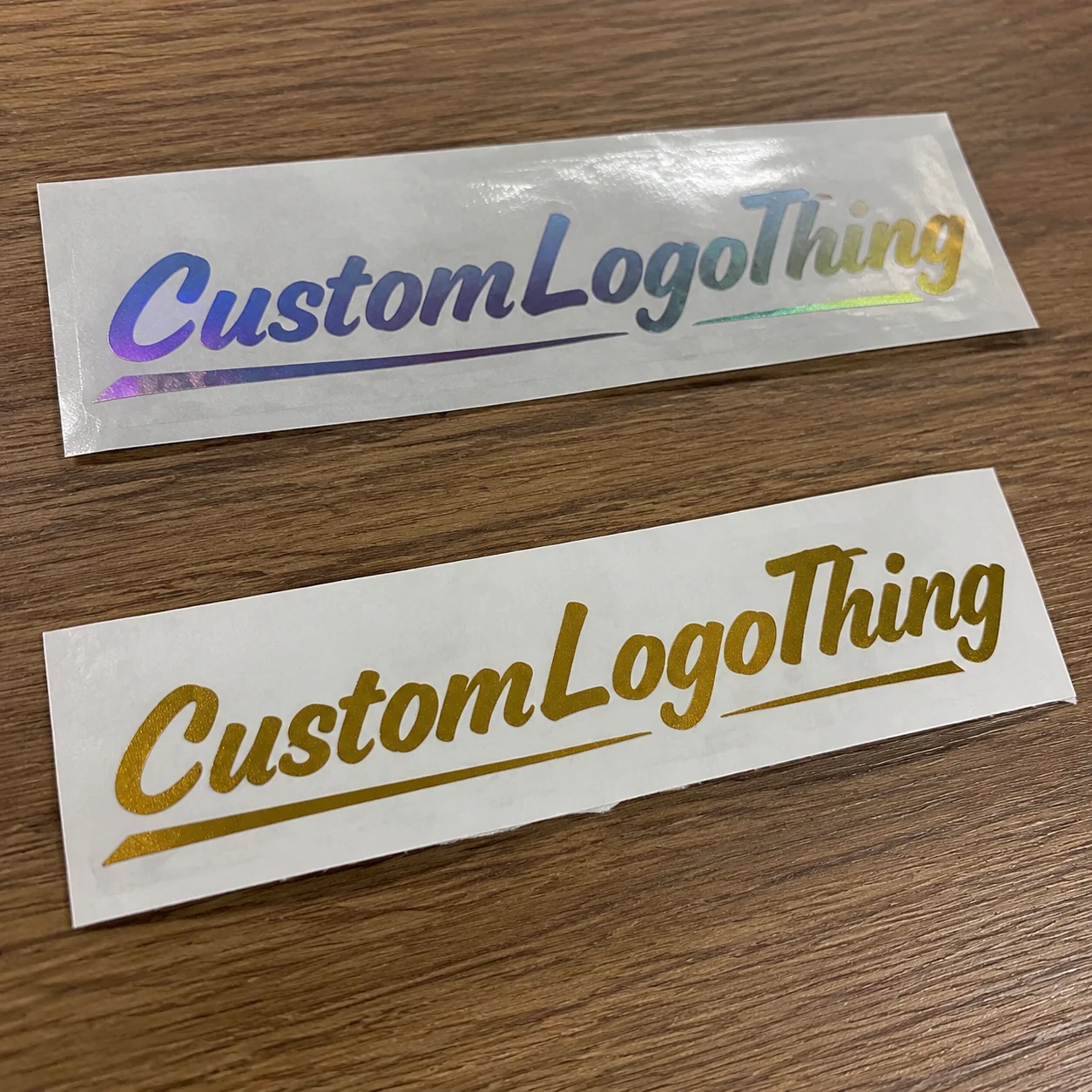
Simple artwork usually performs best on holographic material. Logos in black, white, or a few solid colors often look stronger on holo film because the material already supplies motion and contrast. Negative space helps. Clear hierarchy helps more.
Dense artwork is where problems start. Gradients, tiny text, photo elements, multiple competing colors, and full backgrounds can fight the film instead of sitting cleanly on top of it. What works on white vinyl or coated paper often needs to be simplified here.
For most buyers, it helps to treat holographic film as an effect layer rather than a base that should carry every brand element at once. It is especially useful for:
- limited-edition product launches
- cosmetic jars and folding cartons
- promo giveaways and event merch
- laptop and water bottle decals
- mailer seals and subscription inserts
- accent labels on branded packaging and custom printed boxes
Finish choice affects readability as much as shine. A full holographic background can look dramatic, but some patterns reduce legibility under store lighting. Spot holographic treatment gives more control and is often the cleaner option. Printed color over holo film can work well too, but colors shift depending on ink density and whether white ink sits underneath.
Rule of thumb: if the artwork already feels busy before the reflective effect is added, use holographic accents instead of full coverage.
How the reflective effect works on film, ink, and laminate
Most holographic stickers are built in layers. The face stock is usually holographic PET film or holographic vinyl, backed with adhesive and a release liner. On top of the film, the printer may add white ink, CMYK or spot colors, and a protective laminate.
The reflective effect comes from the film, not the ink. The surface pattern refracts light as the viewing angle changes. Common looks include prism, rainbow, shattered glass, starburst, and brushed metal. These are not interchangeable. A brushed finish and a prism pattern can make the same art feel like different products, so ask which film is actually being quoted.
Print control mostly comes from white ink:
- White ink blocks the holographic effect and creates a stable base for cleaner color.
- Unprinted or transparent areas leave the holo visible.
- Color printed without white underneath lets shimmer show through, but the color will shift.
- Selective white ink placement allows some elements to stay solid while others reflect.
That is the key difference between full holographic coverage and spot-effect artwork. Full holo keeps the effect across the entire visible face. Spot holo leaves only selected areas exposed while backing the rest with white or heavier color. Spot treatment usually looks more controlled, but it requires cleaner file setup and proof review.
Lamination changes both wear resistance and appearance. Gloss laminate preserves the strongest sparkle and adds scratch protection. Matte laminate lowers glare and can improve readability while keeping some of the effect. Unlaminated stickers cost less, but they scuff faster on items that are handled often or exposed to moisture and friction.
Durability depends on the job. A laptop decal, a cosmetic jar label, a cooler bottle sticker, and an outdoor decal all face different conditions. If performance matters, ask whether the construction aligns with recognized transport and packaging test expectations such as those referenced by ISTA.
The basic tradeoff is simple: more visible holographic effect usually means less color purity. More white backing gives cleaner brand color but hides more of the film. More exposed film gives a stronger effect but less predictable color.
Specs that matter before you order: material, adhesive, shape, and finish
A quote is not complete until the construction is clear. Material, adhesive, cut style, and finish decide whether the sticker works on the real package or only in a sample photo.
Material choices
Holographic vinyl is the most common all-around option. It is flexible enough for curved bottles, jars, mailers, and decals, and it holds up well in normal handling.
Holographic PET film is crisper and stiffer, with a cleaner face and sharper edge definition. It suits flatter applications and premium-looking labels, but it is less forgiving on tight curves or squeezable containers.
Paper-based holographic stocks can work for low-cost indoor use, short promotions, or inserts. They are usually the wrong choice for condensation, oils, or repeated handling.
Adhesive choices
Permanent adhesive is standard for retail labels and decals meant to stay in place. Removable adhesive is better for temporary promotions or surfaces that need cleaner removal. Some jobs need higher tack, especially textured cartons, low-surface-energy plastics, freezer environments, and cold-fill containers.
This is often where orders go wrong. Not every sticker goes onto smooth glass. Some are applied to kraft board, soft-touch cartons, chilled cans, tubes, or containers that pick up oil during use. The adhesive should match the actual substrate and environment.
Finish and cut style
Gloss laminate gives the brightest effect. Matte laminate reduces glare and often improves readability. Unlaminated stickers may save around 10% to 20% on some short runs, but they scratch much faster.
Format matters too:
| Format | Best For | Pros | Tradeoffs |
|---|---|---|---|
| Die-cut singles | Giveaways, merch, inserts | Strong presentation, easy to hand out | Higher handling cost per piece |
| Kiss-cut sheets | Small-batch labeling, organized packs | Easy storage, multiple designs per sheet | Slower for high-volume application |
| Roll labels | Retail packaging, fast hand or machine application | Efficient, lower labor in production | Less suitable for promo handouts |
Artwork spec also affects yield. Fine lines under about 0.5 pt can break up. Tiny reverse text can fill in. Large solid color areas may show variation if white underlayers are inconsistent. QR codes need strong contrast and enough quiet space, especially on active prism patterns.
If sourcing claims matter, paper components may also need to align with standards such as FSC for certified paper inputs.
Holographic custom stickers pricing: what drives cost, MOQ, and unit cost
Pricing is driven by more than size and quantity. Specialty film changes the cost structure, and small spec changes can move the quote noticeably.
Main cost drivers usually include:
- material grade: vinyl, PET, or paper-based stock
- size and print area
- quantity
- white ink coverage and layering
- CMYK density or spot-color requirements
- laminate type
- die-cut complexity
- format: rolls, sheets, or singles
- packing method and freight
Short runs are expensive per piece because prepress, setup, and finishing are spread across fewer units. At higher quantities, the same sticker can become much cheaper.
| Typical Order Scenario | Estimated Unit Cost | Notes |
|---|---|---|
| 500 die-cut singles, 3" x 3", holo vinyl, gloss laminate | $0.55-$1.10 each | Digital print, higher handling cost |
| 2,500 die-cut singles, 3" x 3", same spec | $0.24-$0.48 each | Setup and finishing spread across more units |
| 5,000 roll labels, 2" x 2", holo film, permanent adhesive | $0.08-$0.22 each | Faster converting and packing |
| 10,000 roll labels with selective white ink zones | $0.10-$0.28 each | Extra print control adds cost |
These are broad ranges, but they are useful for checking whether a quote is unusually high or suspiciously cheap.
MOQ depends on print method and format. Digital production can start low, sometimes around 50 to 250 pieces for test runs. Better unit pricing usually appears in the thousands, especially for roll labels. Selective holographic effects with controlled white-ink zones tend to keep low-quantity pricing higher because setup is more involved.
The lowest unit price is not always the lowest real cost. Weak adhesive, poor registration, rough trimming, incorrect counts, split shipments, or rush freight can erase any savings. Compare landed cost and usable yield, not just the first number on the quote.
Ask for pricing with exact size, format, laminate, adhesive, quantity tiers, and intended use. A quote without those details is only a placeholder.
From artwork approval to delivery: process, lead time, and production steps
Once the specification is settled, the process is straightforward. Delays usually come from incomplete files, unclear white-ink setup, or slow approvals.
- Quote request: size, quantity, material, adhesive, finish, format, and application surface.
- Artwork review: file type, bleed, cut line, white-ink separation, and readability.
- Proofing: visual proof with holographic exposure and white-ink callouts when needed.
- Material confirmation: stock, adhesive, laminate, and cut style approved.
- Print setup: color mapping, white-ink channels, and registration setup.
- Production: printing, laminating, cutting, and rewinding or singling.
- Packing: counted, bagged, boxed, and labeled.
- Shipping: transit time based on destination and service level.
Simple jobs on stock material often take around 7 to 12 business days after proof approval, plus shipping. Projects with selective reflective effects, custom finishing, or seasonal production pressure more often land in the 12 to 18 business day range. International freight or unusual materials can push lead times further.
Common delays include:
- missing bleed, often 0.125" on standard sticker work
- unclear or inconsistent cut lines
- no white-ink setup for spot holographic areas
- approval loops between marketing, operations, and procurement
- no adhesive decision tied to the real substrate
- color debates based only on RGB screen views
Sampling is usually worth it for new launches, color-sensitive packaging, or designs that rely on selective holographic visibility. A short test run can add a few days and some cost, but it is usually cheaper than remaking a full order because copy disappears under shelf lighting.
Build backward from the launch date. Leave room for proof review, at least one revision cycle, production, and shipping drift.
Common mistakes that make reflective stickers look cheap fast
Most bad outcomes start before printing.
Overdesigned artwork is the most common problem. Reflective film already adds movement. Too many gradients, tiny details, and competing colors flatten the hierarchy and make the sticker look noisy.
No white-ink strategy is next. Without white backing where it matters, logos go muddy, skin tones shift, and brand colors drift. Sometimes that shift is intentional. Often it is not.
Weak contrast causes practical failures. Legal text, QR codes, and fine details can disappear against active prism patterns. If the sticker needs to communicate more than decoration, test it physically.
The wrong construction also shows fast: indoor film used outdoors, weak adhesive on textured board, or no laminate on a high-rub surface.
Poor cut planning reveals itself at the edges. Thin borders make registration shifts obvious. Tight bleed increases trimming problems. Narrow points and small tabs tear easily.
Buying on price alone can create avoidable waste. A low quote may still be acceptable, but check film consistency, adhesive strength, registration tolerance, trim quality, and pack count accuracy.
Smart next steps to spec, test, and order with fewer surprises
A better order starts with a better spec. A useful quote request should include:
- final size and shape
- application surface
- indoor or outdoor use
- water, oil, UV, or freezer exposure
- gloss or matte laminate preference
- rolls, sheets, or die-cut singles
- quantity tiers such as 500, 1,000, 5,000, and 10,000
- vector file type and cut line
- white ink needs and spot reflective zones
Use case should drive the build. A giveaway sticker, bottle label accent, laptop decal, subscription insert, and tamper seal do not need the same material or format.
It helps to compare more than one construction. Test gloss-laminated holo vinyl against matte-laminated holo film, or compare a full holographic background with a selective-effect version. Also request tiered quantities so you can see where unit cost improves.
Your proof should clearly show:
- cut line
- bleed
- safe area
- white ink zones
- visible holographic exposure areas
If the order is large, the design is color-sensitive, or the reflective effect is central to readability, sample first. The safest route is simple: define the real use conditions, prepare the file carefully, compare quantity tiers, and test before scaling.
FAQ
Are holographic custom stickers waterproof and durable enough for bottles or outdoor use?
They can be, provided the material and laminate are chosen for water and UV exposure. Holographic vinyl with a protective laminate is usually the safer choice for bottles, coolers, and outdoor handling. Paper-based or unlaminated options cost less but wear out much faster.
How do I design artwork for custom holographic stickers without losing readability?
Use white ink behind logos, text, and any colors that need to stay clean. Keep small text and QR codes away from highly active reflective areas. Simple layouts generally perform better because the film already adds plenty of visual energy.
What is the typical MOQ for holographic logo stickers?
MOQ depends on supplier, format, and print method. Digital runs may start low, sometimes around 50 to 250 pieces, but pricing improves more noticeably at higher quantities. Tiered quotes make it easier to see the real breakpoints.
Do holographic stickers cost more than standard vinyl stickers?
Usually, yes. The specialty film costs more than standard white vinyl, and white ink or layered effects add print complexity. Die-cut shape, laminate, quantity, and turnaround time also affect the price difference.
Can I get spot holographic effects instead of a full holographic sticker background?
Yes. Artwork can be prepared so certain areas remain reflective while others are covered with white ink or printed color. That approach needs cleaner file setup and careful proof review, though it usually gives a more controlled final look.


