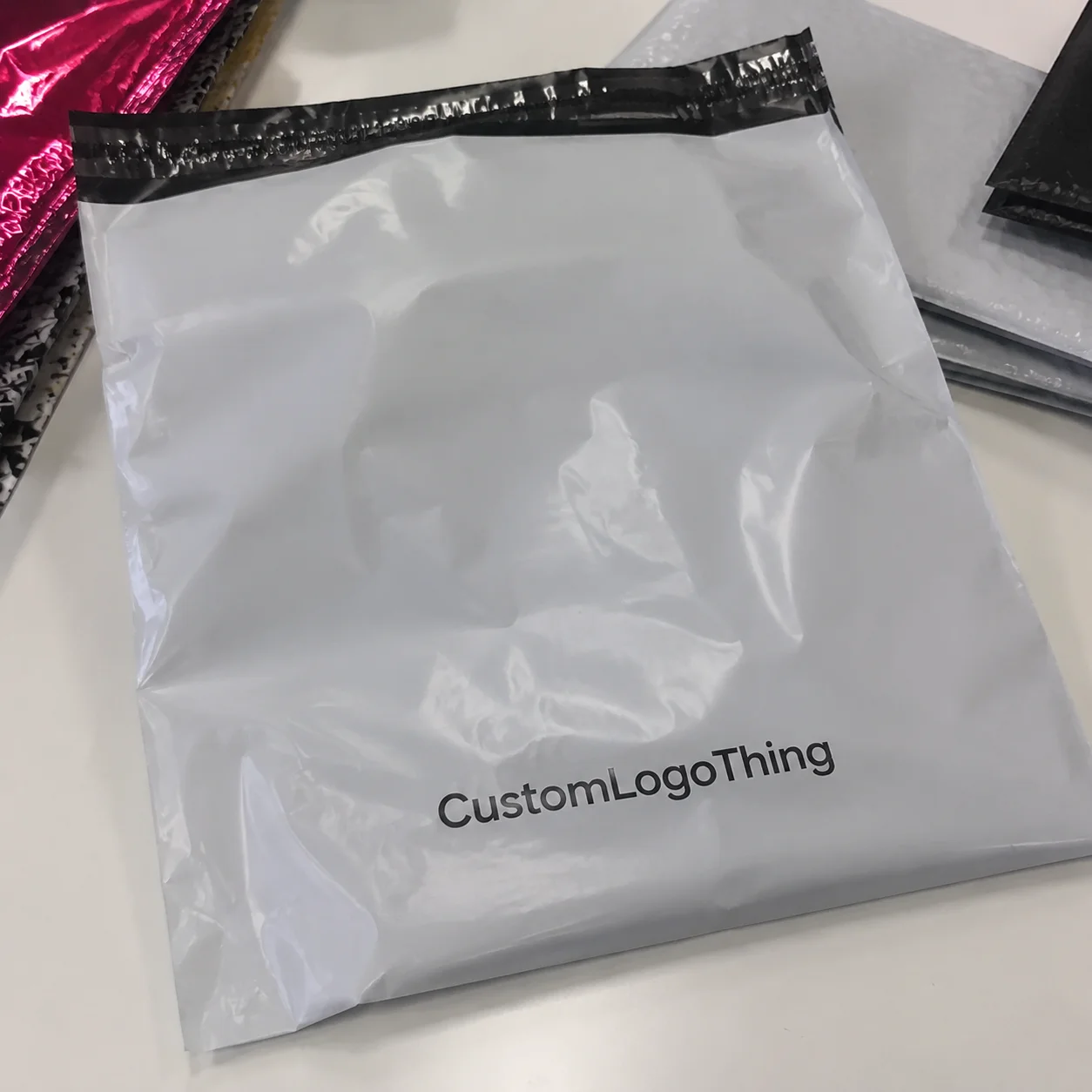
A package can arrive sealed and still create doubt. That doubt costs money through replacement shipments, support time, disputed returns, and lost trust. For sensitive accessories, serialized parts, evidence-style handling, or high-return e-commerce items, visible entry evidence is a control point, not a cosmetic upgrade.
Low minimums matter because many buyers are still testing dimensions, artwork, packing speed, and customer response. A smaller custom run protects cash flow and reduces the risk of sitting on obsolete inventory if the product or process changes.
Custom production also solves identification. Add a logo, warning text, barcode panel, writable field, or sequential numbering, and the bag becomes part of the workflow as well as the package. The most important buying details are usually simple: film gauge, closure performance, print legibility, and lot consistency.
Why a broken seal becomes a real cost
One suspect package can cost more than a carton of bags. On an $18 to $25 shipment, outbound freight, pick-pack labor, customer service time, a replacement order, or a refund can push the direct loss into the $25 to $35 range quickly. Regulated or time-sensitive items can cost more.
Scale makes the issue real. Even a 1% complaint rate across 5,000 orders creates dozens of reships, support cases, and inventory adjustments.
That is the practical appeal of a low-MOQ custom tamper-evident bag program. Smaller brands and mid-volume operations can test visible-entry packaging without committing to a large inventory position. They can measure complaint rates, fulfillment speed, and closure performance before placing a larger reorder.
Custom bags can also improve internal handling. Warehouse teams move faster when SKU groups are easier to identify through tinting, printed graphics, or tracking fields. Returns and transfer workflows get cleaner when numbered bags support visible chain-of-custody steps. If you already use Custom Packaging Products such as labels, inserts, or custom printed boxes, an unmarked stock bag can be the weak point in the system.
Buyers should also read claims carefully. “Tamper evident” means opening attempts leave visible evidence. It does not automatically mean theft-proof, child-resistant, or compliant for every regulated application. Application-specific review still matters.
What many buyers miss: compare more than piece price. Complaint reduction, scan reliability, packout speed, and closure consistency often matter more.
Tamper evident plastic bags low MOQ custom order: what buyers should verify
Before placing a custom order, the key question is not “What is the cheapest bag?” It is “What does this bag need to prove after it leaves the packing table?”
Some buyers only need visible opening evidence and basic branding. Others need sequential numbering, scan-ready barcodes, writable receipt fields, or chain-of-custody support. Those requirements affect film choice, closure style, print layout, lead time, and MOQ.
A careful supplier should ask about the application before finalizing a quote. If pricing appears before anyone confirms dimensions, seal style, numbering, or fill conditions, the quote may be incomplete. That is how a low-MOQ job turns into a costly rerun.
Material, closure, and print details buyers should verify before placing a custom order
Material choice drives feel, durability, and cost. Standard LDPE is flexible and economical for many light-duty uses. Co-extruded polyethylene can improve puncture resistance and stiffness, which may help on faster packing lines. Multilayer films can add opacity, toughness, or barrier performance, but usually at a higher price.
Sharp corners, metal hardware, and dense accessories expose weak film quickly. Buyers often focus on the seal first, but the wrong film structure can fail before the closure is challenged.
Common closure and security options include:
- Permanent adhesive flaps that cannot be reopened cleanly
- Void-message seals that reveal “VOID” or similar text after opening attempts
- Destructible closures where the adhesive area or film tears visibly
- Tear-off receipt sections for receiving or transfer records
- Sequential numbering and barcodes for traceability
Format should match the job. Flat bags suit documents and small accessories. Mailer-style bags fit e-commerce fulfillment. Evidence or specimen styles often include writing panels and receipt strips. Deposit-style security bags usually use opaque film, stronger seals, and numbering.
Print is not only branding. Many operations need warning copy, handling text, lot-code space, writable boxes, or barcode panels that still scan after flexing in transit. A well-designed bag can also reduce packing errors through a clearer opening, better flap size, or useful printed fields. Good packaging design supports the process, not just the look.
Before approving production, ask for measured artwork proofs, close-up seal photos, and a clear explanation of how the closure is checked. A clean website image is not enough.
Key specifications that affect protection, usability, and compliance
Accurate quoting starts with complete dimensions. Specify width, height, flap length, bottom seal style, and the true usable fill area after subtracting seals and closure zones. Two bags with the same listed outside size can behave very differently.
Film thickness is a major cost driver, but thicker is not always better. Lightweight film can work well for documents, soft goods, or low-risk accessories. Heavier gauges generally improve puncture resistance and hand feel. Still, extra thickness will not fix poor fit or a weak adhesive system.
Opacity affects function:
- Clear film supports visual inspection
- Tinted film can help with SKU coding or branding
- Opaque security film reduces visibility where confidentiality matters
Print layout deserves careful review. Seal zones must stay clean. Barcodes placed near folds or wrinkling areas can misread. Small reversed text may look fine on screen and blur on flexible film. If scanning matters, confirm barcode size, orientation, quiet zones, and placement on the proof.
Features that often affect usability more than expected include:
- Sequential numbering for audits and custody records
- Barcodes or QR codes for inventory control
- Writable panels for signatures, dates, and initials
- Warning icons or specialized marks
- Perforated receipt sections
- Hang holes or vent holes for niche uses
Buyers should also ask how seal performance is reviewed. Not every project needs formal lab validation, but a supplier should be able to discuss adhesive consistency, peel behavior, print registration, and lot repeatability. Transport guidance from ISTA can help frame likely handling stress.
Storage conditions matter too. Adhesives can behave differently in cold rooms, hot parcel routes, or long warehouse dwell times. The spec should match the real packing line and shipping environment, not just the product dimensions.
Pricing, MOQ, and unit cost: what actually changes your quote
The main quote variables are usually:
- Bag dimensions
- Film structure and gauge
- Clear, tinted, or opaque construction
- Print colors and ink coverage
- Numbering or barcode requirements
- Adhesive system and seal style
- Carton pack method
- Order quantity and reorder pattern
In this category, “low MOQ” usually means lower than a standard mass-production run, not a few hundred pieces. A custom tamper-evident bag still has setup costs: plates or cylinders, press time, adhesive setup, and sometimes variable-data programming. Simple jobs may begin around 1,000 to 2,500 pieces. Specialty films or variable-data-heavy jobs may start closer to 5,000 pieces or more.
Unit cost usually drops in steps. The jump from 1,000 to 2,500 pieces often gives the biggest improvement because setup is spread across more units. Moving to 5,000 may still help, but storage cost and obsolescence risk start to matter more.
| Order Tier | Typical Use Case | Common Cost Profile | Best Fit |
|---|---|---|---|
| 1,000 pieces | Pilot run or small launch | Highest unit cost because setup is spread thin | Testing fit, workflow, and customer response |
| 2,500 pieces | Short production run | Moderate unit cost improvement | Seasonal programs and smaller SKU sets |
| 5,000 pieces | Standard custom run | Often a practical balance of cost and inventory | Stable demand with moderate storage space |
| 10,000+ pieces | Ongoing fulfillment program | Lower unit cost, higher inventory commitment | Established items with predictable reorders |
For rough planning, simple custom tamper-evident bags with limited print often land around $0.12 to $0.35 per unit. Heavier film, strong opacity, sequential numbering, multi-color printing, or specialty seal construction can move pricing above that range. Freight, geography, and construction details determine the real landed cost.
Also watch secondary costs. Proof revisions add time. Rush production adds fees. Split shipments, unusual pack counts, and heavy cartons can increase freight. A low piece price is not a good value if failures create reships and extra labor.
Ask whether dimensional tolerances are defined, whether adhesive performance is consistent across lots, and how repeatable the second run should be. If long-term volume is likely, it can help to discuss Wholesale Programs early.
Custom order process and lead time: from spec sheet to delivered bags
Most reliable projects follow the same sequence:
- Inquiry with dimensions, features, and quantity tiers
- Supplier review and quote
- Artwork submission
- Proof approval
- Sampling if required
- Production
- Packing and shipment
- Receiving inspection
The best quotes come from complete information: exact dimensions, use case, thickness target, film preference, opacity, print colors, artwork files, quantity breaks, and delivery ZIP code.
What to check during proofing
Check logo placement, warning copy, barcode size, numbering format, writable-field placement, flap direction, and seal zones. Confirm that no critical text falls into a fold, adhesive strip, or wrinkle-prone area. Dark films need extra barcode contrast review.
Know what each sample type actually proves
Material swatches show feel, thickness, and opacity. Blank preproduction samples show fit and filling behavior. Printed proofs show layout and graphics. None alone proves production performance. For sensitive applications, test the actual product in the actual bag using the real packing routine.
Lead time depends on resin and adhesive availability, plate setup, print complexity, run size, scheduling, and freight method. A straightforward custom order may take roughly 12 to 20 business days after proof approval. Specialty structures, multiple versions, or variable data can take longer.
Build in buffer time. Proof edits, freight delays, and receiving inspections can consume days quickly. Teams placing a first order should also review the supplier’s FAQ for artwork requirements, revision policies, and standard order details.
Common ordering mistakes that raise risk, delay production, or inflate cost
Under-specifying dimensions is the most common mistake. Buyers give outside width and height, then overlook flap depth, content thickness, writable panels, or true usable fill area. The bag measures correctly on paper and still performs poorly.
Artwork approval creates the next round of problems. Copy that looks clean on a PDF can become marginal on flexible film. Barcodes printed over dark flood areas or wrinkling zones may fail scans.
Thickness chosen by instinct is another avoidable problem. Too heavy, and you pay more than needed. Too light, and punctures, splits, or closure complaints rise. The right gauge is the one that survives your real distribution cycle with acceptable waste.
Generic print layouts can also hurt results. If the workflow needs signatures, return stubs, receiving fields, or custody notes, those should be built into the design from the start. Otherwise teams add labels or handwriting steps that erase the efficiency of custom packaging.
Forecasting errors create quieter waste. Too little volume can mean repeated setup charges. Too much ties up cash, consumes storage space, and raises obsolescence risk if branding or dimensions change.
Finally, do not skip live testing. Fill the bag with the real product, apply the real labels, run it at normal packing speed, and test any cold-storage or gloved-handling conditions that matter.
Next steps to request the right quote and place a low-risk custom bag order
A useful quote starts with a clear spec sheet. Include:
- Product use and risk level
- Target width, height, and flap length
- Preferred film type and thickness range
- Clear, tinted, or opaque film requirement
- Print colors and artwork files
- Quantity tiers such as 1,000 / 2,500 / 5,000 / 10,000
- Need for sequential numbering, barcodes, QR codes, or writable areas
- Required delivery window and ship-to location
Reference photos can reduce quoting errors. A photo of the packed item, the current bag, and the weak points in the process often helps more than a long description. If the bag has to work within a larger retail packaging or fulfillment system, include that context so it aligns with labels, inserts, and broader package branding.
One useful tactic is to request two versions of the quote: the lowest-cost compliant option and a stronger premium option. Side-by-side pricing makes the tradeoff clear. Sometimes a better seal or tougher film adds little. Sometimes it adds cost without much operational gain.
Before approving production, confirm seal type, dimensional tolerance, carton counts, freight estimate, and proof revision status. Also ask how finished bags will be packed and labeled on arrival.
For a new SKU, a low-MOQ trial order is usually the lowest-risk path. Measure fill speed, waste, complaint rates, and actual consumption, then tighten the spec before placing a larger reorder.
FAQ
What is considered a low MOQ for tamper evident plastic bags custom orders?
It depends on bag size, print method, film structure, and whether the order includes numbering or variable data. In practical terms, low MOQ usually means a quantity small enough to test a new SKU, regional rollout, or revised packout process without overcommitting inventory. For many simple custom jobs, that can mean 1,000 to 2,500 pieces. More specialized constructions often start higher.
Can low MOQ custom tamper evident bags include logos, barcodes, or sequential numbering?
Yes. Many short custom runs can include logos, warning text, barcodes, QR codes, and sequential numbering. Each added feature affects proofing, setup, and price. Barcode placement deserves careful review, especially on dark film or near folds and seal areas.
How do I choose the right thickness for custom tamper evident plastic bags?
Start with the product’s weight, edge profile, and shipping conditions instead of defaulting to the thickest film. Lighter gauges can work for soft or low-risk contents. Heavier or co-ex films usually perform better with sharper or denser items. The safest approach is testing the actual packed product through the real handling cycle.
What information do suppliers need to quote tamper evident plastic bags low MOQ custom order jobs accurately?
Most suppliers need finished dimensions, flap style, film preference, thickness target, opacity, print color count, artwork, quantity tiers, and ship-to location. If the bag needs numbering, barcodes, warning copy, perforated receipts, or writable areas, include those details early. Product photos can also reduce quoting mistakes.
What is the usual lead time for low MOQ custom tamper evident plastic bags?
Lead time depends on artwork readiness, proof approval speed, film and adhesive availability, print complexity, and shipping method. Straightforward printed runs often move within 12 to 20 business days after proof approval. Variable data, specialty films, or multiple versions can take longer.