What Transparent Stickers Custom Really Means on Packaging
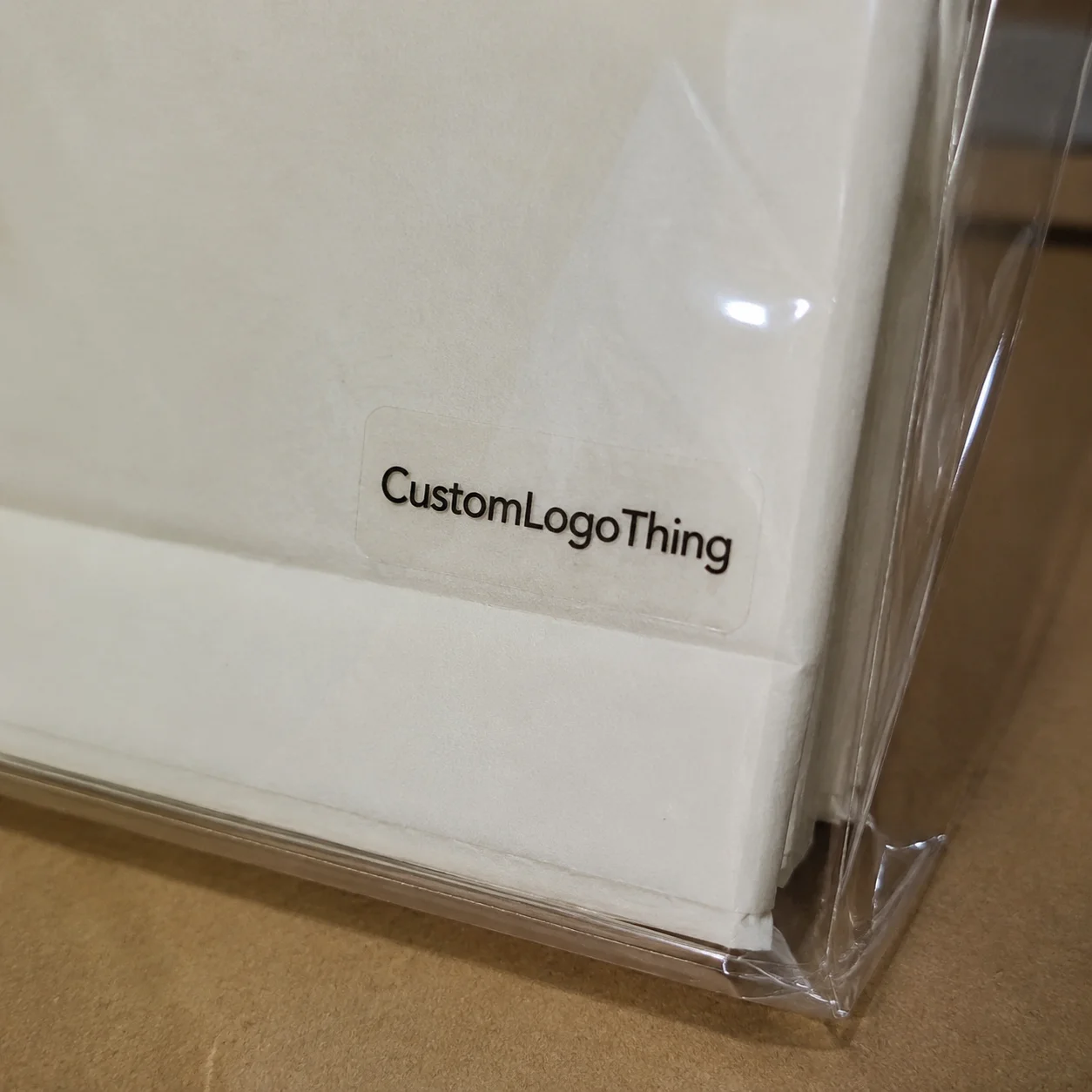
Transparent stickers custom usually refers to clear labels or decals made to a buyer’s exact size, shape, artwork, adhesive requirement, and packaging use case. The “transparent” part sounds simple, but in packaging production it involves more than choosing a clear material and printing a logo.
On a production floor, a clear sticker involves film type, adhesive clarity, print method, white ink support, die-cut tolerance, liner selection, and application behavior. The same artwork can look polished on glass and less refined on a textured pouch if the material and finish are not matched to the package surface.
A clear sticker is not just a paper label without a background color. It is usually printed on a transparent film such as PET, BOPP, PVC, or vinyl. The goal is to let the package show through while the branding appears to sit directly on the product surface. Done well, it can look similar to screen printing without the commitment or cost of decorated packaging. Done poorly, it may show cloudy adhesive, weak color, bubbles, crooked edges, or a gray cast around the design.
For packaging buyers, the appeal is practical. A clear label can make a jar look printed without ordering decorated glass. It can help a small skincare line test several SKUs without buying custom tubes. It also works for seasonal runs, batch codes, limited editions, promotional copy, compliance information, and short-run product launches. Buyers comparing clear labels with other packaging formats can also review Custom Labels & Tags to understand how label materials, shapes, and finishes fit into a broader packaging program.
The biggest misunderstanding is that clear labels are automatically invisible. They are not. Every transparent film has thickness. Every adhesive has its own optical character. Every surface changes the final look. A glossy clear label on glossy glass can almost disappear. The same label on a matte pouch may show its edge immediately. That does not mean the label failed. It usually means the material, finish, and package were not designed as one system.
How Clear Sticker Materials, Adhesives, and White Ink Work
Material selection is the backbone of transparent stickers custom projects. PET is common when buyers want dimensional stability, high clarity, and better resistance to heat, moisture, and chemicals. Clear PET labels show up often on cosmetics, beverage bottles, candles, electronics, and rigid retail packaging.
A typical clear PET label film might be 50 to 75 microns thick before adhesive and liner. Thinner films usually conform better around curved containers. Thicker films can feel more substantial, but they may show a more visible edge. If the container is small, rounded, or squeezable, thickness matters more than many buyers expect.
BOPP, or biaxially oriented polypropylene, is another widely used clear label stock. It is popular for food, beverage, personal care, supplements, and household products because it balances clarity, cost, and moisture resistance. Clear BOPP is usually more economical than PET. It may not feel as rigid or premium, but for many everyday consumer goods it is the practical choice.
Vinyl and PVC are common for outdoor decals, window stickers, equipment labels, and promotional graphics. They can handle curves and irregular surfaces better than stiffer films, especially when the vinyl is cast rather than calendared. PVC does raise sustainability and retailer-compliance questions for some brands, so it should not be treated as a default packaging material unless it fits the buyer’s policy.
Permanent, removable, and repositionable adhesives
The adhesive matters as much as the face film. Permanent clear adhesive is the standard option for packaging labels because the sticker needs to stay put through filling, shipping, shelf display, and handling. Removable adhesive can work for promotional labels, temporary seals, or retail information stickers, but it may lift on textured surfaces or under humidity.
Repositionable adhesive gives applicators more forgiveness during placement. It also tends to cost more and may not reach the same final bond strength as a true permanent adhesive. That tradeoff is acceptable for some promotional or hand-applied projects. It can be risky for packaging that will be refrigerated, squeezed, handled frequently, or exposed to oils and moisture.
Adhesive performance depends heavily on surface energy. Glass and smooth PET bottles usually accept labels well. HDPE and PP containers are trickier because they have lower surface energy, so the adhesive needs to be selected carefully. If a bottle has silicone contamination, mold-release residue, condensation, dust, oil, or heavy texture, even a good adhesive can struggle.
Testing on the actual container is the safest approach. A label that sticks beautifully to a flat office sample board may lift on the real bottle after filling, capping, refrigeration, or a few days in a humid bathroom.
Why white ink changes everything
White ink separates amateur-looking clear labels from professional ones. Standard CMYK inks are translucent, so colors printed directly on clear film can look weak, especially on dark products, amber glass, colored plastic, or kraft packaging. A white ink layer sits behind the colored artwork and makes the print look solid.
White can also be used selectively. Some parts of the label stay transparent, while logos, text, icons, and product claims remain readable. That selective white layer is often what creates the “printed on the package” effect.
A black logo may read clearly without white ink on a clear jar. A pale pink flower, yellow lemon graphic, or small blue type may disappear unless backed with white. Printers may call this a white plate, white underprint, spot white, or white ink layer. In artwork files, it is usually built as a separate spot color named “White” or “Spot White.” Ask the printer for file setup rules before building final art, because press workflows vary.
Key Design Factors That Decide Whether Clear Stickers Look Premium
Good clear-label design is not about filling every inch. Transparent material works best when the designer respects the negative space. If the sticker is supposed to look almost printed onto the package, large clear areas help create that illusion.
Overloaded artwork does the opposite. It makes the clear film look like a normal label that lacks an intentional background.
Start with contrast. Fine gray type on a transparent film may look elegant on a white mockup, then vanish on a beige candle jar or green bottle. Small typography needs careful handling too. For flexographic printing, many suppliers prefer positive text no smaller than 5 or 6 points, depending on font weight and substrate. Digital printing can often hold smaller detail, but readability on the actual package matters more than what a press can technically reproduce.
Clear labels also expose registration issues more than opaque labels. If white ink is printed under color and the two layers are slightly misaligned, buyers may see a tiny white halo or colored shadow. Good printers manage this with trapping, choke settings, and press calibration. Still, artwork should be designed with realistic tolerances. Hairline white-backed icons and tiny reversed-out type can be difficult to reproduce consistently.
Shape and edge visibility
The die-cut shape has a big visual impact. A simple rectangle is economical, but the edge can be visible under retail lighting, especially on glossy surfaces. A contour cut around the artwork can reduce the amount of visible clear film and make the sticker feel more integrated with the package.
Kiss-cut stickers on sheets are convenient for hand application. Roll labels are better for machine application and larger production runs. If the labels will run through an applicator, roll direction, core size, gap, label orientation, and unwind direction need to be confirmed early. “Just put them on a roll” is not enough information for production.
Corner radius helps. Sharp square corners are more likely to lift, catch, or show stress after handling. A 2 mm to 4 mm radius is common on small packaging labels, though the right radius depends on label size. For cylindrical bottles, label height and stiffness need extra attention. A tall, stiff clear PET label wrapped around a tight radius may flag at the edge if the adhesive, film, and application pressure are not right.
Gloss, matte, and texture choices
Finish changes the whole personality of the label. Gloss clear labels usually have the highest transparency and blend best with glass, clear plastic, or glossy laminate. Matte clear labels create a softer frosted look, which can be excellent for cosmetics, candles, supplements, and artisan foods. They are also more visible by design.
A matte varnish can reduce glare and make barcodes easier to scan. That matters on curved glossy containers where scanners can struggle. Premium packaging still needs to function at checkout, in fulfillment, and during inventory handling.
Some buyers ask for soft-touch clear stickers. It is possible in certain constructions, but it can reduce optical clarity and increase cost. Test it before committing. For a premium look, a clear gloss base with selective matte varnish, foil, or a controlled white underprint may work better than trying to make the entire transparent label feel velvety.
Printing and Finishing Options for Clear Labels
Digital printing is common for lower quantities, multiple SKUs, and variable artwork. It avoids plate costs, supports faster proofing, and can produce strong results on clear films. For 250 to 2,000 pieces, digital is often the most practical route.
Pricing varies, but a small clear custom sticker might land around $0.12 to $0.45 per piece depending on size, white ink coverage, finish, quantity, and whether it is supplied on sheets or rolls. That range is not a quote. It is a typical planning range for simple packaging labels.
Flexographic printing becomes more attractive as volume grows. It has plate costs, often around $60 to $150 per color or station depending on supplier and complexity, but unit cost drops on larger runs. For 10,000 to 50,000 roll labels, flexo can be cost-effective, especially for repeat orders. It also supports varnishes, laminates, metallic inks, and efficient roll-to-roll converting.
Screen printing is less common for standard packaging labels, but useful for thick ink deposits, high-opacity whites, durable decals, and special effects. UV inkjet and hybrid presses can also produce excellent results on clear stocks, especially when they include digital white ink and varnish stations.
The best print method depends on quantity, durability, color expectations, finishing, and final application surface. Buyers should compare the full specification, not only the unit price, because a cheaper label that fails in use can cost more than a better-matched construction.
Foil, spot varnish, and special effects
Clear stickers can be upgraded with foil stamping, cold foil, spot UV, raised varnish, metallic inks, or tactile coatings. Foil on clear film can look sharp, especially on beauty, beverage, gift, and candle packaging.
There are limits. Very fine foil lines can break. Large foil areas may show texture. Foil registration over white ink requires careful planning. Metallic effects also change depending on the color and reflectivity of the package behind the clear film.
If the product will face moisture, oil, abrasion, refrigeration, or frequent handling, ask about lamination or protective varnish. A clear laminate adds durability, but it also adds thickness. UV varnish is thinner and often economical, but it may not protect as aggressively as a laminate. For bath products, chilled beverages, cleaning products, and anything handled with wet or oily hands, durability testing is not optional. Labels can look perfect on day one and fail after several days in a wet cooler or steamy bathroom.
Typical Costs, MOQs, and Production Timelines
Cost depends on size, material, print method, color coverage, white ink, finishing, die-cut shape, packing method, and ordering format. A 50 mm round clear BOPP label printed digitally with CMYK plus white might cost around $0.18 to $0.35 each at 1,000 pieces. At 5,000 pieces, that could drop to roughly $0.07 to $0.16 each. At 20,000 pieces on flexo, the same label might run $0.025 to $0.08 each after plate costs, assuming the artwork is stable and the construction is not unusual.
Those ranges are not universal. A small one-color clear sticker without white ink will cost less. A large contour-cut PET decal with white underprint, matte laminate, foil, and individual backing cards will cost far more. Freight, packing method, roll direction, rush scheduling, proofing, and sampling all affect the final landed cost.
Minimum order quantities vary. Digital suppliers may accept 100 to 500 pieces. Roll label converters often prefer 1,000 to 3,000 pieces for efficient setup. Flexo production tends to make more sense at 5,000 pieces and above, though repeat orders can justify lower runs if tooling already exists.
For custom die-cut shapes, a hard die may cost about $80 to $250. Laser cutting can avoid die charges, but it may cost more per unit and can be slower. For simple circles, rectangles, and ovals, standard dies may already exist, which saves money.
Timelines are usually manageable if artwork is clean. Digital clear


