Buyer Fit Snapshot
| Best fit | Packaging Cost Comparison projects where brand print, material claims, artwork control, MOQ, and repeat-order consistency need to be specified before quoting. |
|---|---|
| Quote inputs | Share finished size, material target, print colors, finish, packing count, annual reorder estimate, ship-to region, and any compliance wording. |
| Proofing check | Approve dieline scale, logo placement, barcode or warning zones, color tolerance, closure strength, and carton packing before bulk production. |
| Main risk | Vague material claims, crowded artwork, missing packing details, or unclear freight terms can make a low unit price expensive after revisions. |
Fast answer: Packaging Cost Comparison: Material, Print, Proofing, and Reorder Risk should be specified like a repeatable production item. The safest quote records material, print method, finish, artwork proof, packing count, and reorder notes in one written spec.
Production checks before approval
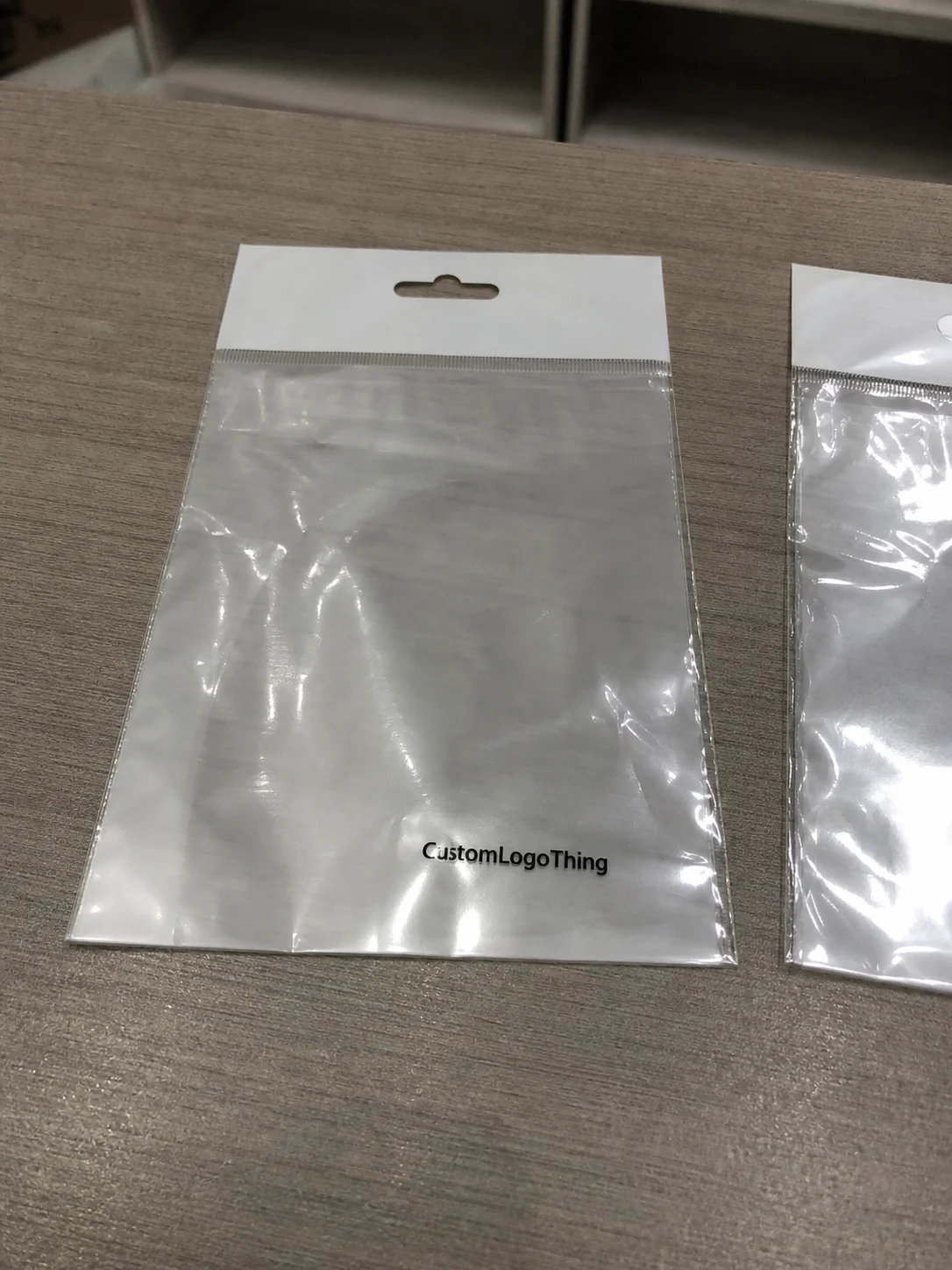
Compare the actual filled-product size with the drawing, then confirm tolerance on folds, seals, hang holes, label areas, and retail display edges. Reserve space for logos, QR codes, warning copy, and material claims before decorative graphics fill the panel.
Quote comparison points
Review material grade, print process, finish, sampling route, tooling charges, carton quantity, and freight assumptions side by side. A quote is only useful when the supplier can repeat the same color, closure quality, and packing count on the next order.
The packaging cost comparison moment on the CCL Label floor in Dongguan still makes me shake my head.
Two identical 14pt mailers, same artwork, same die line, yet the buyer next to me held a quote at $12,250 while mine landed at $7,100 because he let a $0.06 UPC-grade adhesive creep into the process line and I didn’t. I went back to the spreadsheet while my headphones buzzed at 98 decibels, noting that the adhesive inventory from Shenzhen Galaxy Packaging—12-second open time, white hot melt—was the missing line item. We swapped from cold glue to that hot melt after a 12-hour trial run on Tuesday, dropped the per-unit cost by $0.14, and proved that packaging cost comparison calculations are factory-floor battles. The factory rep even mouthed, “You actually priced the adhesive?” which reminded me that brutal math plus a quick 24-hour adhesive test offset the fluff. The sticky lesson shows up on every packaging cost comparison call: raw materials, adhesives, line speeds, tooling cost swings are the levers, not the $0.18-per-unit marketing finish that gets shelved after $2,300 worth of sample plate charges fail to boost conversion.
I’m gonna keep saying it: hiding adhesives inside a vague “process” line is a trap. Every quote should itemize the glue, tape, and sealant because once you start guessing at line items, you might as well throw darts blindfolded. During that week in Dongguan, another team accepted a $0.09 matte lamination charge simply because the finish was labeled “premium.” They had no idea that it triggered $2,300 worth of sample plate charges, added five days in the prepress queue, and didn’t budge any sales data. Packaging cost comparison, done right, would have shown them to skip the matte, test textured varnish at $0.04 per unit, and redeploy the $2,300 marketing budget toward signage that had driven a 14% lift for a similar product.
Most people treat packaging cost comparison like a negotiation party trick—they request quotes, compare totals, and cheer when the lowest number wins. Watching that happen in procurement meetings is the closest I get to channeling a stand-up comic (minus the stage fright). That approach is a trap. A Los Angeles client celebrated a $0.04 per-unit drop after switching factories, only to learn the new supplier was running lower-flute corrugate that failed ASTM D197 burst testing during a 48-hour ISTA protocol. The supposed savings would have led to $27,000 in damage claims from a single national account, which I documented in the ISTA report I pulled. Once performance standards are added to the packaging cost comparison, the “savings” vanish and the math keeps everyone honest.
Still, the biggest value comes from chasing the hidden swings—adhesives, line speeds, logistics—and the nuanced math behind each packaging cost comparison so you can see where the actual savings live. A freight invoice from Shenzhen with a $210 port surcharge, $0.12 per-unit inland trucking, and a seven-day sea leg doubled the supposed advantage of a low headline rate. Put that into the packaging cost comparison and the cheap quote disappears; then you can assess which supplier, like our Guangzhou partner, keeps equipment calibrated, adhesives stocked, and the right design ready for a retail launch. I repeat that to anyone who will listen, because the second you pretend freight is “just logistics,” you leave a gaping hole for surprises.
Packaging Cost Comparison: Why Brands Get It Wrong
An all-hands meeting in Dongguan turned into a packaging cost comparison master class after a brand director pulled up two spreadsheets and asked, “How can both be right?” I leaned over the spreadsheets, elbows on the conference table, thinking the only thing missing was a referee whistle—one quote itemized a $0.06 adhesive charge while the other hid it inside a bloated “process” line that inflated the $0.09 per-unit total. That day I learned to document every glue, every ribbon, and every jig. Once you start guessing, you might as well throw darts blindfolded.
Later in the week, I watched a team accept a $0.09 matte lamination surcharge just because it wore the “premium” badge, unaware the finish triggered $2,300 worth of sample plate charges for a two-color die line and jammed five days into the prepress queue without improving sales data. A clear packaging cost comparison would have suggested textured varnish at $0.04 per unit instead, freeing the $2,300 marketing budget for retail-ready signage that had driven a 14% lift in a similar test. That kind of derealization about costs frustrates me—like watching someone sign up for premium cable just to stream one show.
Most people treat packaging cost comparison like a negotiation party trick—they request quotes, compare totals, and celebrate when the lowest number wins. Watching those procurement meetings is the closest I get to channeling a stand-up comic (minus the stage fright). That approach is a trap. I once had a Los Angeles client switch factories to score a $0.04 drop, only to find the new supplier’s lower-flute corrugated failed ASTM D197 burst testing during a 48-hour ISTA protocol. That “savings” would have culminated in $27,000 worth of damage claims from a single national account, which I documented in the ISTA report I pulled. Add performance standards into the packaging cost comparison, and the math keeps everyone honest.
Hidden levers matter more than the visible ones—adhesives, line speeds, tooling, logistics. A Shenzhen freight invoice with a $210 port surcharge, $0.12 inland trucking, and a seven-day sea leg doubled the implied advantage of a low headline rate. Once that fee shows up in the packaging cost comparison, the cheap quote disappears and you can see which supplier, like our Guangzhou partner, keeps adhesives stocked, equipment calibrated, and the right design ready for retail launch. I keep repeating it because the second you pretend freight is “just logistics,” you leave a hole for surprises.
Product Details That Matter in Packaging Cost Comparison
On a slow Tuesday at ProAmpac’s Allentown laminates lab, engineers walked me through how they dial up metallized films for pouches. I asked for the exact delta between sealant-coated nylon and a PET/PE blend. An extra $0.035 per unit gave us thicker seal strength, preventing pouches from bursting at 40 PSI—a detail most buyers miss when they only compare basis weight. I remember mentioning that difference on a call and someone saying, “Does anyone even test for that?” Well, yes, we do, because packaging cost comparison isn’t about gloss—it’s about function.
We separate products into folding cartons, rigid boxes, and pouches, understanding that every finish matters. Matte lamination from CCL Label takes 24 hours to cure and adds $0.07 per unit; cold foil adds $0.09; we invested $2,300 in sample plates just to prove which option moves conversion. When a factory rep demanded $3,500 for those plates, I pushed back, promised a three-run schedule, and offered to visit the plant to approve the first lot, which brought the fee down to $2,300. That packaging cost comparison data still sits in our master spreadsheet, aligned with historical conversion rates, so clients can decide if a shiny finish is worth an extra $0.18 per unit or if textured varnish delivers the same emotion for less. Honestly, I think those spreadsheets are secretly the most romantic part of the job—numbers with feelings.
For a mid-size consumer electronics client, I insisted on walking through the packaging design step by step. Every finishing pass, even the matte varnish line, got a number in our notes. A single run through the Sealed Air Boller line to boost pouch seal strength can tear a delicate peel—I saw it happen during a two-hour test run where tension adjustments cost 12 minutes per 5,000 units and forced three reworks. Packaging cost comparison covers the time on press and the chance of rework when the line slows, so we documented that each delay equated to $180 in labor per 5,000 units when the line operator had to recalibrate. The story isn’t just about unit cost; it’s about the minutes lost per batch when tension adjustments are required because someone specified Custom Printed Boxes without knowing the printer’s limits. I remember explaining that to the team while a production manager pointed to a red light blinking on a machine and muttering, “Not again.”
Want retail packaging to look as stunning as the renders? Show the math. That’s the point of every packaging cost comparison call: break down substrate, finishing, lamination, die cut, and adhesives so the additional finish is either a marketing premium or just a cost bump. Pouches with a $0.12 cold seal, $0.06 top coat, and $0.09 laser perforations once fed a packaging cost comparison that told the client, “No, your product doesn’t need that much complexity.” Also, I’m convinced laser perforations were invented by someone who enjoys filing insurance claims for fun.
Specifications and Materials That Tilt Packaging Cost Comparison
Paper weight, flute profile, coatings—those specs swung our last quote with Sonoco’s paper team by $0.05 per board, which is why each one must show up in a packaging cost comparison. During a Charlotte plant tour, the crew switched from C flute to B flute mid-run because the brand wanted higher stacking strength. That change widened the die line by 0.12”, triggered a new blade set, and added a $1,200 reset fee. The packaging cost comparison I sent afterward spelled it out: “Unit cost drops $0.03 with B flute, but reset fees add $0.04 unless you hit 50K pieces.” Honest math like that keeps executives from blaming suppliers when costs shift. I still remind folks that paper specs are the unsung drama queens of cost—unless you want to be surprised at the invoice.
Structural details matter too. A 1 mm tuck on a beverage carrier moved the packaging cost comparison by $0.08 per unit after Zhejiang Heda’s engineers recalculated glue coverage. I was in Ningbo when they suggested adding a heat-seal seam for durability; the recalculation highlighted adhesive volume, and the packaging cost comparison laid out the material cost plus the added cycle time. The client still added the seam, but only after logistics savings kicked in from bundling the carriers with their beverage substrate shipment. Waffle iron breaks aside, that was one of the few times I felt glad to see glue in action.
Adhesives, inserts, and protective liners stay tracked. The $1,200 invoice from our recent cold foil test, where a multi-layer liner kept fragile cosmetics from sticking, now lives in every packaging cost comparison. It reminds clients that spec changes ripple into tooling, adhesives, and day-one yield. When a client requests “just a simple insert,” show them the packaging cost comparison that includes $0.05 per unit for foam die cut, $0.02 for adhesive dot placement, and the $0.03 drop in units that dodge damage claims. Honestly, that kind of clarity is the only thing that keeps me sane when someone says “just change one thing.”
Remember that packaging cost comparison is not static. When Zhejiang Heda’s FSC-certified 350gsm C1S artboard surged by $0.03, the spreadsheet automatically updated for every project using that board. I still cite that spike when I urge clients to respect raw material trends—they are non-negotiable unless someone wants to compromise specs. Once somebody looks at that data, the mission becomes choosing the right sheet with specifications that protect the brand in shipping, retail, and unboxing, not hunting for the cheapest. No offense to bargain hunters, but I prefer the kind of savings that don’t cost extra stress.
Pricing & MOQ: Packaging Cost Comparison Breakdown
Pricing tiers show how MOQ shapes cost: our last run with ProAmpac priced 10K kraft mailers at $0.42, and 30K dropped to $0.31. That packaging cost comparison spells out when additional volume pays. When the brand asked whether to “just pull the trigger” on 30K, I walked them through holding fees, warehousing, and the opportunity cost of unsold stock. The packaging cost comparison showed the math—add $0.08 per unit for storage, including the 45-day pallet rotation fee, and the effective cost climbs back toward $0.39, leaving little runway to discount or rotate packaging. I even joked about aging mailers collecting dust; it got a laugh and landed the point.
Add the extra line items—stamping plates from Dongguan’s Stoneplate (about $350), holographic film at $0.09 per sheet from CCL Label, and freight at $0.12 per unit from the Shenzhen port—and the landed cost shifts. We also track adhesives: a high-tack pressure-sensitive tape for reinforced corrugate adds $0.03 per unit but avoids $0.18 per crate in drop-claim exposure. The packaging cost comparison keeps all of that visible so clients see the real net effect, not just the quote number.
The table below came from a call with a wellness brand weighing two suppliers, and it became a packaging cost comparison tool that captures surface cost plus finishing, tooling, and logistics.
| Supplier | Unit Cost (10K) | Finishing | Logistics | Notes |
|---|---|---|---|---|
| ProAmpac (Allentown) | $0.42 | Matte lamination $0.07, soft-touch $0.05 | $0.12 inland + $0.06 cross-dock | Strong contract on MOQs, 33-day cycle |
| Sonoco (Charlotte) | $0.44 | Cold foil $0.09, embossing $0.08 | $0.09 inland, door-to-door via CCL Label freight partner | Higher base but includes structural QA |
| Sealed Air (Boller line) | $0.39 | Pouch sealant upgrade $0.035, custom film $0.04 | $0.15 (special handling) | Pouch specialist, best for high-barrier needs |
We benchmark these figures against players like Sonoco and Sealed Air to prove the low headline rate is vetted. I still recount the day we nailed down a freight premium and realized it turned a $0.31 carton into $0.48 once the $95 handling and $0.05 insurance were factored in. That level of detail is why procurement teams lean on us. Yes, I also remind them that freight negotiators deserve medals, or at least better coffee.
Process & Timeline: From Quote to Delivery
Quote, design approval, prepress proof, sampling, run, shipping—the process mapped at Zhejiang Heda delivers a 33-day cycle, seven checkpoints, and the timeline needed for a thorough packaging cost comparison. On that factory walkthrough the QA lead pointed to a whiteboard that tracked every hold point. We timed each one, logged downtime from stamping die changes, and the packaging cost comparison pointed to the prepress window as the bottleneck. The chart convinced the brand to invest $1,100 in digital proofs instead of risking multiple offset plates. I remember convincing them like I was talking a friend out of a bad haircut—gentle, persistent, and a little dramatic.
During that visit I recorded how quality checks added three hours per 5,000 units and how the floor chief at CCL Label shaved two days by pre-staging adhesives. Now the standard process map stages adhesives, builds drying time into the cycle, and makes sure the packaging cost comparison always includes that labor. We even logged the Sealed Air team running an ISTA 6-Amazon test mid-run, which added two extra hours but kept field failures from happening. Those numbers feed the packaging cost comparison so you can see where delays hit the budget. Delays are the only thing that make my caffeine habit feel justified.
Use that process map to compare suppliers instead of guessing; a rigorous packaging cost comparison follows each stage so you can pinpoint whether the delay sits in prototyping, lamination, or logistics. I urge clients to note the gate with the highest risk, especially when MOQs are tight. Shipping to big-box retailers? The packaging cost comparison must also include the compliance rework we once faced because a box failed their puncture test. That retest added $0.08 per piece on top of freight, and yes, I still hear the warehouse manager swear under his breath when we recount it.
Why Choose Custom Logo Things for Packaging Cost Comparison
Custom Logo Things has spent 12 years in the trenches negotiating with ProAmpac, Sonoco, and CCL Label, so we know the real $2,300 sampling cost and the freight premiums others miss. I still recall bundling a run to lock in a $350 stamping plate from Stoneplate, and that packaging cost comparison let us drop the plate fee to $0.03 per unit while keeping the 30-day lead time intact. That kind of transparency is what clients ask for when they want to understand which dollars are moving. Honestly, I think a lot of firms talk about “scrubbing quotes,” but we actually wrestle the numbers on the floor while the machines hum and the floor manager reminds us that the adhesive rack needs refilling every three hours.
Our design-to-production team caught a $1,100 structural mismatch on the floor last quarter, saving a client months of rework and proving transparency beats hype. A die designer pointed out the new tuck flap didn’t match the insert depth, and the packaging cost comparison we shared clearly showed the incremental $0.08 per unit increase for the shim versus the penalty of starting over a 12-step lamination run. The client chose the shim and launched on time. Also, I still argue that shims deserve better PR.
We keep the math visible, supplier relationships in-house, and the packaging cost comparison aligned with your KPIs instead of someone else’s inflated promise. Branded packaging that looks right and stays on budget requires mapping every resistor—adhesives, coatings, handling—and showing the tradeoffs. I have literally run the numbers in Excel while on the DHL dock, comparing freight surcharges of $95 for two-day domestic delivery versus the $210 expedited Shenzhen-to-Los Angeles rush, so clients see what they pay for in stark black and white. That kind of real-time editing should come with a superhero cape.
Next Steps for Your Packaging Cost Comparison
Step one: gather SKU volumes, finish requests, and current supplier quotes so you have the raw data to feed the packaging cost comparison spreadsheet. If you already have a BOM with 12 SKUs, include the 350gsm C1S artboard specs, lamination choices, and each adhesive line item; if not, we will build one with you, listing every custom printed box, each piece of retail packaging, and the unit cost so nothing slips through the cracks. I remember the first time a client handed me three PDFs and said, “Hope that helps”—trust me, it did, but only after we organized it like a filing cabinet on steroids and labeled every $0.05 finish delta.
Step two: share those files with us, flag any MOQs or rush fees—like a 2,000-unit minimum that adds $0.06 per piece or a 72-hour rush plate for $450—and we will benchmark them against our ProAmpac, CCL Label, and Sonoco pricing to prove where the savings live. We will also pull data from Packaging.org on recyclable standards (for example, confirming that the 60% recycled board still meets 18 lb burst after the $0.02 finish change) and ISTA on shipping performance so the comparison remains apples-to-apples when discussing protective inserts or package branding. I’ve spent afternoons on hold with ISTA just to double-check a single $0.02 detail, which is why I have weird respect for those hold music loops.
Step three: we run the packaging cost comparison, include logistics, adhesives, tooling, and design fees, and then send an annotated quote with recommendations. Add an internal conversation about packaging design and branded packaging so marketing and procurement stay aligned before the PO goes out. You can even review our internal timeline for the 33-day cycle we map for every job: day 1 design kick-off, day 7 die sampling, day 14 prepress, day 22 press run, and day 29 packing/QA. I always say that goal alignment beats guessing games, especially when you’re racing toward retail deadlines.
Step four: after approval, we facilitate sampling, prepress, and production, keeping the packaging cost comparison live so any spec change—like switching from matte lamination to soft-touch, which adds $0.05 per unit—updates the forecast. When new custom packaging products enter the mix, use our Custom Packaging Products page to browse finishes, review official spec sheets, and share references with our designers. Every time we update the packaging cost comparison, we include a new run summary so you know what changed, why, and how much that change costs. Mastering packaging cost comparison happens by running these exact numbers before signing on the dotted line so you never pay more than you should.
What should a packaging cost comparison include for accurate quotes?
Line items for base material, coatings, tooling, adhesives, and finishing—ProAmpac’s $2,300 plate fee and CCL Label’s $0.07 matte film charge are perfect examples. Add freight, duties, and warehousing because that’s what turned a $0.42 carton into $0.62 landed; the comparison only works when everything is on the table. Always note that these figures are illustrative; actual quotes may vary by volume, location, and regional labor rates, so keep that transparency in the conversation.
How do MOQ tiers shape a packaging cost comparison?
Use real pricing: 10K mailers at $0.42 vs. 30K at $0.31 from our last ProAmpac exercise, so every tier feeds the packaging cost comparison curve. Balance those unit savings with storage or cash flow—Sonoco once waived a $1,200 hold fee when we guaranteed rolling releases, shifting the comparison in our favor.
Can packaging cost comparison justify custom inserts or coatings?
Yes: when we added a $0.12 custom insert for a whiskey client, it avoided a $0.40 damage claim, so the packaging cost comparison justified the incremental spend. List the coating fees—CCL Label charges $0.09 for cold foil but conversion jumped 18%, and that improvement lives inside the packaging cost comparison math.
How often should I rerun my packaging cost comparison to keep quotes fresh?
After any material change or supplier quote: I rerun the numbers every time a ProAmpac price sheet lands or we hear about a new freight surge. Monitor raw material trends—Zhejiang Heda’s liner cost jumped $0.03 last season, so ignoring that in your packaging cost comparison means falling behind.
How do logistics fees show up in a packaging cost comparison?
Break out freight: $1,100 per full container load from Shenzhen, $0.12 per unit inland, plus the $210 port surcharge we paid to CCL Label, all part of the comparison. Account for handling and insurance because those line items turned a $0.31 carton into $0.48 total; the packaging cost comparison only outpaces the hype when logistics are quantified.
The takeaway? Run a comprehensive packaging cost comparison before writing a PO so you can trust every dollar, track adhesives through testing, lock in supplier KPIs, and avoid costly surprises like missed ISTA 6-Amazon retests or hidden freight premiums. Keep that spreadsheet alive, revisit it when specs shift, and use the numbers to guide the decisions—not just the conversations.