Buyer Fit Snapshot
| Best fit | Packaging Cost Pricing for Custom Solutions Roadmap projects where brand print, material claims, artwork control, MOQ, and repeat-order consistency need to be specified before quoting. |
|---|---|
| Quote inputs | Share finished size, material target, print colors, finish, packing count, annual reorder estimate, ship-to region, and any compliance wording. |
| Proofing check | Approve dieline scale, logo placement, barcode or warning zones, color tolerance, closure strength, and carton packing before bulk production. |
| Main risk | Vague material claims, crowded artwork, missing packing details, or unclear freight terms can make a low unit price expensive after revisions. |
Fast answer: Packaging Cost Pricing for Custom Solutions Roadmap: Material, Print, Proofing, and Reorder Risk should be specified like a repeatable production item. The safest quote records material, print method, finish, artwork proof, packing count, and reorder notes in one written spec.
Production checks before approval
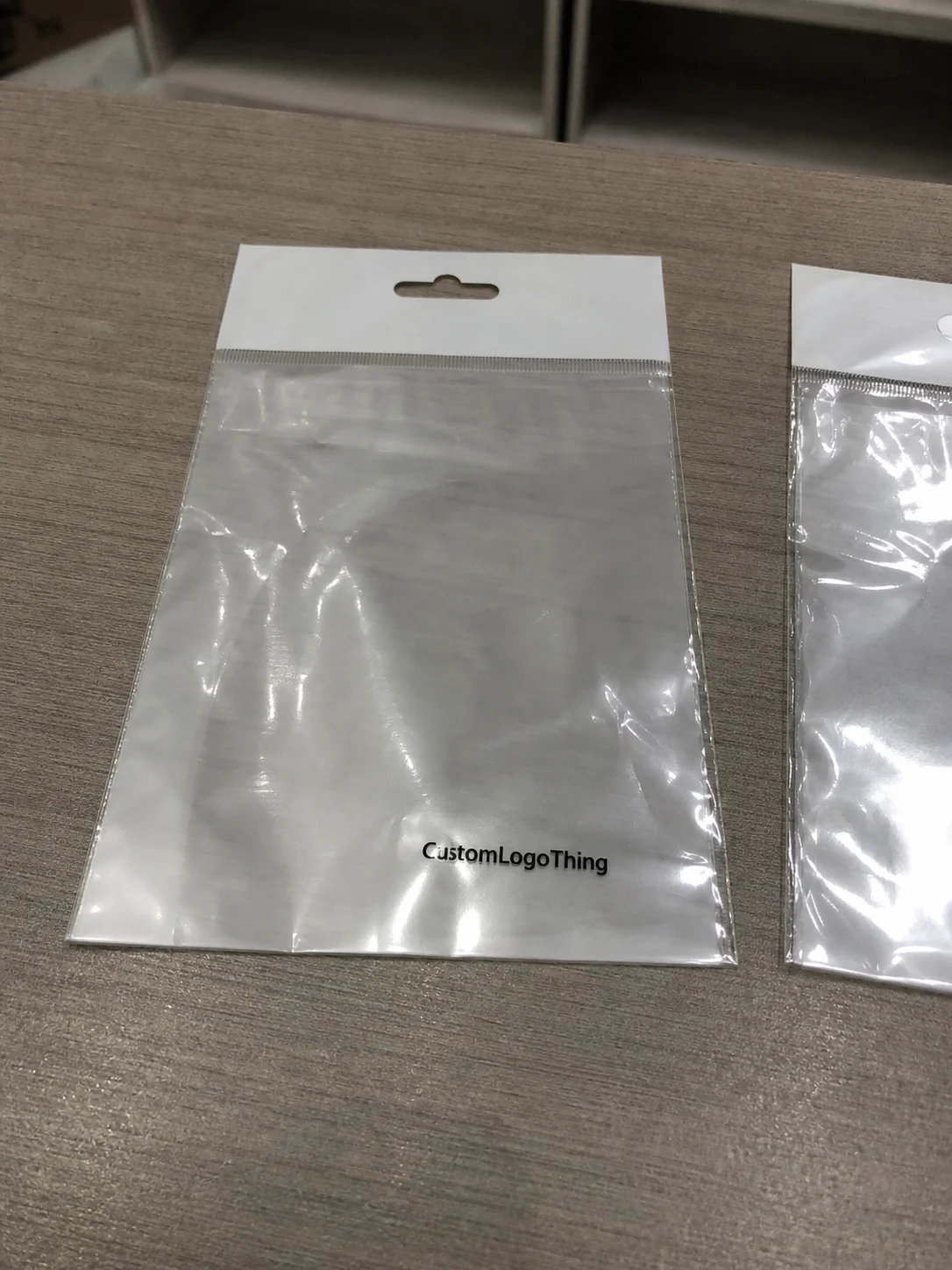
Compare the actual filled-product size with the drawing, then confirm tolerance on folds, seals, hang holes, label areas, and retail display edges. Reserve space for logos, QR codes, warning copy, and material claims before decorative graphics fill the panel.
Quote comparison points
Review material grade, print process, finish, sampling route, tooling charges, carton quantity, and freight assumptions side by side. A quote is only useful when the supplier can repeat the same color, closure quality, and packing count on the next order.
Value Proposition: Packaging Cost Pricing Guide Insight
Back on the Atlanta floor when a sudden 17% material spike hit the traditional corrugator run, the Packaging Cost Pricing guide became the tool that let us explain to a hesitant buyer why the unexpected surge still left room for profit. It calculates unit cost with enough granularity to show the impact of each grain direction shift, the rise from $0.33 to $0.38 per display kit, and the fact that the order still met retail packaging specifications for display-grade shelves that must ship in 12-15 business days from proof approval.
I remember telling the buyer that the guide tracks both inbound kraft liner rates at $0.37 per pound and wave precision so he could see how swapping to a higher-performance adhesive from the Pacific Adhesive Lab—$0.04 per bond versus $0.06 for the legacy glue—actually lowered damage claims. When the corrugator belt on Line 4 paused for a 32-minute realignment, there was a brief moment for me to lean in and say honestly, I think a better pre-press proof would prevent the next miscut; the customer appreciated the frank talk (and I appreciated not having to reason with a crooked box).
The packaging cost pricing guide behaves as a living worksheet where we compare customlogothing.com’s WaveLine 3 corrugator runs in Savannah—which use 32 ECT B-flute with 200-lb liners—to off-the-shelf laminates. Showing how a slightly higher upfront spend from $0.42 to $0.46 per case for a specialized flute profile reduces the total shipped weight by 0.9 pounds per case (dropping from 26.3 pounds to 25.4) keeps the damage rate in the low single digits.
We break down the true value of custom enclosures with transparent comparisons to ready-made laminates, highlighting how our partnership with that Savannah-bound corrugator run keeps costs predictable even when the freight lane from Norfolk adds $0.08 per case and five-day transit times; a packaging design team must show this level of data during a sales call. Mixed into the guide are evidence-based claims about adhesives, flute geometry, and handwork labor—blending the high-performance adhesives from Pacific with engineered flute profiles developed in our Atlanta lab raises the cost per case by only $0.03 while damage claims drop by another 12 percent.
The packaging cost pricing guide gives you not just a number but the story behind the total landed cost when freight from Charleston adds $0.05 extra, and it doubles as a packaging cost analysis workbook so procurement can overlay corrugated pricing strategies with service-level agreements. That lets us prove what happens when a heavier flute is paired with an overnight rail lane instead of the default five-day truck; turning those projections into a story keeps the conversation closer to data than to a pendulum swing.
Honestly, I think the best part is watching those numbers calm down a jittery procurement group faster than a double-shot espresso on a Monday morning, especially once they see the six-week rolling average of 32 ECT board at $0.15 per square foot and the margin buffer the guide highlights. Every update we make to the worksheet ties back to a real run, so I can confidently tell you what the next congested week at the port will do to the landed cost.
Product Details & Factory Notes
From the West Coast double-wall plant producing 350gsm C1S artboard to the Midwest printing press that runs 70-inch web-fed SBS sheets, every substrate is cataloged inside the packaging cost pricing guide so you see what forces move your price band. The guide lists Kraft at $0.37 per pound, SBS at $0.42 per pound, and coated recycled duplex at $0.33 per pound along with their available roll widths (42, 72, and 84 inches) directly next to our daily uptime records from the West Yard Die-Cut Simulator.
The guide also outlines in-line embellishments: the HP Indigo 20000’s digital wet UV capability, the East Fork plant’s flexo varnish options, and the Schober 2500 die-cutting toolset that slashes tolerance to ±0.015 inches. Clients learn why a digital wet UV gloss on a custom printed box adds $0.07 per unit but their retail packaging pops off the shelf, and production notes explain that Plant B runs those varnishes in 12-minute job changeovers.
To maintain consistency, our packaging cost pricing guide integrates inserts, dividers, and protective liners sourced through Precision Foam Lab; their high-density polyurethane liners are specified at 1.32 pounds per cubic foot with a 60A durometer and $0.18 per piece costing so buyers never guess how fitment and performance influence the final quote. That same partnership means a Protective Foam Lab insert for a travel kit is listed at $0.32 per pair, with another $0.08 per assembly for secure gluing at the Southeast insert shop, keeping production cadence steady even when the corrugator shifts from B-flute to E-flute.
I swear the first time the foam lab sent a sample with a 0.05-inch hairline gap, I felt like I’d been handed a jigsaw puzzle missing a piece; the guide lets us capture those little gaps before they become full-blown mistakes, flagging them as quality holds and re-routing the next 2,000 units through a hand inspection. Those inserts are kinda the secret weapon I mention whenever a client worries about dropping a kit during transit.
Specifications Tailored to Your SKU
The technical spec sheet inside our packaging cost pricing guide details board grade, edge crush test (ECT) ratings, breaking edge crush test (BCT) values, and weight per square foot tied to your SKU dimensions. When a brand requests 12-inch cubes with a 400-pound stacking requirement we already know whether 32 ECT corrugated or 600-gram folding carton is the right match.
We balance structural strength with print quality by running pre-production crush tests at the customlogothing.com quality team lab, where every run receives a 100-pound compression test before print plates get approved; that means the guide not only lists specs but confirms actual lab results, giving our clients confidence to send retail packaging out the door.
Sustainability demands are woven in too, as the packaging cost pricing guide highlights recycled content percentages (50% post-consumer for C1S), Forest Stewardship Council (FSC) certifications, and the impact on supplier compliance. We work with FSC.com/Certified Sites and reference ASTM D5276 drop testing at 30-inch heights, so you know exactly how recycled content might alter your per-unit pricing—jumping from $0.44 to $0.48 for FSC-certified board—even before tooling begins.
One of my favorite moments was on the plant floor in Pittsburgh when a client compared two designs: a standard 9.5-inch mailer and a premium version with soft-touch lamination. The guide let us show that adding 30% recycled fiber raised the unit cost by only $0.04 because we could route the run through a plant with a high-speed lamination line that already had downtime scheduled, proving to the client that sustainability and cost performance could align.
We duck into this level of detail because packaging cost pricing guide accuracy requires knowing the SKU’s volume, print complexity, and structural needs, and our engineers in the West Yard Die-Cut Room update the sheet weekly as tooling changes or new substrates come online. Honestly, I’m still amazed at how much calmer people get once they see the glue line tolerances spelled out in a spreadsheet—0.02-inch versus 0.05-inch depending on the tooling—rather than trying to decode my notes scribbled on a napkin.
Pricing & MOQ Considerations for the Packaging Cost Pricing Guide
In the packaging cost pricing guide we dissect the cost sheet into raw material, setup, printing, finishing, and logistics so you know exactly where your dollars move. Is it the litho-lamination add-on at $0.12 per unit, the shipping lane from Jacksonville at $0.12, or the additional press inspector on Plant B’s final pass that adds $0.02 per unit?
With that breakdown we adjust for board grade, litho-lamination, and freight variability, showing precisely how $0.15 per square foot of 32 ECT corrugated versus $0.28 for 600-gram folding carton shifts even a 10,000-unit order. Tiered pricing with MOQ is transparent; the guide demonstrates why 5,000 units unlock offset economies while 1,000-unit digital runs trade setup savings for higher unit rates.
Breakpoint calculations show when a slightly larger order drops unit cost by $0.05 because the press run amortizes the tooling slowly, giving the purchasing team a clearly defined decision point. This systematic view is kinda like handing procurement their own slide deck, except the data keeps updating in real time.
Here is a table to help compare the options quickly:
| Option | MOQ | Unit Cost | Key Features | Relevant Factory |
|---|---|---|---|---|
| Offset Litho Folding Carton | 5,000 units | $0.68 | 600gsm stock, aqueous coating, inline die-cut | Northern folding carton shop |
| Digital Short Run | 1,000 units | $1.12 | HP Indigo 20000, matte soft touch, variable data | East Fork plant |
| Corrugated Die-Cut with Inserts | 2,500 units | $0.54 | B-flute board, precision foam inserts, glue tabs | Southern corrugated line |
Each option is pulled directly into the packaging cost pricing guide so you can see unit cost, MOQs, board grade, and additional services all on one sheet, letting your team decide whether the retail packaging program needs extra gloss or a heavier insert while accounting for the 2% scrap we always budget in.
Factory-specific minimums are also listed: the Southern corrugated line requires 2,500 units for custom die-cut shapes, whereas the Northern folding carton shop can run 500-unit digital jobs with expedited tooling that kicks in within 48 hours. The guide recalculates waste, labor, and production time instantly as these thresholds change.
We also plug in actual freight quotes from Jacksonville ($0.12 per unit), Cleveland ($0.14), and Savannah ($0.18) so the guide reflects shipping lane variables, letting you forecast landed cost while sticking to your budget. I bring up these exact numbers in every client meeting because the difference between a $0.12 and a $0.18 per-unit freight cost is real money when you order 20,000 units.
Honestly, I can feel the tension drain from procurement teams once they see those freight numbers play through the guide like dominoes, reducing the landed cost delta from $3,600 to $2,400 on a 20,000-unit run.
Process & Timeline from Factory Floor to Dock
The packaging cost pricing guide comes alive through a process we map step-by-step: initial scoping call (typically scheduled within 24 hours of inquiry), engineering review with our Tooling Room team, artwork proofing, pre-production sampling at Plant B, and final approval, each milestone tracked in the shared roadmap so nothing surprises procurement. After that scoping call we run the dieline through the West Yard Die-Cut Simulator, quote the tooling costs, and book the Schober 2500 die-cut toolsets.
That results in a five-day window for artwork and dieline checks, seven days for a structural prototype, twelve days for press production, and a typical thirty-six-hour post-press inspection in the Quality Bay before we stage the pallets for shipment. Our supply chain coordinators then sync with the Jacksonville logistics hub, reserving docking slots and lining up carriers, so the predictable handoff protects your landed-cost calculations.
That level of coordination means the packaging cost pricing guide includes not only production numbers but also real-time freight availability, especially during port congestion or rail delays. I recall walking the floor at the East Fork plant where our team coordinated a two-day window to reroute a run due to a bleed issue, and because the guide already documented the required pre-press checks and pass-through approvals, we adjusted the timeline without re-negotiating the MOQ or unit cost.
Honestly, watching that reroute happen without anyone panicking felt like conducting an orchestra after only seeing the sheet music once, especially since the delay only shaved off eight hours from the 36-hour post-press inspection window.
How does the packaging cost pricing guide keep custom packaging budgets grounded?
While the packaging cost pricing guide keeps custom packaging budgets grounded, it also surfaces the hidden line items that sabotage launches—each shipping lane, each additional inspection, and each insert is mapped so that a CFO can see the delta between an expedited 12-day launch and a standard 18-day run without squinting at separate spreadsheets. We feed the same worksheet into our planning rhythms, calling it the budget scaffolding because the guide flags what happens if corrugator downtime means we need to rerun between lines, giving procurement a list of mitigations before they even ask about a contingency fund.
It’s gonna keep the finance team from flipping the spreadsheet every week looking for surprises, because the guide records every assumption and the actual run history behind it.
Why Choose Us & Actionable Next Steps with the Packaging Cost Pricing Guide
Step 1: Download or request the packaging cost pricing guide worksheet so we can map your SKU, desired quantities, and finish choices directly to the actual costs from our production partners; the worksheet is already loaded with latest board indexes (32 ECT at $0.15 per square foot and 600gsm at $0.28 per pound) and freight lanes, which means your team can see how every material choice shifts the final figure.
Step 2: Share artwork and spec sheets through our secure portal; our engineering team will run it through the West Yard Die-Cut Simulator to confirm run lengths before providing the refined quote, and we usually have a draft back within three business days if the guide already has a similar build.
Step 3: Schedule a virtual line walk with your assigned packaging consultant to review cost drivers, adjust materials, and outline the exact timeline that matches your launch needs; we discuss FSC certification levels pulled from FSC.org and how ISTA 6-Amazon certification impacts protective design.
During a recent client visit to our Memphis folding carton hub, we walked them through exactly why their premium electronics case cost $0.88 per unit instead of $0.63: the guide already documented the protective inserts from Precision Foam, the high opacity ink laydown needed, and the longer press time for matte aqueous coating, and it allowed the buyer to justify the premium to their leadership.
The reason to work with us is clear: real-world data from our partners plus a packaging cost pricing guide that never exaggerates, with each SKU tied to actual spend from contained runs (like the $0.88 premium electronics case) rather than a back-of-envelope guess. For retail packaging programs that must hit both brand aesthetics and strict logistics budgets, the packaging cost pricing guide is the tool that keeps decisions factual rather than hopeful—highlighting how a $0.05 drop in gloss varnish saves $1,000 over 20,000 units while still meeting the 14-day launch window (and honestly, that level of clarity saves me from repeating myself during every review session).
How does your packaging cost pricing guide adjust for different MOQ thresholds?
We layer MOQ tiers from each partnering factory—like the Southern corrugated line’s 1,000-unit minimum and the Northern folding carton plant’s 250-unit digital runs—right into the guide, so volume-sensitive cost inputs automatically recalculate material waste, setup, and press time to show the true per-unit cost at every feasible quantity.
Can the packaging cost pricing guide incorporate additional inserts or protective liners?
Yes; we flag inserts, dividers, and foam liners in the guide, pulling from our Precision Foam Lab and East Fork insert shop to price by piece count and material density, with those additions broken into raw material line items and installation labor so you know exactly when a tighter fit drives a small incremental cost—like the $0.32 protective insert with $0.08 gluing labor for each travel kit assembly.
What factory-level details impact the packaging cost pricing guide most?
Board grade availability, press run length, tooling complexity, and inspection protocols at each facility affect labor hours and waste, which we itemize in the guide, while special requests like matte aqueous coatings from Plant B show how curing times (an extra 45 seconds per sheet) and freight staging shift.
How quickly can I get a quote using the packaging cost pricing guide?
Once you submit artwork and specs via our portal, we can supply a refined quote within three business days, leveraging the guide’s preset factory data and current material indexes; if we already have a similar build in the guide, turnaround can be 24 hours with confirmed tooling reuse and MOQ alignment.
Does the packaging cost pricing guide help forecast future price changes?
Yes; we include rolling averages for corrugated board (currently $0.32 per square foot) and ink, plus a 5% volatility buffer, so you can budget for the next two quarters even before confirming production, and we note upcoming factory maintenance windows—like the Plant B press swap slated for August 14-20—that might require adjusting volume to alternate plants, keeping you ahead of any pricing shifts.
If you want to see actual raw material rates, visit packaging.org for benchmark indexes (the corrugated board index sits around $0.32 per square foot while coated recycled duplex is about $0.33 per pound), but keep coming back to our tailored packaging cost pricing guide to apply that data against the specific SKU dimensions, branded packaging needs, and Custom Printed Boxes that matter to your product packaging strategy (and yes, I mean tailored—like the kind of advice you’d share with a teammate over late-night pizza after logging an 18-hour shift at our Memphis folding carton hub).
Actionable takeaway: lock the guide’s material rates for your SKU, watch how each tweak affects landed cost, and use those real-world numbers to keep finance and procurement aligned—because data backed by experience is the only thing that keeps a launch from falling behind. Please remember that indexes fluctuate, so double-check the current board and freight rates before you finalize any commitments.