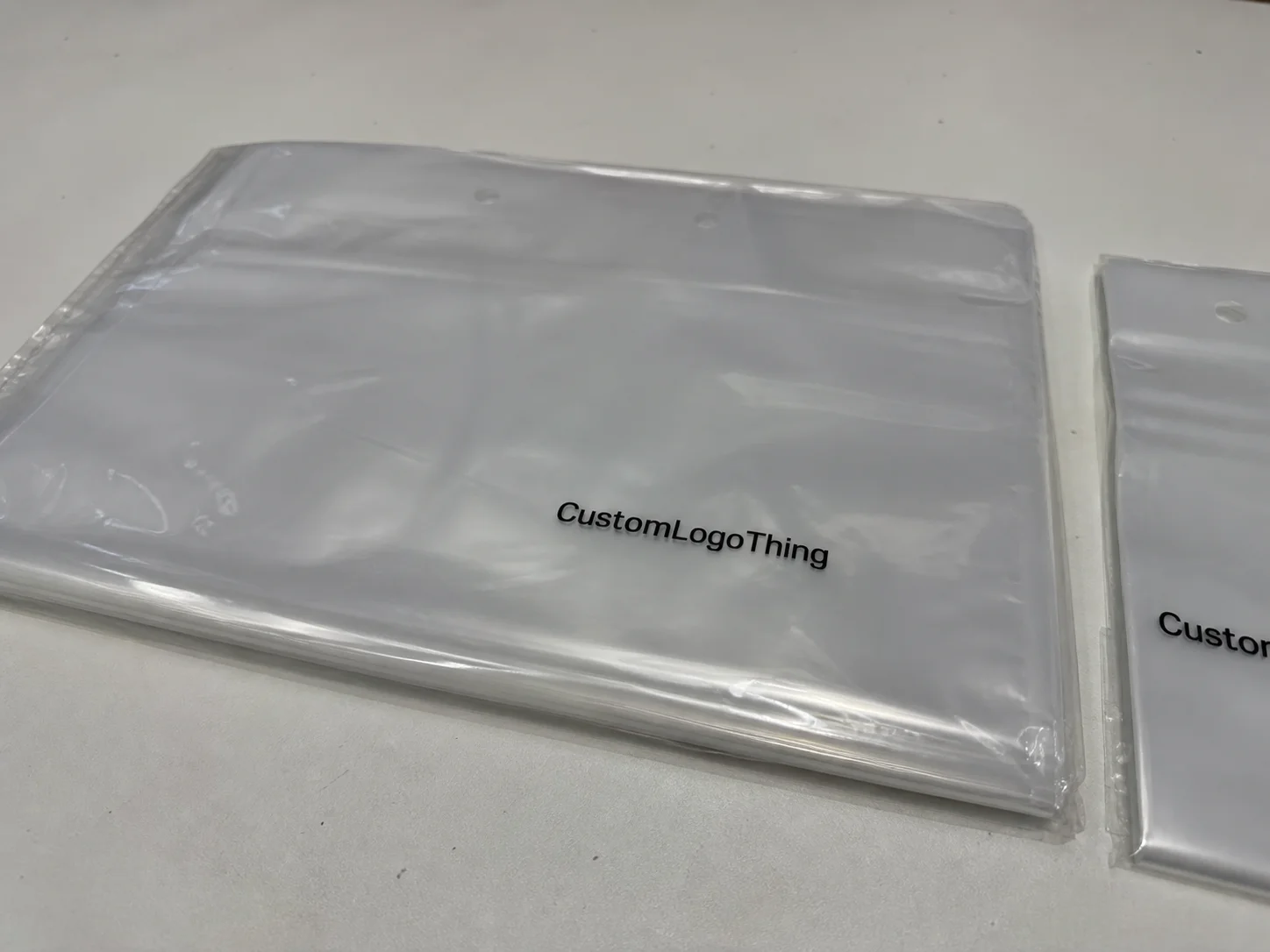
Buyer Fit Snapshot
| Best fit | Packaging Supplier with Logo projects where brand print, material claims, artwork control, MOQ, and repeat-order consistency need to be specified before quoting. |
|---|---|
| Quote inputs | Share finished size, material target, print colors, finish, packing count, annual reorder estimate, ship-to region, and any compliance wording. |
| Proofing check | Approve dieline scale, logo placement, barcode or warning zones, color tolerance, closure strength, and carton packing before bulk production. |
| Main risk | Vague material claims, crowded artwork, missing packing details, or unclear freight terms can make a low unit price expensive after revisions. |
Fast answer: Packaging Supplier with Logo: Quote Scope, Sample Proof, MOQ, and Lead Time should be specified like a repeatable production item. The safest quote records material, print method, finish, artwork proof, packing count, and reorder notes in one written spec.
Production checks before approval
Compare the actual filled-product size with the drawing, then confirm tolerance on folds, seals, hang holes, label areas, and retail display edges. Reserve space for logos, QR codes, warning copy, and material claims before decorative graphics fill the panel.
Quote comparison points
Review material grade, print process, finish, sampling route, tooling charges, carton quantity, and freight assumptions side by side. A quote is only useful when the supplier can repeat the same color, closure quality, and packing count on the next order.
The first thing I noticed on a humid morning in a Guangdong corrugate plant was not the machine speed, which was running close to 180 sheets per minute on the scoring line, but how a packaging supplier with logo changed the way people judged the product before they ever touched it. A simple kraft mailer with a clean one-color mark made a mid-tier candle look like a premium item, and that effect is not marketing fluff; it is buying psychology with ink on board. I still remember standing there with a cup of terrible vending-machine coffee, watching a line of cartons come off the stacker, and thinking, “Well, that’s doing a lot more heavy lifting than the product page ever will.”
A lot of buyers still treat a packaging supplier with logo as if it were only a print shop in Dongguan or Shenzhen. That misses the point by a mile. The right partner is sourcing material, checking caliper and burst strength, managing fit, protecting the product in transit, and translating your brand into something a warehouse team can actually pack at speed. Honestly, if a supplier only talks about ink colors and never asks about product weight or the shipping lane, I start wondering whether they’ve ever had a parcel tossed down a chute at all.
That difference matters whether you ship 300 subscription kits or 30,000 retail cartons from a fulfillment center in Ohio, California, or the greater Manchester area. It matters in ecommerce, on a store shelf, and even in B2B cartons that never see a consumer aisle. When package branding works, people remember the box, the mailer, the tape, the insert, and the label. That memory compounds. And yes, sometimes the logo gets photographed more than the product inside, which is a weirdly satisfying moment for any brand team that has been staring at dielines for three weeks straight.
What a Packaging Supplier with Logo Actually Does
A packaging supplier with logo does far more than apply ink to a surface. In practice, the job starts with material selection and ends with a delivered packout that protects the product, supports the brand, and fits the shipping method. I’ve seen suppliers act like a manufacturer, a brand translator, and a logistics planner all in the same conversation, which is exactly why the good ones are worth keeping around. In a typical factory outside Guangzhou, that can mean checking paper roll stock at 9 a.m., reviewing artwork at noon, and loading finished cartons onto pallets by 4 p.m.
Stock packaging is pre-made and usually blank, custom packaging is built to your exact dimensions and graphics, and semi-custom sits in the middle. With semi-custom, a supplier may use stock box styles, pre-set mailer sizes, or standard bags, then add your logo through printing, labels, sleeves, or tape. A packaging supplier with logo helps you figure out which lane makes sense based on product weight, branding goals, and budget. I’m biased, but I think semi-custom is underrated; it saves real money when the brand wants personality without building a whole new structure from scratch, especially on runs of 3,000 to 5,000 units.
That role becomes obvious when you look at different formats. Boxes, mailers, tissue, bags, inserts, labels, and even branded tape all serve different purposes. One client I visited in New Jersey was spending more on void fill than on the box itself because the packaging dimensions were off by 18 mm. Their packaging supplier with logo solved the problem by resizing the carton from 312 x 220 x 140 mm to 294 x 210 x 130 mm, reducing dunnage, and improving the first impression at the same time. That kind of fix always feels a little magical, although really it is just careful measurement and a supplier who bothered to ask the annoying questions.
Why does logo packaging matter so much? Because perception forms fast. In retail packaging, a crisp mark on a rigid carton can raise perceived value before the product is seen. In ecommerce, a branded mailer does the same job when the customer lifts the parcel off the doorstep. In B2B shipments, it signals that the sender takes operations seriously. The visual cue arrives before the tactile one, which is why a packaging supplier with logo is not a nice-to-have. It is part of the selling system, just as real as the product SKU or the freight label.
That is why I tell buyers to think about product packaging as part of the sales system, not a cost after the sale. The right packaging supplier with logo should help with:
- Brand consistency across boxes, mailers, and inserts
- Protection based on product fragility and transit distance
- Print alignment so the logo lands where the eye expects it
- Format selection between stock, custom, and semi-custom
- Operational fit for hand packing, machine packing, or fulfillment centers
The strongest supplier is not always the one with the broadest catalog. The strongest packaging supplier with logo is usually the one that asks the right questions about dimensions, shipping conditions, brand rules, and reorder behavior. A big catalog is lovely, sure, but I’ll take a supplier who notices a 3 mm mismatch over one who has 400 product pages and no opinions. In practice, the best teams in Foshan and Dongguan often start with a sample room, not a sales deck.
For buyers building out branded packaging, I also recommend reviewing a supplier’s broader catalog of Custom Packaging Products so you can compare cartons, mailers, inserts, and labels under one roof instead of managing five vendors. That simple consolidation can trim one to two weeks off the sourcing cycle when you are coordinating multiple SKUs.
“The box became part of the product story,” a client told me after we replaced a flimsy mailer with a printed corrugated shipper. “Returns fell, and customers started photographing the packaging before the item.” That is a packaging win you can measure, especially when return rates drop from 6.2% to 4.7% over a 60-day period.
How a Packaging Supplier with Logo Works From Quote to Delivery
The workflow is usually more structured than buyers expect. A good packaging supplier with logo follows a sequence that starts with your brief and ends with shipping cartons arriving on time. Skip a step, and you pay for it later in delays, color mismatch, or damaged product. I’ve seen enough quote-to-dockline drama in factories across Guangdong and New Jersey to know that the “quick fix” is often the most expensive route in disguise.
The first step is the brief. This should include packaging dimensions, product weight, shipping method, brand colors, logo files, target quantity, and whether the item is fragile, oily, glass, powder-filled, or temperature-sensitive. I once sat in on a supplier call where the buyer sent only a logo PNG and said “make it premium.” That project stalled for eight days because nobody knew whether the pack had to survive parcel sortation or shelf display. A packaging supplier with logo cannot solve a vague brief without guessing, and guessing is a terrible manufacturing strategy.
Next comes artwork review. The supplier checks whether the logo is vector, whether colors are Pantone-matched, and whether the artwork fits the die line or print area. This is where logo placement decisions happen. A centered mark on a lid looks elegant for gift boxes, while a corner logo on a mailer often works better for warehouse handling and scannability. The print method matters too. Digital printing handles shorter runs and variable artwork well. Flexographic printing is often more cost-efficient at scale. Offset can deliver sharper image quality on certain paper stocks. Foil and embossing add tactile impact but also add setup complexity and cost. I have a soft spot for foil when it is used well, though I’ve also seen it used like glitter at a middle-school dance, which is... not the dream.
Then comes sampling or mockup approval. A supplier may send a plain white sample, a digital proof, a structural prototype, or a press proof depending on the project. If the packaging is custom printed boxes, I strongly prefer to see at least one physical sample before full production. Color on screen can lie. Paper absorbs ink differently from coated board, and soft-touch lamination changes how a dark logo reads under warehouse light. I still remember one sample that looked perfect on the monitor and somehow turned into a muddy charcoal square in daylight. The client stared at it like it had personally insulted them, which, frankly, I understood.
Production begins only after proof approval. That sounds obvious, but buyers still approve too quickly when they are under time pressure. A supplier should be able to explain the run sequence, the expected tolerances, and the packing method. For example, a simple mailer with one-color print and standard flute board may move from proof approval to completion in 10 to 15 business days. Add foil, embossing, or nonstandard dimensions and you may be looking at 18 to 30 business days, depending on the factory queue and raw material availability. A packaging supplier with logo who refuses to talk about those variables is usually leaving out the part that matters most.
Quality control is where the best packaging supplier with logo separates itself from the rest. I’ve toured plants where operators checked print registration every 500 sheets and weighed random cartons to confirm consistent board specs. That kind of discipline reduces reorder headaches. It also protects your brand because no one wants a shipment of boxes where the logo drifts 6 mm to the left on every panel. Six millimeters may sound tiny until you see 5,000 boxes with that same little mistake glaring back at you from a pallet.
Finally, the supplier ships the order. For international orders, this includes palletization, moisture protection, customs paperwork, and freight planning. If the supplier is doing a good job, you should not have to chase three people to find out whether the goods left the dock. The best ones send milestone updates instead of leaving the customer guessing. And if you’ve ever spent an afternoon emailing “Any update?” for the fourth time, you already know how much that matters. From a factory in Shenzhen to a warehouse in Texas, a clear dispatch date is worth its weight in cartons.
Lead time deserves straight talk. Simple jobs can be fast. Custom structures, specialty finishes, or large volumes take longer. A packaging supplier with logo should tell you the timeline plainly, not dress it up with vague promises. If a supplier claims every order ships in a few days, I usually assume either the order is tiny or the detail level is suspiciously low. Sometimes both, which is even less reassuring. The more honest answer is usually something like 12 to 15 business days from proof approval for a standard printed mailer, or 20 to 25 business days for a rigid box with foil and embossing.
Key Factors to Compare in a Packaging Supplier with Logo
Comparing a packaging supplier with logo means looking beyond the headline quote. Price matters, sure. But material quality, print precision, sustainability, and consistency matter just as much, because those variables shape both customer perception and total landed cost. My opinion, for what it’s worth, is that the cheapest-looking spreadsheet rarely survives first contact with real production. A quote that appears tidy in Excel can turn messy once freight, proofs, and rework enter the picture.
Start with the substrate. Corrugated board should be specified by flute type, paper grade, and strength requirement. Paperboard should be checked for gsm or point thickness. A 350gsm C1S artboard with soft-touch lamination feels different from a 300gsm uncoated stock, and the difference shows up immediately in premium retail packaging. If the product is fragile, ask about ECT, burst strength, or drop-test performance. If the product is light, you may prioritize appearance and cost efficiency instead. In a packaging plant in Hebei, I once watched two cartons fail a 32-inch drop test in a row simply because the board spec was 28ECT instead of 32ECT, and that tiny change altered the entire order.
Print capability is the next filter. A strong packaging supplier with logo should explain whether they run flexo, digital, offset, screen, label application, foil stamping, embossing, or debossing. Each method has tradeoffs. Flexo is efficient for high-volume carton work. Digital is flexible for short runs and multiple SKUs. Offset can deliver crisp graphics on cartons and sleeves. Foil adds shine, but it is not always worth it if your customer mostly sees the box in a dim warehouse or on a porch. If your run is 5,000 pieces and the artwork changes every quarter, digital may save you more than a 3% savings on flexo setup ever could.
Brand consistency is where many suppliers stumble. Pantone matching is not a luxury if your brand color has to look the same across orders. Reorder consistency matters too. I once reviewed two batches from the same packaging supplier with logo six months apart, and the second batch drifted slightly warmer because the ink mix had been adjusted to compensate for humidity. Not disastrous, but visible. If your packaging design depends on exact shade matching, ask how they handle production tolerances and archived specifications. A decent supplier in Dongguan should be able to tell you the color delta and the press conditions from the previous run, not just shrug and hope you don’t notice.
Sustainability deserves a serious conversation, not just a badge on a sales deck. Recyclable board, lower ink coverage, right-sized cartons, FSC-certified paper, and reduced void fill all make a measurable difference. If you want a reference point on material responsibility, the Forest Stewardship Council is a useful starting place for paper-based sourcing standards. EPA guidance on waste reduction also helps frame the conversation around recycling and source reduction. In practical terms, a carton trimmed by 10 mm can lower board use by hundreds of square meters across a 20,000-piece run.
Minimum order quantities shape flexibility. Some suppliers want 5,000 pieces. Others will prototype at 500 but charge more per unit. A packaging supplier with logo should be able to scale with your business instead of forcing you into inventory bloat. If your volumes are volatile, smaller MOQs may matter more than rock-bottom unit pricing. A startup launching in Austin or Bristol often needs a 1,000- or 2,500-piece test run before committing to a full pallet of stock.
Communication is probably the most underrated factor. A supplier who answers proof questions in two hours is often more valuable than one who saves you $0.02 per unit but disappears for three days at a time. Ask whether they provide design support, dieline guidance, and reorder documentation. A supplier that only executes and never advises can become expensive very quickly. I’ve learned that the hard way, and once was enough. If they can also document the factory location, whether it is in Shenzhen, Xiamen, or Ningbo, that usually tells you they run a more organized operation.
| Option | Best For | Typical Strength | Typical Cost Impact |
|---|---|---|---|
| Digital print packaging | Short runs, multiple SKUs, fast artwork changes | Excellent flexibility, clean logo detail | Lower setup, higher unit cost |
| Flexographic print packaging | High-volume cartons and mailers | Efficient at scale, solid repeatability | Higher setup, lower unit cost |
| Offset printed packaging | Retail packaging, premium graphics | Sharp detail, strong image quality | Moderate setup, moderate-to-high unit cost |
| Label-applied packaging | Fast launches, semi-custom projects | Flexible, easy to update | Lower tooling, added manual labor |
For many brands, the right answer is a mix. I’ve seen companies use a high-end retail carton for shelf display, a simpler shipper for ecommerce, and branded tissue or tape to tie everything together. That kind of package branding keeps costs controlled while preserving the customer experience. It also keeps the operations team from looking at the brand team like they’ve suggested hand-carving every box with a butter knife. On a 10,000-unit launch, that mixed approach can reduce total packaging spend by 12% to 18% versus making every component premium.
Packaging Supplier with Logo Pricing: What You’re Really Paying For
Pricing is where buyers get tripped up. A packaging supplier with logo may quote a tempting per-unit number, but that number means very little until you know the material, print method, quantity, finishing, and freight assumptions behind it. I’ve seen elegant quotes that hid a small mountain of extra costs, and I’ve seen higher quotes that were actually the smarter buy because they included the ugly parts up front. A real quote should tell you whether the price is EXW, FOB, or delivered to your warehouse in Dallas, Rotterdam, or Melbourne.
Material choice is the biggest driver. A plain kraft mailer costs less than a rigid set-up box. A 24ECT corrugated carton will usually cost less than a heavy-duty double-wall shipper. Paperboard with a matte aqueous coating costs less than soft-touch lamination plus foil. These differences stack up quickly across 5,000 or 50,000 pieces. If your product ships in a 1.2 kg parcel, the board spec alone can swing the landed cost by several cents per unit, especially once freight and pallet count are included.
Unit price usually drops as volume rises. That part is basic manufacturing economics. But total spend can climb when minimums are too high. A supplier might offer $0.18 per unit for 5,000 pieces and $0.11 per unit for 25,000 pieces, yet the smaller order may be smarter if your storage space is limited or your product line changes every quarter. A packaging supplier with logo should help you compare unit economics and cash flow, not just headline numbers. If you are paying $0.15 per unit for 5,000 pieces instead of $0.11 per unit for 25,000, the extra inventory may sit in a warehouse for 90 days, and storage has a cost too.
Let me give you a practical example from a client meeting in Chicago. They were comparing two quotes for custom printed boxes. Supplier A was $0.26 per box at 10,000 units. Supplier B was $0.19 per box but required 30,000 units plus a $420 plate charge and $180 in sample costs. On paper, Supplier B looked cheaper. In reality, the buyer would have tied up an extra $3,000 in inventory and risked obsolete stock if the product line changed. A smart packaging supplier with logo quote should make that tradeoff obvious. If Supplier B also added $160 freight and a 21-day sea transit from Ningbo, the cheaper unit price starts looking much less attractive.
Then there are setup charges. Tooling, plates, die cuts, embossing dies, foil dies, and sampling can add meaningful first-order costs. This is normal, not a red flag. The issue is whether those costs are explained early. Hidden charges are what damage trust. If a supplier suddenly adds artwork cleanup, freight to the warehouse, or rush production after you’ve already approved the proof, you are no longer comparing suppliers fairly. And yes, I still get annoyed when that happens. Nothing like a cheerful “small adjustment” that somehow adds three line items and a headache.
Ask for tiered quotes. I like to see at least three volume levels: one near your forecasted minimum, one near your expected quarterly demand, and one at a higher break point. That makes the economics of a packaging supplier with logo visible. It also helps identify where the true price curve bends. For example, a common structure might be 5,000 pieces at $0.15 each, 10,000 pieces at $0.13 each, and 25,000 pieces at $0.10 each, with a one-time $280 plate charge and shipping quoted separately.
Hidden costs are often the killer. They include storage, reprints, freight, color revisions, shrink wrap, pallet charges, and labor for label application. A packaging supplier that looks expensive sometimes isn’t, once those items are counted. A cheap supplier can turn expensive fast if 2% of the order is unusable or if the logo placement drifts and forces a reprint. If the supplier operates out of a warehouse near Guangzhou and charges $42 per pallet for export packing, that should be visible from day one.
Here’s a simple comparison you can use when reviewing offers.
| Cost Factor | What It Means | Why It Matters |
|---|---|---|
| Material grade | Board weight, paper quality, finish | Affects protection, feel, and shelf appeal |
| Print method | Digital, flexo, offset, foil, embossing | Changes setup cost and visual quality |
| Quantity | Number of units ordered | Impacts unit cost and storage burden |
| Finishing | Laminate, varnish, foil, spot UV | Improves appearance, adds cost |
| Freight | Delivery from factory to your site | Can be significant on heavy cartons |
I’ve negotiated enough packaging contracts to say this plainly: the cheapest quote is often the most expensive mistake. A packaging supplier with logo should help you buy the right packaging, not just the least expensive one. If a quote seems too tidy, I usually assume something got left out on purpose or by accident, and either way I want a second look. A factory in Shanghai quoting $0.17 per unit for a 350gsm sleeve may look attractive until you discover the freight, sample, and plate charges push the real cost to $0.24.
How Do You Choose a Packaging Supplier with Logo?
Choosing a packaging supplier with logo gets easier when you break it into steps. That sounds basic, but it prevents the usual chaos: rushed quotes, unclear files, mismatched dimensions, and a production schedule nobody fully owns. If you’ve ever watched three departments argue over who approved the wrong dieline, you know exactly why a simple process matters. A good workflow also keeps your launch from slipping by two weeks because a proof got buried in someone’s inbox.
Step 1: Define the packaging job
Start with the product itself. What is its size, weight, fragility, and shipping environment? A bottle of supplements, a ceramic mug, and a set of socks all need different packaging. Write down the brand goal too. Are you trying to look premium, eco-conscious, retail-ready, or warehouse-efficient? A packaging supplier with logo can only recommend the right structure if the brief is concrete. If your product weighs 420 grams and ships in a 6-inch mailer, that detail changes the board spec immediately.
Step 2: Prepare your files and measurements
Gather vector logo files, Pantone references, packaging dimensions, and any special instructions. If you have brand guidelines, send those too. I’ve seen hours lost because a buyer sent a low-resolution JPG from a website header and expected a crisp print file. That is not enough for good package branding. Your supplier needs the actual source asset, not a screenshot, and definitely not a file named “final_final_v7_reallyfinal.png.” We’ve all been there, but still. A clean AI, EPS, or PDF file saves everyone time, especially when the artwork has to fit a 210 x 150 mm print area.
Step 3: Shortlist by capability, not just price
Not every packaging supplier with logo can make every format. Some are great at corrugated mailers but weak on rigid presentation boxes. Others can do gorgeous retail packaging but struggle with fulfillment-friendly sizing. Check whether they can produce the style you want, in the quantity you need, with the finish you expect. If they can’t, move on. A plant in Xiamen that excels at folding cartons may not be the right fit for a double-wall ecommerce shipper out of 12ECT board.
Step 4: Request samples or mockups
Ask for something physical whenever possible. Even a plain mockup tells you a lot about fold strength, board feel, and fit. For branded packaging, a printed sample is better because it reveals logo placement and color behavior. One supplier I visited in Shenzhen produced a set of five prototype mailers for a skincare brand, each with a slightly different logo position. The buyer picked the version that survived the best hand-feel test in the room. That decision later improved opening rates because the mailer looked cleaner in photos. Physical samples usually add 3 to 5 business days, but that is time well spent.
Step 5: Compare quotes on the same basis
Do not compare one quote that includes freight, proofing, and samples against another that excludes all three. A fair comparison is essential. Ask each packaging supplier with logo for the same assumptions: dimensions, board grade, print colors, quantity, lead time, and delivery location. If one supplier is vague, treat that as a cost signal. A quote delivered to Los Angeles on DDP terms should never be compared directly against an EXW quote from Ningbo without adding freight, customs, and handling.
Step 6: Approve proofs carefully
This is the part where a lot of money gets saved or lost. Check spelling, logo size, fold lines, bleeds, die-cut placement, and color notes. If the supplier provides a structural proof, measure it. If they provide a digital proof, zoom in. If they provide both, compare them line by line. Once production starts, changes become expensive quickly. If the proof shows a 4 mm bleed and your artwork only allows 2 mm, stop and fix it before the press run begins.
A good packaging supplier with logo should also confirm the production milestones: artwork approval, plate creation, material procurement, press date, QC check, packout, and dispatch. That way you know exactly where the order stands. Vague timelines usually become rushed timelines. I like suppliers who give a calendar with named checkpoints, because a date in Wenzhou or Taicang is much more useful than a promise that “it will be fine.”
If you are trying to make packaging design support growth rather than drain budget, I’d also recommend asking whether the supplier can standardize SKUs across multiple products. Standard dimensions cut cost, simplify inventory, and make reorders easier. That is one of the smartest operational moves a brand can make. A single master carton size used across three product variations can cut die costs and reduce warehouse complexity in one stroke.
Common Mistakes When Hiring a Packaging Supplier with Logo
Most problems with a packaging supplier with logo are preventable. They start with the quote request and show up later as delays, wasted inventory, or a package that looks cheaper than the brand it represents. The good news is that every one of these mistakes has a fix, and usually a fairly practical one.
Mistake 1: Choosing only by lowest price. A supplier can underbid and still miss print quality, board strength, or delivery timing. That “savings” disappears fast if the packaging fails in transit. I’ve seen a brand spend $8,000 replacing damaged goods because the carton spec was too light for parcel handling. That was a painful meeting, and nobody left with a happy expression. If the supplier in Guangzhou quoted $0.14 per unit but used 18ECT board when 32ECT was needed, the cheap quote was never really cheap.
Mistake 2: Sending poor artwork files. Low-resolution files produce fuzzy logos, uneven edges, and unhappy customers. A packaging supplier with logo can help clean up files, but they cannot invent detail that does not exist. Send vector artwork whenever possible. A 72 dpi JPEG simply will not hold up on a 280 mm-wide mailer.
Mistake 3: Ignoring dimensions. Oversized packaging wastes material and freight. Undersized packaging damages products. Both errors are expensive. Measure product size, add the needed clearance, and confirm the inner and outer dimensions with the supplier. Even a 5 mm change can alter fit, board usage, and pallet counts.
Mistake 4: Forgetting reorder consistency. The first order may look perfect, then the second batch drifts slightly in color, laminate finish, or fold style. Ask how the supplier archives specs and whether they can match a previous run. For branded packaging, consistency is part of trust. A supplier that keeps a production record in Dongguan or Shenzhen should be able to replicate a 2024 run in 2025 without guesswork.
Mistake 5: Underestimating lead time. A packaging supplier with logo does not control every variable. Material shortages, proof revisions, and freight bottlenecks happen. If you are launching during a peak season, order earlier than you think you need to. Running out of packaging during a sales spike is avoidable pain. For a Q4 launch, I would rather see the purchase order signed six weeks early than be “almost ready” with three days to spare.
Mistake 6: Skipping sample approval. I know it is tempting. Everyone wants to move faster. But sample approval often catches problems with finish, structure, or logo placement before they become expensive. I once watched a buyer approve a matte black mailer from a PDF alone, then discover the logo was too dark to read on receipt. That reprint hurt twice: financially and operationally. A physical sample from a factory in Suzhou would have caught it immediately.
One more mistake deserves mention. Some buyers think sustainability and branding are separate decisions. They are not. A packaging supplier with logo can often reduce waste by right-sizing the pack, using lighter board, or changing the print coverage. That lowers environmental impact and often reduces freight too. EPA guidance on source reduction is useful here, because less material usually means less waste downstream. If a carton can be trimmed from 320 x 240 x 120 mm to 300 x 220 x 110 mm without harming protection, that is real savings in board, space, and shipping weight.
Expert Tips for Getting Better Results From Your Packaging Supplier with Logo
If you want better results from a packaging supplier with logo, think like an operations manager and a brand owner at the same time. That balance usually produces the strongest packaging decisions. In other words, keep the pretty stuff, but make sure the pallet actually survives the truck ride from the factory in Guangdong to the warehouse in Chicago or Milton Keynes.
First, standardize dimensions where you can. I’ve seen brands run six box sizes when three would do. Every extra size adds complexity, inventory cost, and reorder risk. Standard sizing also makes custom printed boxes easier to plan and quote. A supplier can often optimize board usage when dimensions are consistent, and that can improve yield by several percentage points across a 10,000-piece run.
Second, keep the logo legible. Decorative complexity is not always your friend. On shipping boxes and mailers, a large clear mark often performs better than a tiny ornate one. People see the box from three to six feet away during delivery, on shelves, or in a warehouse. Readability beats flourish more often than designers want to admit. If the logo only works at 400% zoom on a monitor, it probably will not work on a corrugated liner in daylight.
Third, test packaging in conditions that resemble real use. I recommend a simple test matrix: drop resistance from 30 inches, scuff testing with a dry cloth, moisture exposure for 20 minutes, and storage under stacking pressure. If your supplier can reference ISTA procedures, that is a plus. The International Safe Transit Association publishes widely used transit-testing standards, and their site is a useful reference at ISTA. A test result from a Shenzhen lab is much more convincing than a promise from a sales deck.
Fourth, ask directly about tolerances. How much can artwork placement vary? What is the acceptable color delta? How do they handle reorder adjustments? A reliable packaging supplier with logo will answer these questions without dancing around them. If they can say “logo position +/- 2 mm” and “color delta within a 1.5 to 2.0 range,” you are dealing with a team that knows its process.
Fifth, judge packaging as part of the customer experience. I’ve watched teams obsess over ad creative and then cut corners on the box the customer actually holds. That is backwards. Your packaging is a physical brand impression with postage attached. It should support the purchase, not undermine it. A box with a crisp mark, a 350gsm insert, and a neat unboxing sequence can do more for repeat purchase than another round of paid ads.
Finally, remember that restraint often works better than noise. The strongest branded packaging I see usually balances function, consistency, and a clear visual cue. A tasteful logo on a well-built box says more than five loud effects glued together. If the supplier can produce a clean one-color print on kraft board for $0.12 per unit at 10,000 pieces, that is often stronger than a busy design with foil, UV, and three inks that costs twice as much.
“We stopped chasing the fanciest finish and focused on fit, color accuracy, and reorder consistency,” one operations director told me. “Our packaging costs went down 14%, and complaints dropped almost immediately.” That is the kind of result a smart packaging supplier with logo should help create, especially when the factory can repeat the same spec across multiple reorders without drifting.
If you are selecting a supplier now, compare their printed samples, lead-time promises, and material specs against your real shipping conditions. A good packaging supplier with logo should make that comparison straightforward, not mysterious. If they can explain why a 24ECT mailer is enough for domestic shipping but 32ECT is better for export, you are in the right conversation.
So the practical takeaway is simple: pick the supplier that can prove fit, print accuracy, and reorder consistency before full production starts. That is what turns a packaging supplier with logo from a vendor into part of the operation, and it is the difference between packaging that merely carries a product and packaging that helps sell it again.
FAQ
How do I choose the best packaging supplier with logo for a small business?
Look for low minimum order quantities, clear proofing, and flexible materials so you can test branding without overbuying. Ask for samples and compare print clarity, durability, and turnaround before committing. A small business usually benefits from a packaging supplier with logo that can handle shorter runs without pushing you into excess inventory, especially if your first order is 500 to 1,000 units rather than 10,000.
What is the usual timeline for a packaging supplier with logo order?
Timeline depends on artwork readiness, sample approval, print method, and volume. Simple jobs can move in 10 to 15 business days after proof approval, while custom packaging with special finishes may take 18 to 30 business days or longer. A dependable packaging supplier with logo should spell that out early. For a standard printed mailer, many factories in Guangdong quote 12 to 15 business days from proof approval, while rigid boxes with foil can stretch to 20 to 25 business days.
How much does a packaging supplier with logo typically cost?
Pricing depends on material, size, print complexity, order quantity, and shipping. You might see something like $0.18 per unit at 5,000 pieces and $0.11 per unit at 25,000 pieces, plus setup fees or freight. Request tiered quotes so you can see how unit price changes at different volumes from a packaging supplier with logo. For example, a 350gsm C1S artboard mailer with one-color print might land near $0.15 per unit at 5,000 pieces, while the same structure at 20,000 pieces could drop closer to $0.11 before freight.
What files should I send to a packaging supplier with logo?
Send high-resolution vector logo files, brand color references, packaging dimensions, and any placement instructions. If possible, include examples of packaging styles you like to reduce back-and-forth. The cleaner the file package, the faster a packaging supplier with logo can move from proof to production. A PDF in CMYK, an AI or EPS source file, and a dimension sheet with inner and outer measurements will usually save at least one revision cycle.
Can a packaging supplier with logo help with sustainability?
Yes, many suppliers can recommend recyclable materials, right-sized packaging, and printing options that reduce waste. Ask whether they offer paper-based alternatives, minimal ink coverage, FSC-certified substrates, or lighter-weight formats. A good packaging supplier with logo will usually have several practical options, not just one green claim. In many cases, a right-sized corrugated carton from a plant in Dongguan or Ningbo will reduce both board use and freight weight at the same time.
Choosing a packaging supplier with logo is really a decision about control: control over quality, consistency, cost, timing, and how your brand is physically experienced. In my experience, the best results come from suppliers who ask difficult questions, show real samples, and explain tradeoffs with numbers. That is the kind of partner worth keeping, whether the factory is in Shenzhen, Guangzhou, or halfway across the world in Ohio.
If you want branded packaging that actually strengthens your business, start with the specs, compare the real costs, and insist on sample approval. A dependable packaging supplier with logo should make your product look better, ship safer, and reorder with less friction the next time around. When the quote, proof, and pallet all line up, the whole operation feels lighter by several kilograms per shipment, and that is a practical kind of relief.
Related packaging resources
Use these related guides to compare specs, costs, quality checks, and buyer decisions before making the final call.