Personalized backpacks and lunch boxes have to work in real use, not just look good in a mockup. They get carried, wiped down, zipped open, stacked, and stuffed into lockers, so buyers should judge them on construction, material choice, decoration method, and packing details as much as on artwork.
For schools, camps, nonprofits, staff kits, and retail programs, a coordinated bag set can carry a brand through daily routines. The best orders are usually not the cheapest ones on paper. They are the ones where the bag, lunch box, decoration, and assembly plan all fit the job.
Why personalized bag sets feel more premium than giveaways
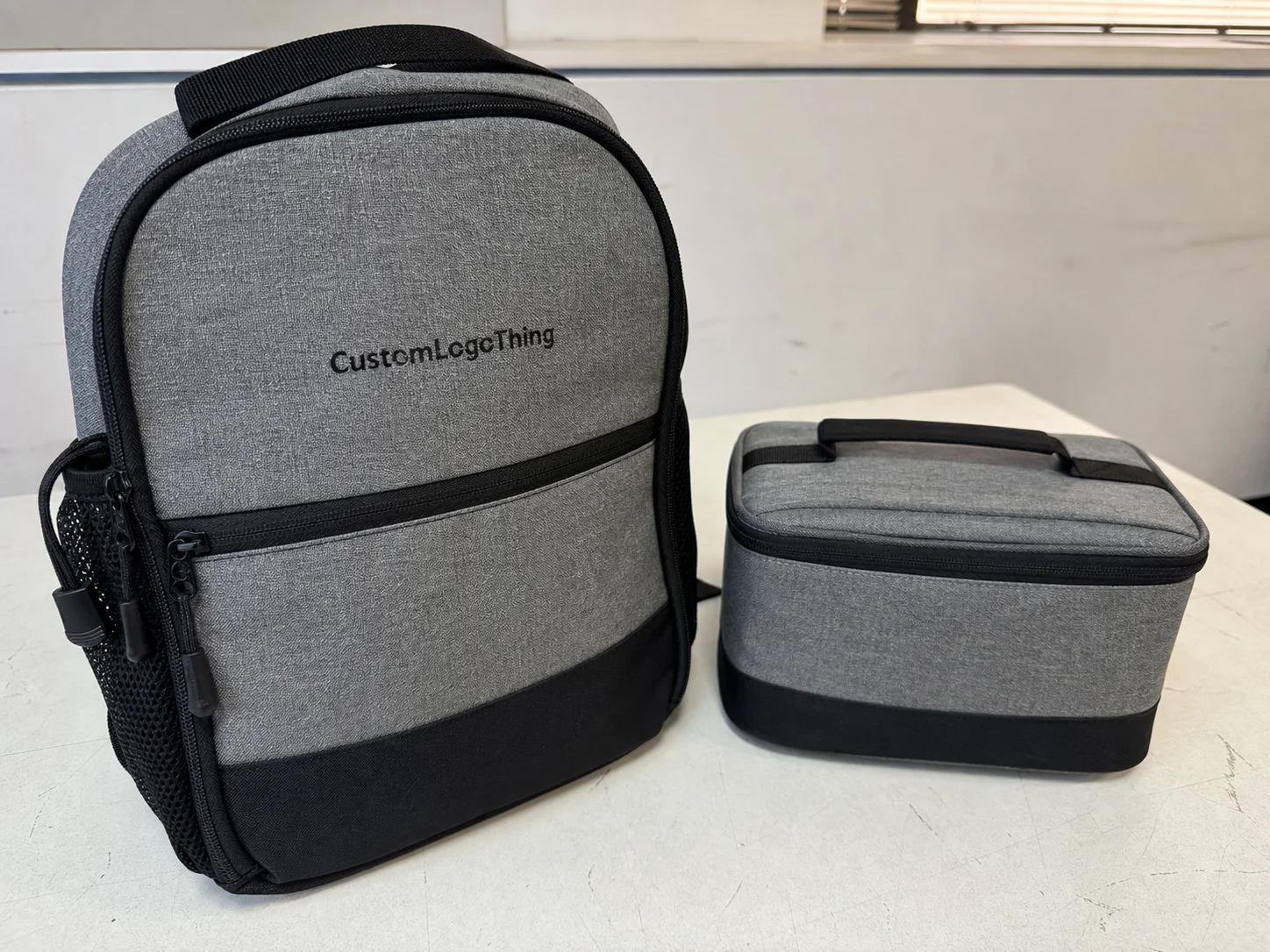
A backpack and lunch box set is used hard enough that weak stitching, poor zippers, and low-grade printing show up quickly. That is the main difference between a usable branded item and a short-lived giveaway.
With personalized backpacks and lunch boxes, the product itself carries the brand experience. If the logo cracks, the straps twist, or the zipper snags after a few cleanings, the set feels disposable no matter how sharp the proof looked.
Different buyers care about different things. Schools usually want easy-clean materials, age-appropriate sizing, and clear branding. Employee kits often need a cleaner, more restrained look. Camps and youth programs usually prioritize durability and easy identification. Retail buyers also have to think about shelf presentation, color consistency, and packaging.
The logo matters, but the bag has to survive daily use. That is what people remember.
The tradeoff is straightforward: better materials and cleaner finishing raise unit cost, but they also reduce replacements, complaints, and returns. A very low quote can become expensive if the product fails early or if the packing and decoration details were not priced correctly.
How the decoration and assembly process works
The process usually starts with artwork review and product selection. The supplier checks the logo file, confirms the decoration area, and decides whether the surface is better suited to screen printing, heat transfer, embroidery, woven labeling, or a patch. This matters because a design that works on a flat proof may not translate cleanly onto a curved panel, seam, or padded section.
Each method has limits. Screen printing works well for bold artwork and larger runs with a small number of colors. Heat transfer can handle finer detail on some fabrics, but the surface has to be compatible. Embroidery adds texture and a more finished feel, though small text can lose clarity. Woven labels and PVC patches are often used when the goal is a cleaner retail-style finish.
Lunch boxes often need a different decoration approach from backpacks because the shell may be insulated, coated, or heat-sealed. A PEVA-lined lunch box may not accept the same method as a polyester front panel on the backpack. In many set orders, that means two different branding methods that still need to look coordinated in color, size, and placement.
Assembly is another production step buyers should not overlook. The supplier may need to pair the correct backpack with the correct lunch box, match colorways, insert cards or hang tags, and pack the set to the buyer’s specification. If the order is going to schools or internal programs, individual polybags may be enough. If it is meant for retail or resale, the carton pack, labeling, and outer presentation need tighter control.
For projects that include packaging or kit assembly, it helps to review the available options on Custom Packaging Products early. The bag spec and the pack format should be planned together.
Cost, pricing, and MOQ factors buyers should compare
Pricing for personalized bag sets is driven by fabric quality, lining, insulation, zipper grade, stitching density, decoration size, number of colors, and whether the order is for a single item or a matched set. A simple polyester backpack with one-color print sits in a very different price band from a padded set with embroidery, custom pulls, and a coordinated lunch box with separate finishing steps.
MOQ, or minimum order quantity, affects pricing in a direct way. Lower quantities usually carry a higher unit price because setup labor and material waste are spread across fewer sets. Higher quantities usually reduce per-unit cost, but they increase upfront spend and require more storage space.
As a rough planning range, a basic two-piece set bought at volume may fall around $6 to $12 per set when construction is simple and decoration is limited. Mid-range orders with embroidery, patches, or better hardware often land closer to $12 to $20. Premium retail-style sets, especially those with custom trims, more complex assembly, or stronger presentation packaging, can move into the $20 to $35+ range. These are only planning ranges, not fixed prices.
Some costs are easy to miss. Separate artwork setup, extra logo versions, multiple colorways, rush handling, Custom Hang Tags, and individual packaging can all change the quote. Freight matters too, because bags are light but bulky and fill cartons quickly.
Compare quotes on the same basis. If one supplier includes assembly, packaging, and sampling while another leaves them out, the lower quote is not actually lower. A fair comparison should use the same materials, decoration method, number of colors, pack-out, and delivery assumption.
For stock-based models, MOQs often start in the low hundreds and rise when the project needs custom fabric, custom hardware, or specialized packing. Orders that need multiple sizes or multiple decoration placements usually require a higher minimum as well.
Material, size, and durability choices that change the final result
Material selection affects appearance, feel, and lifespan. Polyester is common because it balances cost, durability, and print compatibility. Nylon usually feels more premium and handles abrasion well. Coated fabrics can add water resistance and a smoother exterior, but they also change how decoration behaves.
For lunch boxes, the interior matters as much as the shell. Insulated foam, PEVA liners, and wipe-clean coated interiors are common because they help with temperature retention and cleanup. Heat-sealed seams improve spill resistance, while sturdy zippers help the structure hold up over time.
Size should match the actual user. A child-size backpack that is too deep will sit awkwardly on small shoulders. A youth lunch box that is too narrow may not hold common containers. An adult employee set that is oversized can look bulky if it is only meant to carry a notebook, bottle, and lunch.
Durability often comes down to the parts buyers are most likely to skip: reinforced seams, bar tacks at stress points, padded straps, stable bottom panels, and zippers that feel smooth under load. If the set is meant for daily use, those details matter more than decorative extras.
Clean presentation does not have to make production harder. Woven labels, restrained contrast panels, and well-placed zipper pulls can make the set feel deliberate without pushing the order into a more complex build. That often delivers better value than spending more on features nobody notices after the first week.
If the finish is uncertain, ask for a material swatch or close-match sample before approving production. Sheen, hand-feel, and print behavior are easier to judge in hand than on screen.
Production steps and lead time: from artwork to delivery
The production flow is usually straightforward. The buyer sends quantity, target size, artwork, color preferences, and delivery expectations. The supplier confirms materials and decoration methods, produces a digital proof or sample, waits for approval, and then moves into bulk production, inspection, packing, and shipment.
Lead time depends on how much customization is involved. A stock-bodied set with one decoration method is faster than a project that needs custom color matching, custom hardware, imported components, or multi-step assembly. Even with simple artwork, the moving parts can stretch the timeline.
Sample time is different from bulk turnaround, and buyers should treat them separately. A sample may need several days if the supplier is checking print adhesion or stitch quality on the exact material. Bulk production then starts a separate clock. Proof revisions add more time.
In practical terms, planning often looks like this:
- artwork review and proofing
- material confirmation or color matching
- sample review, if the order needs one
- bulk production and final inspection
- pack-out, freight booking, and delivery
For a straightforward run, sample timing may be around 5 to 10 business days and bulk production around 2 to 4 weeks after approval. More customized builds can run 4 to 6 weeks or longer, especially if the order needs special fabrics, multiple decoration methods, or assembled retail packaging. Seasonal demand can stretch those timelines further, and rush service usually costs more.
If the bags are tied to a school launch, a staff rollout, or a retail deadline, build in buffer time. Freight and receiving add another layer, especially when the order crosses regions or needs staged delivery.
Common ordering mistakes that create delays or disappointing results
The first mistake is approving artwork too quickly. A logo that looks balanced on a monitor can become too small, too crowded, or too close to a seam once it is placed on a real panel. The image, the material, and the construction need to be checked together.
Another common problem is choosing a decoration method that does not suit the fabric. Some coated or textured surfaces do not hold fine detail well. Some lunch box materials are too flexible for crisp embroidery or too sensitive for certain heat-transfer processes.
Vague specs cause problems every time. Words like “nice quality” or “standard size” do not give a supplier enough detail to quote accurately. Better orders include exact dimensions, the intended age group, color references, artwork files, expected use conditions, and packing requirements.
Packaging is another place where projects slip. A bag set can look fine when loose on a table and still arrive damaged if straps twist, zippers catch, or the lunch box gets crushed in transit. If the order needs retail presentation, direct mail, or kit assembly, the pack method should be decided before production starts.
Skipping a sample is risky when the order is large, time-sensitive, or intended for resale. A sample gives the buyer a chance to inspect print clarity, zipper movement, seam finish, and the overall feel of the product. That one check often catches problems digital proofing cannot show.
Expert setup tips for cleaner branding and better wear
Design for walking-distance visibility, not just screen clarity. On a bag, the logo is often seen in motion and from several feet away, so bold shapes and readable type usually perform better than fine detail.
Fewer colors can help the run stay cleaner. Simpler artwork is easier to reproduce consistently across larger quantities, and it usually keeps setup more predictable. That does not mean the design has to feel plain. It means the decoration should fit the method.
Neutral base colors often work best for school programs, camps, and staff kits because they hide wear and photograph well. Navy, black, gray, and muted earth tones usually pair more easily with a range of logo colors than very light fabrics do.
Check the structure before you focus on the graphic. A strong zipper, stable strap anchors, and neat stitching matter more than a flashy patch if the bag is going to be used daily.
Ask for a reference sample on the exact material, or as close as possible. That usually tells you more about print quality than a stack of digital proofs.
Good setup also means keeping the artwork practical. Large open areas print more reliably than thin outlines. Small text should be avoided unless the decoration method is known to hold it. For embroidered or patched pieces, the thread path and edge finish should be reviewed with the same care as the logo.
Next steps to compare samples, confirm specs, and place the order
Before placing the order, gather the basics in one place: quantity, user age, size needs, artwork files, color preferences, target delivery date, and the setting where the bags will be used. The more complete the brief, the more stable the quote and the lower the chance of surprise costs later.
Ask for a spec sheet and a proof that shows dimensions, decoration placement, materials, and exactly what is included in each set. If the backpack and lunch box are being packed together, confirm carton count, inner packaging, and set assembly instructions.
Compare two or three samples side by side if possible. That makes it easier to judge fabric hand-feel, zipper quality, stitch neatness, print sharpness, and overall perceived value. One sample can look fine by itself, but a small comparison usually reveals which one is actually better suited to the project.
Before approval, confirm the production schedule, freight method, and sign-off deadlines. That last check keeps the order from drifting, especially if the deadline is tied to a school start, staff rollout, or launch date.
What materials work best for personalized backpacks and lunch boxes?
Polyester and nylon are common for backpacks because they balance durability, print compatibility, and cost. For lunch boxes, insulated foam with a wipe-clean PEVA or coated lining is a practical choice. The right material depends on whether the priority is price, water resistance, premium feel, or easier cleaning after daily use.
How does MOQ affect the price of custom backpack and lunch box sets?
Lower MOQs usually mean a higher unit price because setup and production costs are spread across fewer sets. Higher quantities usually reduce the per-set cost, but they require more upfront budget and more storage space. Compare quotes only after matching the same materials, decoration method, and packaging.
What is the typical turnaround for personalized backpack and lunch box orders?
Simple stock-based projects can often move from proof approval to delivery in about 2 to 4 weeks, while samples may take 5 to 10 business days. More customized sets can take 4 to 6 weeks or longer. Artwork revisions, sample approval, freight timing, and seasonal demand all affect the schedule.
Can the backpack and lunch box be decorated with different logos or colors?
Yes, but each additional logo version or colorway can add setup time and cost. Different placements may also require separate proofs so the buyer can confirm scale and alignment. It is usually better to keep the visual system consistent unless the project has a real reason to vary it.
How do I make sure the set is durable enough for daily use?
Ask about fabric weight, seam reinforcement, zipper grade, and the stitching used at stress points. Request a sample or swatch to check feel and decoration compatibility in hand. The most useful durability checks are practical ones: zipper movement, print adhesion, seam finish, and whether the structure holds after packing.
For brands, schools, and programs that need practical value, personalized backpacks and lunch boxes work best when the order is built around real use, realistic timing, and a decoration method that suits the product.


