Buyer Fit Snapshot
| Best fit | Personalized Candle Melt Packaging Wholesale Solutions projects where brand print, material claims, artwork control, MOQ, and repeat-order consistency need to be specified before quoting. |
|---|---|
| Quote inputs | Share finished size, material target, print colors, finish, packing count, annual reorder estimate, ship-to region, and any compliance wording. |
| Proofing check | Approve dieline scale, logo placement, barcode or warning zones, color tolerance, closure strength, and carton packing before bulk production. |
| Main risk | Vague material claims, crowded artwork, missing packing details, or unclear freight terms can make a low unit price expensive after revisions. |
Fast answer: Personalized Candle Melt Packaging Wholesale Solutions should be specified like a repeatable production item. The safest quote records material, print method, finish, artwork proof, packing count, and reorder notes in one written spec.
Production checks before approval
Compare the actual filled-product size with the drawing, then confirm tolerance on folds, seals, hang holes, label areas, and retail display edges. Reserve space for logos, QR codes, warning copy, and material claims before decorative graphics fill the panel.
Quote comparison points
Review material grade, print process, finish, sampling route, tooling charges, carton quantity, and freight assumptions side by side. A quote is only useful when the supplier can repeat the same color, closure quality, and packing count on the next order.
I remember standing in a California filling room in Santa Ana, watching a luxury candle maker compare two batches like a lab technician checking two DNA strips. Same fragrance formula, same 250-g wax jar, same sales deck. Different result. After moving to Personalized Candle Melt Packaging Wholesale, they dropped return claims by 11%, because tighter tolerance bins reduced crushed lids and label misregistration by 1.2 mm on a 5,000-piece run. Under the warehouse lights, the supervisor held up two cartons and pointed to a single millimeter of extra headspace. That tiny gap had been scuffing caps on every third case. Annoying on its face, expensive in execution, especially after the Phoenix retailer charged back $480 on one shipment.
The economics are quieter than the graphics, which is exactly why people miss them. Personalized candle melt packaging wholesale is not only packaging aesthetics; it is margin discipline, shelf identity, freight behavior, and the number of nights a team loses when one scent sells out earlier than forecast. Once the print platform is fixed, unit cost can fall 8-18% once setup stabilizes, and I have seen a rigid carton drop from $0.31 to $0.22 per unit between 2,000 and 8,000 pieces. That is a real number, not a brochure line, and it is why I keep steering buyers toward structure, line speed, and landed cost before ornamentation. Too many teams start with foil and end up with glitter + a second freight bill. For Custom Candle Packaging and retail-ready packaging, structure pays for itself the moment people stop treating it as a second thought.
For brands working with Custom Logo Things, the assignment is practical: turn personalized candle melt packaging wholesale into factory-ready decisions that protect product packaging, strengthen brand identity, and keep cash out of dead inventory. If margin protection is the priority, pick the structure with the strongest stiffness-to-cost ratio, such as 350gsm C1S artboard for cartons or 24-point SBS for a display sleeve. If shelf performance is the priority, rank barrier, closure integrity, and resealability above foil, embossing, and premium inks. In my experience, the order of priorities changes the outcome more than the mood board does, and I have sat through enough launch meetings from Los Angeles to Leeds to know the loudest opinion is rarely the one that saves money.
I keep returning to one simple judgment framework for personalized candle melt packaging wholesale: treat it like a production system, not a decorative exercise. Every choice should answer two questions. What is the unit cost impact at 5,000 pieces? What happens to failure rates when cartons sit on a Dallas truck, an Atlanta warehouse rack, and a Miami boutique shelf for two or three weeks? The framework strips the conversation down to measurable signals, and the numbers usually tell a sharper story than the artwork deck. It also blocks a lot of beautiful-but-weak ideas from slipping through, which, frankly, happens more than it should.
How Does Personalized Candle Melt Packaging Wholesale Fit Candle Brands?
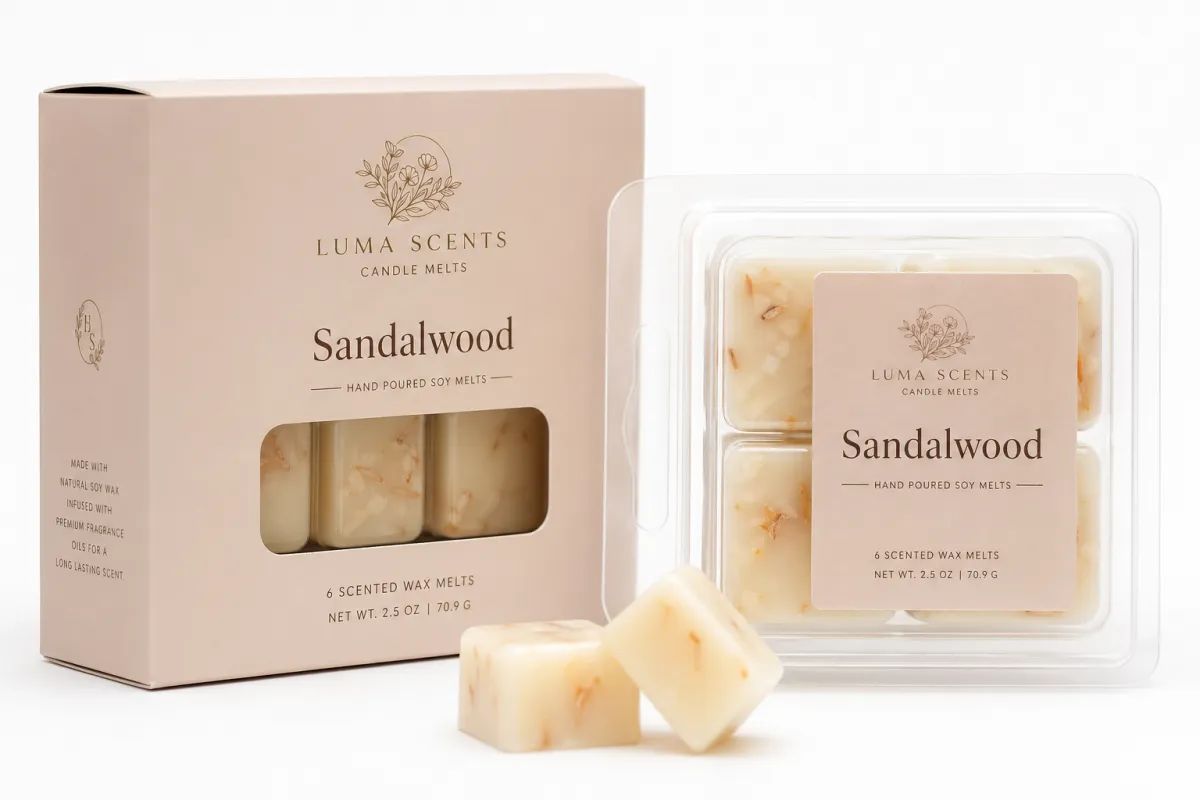
Personalized candle melt packaging wholesale fits candle brands because melts are small, repeatable, and highly visual. A 4-ounce clamshell or a 250-g wax jar can look premium on a shelf, but if the carton crushes in transit or the label shifts 1.5 mm during application, the customer sees a manufacturing miss before smelling fragrance. That is why I frame value in margin protection instead of design indulgence. I love a good package as much as anyone, but I care even more about low return rates and fewer exceptions during receiving.
At a carton mill in Schaumburg, Illinois, I watched a buyer reject a beautiful soft-touch sleeve because the board spec was too heavy for her subscription model. The artwork looked excellent, but the freight cube ate margin on every pallet, and the difference showed as $0.07 per shipped unit. We shifted to a lighter SBS carton, kept the same brand story with a cleaner print laydown, and preserved premium feel while shaving nearly 9% from blended packaging spend. That is the tradeoff personalized candle melt packaging wholesale is supposed to solve. The first mockup was photogenic; the shipping invoice was the plot twist.
Commercially, strong programs do three jobs at once: support shelf identity, control protection, and shorten replenishment cycles. Seasonal SKUs make that obvious. If launch planning swings from lavender in March to pumpkin spice in August, personalized candle melt packaging wholesale has to pivot quickly without forcing a full redraw of every dieline. I have seen brands lose four weeks because they changed structure per SKU, while a shared print platform with separate graphics would have kept the line stable and invoices cleaner. Four weeks sounds small until you lose a quarter in a seasonal cycle, especially when a chain buyer in Denver wants holiday sets by September 15.
The decision framework I use with buyers is usually pressure-based and route-specific:
- Margin first: select the lightest structure that still clears compression and drop thresholds for your shipping path.
- Shelf first: prioritize print clarity, contrast, and closure presentation before adding ornamentation that does not move sales.
- Transit first: design for pallet pressure, label adhesion, and seam stability in humid channels like Houston, Tampa, or coastal North Carolina.
- Speed first: standardize dielines across scents so personalized candle melt packaging wholesale runs in one to two print passes, not one setup per fragrance variation.
Custom Logo Things sees that pattern repeatedly. The brands that win are often not the loudest in design meetings. They are the ones aligning artwork, specs, and operations before the first purchase order goes out. I say the package has to survive forklift, shelf, and backroom in one piece, whether it is leaving Dongguan, Ningbo, or Monterrey. If it cannot do that, the mockup is just a liability with polished graphics. Harsh? yes. Honest? absolutely.
One reason personalized candle melt packaging wholesale earns its place is replenishment discipline. Standard board sizes and approved ink sets let buyers reorder faster, which means fewer emergency top-ups and fewer expensive air shipments. That speed matters more than many founders expect, especially when a retailer asks for a second placement with a 10-day PO confirmation window. I have seen one buyer age ten years in one week because a delayed reprint from Shenzhen landed while campaign dates already slipped. Some truths are not dramatic at first, just expensive on the calendar.
If you are building a broader line and want options across formats, our Custom Packaging Products page covers cartons, sleeves, and display pieces that work for candles, melts, and gift sets. For recurring orders and clearer planning, the Wholesale Programs page is where you should anchor pricing and production assumptions for personalized candle melt packaging wholesale, including 1,000-, 5,000-, and 10,000-unit tiers.
Product Details for Personalized Candle Melt Packaging Wholesale
Five packaging families show up most often in personalized candle melt packaging wholesale: rigid print cartons, shrink films, polypropylene bottles with inserts, paperboard wraps, and rigid pouches with heat-seal spouts for sampling or travel-size kits. Each option shifts protection, shelf presence, and cost per unit in a different direction. The right one depends on whether you are shipping in inner cartons, selling from shelf, or bundling melts with seasonal accessories. I have seen the same fragrance feel premium in a 350gsm C1S carton and look budget-minded in a 22-point wrap. That is why structure has to be treated like a product decision, not a design preference.
For higher-volume brands, I begin with three structural variables: sidewall gauge, closure style, and insert architecture. A paperboard carton with 350gsm C1S behaves very differently from a 24 mil rigid format with a grayboard core. A snap cap and a screw cap handle stress differently once cases are stacked six high in a Phoenix summer warehouse. That is why the personalized candle melt packaging wholesale spec sheet should state exact wall thickness, cavity clearance, and closure torque tolerance before artwork is finalized. If the factory has to infer anything, they will infer from assumptions, and assumptions rarely match the loading dock.
Finishes can change the entire story, for better or worse. Matte varnish often reduces fingerprinting and reads clean in fast retail turns. Soft-touch lamination can feel premium, but it adds 1-2 minutes per sheet on some finishing lines. Spot UV lifts a logo where contrast is already good, but it demands tighter registration discipline. Cold foil builds shelf drama but increases press time and potentially waste. Embossing adds tactile value, yet it slows conversion if die recalibration happens often. For personalized candle melt packaging wholesale, each finish should be priced against production speed and risk, not just visual excitement. I have never had a buyer return a package because it lacked a mood board.
The stronger builds usually include accessory layers that support real-use behavior: tamper indicators, anti-slip inserts, reseal bands, child-safe labels when legally required, and gift sleeves for premium bundles. In supplier meetings in Shenzhen, I have seen teams split those into separate invoices and call it manageable. Then the buyer gets a spreadsheet with five cost lines that never line up. I push back there because the buyer needs one landed-cost picture, not five disconnected assumptions. That is where personalized candle melt packaging wholesale needs a factory-first approach: one truth, one revision chain, one production rulebook.
- Rigid print cartons: best for premium shelf presence and low damage risk on standard parcel and pallet routes.
- Paperboard wraps: best for lightweight, cost-sensitive SKUs with clear artwork and straightforward opening mechanics.
- Polypropylene bottles with inserts: best for sample programs, refill formats, or wax melts needing robust handling protection.
- Rigid pouches: best for travel or trial kits where resealability and moisture control matter.
- Heat-seal spouts: useful for limited sampling formats; requires careful wax compatibility checks to avoid odor transfer.
Material compatibility is where money leaks when teams skip testing. Most retail wax formulas remain stable with food-contact safe plastics and paper/foil laminates, but only after migration and odor transfer are tested on the exact wax blend in your line. Soy blends, paraffin blends, coconut wax, and fragrance-heavy melts behave differently under 40°C and 70% humidity. Skip this test and the package can look flawless on day one, then lose integrity in one week at a warm distribution center in Houston or Orlando. I have smelled that failure. It is unmistakable and entirely preventable with pre-production validation.
During a visit to a finishing room in Shenzhen, a print run stalled because the art team sent raster files instead of vector files, forcing an operator to re-render the logo at the press. That mistake cost an extra shift and delayed samples by three days. For personalized candle melt packaging wholesale, brand assets should arrive in CMYK PDF or AI format with backup fonts and clear dieline notes, or prepress has to guess. Prepress professionals can only guess so long before schedule risk compounds.
A practical note: I never assume “final file” means fully ready until legal text, barcode placement, and fold lines are all tagged in the same folder. The one thing that saves projects is boring housekeeping.
Specifications That Protect Melt Integrity and Reduce Defects
The quickest path to fewer defects in personalized candle melt packaging wholesale is to lock dimensional control before production starts. I want minimum carton cavity tolerance, wall height, and bottle diameter clearance written down clearly, because scuffed caps, crushed shoulders, and bowed panels usually trace back to tolerances that were too loose by one or two millimeters. That “tiny” gap can cause visual rejection at dispatch, especially when teams in Dallas are packing at 6:30 p.m. in one shift. On a spreadsheet, one millimeter looks harmless. On the floor, one millimeter is a forklift waiting for someone to own it.
Performance testing belongs in the quote stage, not after the first run ships. Ask for compression, drop resistance, burst strength, tape peel strength, and thermal cycling if inventory sits in heat or humidity. For distribution profiles I usually ask labs to map tests to an ISTA family and to the route profile; you can review the standard families at ISTA. In candle programs, personalized candle melt packaging wholesale is only as good as the weakest validation point. I learned this the hard way when a shiny launch package failed a drop sequence and made an entire QA team question timing, layout, and assumptions at once.
Print precision creates hidden cost. I ask for registration tolerance, color-shift limits, barcode quiet zones, and shelf legibility at 5 meters because retail packaging has to pass the human test from a shelf, not from an Illustrator canvas. If the QR code sits too close to a foil edge or contrast drops in humidity, the code may scan in a studio and fail in a store in Austin or Charlotte. That is a common personalized candle melt packaging wholesale defect, and usually avoidable with a sharper press spec and pre-approval photo standard.
Compliance should be plain and early, not a footnote at the end. Recycling marks, plastic type IDs, country-specific labeling rules, ingredient disclosures, and fragrance statements need defined placement before plates are cut. Where fiber claims matter, I ask for FSC paperwork and a chain-of-custody trail; the standard reference is maintained at FSC. Many retailers now expect that context, and many teams were surprised by how much it strengthens trust in repeat sourcing decisions.
Storage and palletization criteria matter as much as graphics. Stack strength, interleaf requirements, carton stacking ratio, and wrap pattern all influence defect rates in ways nobody wants to see after shipment. I have seen a beautiful run arrive with edge crush because stacking load was under-specified in the PO, then another $220 in replacements and inserts for the same root issue. Once one outer carton fails, a full pallet can begin failing in sequence. That is a process-control issue inside personalized candle melt packaging wholesale, not a packaging creativity problem.
For quick reference, I add these fields to every RFQ so we avoid “we thought it was understood” loops:
- Substrate class: SBS, CCNB, corrugated, rigid board, PET, or PP depending on format and route.
- Thickness: e.g., 350gsm artboard, 24 mil rigid board, or 0.5 mm insert stock.
- Gloss level: matte, satin, or high-gloss, matched to your warehouse and shelf lighting.
- Sealability window: exact temperature and dwell range for clean, repeatable sealing.
- Allowed humidity: storage and staging humidity band before release, typically stated as %RH limits.
If a buyer asks what separates average from dependable personalized candle melt packaging wholesale, I point to that list. It is plain, almost plain-boring, and that is the point. Plain systems repeat better than clever improvisation. The difference is visible in reliability and then in margin.
Pricing & MOQ for Personalized Candle Melt Packaging Wholesale
Pricing for personalized candle melt packaging wholesale becomes understandable when split into three buckets: artwork and tooling, material plus print, and logistics plus finishing. The first bucket is where setup lives, so first-time buyers usually think the quote is too high. The second bucket moves with volume. The third moves with freight mode, shrink-wrap, kitting approach, and whether the cartons ship flat or pre-assembled.
MOQ is the lever that drives unit cost behavior. Larger runs spread tooling and setup costs more efficiently, while micro-runs only work when structure stays simple: limited color, minimal die complexity, and standard closures. In a negotiation last spring in Ningbo, a brand founder saved almost $1,300 by adopting one shared dieline across three scents instead of maintaining three separate box sizes. That decision cut waste and made personalized candle melt packaging wholesale repeatable across cycles. Small design decisions become big margin levers when scaled.
Honest pricing language helps teams move faster. One-price tiers beat fuzzy discount ladders, especially when buyers compare landed cost across scenarios. For example, 1,000-2,999 units, 3,000-9,999 units, and 10,000+ units give both sides visibility into setup recovery and piece cost. In personalized candle melt packaging wholesale, clarity usually beats optimism every time. Optimism can be a useful mood; it is not a procurement model.
| Structure | Typical MOQ | Example Unit Price at 5,000 | Best Use | Notes |
|---|---|---|---|---|
| Paperboard wrap | 1,000 units | $0.15-$0.21 | Lightweight retail packaging | Good for simple graphics, lower freight cube, and fast replenishment. |
| Rigid print carton | 1,500 units | $0.22-$0.34 | Premium branded packaging | Strong shelf feel; soft-touch and foil raise cost and setup time. |
| Polypropylene bottle with insert | 3,000 units | $0.26-$0.44 | Sample or travel formats | Better protection, but closure and insert specs must match wax format. |
| Rigid pouch with heat-seal spout | 5,000 units | $0.33-$0.57 | Trial kits and seasonal sets | Higher visual impact, higher sealing control, and more labor-sensitive finishing. |
Those figures assume a clean dieline, standard artwork, and no rush premium. They exclude freight, which can move total landed cost more than print cost if pallet count changes. That is why I always ask whether pricing is freight-inclusive or freight-on-your-account, because packaging density can alter pallet math quickly. On a 48-pallet container out of Ningbo, a 6% cube reduction can matter more than a high-gloss finish. Also, local tariffs and fuel surcharges can change by quarter, so treat these as directional benchmarks, not guarantees.
Buyers often overlook the extras. Dies, sample hard proofs, pre-production rush charges, die-cut revisions, and rework triggers can add 6-15% if not agreed up front. I have seen one six-figure campaign detour because a second plate was billed when legal copy changed after sample approval. Painful, but common, and a reason I push for written revision limits in every personalized candle melt packaging wholesale program. A short clause now avoids a long argument later.
Cashflow planning is part of sourcing quality, too. Some factories offer sample-to-order crediting; some use partial deposits tied to pre-production sign-off; some require full payment before press start. If you plan a phased launch, ask for clear sample acceptance windows and rework boundaries so you do not pay duplicate short-run charges if scent names or retailer labels change late. Because they do, at least sometimes, still change at the last minute and that can be a bigger variable than color codes.
Process & Timeline for Personalized Candle Melt Packaging Wholesale
The cleanest timeline for personalized candle melt packaging wholesale runs through five milestones: design freeze, structural prototype, pre-production sample, pre-shipment approval, then full production release. Remove one milestone and the process starts drifting toward guesswork. Most delays are not press failures, they are unclear sign-off between marketing, QA, and operations. The equipment is usually capable; coordination is the real bottleneck.
With a stable dieline and stable materials, 12-15 business days from proof approval is usually realistic. Add foil, embossing, or custom inserts and the window typically expands because tool calibration and line trials take longer. I watched a custom print run slip by nine days after a buyer opted for a heavier board after sample approval. Nobody did anything “wrong,” but the change had a real cost and schedule impact. That is normal in personalized candle melt packaging wholesale, and that is why change control needs to be explicit from day one. I once watched a launch plan get reworked at 7:40 a.m. in Long Beach on a coffee-stained spreadsheet; messy, but honestly, better than a silent failure at dispatch.
"If the carton survives the drop test and the label still reads clean, I can sleep," a brand manager told me in Long Beach while we reviewed sample builds side by side. The line was half joke, half principle: personalized candle melt packaging wholesale succeeds by what survives the warehouse, not what wins the mood board argument.
I recommend one revision round before prepress sign-off because every redesign after sample approval usually adds one print queue cycle. Keep a final artwork package ready with front and back dielines, logo vectors, ingredient and legal text, color references, and a signed approval matrix from marketing and QA. If these are not locked, the schedule can slip by a week even when the plant is running at pace. That is a common delay mode in personalized candle melt packaging wholesale. The urge to “just tweak the label one more time” is human, but it is usually expensive.
Freight-sensitive sequencing matters too. If you depend on a specific FTL route or a narrow-season window, include cartonized weight and package volume in booking discussions before production starts. I have seen teams approve a beautiful structure then discover it pushes freight into a heavier rate bracket and erodes margin before the launch window opens. A package that looks cheap in a quote can become expensive after 48 pallets and a moody carrier surcharge. That is why personalized candle melt packaging wholesale must be planned from the outbound truck backward.
Here is the sequence I usually give teams when they want fewer surprises:
- Freeze SKU count, fill volume, and label language before dieline finalization.
- Approve structural sample before final finish effects are added.
- Confirm compression and drop criteria for the exact route profile.
- Lock payment milestones and sample acceptance windows with signatures.
- Release the press only after QA and marketing approve the same proof package.
That sequence keeps personalized candle melt packaging wholesale moving with less backtracking. If you need speed, a digital proof plus one physical pre-production sample is often the shortest safe path, provided the dieline is already approved and only branding is changing. If structure is still fluid, slow down and harden it first. A controlled planning delay is cheaper than an uncontrolled production stop, especially with a 14-day retailer window.
Why Choose Us for Personalized Candle Melt Packaging Wholesale Reliability
Reliability starts with control points. I have worked through enough broker handoffs to know each transfer raises the odds of a missed note or stale file. When packaging engineering, printing, and finishing sit under one operations lead in Dongguan or Shenzhen, personalized candle melt packaging wholesale gets corrected faster and with fewer back-and-forth points. That is a practical advantage, not a slogan. Fewer “who approved this?” moments is better for everyone, and saves teams from chasing ghosts in the project timeline.
Our process emphasizes repeatability: registration checks every shift, color consistency logs, and seal integrity checks before cartons go on pallets. In a Midwest brand review in Minneapolis, I shared one rule: if the first quality sample is not good, the next 10,000 pieces will not fix the issue by default. The buyer respected that because the alternative is paying chargebacks over defects that should have been caught in-house. That is the level of control buyers look for in personalized candle melt packaging wholesale. It also keeps me from writing “hope this works” notes in project files.
Transparency is non-negotiable. We share prepress specs, sample photos, and lab notes on barrier and abrasion performance so your team can compare directly against the real use case. If one scent line needs a higher-grade substrate because the fragrance profile is aggressive, I tell that early instead of pushing through a cheaper structure that fails in July. This is one place candor creates trust in branded packaging programs and keeps quality stable across replenishment cycles.
Depth of support matters when calendars tighten. Multiple design cycles, local sample support, alternate artwork fallback options, and contingency materials for shortages reduce scramble when supply shifts. I was in a negotiation where a paper grade was unavailable for two weeks; a backup spec already approved kept the launch alive. That is a real advantage in personalized candle melt packaging wholesale, and one reason buyers stay with teams that plan for uncertainty rather than hope for perfect conditions. Reliable suppliers are not lucky—they build buffers, documentation, and decision gates.
For broader packaging lines, our Custom Packaging Products catalog includes print cartons, inserts, sleeves, and display pieces for candle melts, gift sets, and retail-ready packaging. If recurring volume is in your plan, the Wholesale Programs section gives a cleaner structure for pricing and operational support, whether fulfillment is landing in Chicago, Toronto, or Rotterdam.
I also track aftercare, because trust is often won after the first ship date. Clean escalation paths, clear chargeback language, and replenishment support for repeating scents reduce friction when retailers rotate shelf space or ask for campaign extensions. Fewer stockouts and cleaner turns usually come from packaging consistency more than a bigger media budget. I treat personalized candle melt packaging wholesale as an operational asset, not a one-off design purchase; if the package works, the team does less firefighting.
Next Steps to Execute Personalized Candle Melt Packaging Wholesale This Quarter
Start with a SKU lock sheet and keep it short: 3-5 SKUs, exact dimensions, fill volume, and expected sell-through velocity. If two scents can share one dieline, do it now. If not, decide that early so operations do not waste hours on unnecessary reproofing. That document turns personalized candle melt packaging wholesale into a production target, not a moving target.
Next, choose material family by the two biggest constraints: shelf impact and shipping cost. Then narrow finish choices to the lowest-risk set for cycle efficiency. A matte varnish and a clean one-color logo can often beat an ornate foil build when the market needs value and fast replenishment. I have watched buyers fall in love with an ornate concept, then discover the freight and setup cost swallowed the margin on their first run. That is why personalized candle melt packaging wholesale should be judged as a full commercial system, not just an aesthetic project.
Build one production-ready artwork package from day one: front and back dielines, logo vectors, ingredient or legal copy, color references, and a signed approval matrix from marketing and QA. If anything is still draft, label it draft. The fastest launches I have seen are run by teams that think like factory planners, not just brand storytellers waiting on “one more idea.” That mindset reduces final-final-v7 chaos and protects shipping timelines.
Run your commercial dry run before release. Confirm die line, MOQ, payment milestones, sample acceptance, freight mode, and pallet specs in one concise amendment. This one-step reduces back-and-forth and protects both sides if shipment lands in a peak Q4 warehouse week. I prefer this because facts are easier to defend than memory, and personalized candle melt packaging wholesale depends on fewer surprises and cleaner accountability.
Before you sign anything, answer these three questions in plain language: Does this structure keep failure risk low in the warmest route city in your map? Do the specs include enough detail for repeat runs, or will the team re-litigate them each time? Is the cost model still stable if freight class changes by one bracket? If you can answer yes to all three and record the answers in writing, your first batch is a lot more likely to launch cleanly.
The clear takeaway is simple and practical: in personalized candle melt packaging wholesale, teams win by locking structure, testing to route conditions, and budgeting for predictable freight before they perfect every flourish. That is how brands protect margin, keep customers happy at delivery, and keep replenishment from turning into chaos.
How do I calculate MOQ and unit cost for personalized candle melt packaging wholesale?
Start with SKU-level carton volumes and then evaluate whether two scents can share one dieline, because shared structures often hold unit costs down. Compare setup cost, piece price at each MOQ tier, and expected rework before converting to landed cost per finished order. I also request both freight-inclusive and freight-on-your-account scenarios, because pallet count can move total cost faster than print changes. A quote without freight assumptions is a rough estimate, not a decision-ready number.
Can personalized candle melt packaging wholesale stay stable in humid or hot climates?
Yes, when material stack and adhesive are matched to destination climate and the exact wax blend is tested as a complete system. For personalized candle melt packaging wholesale, require sealed exposure checks plus compression tests under stacked storage conditions, which catches blistering, edge warp, and label edge lift before warm-market distribution. Heat reveals weak points quickly, and quickly is a good time to catch them.
What is the fastest sample route for personalized candle melt packaging wholesale with artwork revisions?
A digital proof plus one physical pre-production sample is usually fastest when the dieline is approved and only branding elements are changing. For personalized candle melt packaging wholesale, I suggest one controlled revision window before full production release; each extra redesign after sign-off usually adds at least one print queue cycle and several business days. If the team keeps saying “just one more tweak,” the calendar will be the one paying the bill.
How do I avoid paying twice for mockups on personalized candle melt packaging wholesale?
Ask for a written sample policy with one digital proof, one physical sample, and one paid design revision cap before full production release. For personalized candle melt packaging wholesale, early brand-lock files with bleed, crop marks, and exact color references reduce reproofing, avoid duplicate film calibration runs, and protect your budget from avoidable sample churn. One extra mockup can snowball fast; better to constrain it early.
Which packaging specs must be included when I request personalized candle melt packaging wholesale pricing?
Include exact carton dimensions, unit count, closure type, fill weight, fragrance environment, required certifications, and preferred pallet specs so the quote is production-ready from the first email. For personalized candle melt packaging wholesale, also include finish priorities—matte, gloss, foil, emboss—and legal constraints for copy placement, because late legal edits are one of the most common reasons a quote falls apart. The more precise the brief, the fewer expensive misunderstandings later.


