Personalized capri sun labels look small on a spec sheet and surprisingly visible on a table. That is the appeal. A drink pouch is a compact surface, but because it sits in hand level, photo level, and ice-tub level, even modest design changes have an outsized effect. A clean label can make a casual drink station feel organized, branded, and intentional without adding much cost or labor.
Buyers usually arrive at this product for practical reasons, not theory. They need something for a birthday party, school event, baby shower, graduation table, team banquet, charity fundraiser, or a short promotional run where the drinks are more visible than the decor. In those settings, a custom label does two jobs at once: it covers the generic look of the pouch and turns the drink into part of the event design. That is a useful ratio of effort to impact, which is why the format keeps showing up in fast-turn packaging orders.
There are also different ways to buy them, and the choice affects everything downstream. Some orders are simple sticker overlays. Others are wrap-style labels that cover more of the front face. A few are delivered pre-applied for events where labor is the bottleneck. Those are not interchangeable products. Size, adhesive strength, finish, and application method all change the quote, the proofing process, and the risk of failure once the drinks hit ice.
Why personalized capri sun labels stand out at events
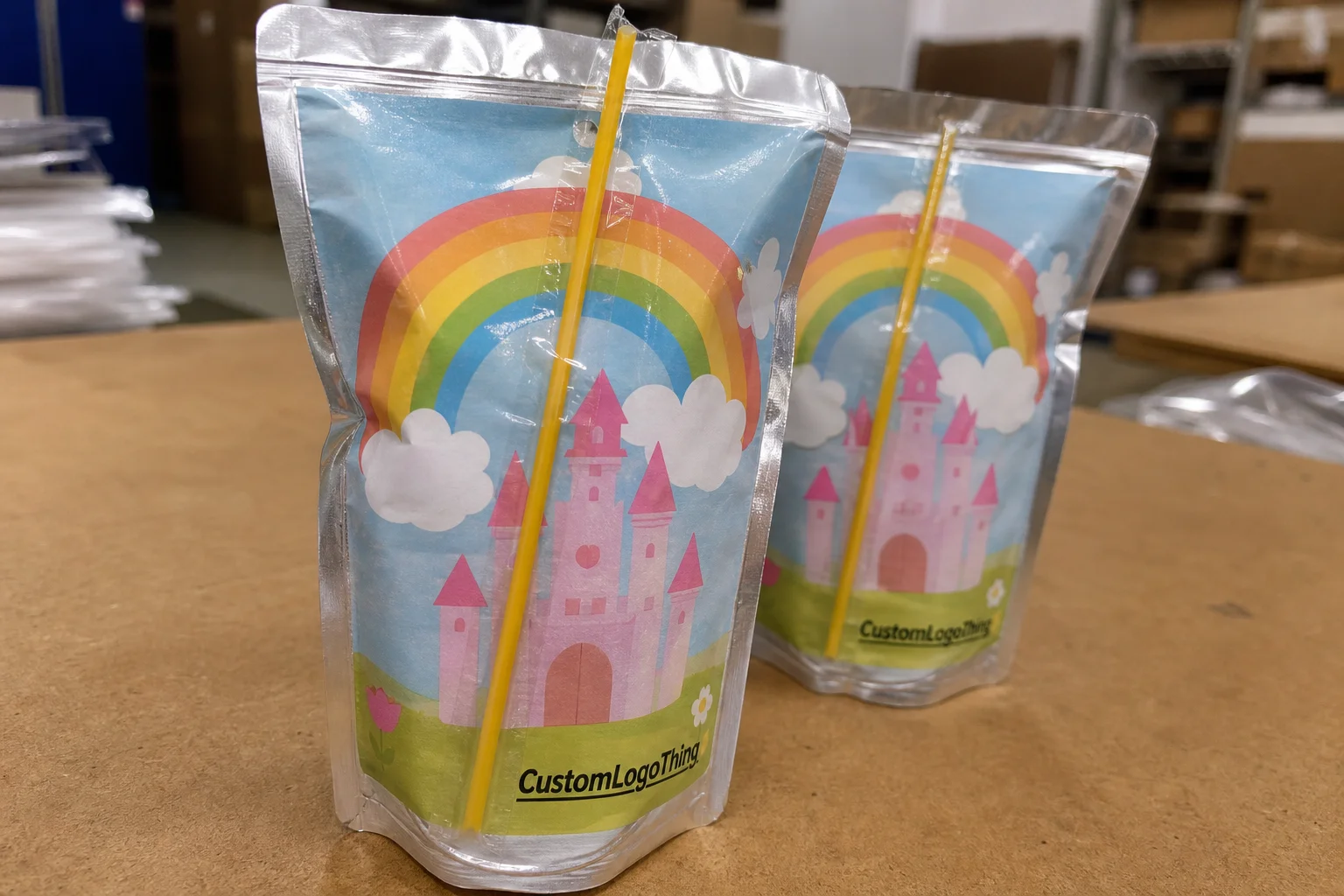
A good small-format label works because it stays legible at a glance. The pouch is not a billboard, and it should not try to be one. With personalized capri sun labels, the goal is fast recognition: name, theme, logo, or color story should read immediately without crowding the face panel. If a guest has to squint to understand the design, the label is doing too much and too little at the same time.
They are especially effective at events where people move quickly. Guests grab a drink, step aside, and often end up in photos before they sit down. That means the label has to survive real-world viewing conditions: mixed lighting, condensation, fast handling, and a distance of a few feet. A well-matched label stands out in pictures even when the rest of the table is simple. A poorly sized one stands out too, but for the wrong reason.
That is one reason the format is used across such a wide range of events. A school function wants easy identification and low waste. A baby shower wants the drink table to match the rest of the decor. A corporate mixer may need a logo and event name that feels polished without looking overproduced. The same pouch can serve all three, but the design priorities are different. One may favor bright color and playful type. Another may need restraint and plenty of white space. The label should follow the setting, not fight it.
There is a practical distinction buyers should make early: are they covering the existing front panel, or are they trying to reframe the whole pouch? The first option is cheaper and faster. The second creates a stronger custom effect but usually requires more precise measurements and a label shape that respects the seams and curves of the package. If you skip that distinction, you end up comparing quotes that are not even talking about the same thing.
For buyers balancing multiple event pieces, it helps to keep the drink label aligned with the rest of the printed set. Matching the same font family, color palette, and logo treatment across the project matters more than adding decorative extras. If you already have a packaging file system in place, starting from Custom Labels & Tags can save time when you need the same look across more than one item.
If the pouch will sit in ice, choose the stock and adhesive first. Design cannot rescue a label that lifts at the corners after twenty minutes.
That is the part many first-time buyers underestimate. A label is judged in use, not in a proof PDF.
Production process and turnaround timelines
The best label orders usually follow a boring sequence, and that is a good thing. Measure the pouch. Confirm the format. Prepare the artwork. Review the proof. Approve only after the fit and copy are checked line by line. Skipping any of those steps tends to create problems later, and the problems are usually expensive because they show up after printing rather than before.
Production starts with dimensions. A label designed for one drink pouch does not automatically fit another, even if the packages look similar in a product photo. Small changes in width, seam placement, visible panel height, or rounded corners can alter the final result enough to make a design feel off-center. That is why a template or dieline matters. A rough guess from memory is not enough.
After dimensions come artwork checks. This is where many delays hide. Low-resolution logos, missing fonts, spelling corrections, and resized graphics can all push back proof approval. If a logo was pulled from a website or social image, the file often looks passable on screen and soft in print. Clean vector art is faster to approve and less likely to produce surprise issues in the final file.
Standard timing is usually straightforward, but only if the artwork is ready. Proofs can come back in about a business day, and production often takes several business days after approval. Shipping adds another layer. If the order is tied to a fixed event date, transit should be treated as part of the lead time, not a separate step. A three-day print window is not useful if the boxes still need to cross the country.
Rush work is possible, but there is a reason it costs more. It compresses proof review, print scheduling, finishing, and freight into a narrower window. That leaves less room for correction and no room for indecision. If the event date is non-negotiable, build a buffer of several business days at minimum. More if the artwork is not final or if the order includes unusual finishing.
For larger programs, consistency matters as much as speed. If the label is part of a broader package, keep the file naming, dimension specs, and proof notes organized so revisions do not multiply. A clean production path is cheaper than a clever one. And if the same event set includes other printed pieces, keeping the art system aligned with Custom Labels & Tags prevents avoidable mismatches between components.
Material, adhesive, and finish choices that affect fit
Material choice is where the label either behaves well or becomes a maintenance problem. Paper stock is the least expensive option, and for a dry indoor event it may be enough. Once cold drinks, ice tubs, condensation, or long handling enter the picture, film-based materials usually make more sense because they resist moisture and curling better than standard paper.
Adhesive is just as important as the face stock, and the two need to be considered together. A stronger adhesive helps a label stay put on a slick pouch surface, but it can make removal messier after the event. A lighter adhesive is easier to peel off, but it may fail early if the drinks are chilled for hours. There is no universal adhesive that solves every use case. The right answer depends on whether the product needs to survive a short display, a full party table, or transport in a cooler.
Finish changes both appearance and handling. Gloss adds brightness and tends to read more vividly under venue lights. Matte lowers glare, which can improve legibility in photos and in rooms with mixed lighting. Soft-touch can feel premium, but it adds cost without improving moisture resistance on its own. That distinction matters. A premium feel is useful only if the label still stays in place.
Fit problems usually come from design assumptions, not printing defects. A well-printed label can still look wrong if the art ignores the pouch curve, the seam, or the portion of the front that is actually visible when the package is handled. Designers often treat the pouch like a flat flyer. It is not. The footprint is narrow, and the visible area is smaller than people expect once folds and margins are accounted for. Ask for a dieline or template before the artwork is laid out.
For buyers who care about shipping durability or material sourcing, a few outside references are useful. Packaging testing standards such as ISTA help frame how printed products behave in transit. For paper-based options, some buyers also review whether stock is sourced under FSC guidelines before approving the spec. Those questions do not make the label more decorative, but they do make the buying decision more defensible.
Cost, MOQ, and quote variables to compare
Pricing for personalized capri sun labels is shaped by the same variables that drive most short-run packaging work: quantity, size, print method, material, finish, proofing, and how much manual handling the job requires. The first quote often looks simple until you compare it against a second quote with a different stock, different adhesive, and fewer proof rounds. Then the real cost picture appears.
For label-only pricing, before shipping and before any application labor, these ranges are a realistic starting point:
| Order Size | Typical Unit Cost | Best For | Notes |
|---|---|---|---|
| 50 to 150 pieces | $0.70 to $1.50 | Small parties, sample runs | Setup cost has a large impact here. |
| 250 to 500 pieces | $0.35 to $0.85 | Most private events | Good balance of price and flexibility. |
| 1,000 to 5,000 pieces | $0.18 to $0.45 | Brand activations, repeat use | Pricing improves when the art stays the same. |
Minimum order quantity matters more than many buyers expect. Small event work benefits from low minimums because the goal is usually one date, one theme, one final count. Larger minimums make more sense for recurring promotions or resellers who can spread stock across multiple uses. The useful question is not whether an MOQ is low or high in isolation. It is whether that minimum matches the actual use case.
Several hidden costs should be kept in view. Shipping can be meaningful on a lightweight product if the timeline is tight. Extra proof rounds can add both time and labor. Artwork cleanup is often necessary if the source file is low resolution or if the design needs resizing. If the team is hand-applying labels, that labor should be counted too. It rarely stays invisible once the order lands on a real table.
A quote is most useful when it breaks the job into parts: print, finish, application, and freight. That makes comparison possible. A single lump sum hides too much, and buyers end up comparing numbers that are built on different assumptions. That is how a cheaper quote becomes the more expensive one after revisions, freight, and rework are included.
Step-by-step ordering workflow for a clean result
The ordering process should be simple enough to repeat without drama. Measure the pouch. Pick the format. Build the artwork. Check the proof. Leave time for shipping. The sequence sounds basic because it is. Most problems show up when buyers reverse the order and design first, then discover the label shape later.
- Measure the visible face. Confirm width, height, and any sealed or curved areas that should stay clear.
- Choose the format. Decide between loose labels, sheet labels, roll labels, or pre-applied packaging based on who will handle the job.
- Prepare the artwork. Use vector logos if possible, keep text away from trim edges, and avoid very small copy that will disappear in print.
- Review the proof. Check spelling, alignment, contrast, and any QR code or barcode placement before approval.
- Order a buffer. Add extras for waste, damaged pieces, or a count change close to the event date.
Artwork quality matters more than decorative complexity. Strong contrast is usually safer than fussy gradients. A logo with one or two clean colors often reads better on a small pouch than a design packed with effects. If the event space has mixed lighting, a darker type on a lighter background is easier to read than the reverse. Small-format packaging rewards clarity and punishes excess.
If the label includes a barcode, QR code, or variable message, leave more spacing than you would on a larger product. Those elements need room around them to scan properly. Poor scan rates are often caused by a design that looks polished but gives the code too little quiet space. That is a technical failure, not a print mystery.
For recurring programs, file organization becomes part of quality control. Save the measured template, approved copy, and final proof together so the next order starts from the same facts instead of a new round of guesswork. That is especially useful if the same art needs to be reused across related packaging items from Custom Labels & Tags.
Common mistakes that waste labels and budget
The most common failure is assuming a close-enough size will work. It usually does not. Drink pouch dimensions vary enough that a label sized for one supplier may leave odd gaps on another or overlap an edge that should remain open. A phone photo is not a measurement system.
Artwork quality is the next weak point. Logos pulled from social media or a website header often print softly because the source file is too small. Tiny type is another problem. What looks elegant on a monitor can become illegible once it is reduced to pouch scale. The smaller the label, the less tolerance there is for busy design choices.
Condensation is where many paper-based orders fail in plain sight. A dry proof can look fine, then the actual product sits in ice and starts lifting at the corners. If the drinks are meant to stay cold, ask for moisture-resistant material and a suitable adhesive. Do not assume a label that survives handling will also survive a cooler.
Timing mistakes are just as costly. Ordering the week before the event leaves little room for proof revisions, freight delays, or missing artwork files. Approving a proof without reading the copy carefully is another expensive habit. Printers print what gets approved. They do not repair typos after the fact.
Application labor is easy to overlook. Hand-labeling 200 pouches takes time, even for a tidy team. The more units involved, the more that time starts to matter. In some cases pre-applied labels make more sense because they reduce error and save labor, even if the line item is higher. The cheaper option is not always cheaper once staff time is counted.
A small overage is usually smart. A few extra labels absorb tear-offs, misalignment, and the one pouch that arrives scuffed or slightly different from the rest. Reordering for a handful of missing units is a poor use of time and money. The better approach is to build a modest buffer into the run from the start.
Expert tips before you place the order
Ask for the dieline before design begins. Not after. That one step reduces most fit problems because the artwork is built around the real label footprint rather than a rough estimate. If the supplier cannot provide a template, slow down and ask how the label is meant to sit on the pouch before approving anything.
Request a sample or test proof if the labels need to handle ice, transport, or long display time. Digital mockups can hide weaknesses that only appear in use. A label may look clean on a monitor and still fail after twenty minutes in a cooler. That is not a mystery; it is a mismatch between the material spec and the environment.
Before payment, check a short final list:
- Confirmed pouch measurements and visible face area
- Final artwork files in the correct format
- Proof approved with spelling checked line by line
- Quantity includes extras for waste and last-minute additions
- Event date leaves room for transit and one revision cycle
- Application plan confirmed, either on-site or before delivery
If the drink label is part of a larger event package, keep the visual system consistent. The label should feel like it belongs with the rest of the printed material, not like it was ordered separately in a hurry. Coordination usually matters more than ornament. A simple, aligned look almost always beats a busy one.
My practical rule is to compare quotes on the same spec, not just the final number. Ask what stock is being used, how the adhesive behaves on cold surfaces, how many proof rounds are included, and whether turnaround includes shipping or stops at print completion. Once those details are lined up, the quote that looked cheapest often stops being cheap. With the right setup, personalized capri sun labels do what they are supposed to do: make a small drink station feel deliberate, readable, and ready for the event without spending more than the job deserves.
How much do custom Capri Sun-style labels usually cost?
Pricing depends on quantity, material, finish, proofing, and whether the job includes application or just print. Small runs usually cost more per piece because setup is spread across fewer labels, while larger runs lower unit cost if the artwork stays unchanged.
What size should drink pouch labels be for a clean fit?
The safest approach is to measure the actual pouch or use a printer-provided template, because pouch dimensions vary across suppliers and product lines. Leave room for seams, curves, and handling so the label stays centered and does not peel at the edges.
How long does production take for personalized drink labels?
Most jobs need proof approval before production starts, so the timeline includes revision time plus shipping, not only print time. A standard order often takes a few business days after approval, while rush service depends on quantity, finishing, and carrier timing.
Will these labels hold up in ice or condensation?
Yes, if the stock and adhesive are made for cold conditions. Film-based materials usually perform better than basic paper when drinks sit in coolers or ice tubs, but it is still smart to test a sample before committing to the full order.
Can I apply the labels myself, or should they come pre-applied?
Self-application works well for small runs if you have time and a clean workspace, especially when the count is low. Pre-applied labels reduce labor and mistakes for larger events, but they can raise cost and require earlier confirmation of the final quantity.


