Personalized cloth labels do more than carry a brand name. They affect how a garment feels in hand, how it holds up after washing, and whether the product reads as finished or improvised. A neck tag that scratches, twists, or frays can undo a lot of work that went into the fabric, cut, and construction.
Buyers often spend most of their attention on fabric weight, stitching, or print quality. That focus makes sense. Still, the trim is the part customers touch closest to the skin, inspect up close, and remember when they wash the item. If the label feels wrong, the garment feels wrong. If it disappears into the garment, the product usually feels more expensive than it is.
If you are comparing Custom Labels & Tags, the real question is not just branding. It is whether the label supports comfort, legibility, and repeat wear without creating a maintenance problem later. That is the standard worth using.
Why cloth labels change the way a garment feels
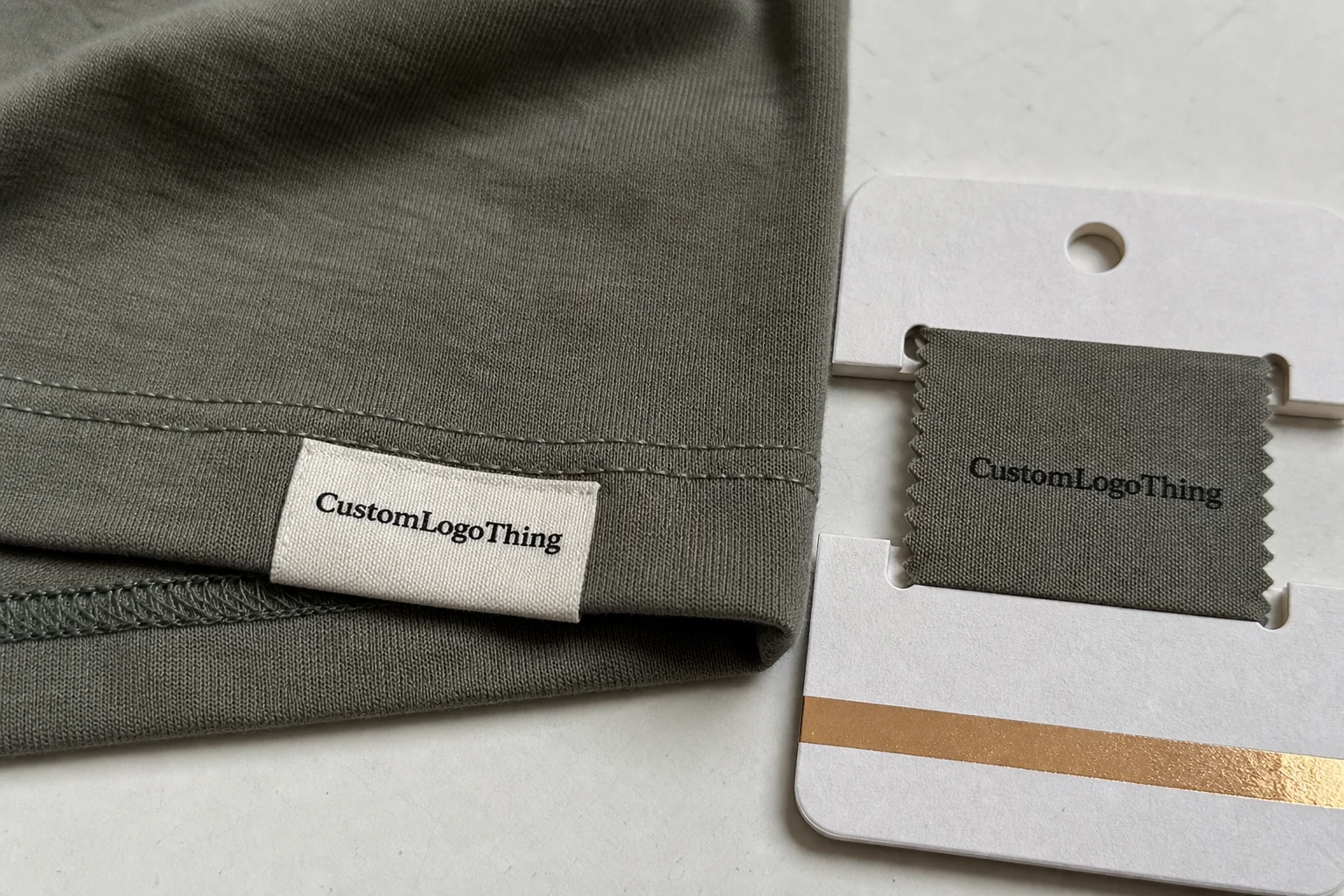
Most customers only notice labels when something goes wrong. A stiff satin edge catches the neck. A woven label feels scratchy after the first wash. A care label curls and folds into the seam. Small defects, yes, but they are the kind that make a garment feel unfinished even if the rest of the construction is solid.
That is why experienced apparel buyers treat labels as part of product engineering rather than decoration. A good label fades into the background. A bad one becomes the complaint, especially on basics, children’s wear, uniforms, sleepwear, and garments worn close to the skin.
Comfort changes perception. Clean edges, readable type, and the right hand feel make a garment seem better planned. The effect is partly visual, partly physical. Customers may not describe the label itself, but they will describe the overall impression: soft, cheap, premium, irritating, refined.
Wash behavior matters too. A label can look perfect on a desk and still become irritating after a few laundry cycles if the edge finish is weak or the material is too sparse. That is why a proof alone is not enough. The label needs to behave under real use, not just under studio lighting.
A label should support the garment, not fight it. If the trim is the first thing a customer feels, the spec needs to change.
Consistency matters as well. A knit tee, hoodie, and woven shirt can carry different constructions, but the trim language should still feel like it belongs to the same brand family. When neck labels, size tabs, and hang tags all work together, the line looks deliberate instead of pieced together from separate decisions.
Production steps: how labels move from artwork to sewn-in tags
Production usually starts with artwork review. The supplier checks logo size, font weight, line thickness, number of colors, and whether the design can survive the selected production method. Tiny type is the most common issue. A logo that looks clean on a screen may collapse once it is reduced to 18 mm wide or woven at a low density.
Then comes the spec check. This stage sounds simple until the buyer sends only width and logo art, leaving out length, fold style, seam allowance, or intended placement. A center-back neck label and a side seam label are not interchangeable. They sit differently, carry different information, and need different finishing.
The route after that depends on the label type:
- Woven labels require loom setup, so thread count, color count, and detail resolution shape the result.
- Printed satin labels depend on print registration and edge finishing, which usually gives a softer feel and more flexibility for fine text.
- Cotton labels create a natural look, but loose fibers can soften edges and make poor finishing more visible.
- Heat-applied labels remove sewing from some applications, but the adhesive has to match the garment fabric and wash cycle.
The proof stage is where a careful buyer avoids expensive mistakes. Color matching, fold style, placement, and final dimensions should be confirmed before the run begins. If a proof shows text too close to the edge or a logo too small to read clearly after stitching, that is the time to correct it. Once production starts, those changes become costly.
Fast orders usually come from clean inputs. One approved vector file, one spec sheet, and one clear revision point keep the process moving. Multiple versions, scattered notes, and vague size requests slow everything down and create room for errors that could have been avoided.
If the supplier can provide a digital mockup or woven strike-off, use it. A physical sample tells you things a screen cannot: texture, density, edge stiffness, thread sheen, and how a pale color behaves against a dark garment. That matters most for small text, multi-color branding, and labels intended for premium products where detail is part of the value.
Cost, pricing, and MOQ: what actually changes the quote
Pricing is predictable once you understand the cost stack. For personalized cloth labels, the quote usually reflects setup work first, then volume. Artwork preparation, machine setup, material allocation, finishing, and packing all sit in the fixed-cost layer. After that, unit price drops as the order gets larger.
The main price drivers are straightforward:
- Quantity: higher volume spreads setup costs across more pieces.
- Color count: more colors can mean more thread changes or more print steps.
- Size and complexity: larger labels and finer artwork usually cost more.
- Fold style: center fold, end fold, and mitre fold each change finishing time.
- Material choice: woven, satin, cotton, and specialty backings price differently.
MOQ exists because setup cost does not shrink much on a tiny run. A 500-piece order may cost more per unit than a 5,000-piece order because the proofing, machine preparation, and handling are similar either way. That matters to smaller brands trying to test a new line or launch a seasonal capsule.
Useful planning ranges for mid-volume orders often look like this. They are not universal, but they are close enough to help with budgeting.
| Label type | Typical MOQ | Approx. unit cost at 5,000 pcs | Best fit |
|---|---|---|---|
| Woven label | 1,000-3,000 pcs | $0.05-$0.18 | Premium apparel, logos with moderate detail |
| Printed satin label | 500-1,000 pcs | $0.04-$0.14 | Soft hand feel, fine text, lower-cost runs |
| Cotton label | 1,000-3,000 pcs | $0.08-$0.22 | Natural look, heritage brands, casualwear |
| Heat-applied label | 500-2,000 pcs | $0.12-$0.35 | Performance garments, no-sew applications |
That range shifts quickly if you add metallic thread, specialty backing, unusual folds, or unusually small text. Packing also affects cost. If the labels need to be cut, folded, sorted by size, and packed in specific counts, the labor has to show up somewhere in the quote. It should be visible, not buried.
Do not compare suppliers on unit price alone. A cheaper quote with weak density, poor proofing, or sloppy finishing often costs more later because the order has to be replaced or reworked. The true cost of a bad label is not just the invoice. It is the delay, the complaint, and the lost confidence in the product.
For broader shipping and packaging context, ISTA is a useful reference. Labels themselves are small, but they often travel with garments, boxed sets, or retail packs that still need to arrive in sellable condition.
Materials, weave, and attachment choices that affect wear
Material choice affects far more than appearance. It changes softness, readability, durability, and how the label behaves in washing and drying. Personalized cloth labels do not all serve the same job, so the material should match the garment instead of defaulting to the most familiar option in the sample book.
Woven labels are the standard for good reason. They can hold detail well, feel polished, and usually hold up through repeated laundering if the weave density is appropriate. They are a strong fit for denim, outerwear, retail basics, and anything where the brand mark needs a crisp edge.
Printed satin labels work well when softness is the priority. They are common in babywear, sleepwear, and lightweight garments because the surface is smooth and the print can carry fine text more clearly than a low-density weave. The tradeoff is that print wear may show earlier if the ink system or finish is weak.
Cotton labels give a quieter, more natural look. They suit brands that want a handcrafted tone or a more understated presentation. The downside is simple: cotton can fray or fuzz if edge finishing is not handled carefully, so the buyer has to balance style against long-term wear.
Heat-applied labels are useful for performance apparel and styles that should avoid seam bulk. They can reduce stitching complexity and preserve a cleaner inside finish. Still, the adhesive has to be tested on the actual garment fabric. A transfer that holds on one polyester blend may fail on another after laundering.
Attachment style matters just as much as material. Center fold, end fold, mitre fold, and straight cut each change how the label sits and what information it can carry. A center fold is common for neck labels because it creates a tidy sewn-in point. An end fold works well on side seams and woven tabs. A straight cut generally needs a seam allowance or another finishing plan so the edge does not become a problem later.
Density is another tradeoff buyers need to understand. Too sparse, and the artwork looks weak. Too dense, and the label gets stiff. The balance depends on the garment and the brand promise. Softness and sharp detail rarely arrive together by accident; usually one of them has to be engineered into the construction.
For brands that care about lower-impact sourcing, ask whether the supplier can document fiber composition or support certified paper components in related packaging. If you use label cards, inserts, or hang tags alongside Custom Labels & Tags, FSC-certified paper is a sensible reference point, provided the supplier can substantiate the claim. The FSC system is useful only when the chain of custody is real.
Turnaround and proofing: what the timeline really looks like
A standard timeline starts with artwork review and proof approval. If the file is clean and the spec is complete, that stage can move quickly. If the logo needs redrawing or the size has not been defined, the schedule slows immediately. The fastest orders are usually the ones where the buyer already knows the intended placement, size, color count, and fold style.
After approval, production time depends on label type and queue. A straightforward woven or printed run often lands around 12 to 15 business days after proof approval, sometimes sooner for standard materials, sometimes later if the factory is busy or the order needs special finishing. Shipping adds its own time, which is easy to forget until the labels are already in transit.
Rush service sounds simple, but it is fragile. It works best only when the artwork is final, the material is in stock, and the buyer responds quickly to proofs. One delayed reply can wipe out the time saved. Production schedules are not elastic just because the order is urgent.
Planning matters most for launches, holiday inventory, and replenishment orders. Labels are small, but they can still become the bottleneck because garments cannot ship without them. If the body goods are ready and the trims are not, the shipment waits.
A useful habit is to treat label approval like a small prepress review. Confirm spelling, size, fold, thread or print color, attachment method, and quantity split by SKU. If multiple sizes are involved, ask for a ratio early. Changing the packaging plan after production starts tends to push the whole order back.
Wash testing is worth requesting on higher-value items, kidswear, or anything with heavy laundering. Not every project needs it, but it can reveal edge lift, fading, shrinkage, or stiffness before the full order is committed. That is a small expense compared with rework.
Build in a buffer if the garment line is tied to a fixed shipping calendar. A few extra days may look unnecessary until a late trim delays a launch. Labels are small, but the schedule impact is not.
Common mistakes that make labels look cheap or wear out fast
The most common mistake is trying to put too much into one label. Brand name, logo, website, size, care instructions, fiber content, social handle, and a slogan can overwhelm a label fast. That is not a branding decision. It is a readability problem.
Low-contrast color choices create another predictable failure. Dark thread on dark fabric can look elegant in a mockup and disappear in real life. Buyers often notice only after the sample arrives, which is the wrong moment to discover that the label cannot be read without turning the garment under a light. High contrast usually wins for neck labels and care labels because people need to see them quickly.
Here are the mistakes that show up most often in production and wear tests:
- Type that is too small to read once stitched and folded.
- Overly thin lines that disappear in woven construction.
- Wrong backing or finish that makes the label itch, curl, or detach early.
- Poor placement planning that puts the label on an awkward seam.
- Using the wrong label type for wash frequency or skin contact.
Edge quality is another giveaway. A label that curls after one wash usually had a weak edge finish or a material choice that was not suited to the garment. Fraying is common on lower-grade cotton trims. Curling is more common when cutting or finishing was too aggressive. Either way, the result looks cheap and feels unfinished.
Placement checks matter more than many buyers expect. A label that looks fine in hand can sit badly once sewn into the garment. It may twist on a seam, fold under the collar, or press against skin in a way that seemed impossible during approval. A short placement test on the actual garment can prevent a lot of irritation later.
There is also a budget trap. A low-cost spec can look attractive until the first wear test exposes the weakness. A slightly better woven construction can often replace a too-thin printed label that would have failed early. Spending a little more at the spec stage is usually cheaper than replacing thousands of units after complaints begin.
Personalized cloth labels: next steps before you order
If you want a useful quote, send a clean brief. Include the artwork, finished size, fold style, color count, quantity, placement, and any special finishing. That reduces back-and-forth and gives the supplier a real basis for pricing instead of a rough guess.
A practical order checklist looks like this:
- Artwork file in a usable vector format.
- Finished size in millimeters or inches.
- Label type: woven, printed satin, cotton, or heat-applied.
- Fold and cut style with exact placement notes.
- Quantity and any split by size or color.
- Text content for brand name, care, and compliance details.
Ask for a proof before production. If the label is going into a higher-value item, ask for a sample or wash test as well. That extra step is usually cheap compared with rework, and it tells you whether the label has the softness, density, and clarity the garment needs.
The cleanest way to buy personalized cloth labels is to define the use case first. Is the product soft kidswear, rugged workwear, or a fashion piece that needs a polished neck label? Once the garment type, wear conditions, and budget are clear, the label stops being guesswork and becomes a controlled part of the spec.
How long do personalized cloth labels usually last?
Well-made woven or printed labels should survive repeated washing without fraying or fading when the material and attachment method match the garment. Durability depends more on construction and care instructions than on the logo itself, which is why weak labels often fail at the edges first.
What is the minimum order for cloth labels?
MOQ varies by supplier and label style, but smaller runs usually cost more per piece because setup work gets spread across fewer units. If you only need a short run, ask whether the vendor offers sample quantities, mixed-size packaging, or a lower-volume print option.
Are woven labels better than printed labels for apparel?
Woven labels usually feel more premium and hold detail well, while printed labels can be better for soft hand feel, fine text, or lower-cost runs. The right choice depends on the garment type, wash frequency, and how much texture you want the customer to feel.
How fast can custom cloth labels be made?
Standard turnaround depends on approval speed, production queue, and shipping method, so the biggest delay is often waiting on artwork confirmation. Rush service may be possible, but only if the design is already clean and the supplier has the right stock material available.
What information should go on personalized cloth labels?
Most buyers include brand name, size, care instructions, and sometimes country of origin or fiber content if the garment requires it. Keep the layout simple and readable, because labels are small and cluttered artwork becomes hard to use once it is stitched in.
Personalized cloth labels are a small purchase with an outsized effect. If you start with the garment, the wash conditions, and the budget, the result is usually cleaner, more durable, and far easier to live with after the first shipment goes out.


