Personalized nylon drawstring bags look simple, but sourcing them is where the details start to matter. Fabric weight, closure style, print method, packing, and lead time all affect how the finished bag looks, feels, and prices out.
That is why they keep showing up in event kits, retail orders, sports promotions, and travel bundles. They are light, easy to store, and affordable at scale, but they still offer enough surface area for branding to be visible without overcomplicating the product.
The difference between a useful bag and a cheap-looking one usually comes down to three things: material, decoration, and whether the buyer gave production enough information to quote and build accurately.
Why these bags punch above their weight
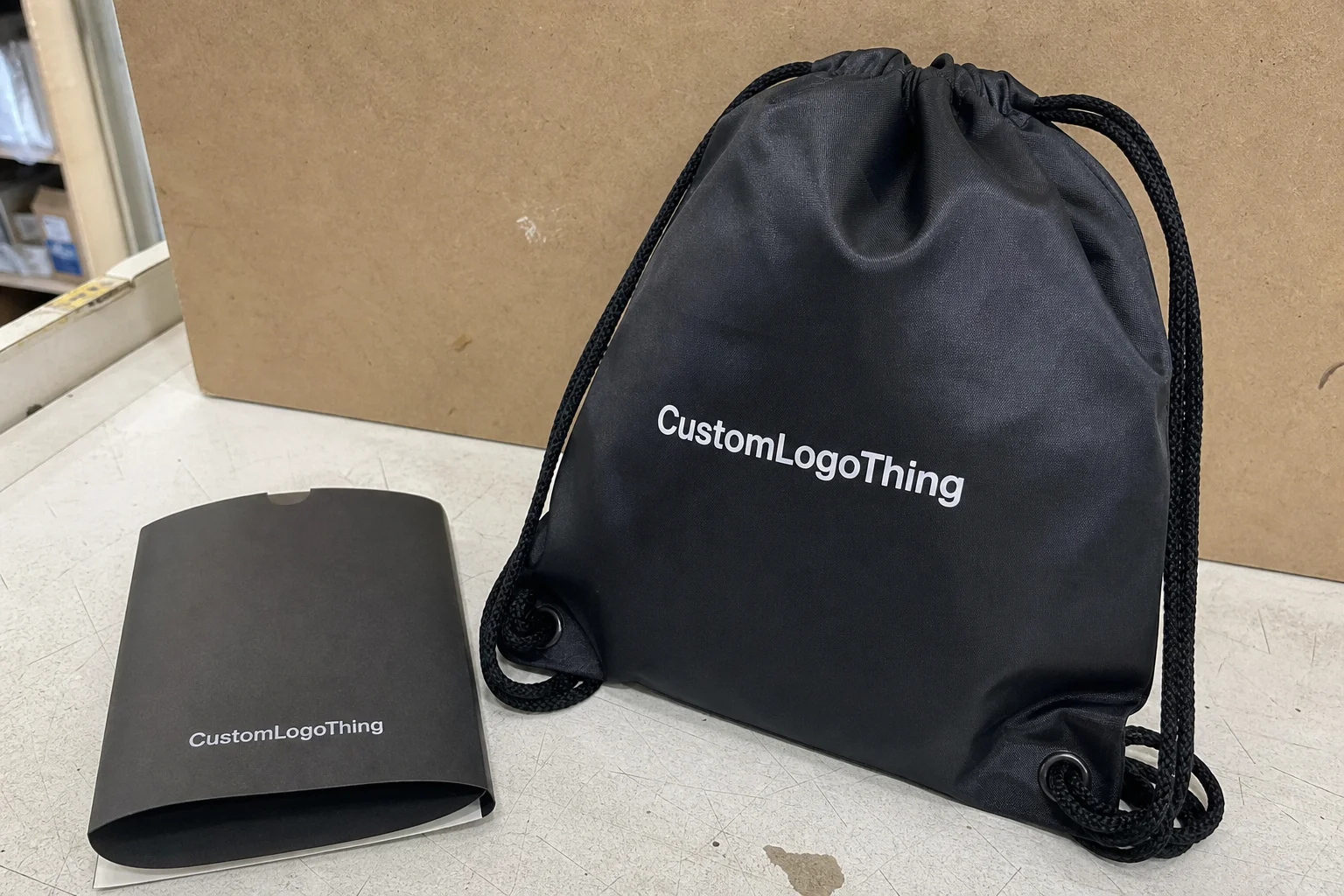
A nylon drawstring bag sits in a useful middle ground. It is not trying to be a tote, a backpack, or disposable packaging. It is a practical carry item that folds flat, ships efficiently, and still feels deliberate when the construction is clean.
For branded programs, that matters. A flyer gets discarded. A sticker gets forgotten. A bag gets reused. If someone takes it to a gym, packs it in a suitcase, or uses it for retail purchases, the logo keeps circulating without another round of spend. That is the real value behind personalized nylon drawstring bags.
They also present better than many low-cost alternatives when the seams are straight and the print is crisp. The bag does not need to look premium. It just needs to avoid looking flimsy or rushed.
“If the bag is meant to travel after the event, it has to feel worth keeping.”
Common use cases include:
- Conference handouts and attendee kits
- Retail purchases and product packaging
- Sports giveaways and team gear
- Travel amenity sets
- Sponsor gifts and VIP bundles
The use case matters because it determines the right balance of cost, durability, and finish. A bag for pamphlets can be lighter and simpler. A bag that will be reused should have more structure and better stitching.
Material, size, and closure choices that change the result
Nylon is not a single spec. Denier, weave density, finish, and stitching all affect how the bag performs. A lighter fabric is fine for apparel, small gifts, or printed inserts. A heavier build is better for repeat use, sharper corners, or anything that gets stuffed and pulled open all day.
Common constructions often sit around 70D or 210D. Lower denier usually feels softer and folds smaller. Higher denier gives more body, better opacity, and a sturdier hand feel. If the bag is supposed to survive real reuse, the higher spec is usually worth the modest price increase.
Size matters just as much. Too small and the contents bulge, seams strain, and the print lands across folds. Too large and the bag can look generic even if the logo is fine. For most promotional and retail uses, a little extra room is better than forcing the dimensions down too far.
Closure choice changes how the bag behaves in use. A single drawcord is common and inexpensive. A double drawcord opens more evenly and sits better on the shoulders. Cord locks are useful when the bag needs faster tightening or a more secure close, especially for travel and sports.
| Option | Typical use | Strength | Tradeoff |
|---|---|---|---|
| Light nylon | Flyers, apparel, small gifts | Lowest cost, folds flat | Less structure, more wrinkling |
| Midweight nylon | Retail, event kits, repeat use | Better hand feel and durability | Slightly higher unit price |
| Double drawcord | Comfort and balanced carry | Easier handling | Can add a little cost |
| Cord lock | Travel, sports, secure closure | Fast tightening | More parts, more setup detail |
Color choice also affects the final impression. Darker bags hide scuffs and handling marks better. Lighter colors can look fresher, but they reveal print defects, stitch variation, and dirt more easily. If the bag is going into retail, a light color may make sense. If it will be handed out at a crowded event, darker usually ages better.
Construction details separate a usable product from a cheap one. Reinforced seams, tidy topstitching, and clean edge finishing help the bag hold its shape. Those details also add cost, so the buyer should decide early where the line is between functional and premium.
Before finalizing size, ask how the bag behaves when filled. A sample can look balanced when empty and then tilt once books, shoes, or bundled merchandise go inside. That is not a decoration issue. It is a spec issue, and it is easier to fix before production starts.
How the decoration process works on nylon
The decoration workflow is usually straightforward: final artwork, proof, method selection, sampling if needed, production, and quality control. If the brief is incomplete, every step becomes slower and more expensive.
Screen printing is the best fit for many orders. It handles simple logos, solid shapes, and limited colors well, and it holds up properly at scale. Heat transfer works better for more detailed artwork, small type, and multicolor graphics that would get muddy with ink alone. Woven or sewn-on branding can look more premium, but it belongs in a different price bracket.
Nylon can be a tricky print surface because it is slick. Tiny text, thin lines, and low-contrast graphics are the first things to suffer. Gradients can also become muddy depending on the method and print area. If your design depends on fine detail, test it at the real size instead of assuming the artwork file will translate cleanly.
Vector artwork is the cleanest starting point. If you only have a raster file, resolution must be high enough for the final print size. Color matching should be discussed before production starts, especially if brand colors are fixed. A supplier worth using will ask for PMS references or equivalent targets rather than guessing.
Proofing is where most preventable issues get caught. Check the bag size, print area, placement, closure style, and cord color together. A correct logo in the wrong position is still a bad product.
A practical approval checklist looks like this:
- Confirm final bag dimensions and color.
- Verify logo placement and print size.
- Check the number of colors or print passes.
- Review spelling, punctuation, and spacing.
- Confirm closure style, cord type, and packing method.
For packaging programs, it can also help to look one step beyond decoration. If the bags are going into retail distribution or need to survive longer shipping routes, ask about carton strength, internal packing, and drop protection. The bag may be fine while the outer packaging is what damages the first impression.
For distribution and handling standards, references like the ISTA testing resources and the Institute of Packaging Professionals can help frame the risk more clearly.
Cost, MOQ, and unit price: what actually moves the quote
Price is driven by a short list of variables: bag size, fabric weight, print coverage, color count, packing requirements, and any custom hardware. Add individual polybags, inserts, or special folding, and the cost rises again.
MOQ changes the math because setup cost gets spread across the run. A 250-piece order almost always costs more per unit than a 1,000-piece order if the spec stays the same. Once screens, plates, or transfer setup are paid for, per-piece pricing drops. Buyers who only compare the first quote often miss that breakpoint.
| Spec | Indicative unit price range | What pushes it up |
|---|---|---|
| Simple one-color print, basic nylon | $0.85-$1.50 at 1,000+ units | Rush timing, extra color, individual packing |
| Midweight bag with multi-color print | $1.20-$2.20 at 1,000+ units | Large print area, color matching, special cords |
| Lower MOQ run, 250-500 units | $1.75-$3.50 | Setup spread across fewer bags |
| Premium construction or specialty finish | $2.50-$5.00+ | Lining, reinforced seams, sewn-on branding |
Those are reference ranges, not a quote. Exact pricing depends on destination, supplier capability, decoration method, and the details of the bag itself. If a number comes back unusually low and nobody has confirmed size, material, print count, and packing, the quote is incomplete.
Watch for adders. Rush fees are common when the timeline gets compressed. Extra decoration positions cost more. Special cords, cord locks, custom labels, and individual packing all add labor or components.
A simple way to pressure-test the quote is to ask for pricing at three quantities: 100, 500, and 1,000 units. That usually exposes the setup structure immediately and shows whether the supplier is pricing with discipline.
Production steps and turnaround from proof to ship
Production is usually straightforward: final art, digital proof, approval, manufacturing, quality control, packing, and dispatch. The part buyers often underestimate is that shipping time is separate from production time. If the calendar is tight, those two get mixed together and the order suddenly looks impossible.
For simple runs, production can often finish in about 10-15 business days after proof approval. Larger orders, more complicated decoration, or specialty construction can push that into the 15-25 business day range or beyond. Transit time adds another layer depending on whether the order is shipping domestically or internationally.
Delays usually come from a few predictable places: late artwork, last-minute changes, unclear specs, proof revisions, holiday congestion, and quantity changes after the order is already moving. None of that is mysterious. It is just expensive when it happens right before an event.
Build buffer into the schedule. Enough room for one proof revision and a transit delay is often the difference between a smooth delivery and a scramble. If the bags are tied to a launch, conference, or retail date, treat the deadline as fixed and work backward from it.
QC matters more than people think. A good factory will check print alignment, color consistency, seam strength, cord insertion, and visible defects before packing. For larger orders, ask for carton counts, sample photos, or a pre-shipment check if the order justifies it.
Common mistakes that make a simple bag look cheap
The first mistake is a size mismatch. If the bag is too small for the contents, it looks strained and the seams take unnecessary abuse. If the logo sits across folds or bulges, the whole product starts looking careless.
The second mistake is artwork that is too busy for the substrate. Tiny text, low-contrast details, and soft gradients are risky on nylon. What looks fine on a monitor may print muddy on a slick surface. If the design depends on fine detail, test it at actual print size.
Weak hardware is another giveaway. Cheap cords, uneven stitching, loose edge finishing, and bad seam alignment make the product feel underbuilt even if the logo looks good. End users do not diagnose construction. They just decide the bag feels cheap.
Poor packing can ruin an otherwise acceptable bag. If the order is folded carelessly, shipped in oversized cartons, or stacked against hard accessories without protection, it can arrive wrinkled, scuffed, or marked.
There is also a proofing mistake that keeps repeating because people rush. Buyers approve a layout without checking how the print area interacts with folds or seams. Then the logo lands on a puckered section and looks off-center in use. That is not a factory surprise. That is a proofing miss.
The simplest way to improve the final result is to treat the bag like a finished product, not a blank surface that happens to carry a logo. Material, size, closure, color, print scale, and packing all affect the final impression.
Personalized nylon drawstring bags: next steps before you order
Before requesting a quote, lock in five things: use case, quantity, size, color, and decoration method. If any of those are still unclear, the quote will be unclear too.
Prepare the clean logo file, note the preferred placement, and gather brand color references. If the bags are going to clients or customers, ask for a proof and, if the order is important enough, a sample photo or swatch before the run starts.
Comparing quotes for personalized nylon drawstring bags only works if the specs match. Size, fabric weight, closure style, print coverage, and packing method need to be identical across every quote. Otherwise, you are comparing different products and treating the numbers as if they mean the same thing.
The practical approach is simple: get two or three spec-based quotes, review the proof carefully, and leave enough calendar room for production plus transit. That gets you a bag that feels deliberate instead of rushed.
How durable are personalized nylon drawstring bags for daily use?
Durability depends on fabric weight, seam quality, and cord construction more than the logo itself. Nylon handles repeated folding and light-to-moderate loads well, especially in midweight constructions. If the bag will carry books, shoes, or retail purchases, ask for reinforced stitching and a heavier fabric spec.
What print method works best on personalized nylon drawstring bags?
Screen printing is usually the best fit for simple logos and solid colors. Heat transfer works better for detailed artwork or multicolor graphics, though it can feel different on the surface. The right choice depends on artwork complexity, color count, and how slick the nylon is.
What is a typical MOQ for personalized nylon drawstring bags?
MOQ varies by supplier, size, and decoration method, so there is no single standard number. Lower MOQs usually cost more per unit because setup gets spread across fewer bags. Ask for pricing at 100, 250, 500, and 1,000 units if you want to see where the real breakpoints are.
How long do personalized nylon drawstring bags take to produce?
Simple orders can often move in about 10-15 business days after proof approval. Larger or more complex orders may take 15-25 business days or longer. Shipping time is separate, so always add transit time on top of production.
What should I check before approving personalized nylon drawstring bags?
Check logo size, placement, color contrast, and whether the design stays readable once the bag folds or fills. Confirm bag dimensions, cord style, packing method, and final quantity before production starts. Review the proof carefully and fix issues early, not after the bags are already finished.


