personalized pastry boxes do far more than move a sweet item from counter to customer. They shape the first impression, protect fragile finishes, and tell people, often before the lid is opened, whether the bakery is careful, premium, playful, or built for speed. For a product that depends on appearance as much as flavor, packaging is part of the sale, not an afterthought.
A good box also has to survive real handling. It may be picked up in-store, stacked for catering, loaded into a delivery bag, or carried through a warm car before it is opened. That means the best packaging spec is rarely the fanciest one on paper. It is the one that holds the pastry in place, keeps the exterior clean, and still looks intentional when it reaches the customer.
What Personalized Pastry Boxes Actually Do for Fresh Food Display
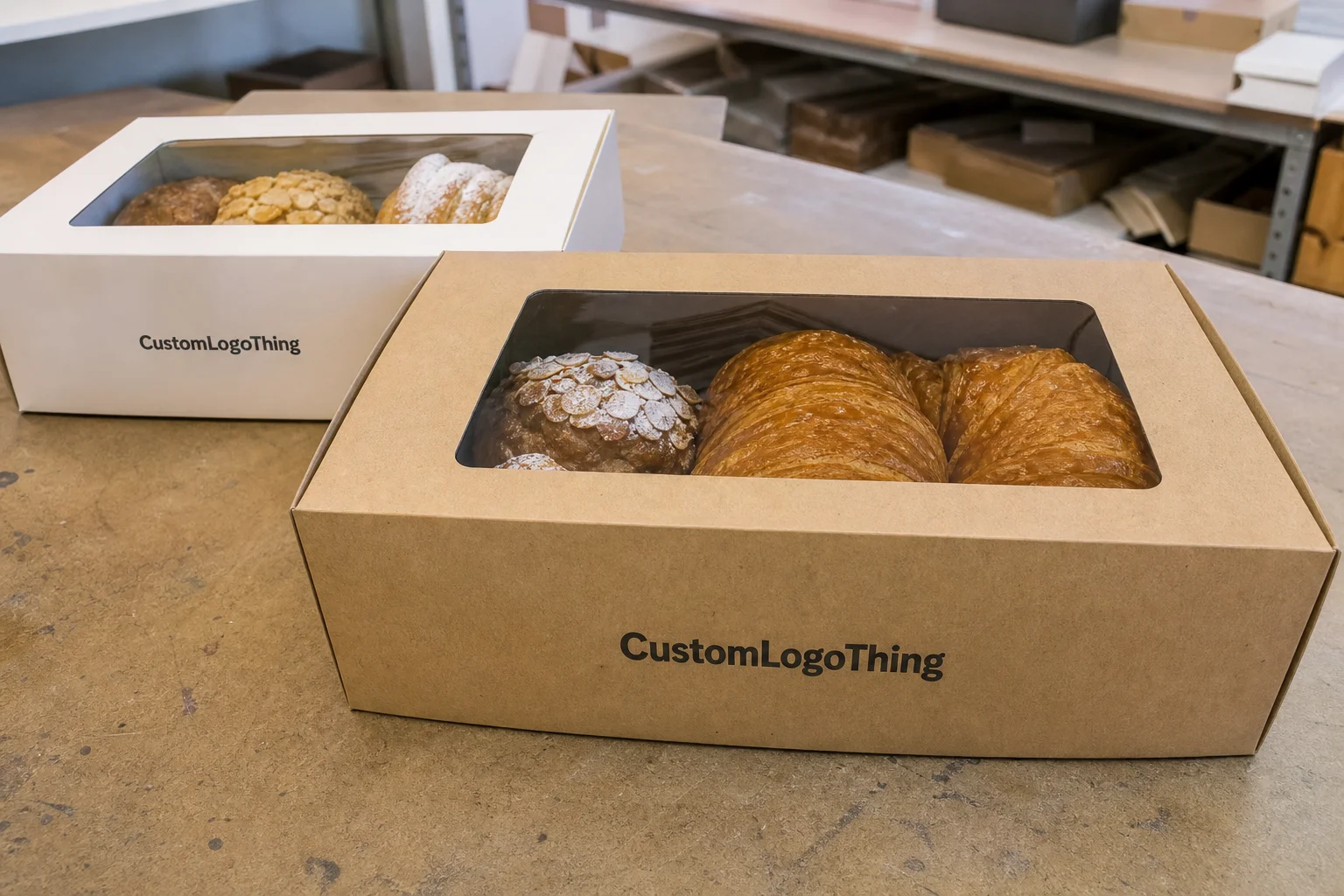
Pastries are judged visually first. A glossy tart, a powdered croissant, or a neat row of macarons can look excellent on a shelf, but that appeal drops quickly if the packaging wrinkles, crushes, or lets the product slide around. That is why personalized pastry boxes are not simply decorative cartons; they are part of the display, the protection system, and the unboxing experience.
At the simplest level, these are custom-printed or custom-formed bakery packages built for delicate items. Some are standard folding cartons with logo print and a window. Others are rigid or specialty shapes with inserts, dividers, or trays to keep individual pieces separated. For heavier catering orders, corrugated bakery boxes usually make more sense. For retail display, a clear window or PET panel can matter because customers want to see frosting, glaze, texture, and portion count before buying.
Personalization also changes how people handle the product. A branded pastry box reduces confusion in mixed orders, makes catering trays look deliberate, and helps a takeaway purchase feel more like a gift than a generic bagged item. That matters for bakeries, cafés, hotel pastry counters, event caterers, and any shop selling assortments with multiple flavors in one package.
Common uses include:
- Macarons and petit fours
- Donuts and glazed rings
- Mini tarts and fruit pastries
- Croissants and danishes
- Cupcakes and cupcake assortments
- Mixed takeaway bakery sets
From a buyer’s point of view, the real task is balance. You want shelf appeal, product protection, and a unit cost that still makes sense. You also need a timeline that fits launch dates, seasonal menu changes, and reorder cycles. That balance is what separates a practical packaging spec from a sample that looks good but performs poorly once it leaves the counter.
How Custom Bakery Packaging Is Made and Finished
The production path usually starts with a dieline, which is the flat template showing folds, flaps, glue areas, cut lines, and any window openings. Artwork is then placed onto that structure so the logo, flavor name, ingredients panel, or promotional message lands in the right spot after folding. Once the layout is approved, a sample or proof is checked before the full run begins.
Box style is chosen around the product, not around the artwork. A low-profile pastry tray may only need a tuck-end carton with a window. A taller box for decorated cupcakes needs more headroom and often a locking top so the frosting does not touch the lid. For items that stack or travel in groups, inserts and dividers keep the contents from drifting or bumping into one another.
Printing choices usually come down to run size and color consistency. Digital printing is often practical for shorter runs, seasonal artwork, or frequent design changes. Offset printing is typically better when the order volume is larger and the brand needs stable color across thousands of units. Finishes like matte, gloss, soft-touch, and spot UV each change the feel and visual tone of the package.
For food packaging, the structure is only half the story. Material choice affects odor control, grease resistance, and how the box behaves around condensation. If the pastries are buttery or glazed, an inner liner, tray, or food-safe barrier may be needed so the outer printed surface stays clean. Direct contact with food is not suitable for every board or coating, so the product spec has to reflect how the pastry is actually packed.
“The cleanest packaging idea can still fail if the product shifts, sweats, or rubs against the lid. A good box is designed around the pastry’s behavior, not just the graphic design.”
For buyers comparing packaging paths, a supplier’s Custom Packaging Products catalog can help frame the options before artwork gets too far along. The goal is not to choose the fanciest box. It is to choose the structure that keeps the pastry looking the way it should when the customer opens it.
Key Specs That Affect Appearance, Protection, and Branding
Material is one of the first decisions that affects the feel of the package. Paperboard is common for light to medium bakery items and gives a clean print surface. Coated board improves image sharpness and helps with moisture resistance. Corrugated board is more suitable for heavier catering packs or delivery orders that need extra crush protection. If visibility is the priority, a plastic-window option can let the product do the selling without opening the box.
Fit matters just as much as structure. A box that is too loose lets delicate toppings shift and smear. A box that is too tight can press frosting, sugar decoration, or fragile garnishes into the lid. Good packaging specs account for the finished product height, not just the base footprint, and they also leave room for trays, liners, or separators if needed. In bakery work, a few millimeters can make the difference between a polished opening and a damaged one.
Closure style affects both presentation and handling. Tuck-top cartons are familiar and easy to assemble. Lock-bottom styles carry weight better. Handle cutouts can help for takeaway orders, though they are not always the best choice for stacked storage. Tamper evidence is another consideration for delivery or retail, especially when the bakery wants the customer to see that the package has remained closed.
Branding should match the way the product is sold. A boutique pastry line may use restrained typography, soft colors, and a small logo mark. A high-volume retail program may need bold contrast, larger logo placement, and clear flavor labeling. The design can feel artisanal, premium, playful, or minimalist, but it should not look crowded. Too much ink coverage can make the package feel busy and can also increase cost.
| Spec Choice | Best For | Typical Effect on Cost | Presentation Result |
|---|---|---|---|
| Paperboard carton | Light pastries, retail display | Lower to moderate | Clean, printable, easy to brand |
| Coated paperboard with window | Macarons, donuts, assortments | Moderate | Strong shelf visibility and better moisture control |
| Corrugated bakery box | Catering trays, delivery packs | Moderate to higher | Better crush resistance and stacking strength |
| Rigid or premium specialty build | Gift sets, high-end assortments | Higher | Luxury feel with stronger unboxing impact |
Environmental goals can be part of the spec too. Recyclable substrates, reduced plastic content, and simpler ink coverage are all common ways to make the pack easier to justify to customers who pay attention to waste. FSC-certified paperboard can be a useful signal when sourcing matters to the brand. For reference on responsible forestry standards, FSC is a useful place to review the framework.
If the box will travel through refrigerated conditions, condensation can become a real issue. Cold pastries may warm slowly in the customer’s hands, and if the board or coating is not chosen carefully, the exterior can soften or lose print clarity. That is why the exact handling environment matters as much as the pastry style.
Pricing, MOQ, and Unit Cost: What Changes the Quote
Most buyers want a simple answer on price, but the quote depends on a handful of concrete factors. Box size, board thickness, print coverage, number of colors, finish complexity, and whether windows or inserts are included all push cost up or down. A small, lightly printed carton is very different from a custom structure with specialty coating and multiple components.
MOQ means minimum order quantity, and it affects per-unit cost more than many buyers expect. Smaller runs usually cost more per box because setup, plates, cutting dies, proofing, and production changeovers are spread across fewer pieces. Larger runs lower the unit price because the fixed setup is divided over more cartons. That is normal across custom packaging, not just for bakery items.
Short-run digital orders are often attractive when a brand wants test packaging, seasonal artwork, or a limited menu release. Offset printing makes more sense when the design is stable and the order volume is high enough to recover setup costs. If the order is very simple, a standard structure with print may be enough. If the box is unusual in shape, tooling and sample work may add to the budget.
Here is a practical budgeting frame that buyers can use:
- Pay first for the features customers will see immediately, such as logo placement and window visibility.
- Pay second for the features that protect the pastry, such as inserts, fit, and board strength.
- Trim extras that do not change performance, such as decorative ink on hidden panels or unnecessary specialty effects.
Typical cost discussions should include artwork prep, proofing, freight, storage, and kitting if inserts or accessories are packed separately. Buyers sometimes compare only the printed carton price and forget about the rest of the order path. That can distort the real landed cost quite a bit.
For many bakery programs, the sweet spot is not the cheapest box on paper. It is the box that looks right, arrives intact, and can be reordered without reworking the whole packaging system each time. If you know your top-selling pastry sizes early, that alone can keep costs under control.
Process and Timeline: From Quote to Delivery
The usual sequence is straightforward: inquiry, specification review, quote, dieline creation, artwork placement, proofing, approval, production, finishing, and shipping. The timeline expands or contracts depending on whether the box is a standard format or a fully custom build that needs new tooling and sample signoff.
Most delays happen before production, not during it. If the logo file is low-resolution, the barcode needs repositioning, or the window opening was measured incorrectly, the proof stage can stop the schedule while revisions are made. That is why proofing protects the budget as much as the timeline. It is far cheaper to fix a layout on screen than to reprint a finished run.
Order quantity and print method also affect timing. A shorter digital run may move faster, while a larger offset run may take longer to prepare but deliver better economics at scale. Seasonal workload matters too, especially around holidays and catering peaks. If a bakery is launching a new menu item or opening a new location, packaging coordination often becomes part of the launch calendar itself.
Most buyers should leave buffer time for revisions, freight, and final quality checks. Planning right up to the first sell date is usually too tight, especially when products are customer-facing and the packaging has to arrive looking perfect. For companies that also need transport testing, standards such as ISTA can be a useful reference point for distribution performance expectations.
Common Mistakes Buyers Make When Ordering Bakery Packaging
The first mistake is choosing the box for looks alone. A beautiful carton can still fail if the pastries slide, smear, or lose shape during pickup. The second mistake is measuring only the tray or base footprint and ignoring frosting height, garnish height, or inserts. That small oversight often leads to crushed decoration or a lid that will not close properly.
Another common issue is overdesign. A premium pastry assortment does not always need every surface filled with graphics, foil effects, and heavy contrast. Sometimes the product looks more elegant when the packaging gives the eye one strong focal point and leaves the rest clean. In food packaging, restraint can feel more premium than decoration overload.
Moisture and grease are easy to underestimate. Butter-rich doughs, glazed donuts, and refrigerated pastries can create surface conditions that soften board or blur ink if the spec is too light. If delivery is part of the plan, stacking and temperature exposure should be discussed early. What works on a display shelf may not hold up in a courier bag or catering stack.
Skipping proof review is another expensive mistake. Logo placement can shift, colors can look different on press, and small text can become unreadable once folded. A box proof is not a formality; it is the last chance to catch errors before they turn into a reprint.
Finally, buyers sometimes forget how the customer receives the product. Will it be handed across a counter, carried by a handle, stacked in a delivery tote, or opened at a table during an event? The right package spec changes with each of those uses.
Expert Tips for Better Shelf Appeal and Faster Reordering
Keep the design system simple enough that seasonal changes do not require a full rebuild. If the brand can rotate artwork for holidays, specials, or flavor launches while keeping the same structure, reorder speed usually improves and the packaging library stays easier to manage.
Choose one strong branding moment instead of trying to brand every inch. That could be a logo panel, a window frame, an interior message, or a bold flavor band. One clear visual anchor often reads better than multiple competing elements, especially on a busy retail counter.
Standardize core sizes for the best-selling items. This is one of the most practical ways to control cost over time. If the bakery always uses one size for six-packs of macarons, another for four cupcakes, and another for mixed pastry assortments, reorders are easier to forecast and unit pricing tends to improve with repeat volume.
Mockups and samples matter more for delicate pastries than for many other food products. If toppings are tall, fillings are soft, or glazing is sticky, a quick fit test can prevent a bad surprise. Even a simple sample assembly can show whether the lid rubs, the insert shifts, or the product sits too low in the box.
Also, think through the customer journey. The package should look good on the counter, in the customer’s hand, and after it is opened at home or at an event. A Soft Matte Finish can fit artisan products well, while bright, high-contrast graphics may work better for impulse retail or high-visibility takeaway. Matching finish to pastry style helps the whole experience feel consistent.
Next Steps for Choosing the Right Custom Box Spec
Start with the basics: list the pastry types, piece counts, and the conditions they will face during pickup, display, delivery, or catering. That one step clears up a lot of confusion before the first quote is even requested. If the product is fragile, include stack height, garnish height, and whether liners, trays, or dividers are needed.
Then decide what matters most for the first order. Some buyers need the lowest unit cost. Others need the fastest turnaround. Some care most about branding impact, while others prioritize protection or storage efficiency. There is no single correct answer, but there is usually a correct tradeoff for the specific bakery program.
Artwork readiness matters too. Have logo files, brand colors, and any compliance needs organized early. If the box needs barcodes, ingredient panels, or space for regulatory details, those elements should be planned before the dieline is finalized. That saves revision time and keeps the package from feeling crowded.
A realistic quote request should include quantity, product type, intended use, and target delivery window. If the pastry is delicate or the box will be customer-facing, ask for sample options before committing to a full run. A well-chosen spec usually comes from matching the packaging to the pastry’s real handling needs, not just the graphic design, and that is exactly where personalized pastry boxes prove their value.
What are personalized pastry boxes used for besides branding?
They protect delicate pastries during pickup, delivery, and display. They also help organize assortments so pieces do not shift around inside the package, and they can improve perceived freshness and value when the box fits the product well.
How do I choose the right size for custom pastry boxes?
Measure the finished pastry size, including frosting, garnish, or toppings. Leave enough headspace for safe closing without crushing decoration, and account for inserts, dividers, liners, or trays if the product needs more stability.
What affects the price of personalized pastry boxes most?
Size, material, print coverage, and finish are the biggest cost drivers. Lower quantities usually raise unit cost because setup costs are spread across fewer boxes, and windows, inserts, specialty coatings, and complex structures can increase pricing.
How long does the production timeline usually take?
Timeline depends on proofing, quantity, print method, and whether custom tooling is needed. Simple runs can move faster than fully custom structural packaging, and artwork approvals plus shipping time should be built in so the order arrives before launch or seasonal demand.
Can personalized pastry boxes help with takeaway and delivery orders?
Yes, if the structure is designed to keep pastries from sliding or getting crushed. Grease resistance and moisture management matter a lot for transported baked goods, and a well-fitted box can improve presentation when the customer opens it at home or at an event.